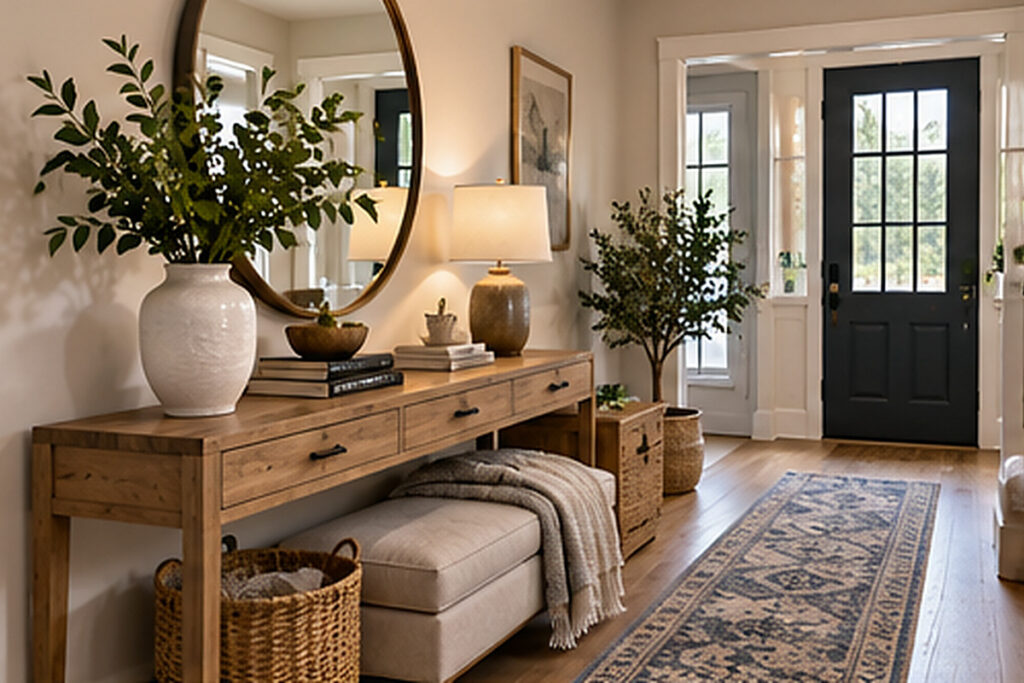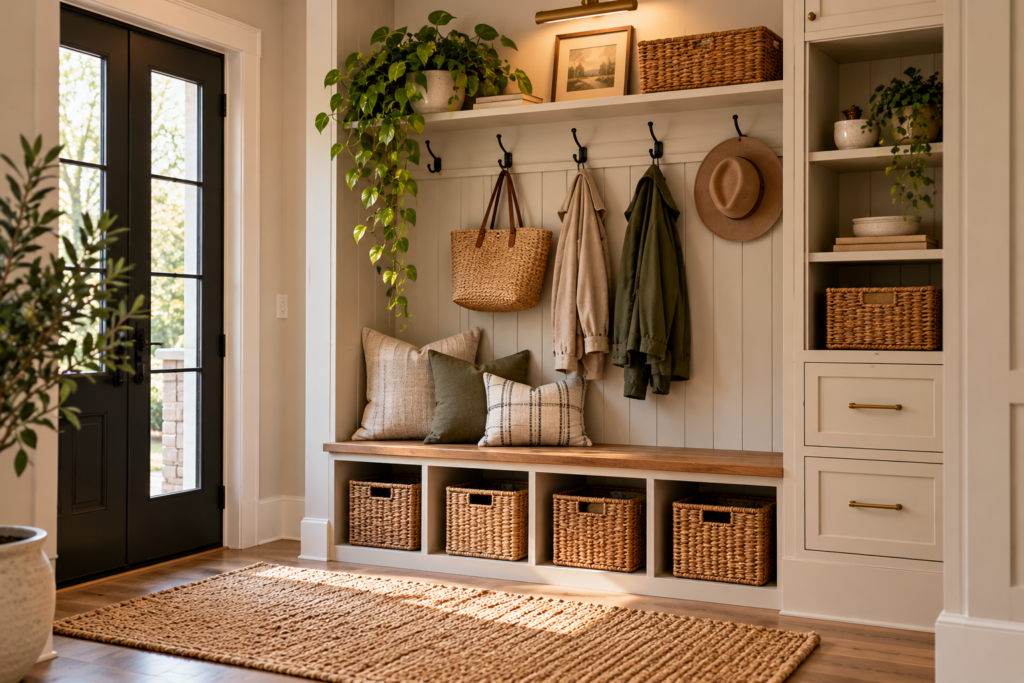
A vintage entryway table can look the right size in a listing photo and still be awkward the first time you open the front door. These vintage entryway table ideas help you measure the route, compare pieces, and give the one you bring home a useful job.
Start with photos of your own entry from both directions. Take a tape measure to the shop and check the tabletop, feet, and drawer pull as separate measurements. Check the piece for loose joints, water damage, and signs that it may need professional repair. If the hallway needs more than a table, use the small-foyer furniture guide to compare benches and cabinets.
1. Measure the Table Where It Sticks Out Farthest
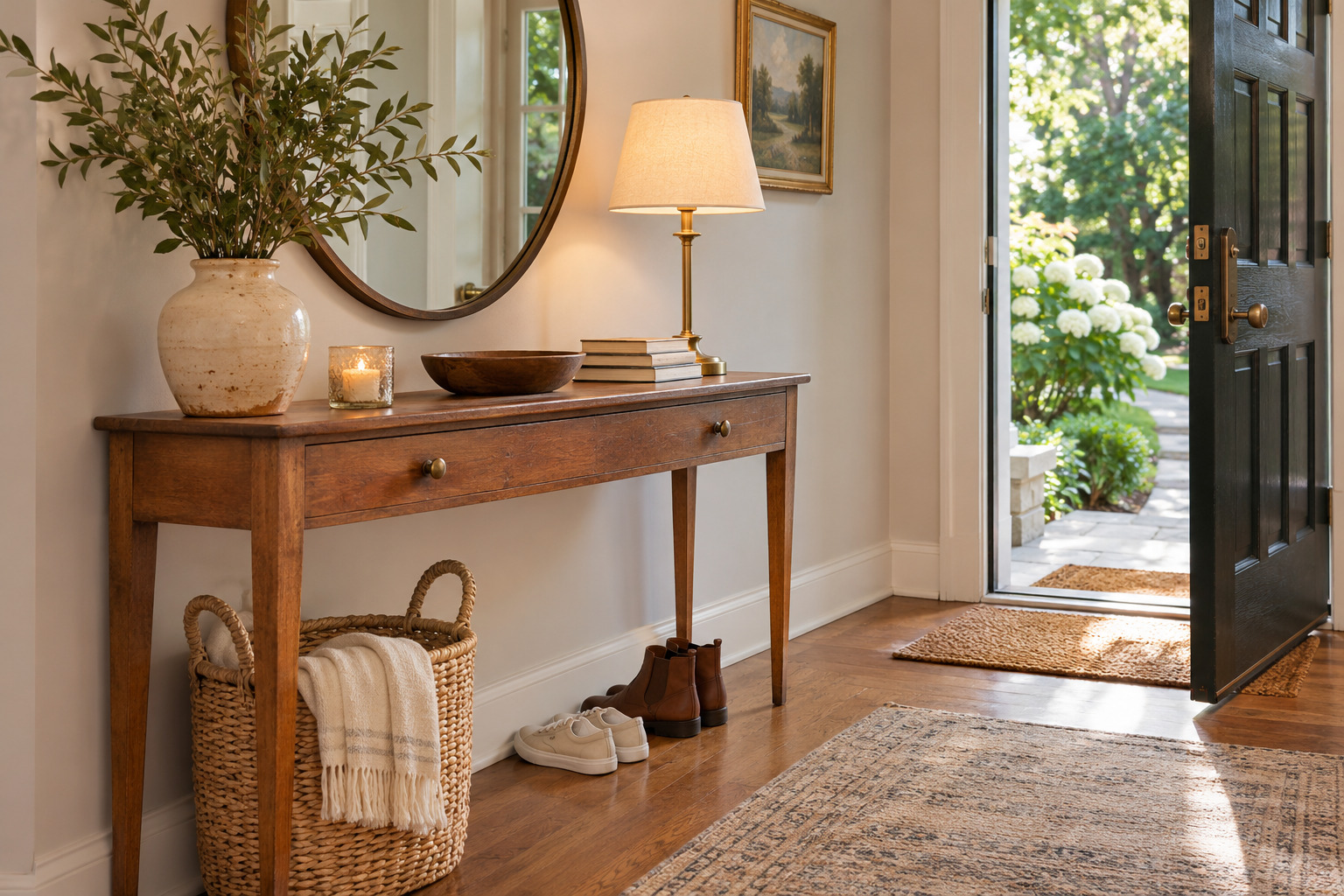
Record the entrance width with the front door open and a coat hanging where you usually leave it. An old console can be deeper at the curved feet or at a loose drawer pull than it is at the middle of the top. Ask for the outside dimensions at the farthest point before committing. Set a cardboard mockup in the proposed position and walk past it with the bag you carry most often.
Leave a little room where a drawer needs to open. A slim tabletop loses its advantage if you have to step around the drawer every time you empty your pockets.
If you want a new alternative to compare, mark out the 41.7-inch width and 11.8-inch depth of this shallow console on the floor before ordering.
Measure for this shallow console (paid link)
2. Test the Footprint of a Half-Moon Table
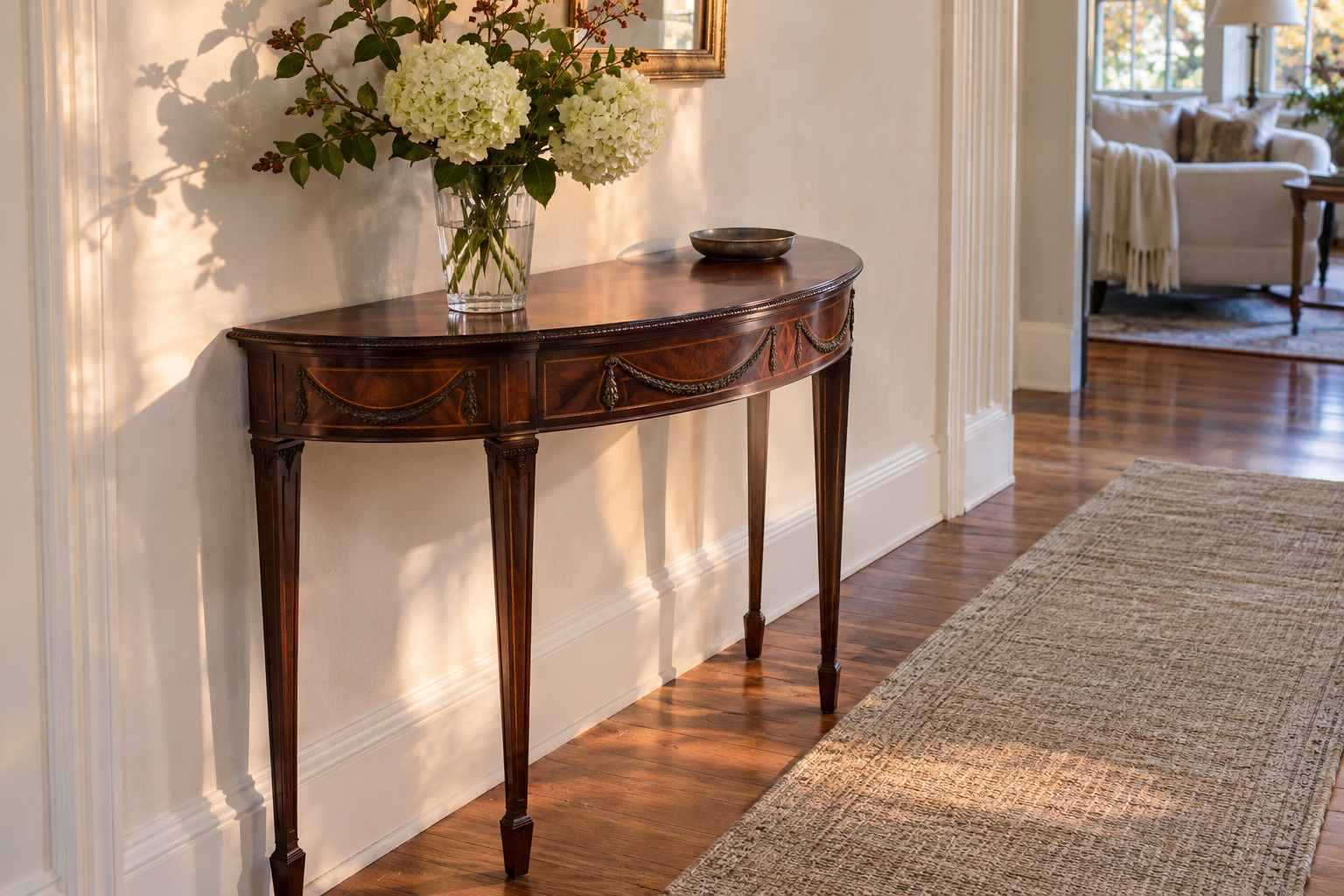
Try a small demilune where the end of a rectangular table would interrupt the path. Its flat back sits along the wall while the curved front gives your shoulder a little more room to turn. Compare the depth at the center with the space left to pass. A curved top can look very shallow in photos even when it projects into the hallway.
Give a curved table a small round tray near the back and keep one side open. A lamp base should sit fully on the top, with its cord routed away from the walking line.
3. Put One Shallow Drawer to Work
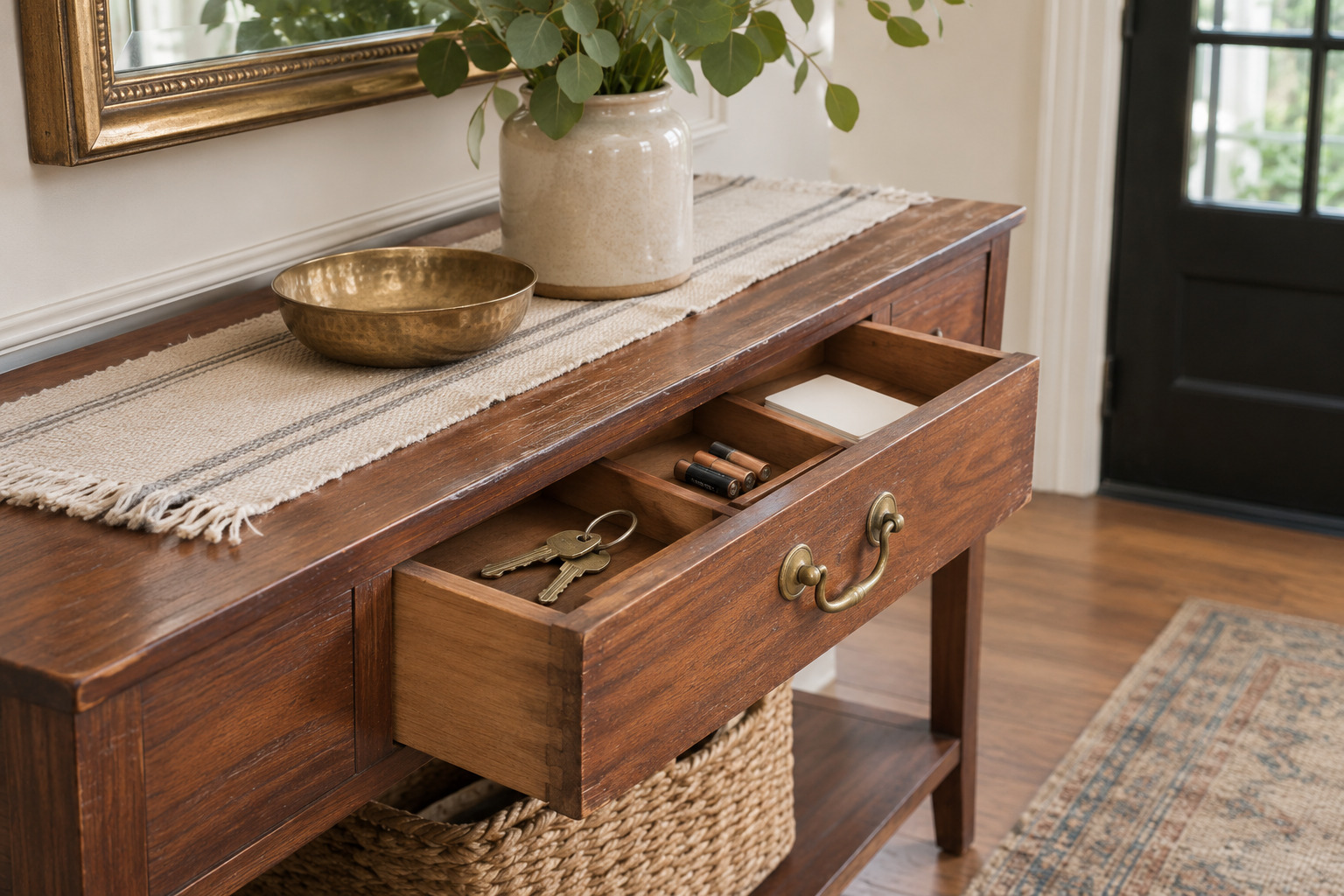
Look for a smooth drawer that stops before it leaves the runners. Reserve it for keys, a transit card, and the spare batteries you use by the door. A short divided tray makes it easier to clear the surface before guests come over. Check the drawer’s inside depth including any hardware that intrudes into it.
A sunny entry can make the top look lighter over time. When the drawer is closed, let the tabletop show a little wear around the edges, where the original finish is part of the piece’s history.
4. Set a Sewing Table Against a Plain Wall
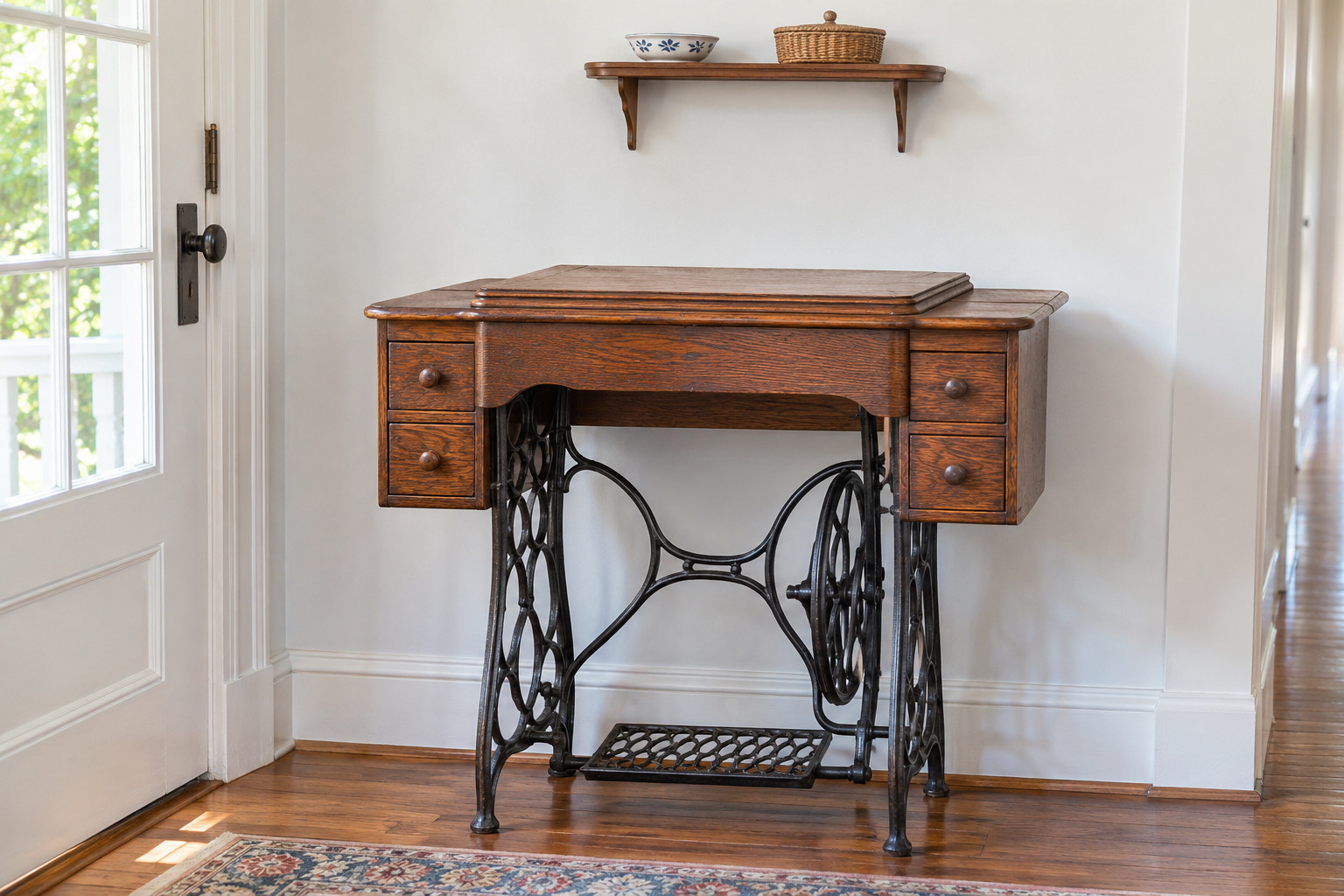
A retired sewing cabinet has a recognizable outline even with the machine closed. Use it as a slim landing spot and set it against a quiet wall so the base, foot pedal, or folded top can show. Check that the closed surface is secure and level, and ask about any moving components when you buy.
A compact catchall and one modest print are enough. If the base projects, keep it visible instead of trying to fit a shoe basket into the space around it.
5. Repurpose a Writing Desk With Room for a Bag
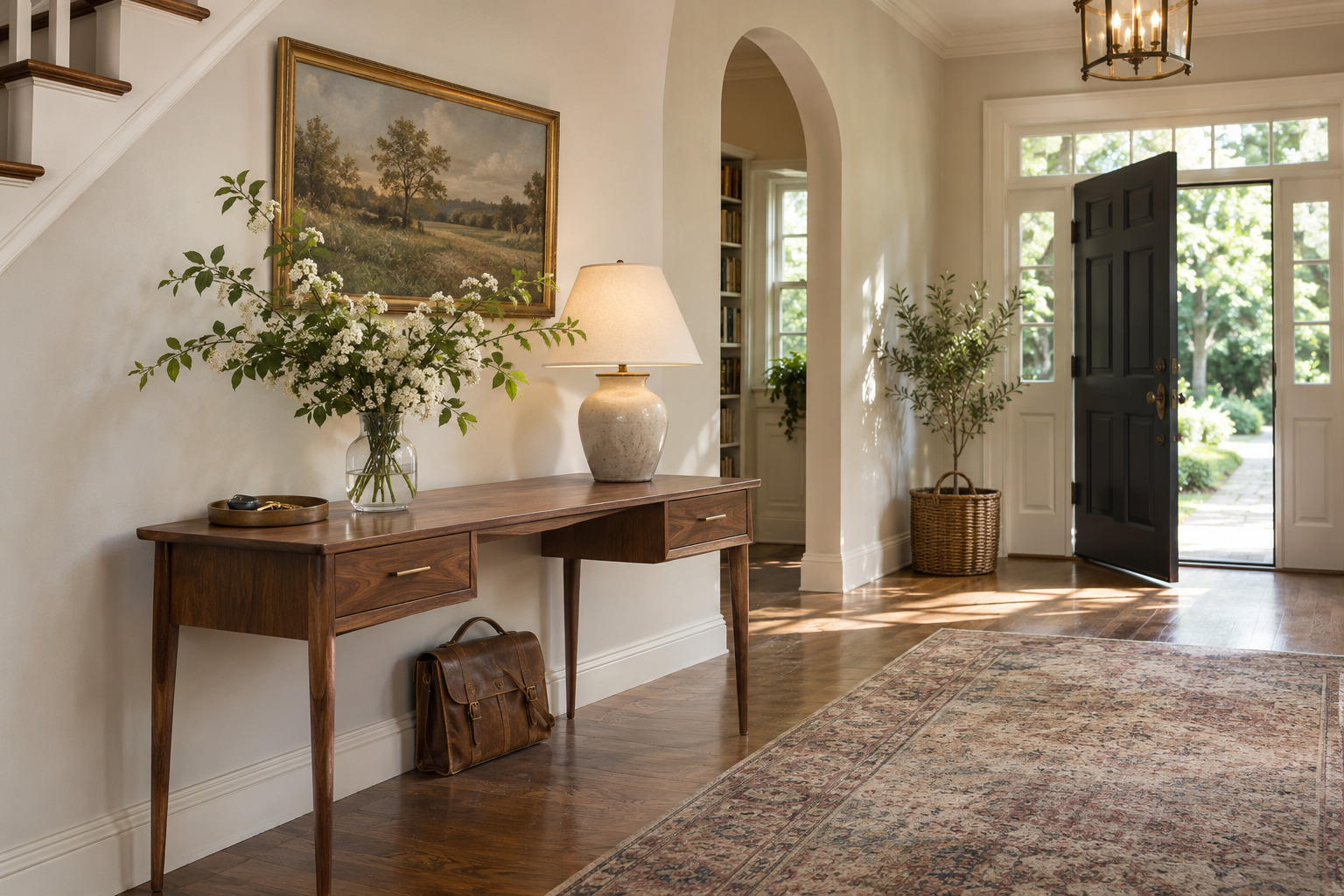
Look for a small writing desk with enough space beneath the apron to slide a satchel out of the traffic route. Put a tray near one side of the top for mail and leave the rest open for a coat or package. A compact desk can work along a broad entry wall where a long, thin conventional console would feel lost.
Check the front edge and drawer pull with the front door in motion. An old desk usually has a deeper worktop than a dedicated entry table, so give the depth a real test before buying.
6. Use a Drop-Leaf Table With Its Leaves Down
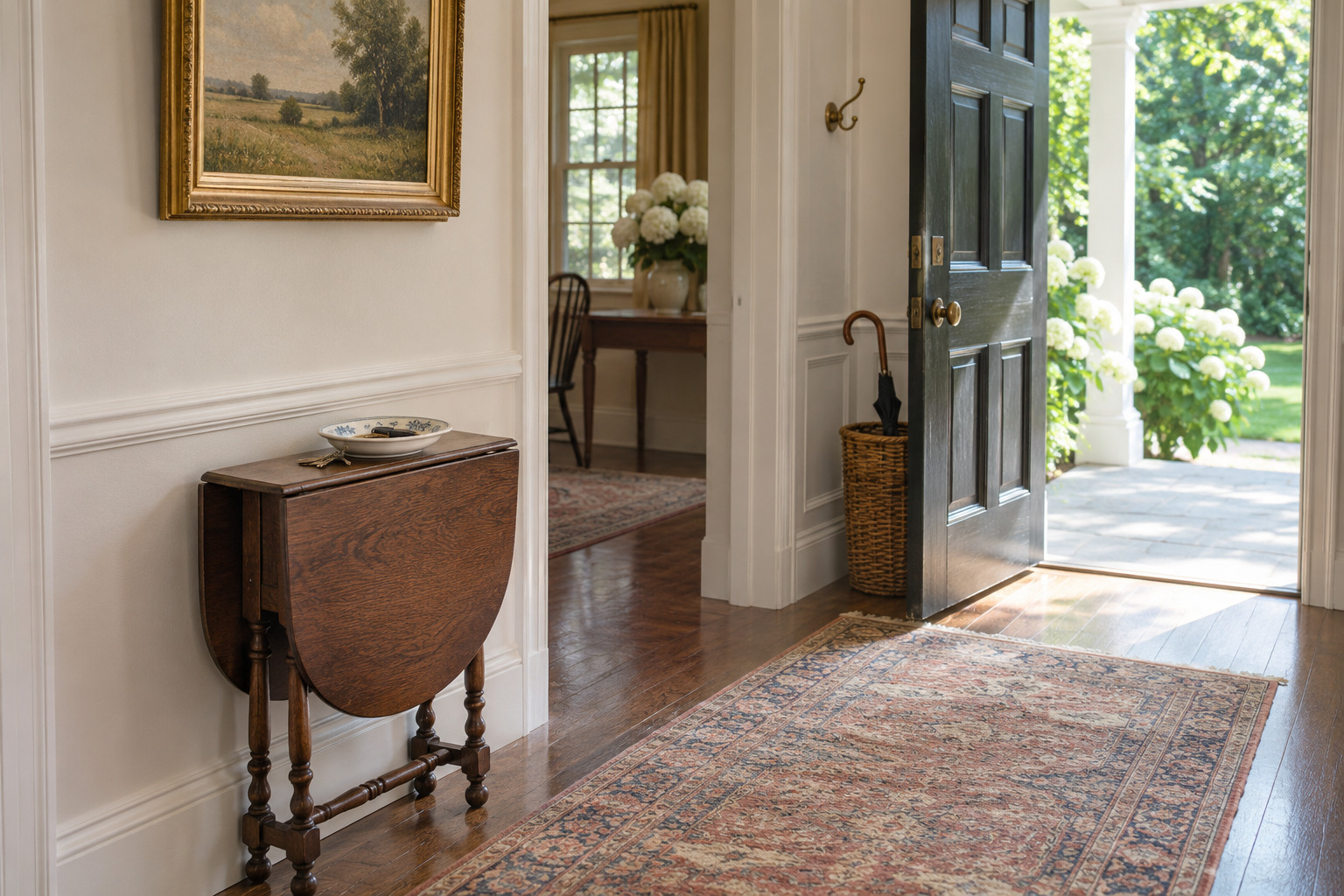
An old drop-leaf side table gives you a narrow daily landing spot when the leaves are down. With the table in place, test that each leaf clears the baseboard and adjacent furniture. Check that the hinges and support move as intended before paying for it. Choose which side opens into the wider part of the room.
If you have a gathering, open a leaf for a tray of things guests are taking home and fold it back after the entry clears. Keep the table in its narrow configuration whenever the wider footprint would interfere with the exit path.
7. Change the Pulls Using the Holes You Have
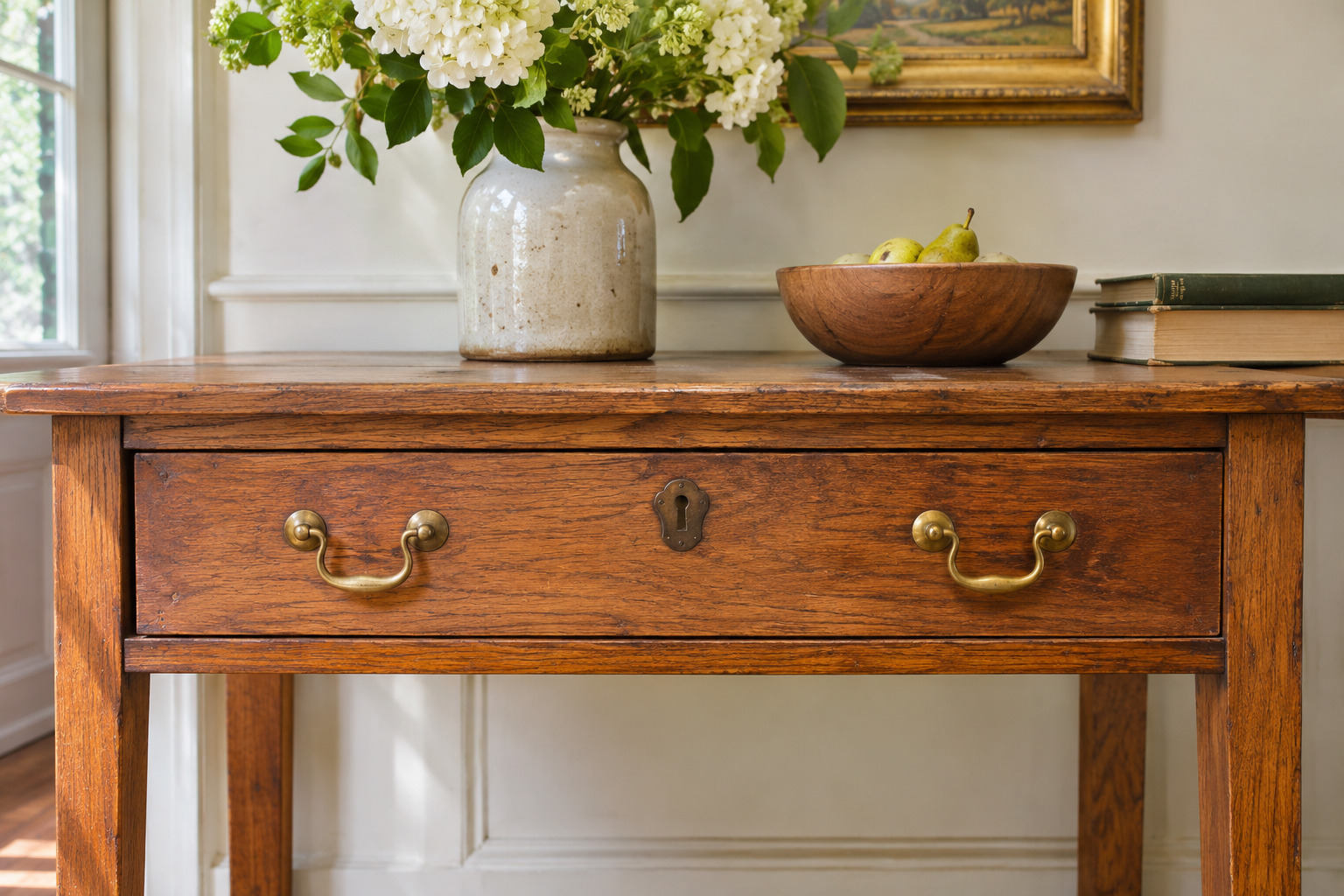
Take off one removable pull and measure between the centers of the holes. Compare that spacing with a replacement before buying it. Check whether the original hardware is worth keeping with the piece. A simple brass pull can make a dark drawer easier to spot, and the old pull can go in its own small envelope.
Check screw length against the drawer front and the new pull’s instructions before installation. Use a pull you can grip with the drawer at the height you actually use it.
8. Give a Two-Tone Top Room to Show
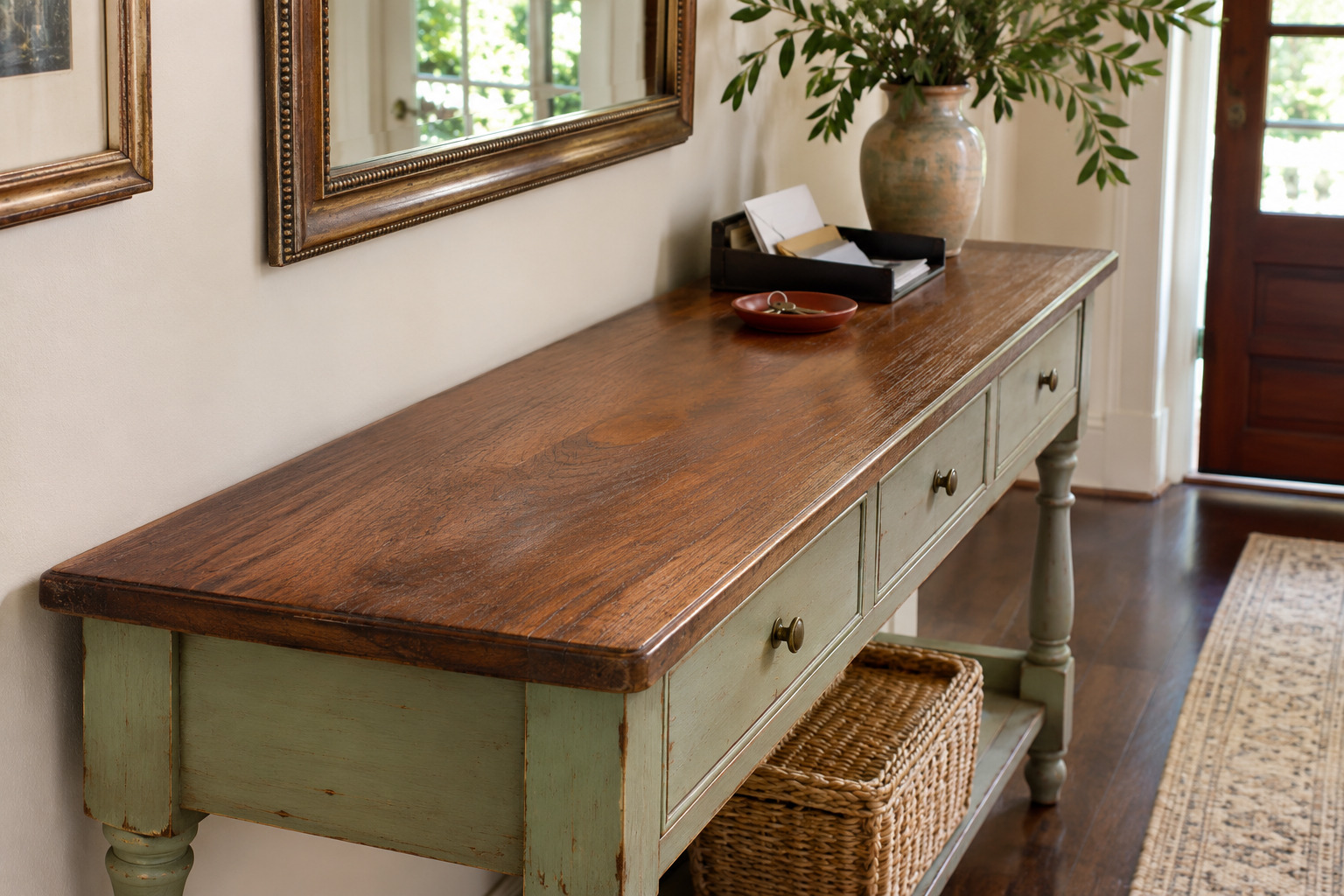
A dark stained top on a pale painted base can carry an entry on its own. Put a pair of small useful objects at one side and leave the center bare enough to see the grain. If the tabletop has irregular color, repeat only one of those tones in the frame or tray nearby.
Look at the finish from the side in daylight. Find out what the surface is finished with before adding cleaner or finish. A snug felt pad under the tray can help protect it from being slid across the surface.
9. Position a Lamp Where the Grain Catches the Light
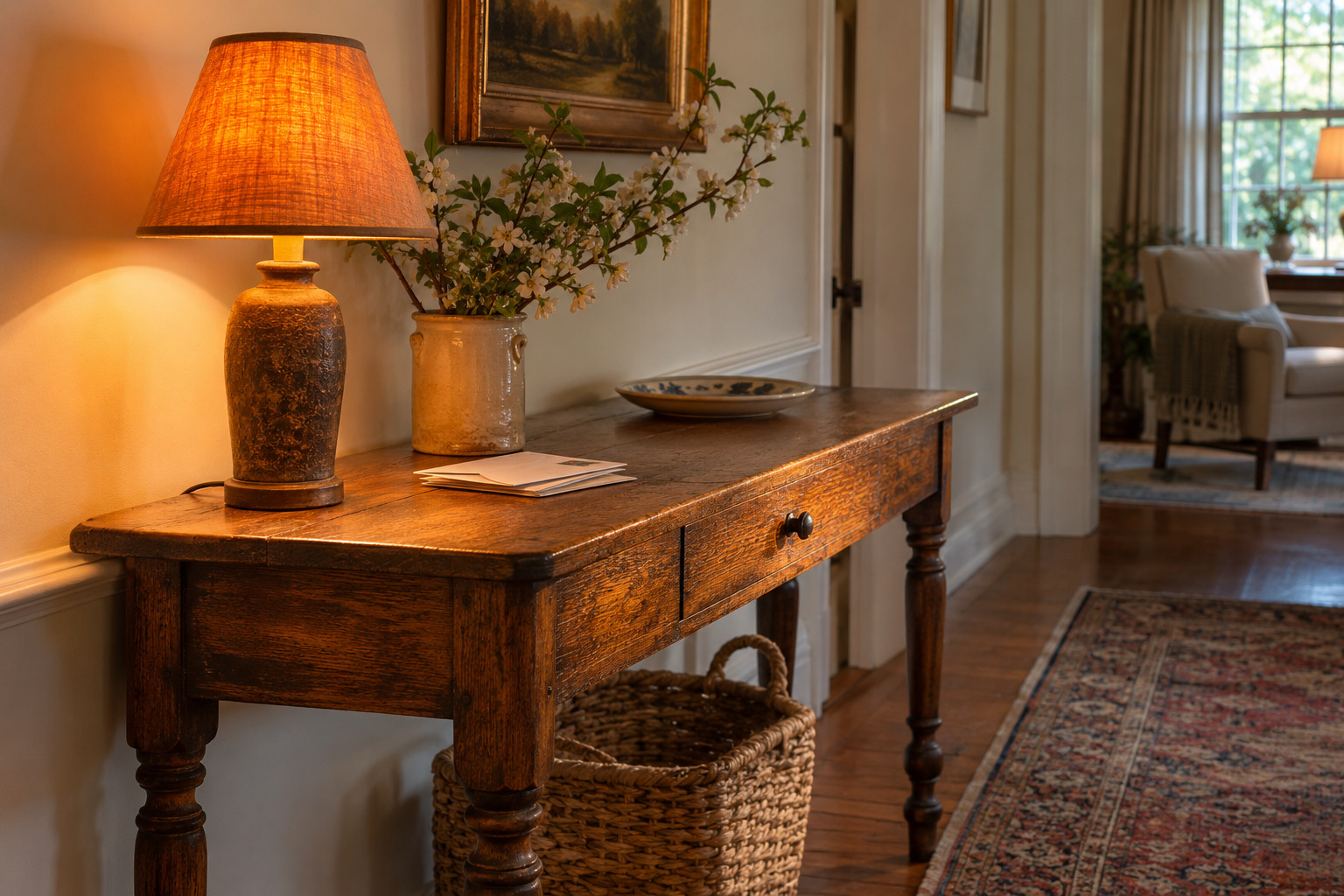
Place a shaded lamp near one end so light grazes the front edge instead of washing out the whole top. An old oak table with open pores can look warmer in angled light. Pick a base whose entire footprint fits and route its cord along the wall away from the route. Turn the lamp on after dark and check the view from the doorway.
For a table beside glass, sit the shade clear of the treatment and any clearance required by the fixture maker. Night light can be gentle and still show exactly where the keys are.
10. Fit the Vase Between the Back Corners
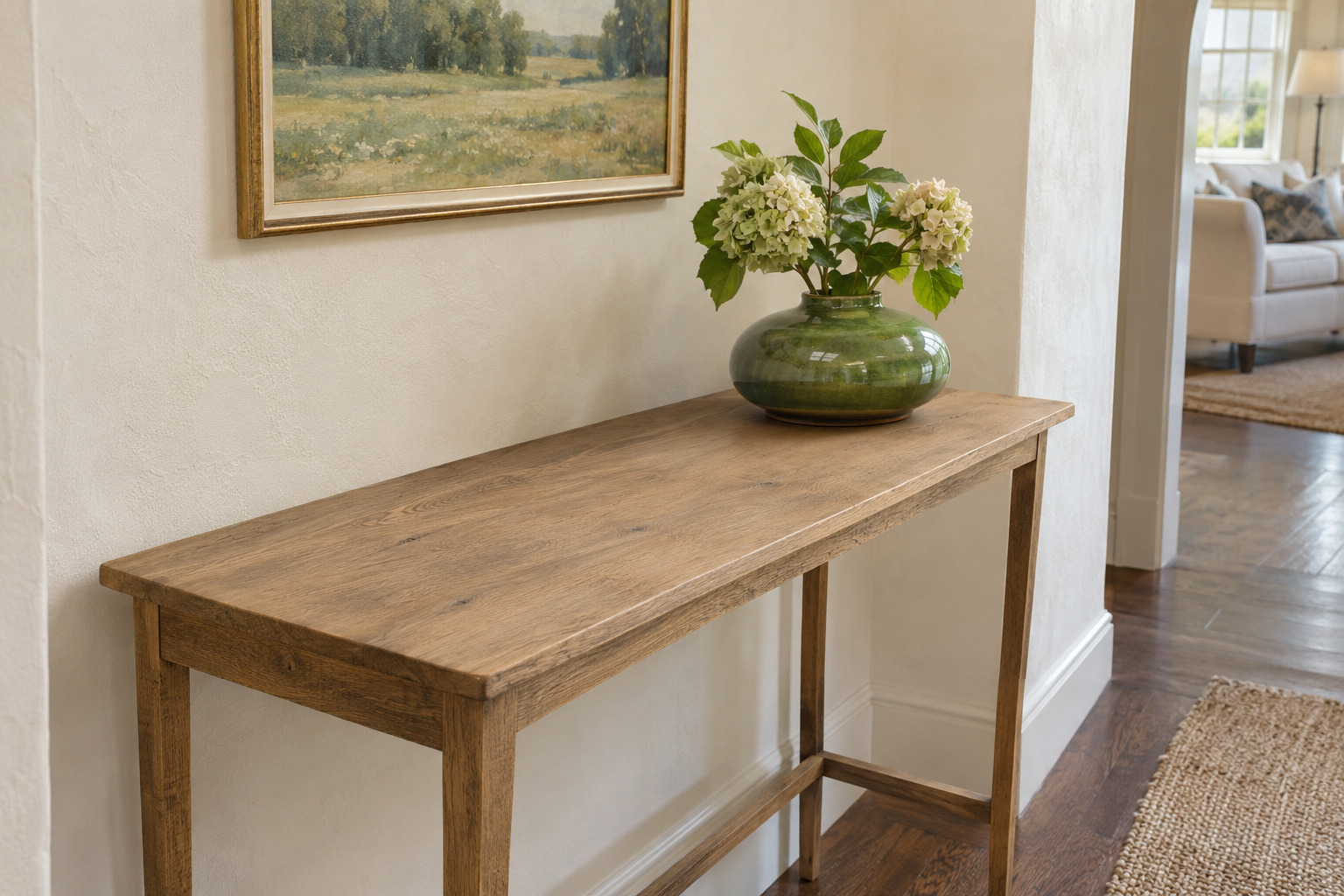
Choose a low vase with a wide base and set it within the back corners of a rectangular top. A few short stems leave the view to the adjoining room open and are easier to keep away from passing coats. Try the arrangement on a washable mat before putting it on an old veneer.
Leave enough open surface to lower a bag without moving the vase. A wider table can take a second, small vessel later if the first arrangement still feels unfussy.
11. Set a Dark Table Against a Warm Wall
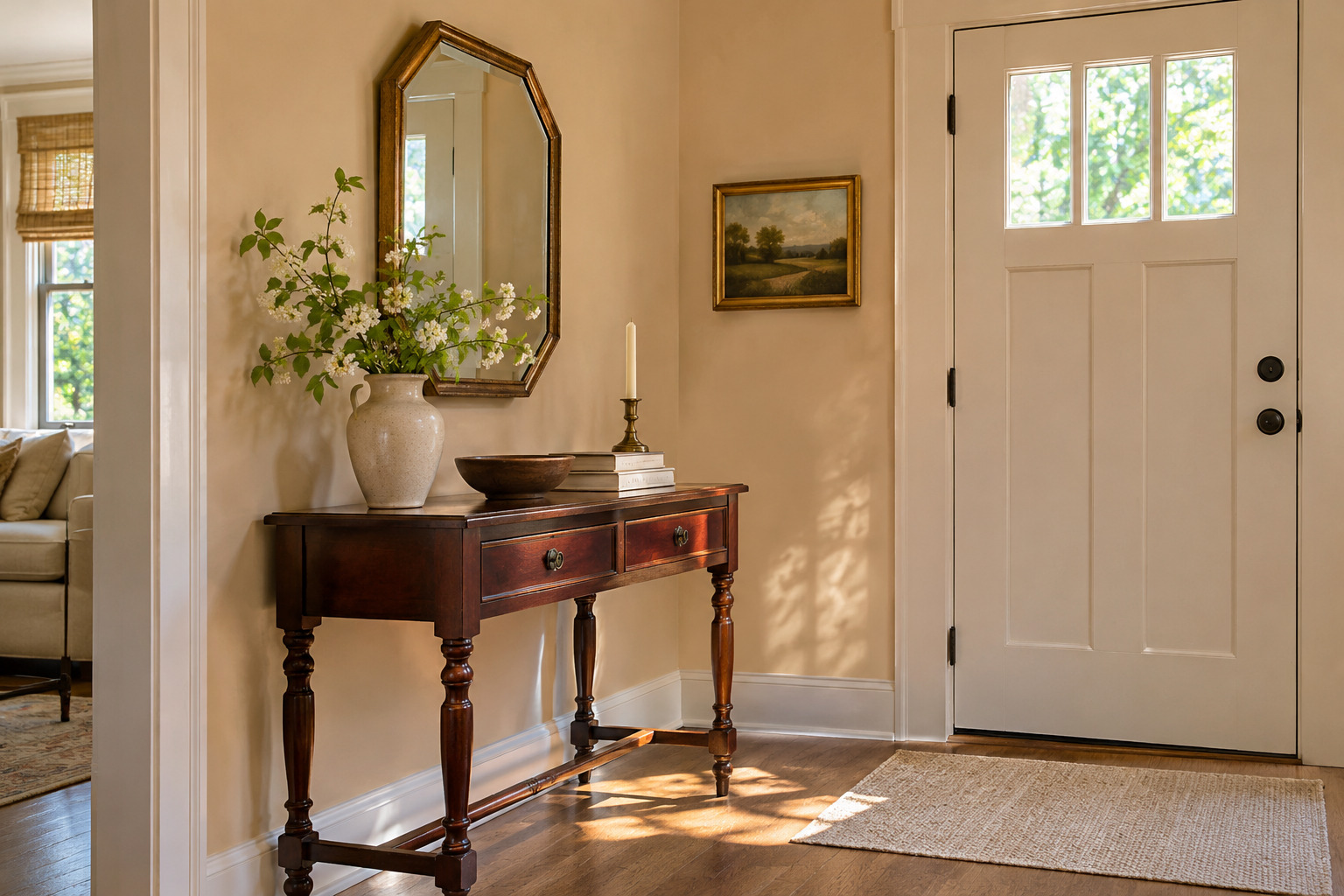
Sample the wall beside the furniture at the time of day you use the entry. Muted biscuit, mushroom, and pale clay each bring out different undertones in dark wood. Paint a test board or hold a large sample beside the legs rather than judging a chip in the store.
If the table has a warm red cast you want to tone down, compare it with a quieter neutral before committing. Repeat the tone in one functional item, such as a mat by the door.
12. Store Small Everyday Items in Two Low Baskets
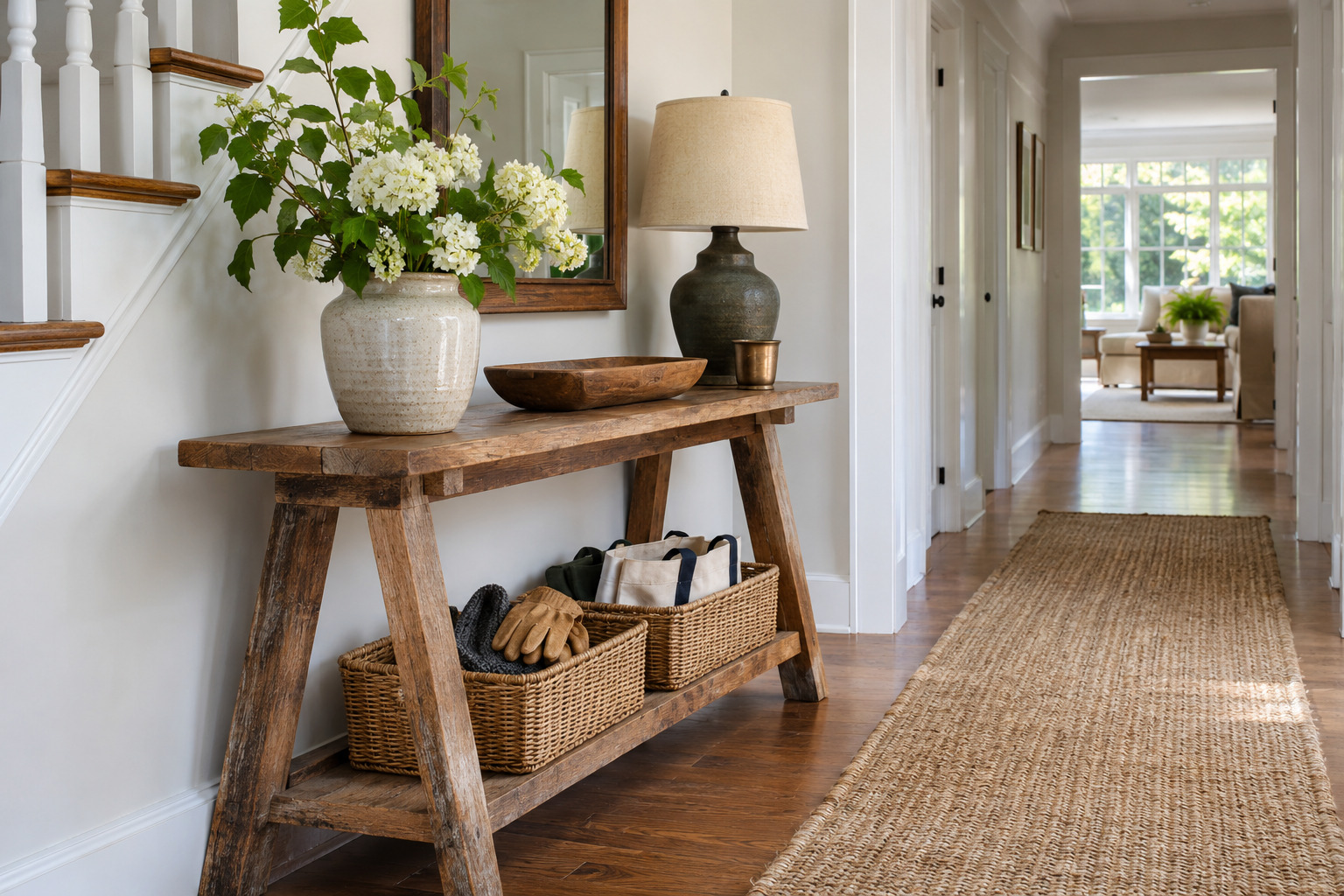
When there is enough room below the apron, a pair of low matching baskets can hold items that otherwise pile up on the table. Put gloves in one and spare bags in the other. Check the inside width between the legs and handle clearance before buying. The baskets should pull out without rubbing a stretcher or projecting into the path.
Choose handles you can reach from above. A lightly woven basket with an open top works when you sort its contents often. For a smaller room, the Japandi entryway ideas explain how a limited drop zone can feel calmer.
13. Use an Existing Shelf Between Thick Legs
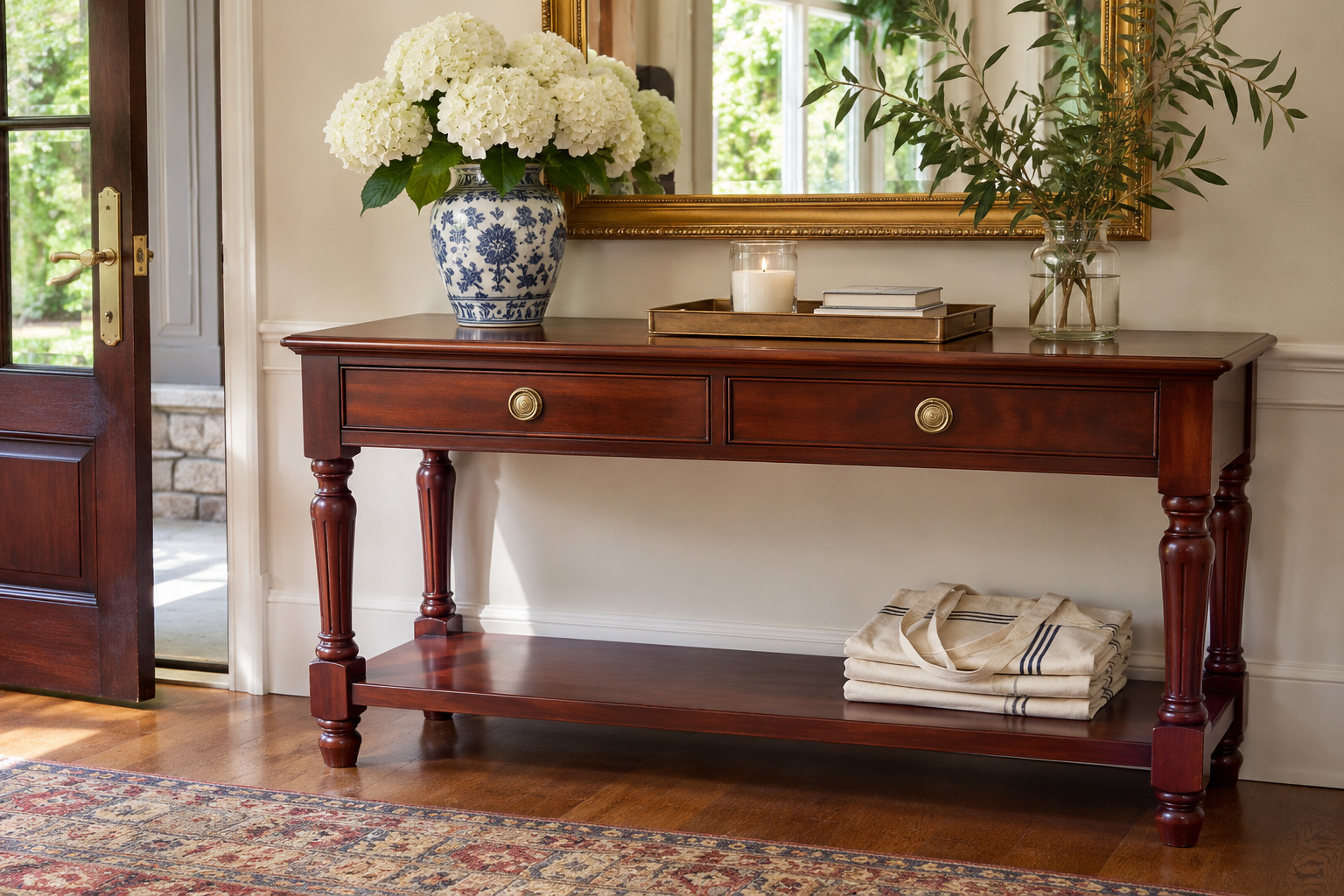
Some old hall tables have a low shelf or a structural stretcher. A real shelf can carry a short stack of folded totes if it is sound and intended for storage. A narrow structural rail should stay visible. Look underneath and check for repairs, warping, or a missing support before placing anything on the lower surface.
Repeat the low shelf’s shape with a shallow tray on the top. The grouping will look settled even when the shelf is nearly empty.
14. Compare Two Shades Before You Settle on the Lamp
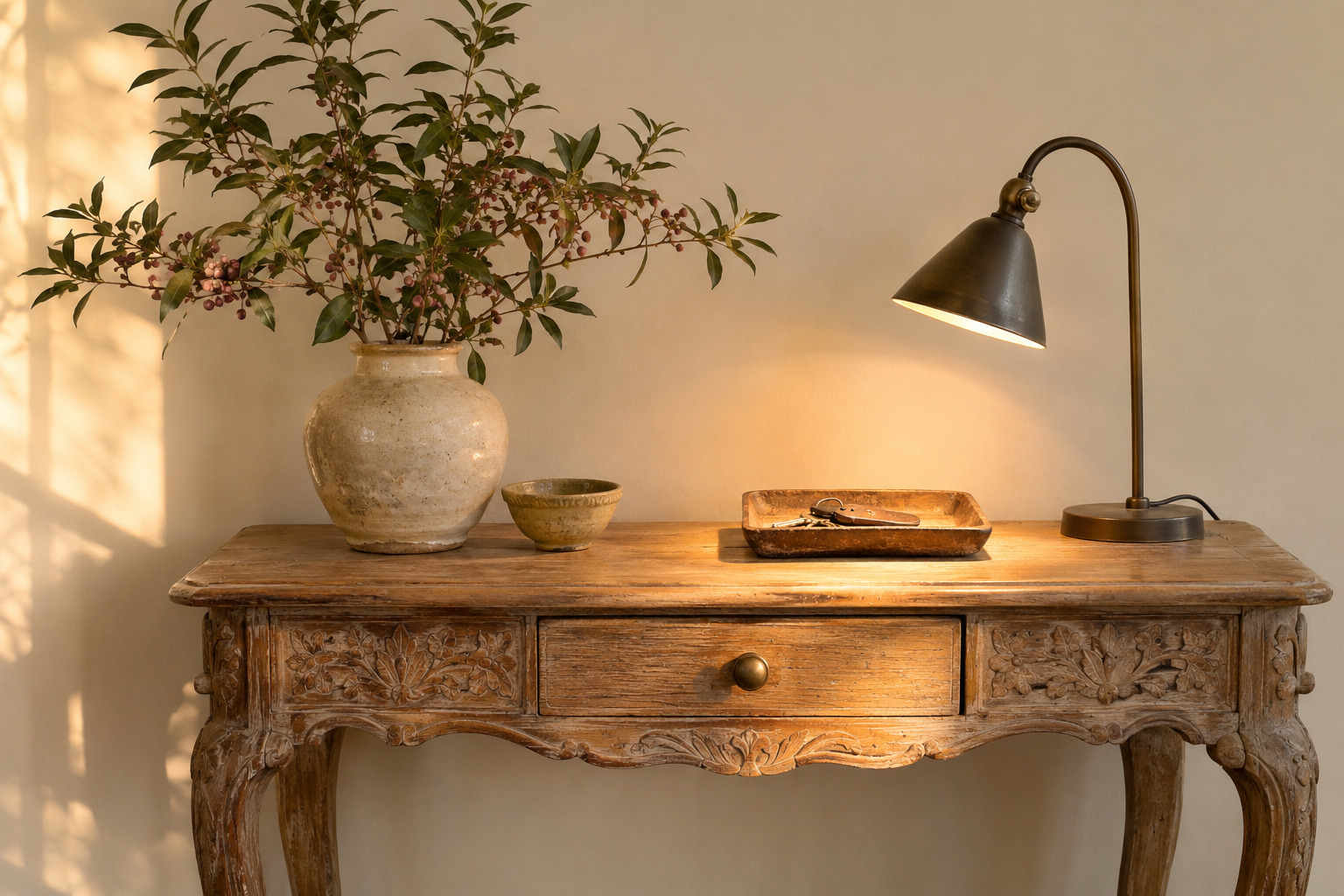
A paper shade makes a soft pool of light against a busy wall. A small metal shade gives more direction where you want to see the drawer handle or drop spot. Bring a paper outline of the base diameter to the store and check where the light would sit in relation to your eyes when you enter.
With curved or heavily turned legs, choose one shade profile that lets the rest of the piece show. Use the lighting requirements for the actual lamp and check that the cord reaches a suitable outlet without crossing the path.
Give the table a simple first week with a catchall and one place for mail. Once you see where objects land and which drawer you open every day, decide whether it needs anything else. The best secondhand find is one you want to keep using.
Discover more from HomeTrendora
Subscribe to get the latest posts sent to your email.