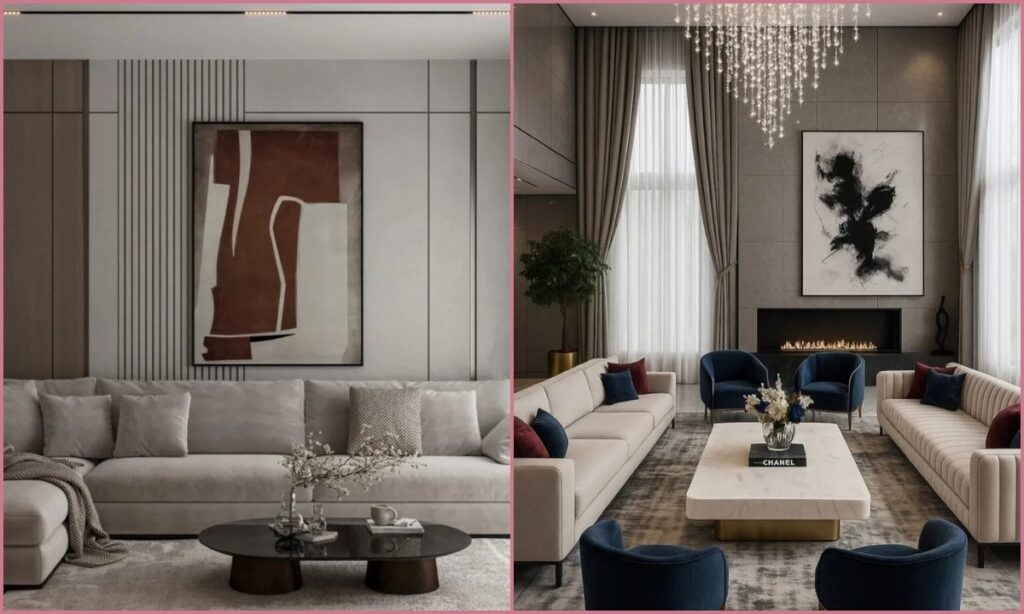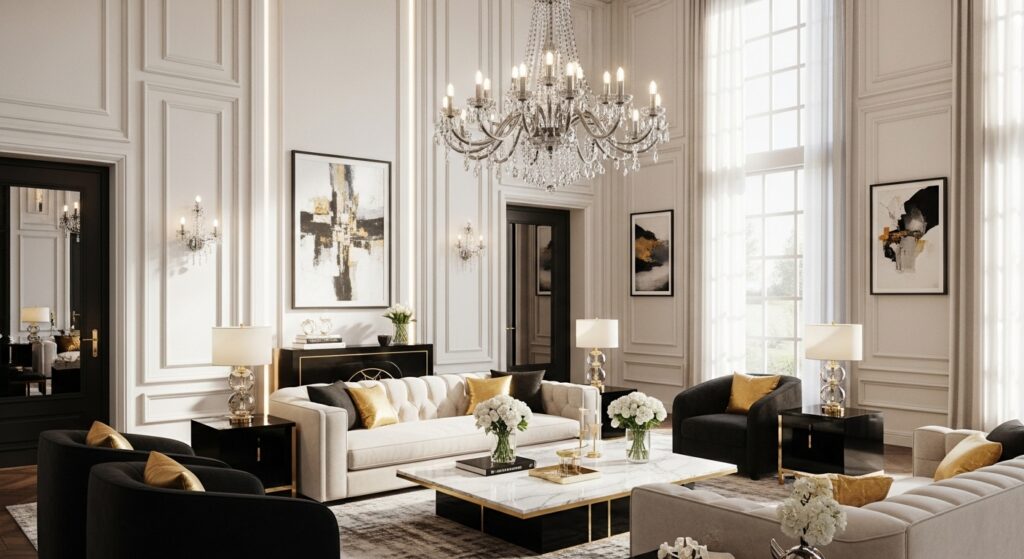
Maximizing space in a compact home can be a challenge, but the right small living room layout can transform a cramped area into a comfortable and functional retreat. The key is to think strategically about furniture placement, scale, and flow. By embracing clever design solutions, you can create an inviting atmosphere that feels surprisingly spacious. From multi-functional furniture to smart seating arrangements, these ideas focus on making every square foot count. Explore these layouts to find the perfect configuration that suits your lifestyle and enhances your home’s character, proving that style and function can thrive even in limited square footage.
1. Small Living Room Layout with a Floating Media Console

A floating media console is a game-changer for a small living room layout. By mounting your entertainment unit to the wall, you free up valuable floor space, which creates an illusion of a larger area. This approach provides storage for electronics and media without the bulk of traditional TV stands. The open space underneath can be used for decorative baskets or left empty to enhance the airy feel. This layout works exceptionally well in narrow rooms, as it draws the eye upward and prevents the main walkway from feeling cluttered. Pair it with a slim sofa and a compact coffee table to complete the streamlined look.
2. The Back-to-Back Sofa Small Living Room Layout

For an open-concept space that merges the living and dining areas, a back-to-back sofa layout offers a brilliant solution. This arrangement uses the back of the sofa to create a clear, visual divider between the two zones without erecting a physical wall. One sofa faces the living room’s focal point, like a TV or fireplace, while another piece of furniture, such as a bench or a second small sofa, faces the dining area. This defines each space’s function while maintaining an open, connected feel. It’s an intelligent way to maximize seating and delineate zones in a multi-purpose small living room.
3. Small Living Room Layout with Two Loveseats

Instead of a single bulky sofa, consider a small living room layout featuring two matching loveseats. Placing them opposite each other creates a conversational and intimate setting. This symmetrical arrangement fosters interaction and provides as much seating as a standard three-seater sofa but with greater flexibility. A coffee table or a pair of ottomans can be placed in the middle to anchor the space. This layout is particularly effective in square-shaped rooms, promoting a sense of balance and order. It allows for clear traffic paths on either side, preventing the room from feeling blocked off or congested.
4. The Corner Sectional Small Living Room Layout

A corner sectional sofa can be a surprisingly effective choice for a small living room layout. Tucking it neatly into a corner utilizes an often-underused area of the room, maximizing seating without dominating the entire space. This L-shaped configuration provides ample room for lounging and entertaining guests. To avoid overwhelming the room, choose a sectional with clean lines and raised legs, which creates a sense of openness underneath. This layout frees up the center of the room, making it feel more spacious and allowing for easier movement. It’s a comfortable and practical solution for making the most of your square footage.
5. Small Living Room Layout Focused on a Fireplace

When your small living room has a fireplace, make it the undeniable star of the layout. Arrange your furniture to face this natural focal point, creating a cozy and inviting atmosphere. A loveseat or a small sofa can be placed directly opposite the fireplace, with two comfortable armchairs flanking it on either side. This setup encourages conversation and relaxation. A small coffee table or a plush ottoman in the center completes the arrangement. This layout not only enhances the room’s architectural feature but also establishes a warm, welcoming hub for family and friends to gather around, especially during colder months.
6. Symmetrical Small Living Room Layout

Achieving a symmetrical small living room layout can bring a sense of calm and order to the space. This classic design principle involves creating a mirror image on either side of a central axis, which could be a fireplace, a large window, or a piece of art. Place two identical sofas or a sofa and two matching armchairs opposite each other. A central coffee table anchors the arrangement. Use matching end tables and lamps to complete the balanced look. This layout works wonderfully in formal living areas or rooms where a serene and organized aesthetic is desired, making the space feel purposeful and elegantly composed.
7. Asymmetrical Small Living Room Layout for Dynamic Flow

An asymmetrical small living room layout offers a more relaxed and dynamic alternative to rigid symmetry. This approach involves balancing visual weight without using identical pairs. For instance, you could balance a larger sofa on one side of the room with two smaller armchairs and a floor lamp on the opposite side. This creates interest and guides the eye through the space in a more fluid manner. Asymmetry is perfect for rooms with irregular shapes or for those who prefer a less formal, more eclectic vibe. It allows for greater flexibility in furniture choice and placement, resulting in a unique and visually engaging environment.
8. Small Living Room Layout with a Large Area Rug

Using a large area rug is a powerful tool in a small living room layout. A generously sized rug can trick the eye into perceiving the room as bigger than it is. The key is to have a rug large enough so that at least the front legs of all your main furniture pieces can rest on it. This visually connects the furniture, creating a unified and cohesive seating area. A common mistake is using a rug that is too small, which can make the room feel disjointed and even smaller. Choose a light-colored or subtly patterned rug to further enhance the sense of space.
9. Layout with Transparent Furniture for Small Living Rooms

To create an airy and uncluttered feel, incorporate transparent furniture into your small living room layout. Pieces made of acrylic or glass, such as a coffee table, console table, or side tables, have very little visual weight. They perform their function without blocking views or light, making the space feel more open and expansive. A clear coffee table, for example, allows you to see the floor underneath, which enhances the perception of space. This “barely there” furniture is a modern and chic solution for maximizing style in a compact room without adding visual bulk, keeping the layout feeling light and breezy.
10. Small Living Room Layout with Wall-Mounted Shelving

When floor space is at a premium, a small living room layout that utilizes vertical space is essential. Wall-mounted shelving, also known as floating shelves, offers a sleek and practical solution for storage and display. By lifting storage off the floor, you create a more open and airy environment. Use these shelves to hold books, decorative objects, or even small plants. Installing them above a sofa or a media console draws the eye upward, adding a sense of height to the room. This approach keeps your essentials organized and accessible without sacrificing precious square footage, making it ideal for compact living.
11. The Diagonal Small Living Room Layout

For a creative twist, try a diagonal small living room layout. Instead of placing furniture parallel to the walls, angle your main seating piece, like the sofa, towards a corner. This unconventional arrangement can surprisingly make a small, boxy room feel larger and more dynamic. It creates interesting triangular spaces in the corners that can be used for floor lamps, plants, or a small side table. The diagonal lines draw the eye across the longest dimension of the room, enhancing the sense of space. This layout encourages a unique flow of traffic and adds a touch of unexpected flair to your decor.
12. Small Living Room Layout with a Round Coffee Table

In a tight space, a small living room layout benefits greatly from a round coffee table. Unlike square or rectangular tables, a round table has no sharp corners, making it easier to navigate around. This improves traffic flow and reduces the risk of bumped shins, which is a practical advantage in compact areas. The curved shape also softens the look of the room, breaking up the straight lines of sofas and walls. A round coffee table provides ample surface area for drinks and decor while occupying less visual space, contributing to a more open and welcoming atmosphere.
13. Minimalist Small Living Room Layout

A minimalist small living room layout is centered on the principle of “less is more.” This approach involves using only essential furniture pieces and keeping decor to a minimum. Choose furniture with clean lines, a neutral color palette, and a focus on functionality. A simple sofa, a single accent chair, and a sleek coffee table might be all you need. By eliminating clutter, you create a serene and spacious environment. This layout emphasizes negative space, which is the empty area around objects, making the room feel open and breathable. It’s a perfect strategy for creating a calm, uncluttered retreat.
14. Small Living Room Layout with Nesting Tables

Nesting tables are a highly versatile option for a small living room layout. This set of two or three tables of varying sizes can be stacked together to save space when not in use. When you have guests, you can pull them apart to provide extra surface area for drinks and snacks. They can function as a layered coffee table or be used individually as side tables wherever they are needed. This flexibility makes them an incredibly practical choice for compact spaces where every piece of furniture needs to be adaptable. They offer the functionality of multiple tables without the permanent footprint.
15. The “Floating” Furniture Small Living Room Layout

Creating a “floating” furniture layout can make a small living room feel significantly larger. Instead of pushing all your furniture up against the walls, pull the sofa and chairs away from the perimeter of the room. Leaving even a few inches of space between the furniture and the walls creates an illusion of depth and airiness. This arrangement defines a central conversation area and allows for circulation around it. While it may seem counterintuitive to use the center of the room, this technique prevents the space from feeling cramped and static, promoting a more open and dynamic atmosphere that breathes.
16. Small Living Room Layout with a Window Seat

A small living room layout that incorporates a window seat is both charming and space-efficient. A window seat transforms an often-overlooked area into a functional and cozy nook. It provides extra seating without taking up valuable floor space that a traditional chair or sofa would occupy. Many window seats can also be designed with built-in storage drawers or a lift-up top, offering a clever place to hide away blankets, pillows, or books. This multi-functional feature adds architectural interest and creates a perfect spot for reading or enjoying the view, making the room feel more customized and inviting.
17. The Armless Chair Small Living Room Layout

When every inch counts, an armless chair small living room layout is a smart choice. Armless chairs and sofas have a smaller physical and visual footprint compared to their traditional counterparts. By removing the bulky arms, you get a more streamlined silhouette that takes up less space. This makes it easier to fit seating into tight corners or narrow rooms. You can place two armless chairs opposite a loveseat to create a balanced conversation area that doesn’t feel crowded. Their open design contributes to a more airy and less constricted feel, maximizing seating potential in a compact living area.
18. Small Living Room Layout with a Slim Console Table Behind the Sofa

A clever strategy for a small living room layout is to place a slim console table directly behind the sofa. This is especially effective if your sofa is “floating” in the middle of the room. The console table adds a functional surface for lamps, books, or decorative items without taking up much floor space. It also helps to visually anchor the sofa and define the living area, particularly in an open-concept home. This setup creates a subtle separation of space and provides an extra layer of utility, offering a spot for lighting or storage that keeps side tables from cluttering the main seating zone.
19. Open-Concept Small Living Room and Dining Layout

In an open-concept home, a cohesive layout for the small living room and dining area is crucial. Use furniture to define the different zones without closing them off. A low-profile sectional can create a soft boundary for the living space. Position the dining table adjacent to the seating area, ensuring there’s a clear path for walking between the two. Using a consistent color palette or a large area rug that partially extends into the dining space can help unify the entire area. This approach maintains the airy, open feel while ensuring each zone has a distinct purpose, creating a harmonious and functional living environment.
20. Small Living Room Layout with a Daybed

A daybed is an incredibly versatile piece for a small living room layout, serving as both a sofa and a potential guest bed. Its streamlined, backless design often makes it appear less bulky than a traditional sofa, which helps to keep the space feeling open. By day, it’s a stylish spot for sitting and lounging, adorned with pillows and throws. By night, it can easily transform into a comfortable sleeping spot for visitors. This two-in-one functionality is perfect for studio apartments or homes without a dedicated guest room, ensuring your living room is always ready for both relaxation and hospitality.
Conclusion:
Ultimately, the best small living room layout is one that blends cleverness with your personal needs. By using strategies like floating furniture, multifunctional pieces, and vertical storage, you can overcome spatial limitations. A well-planned layout not only maximizes floor space but also creates a room that feels open, organized, and truly livable. The key is to prioritize flow, scale, and function. These ideas prove that with thoughtful arrangement and the right furniture, even the most compact living room can become a stylish and comfortable heart of the home, perfectly suited for both daily life and entertaining.