White glass can disappear into a Christmas display when the branches, ribbon, and ornaments hide its shape. These 12 milk glass Christmas decor ideas help you choose a setting that shows the vessel first, whether you own one bud vase or a cabinet of collected pieces.
This collection focuses on opaque white glass, including smooth, ribbed, and hobnail forms. Use sound pieces and follow the care appropriate to their age and decoration; a vintage vessel is not automatically suitable for food, dishwasher cleaning, or a lit candle. The arrangements below use decorative contents and flameless light, with room left to pick each piece up by its body and base.
1. Fit Flameless Tapers to Milk Glass Candleholders
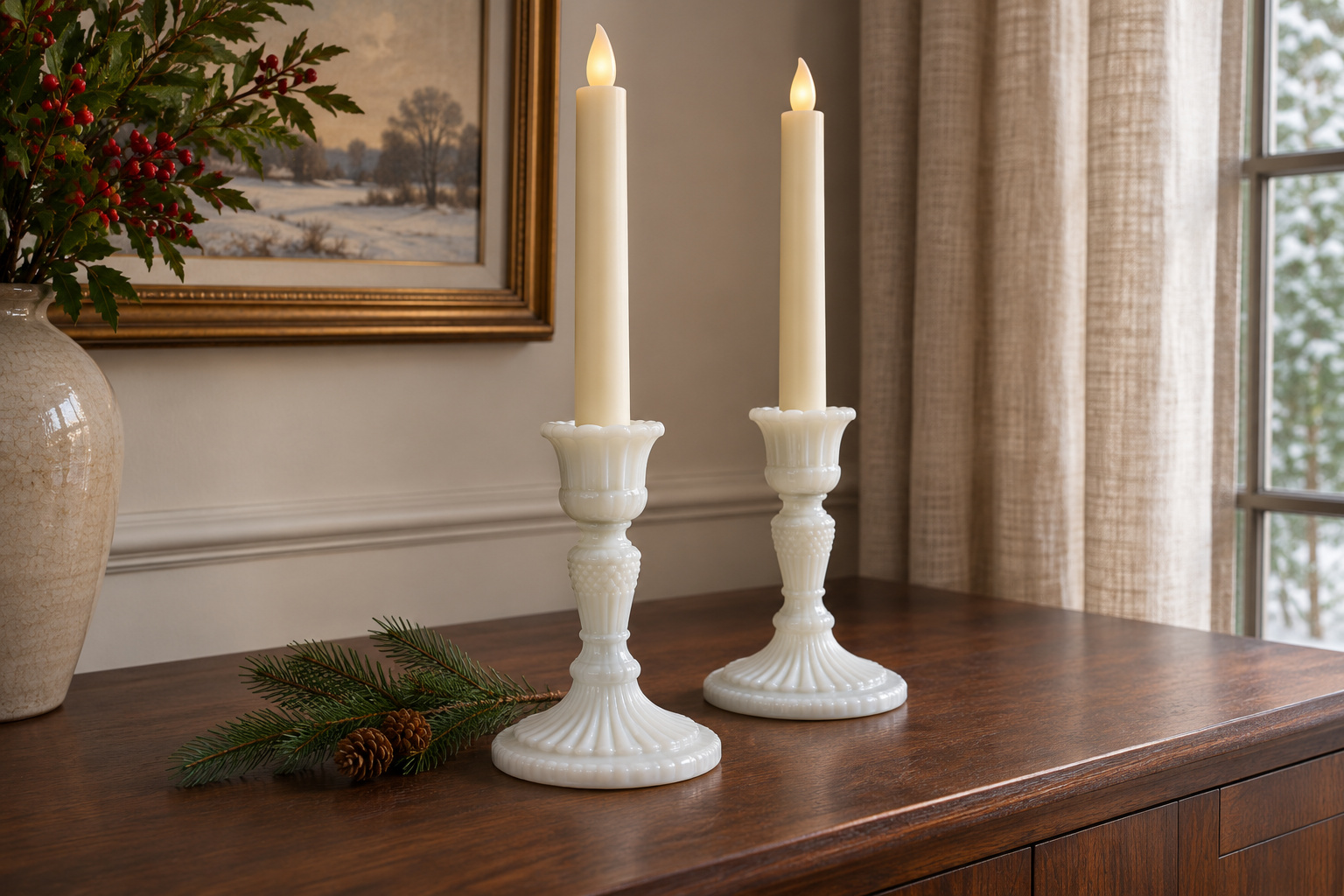
A pair of white pressed-glass candleholders needs very little around it. Put each on a level surface with a plain ivory flameless taper, then add a short evergreen accent beside the bases rather than wrapping the stems. The uninterrupted white outline is the point: the foot, stem, and candle cup should remain visible.
Match the taper’s actual base diameter and weight to the holder. It should sit upright without being forced into the glass, and the battery compartment should remain accessible. Follow the light’s instructions instead of trimming, heating, or modifying its base to make it fit.
Try the pair at opposite ends of a low sideboard group, leaving the middle available for a shallow bowl or one small framed picture. Switch the lights on at normal evening brightness before adding another decoration. If the white glass already reads clearly, stop there.
2. Let One Branch Reveal the Shape of a Bud Vase
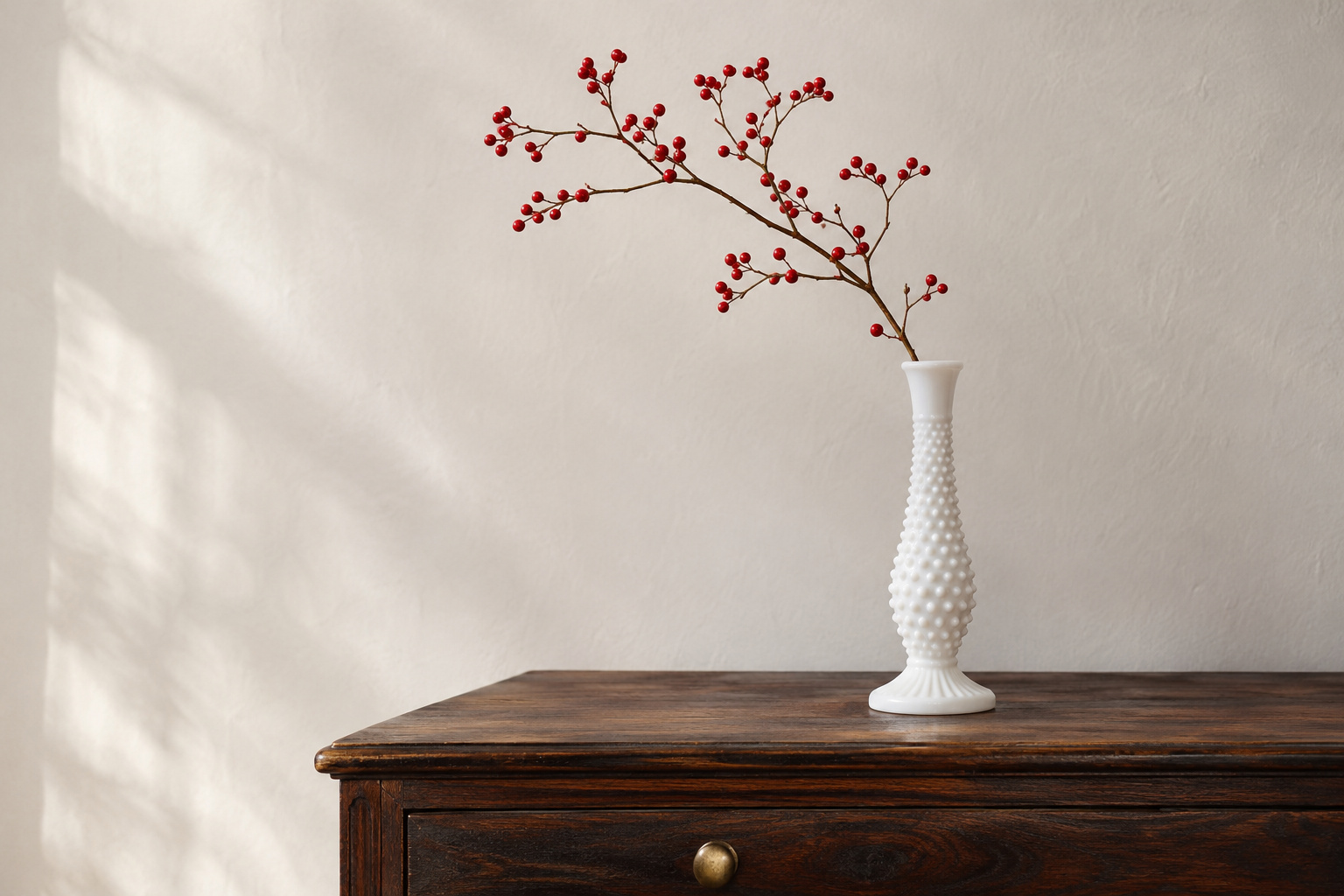
A narrow bud vase looks quite different with one airy branch instead of a packed bouquet. Choose a small faux berry or conifer stem whose outline opens above the rim. Turn it until the branch leans into the empty space beside the vase, with the lower glass left uncovered.
The height of the branch needs to suit the vase’s base, not just the room above it. A broad heavy spray can make a small vessel unstable. Start with a restrained stem, shorten it as its construction allows, and keep the whole arrangement comfortably within its display surface.
On a dark wood chest, red berries give the white a crisp holiday companion. On a pale table, a deeper green stem may be the clearer choice. Let the background determine which version you use instead of putting both colors into every vessel.
3. Compose Three Different Glass Profiles as One Group
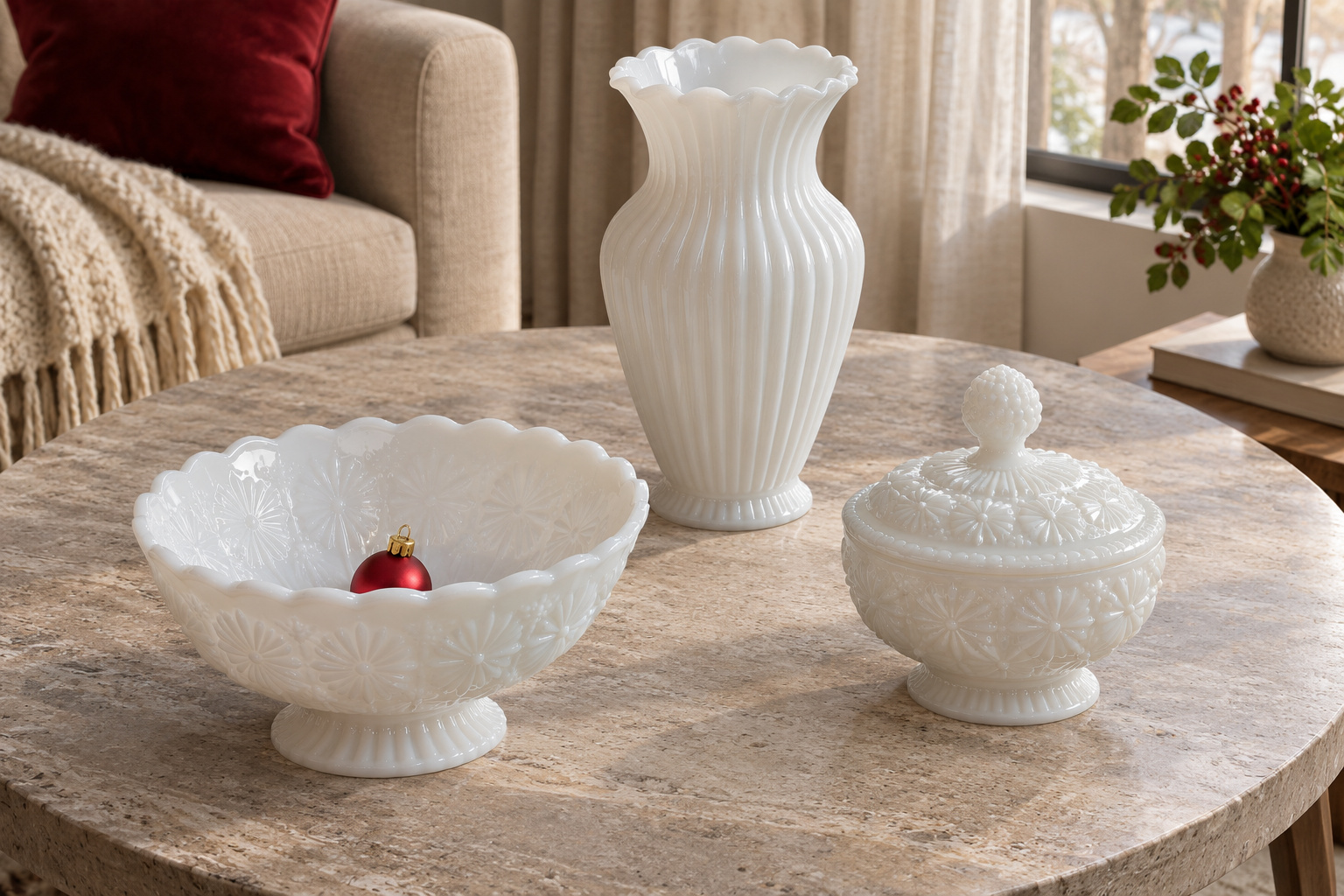
Bring together a tall vase, a lower rounded bowl, and a compact lidded piece. Arrange their bases in a loose triangle, with a visible gap between neighboring rims. Different profiles give the group movement even when every piece is the same white.
Let the largest shape establish the group, then slide the smaller two forward or sideways until their outlines separate. Avoid lining all three centers along the same ruler-straight axis. One small Christmas accent in the lowest piece can be enough; the collection does not need a matching filling in every opening.
Look from the place where you normally see the display. A vase that looks elegant close up may hide the covered dish from the sofa. Adjust the position before adding height, and leave enough room to lift any one piece without touching the others.
4. Keep Short Bud Vases Below the Dining Sightline
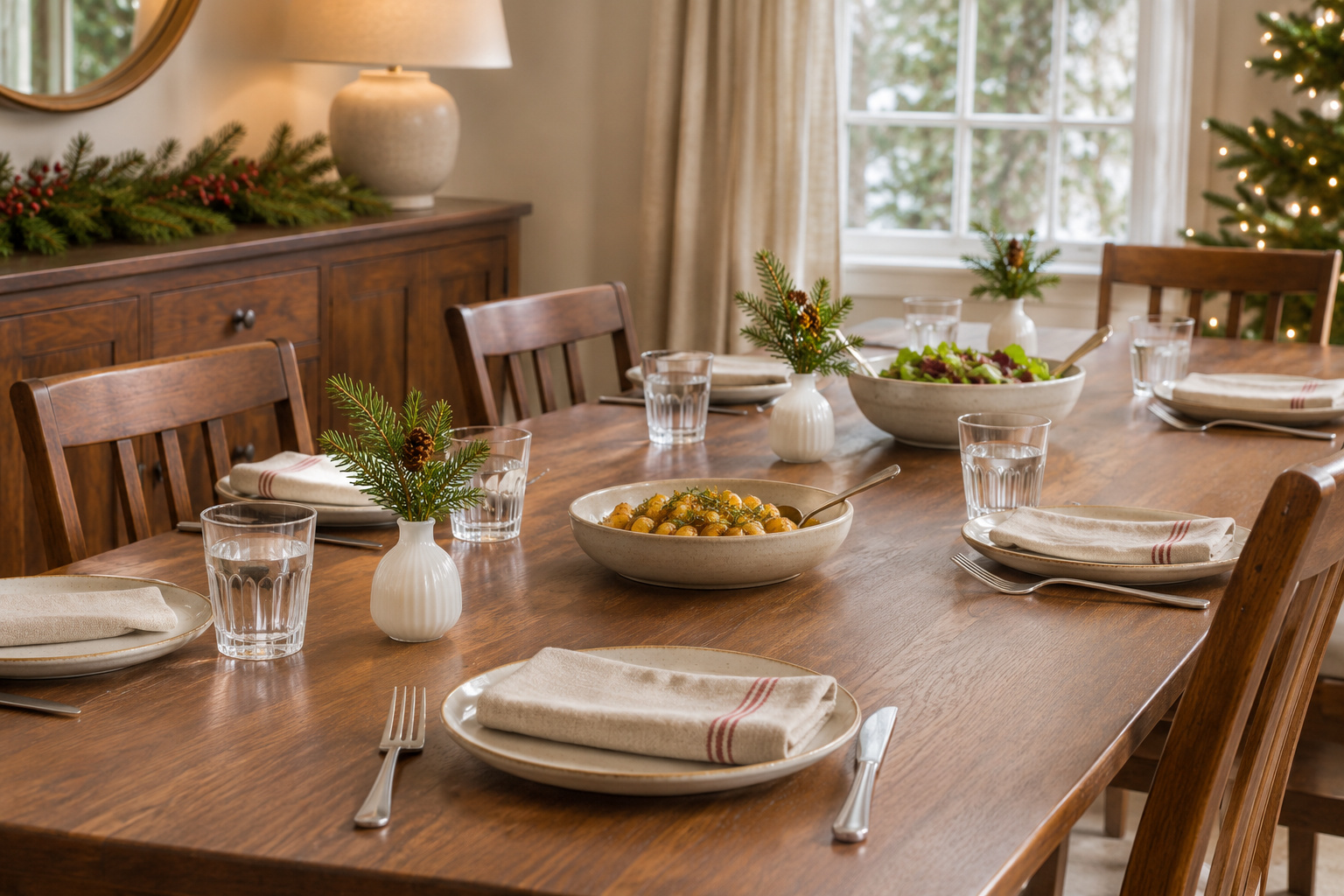
Several short milk glass vases can mark the center of a dining table without turning it into a tall floral arrangement. Place a small seasonal stem in each, keeping the tops low enough for people to see across the table. Let the individual white bases repeat down the wood rather than joining them with a thick bed of greenery.
Set out your usual plates, glasses, and shared dishes first. The vases belong in the space that is genuinely left, with gaps where serving bowls travel. On a narrow table, two small arrangements can be more useful than a continuous row.
Keep the number flexible when guests sit down. A vase can move to the sideboard if an extra dish needs the middle. The repeated glass still gives the meal a seasonal rhythm when the arrangement becomes shorter.
5. Put a Small Winter Scene on a Glass Pedestal
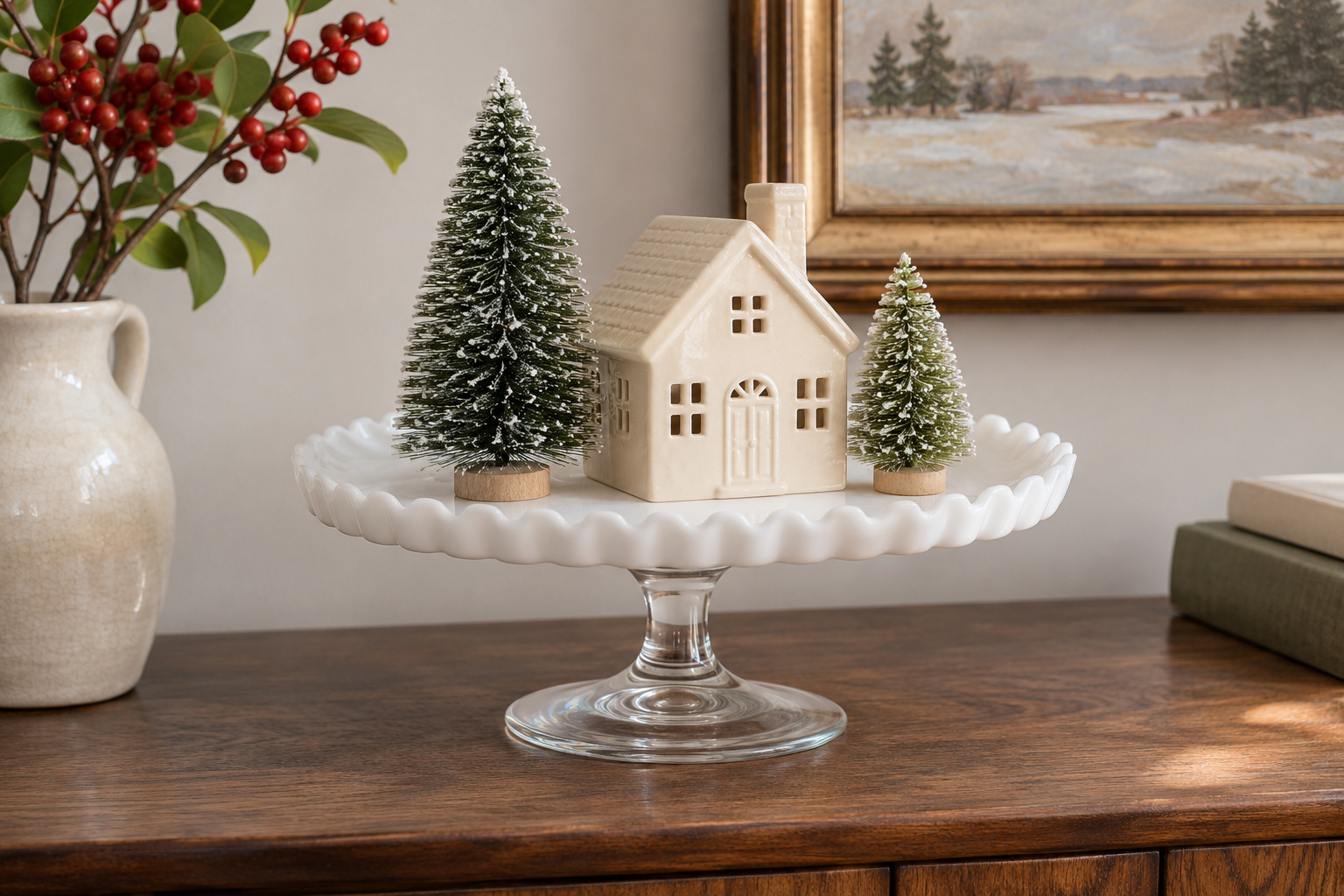
A broad pedestal plate can lift a tiny decorative house or a few bottle brush trees above the surrounding surface. Choose a light, low arrangement that stays entirely within the plate’s footprint. Leave a clear band around the rim so the glass remains part of the scene.
Arrange the pieces on a separate work surface before moving them onto the pedestal. Their bases need to sit flat, and the combined weight should suit the particular plate. Skip loose artificial snow when it would spill into the rim or make the pieces harder to move.
If you prefer the same kind of contained display at table height, these Christmas dough bowl arrangements offer a lower alternative. The glass pedestal version works especially well on a broad sideboard, where its stem and raised edge can be appreciated without taking over a meal.
6. Use Window Light Without Crowding the Sill
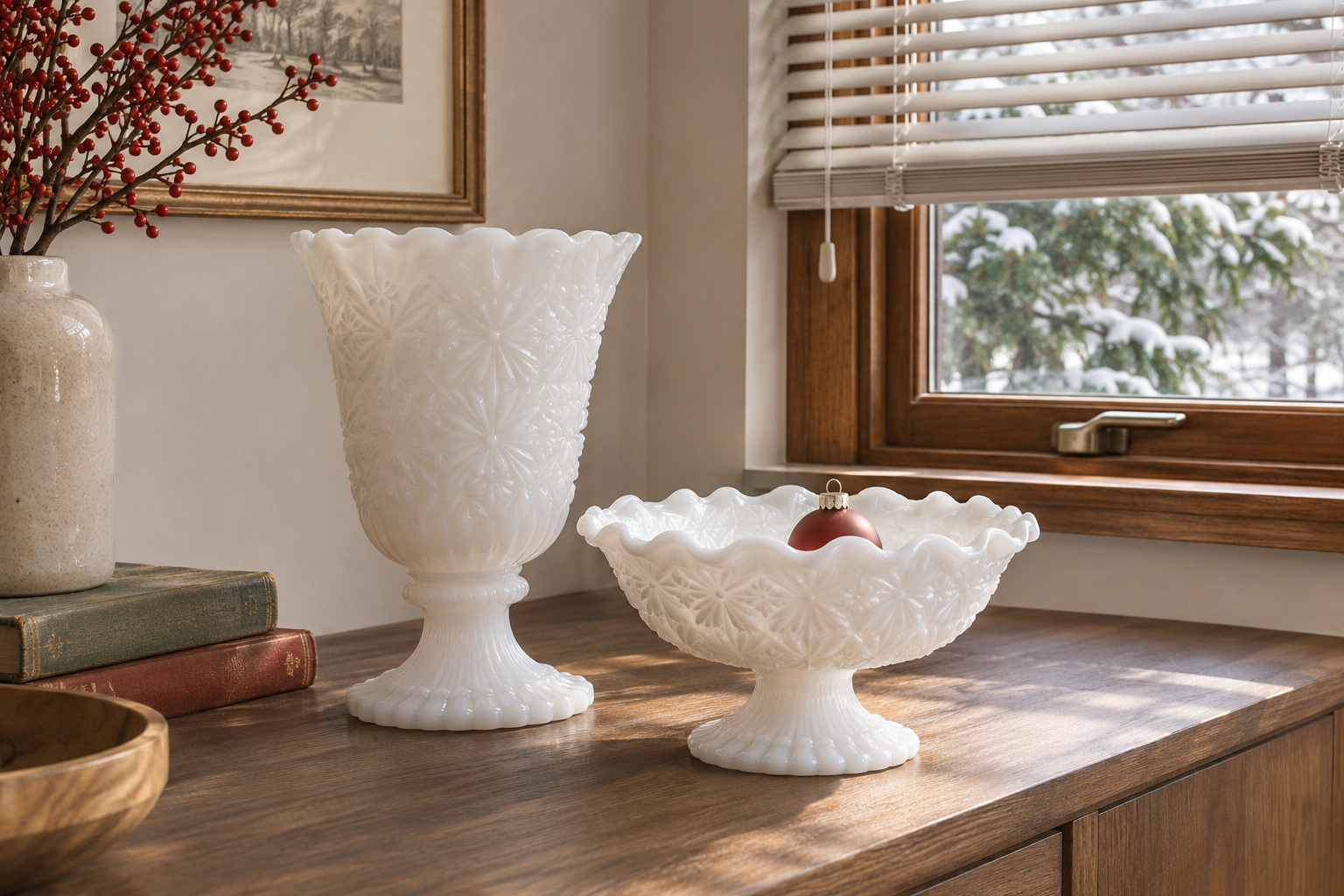
Window light can pick out the ridges and raised dots in white glass. Try two pieces of different height on a broad, stable sill or a table beside the window. Keep a little distance between the glass and the backdrop so the profiles do not merge with the painted frame.
The window still needs its normal opening, shade movement, and maintenance access. Keep the display out of that working area, and choose another surface if the sill is narrow or regularly wet. A small table beside the opening often gives the glass a better base than the sill itself.
Use a discreet Christmas accent, such as one small ornament resting in a low dish. The daylight is doing most of the visual work here. More hanging decoration across the same glass can make the vessels harder to see.
7. Give a Glass-Front Cabinet a White Collection Row
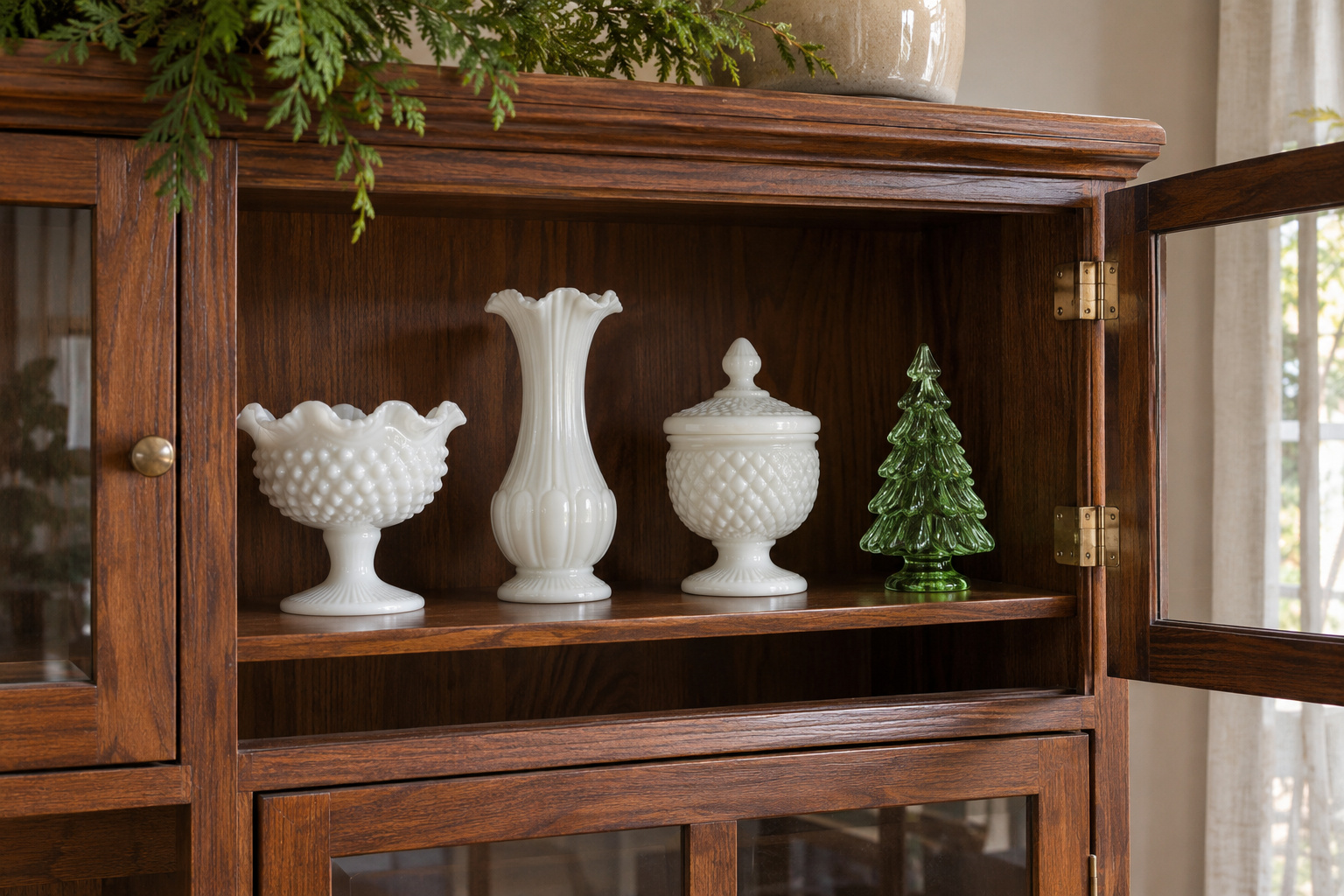
A cabinet lets a collection become part of the room without placing every piece on an open tabletop. Dedicate one shelf to white glass, grouping related forms while leaving a retrieval gap beside each larger vessel. A darker cabinet backing makes the pale outlines easy to read through the doors.
Keep the shelf’s load, depth, and door movement in mind. Heavy pieces belong where the cabinet is designed to support them, and taller vases need room above their rims to be lifted out. Give the most frequently used piece the easiest position rather than placing it at the back of the most crowded shelf.
One seasonal object can identify the row as Christmas: a small green tree beside the white vessels or a plain red ornament in a low bowl. For a bookcase that stays in everyday use, these Christmas shelf styling ideas address the different clearances books require.
8. Keep a Covered Dish Decorative and Easy to Open
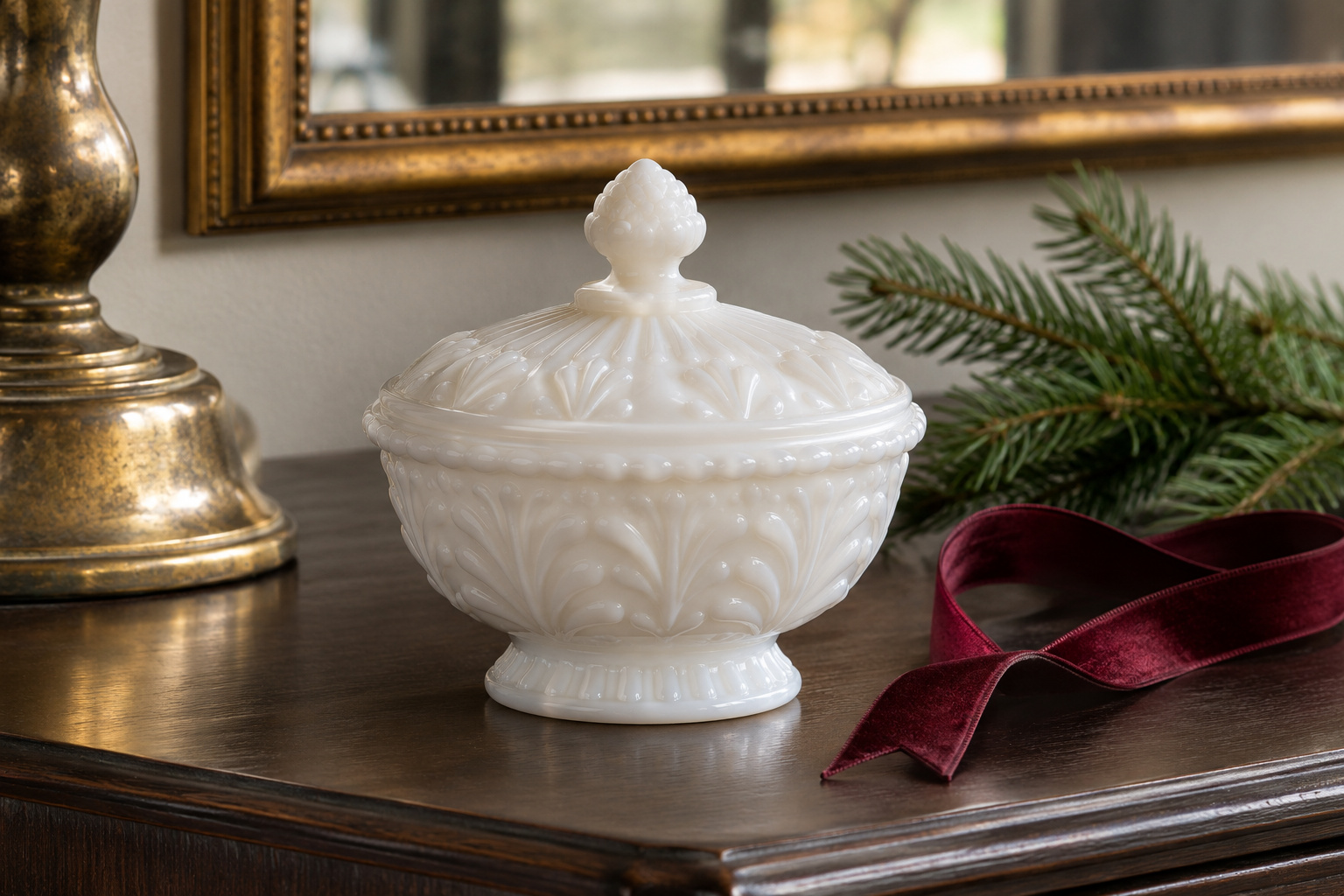
A milk glass covered dish has its own finished silhouette, so it can remain nearly bare. Use it as a small decorative object beside an evergreen sprig, with the lid seated properly and its outline visible. A ribbon can sit loosely beside the dish instead of being tied across the handle.
If you want to keep suitable lightweight seasonal pieces inside, choose contents that fit without pushing against the lid. Remove the lid by its intended grip while supporting the vessel as appropriate for the piece. Do not turn a decorative vintage dish into food storage simply because it resembles a serving container.
Set it where opening it is an ordinary movement, not an exercise in moving three other ornaments first. The useful detail is the complete object: its base, cover, and little point of interest at the top.
9. Move a Whole Group on One Properly Sized Tray
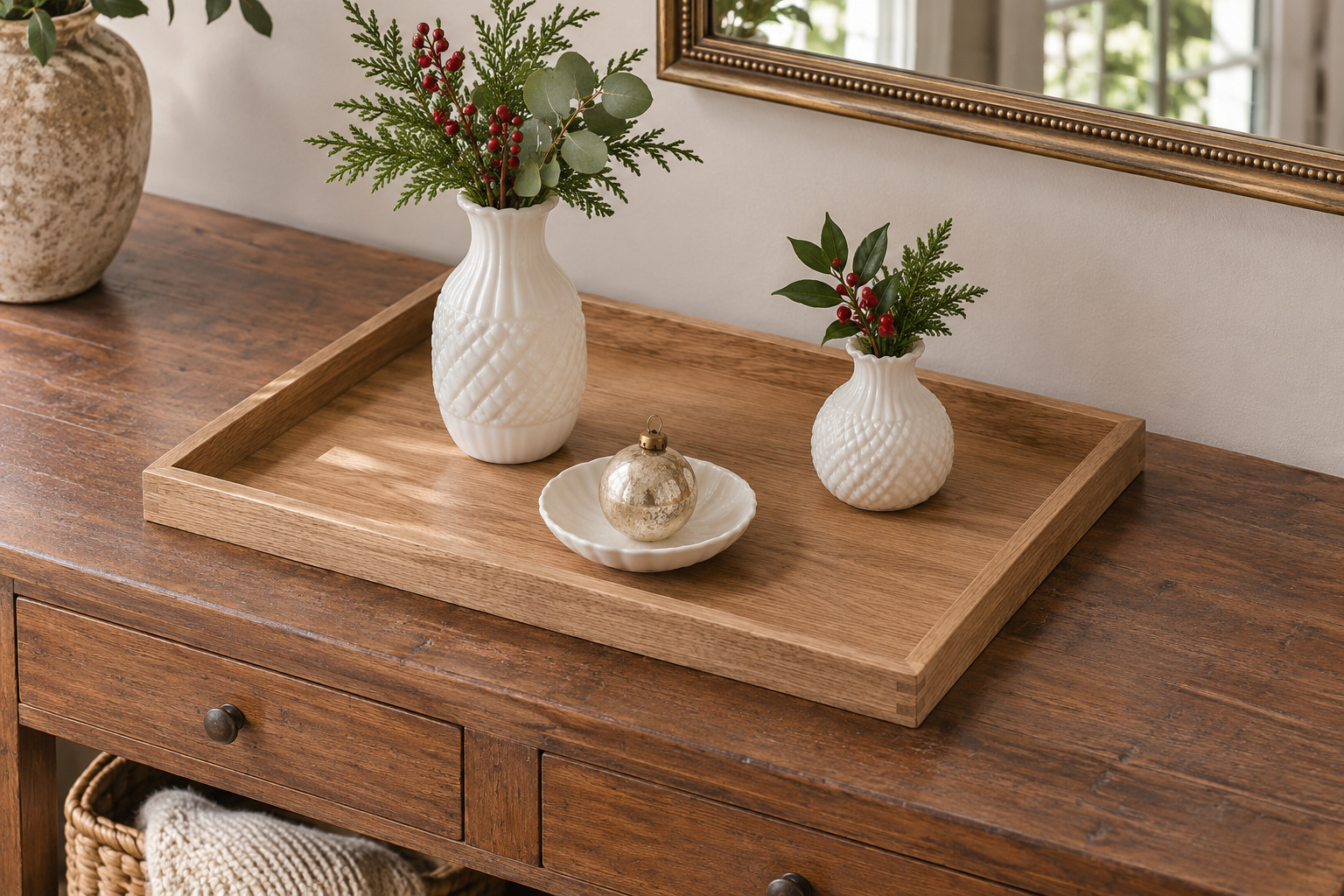
A tray can give two or three smaller glass pieces a clear boundary on a frequently used surface. Choose a level base wide enough that every foot sits fully inside it. A quiet dark wood or plain painted finish keeps the tray from competing with the white profiles.
Arrange the group with space for your hands around the outside. Before lifting a loaded tray, assess whether the pieces can slide or tip; carrying fragile glass individually may be the better approach. The tray is a visual boundary and an aid to resetting the surface, not a promise that any collection can be carried safely as one unit.
Keep greenery within the tray’s outline. When the tabletop is needed, the arrangement has an obvious place to return to, and the surrounding surface can be wiped without dismantling a long trail of decorations.
10. Set Opaque Glass Against Flax and Open Wood Grain
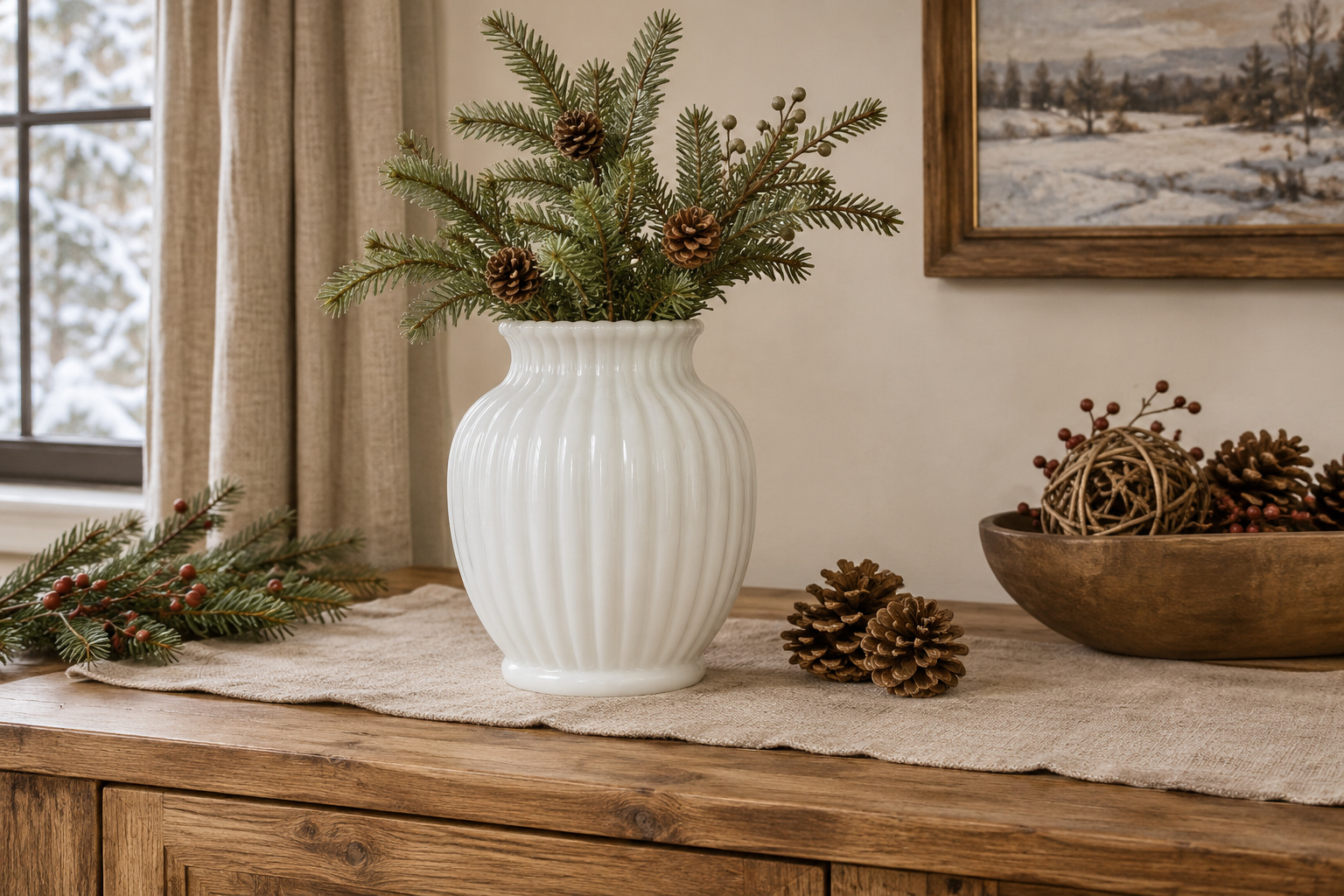
Milk glass can feel softer beside materials with visible texture. Lay a plain flax-colored linen cloth on an oak or other open-grain wood surface, then place one substantial white vessel where the folds and grain remain visible around it. A small dry or faux evergreen branch provides the Christmas reference.
Choose the cloth for its actual weave and care, not just its color. Keep it flat beneath the glass so the base sits securely, with any extra fold outside that footprint. The contrast works because the glass is smooth or regularly patterned while the linen and timber have irregular detail.
Let the rest of this arrangement remain earthy: muted foliage, natural wood, and the soft cream of the cloth. Bright metallic ornaments would create a different effect. Here, the vessel’s white becomes one calm material in a deliberately tactile display.
11. Build One Mantel Composition Around a Quiet Frame
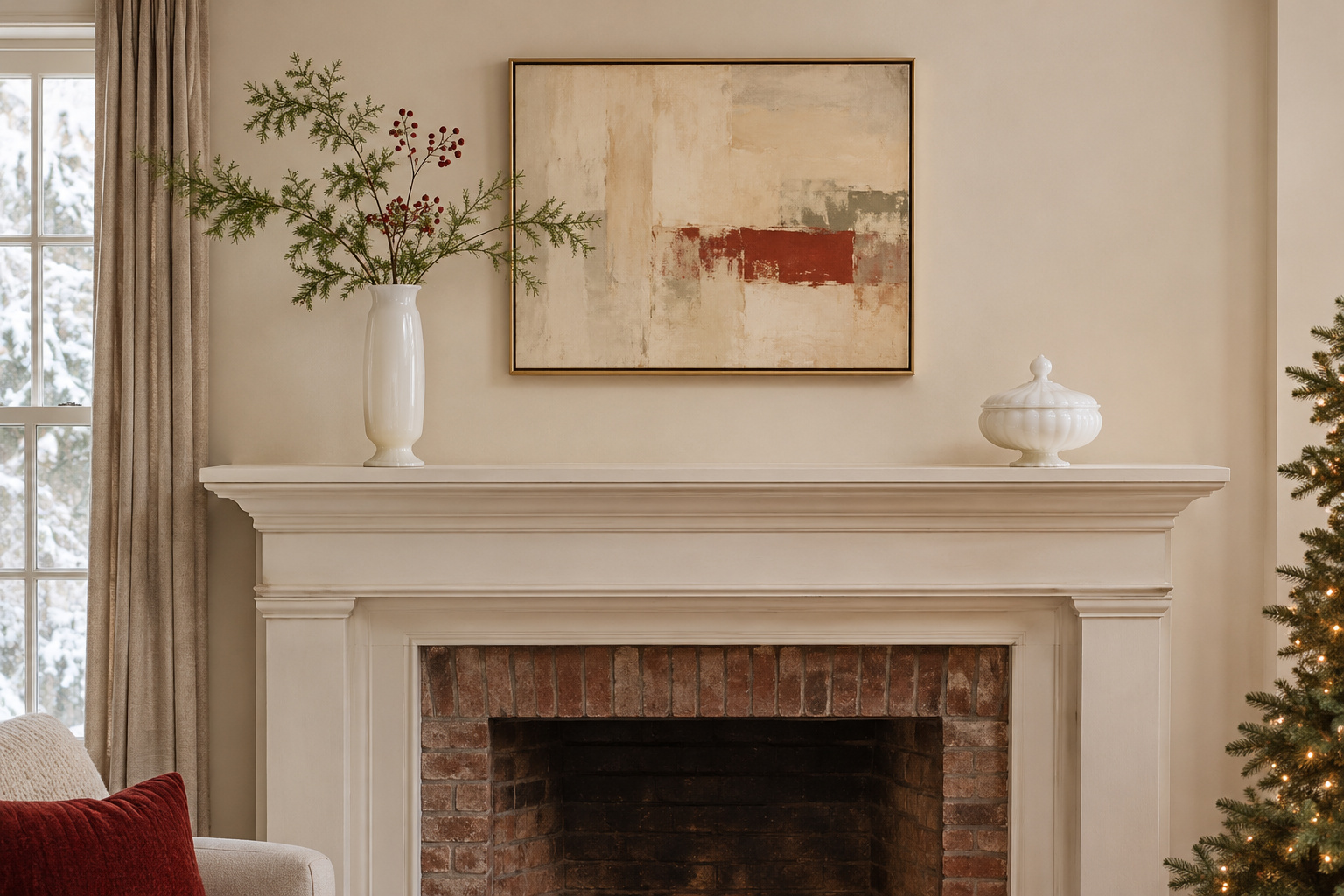
Treat the mantel and the artwork or mirror above it as one composition. Begin with a simply framed piece that leaves visible wall around it, then place a taller milk glass vase on one side and a lower white object on the other. Their unequal heights can balance without becoming matching bookends.
Keep the lower grouping within the frame’s visual span and leave some of the mantel bare. A short green stem or a single red accent is enough to connect the white objects to Christmas. Do not stretch greenery across every gap if the frame and glass already form a clear arrangement.
Use a location suitable for the objects and the fireplace’s actual operating requirements. If the mantel is exposed to heat or required clearances, move the composition to a console against a fixed wall. The relationship between frame, wall, and white glass can remain the same.
12. Balance White Glass With Clear Glass and Warm Metal
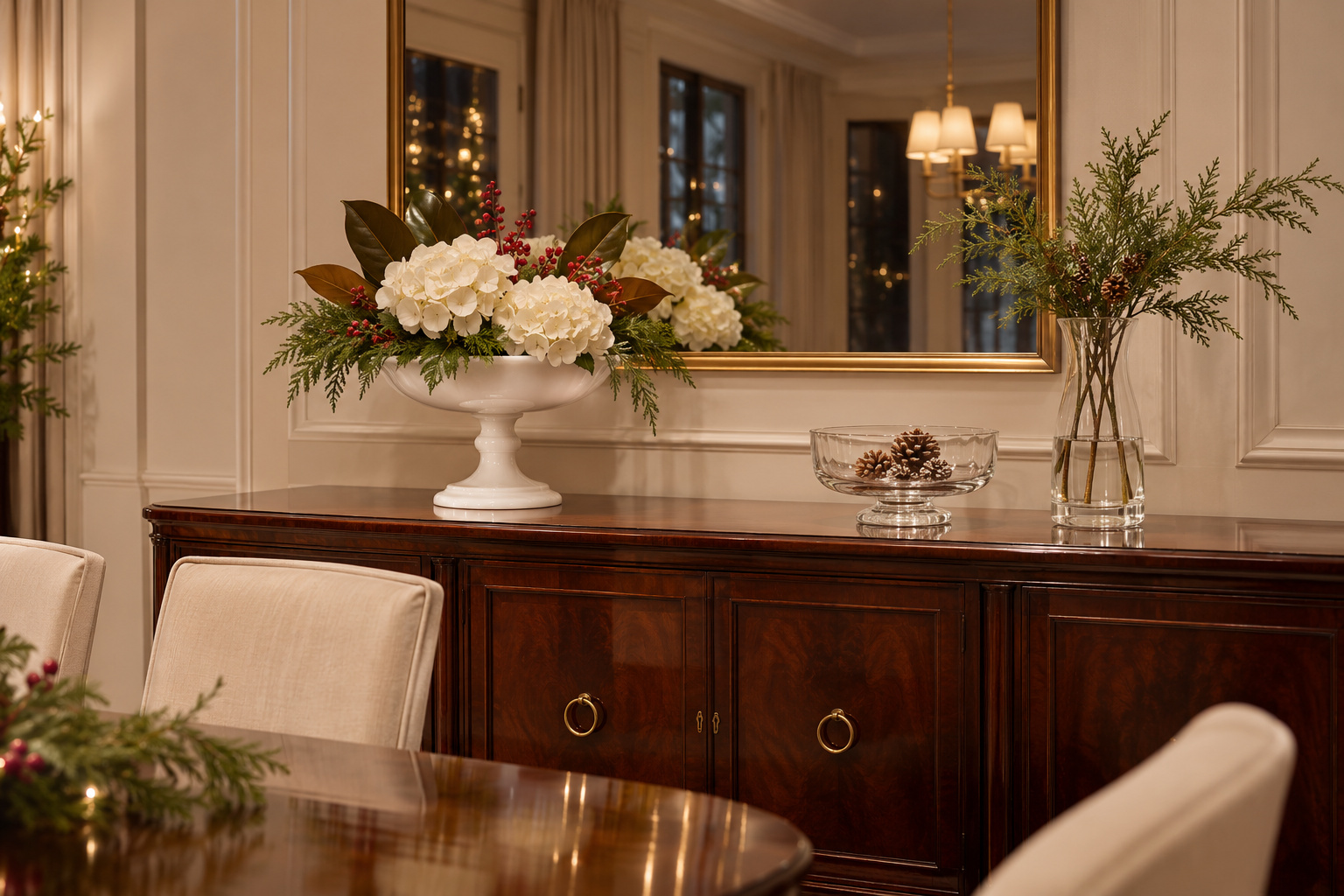
For a more formal dining room, pair one opaque white compote or vase with a clear glass piece and a restrained warm-metal detail. Their different surfaces give the group depth: white supplies a solid shape, clear glass keeps part of the background visible, and metal adds a narrow reflective edge.
Keep the shapes generous and the number of objects limited. A broad sideboard, a well-proportioned framed mirror, and a pair of clear glass vessels can give a small milk glass centerpiece a polished setting. Use the metal once or twice through an existing frame or lamp detail rather than adding a collection of glittering accessories.
Check reflections from the dining seats as well as the doorway. Move the clear piece if it vanishes against a bright reflection, and leave the white vessel in the stronger visual position. The result should read as an edited group, with the milk glass easy to identify.
Choose the piece you most want to see, then give it the right background, a stable footprint, and one seasonal companion. You may find that a branch, a small glow, or a little empty space does more for the collection than filling every vessel.
Discover more from HomeTrendora
Subscribe to get the latest posts sent to your email.