
A Christmas shelf can look lovely from the sofa and still be a nuisance when you try to pull out a book. The best starting point is the way you already use the case. Leave a little room for your hand where you reach most often, then look for quieter stretches that can hold something seasonal. These 20 Christmas shelf styling ideas help you do both, whether you have one freestanding bookcase or an entire wall of shelves.
1. Mark the Shelves You Reach for Every Day
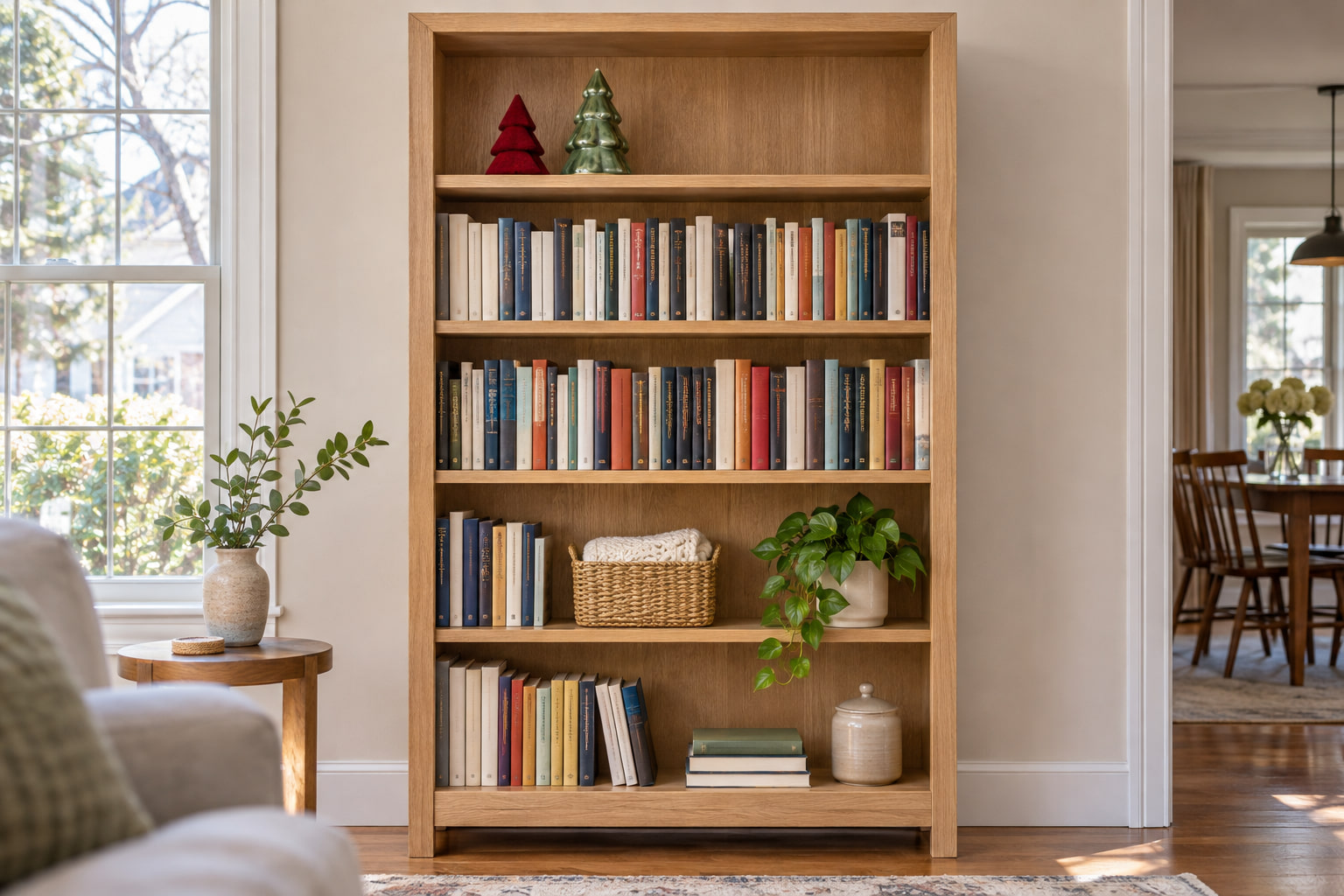
Before you take out the decorations, think through a normal evening. Which shelf holds the mystery you’re halfway through? Where does the library book go when you put it down? Pull out one book from each busy row and set it back. The shelves where that happens most often get first claim on the space in front of them. If two people use the case, ask each to show you what they take down. Their regular shelf may be different from yours.
On a bookcase beside the sofa, the two middle shelves might be working shelves and the top one might be open for Christmas decor. Put a few decorations there first and live with the arrangement before adding anything lower. If the case needs a more general reset, start with these living room shelf styling ideas and decide which objects you want to see again in January.
2. Leave a Pull-Out Gap Beside the Books You Use Most
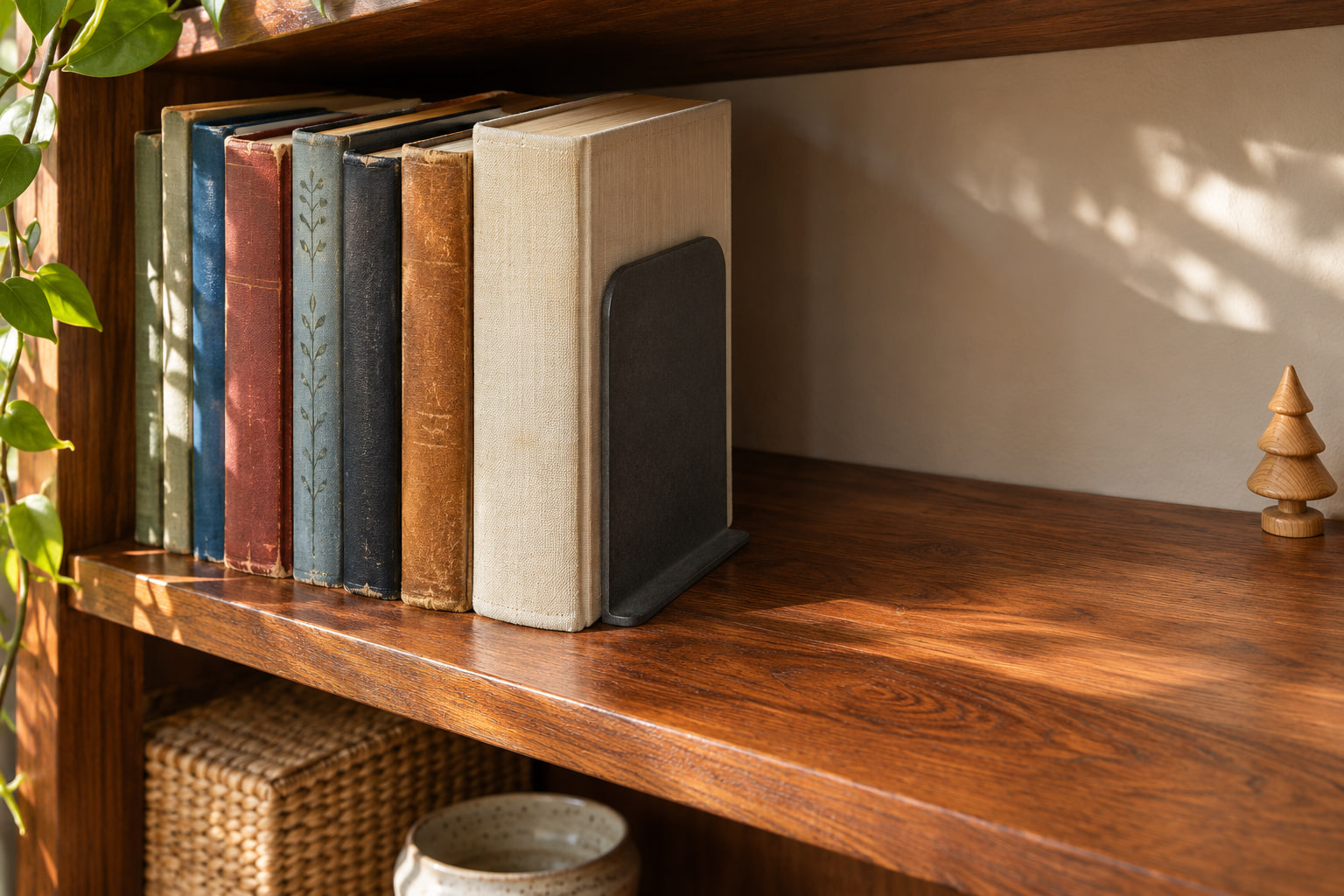
Choose the thickest book you regularly reach for and practice lifting it out. If your knuckles hit the next book, take one or two less-used volumes out of the row. Shift the remaining books to one side and leave a gap where you can slip in your fingers. A bookend can mark the end of the row without making the row so tight that nothing moves. Try moving the bookend inward a little if the row leans. You want enough support to stand the books up without wedging them together.
Keep small Christmas pieces outside the space your wrist travels through, even when they seem to fit on the shelf. On a shelf at eye level, a low wooden tree can sit at the far end while an open gap beside the book you want does the useful work. Test putting the book back with one hand, too.
3. Anchor One Bay With a Single Sculptural Christmas Shape
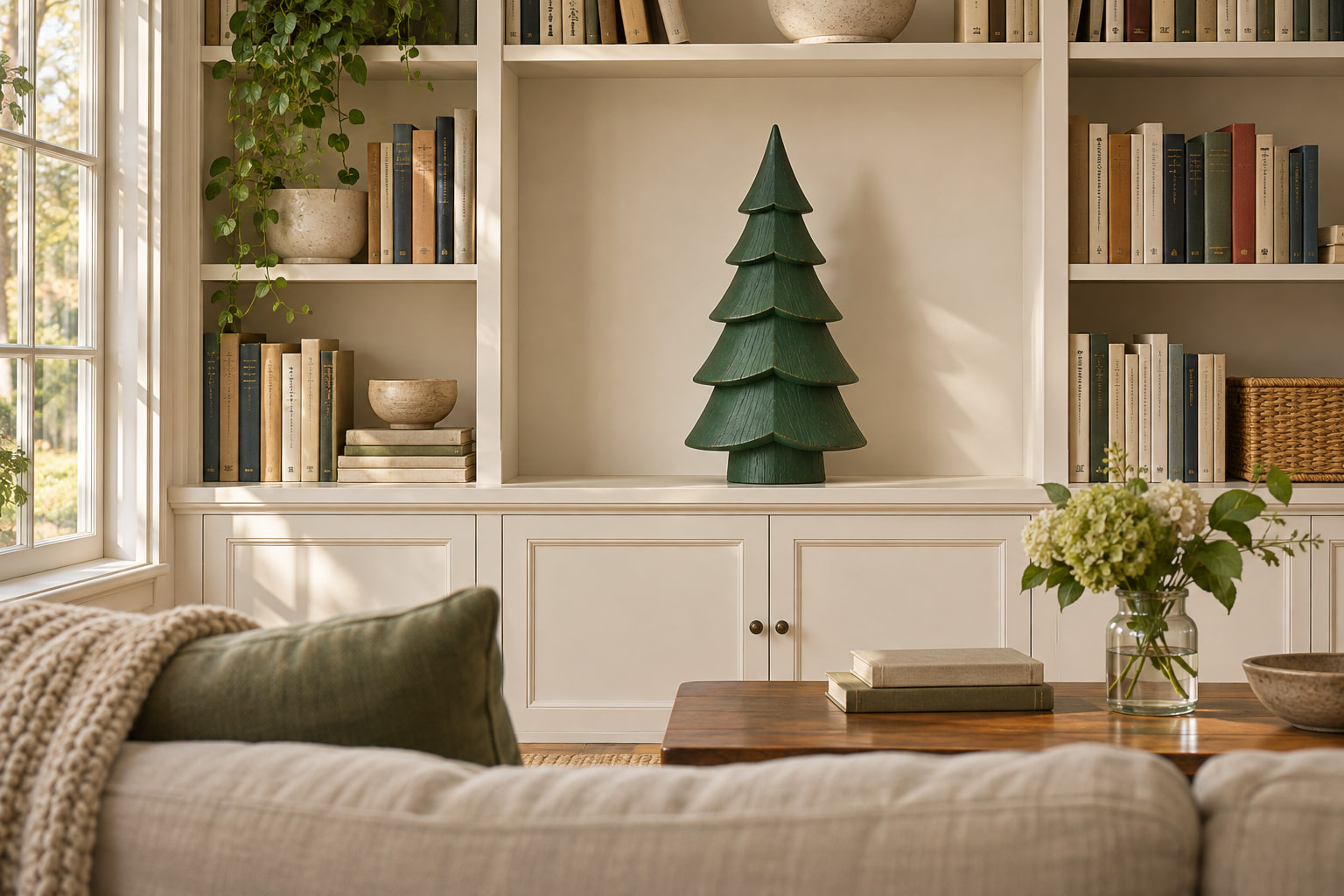
Pick a bay you can see from the sofa and clear enough space for one shape to read. A small ceramic reindeer with a clean silhouette can work against a dark backing. On pale shelves, a deep green wooden tree does the same job. Leave air on both sides so the shape stands apart from the straight edges of the books.
If the piece disappears when you sit down, move it into a brighter bay or change the contrast with the backing. Try that before bringing in more ornaments. This approach also works on a divided bookcase, where the frame of one bay gives the piece a clear boundary without asking the other shelves to match. On a tall, narrow bay, choose a shape with an upright outline. A wider silhouette can fill the visual space in a low opening.
4. Offset Cedar Texture Against a Walnut Bookcase
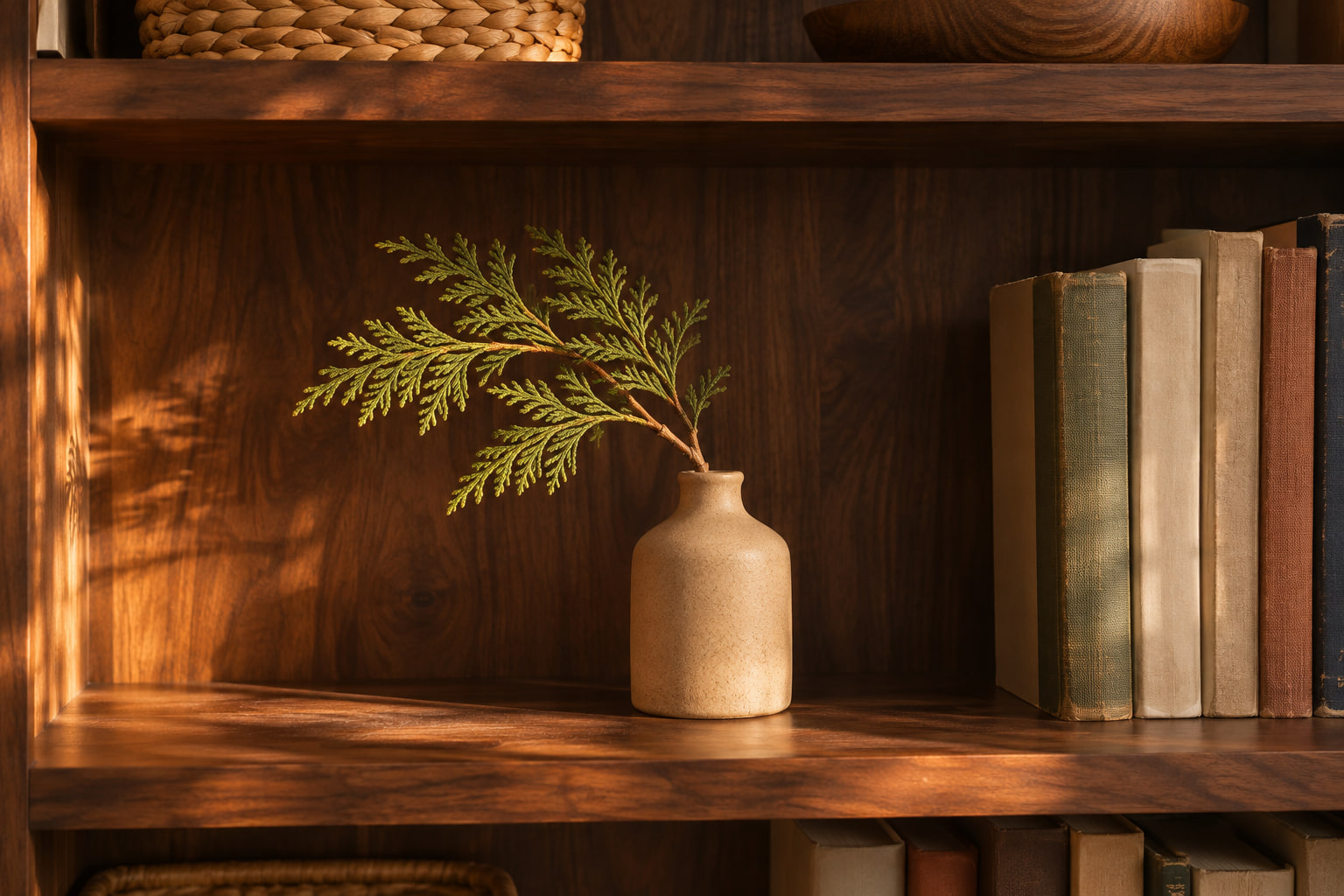
Place a short cedar stem in a small ceramic vessel where the green can sit beside the walnut grain. A low, slightly irregular stem keeps the view from turning into a solid band of foliage. Give it its own end of the shelf, with a little breathing room between the needles and the books. Set the vessel on the shelf before trimming the stem. Cut only enough to keep the tip clear of the wood above.
A dry display keeps water away from book jackets and wood. Use a realistic faux sprig if you want to avoid shedding or fragrance. Check the view from the doorway before turning the vessel. A branch that looks full head-on may read better in profile, with the outline of the cedar visible against the back of the shelf.
5. Give the Armchair Shelf a Read-Next Row and One Soft Glow
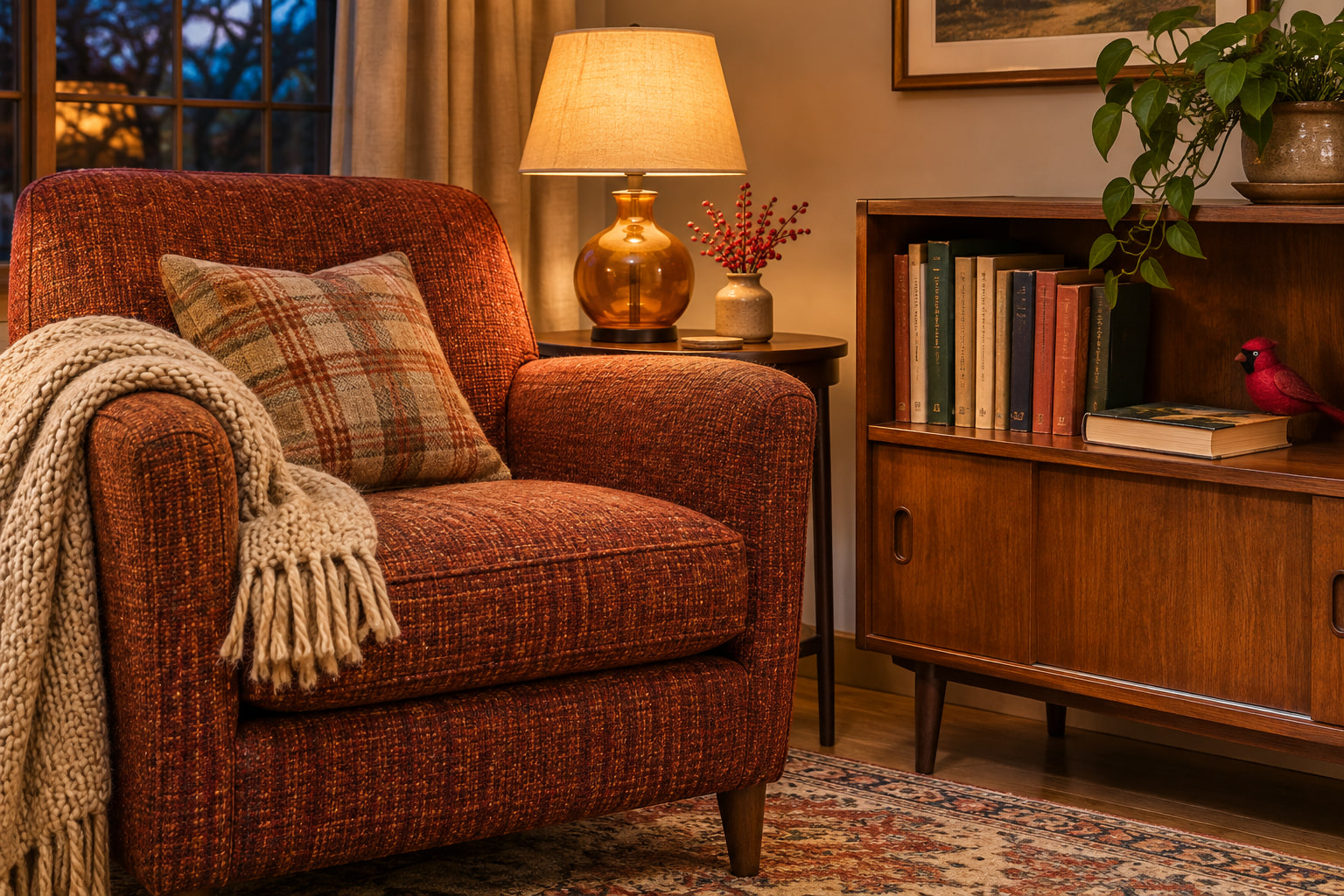
Clear a shelf at seated reach beside your favorite chair and use it for the books you plan to read next. Keep the row short enough to see each spine, and give the book you’re currently reading a place to lie flat. A couple of December favorites can make the spot feel seasonal without turning it into a display you’re reluctant to disturb. Put the next book at the end closest to the chair. Give its neighbors enough room to stand while it’s out of the row.
Let a shaded lamp glow from the adjacent end table or from its own clear bay. If the lamp crowds the books or catches your eye when you sit down, move it farther to the side. The useful test is whether you can find a title and pick it up comfortably from the chair.
6. Pair Stone Bookends With One Mercury-Glass Accent
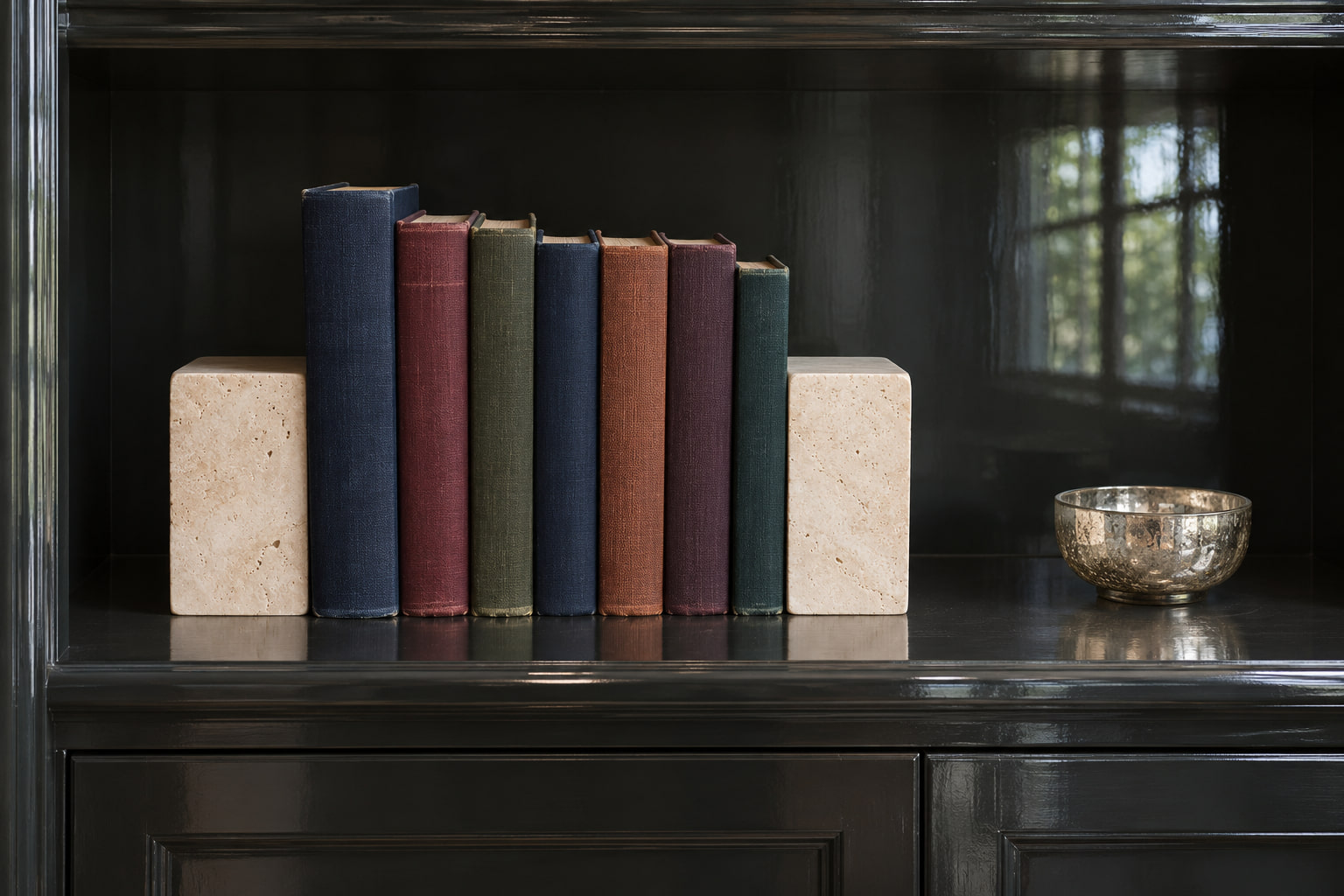
Bookends can do two jobs here. They keep a row standing and give it a deliberate edge. Start with a pair of stone bookends with a flat face against the books, then leave a little space beyond one end for a small mercury-glass ornament or bowl. Low glass catches the light without competing with the book spines. On a shallow shelf, check the bookends’ footprint before you add the glass. Both bases should sit fully on the wood.
Look at the shelf from the main seat. If the reflection is all you see, shift the glass to the side or into the shadow of the shelf above. Leave room between the stone and glass so a book coming out won’t bump either. Check that your shelf can support the combined weight before adding heavier bookends or another stack.
For a warmer take on the arrangement, try the LUXDOMICILE reddish-brown marble bookends. They come as a pair and each stands 7.4 inches tall, so measure the open space in your shelf bay before choosing them.
7. Repeat Undyed Paper, Linen, and Unfinished Wood
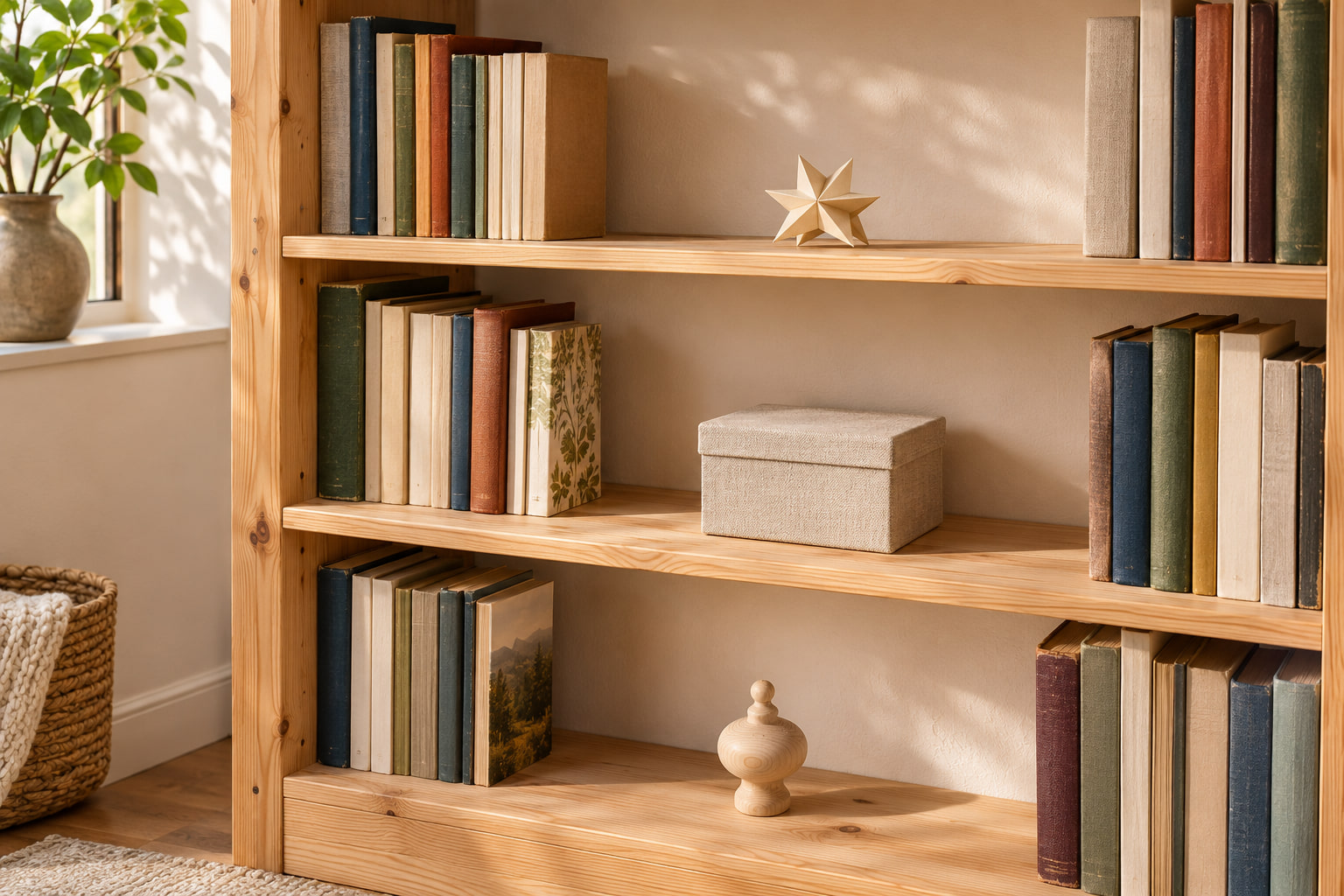
A shelf full of colorful spines already has a palette. Set a folded natural-paper star on one shelf, a linen-covered box on the next, and a small unfinished wood ornament on a third. Each piece can be a different shape. The related tones tie them together without asking you to rearrange your books by color.
Set the materials down in daylight before settling on their spots. If two pieces match the shelf so closely that they disappear, put one against a darker stretch of books and give the other more open space. Try leaving a full row of books between the accents if the display still feels busy. A linen box can hold spare bookmarks or reading glasses. Leave enough space above it to lift the lid without pulling the box out.
8. Use the Depth Behind a Low Row Without Hiding Its Titles
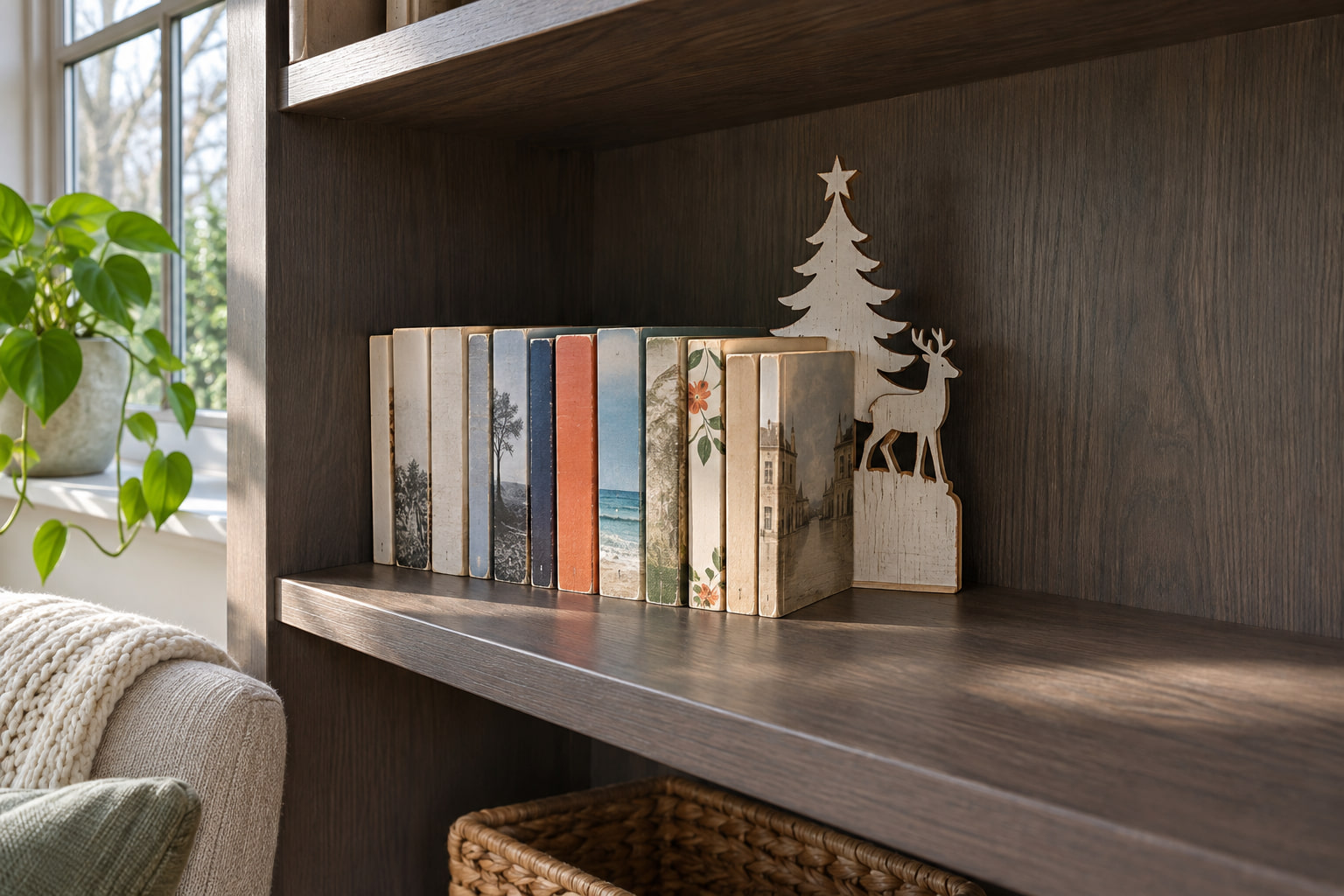
A shelf with extra depth can hold a second layer without creating a second row of books. Keep a short run of paperbacks near the front and place a shallow Christmas object behind just one end of the row. Its top should show above the books while the spines remain visible from the front. Measure how deep the largest paperback is before you choose the accent. Count any base that sticks out in front of the decoration.
Stand where you normally approach the case and reach for a paperback. If the object makes you push the book forward awkwardly or brush past it, move the object sideways rather than stacking it higher. Reserve this idea for a genuinely deep shelf. On a shallow shelf, a clear row is more useful.
9. Repeat One Holiday Shape Across Separated Bookcase Bays
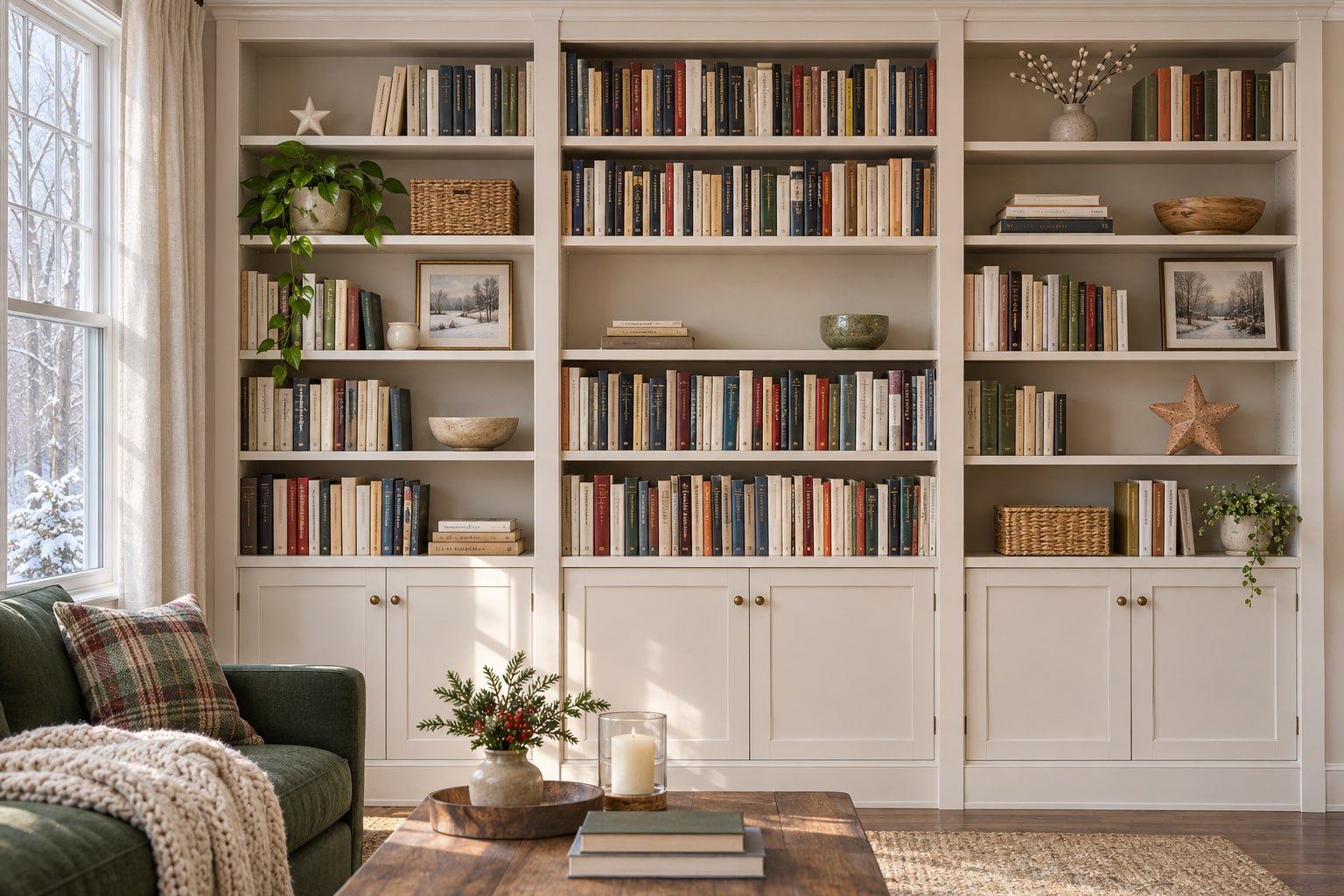
Repeat one recognizable holiday shape in two bays with another bay in between. For example, place one small ceramic star near the end of a high shelf and another in the opposite half of the bookcase. Let the books and a quieter stretch of shelf do the work between them.
The shapes don’t need to be identical. A matte ivory star and a rough clay one can feel related from across the room. If your eye jumps from one directly to the other, move one a little higher or let it sit farther back. On a wall of built-in shelves, the existing divisions make good guides for placing the pair. Give the more noticeable star the dimmer spot if it pulls too much attention. The smaller shape can take the brighter shelf.
10. Give Oversized Art Books Their Own Open Shelf
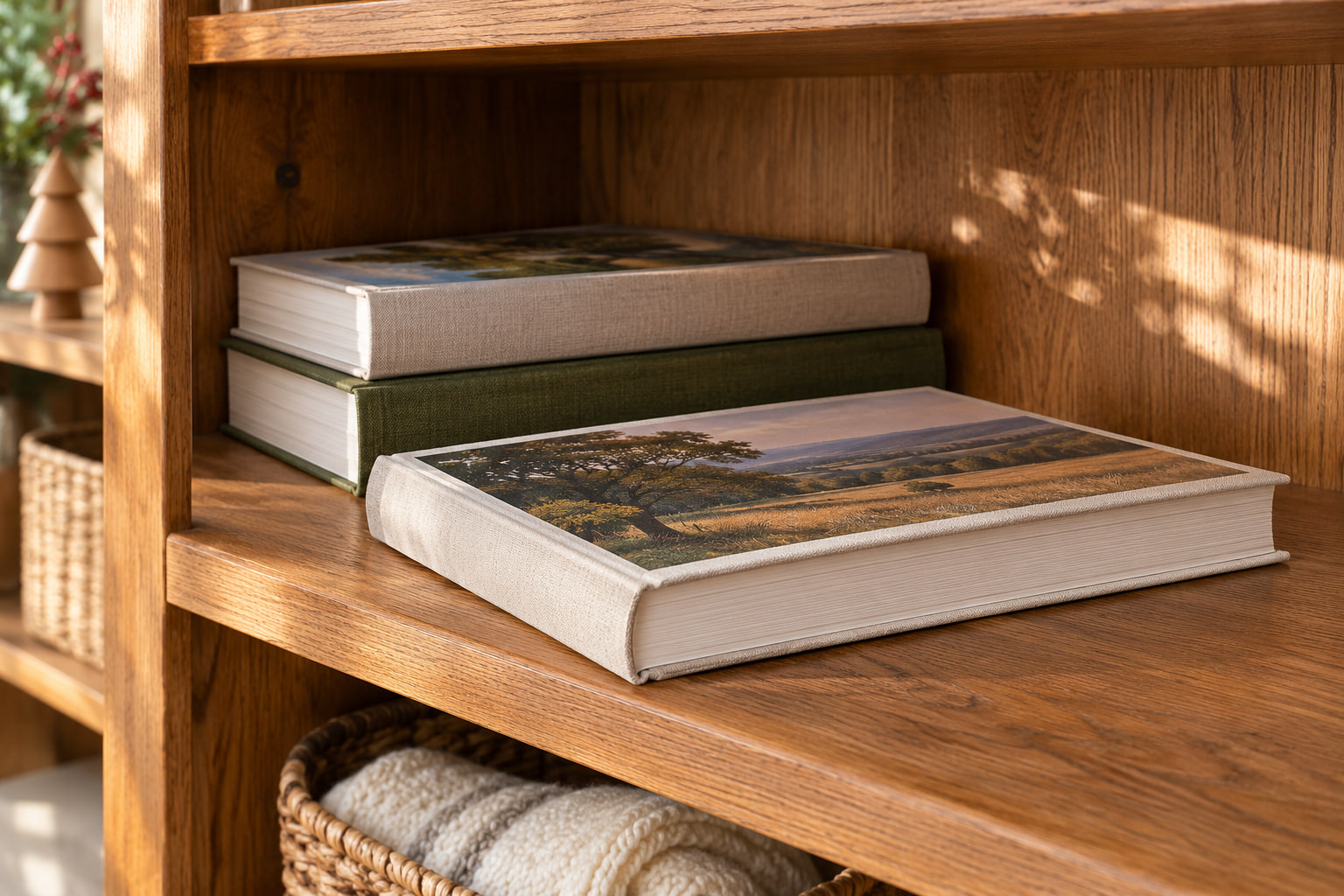
Set aside a shelf with enough height and depth to remove your widest art book without tilting it around a decoration. You might stand volumes of similar size upright with appropriate support, or keep a small stack of books that are easiest to lift from the top. Leave a clear place for your other hand. Before settling on an upright row, check the height at the front edge, where a shelf lip can get in the way.
Move glass ornaments off this shelf, even if there’s a neat-looking gap above the stack. They’re better on a level you rarely touch. If you want a Christmas note here, let the edge of a red book or a wooden ornament in the next bay carry the color while the oversized books keep their working space.
11. Keep the Bottom Shelf Ready for Books That Come and Go
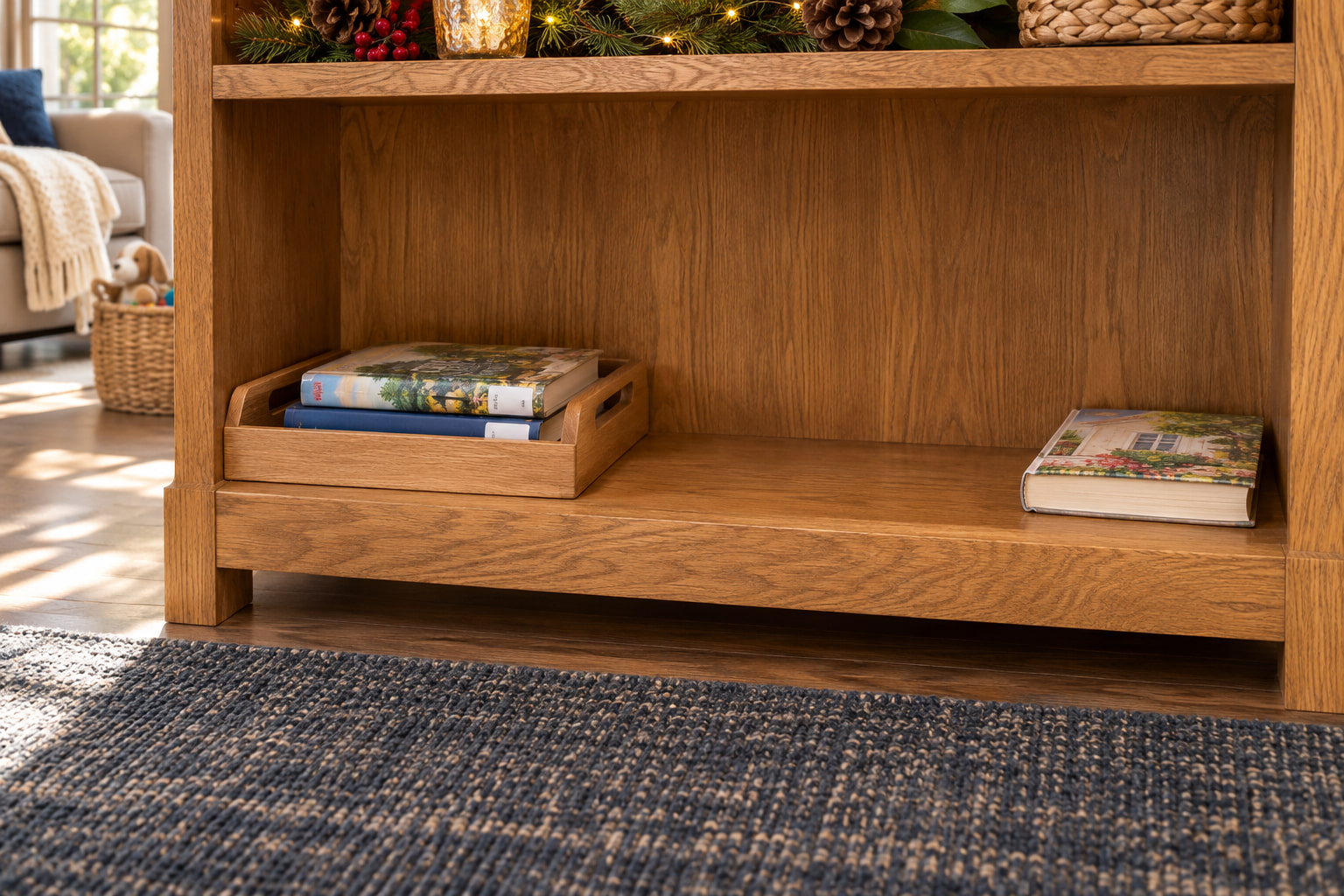
Save the bottom shelf for books that change often. A library return can go straight onto one end and a book you’ve brought from another room can sit at the other. Keep the middle free enough to accept an extra book without shifting the whole row.
A shallow, sturdy tray can mark where returns go, provided it sits entirely on the shelf and has room for the largest book you expect to use. Leave the fragile Christmas pieces on a less active level. If the bottom shelf is constantly filling up, clear it at the same time you gather the books for their next trip. If you borrow books for more than one person, put returns together and reserve the other side for titles someone is still reading.
12. Save a Shelf Photo Before the Seasonal Swap

Before moving the first book or object, take one straight-on photo of the everyday shelves. Get the whole case in the frame so you can see which bay belongs to each stack and where the empty spaces are. A second photo of a complicated bay is more useful than a close-up of every piece.
Keep the decorations you remove in one box and the books you temporarily relocate in another place you can reach. When Christmas is over, use the photo to restore the shelf in the order you use it, starting with the busiest row. You can keep any change that made the shelf easier to use. Save the picture where you keep other holiday notes. It’s easier to find next year if you give it a name you’ll remember.
13. Give One Christmas Book a Face-Out Spot
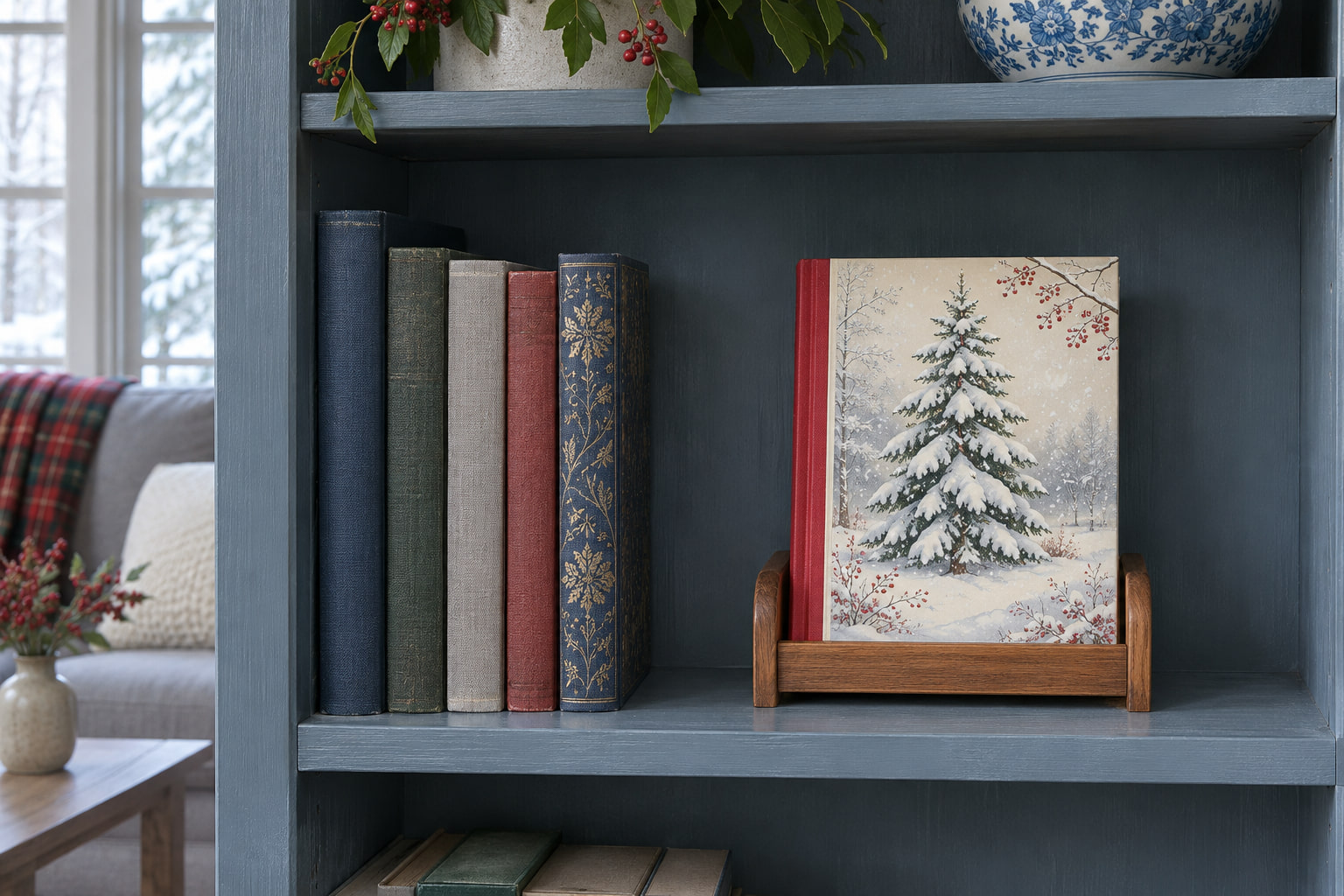
Choose a Christmas book you want someone to pick up, then turn its cover toward the room. A picture book looks deliberate beside a row of taller novels, even if its cover supplies the only holiday color. Stand it in a low book cradle at the end of the row, where the entire base fits on the shelf and the cover faces the main seat.
Leave room at both sides of the cover for a hand. If the shelf is too shallow for the cradle and book, move the display to a deeper bay or set the book flat with the cover up. Trade it for another favorite after you finish reading it.
14. Frame a Family Christmas Memory Alongside a Book Row
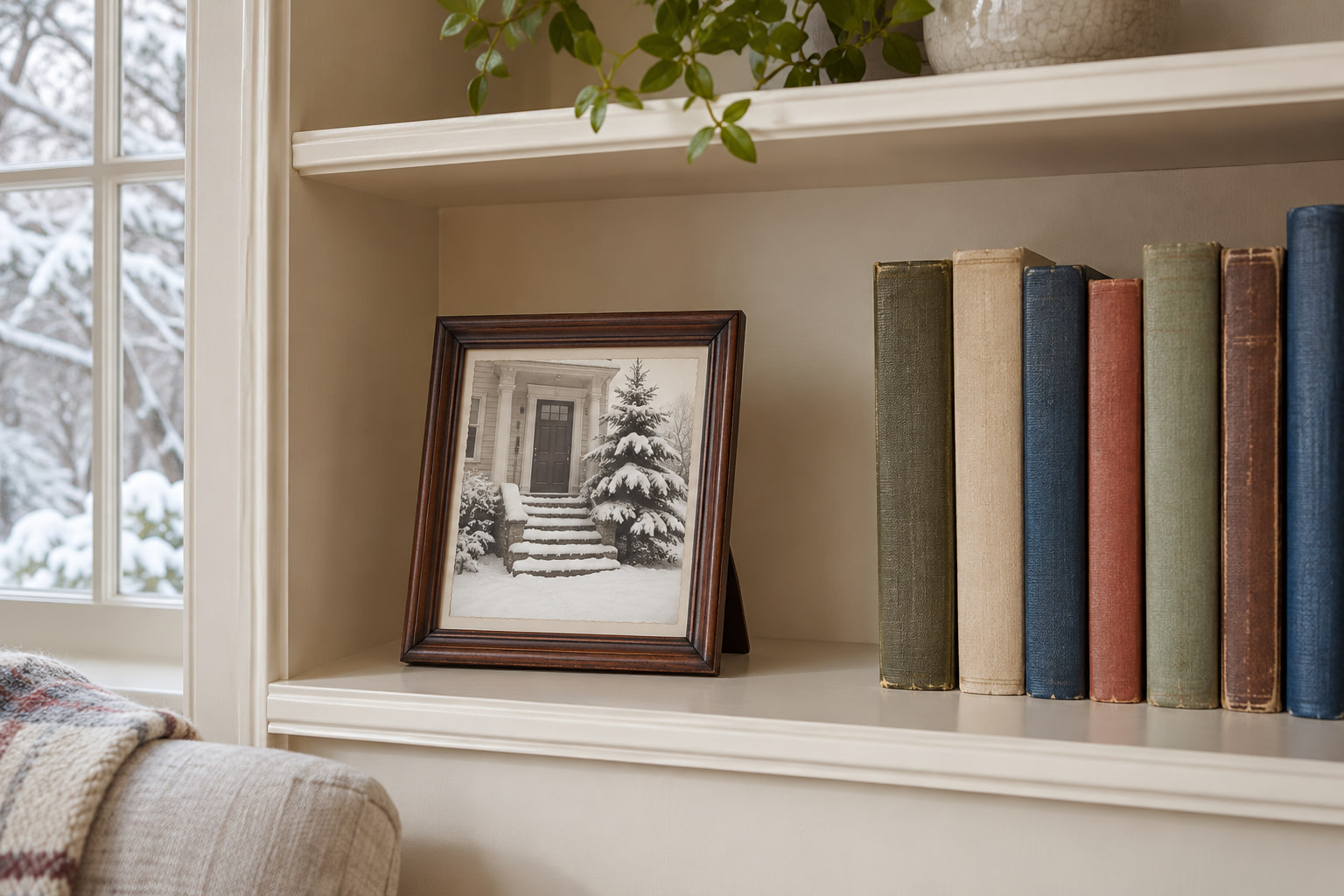
Pick one small photograph with a detail you can recognize from the sofa. A snowy front step or someone carrying a tree gives the shelf a sense of place. Try the picture in a plain standing frame with its own space beside the books. On a light shelf, a dark frame gives a washed-out photo a firmer edge without asking you to add more decorations.
Set the frame back far enough that it won’t brush the nearest spine as you pull a book out. Check for glare at the time you normally use the room. Turn the frame a few degrees if the window reflection hides the picture, then test the nearest book again.
15. Put a Slim Wreath on the Outer Side of the Bookcase
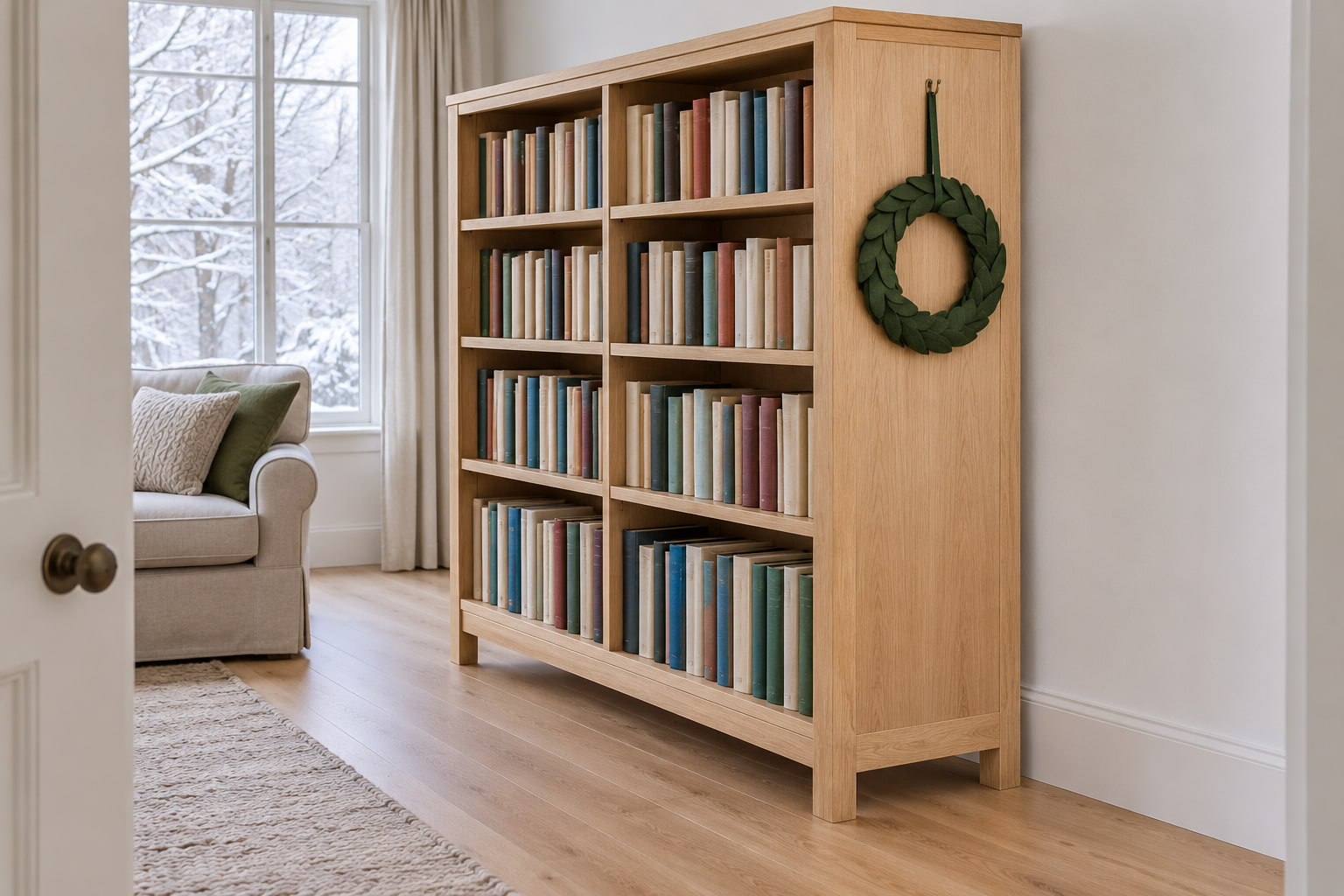
If the bookcase has an exposed outer side, look at it from the doorway. You may see that panel before you see any of the books. A small, flat wreath made from felt or fabric can give the side a Christmas detail and keep the usable shelves clear. Choose a wreath that sits inside the outline of the panel from front to back.
Use an existing hook or a hanging method suited to the bookcase finish. Keep the hanger short and the wreath away from places where a sleeve could catch. Walk past the case carrying a book to check the route. If the side borders a busy doorway or a narrow passage, choose another display spot.
16. Change the Contents of a Bowl You Already Display
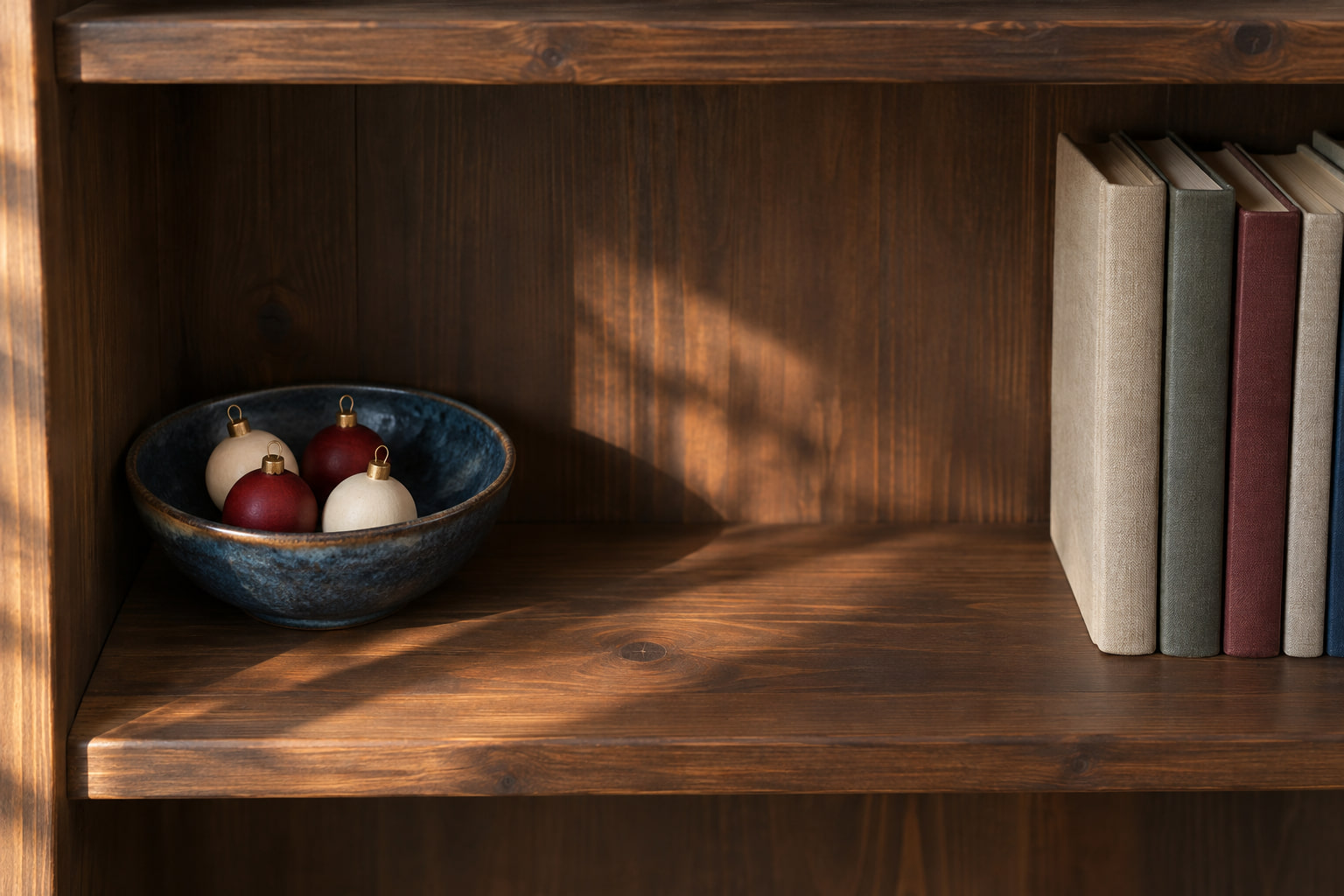
A shallow bowl can look festive with three or four pieces that give it a new color. Try small matte wood balls in red and cream inside a plain dark blue ceramic bowl. Keep most of the rim visible. On a shelf with books, that open edge helps the bowl read as a single object and gives you somewhere to grip it when you lift it.
Pick a bowl with a stable base and place it on a stretch of shelf you rarely reach across. Pull out the nearest book to see where your hand travels. If it crosses the bowl, shift the bowl to an open end. After Christmas, lift it out and put its everyday contents back.
17. Take the Accent Color From a Book Spine You Already Love
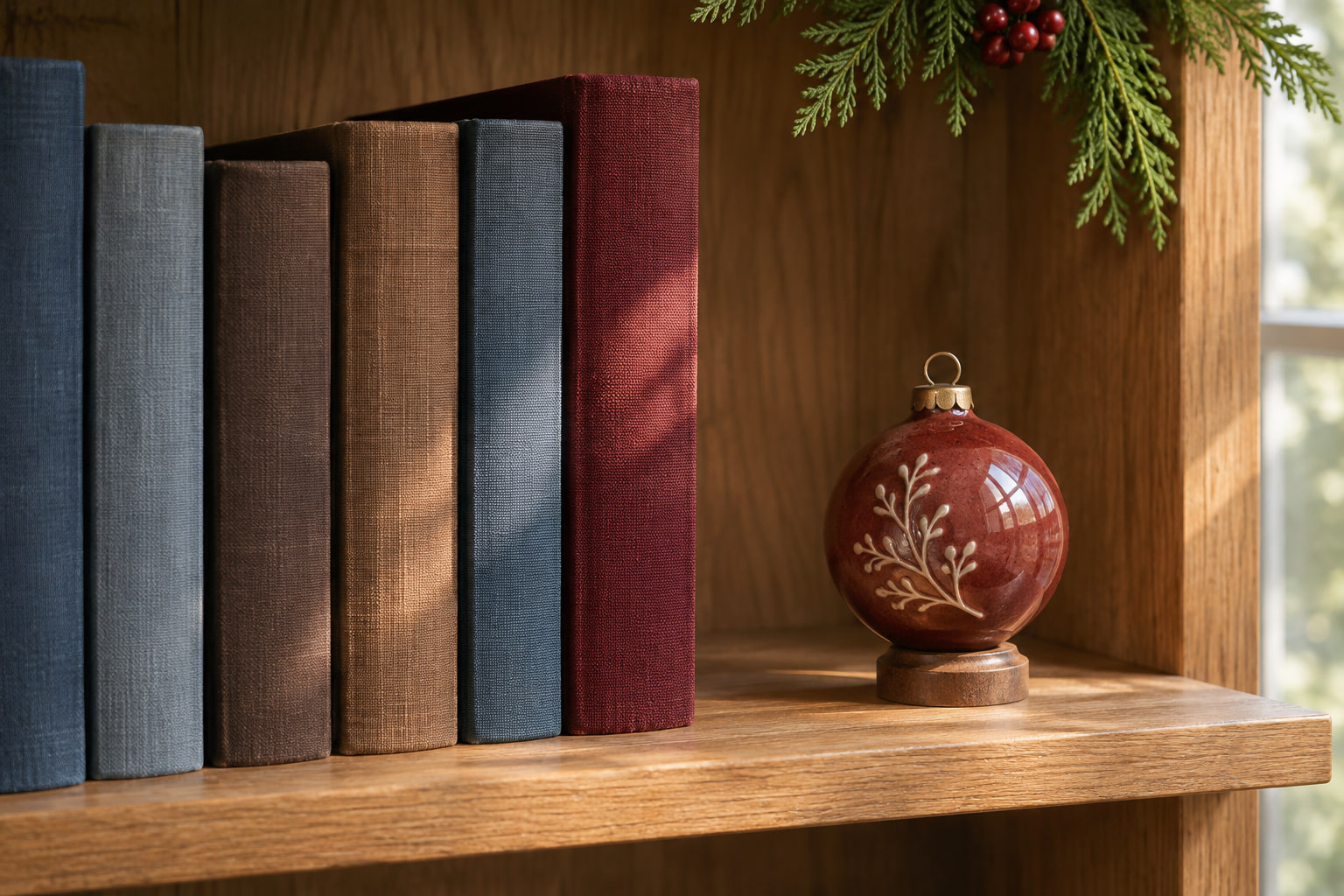
Look for one book spine that already stands out in a row. It could be an oxblood mystery novel or a green linen cookbook you still pull down. Hold a small Christmas decoration nearby to see whether its color makes the book’s color easier to notice. A muted red ornament can work beside a darker red spine. They can share a color without looking like a matched set.
Set the accent at the open end of the row where it can be seen without sitting in front of the book. When you take the book down, the ornament can stay where it is. If the two reds clash in evening light, try ivory beside the book and let its spine carry the brighter color.
18. Give a Freestanding Advent Calendar Room to Open
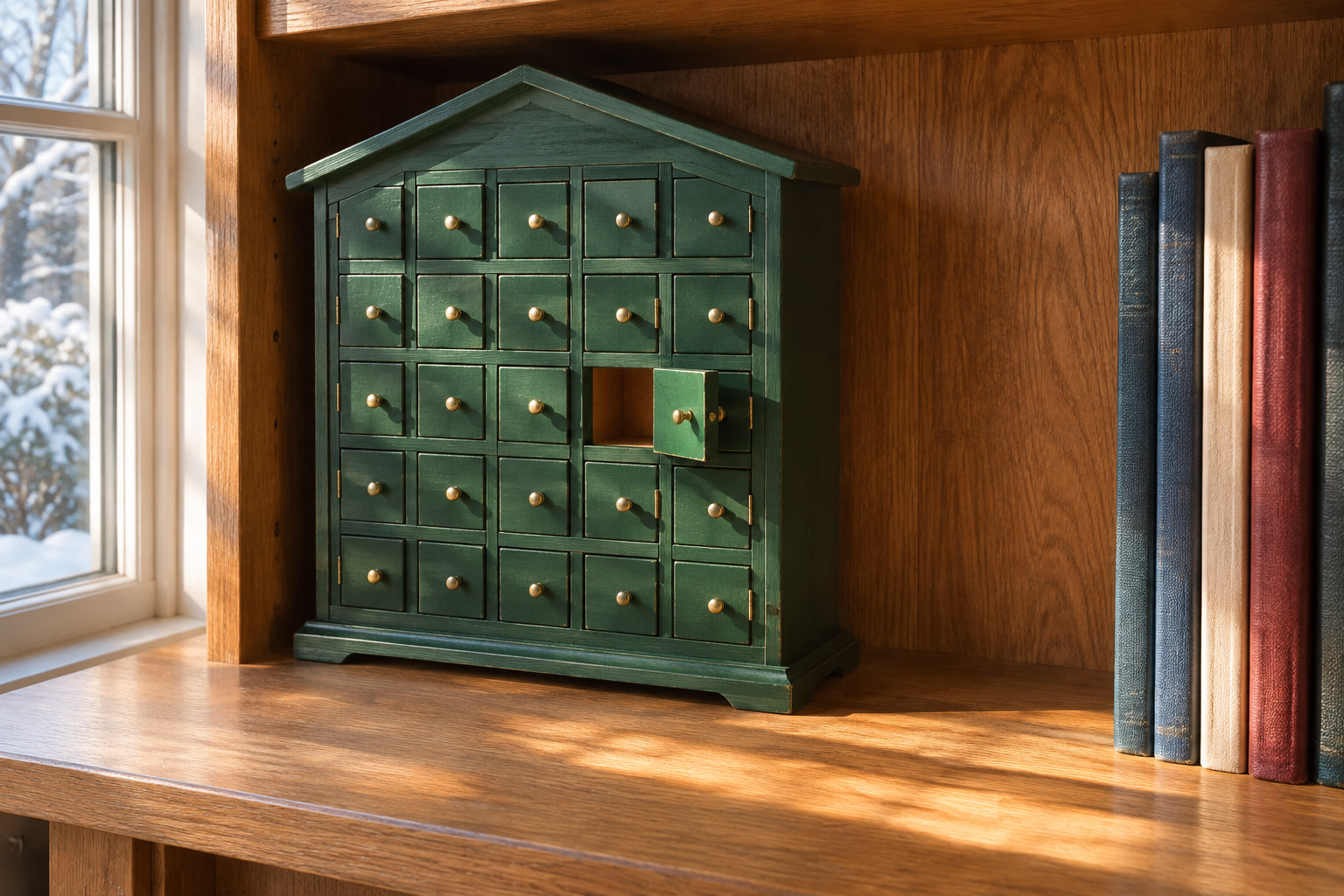
Put a small standing Advent calendar on an empty stretch of shelf that’s easy to reach in the morning. Open the largest door or drawer before you settle on its position. That will show you where its moving parts travel and how much room your hand needs. If a tall book sits right alongside it, check the door on that side too.
Reserve a small patch of clear shelf in front of the calendar. A low decoration can sit beyond that patch if you have the width. Try opening one door while your other hand holds the base. A calendar that rocks, has to be picked up, or catches on a neighboring spine belongs on a deeper shelf or a different piece of furniture.
19. Make a Flat Christmas Tree From Five Books
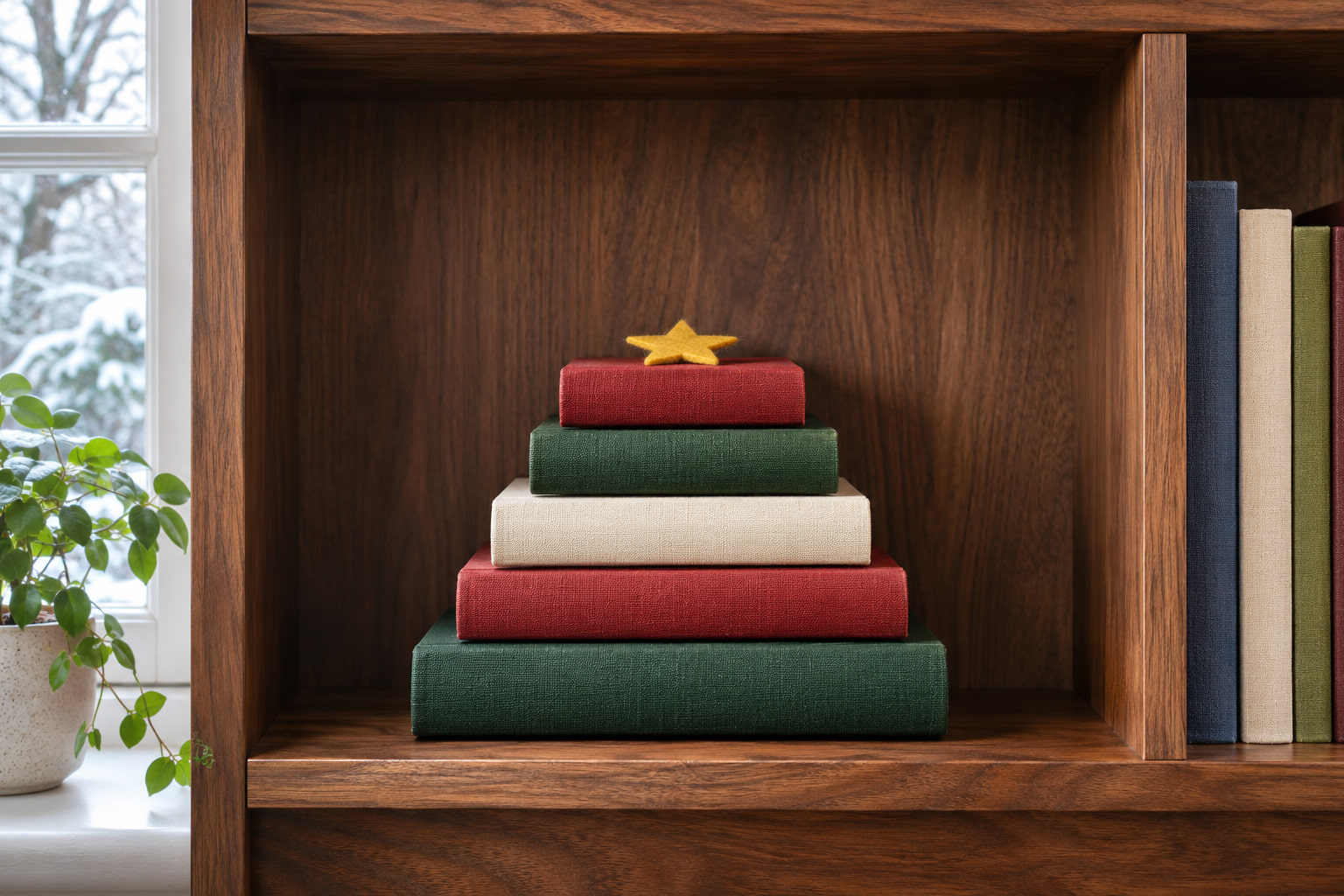
Choose five small hardcovers you can leave on display through Christmas. Stack them on their broad sides, starting with the largest book. Work up toward the smallest and pull the second or third book a little forward if the tree outline needs more definition. The stack should look deliberate from the sofa, with every book fully supported by the one below it.
Give the stack its own space beside a working row. Keep your current read and anything due back at the library out of it, so you won’t have to dismantle the tree to get a book you need. Leave the top book bare or rest a single lightweight felt star flat on its cover. That small top detail makes the stepped outline look like a Christmas tree.
20. Set Aside One Bay for Books You’re Giving Away
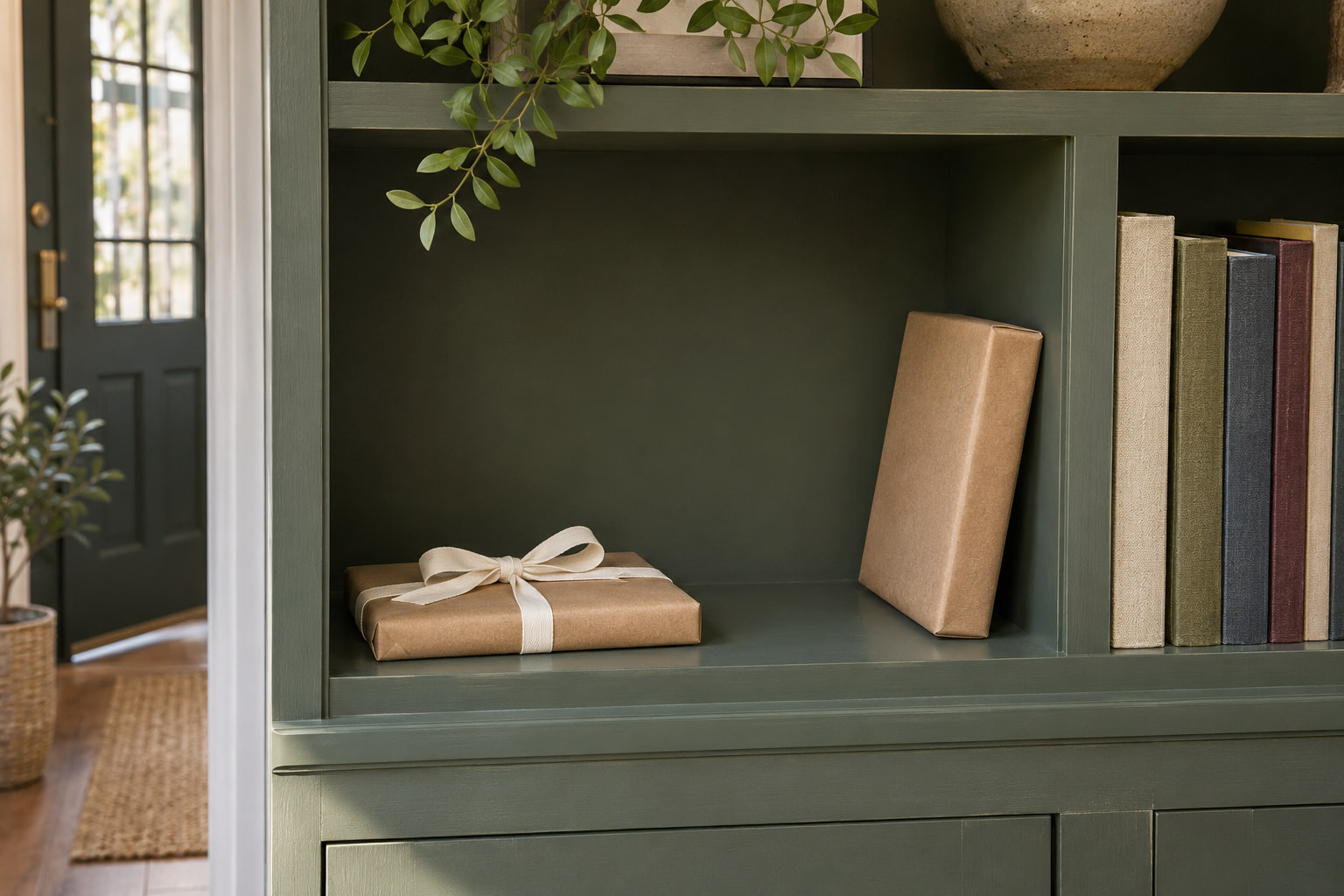
If you’re giving books this Christmas, reserve one small bay for the ones that are ready to go. Put each parcel on its edge if it stands easily, or lay it flat with a little room to lift it. Use a narrow ribbon on one package to give the group a holiday detail. Choose the shelf nearest your usual exit if the books are heading out over several days.
Give each gift a spot in the order you expect to hand it over. Put the first one nearest the open edge and keep the bay separate from books you’re still using. If the shelf is full, move the gifts into a basket elsewhere. An easily retrieved parcel makes a more useful display than a whole shelf you have to unpack.
Once the shelves are decorated, use them normally for an evening. Take a book down, turn on the reading lamp, and see what catches your eye from the sofa. Move whatever gets in your way. The shelf is ready when the room feels like Christmas and getting to the book you want still feels easy.
Discover more from HomeTrendora
Subscribe to get the latest posts sent to your email.