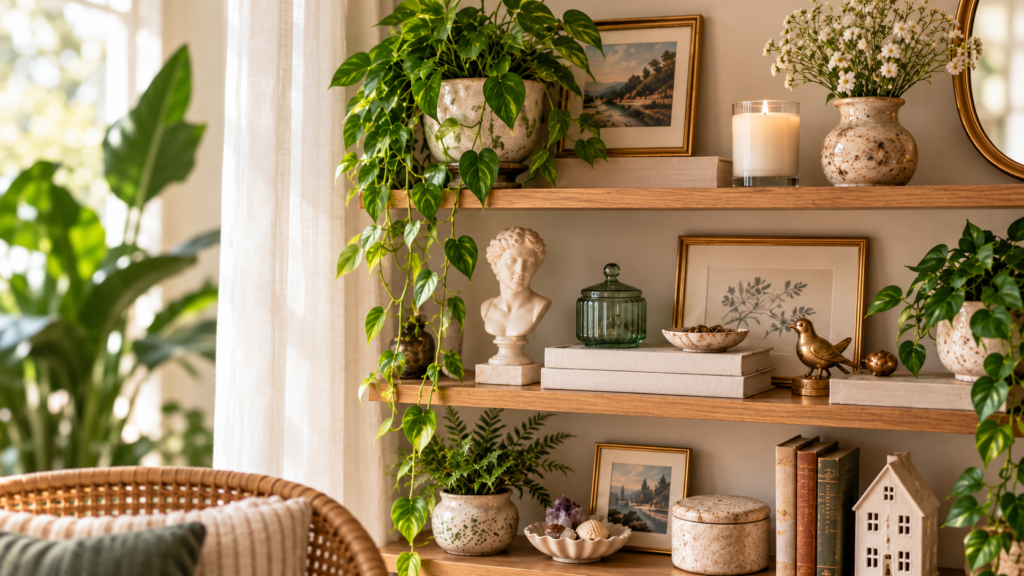
A small squishy collection can disappear into a deep bin surprisingly quickly. The most useful storage lets you see the pieces, take one out without digging and return it without pressing the others into a tighter pile.
These 12 squishy storage ideas start with the actual size and type of your toys. Keep the maker’s care instructions and any protective packaging that belongs with each piece; soft foam, filled toys and other squishy materials do not all need the same treatment. Measure the largest piece with its packaging before choosing a container, then leave room for an ordinary opening and closing movement.
1. Start With a Shallow Divided Case
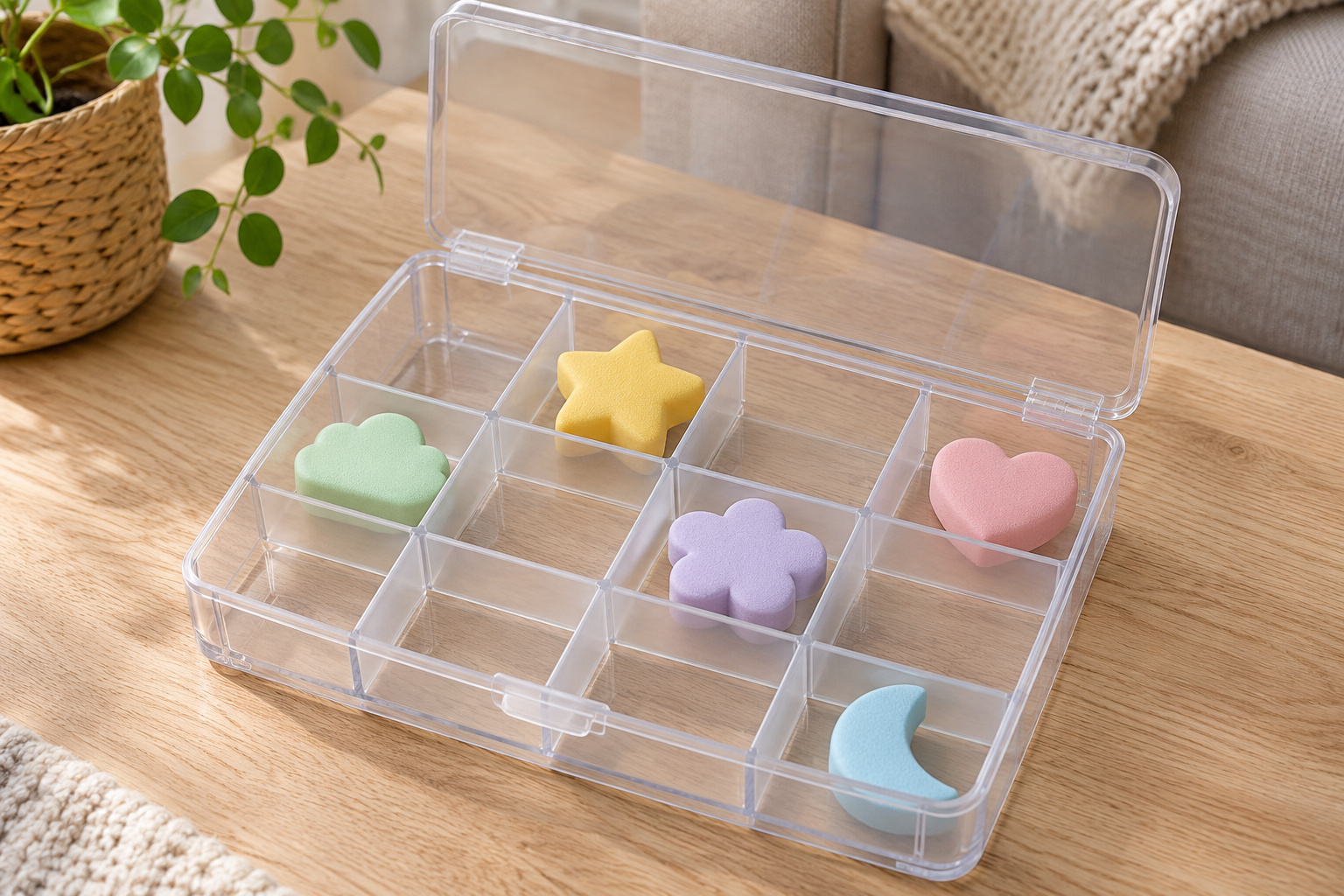
A shallow case works well for a modest collection of small pieces because the contents stay in one visible layer. Choose cells that hold the toys loosely, with enough room to lift one out by its own body or pouch. A lid that closes only when you push down on the contents is a sign that the case is too shallow.
Removable dividers are useful when some pieces are wider than others, but check which walls are actually removable. Fixed compartments can limit the largest usable space even in a generous-looking case. Compare the internal cell dimensions and lid clearance with your collection, rather than relying only on the outside measurements.
Leave a few cells empty at first. That spare space makes it easier to rearrange the group when a new piece arrives, and it prevents the storage from becoming a tight puzzle that has to be rebuilt after every use.
2. Keep Delicate Pieces in Their Own Original Pouches
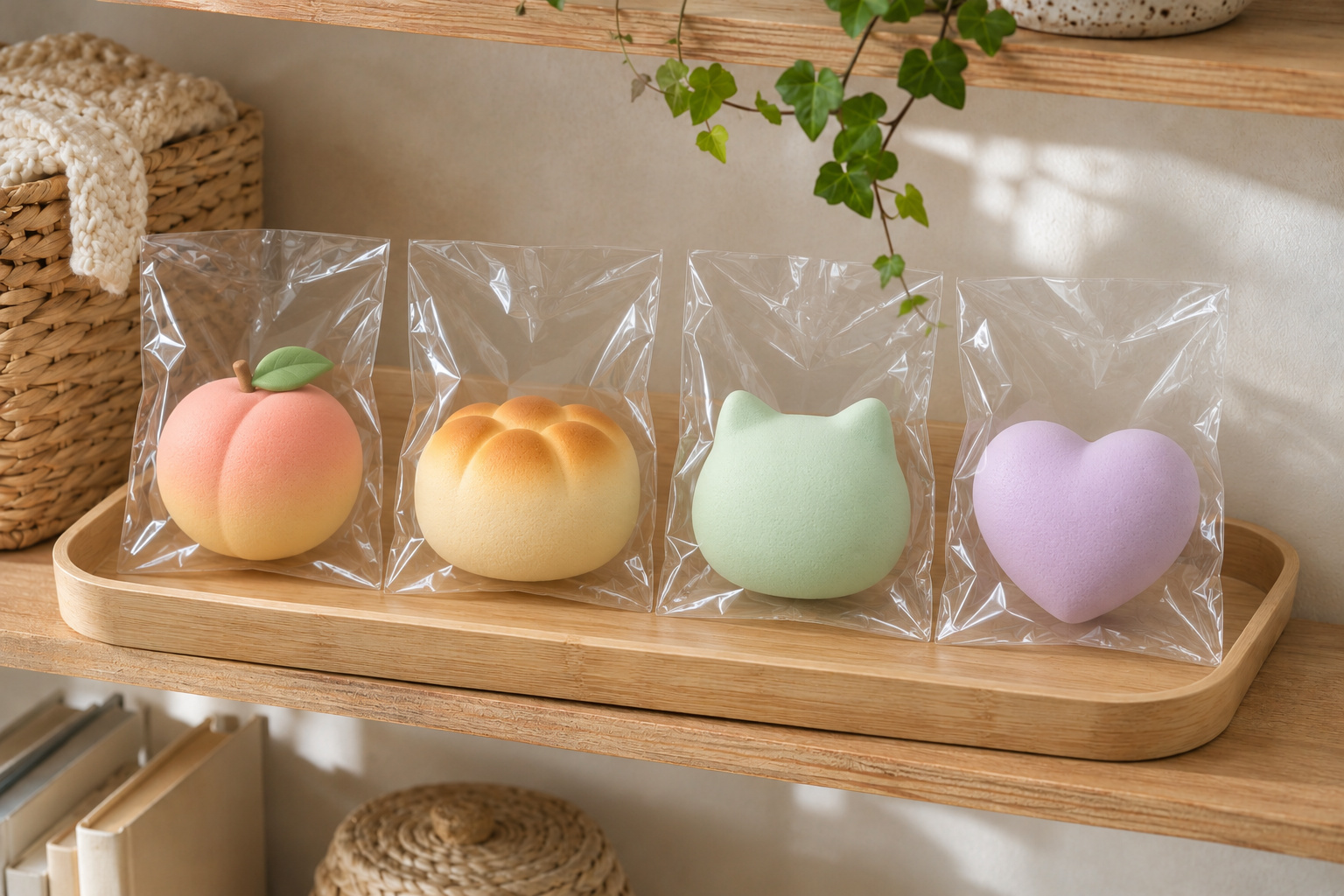
If a toy comes with a protective pouch that its maker intends you to keep, give the pouch a place in the storage system. It can separate a delicate or tacky surface from neighboring pieces without requiring an improvised lining. Keep the maker’s care information with the collection so the packaging has a clear purpose.
Lay the packets in one layer in a shallow tray or case. Avoid folding a packet tightly around the toy just to match the shape of the container. There should be room for the piece to rest naturally and for the opening to remain usable.
Check the specific instructions before replacing original packaging with a different plastic bag, paper or fabric. A container that looks tidy is not proof that every material inside it is compatible. Keep loose packaging accessible only as appropriate for the household and the toy’s age guidance.
3. Use One Removable Drawer Insert Instead of a Deep Pile
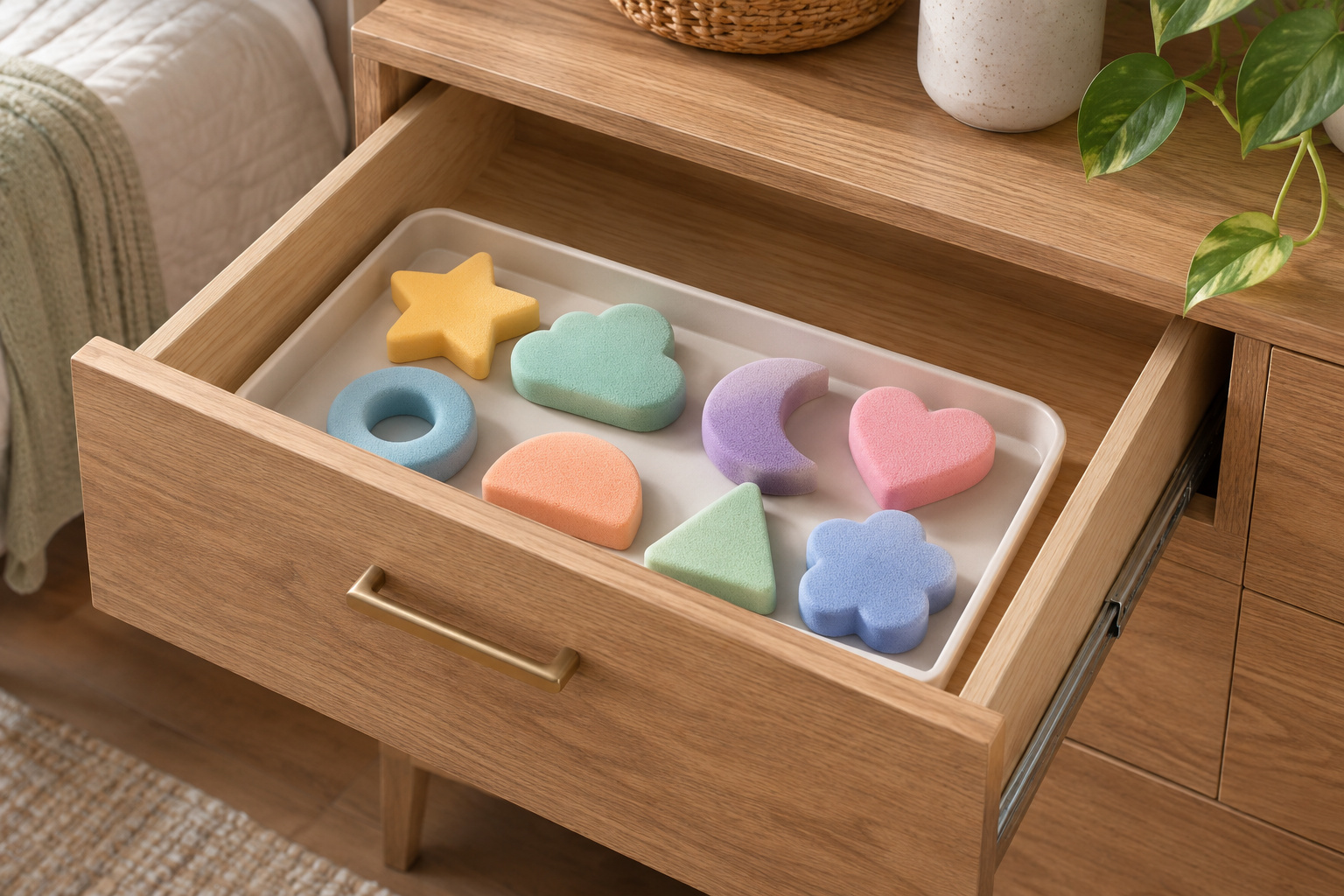
An existing bedroom drawer can hold a small collection without adding another storage unit to the floor. Choose a removable shallow insert that leaves the drawer runners and closing movement clear. Measure the available height with the drawer shut, including any structure above it.
Arrange the pieces in one layer, leaving a little space around each one. Smooth dividers can give different toy sizes their own areas, while pouches remain with the pieces that need them. Keep the insert light enough to lift out comfortably when the drawer needs cleaning.
Try opening and closing the loaded drawer before calling the arrangement finished. If a taller toy catches or tips, move it to a deeper container. The useful part of the insert is the clear view and easy return, not fitting every toy into the same drawer at any cost.
4. File Flat Packets Upright in a Narrow Bin
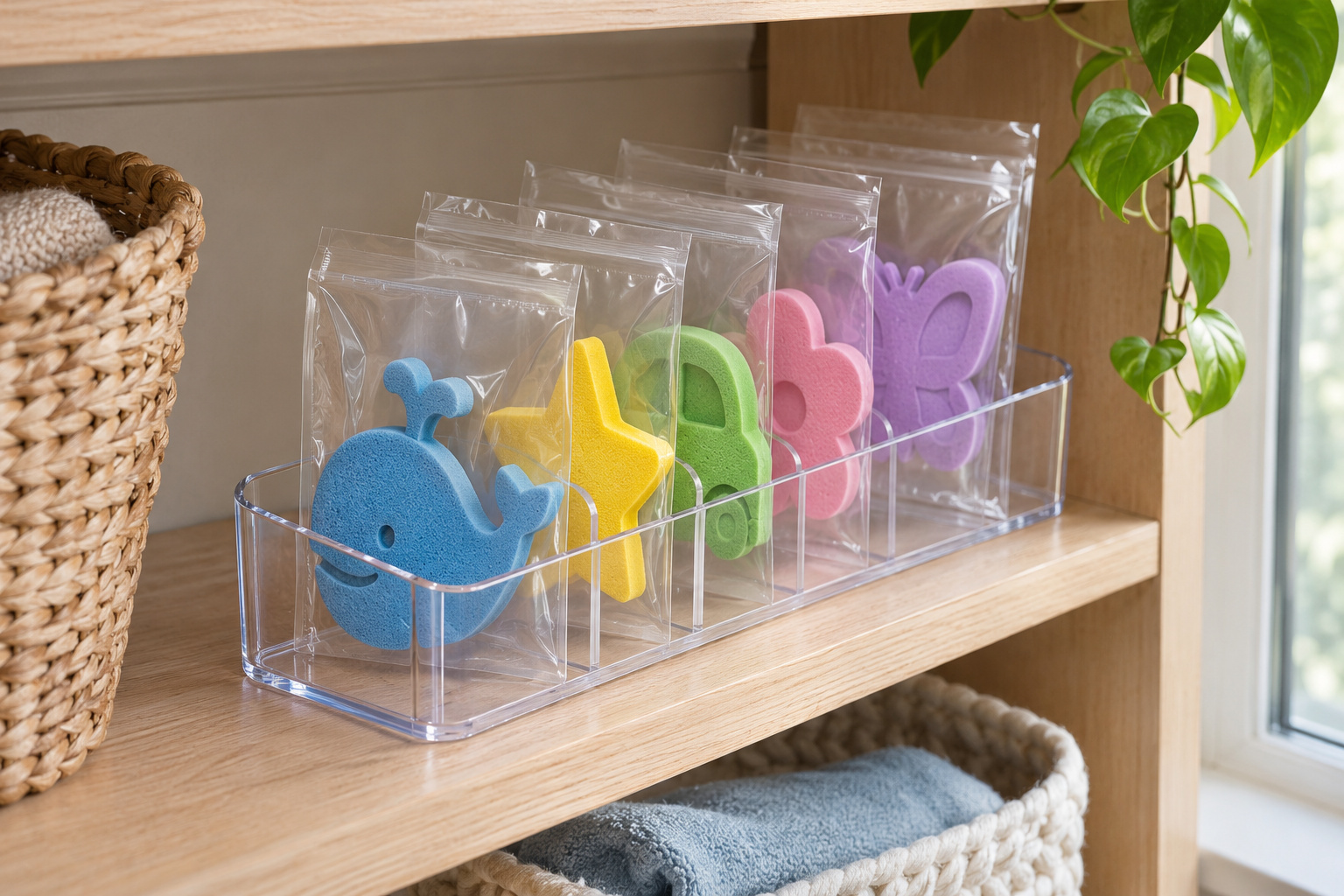
Some small toys come in relatively flat packets that are easier to browse upright than stacked. Use a narrow bin with a smooth interior and enough height to support the packets. The pieces should remain in their natural shape; this method is for packaging that is already flat enough to stand comfortably.
Add a few simple dividers if the row slumps when one packet is removed. Leave the tops visible so you can recognize the contents without pulling out the whole collection. Do not tighten the row until the packets must be bent or forced back into place.
Put the bin on a shelf where it can be lifted out normally. A row filed behind several other boxes is no easier to use than a deep pile. If the packets vary greatly in size, make two small groups instead of making the shortest ones disappear behind the tallest.
5. Give Larger Squishies a Separate Lidded Box
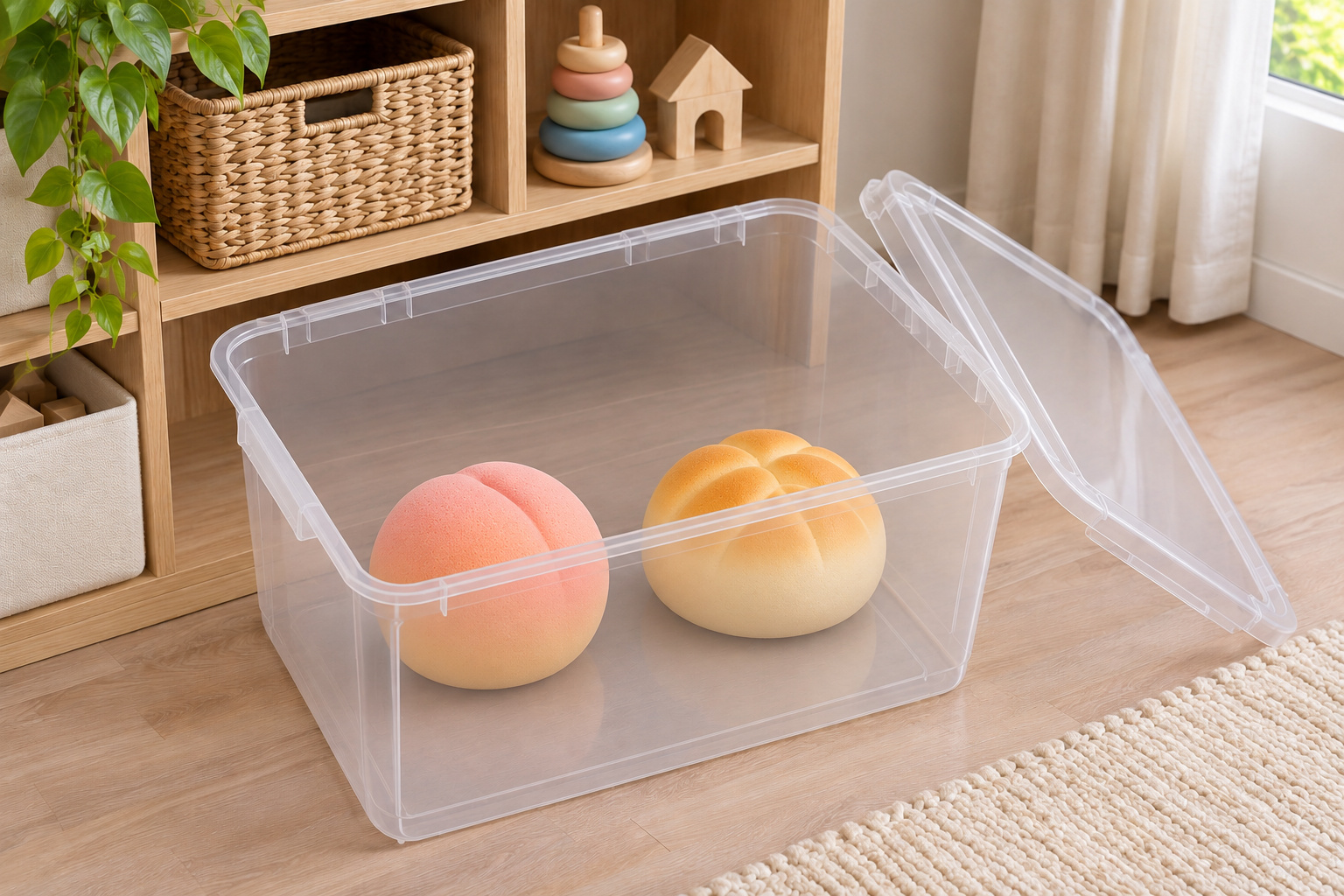
A larger toy may need its own deeper box while the small pieces stay in a divided case. Choose a smooth container whose usable height and width let the toy rest without pressing against the lid. Two larger pieces can share a box when they fit side by side with room around them.
Keep the interior simple. A deep decorative basket can catch a delicate surface, and a tightly fitted liner introduces another material to check against the toy’s care guidance. Retain suitable original pouches where required, rather than assuming bare contact with any container will be fine.
Try retrieving the larger piece before choosing the box’s final shelf. You should be able to open the lid fully and lift the toy without dragging it across a sharp edge. A plain box that works is more useful than a beautiful one that needs to be unpacked from a stack first.
6. Carry the Current Selection in a Small Caddy
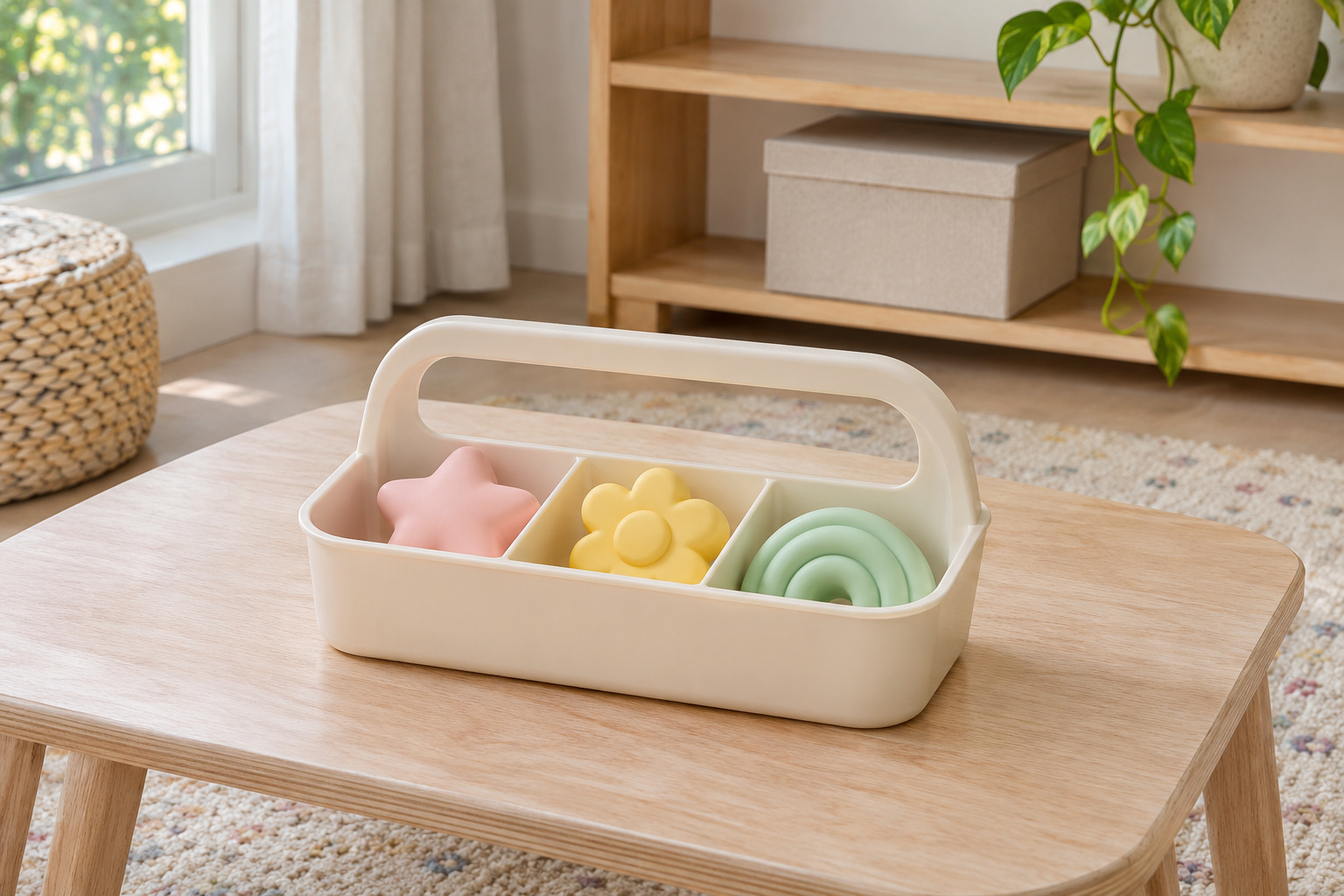
A lightweight caddy can hold the few pieces currently in use while the rest of the collection stays put away. Choose one with a comfortable handle and roomy sections, keeping the load below the handle so it remains easy to pick up. This creates a portable selection rather than another full storage bin.
Give each section only the pieces it can hold loosely. Keep pouches with toys that need them and avoid mixing in markers, glue or other supplies that could soil their surfaces. The caddy belongs on a stable table or shelf when it is not being carried.
Return the toys to their longer-term places when the selection changes. If you are also organizing the room around several kinds of play, these colorful playroom ideas show how separate activities can have useful homes of their own.
7. Fit One Closed Collection Box Into a Bedroom Cubby
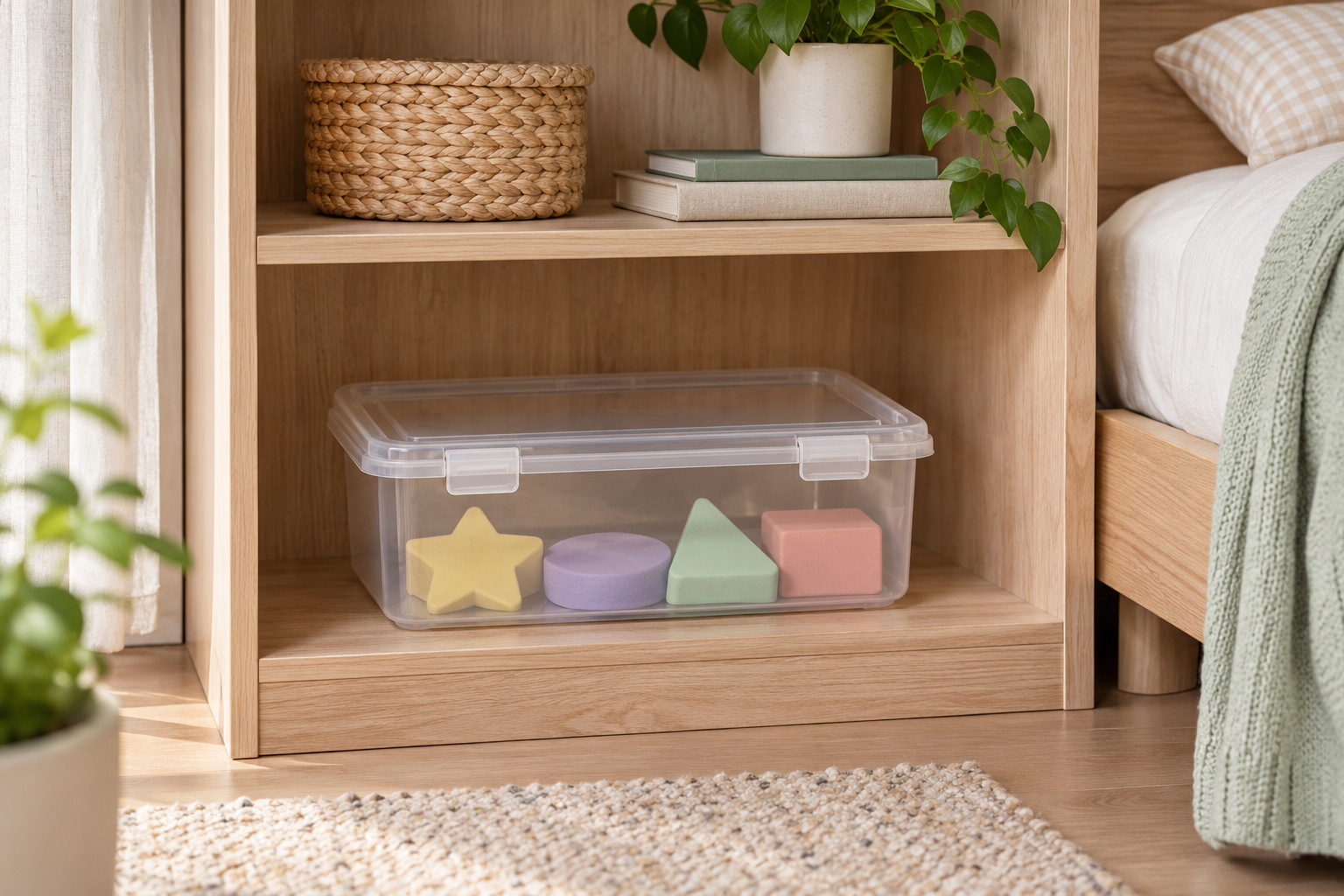
One closed box can give a bedroom cubby a clear storage role without turning the entire shelving unit into a toy display. Measure the shelf opening and the box’s widest points, including handles, latches and lid edges. Leave space at the sides so it can be grasped rather than pried out.
Check where the lid will open. A low cubby may work best when the whole box is brought to a table first; a hinged lid needs enough room behind and above it. Keep the case on a shelf that supports its full base and expected load.
Choose a reachable location suited to the household instead of automatically putting the collection on the highest shelf. The goal is a box that returns to the same place easily. A closed container is a storage choice, not a substitute for any access restrictions required by the toys’ age guidance.
8. Make a Clear-Front Grid for the Favorites on Display
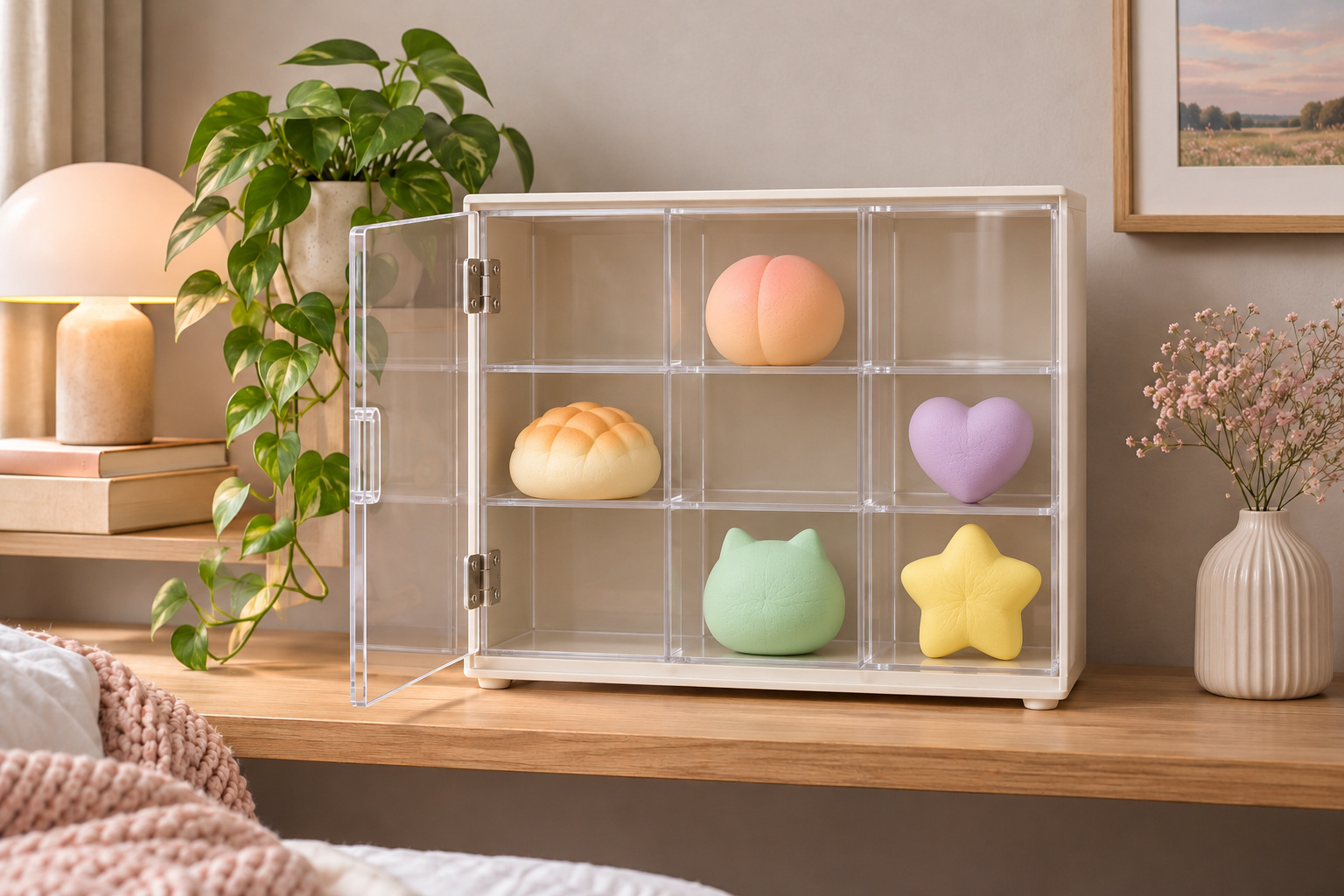
A small compartment display can turn a few favorite shapes into an intentional arrangement. Choose a clear-front box with cells large enough for the actual pieces and their pouches. Set a rounded shape beside a taller one, leaving some cells empty so the collection has a readable rhythm.
The door or front panel should open without disturbing the toys. Check how the display is supported or mounted, and use the manufacturer’s fittings for the intended location. A shallow ledge that barely supports the box is not a good base for something you open regularly.
Keep the rest of that shelf relatively quiet. The grid works because the individual shapes can be seen, not because every cell is filled. Rotate a few favorites when you want a different display instead of crowding the existing arrangement with the whole collection.
9. Use a Shallow Underbed Box Without Compressing the Toys
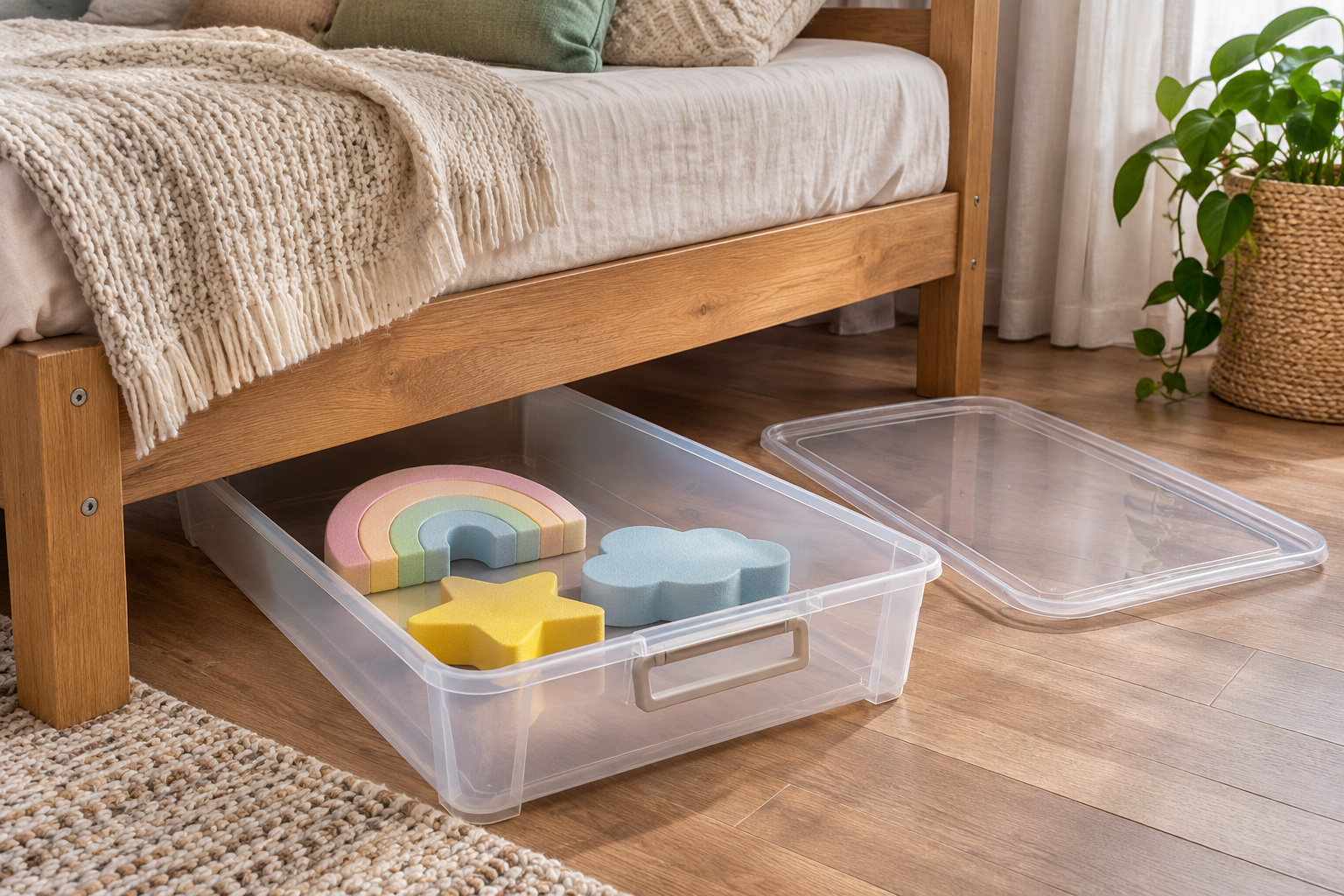
A shallow underbed box can use space that is otherwise awkward, provided the bed frame clears the closed lid. Measure the lowest obstruction along the box’s whole path, including legs and support rails. Allow room for the box to slide out without catching the mattress base.
Keep the toys in one loose layer and use a smooth divided insert if the pieces otherwise roll into one end. A low box is only useful for toys that genuinely fit its height. Do not rely on squashing a soft toy to create the clearance needed to put the lid on.
Choose a handle that remains reachable from the side of the bed. If getting the collection out requires shifting a heavy nightstand, another location will probably be easier to maintain. Follow the maker’s storage conditions rather than treating every underbed space as suitable for every toy material.
10. Give Pocket Storage Only the Pieces It Actually Fits
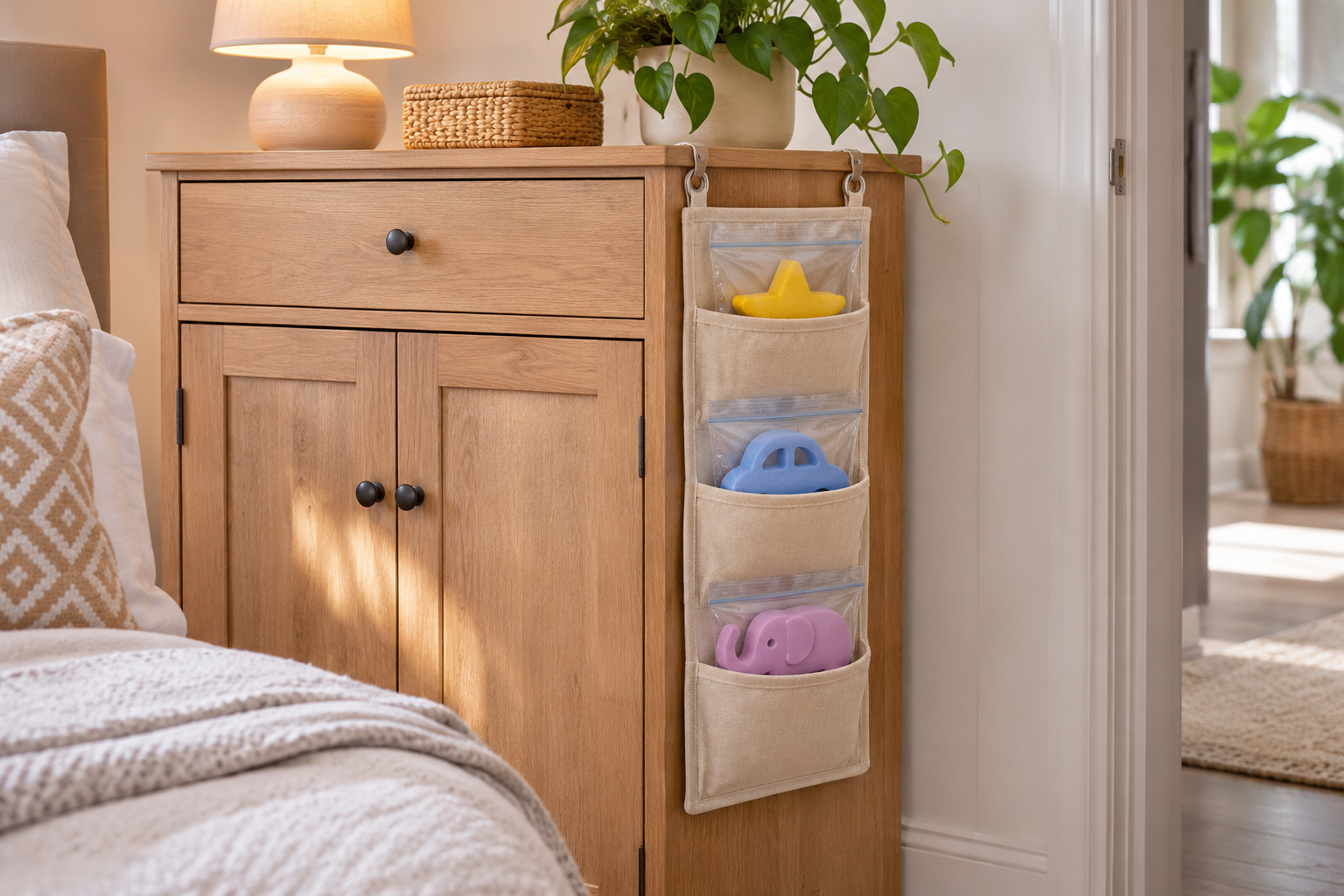
A pocket organizer can hold a few lightweight pieces when each pocket is smooth, roomy and easy to reach. It suits a small selection better than a whole collection of mixed sizes. Keep any required pouch around the toy, and leave the upper part visible instead of pushing it down into a narrow pocket.
Check both the pocket dimensions and the organizer’s allowed load before using it. Secure it as intended on a suitable surface, keeping cabinet doors and normal movement clear. Do not assume an organizer designed for shoes or craft tools is automatically right for a delicate toy surface.
Stop if a pocket bulges, folds a packet sharply or grips the toy tightly. The piece belongs in a different container. Pocket storage earns its place through easy retrieval; it should not turn putting things away into a squeezing exercise.
11. Keep the Rotation Set in a Different Cupboard
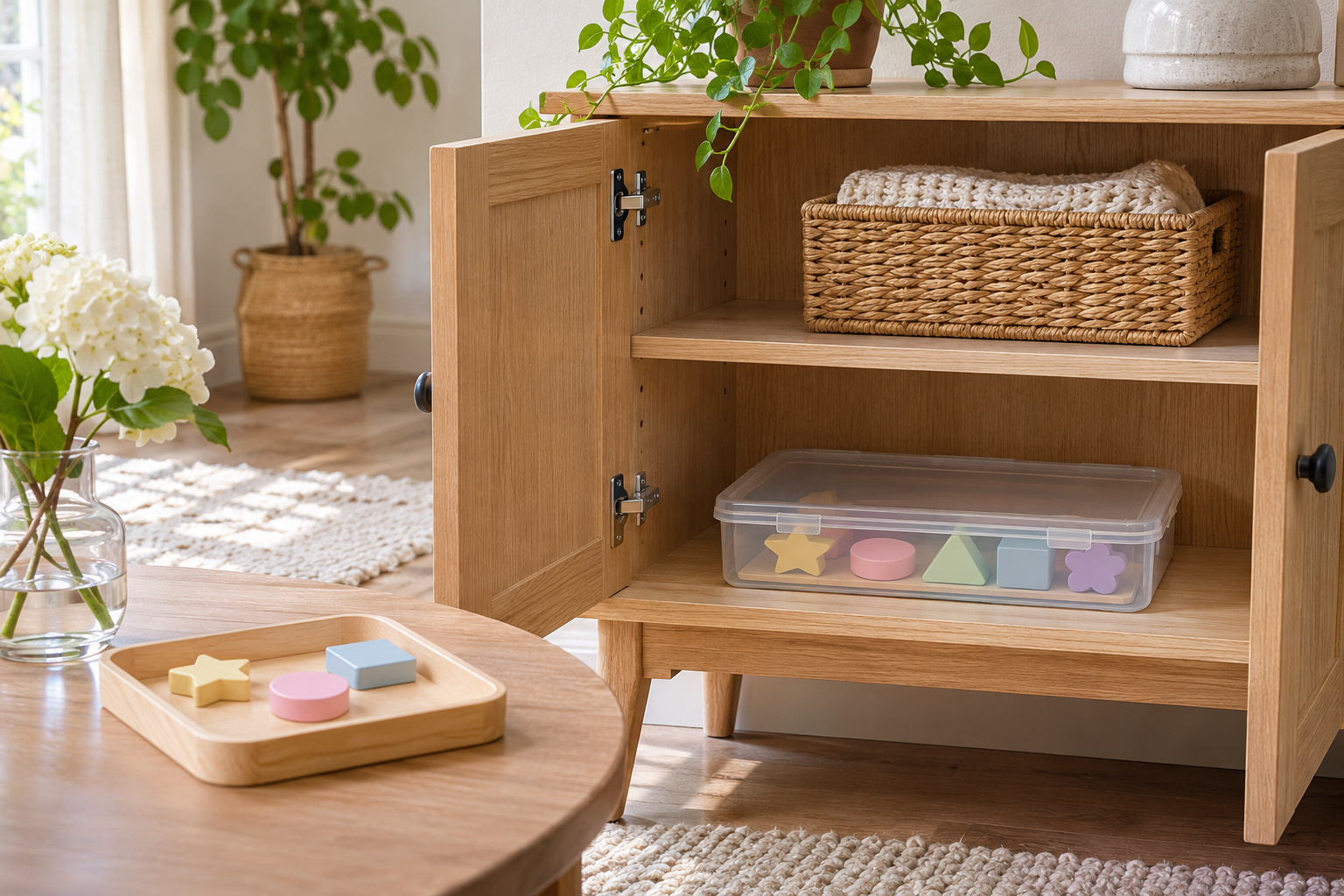
If only a few toys are used at a time, keep the remaining collection in a separate, clearly assigned box. A suitable cupboard shelf can hold that rotation set while the current selection stays in a caddy or tray. Keep the stored toys in their appropriate packaging with enough room around them.
Choose a cupboard that meets the toys’ storage instructions and does not mix the collection with cleaning products, medicines or leaking household supplies. The box needs a supported base and enough clearance to be removed without tilting the contents into a pile.
When you change the active selection, bring the rotation box to a clear surface and swap a few pieces. Keep each toy’s pouch and care information together. A consistent return place makes a small rotation easier to maintain than several half-filled containers scattered around the room.
12. Add a Temporary Return Tray Beside the Play Spot
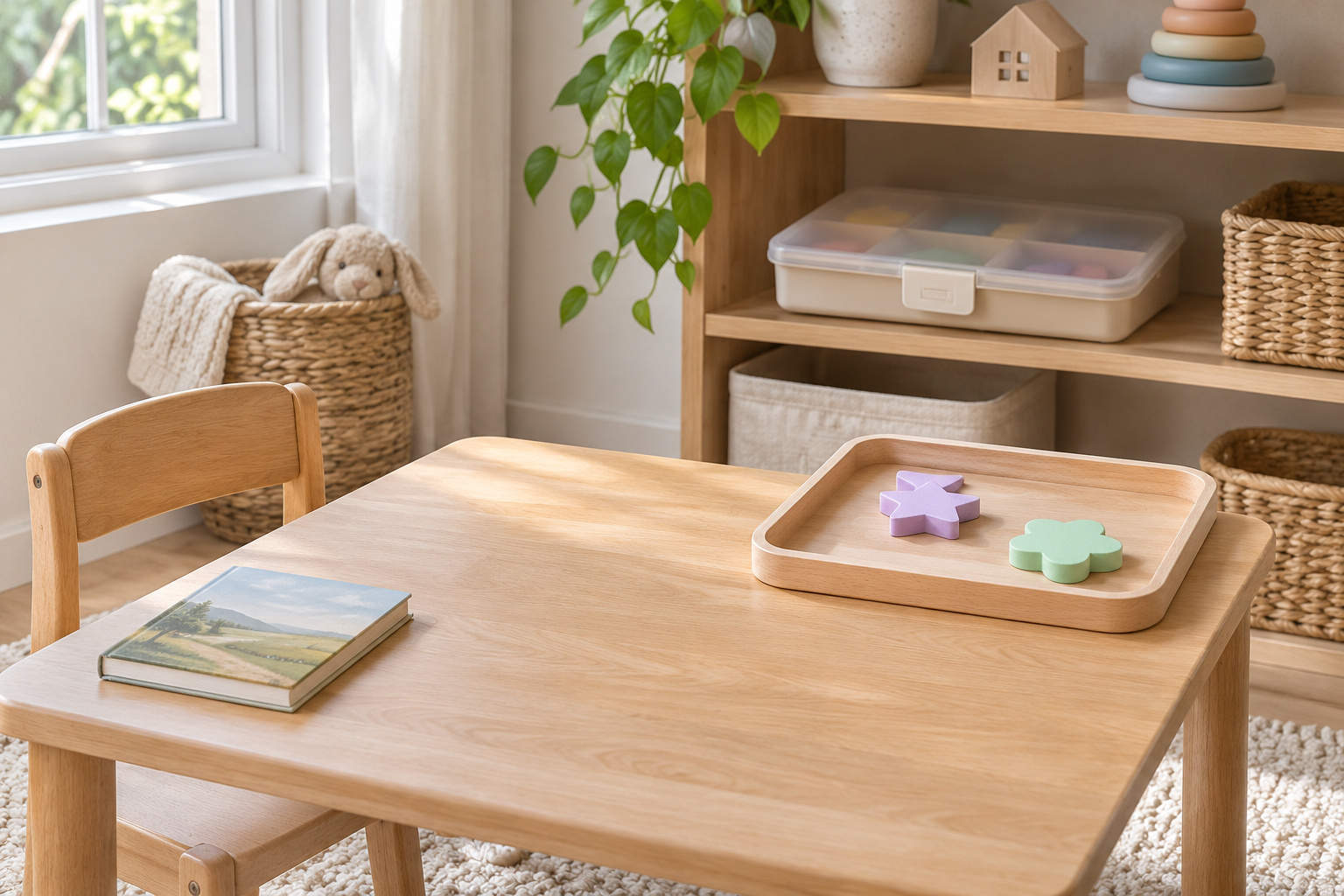
A small return tray can catch the pieces that are finished with but have not yet gone back into their case. Put it beside the usual play spot, leaving the main table area available. A shallow, smooth tray makes the contents visible and provides a simple intermediate step during a room reset.
Keep the tray temporary. At the end of the activity, check the toys according to their own care guidance and return them to the assigned containers. Avoid sending damp, dirty or damaged pieces straight into a closed collection box without following the maker’s instructions.
If the tray regularly overflows, reduce the active selection or make the final storage easier to reach. The tray should help the return routine, not become a second permanent pile. Two or three pieces waiting briefly are easier to deal with than an entire collection waiting for a major sort.
Begin with the container that solves your collection’s biggest problem: poor visibility, awkward access or pieces pressed together. Test it with a small selection before buying more. A system that opens, closes and resets easily will do more for the room than matching containers that do not fit the toys.
Discover more from HomeTrendora
Subscribe to get the latest posts sent to your email.