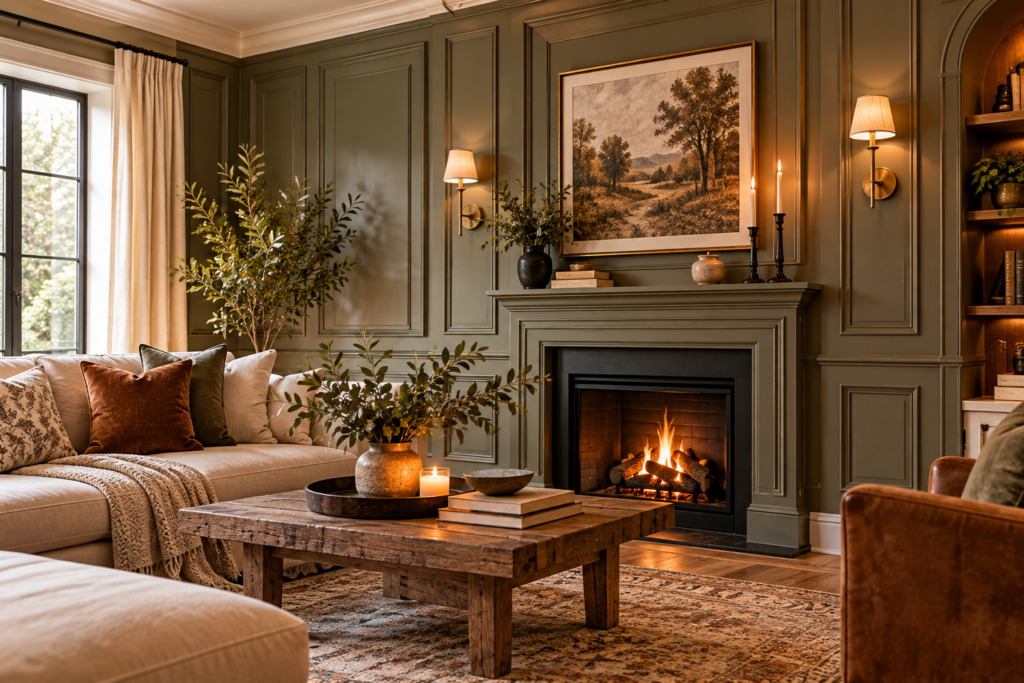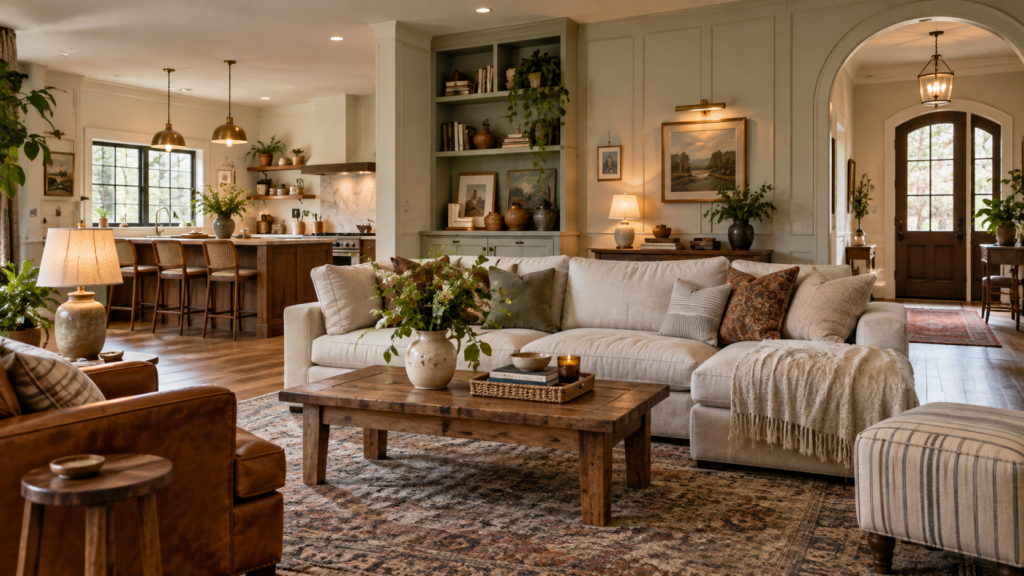
A whimsigoth bedroom comes together through a few recognizable choices: celestial pattern, rich color, old wood and objects that look collected over time. The challenge is giving those details room while keeping the bed, reading spot and storage comfortable to use.
These 13 ideas offer different starting points, from a single patterned wall to a working vintage dressing table. Choose the feature that suits your existing furniture, then repeat one or two of its colors elsewhere. You can build the room gradually without making every surface equally busy.
1. Give One Wall a Small Celestial Pattern
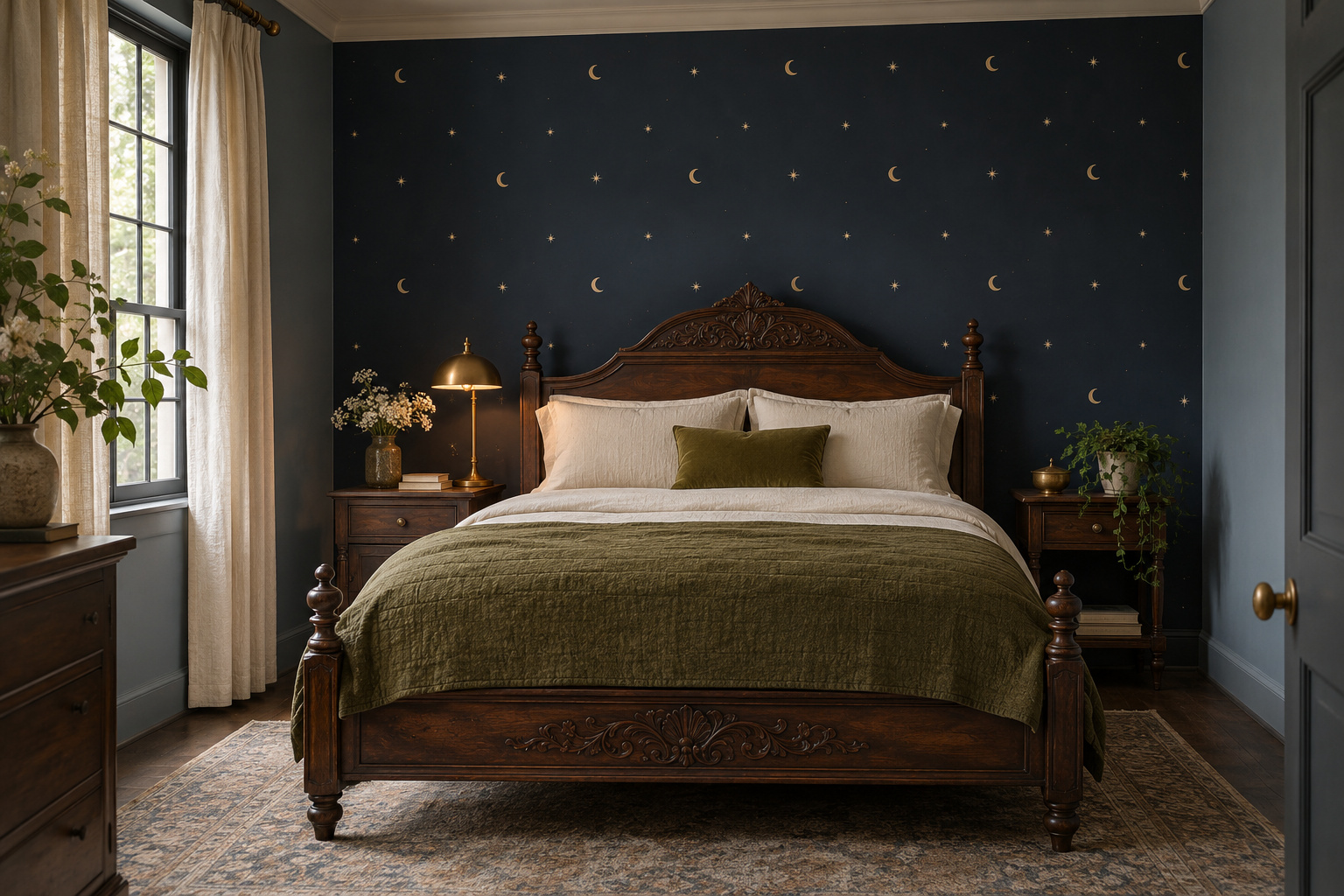
Use a wall of fine stars, small moons or an original constellation pattern to establish the room’s direction. Behind the bed, the pattern has a natural boundary and can be seen as a complete surface. Midnight blue with muted gold marks feels quite different from scattering large metallic stickers across every wall.
Look at a generous sample in the bedroom’s daylight and evening light before choosing wallpaper or a painted treatment. A small repeating motif can become visually dense across a full wall. Keep the neighboring walls quieter so the pattern remains readable instead of blending into several competing prints.
Let plain bedding and the outline of the headboard break up the field. One small star-print cushion can repeat the idea elsewhere, but it need not match every point on the wall. The room gains a clear focal plane while the rest stays easier to arrange.
2. Anchor a Jewel-Tone Reading Corner With a Wingback
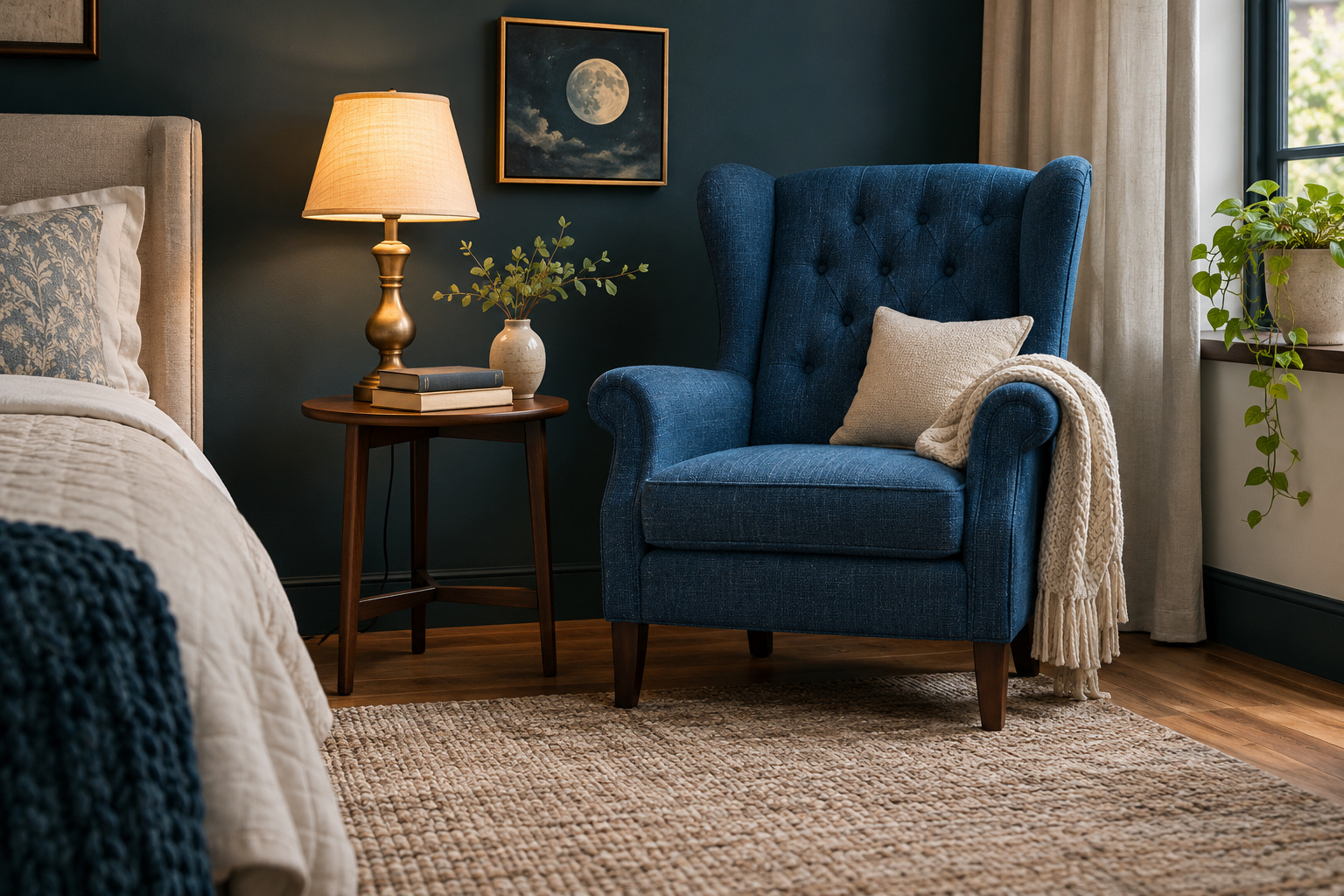
A tall wingback chair gives a collected bedroom a recognizable reading place. Try jewel blue against deep teal, plum or a quieter gray-green wall. The high back supplies shape even when the upholstery is plain, leaving the celestial detail to a small artwork or nearby lamp.
Check the chair’s footprint with tape on the floor, including the room needed to sit down and stand up. Place a small table within an ordinary reach and choose a reading light that falls on the page. A beautiful corner loses its purpose when the chair blocks the wardrobe or the table is too far away.
Keep the small objects on the table limited to what you actually use. If the bedroom has an awkward window corner or a shallow recess, these cozy bedroom nook ideas offer more ways to work the seating into the layout.
3. Compose a Sun and Moon Pair as One Wall Feature
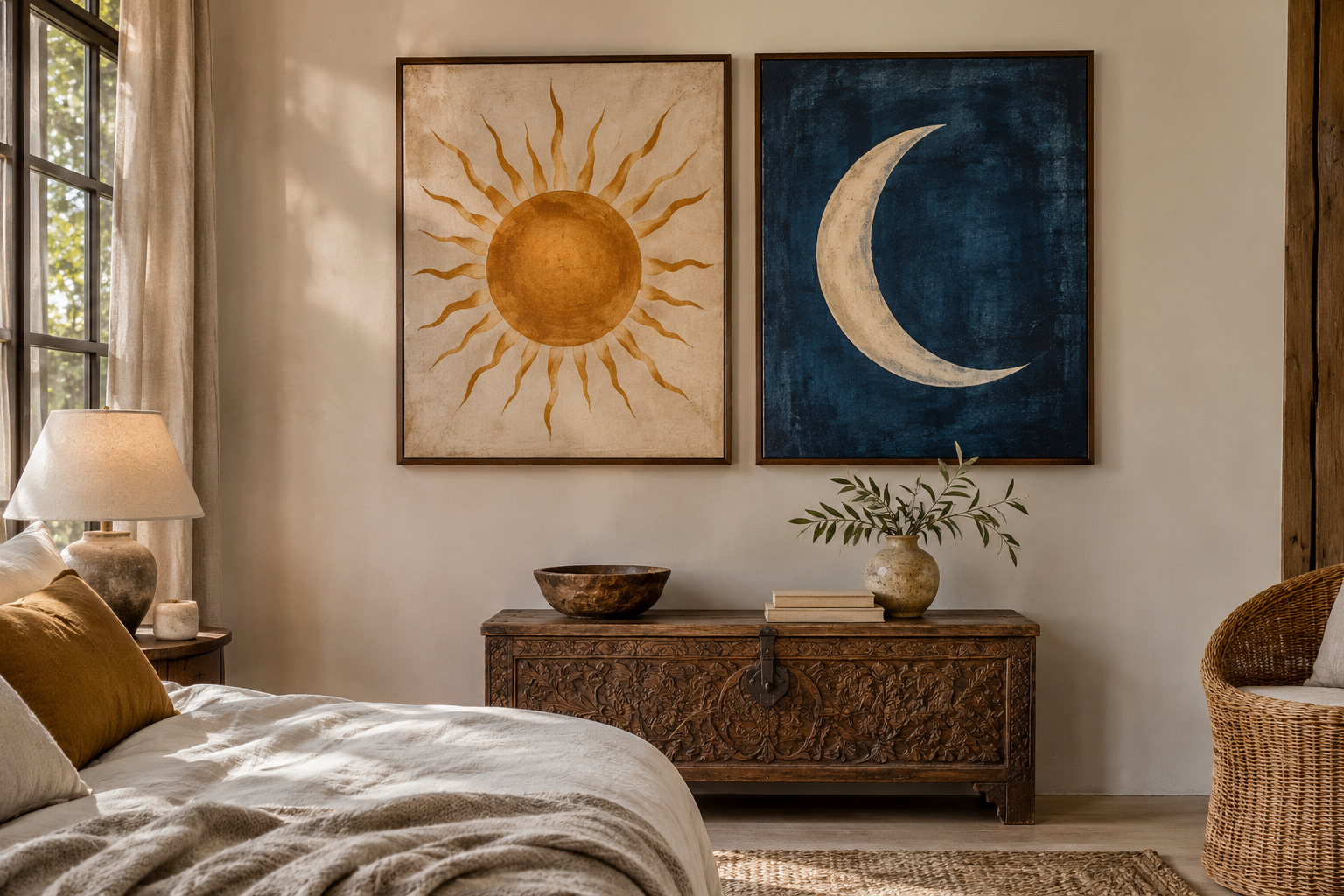
Give a sun and moon artwork the same frame finish so their different shapes belong together. They can be original paintings, unbranded prints or simple metal wall pieces. A warm sun beside a cool moon creates enough contrast without adding several more celestial symbols around them.
Lay the pair on the floor first and compare the gap with the width of the pieces. Use paper templates to judge the group from the doorway before hanging it with appropriate fixings. The visual center of a round sun may differ from that of a crescent, so align the overall composition rather than relying only on the shapes’ edges.
Hang the pair above a low chest or on a clear side wall where both can be seen together. Keep a tall vase from covering half the moon. The wall arrangement should remain a feature when the furniture is in normal use.
4. Turn an Existing Recess Into a Small Book Niche
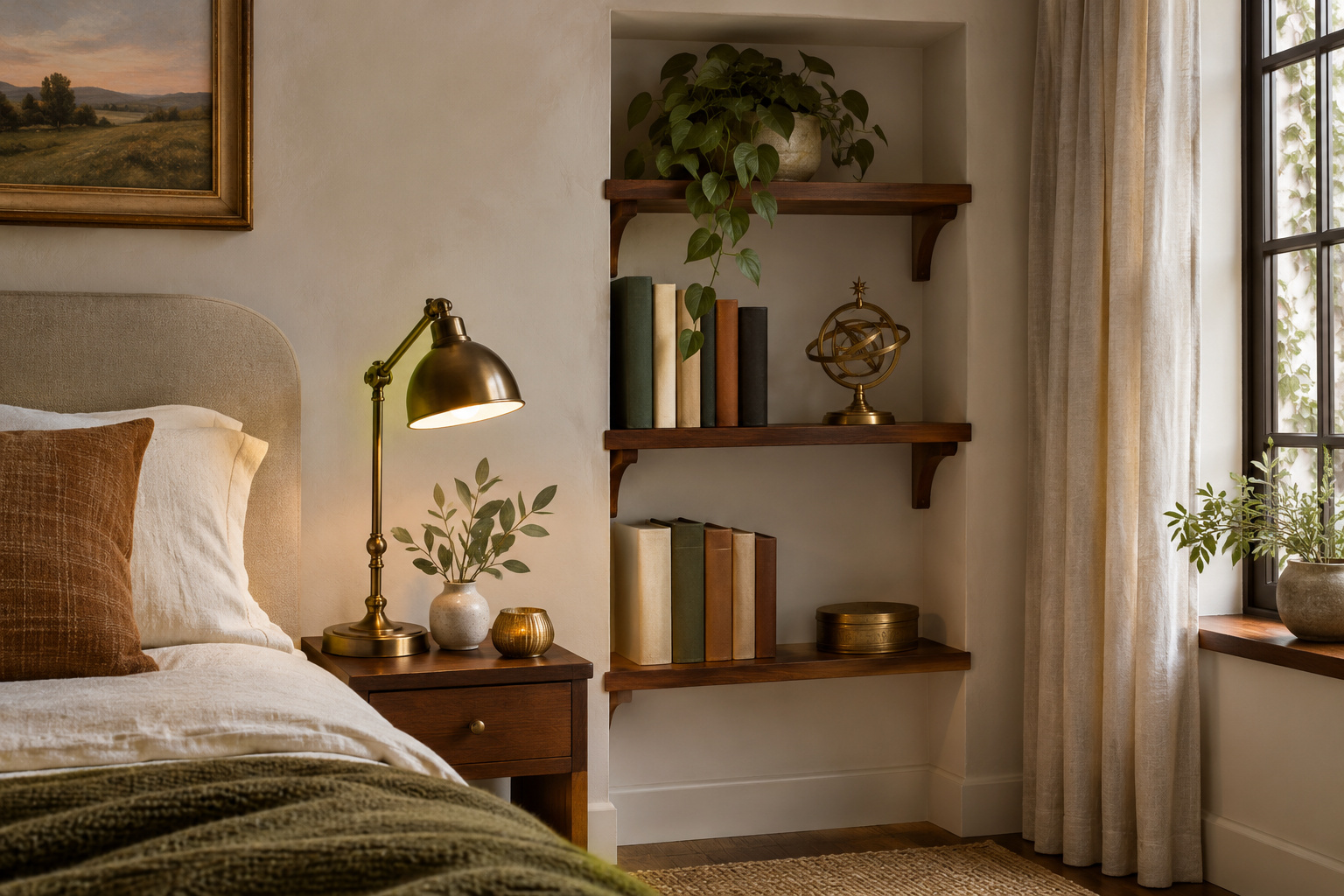
An existing recess can hold the books that otherwise gather beside the bed. Measure its width and depth at several points before choosing shelves; old walls are not always square. A dark timber finish can connect the niche to collected furniture without requiring another floor-standing cabinet.
Match the shelf depth and spacing to the actual books, including room to tilt one out. Shelves and fixings need to suit the wall construction and expected load. Keep taller reference books on a shelf that can genuinely accommodate them instead of turning every book sideways to fit a decorative spacing.
Reserve a little room for one small brass shape or a stone you enjoy, then leave the remaining shelves useful. This makes the niche part of the bedroom’s storage. It also gives a limited floor plan more breathing room around the bed and reading chair.
5. Let a Carved Four-Poster Carry the Architecture
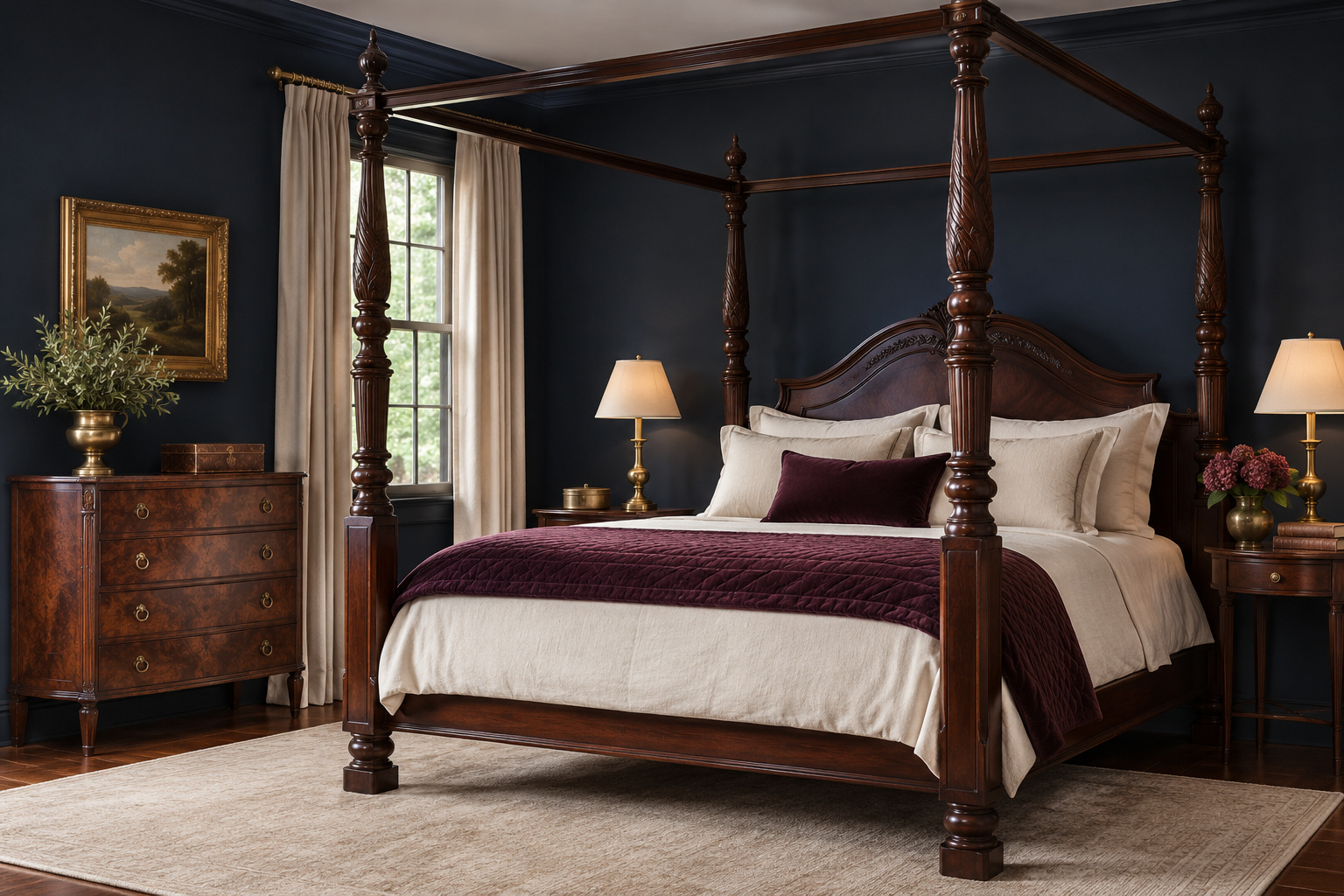
A substantial carved four-poster can provide the room’s strongest detail before any small decorations are added. Its posts define a frame around the bed, especially against a relatively quiet deep-colored wall. Look for a shape whose carving and proportions you enjoy from both the doorway and the side of the bed.
Measure the full height, outside footprint and route into the room, not just the mattress size. Leave space around the posts for ordinary movement and bedside furniture. A large bed squeezed between oversized cabinets can lose the architectural presence that attracted you to it.
Keep the linen tailored and the surrounding patterns selective. One faded rug, a plain coverlet and a well-scaled chest allow the woodwork to feel considered. Avoid hanging unrelated ornaments from each post; the frame already contributes an elaborate silhouette.
6. Layer a Velvet Coverlet Over Plain Sleeping Linen
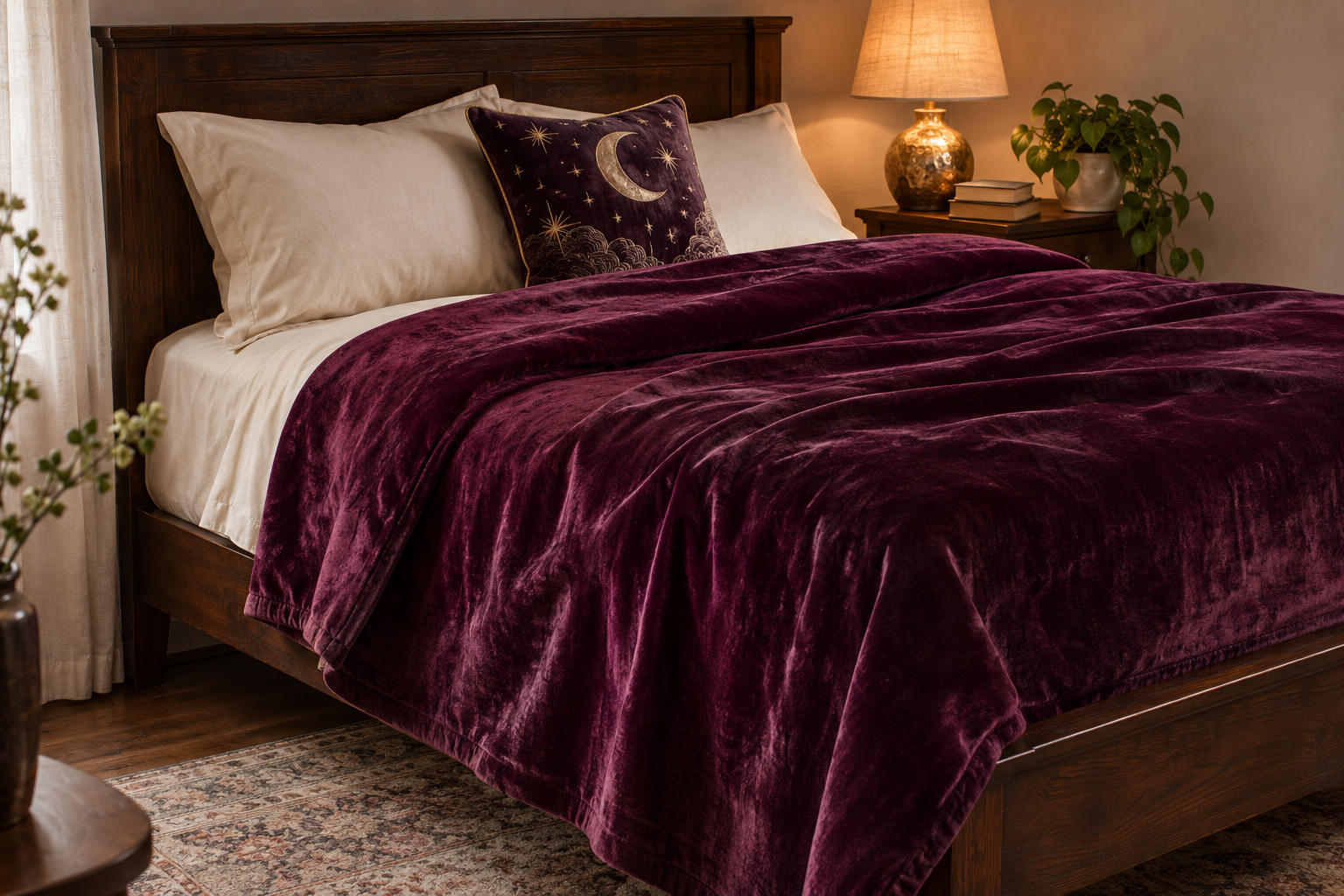
Use velvet where its texture can be felt and seen: a removable coverlet across the bed. Plum, moss or deep blue can give plain cream sleeping linen a richer upper layer. Fold it back near the pillows so the room shows both the velvet pile and the simpler fabric beneath.
Choose the layer for its weight, care instructions and how you prefer to sleep. A decorative coverlet can be folded aside at night instead of becoming another heavy blanket. Keep the pillows you actually use accessible, with a sensible place for any decorative cushion when it is removed.
Look at the velvet from both sides of the room; its pile can make one area appear lighter or darker. That change adds interest without another print. A small celestial cushion is enough to connect the tactile bed to the room’s broader theme.
7. Choose a Complete Stained-Glass Lamp for Colored Light
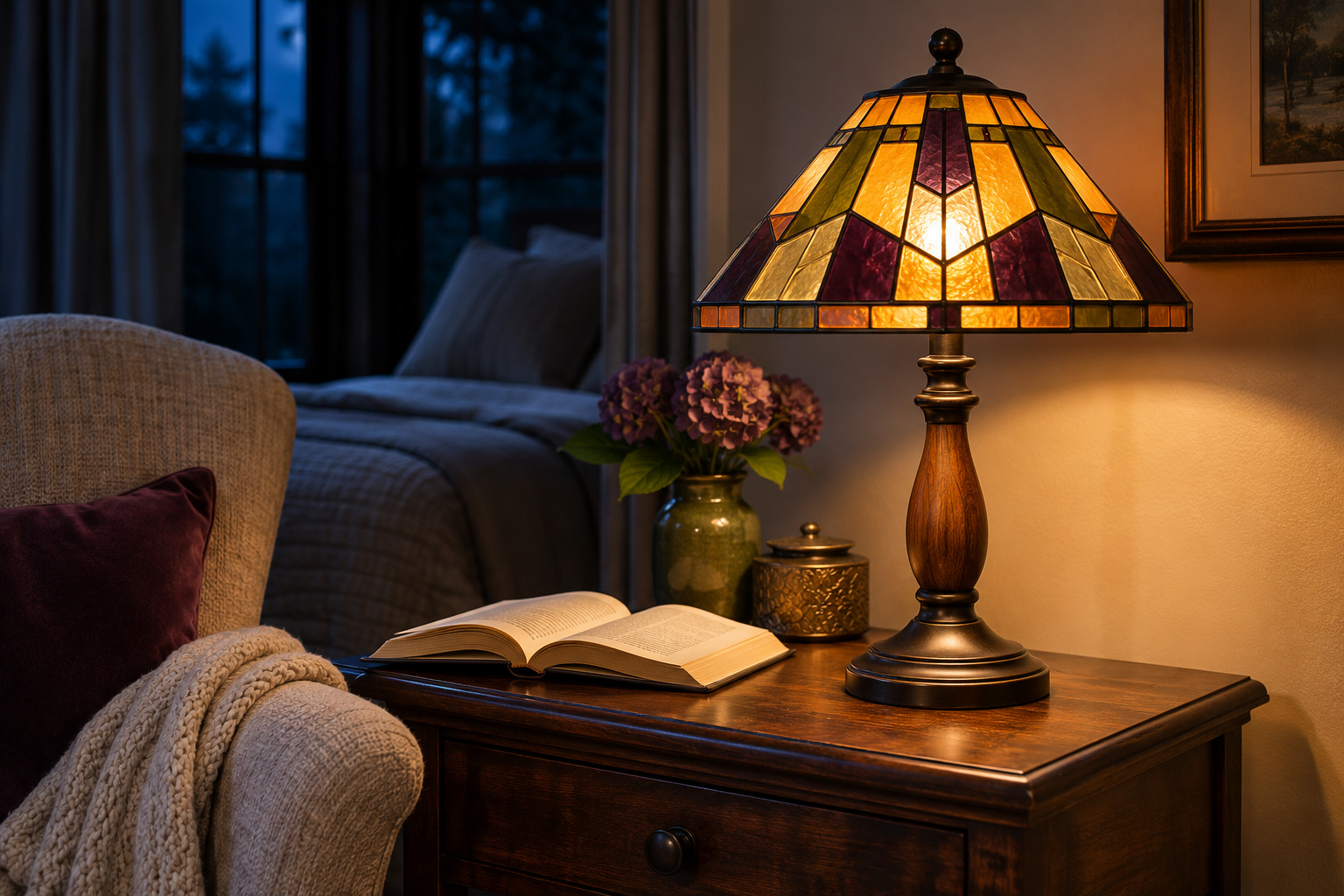
A stained-glass lamp can introduce amber, moss and plum in a small area. Choose a complete, sound fixture whose shade and base are meant to work together. The color comes from the glass itself, so nearby dark wood and a plain wall can provide a calm setting.
Place it on a stable surface with the shade clear of bedding and curtains, using the bulb type and wattage specified for the fixture. In a reading corner, check whether the light actually reaches the page; decorative colored light may need a separate task light nearby. Keep its cord out of the route around the bed.
At night, let the lamp illuminate a few useful objects rather than an entire shelf of props. An open book, a comfortable seat and the grain of a wood table create an inviting corner. You can judge the effect under your normal room lighting before adding another light source.
8. Give a Usable Vintage Sewing Table a Dressing Role
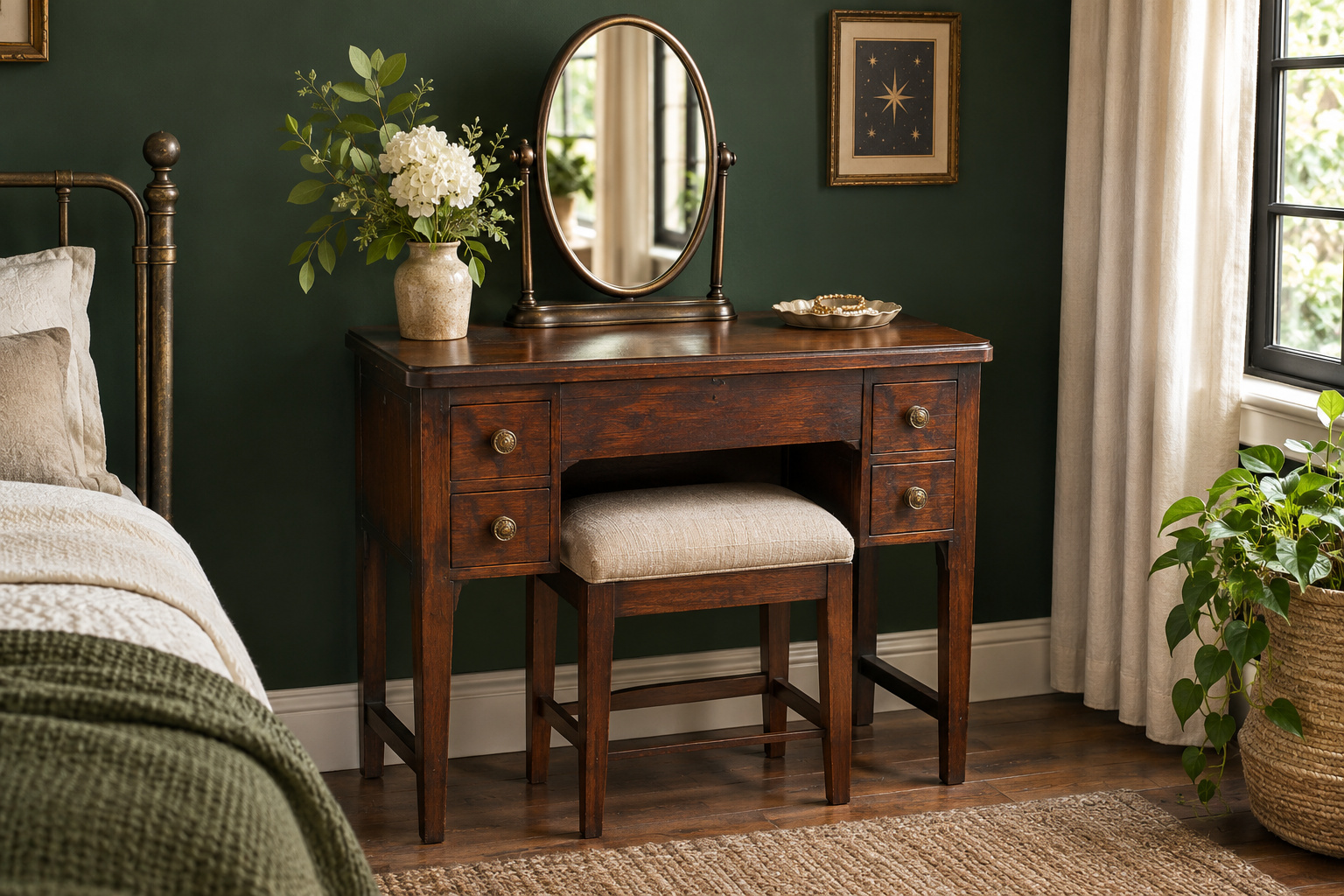
A closed-top vintage sewing table can become a compact place to get ready when its structure and height suit the job. Start with a stable piece and check that the top closes securely. Any remaining machine or mechanism needs proper support and should not interfere with the seat or your legs.
Try the stool or chair at the table before deciding on the arrangement. You need space for knees, a useful working height and room to stand without backing into the bed. A small mirror on a secure stand and one shallow accessory dish may be all the top needs.
This is a practical reuse of furniture you already have, rather than a reason to buy an unsuitable antique. If the top is delicate, use an appropriate removable protective layer for the objects you plan to place on it. Keep drawers working and leave the main surface ready for everyday use.
9. Put Small Curiosities Behind Glass Cabinet Doors
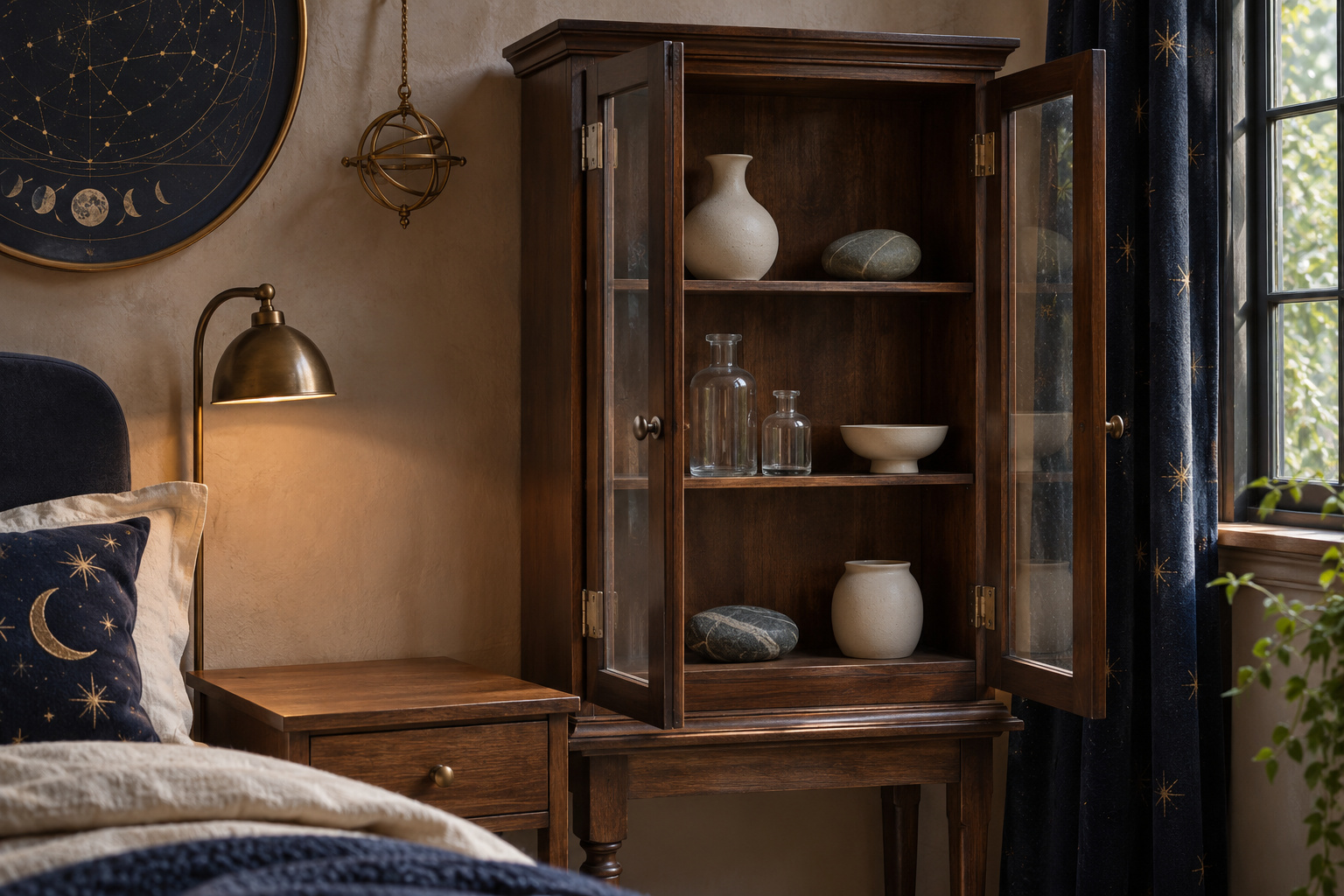
A little glass-front cabinet gives collected stones, bottles and small decorative objects a defined home. Choose a few pieces with different outlines, then separate them enough that each can be seen. A darker backing can help clear glass and pale objects stand out without filling every inch of the shelf.
Check shelf depth, load limits and the space needed to open the doors. Use any anchoring required for the cabinet and place heavier items where its construction supports them. Leave room above tall bottles to lift them out normally, rather than threading them between crowded neighbors.
Keep this display distinct from the bedside surface where you need water, a book or glasses. The cabinet allows the collection to remain part of the room while those everyday surfaces stay useful. Add a new object by reconsidering the group, rather than automatically creating another row.
10. Repeat an Ogee Shape Without Filling Every Wall
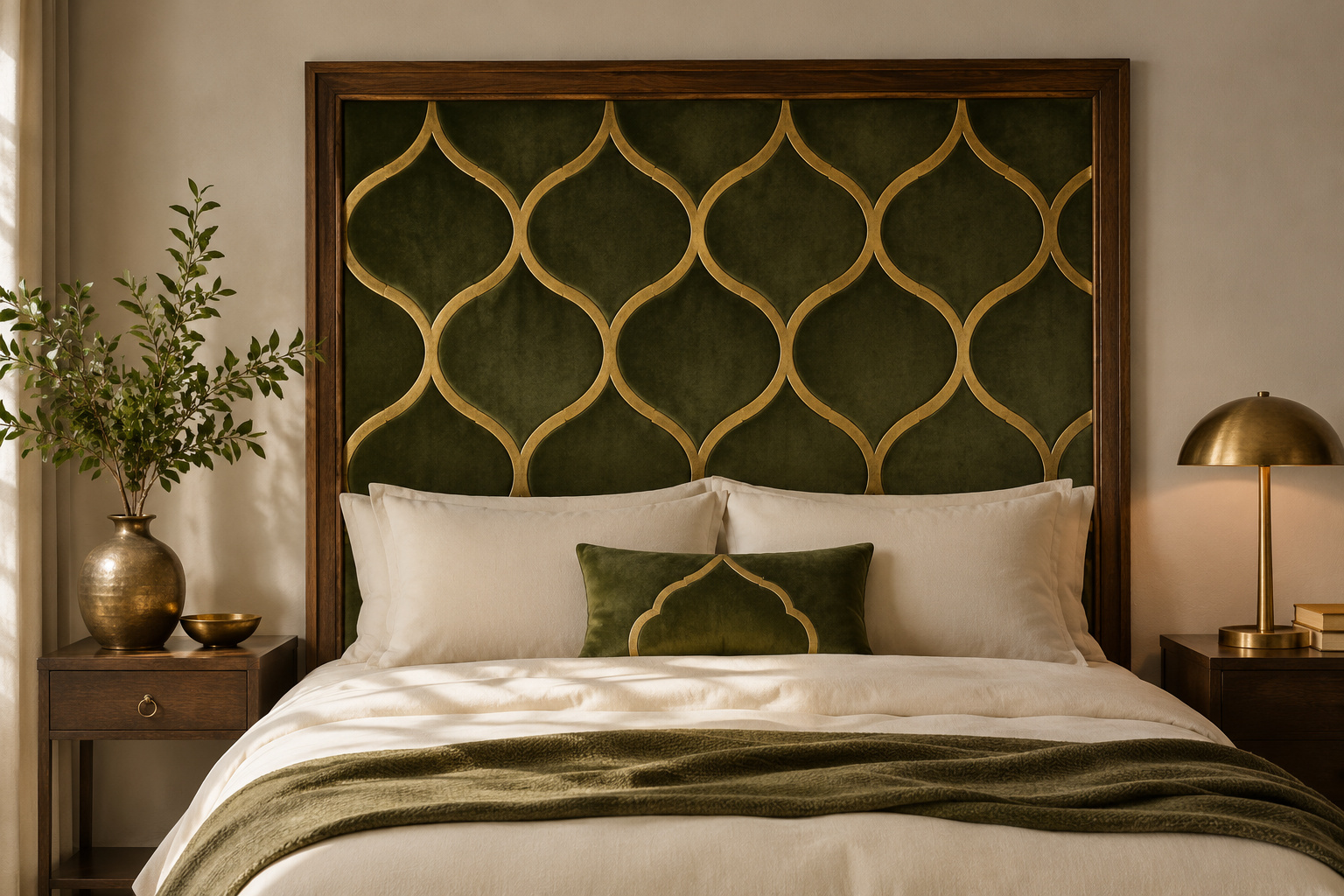
An ogee is a pointed, curved outline that can appear in a headboard, textile or decorative panel. Choose one substantial version as the starting point. Against a deep moss or blue background, its alternating curves can supply much of the room’s pattern without another wall covering.
Repeat the shape once on a smaller piece, such as a cushion or framed design, while changing its scale. Several identical repeats across the bed, curtains and rug can make the room feel coordinated more rigidly than intended. A looser relationship leaves space for collected objects that do not belong to a matching set.
Keep the furniture around the strongest motif relatively simple. The shape is easier to appreciate when its edge is visible. If it appears on a headboard, avoid pushing a tall bedside arrangement directly across the outline.
11. Pair a Faded Rug With One Fine Star Print
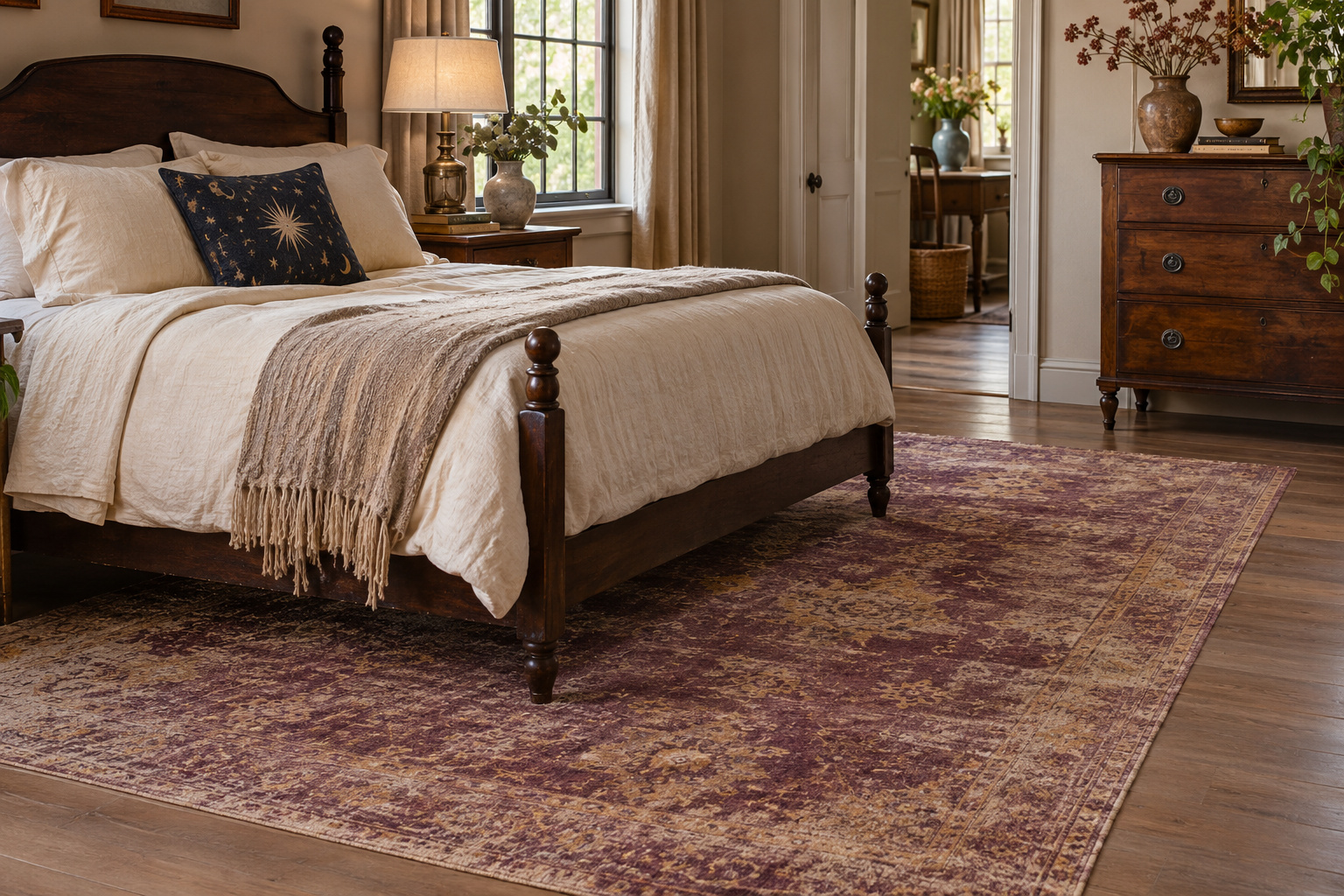
A faded patterned rug can bring plum, ocher and muted blue together beneath a bed. Choose it for the colors that are still visible, then use one of those colors in a fine star print on a cushion or small textile. The old-looking pattern and the celestial detail connect through color rather than matching motifs.
Plan the rug position against the bed and walking routes before ordering. Let enough of the border remain visible to explain the pattern, and use an appropriate nonslip layer where needed. A narrow exposed sliver is unlikely to contribute much to the scheme even if the rug is beautiful by itself.
Keep the larger bedding areas plain so the two patterned surfaces have room. For more ideas about balancing deep colors with softer edges, this dark feminine bedroom guide explores that broader palette without requiring celestial decoration.
12. Use a Decorative Folding Screen to Finish a Corner
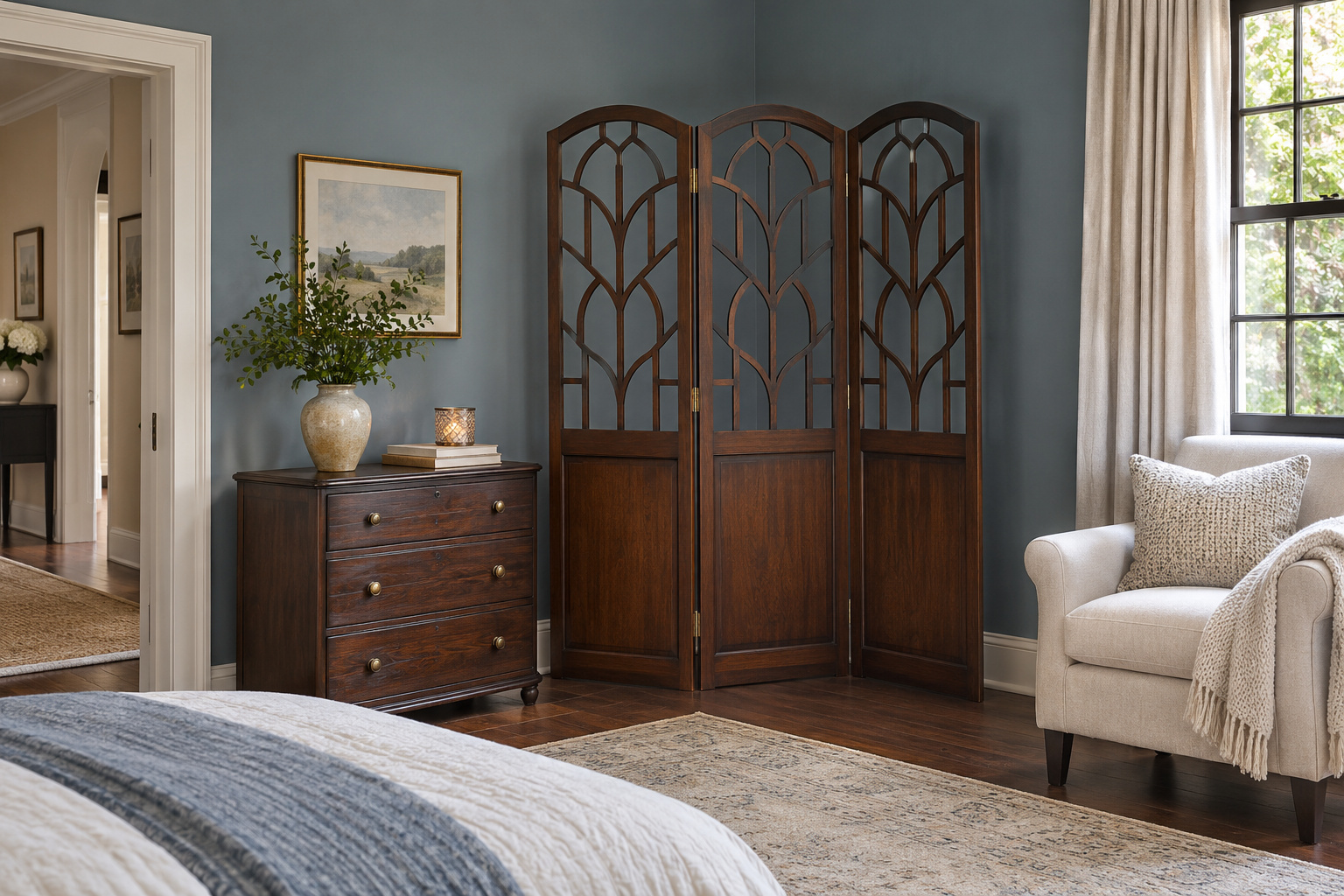
A folding screen can give an empty corner a more deliberate outline. Dark wood, an arched pattern or a subdued fabric panel can suit a collected bedroom. Place it where its complete shape can be seen, rather than wedging it into a narrow gap beside a wardrobe.
Set the panels at the angles required for the particular screen to stand securely. A screen that is stable in a shallow zigzag may not be stable opened flat. Keep its feet and projecting edges outside the normal route, and leave doors, windows and heaters with their required clearance.
Treat it as a decorative piece unless it is designed for another purpose. It need not conceal a pile of clothes or carry hooks full of bags. A quieter chest or seat beside it gives the shape an intentional place in the room.
13. Arrange Dried Botanicals in a Few Collected Bottles
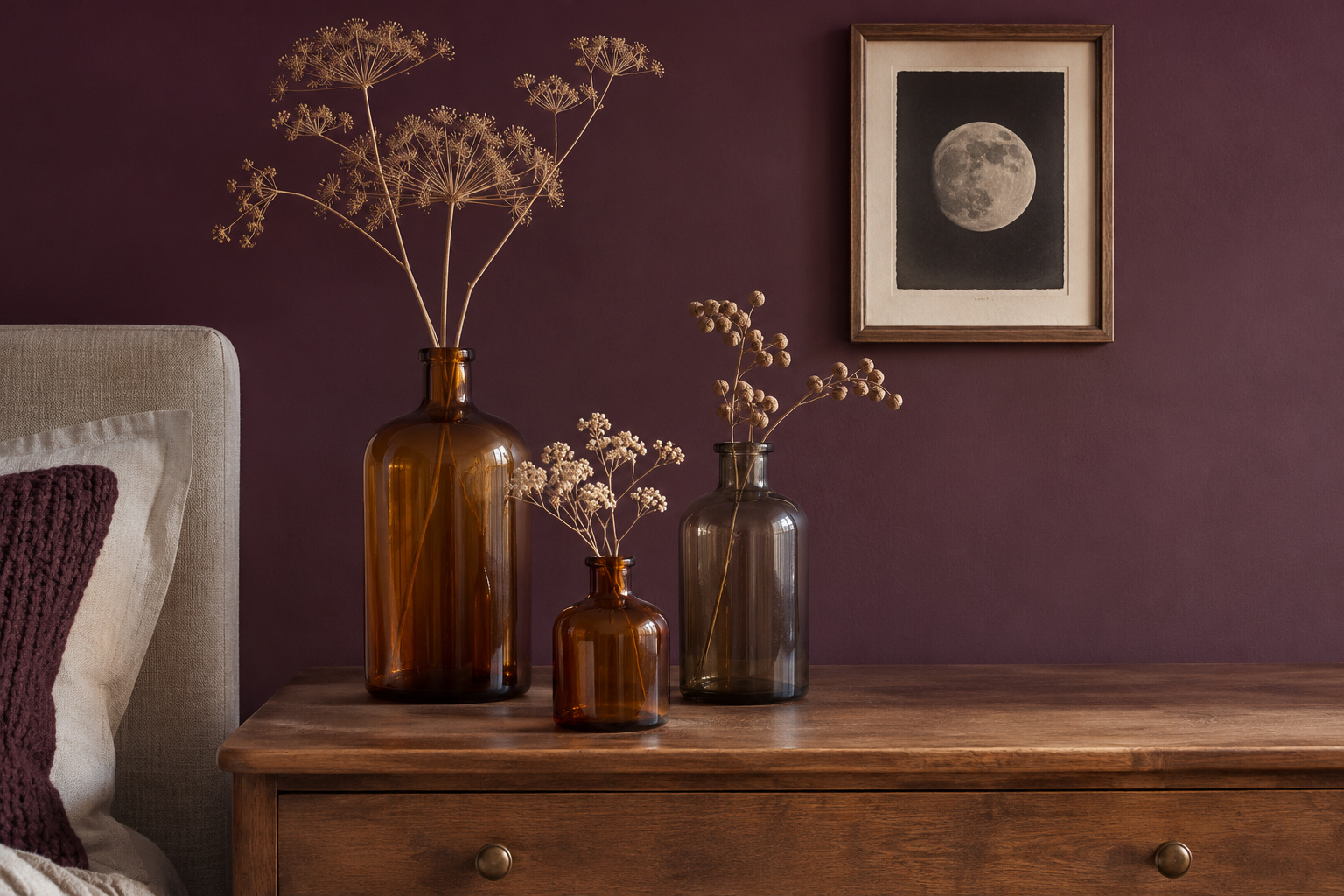
Give two or three collected bottles a shared purpose with a few airy dried stems. Vary the heights, keeping the tallest stem in the bottle whose base can comfortably support it. Amber and smoky glass can repeat the warm metal and dark timber elsewhere in the bedroom.
Keep the stems sparse enough that the bottle necks remain visible. Set the group on a broad, stable surface away from the area you reach across to dress or open drawers. Choose dried material suited to the household and keep it away from heat sources; a bottle of brittle stems should not share a crowded lamp base.
Leave a clear stretch of tabletop beside the group. The empty area helps the separate silhouettes read as one arrangement and makes dusting simpler. A few well-chosen shapes can give the chest a collected character without turning it into a miniature storage shelf.
Start with one feature you will enjoy using or looking at every day. A celestial wall, a good reading chair or a useful vintage table can establish the bedroom’s character, leaving the smaller objects to arrive gradually and earn their space.
Discover more from HomeTrendora
Subscribe to get the latest posts sent to your email.