The ornaments you most want people to see can get lost among the branches of a busy tree. These 12 ways to display Christmas ornaments without a tree help you choose a support, backdrop, and spot for the particular pieces you want to bring out.
Unwrap one piece at a time and look at its hanging loop, underside, and painted surfaces in good light. Make the display suit the ornament’s condition and shape. A piece with a weak cap or a loose attachment can stay in supported storage until a conservator or appropriate specialist can look at it.
1. Start With the Shape of the Hanging Loop
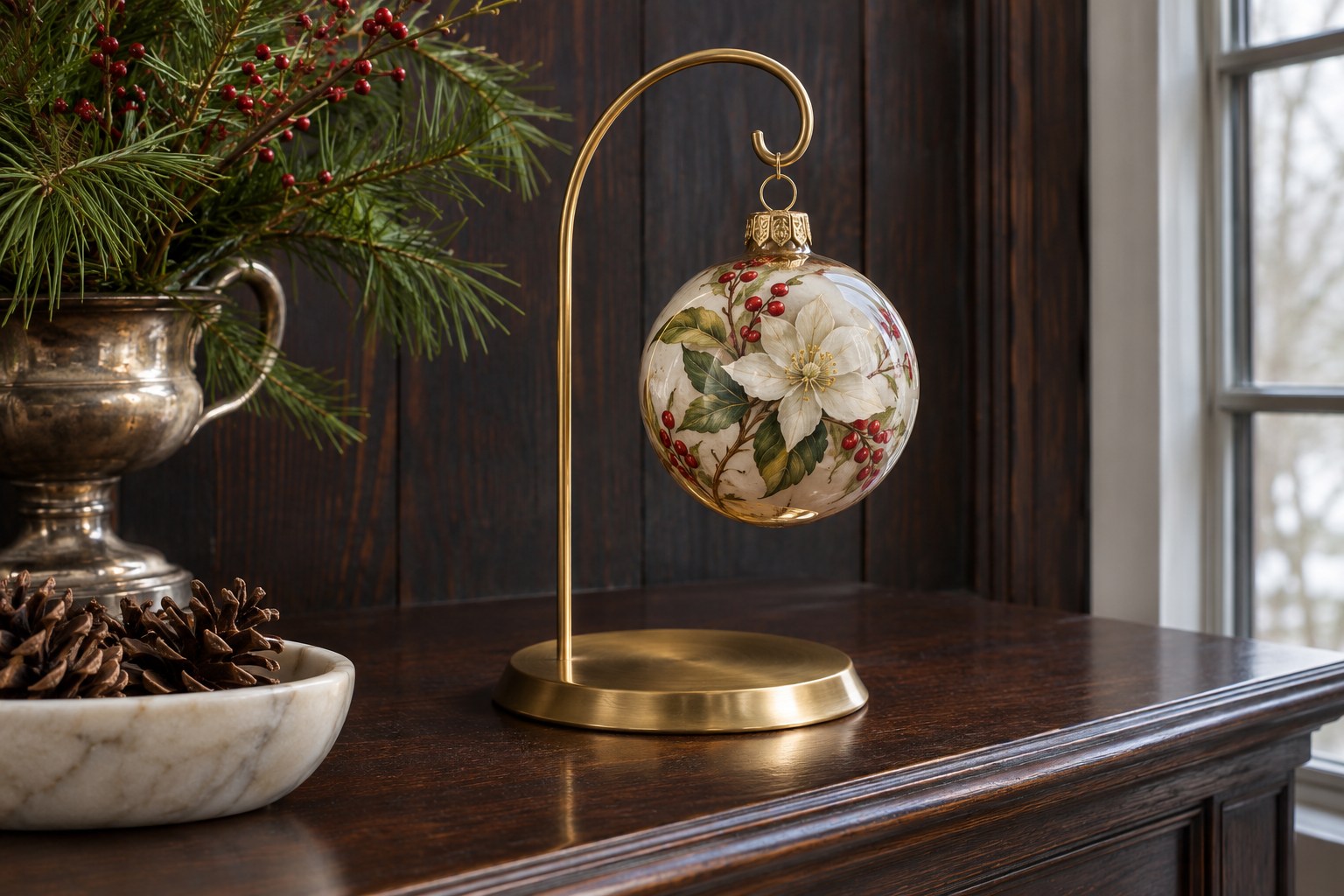
Try a sound, lightweight ornament on an individual display stand. Look at which way the loop points and where the ornament naturally turns. If a painted face always ends up sideways, try a different stand or put the stand at an angle to the edge of the table. Leave enough height that the ornament hangs just clear of the base.
Set the stand back on a stable surface so an arm reaching for a lamp or glass has room to pass. If the piece touches the stem or base as it turns, find a better fit or support it from underneath. A stand that suits the object gives one favorite ornament the shape and space it deserves.
HOMETRENDORA PLANNING BUNDLE
Plan the room before adding more decorations.
Leave room for everyday life as you decorate. The Home Design Book includes room-planning guidance, a fillable planner and a budget tracker to help you decide what fits, what to reuse and what to buy.
160-page PDF + fillable room planner + Excel budget tracker
Bonuses included with your eBook purchase.
GRAB 10% DISCOUNT
Coupon code: HOMETRENDORA10
Use this code at Payhip checkout.
2. Give Delicate Glass Its Own Adjustable Shelf
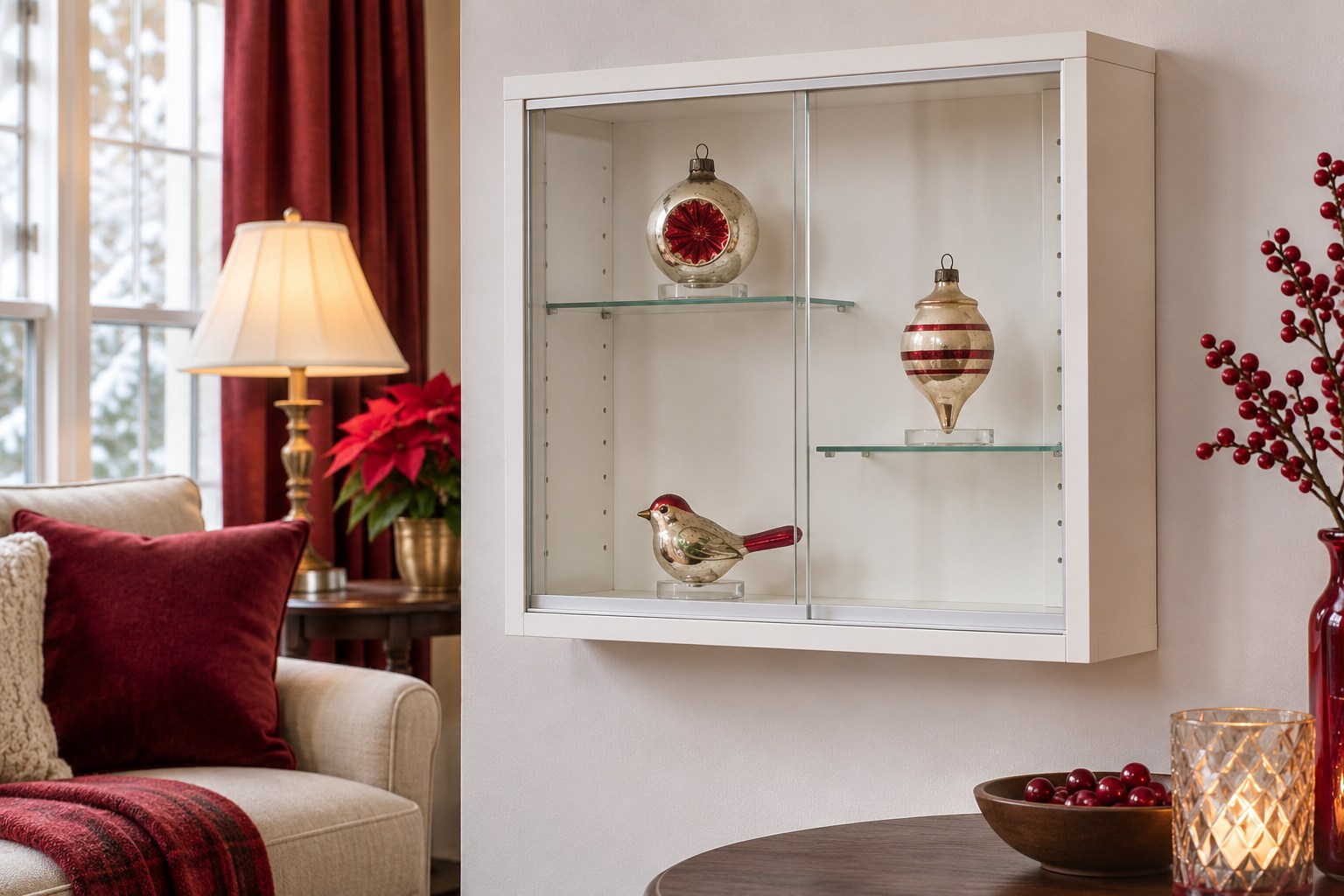
Choose shelves you can adjust to the pieces that will actually stand on them. Measure the widest part of the ornaments, including any projections. Leave space for your hands above and beside each one. Look for a flat bottom or use a stable cradle that supports the shape. Round ornaments are better with their own holders than lying loose on a hard shelf.
Set the empty supports in place and test how the door opens before loading anything. In a shallow cabinet, use only pieces whose bases and cradles fit entirely on the shelves. Keep vulnerable glass behind the door and attach a wall-mounted cabinet according to the manufacturer’s instructions and the wall’s construction.
For shallow pieces, this white HOMCOM display cabinet has adjustable shelves and sliding glass doors. Its listed interior depth is 3 inches, so measure the ornament and its support together before choosing it.
See the shallow display cabinet(paid link)
3. Give an Old Bell a Stand That Shows the Bottom
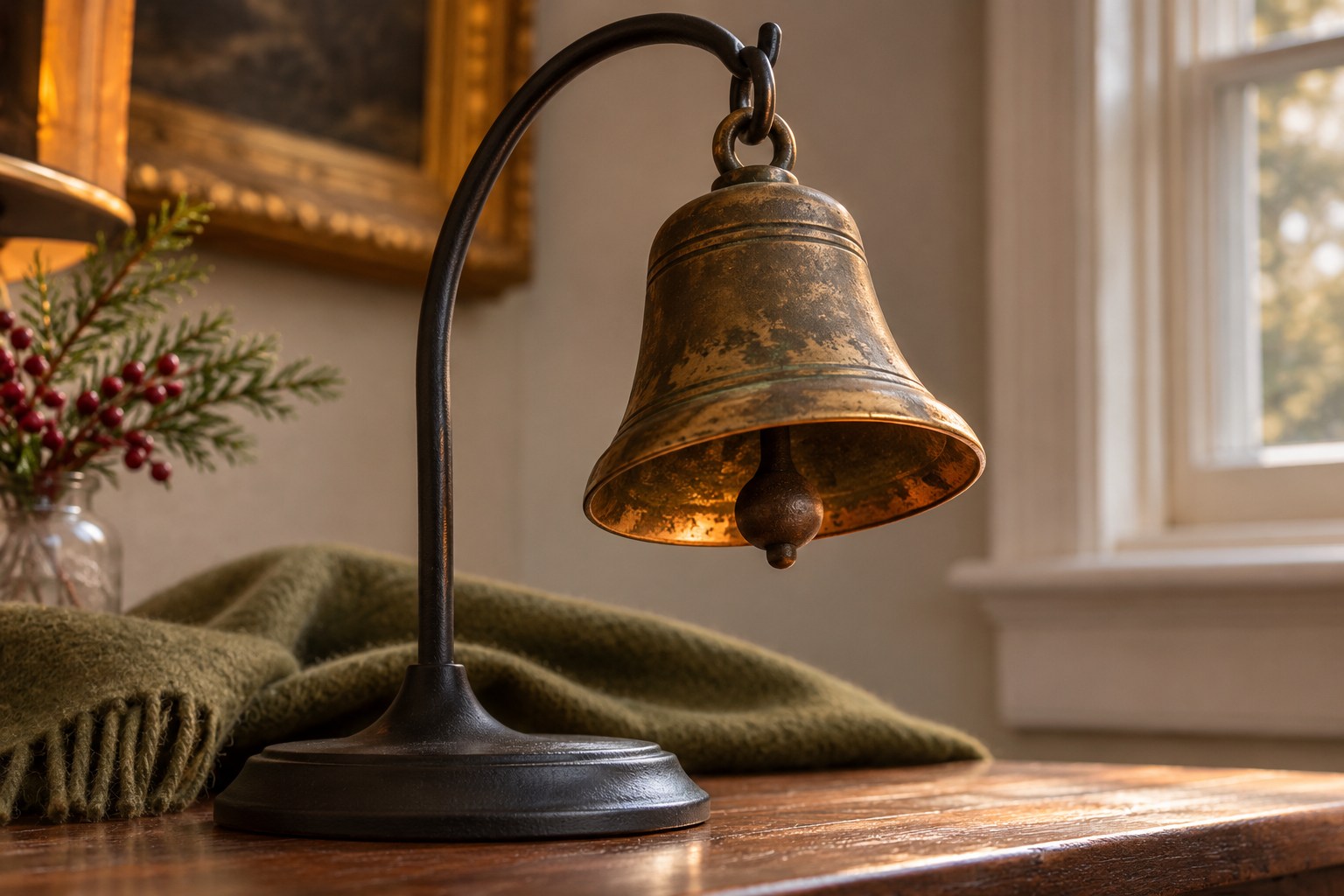
A bell with a beautiful rolled rim disappears visually if you set it upright on a shelf. A short display hook lets the rim, clapper, and shape show together. Put the mount on a wide, stable base, and let the bell hang freely with room beneath. Check that the original loop and its connection to the bell are sound first.
Find the quiet part of the room for this one. Air from a register or a door that swings close can keep the bell moving. An offset lamp can bring out a stamped pattern in the metal. Choose a background that leaves the underside visible, even when you see the piece from a low chair.
4. Set a Flat Paper Ornament Against a Linen Mat
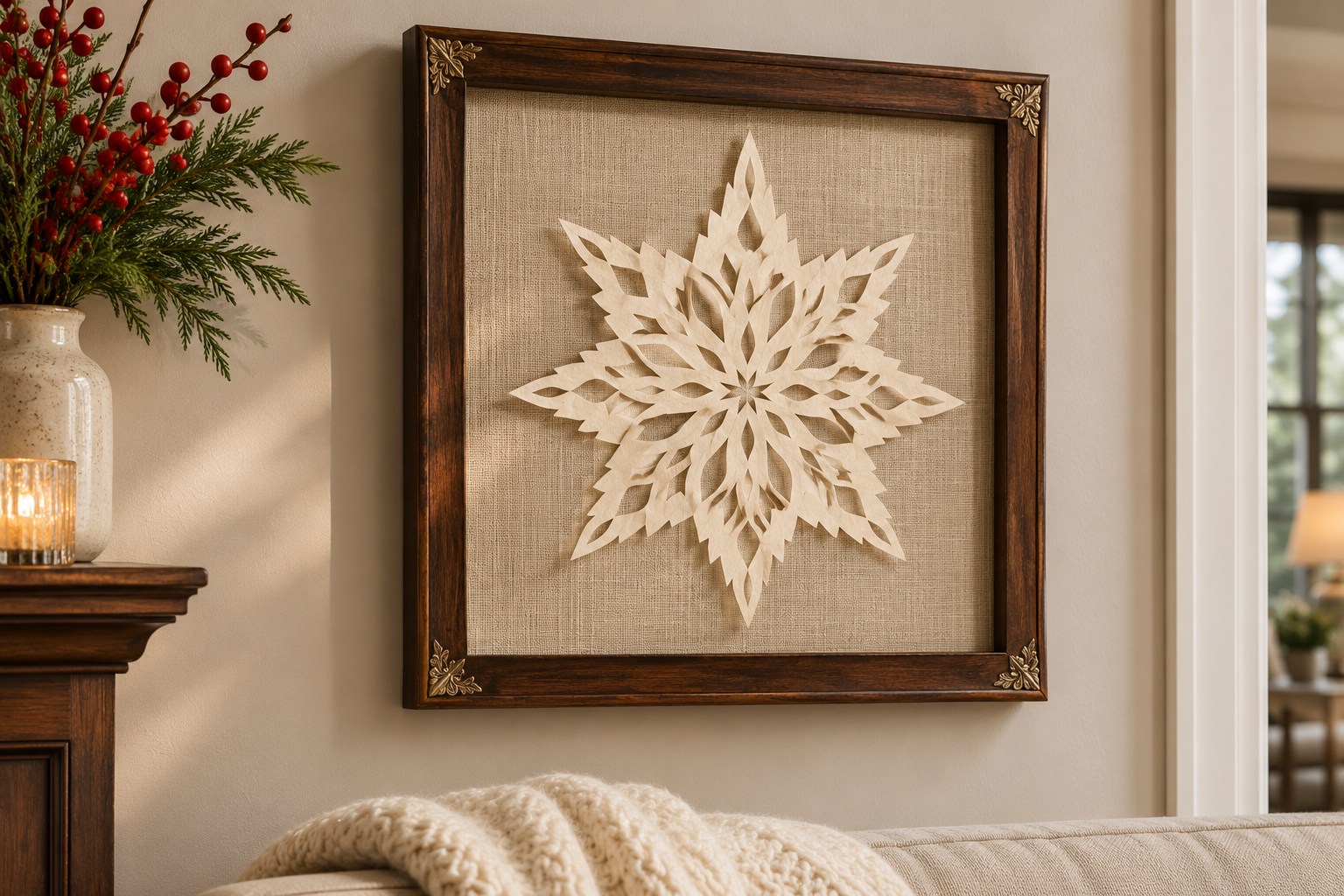
A card-stock cutout or a folded-paper star can be hard to see on a busy shelf. Put it upright with a flat linen-colored mat behind it and give the edges a little space. A shadow line on one side makes a scalloped or cut edge read clearly. Try muted flax or oatmeal instead of bright white if the piece has a softened, aged paper color.
Use a support that fits the paper’s condition, without gluing anything irreplaceable. For a framed keepsake, ask a framer about a conservation mount and spacers if it has raised folds. Let a shaded room lamp skim the texture from the side.
5. Float Lightweight Wooden Shapes Inside an Open Frame
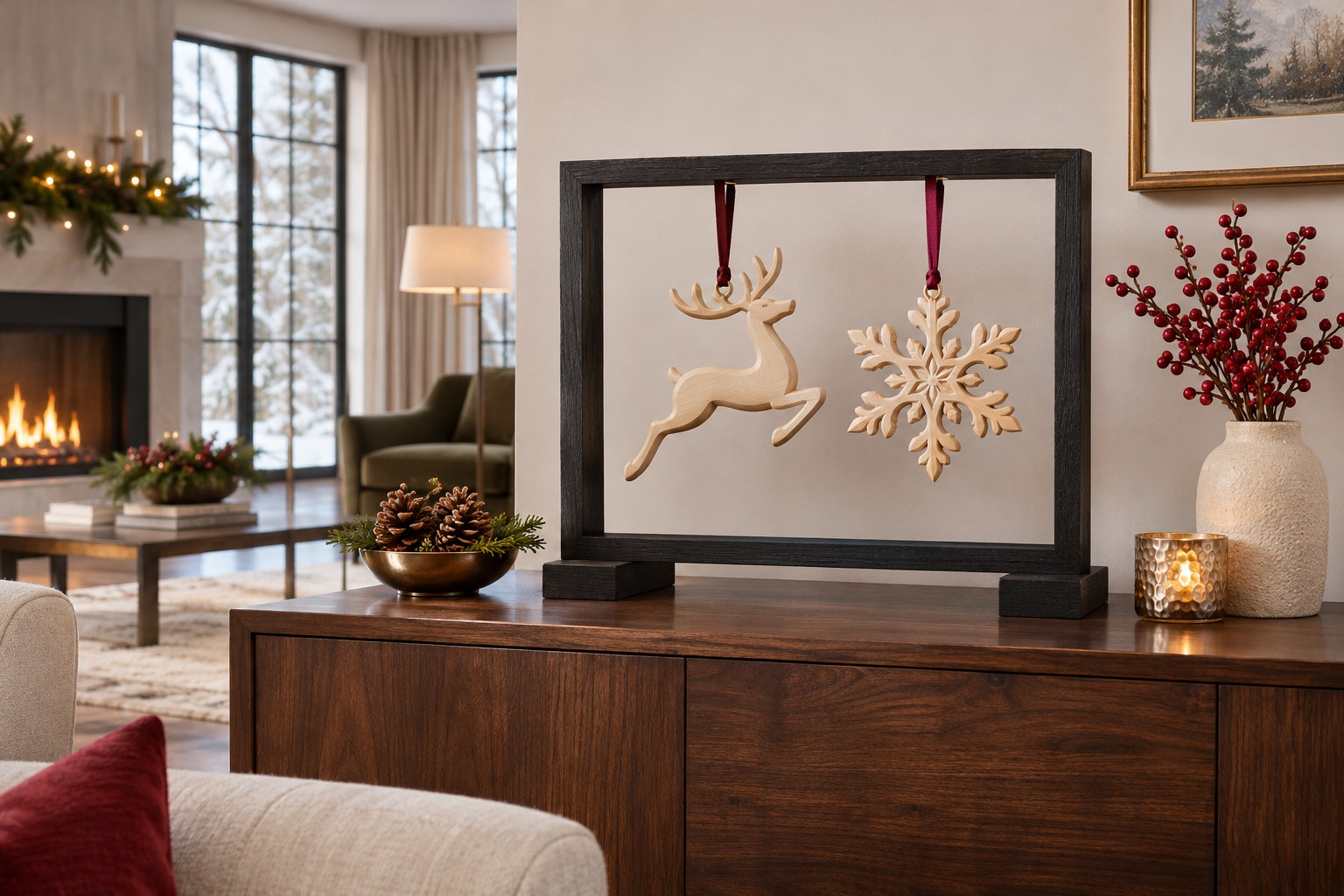
Use an empty freestanding frame to give small wooden ornaments a shared outline. Put support hooks on a sturdy rail or mount within the frame. Hang each lightweight piece so it clears the others and the frame when it moves. Leave the center quiet if you want an extended shape, such as a reindeer, to stand out.
Try two widely spaced pieces before adding another. Look from the main chair to see if the negative space between them reads as part of the design. A repeated ribbon or wood tone is enough to tie the pieces together when their silhouettes are all different.
6. Set a Stand Inside a Shallow Wall Niche
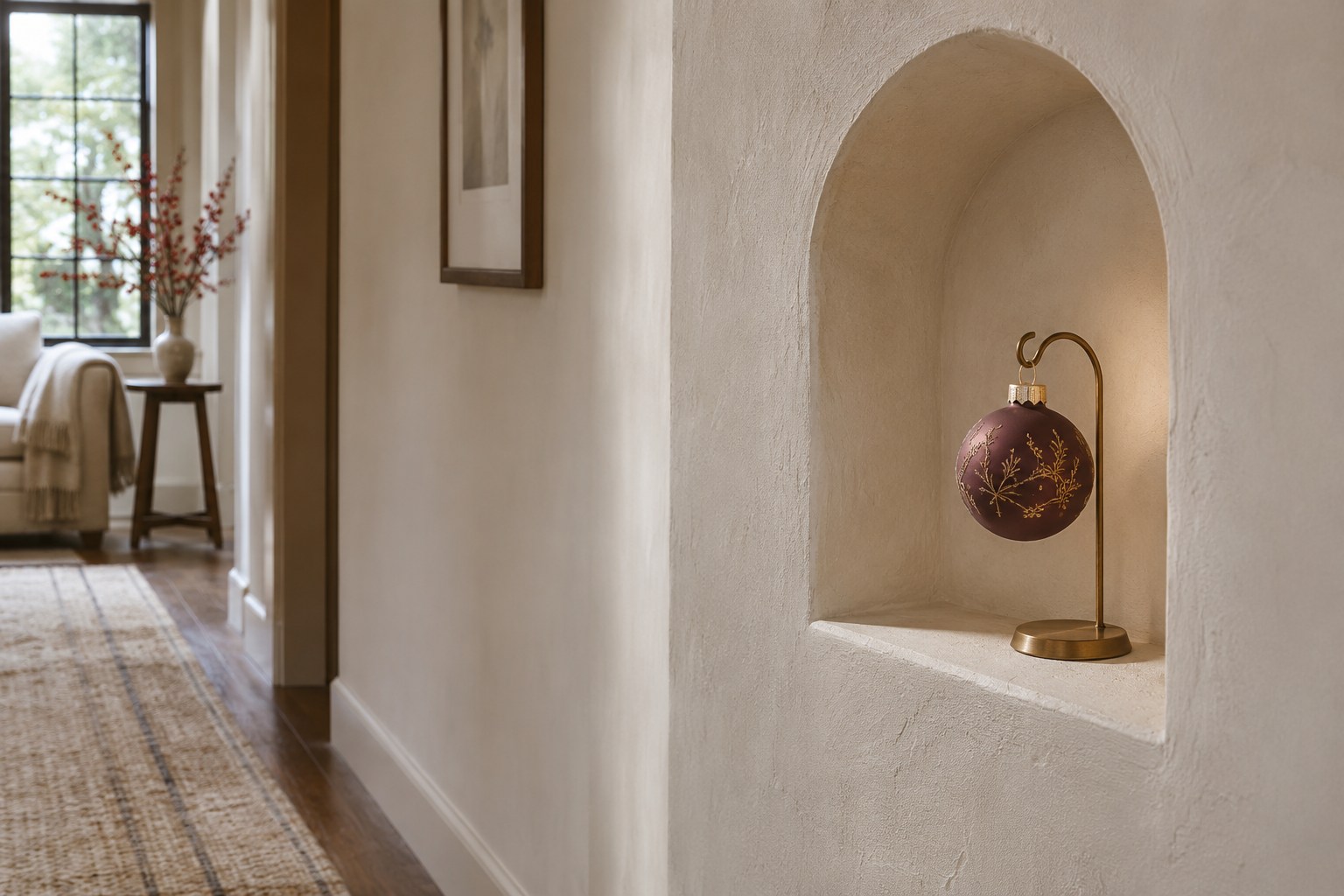
A recess can carry one special ornament even when the room has no space for an extra table. Try a little flat-footed stand entirely inside the niche and check it from the side. Measure the base as well as the ornament’s depth, and make sure neither protrudes into the walkway. Choose an alcove where swinging doors, bags, and coats pass without brushing the opening.
A plain, felted base makes a small shape easier to read. Remove the stand with both hands if the niche makes reaching in awkward. If your recess is better suited to a longer display, see these trinket shelf ideas for options sized around the collection.
7. Show Silver and Mercury Glass Against Dark Velvet
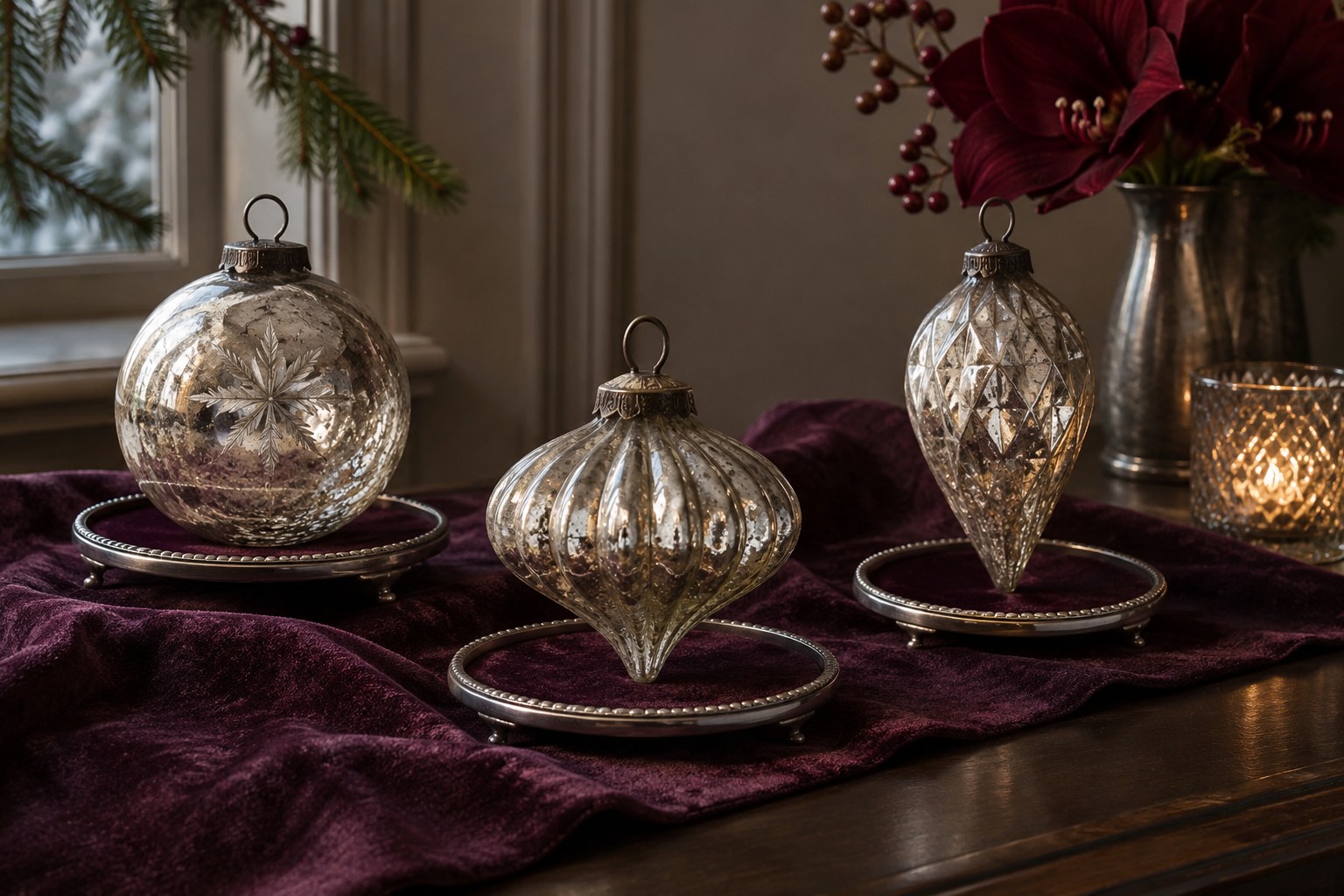
Set a few similarly toned ornaments across a stable velvet-lined display surface. Deep plum or charcoal absorbs some of the competing reflections you’d see against gloss paint. Put one ornate piece where a person naturally looks first, with simpler shapes outward from it. Move each piece on its support until you can see the curve between neighboring pieces.
Use light from the side and compare the appearance with the main room light on and off. If a bright dot distracts from a face or engraved line, angle the lamp or choose a less reflective spot. A restrained group with breathing room gives silver a little ceremony.
8. Keep a Family Set Beside the Photograph That Goes With It
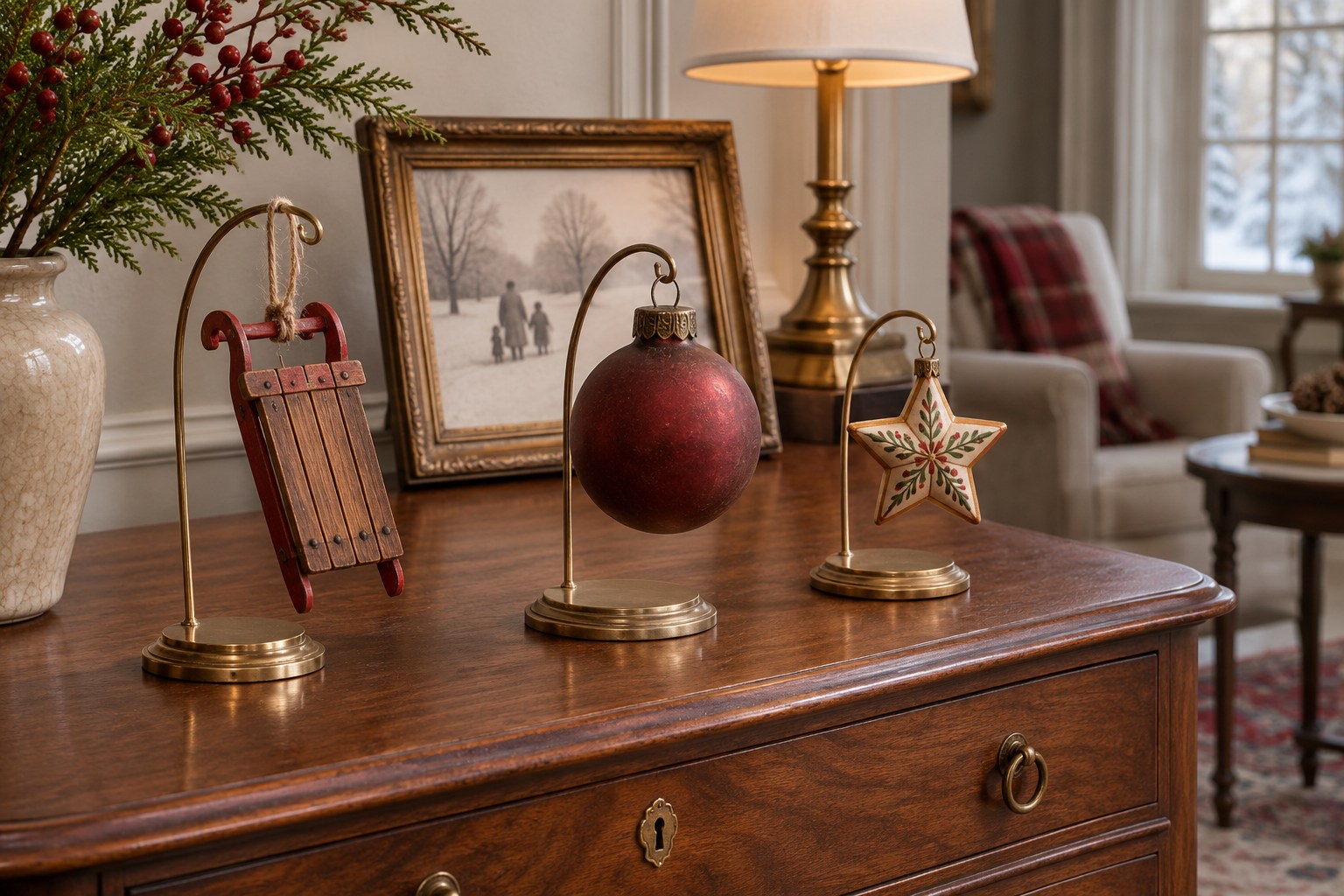
Choose three or four ornaments that tell one part of your family’s Christmas story. Put a copy of a photograph behind them on a low stand, with its bottom edge visible. Use an unprinted mat as a little breathing room between the pieces and the image. Visitors will often notice the photograph first and discover the pieces once they come closer.
Use a stable support for an odd-shaped ornament and a small cradle for anything round. Avoid setting the originals on the photo. If no photo survives, a small card with the year or place can do the same job. You can swap the picture or group as family members visit.
9. Choose a Backdrop That Can Hold Its Own Against the Wall
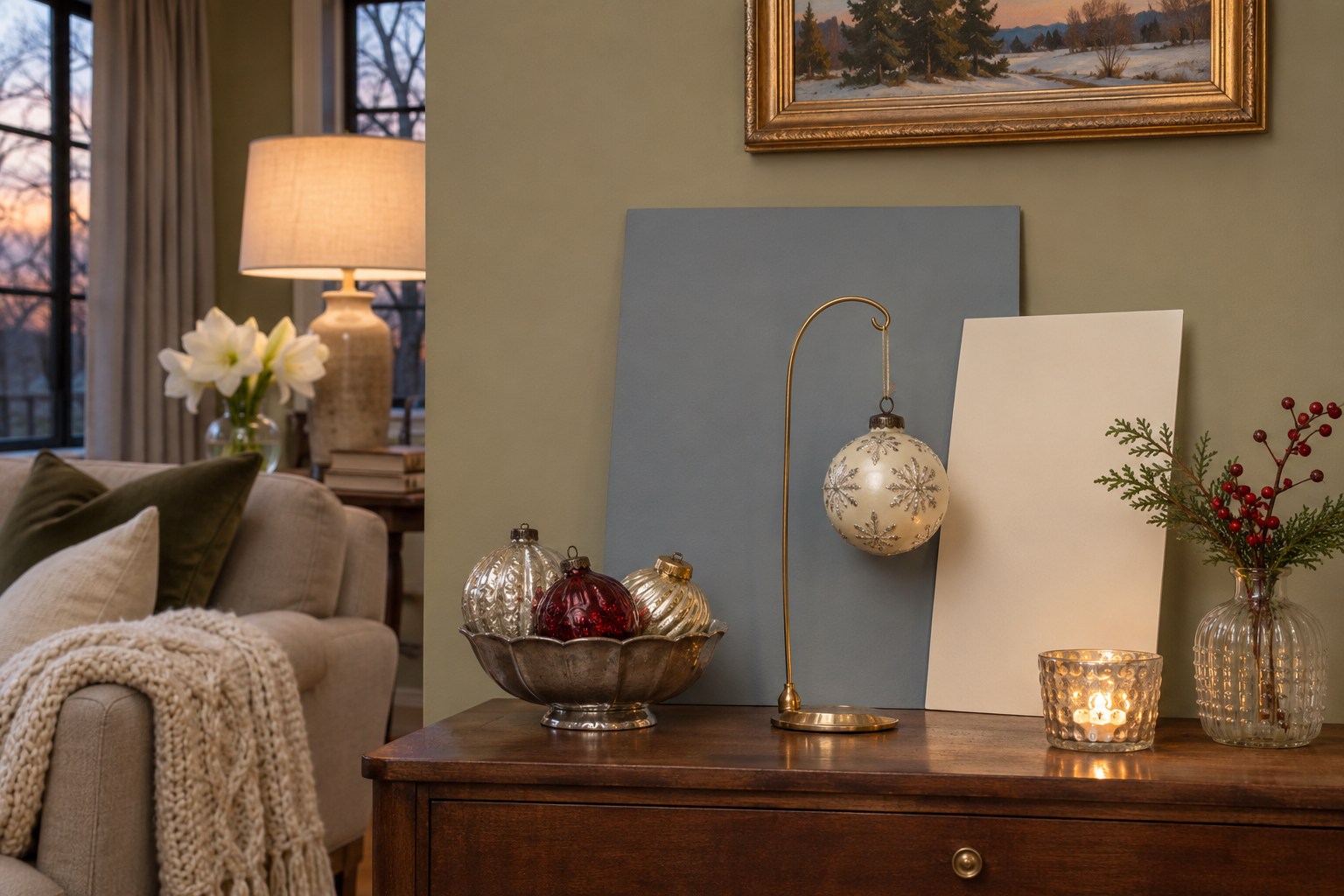
Try two small backdrop samples before you choose something permanent. Put the ornament in front of a warmer, darker swatch and a pale, quieter one, then look from your usual seat. An ivory ornament on pale walls may need a deeper insert to show its edges. A colored piece against a dark wall may read more clearly with a light matte panel.
Test the panel again under evening light. Keep it related to the wall color so the niche or shelf feels intentional. For other December combinations, see these Christmas color schemes and look for one strong difference in value before changing the rest of the palette.
10. Support Heavy Ceramic Keepsakes From Below
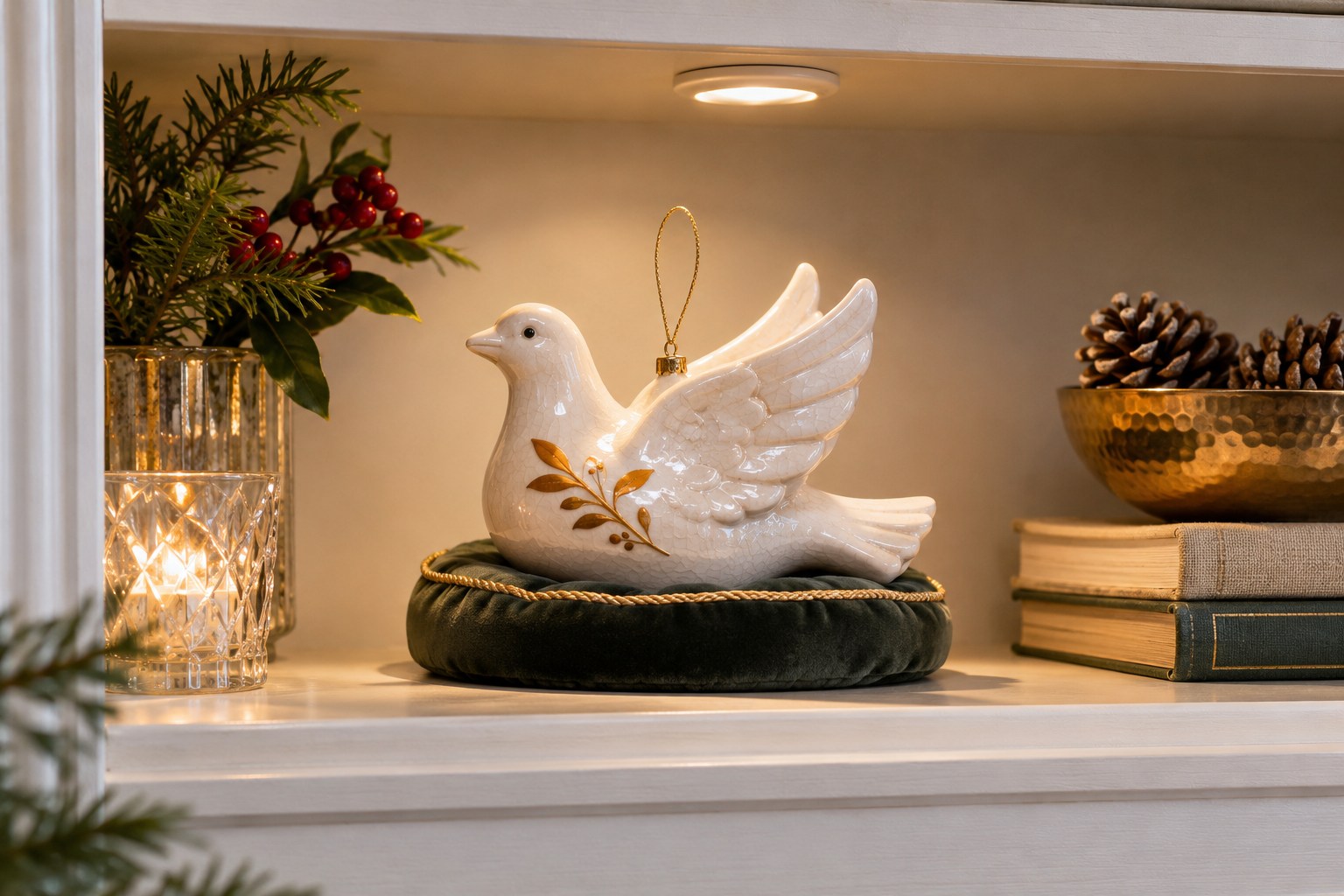
Some ceramic ornaments are easier to see when they’re upright on a flat surface. Start by testing what part of the underside can bear the weight without tipping. A suitable support can hold the body and keep a delicate loop or attached detail free. If no stable arrangement is available, avoid making the ornament balance on its projecting points.
Compare supports with the object placed low and close to the back of a stable shelf. Choose a quiet color so the support is easy to miss from the room. Take the object out with both hands before moving the shelf or changing its background.
11. Give This Year’s Handmade Ornament Its Own Spot
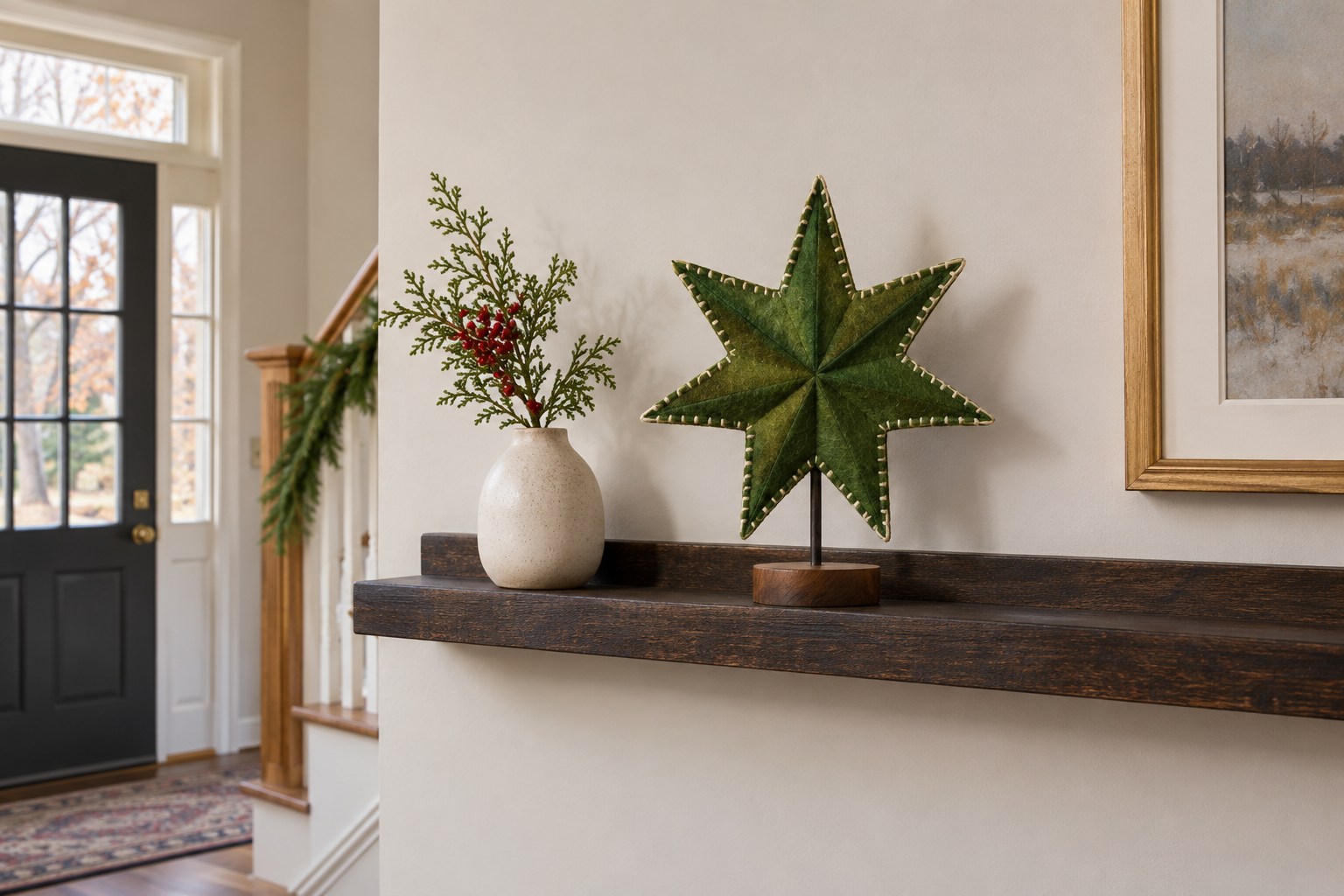
Set the newest piece in the place where someone will see it first on entering the room. An existing picture ledge can work for a flat, durable handmade ornament with a stable stand. Keep glass and fragile heirlooms apart. Leave space around a wonky star or painted shape so its particular outline stays recognizable.
Choose a piece small enough for the setting and take its depth into account before putting it on any ledge. A useful arrangement is easy to add to next year. Start with two pieces at most, so one still looks like the reason you stopped to look.
12. Bring Out a Padded Tray for a Christmas Show-and-Tell
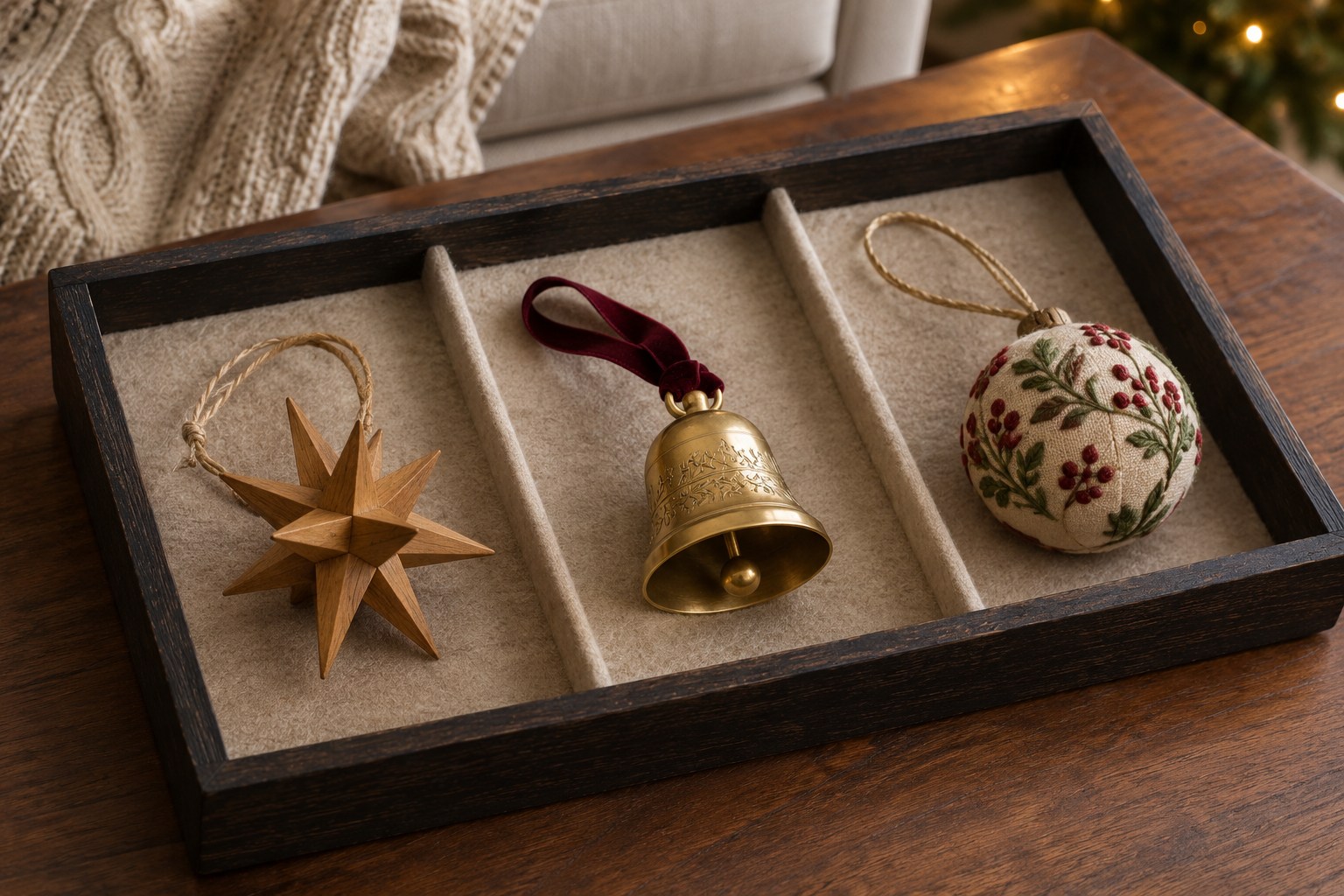
Set a shallow, stable tray with soft compartments on a clear table for a short family visit. Give each ornament one supported place and bring out pieces that can be handled responsibly. Keep the pieces spaced so one can be lifted without disturbing the next. An old bell, stitched ornament, and small carved animal tell three stories without needing a full room of decorations.
Bring the tray back to its storage spot after the visit. If you use the room’s fixed display for other holiday pieces, these woodland Christmas living room ideas cover ways to give the whole room a December feeling.
The best candidates for an off-tree display are pieces someone would want to look at up close. Start with one, make sure it sits or hangs comfortably in its spot, and give the shape and its story enough room to be seen.
Discover more from HomeTrendora
Subscribe to get the latest posts sent to your email.