A fixed radiator can sit exactly where you’d normally push the sofa, hang the curtains, or put the media cabinet. These 14 living room layouts show how to give the furniture a different place while keeping the heater, controls, and way through the room accessible.
Start by identifying the heater and finding the applicable clearance and maintenance instructions. These ideas are for rooms with fixed radiators. The heat source, its manufacturer, and your building’s guidance determine the space it needs. If you rent or can’t identify the unit, ask the building owner or a heating professional before moving anything into the area around it.
1. Mark the Heating Zone Before You Move the Sofa
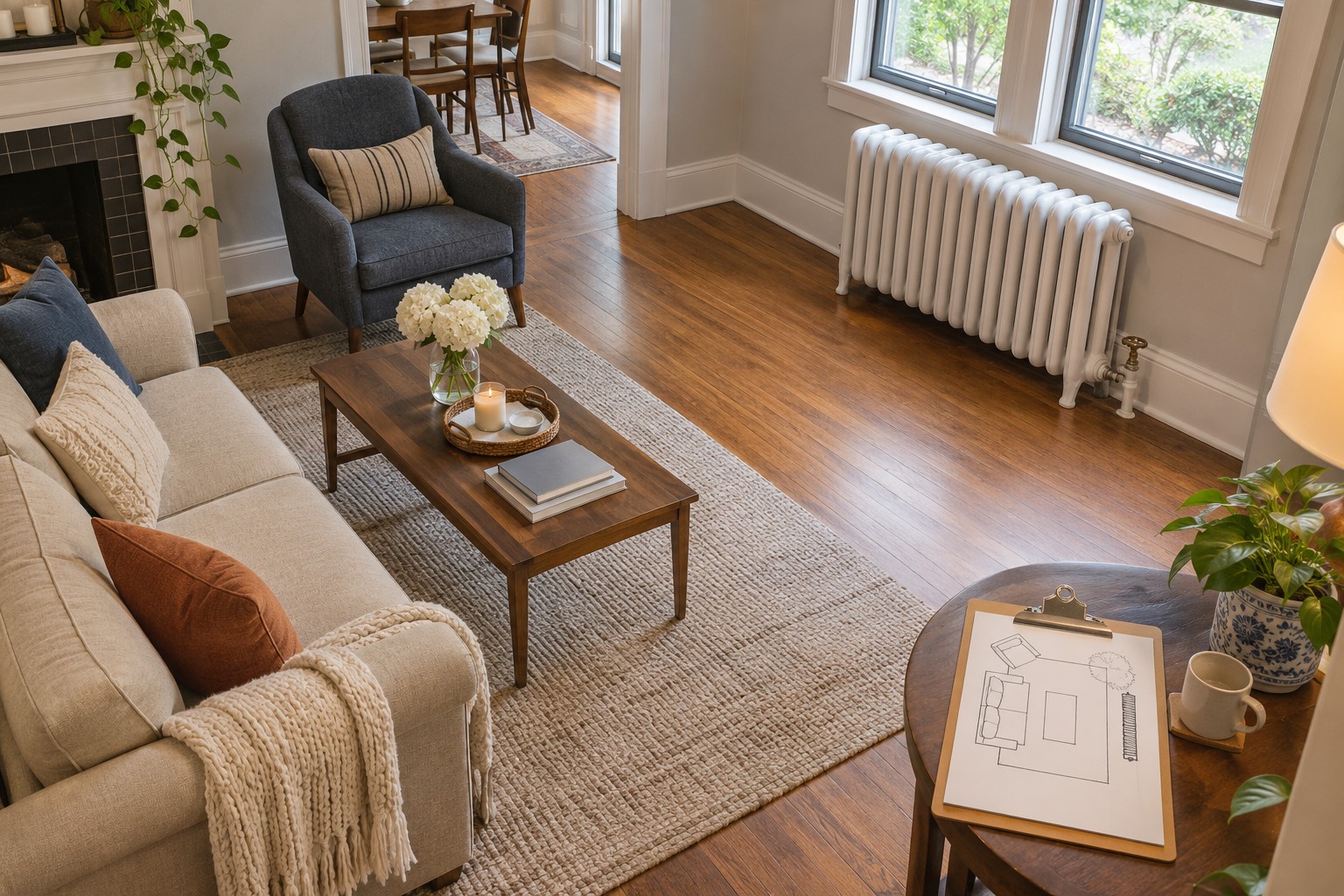
Draw the outside shape of the radiator, the valve, and the floor area in front on a simple plan. Use the clearance guidance for your unit to mark the area that furniture must leave open. On the same sketch, draw the route from the door to the rest of the home. That second line helps you see which changes leave both the heat and the room usable.
Use removable floor-safe tape or paper to compare furniture footprints well outside the heater’s clearance zone during the planning stage. Include the space occupied by your sofa arms, the reach of chair legs, and the distance a cabinet door needs to open. Once you find a layout, take up the paper and tape.
2. Turn the Sofa Perpendicular to a Window Radiator
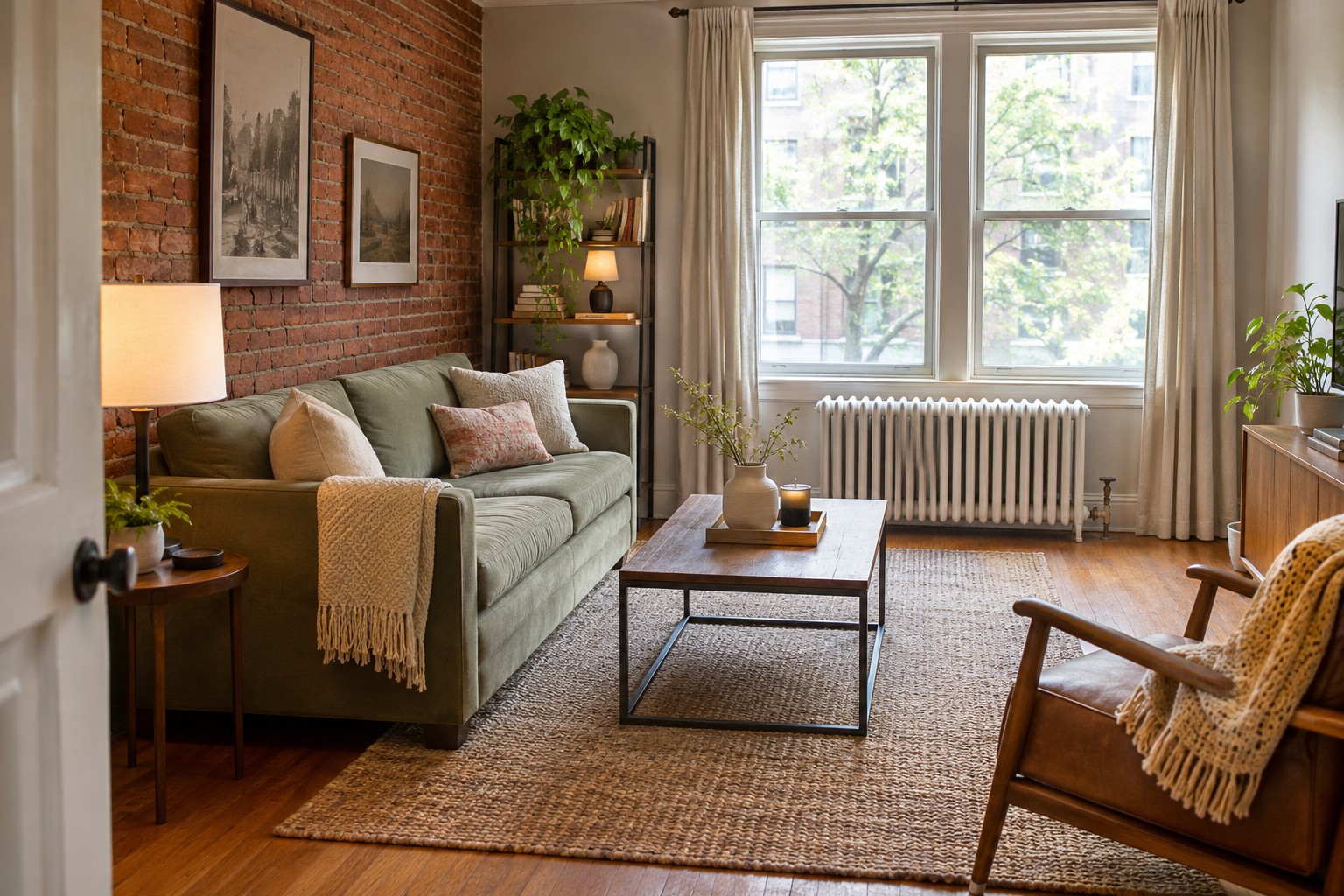
Put the sofa on the adjoining wall or turn it so its long side runs away from the window. That moves the deepest seat out of the space in front of the radiator. Leave the clear zone by the window open, then use the far side of the sofa to anchor a rug and a low table if those pieces fit.
Start with the longer arm farther from the heater. Sit at both ends and check the view and the walk into the room. If the sofa points into the main route, try a shorter loveseat or move the table to the other end. The small living room layout guide offers alternatives when the front door is the next obstacle.
3. Give the Window a View With Two Offset Chairs
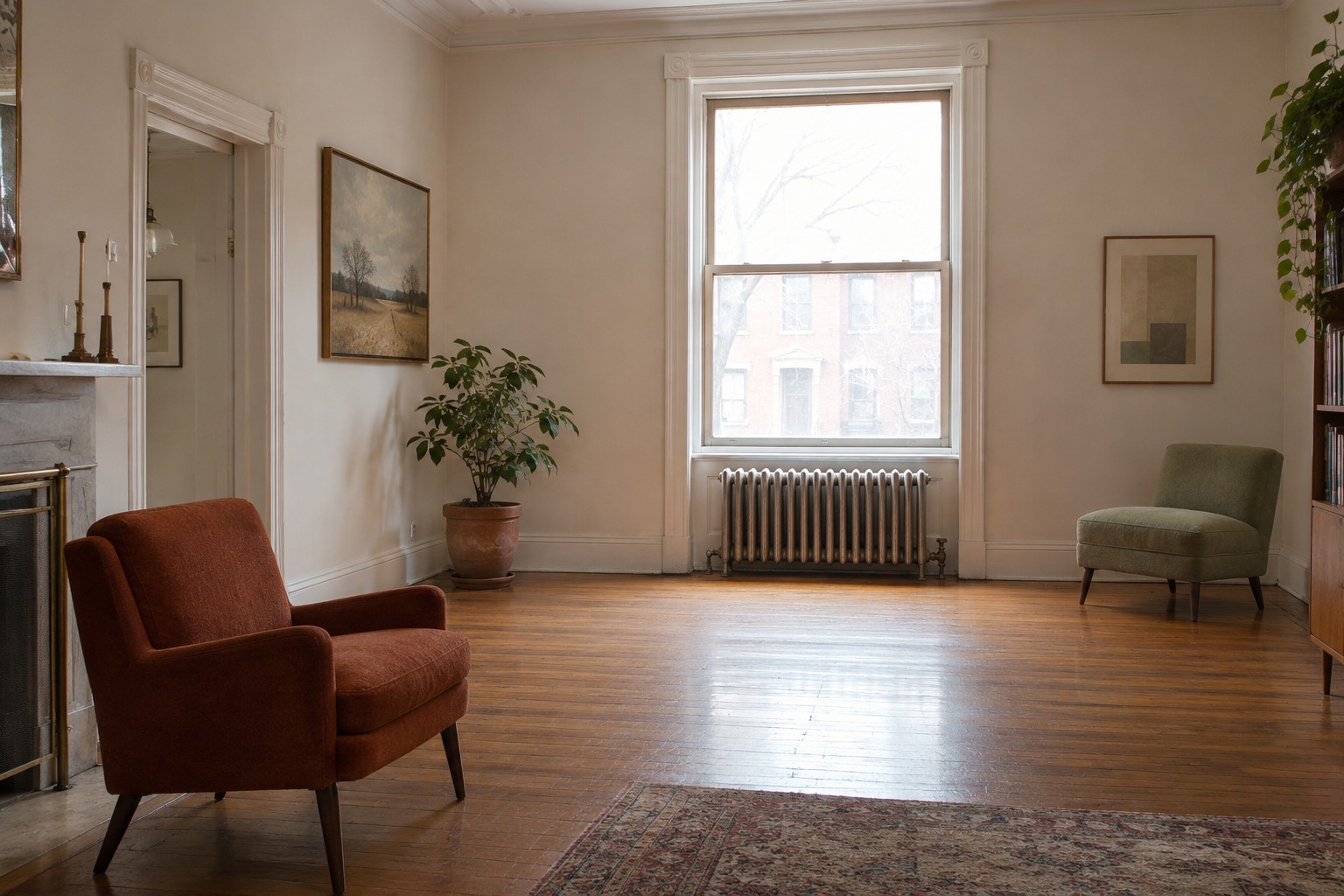
A pair of individually placed chairs can leave a wider gap in front of the window than one long piece. Put one seat on each side of the radiator’s clearance zone, then pull one slightly deeper into the room. You can still look out without flattening both chairs into one crowded line.
Before adding a rug or side table, turn each chair a little toward the other and see how easy it is to stand up. Put a shared side table on the outer side of the group or omit it when that’s the path to another room. Leaving the space in front of the window open can be the feature of the arrangement.
4. Move Media Storage to a Separate Wall
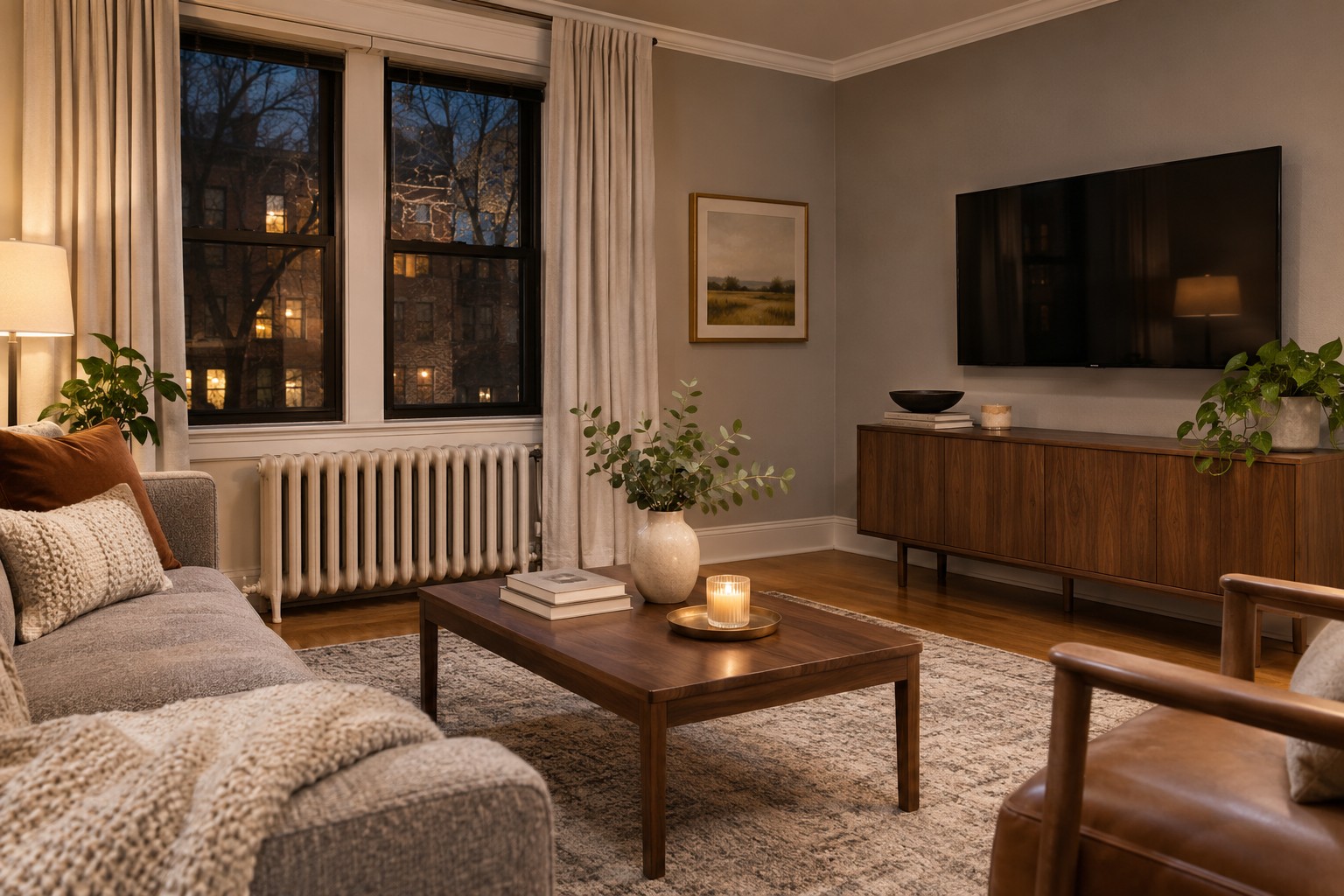
Choose an unheated wall for a low media cabinet so electronics, cables, and media stay in one accessible place. Set the furniture where you can open the doors and reach outlets without routing cords by the radiator. Leave the ventilation and access your equipment maker requires, and secure the cabinet and TV according to their directions.
Look at the arrangement from the main seat, then put the equipment you use most within reach of the front. If the new location gives you room only for a slim cabinet, these living room media storage ideas can help you decide what belongs inside it.
5. Use a Pull-In Table at the Sofa’s Other End
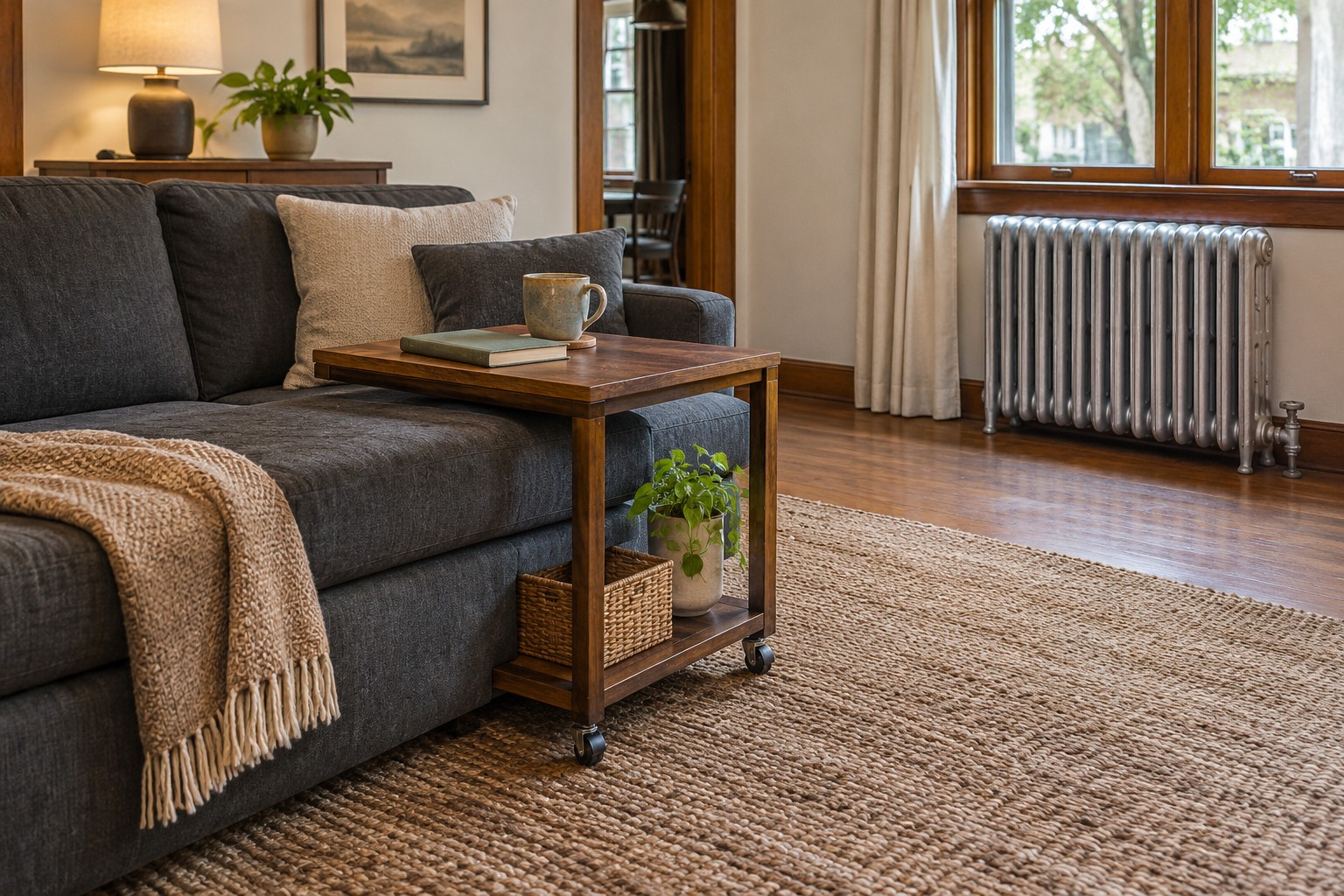
When the sofa’s window end is already crowded, put the everyday drink and book at the opposite arm. A C-shaped table can bring the surface into reach when the base clears the sofa frame. Check the widest part of the table, including wheels if it has them, and measure below the seat before choosing one.
Pull the table into position while seated. Your feet need a place to land, and the tabletop should sit comfortably beside your hand. With a wheeled table, lock it for use where the design provides brakes. Give it a parking spot clear of the heater, the main walking route, and the sofa’s moving parts.
HOMCOM’s brown C-shaped table has three tiers and locking casters. Measure the space under your sofa and the table’s widest point, then check where you’ll park it away from the radiator.
See the rolling C-shaped table(paid link)
6. Use the Wall Paint to Soften the Radiator’s Outline
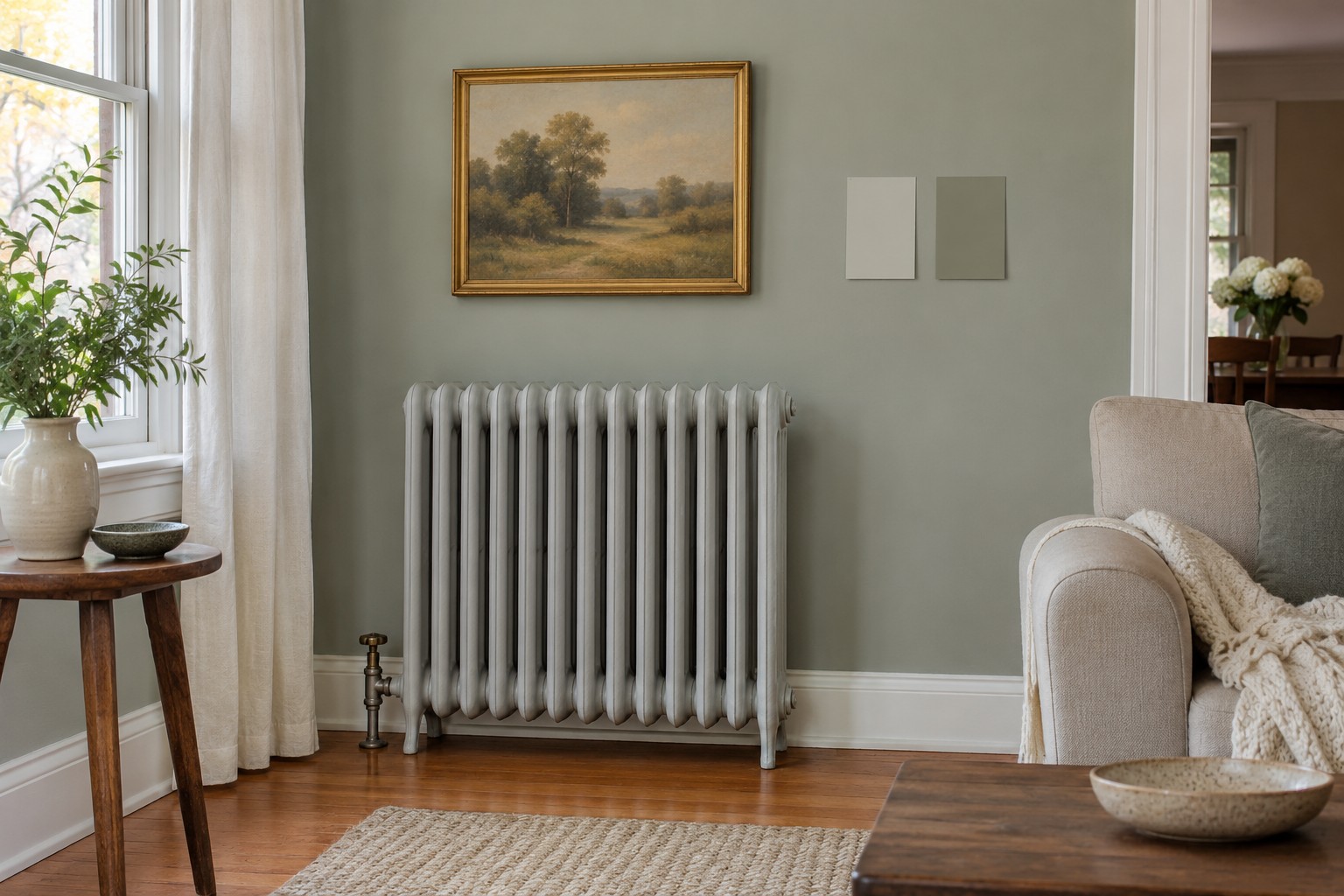
If a pale radiator dominates a dark wall, try a few quieter wall samples just beside it. Hold one sample close to the radiator’s color and another that picks up the trim or floor. Compare them from the sofa rather than judging the color at the wall. A close tone can make the fixed shape recede and give the room’s other features more attention.
Work on the wall color. If repainting the radiator itself is under consideration, consult the instructions for that specific unit and coating first. Changing only the wall is often enough to create a clear relationship among the heater, trim, and room.
7. Make a Tall Radiator the Edge of a Wall Composition
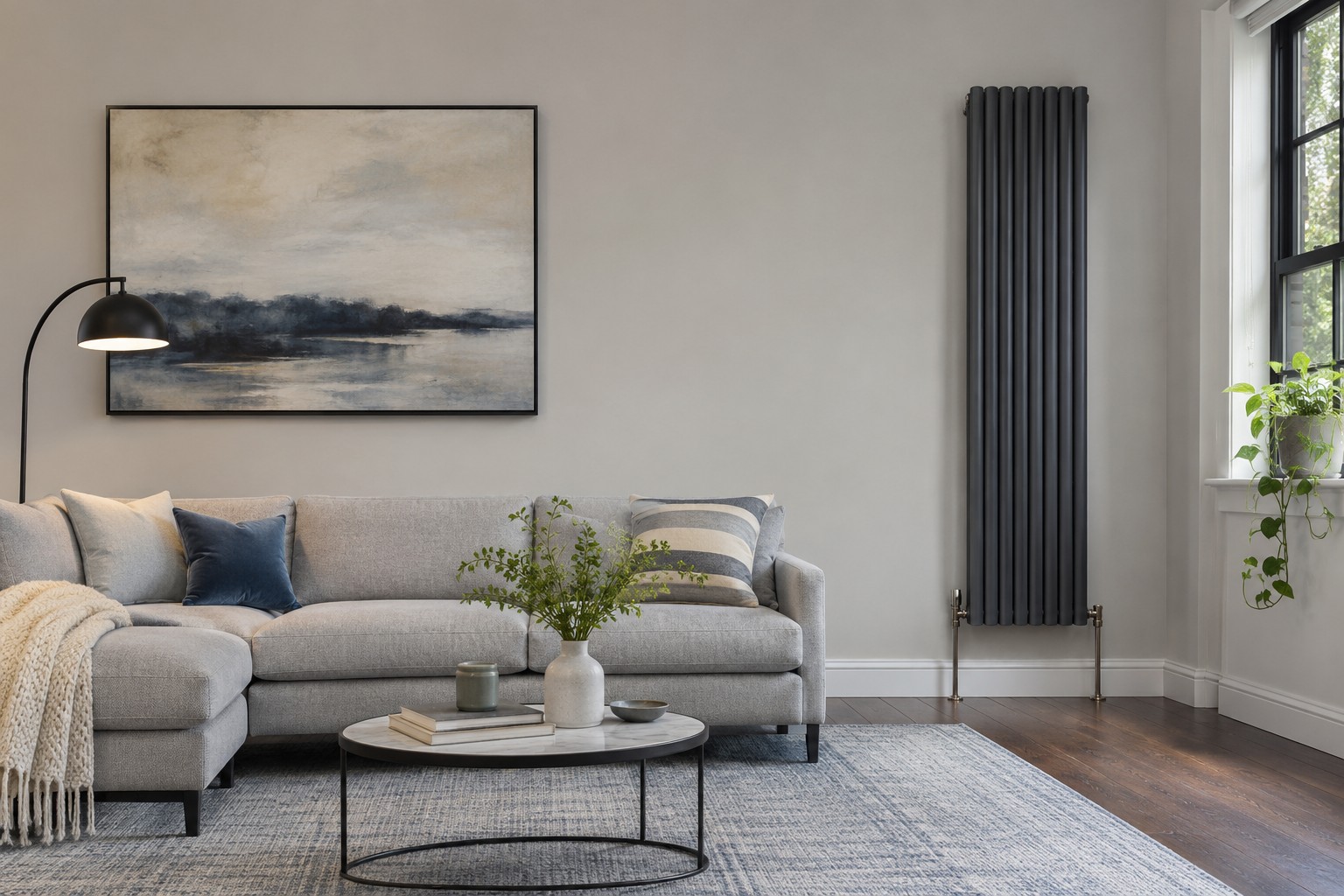
A slim tall radiator can act as a visual boundary even when it can’t move. Give a framed artwork its own patch of wall on the far side, entirely outside the heating unit’s required clearances. Try the edge of a tall frame at a distance where the two shapes read as a considered pair. Keep art, fabric, and other objects out of the heater’s zone.
Use a paper outline on the part of the wall where the picture can safely go. Check the gap from the main seat and from the doorway. If the shapes look cramped together, move the art outward or choose a wider piece that draws attention to a different wall.
8. Use a Different Corner for the Reading Chair
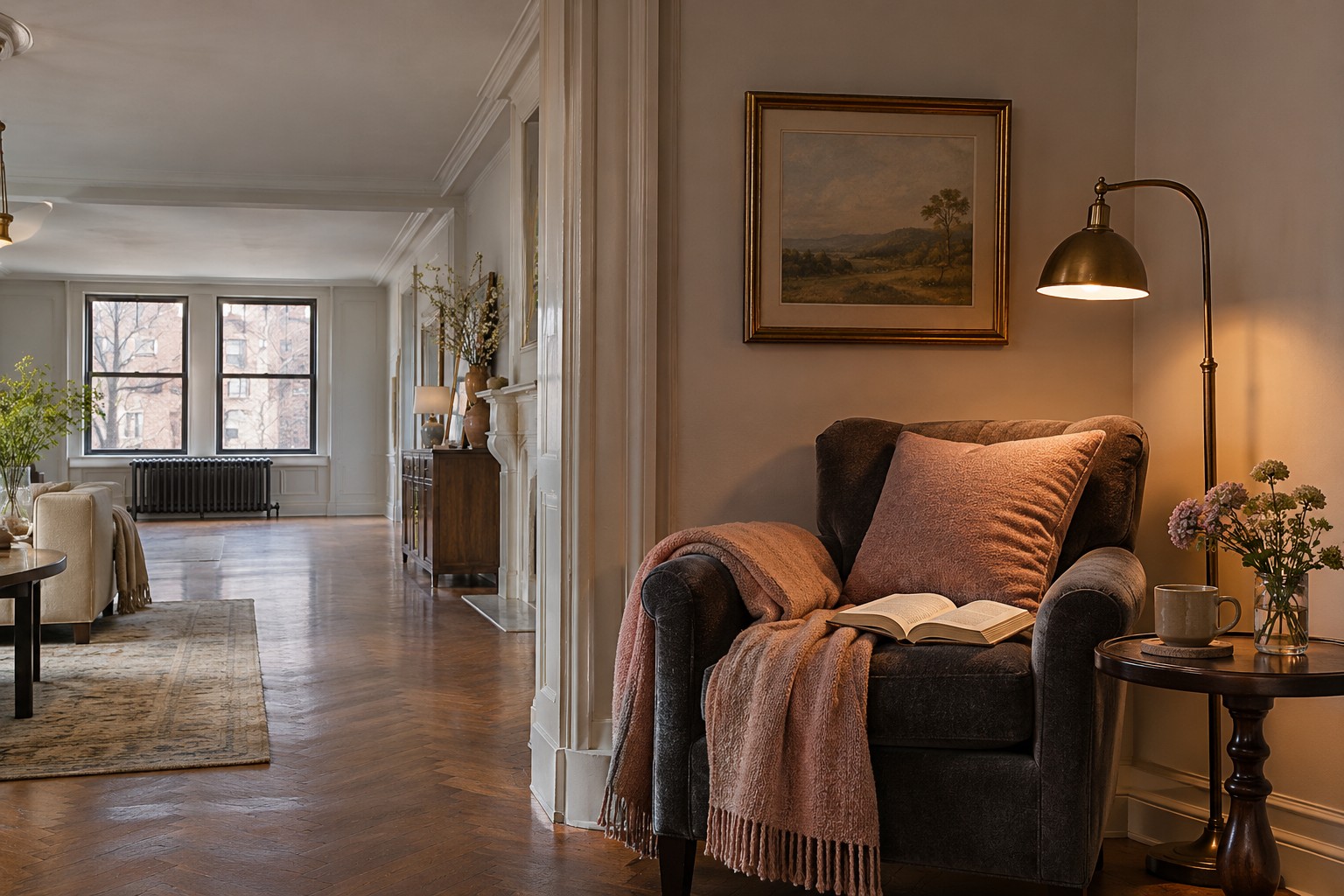
The brightest daytime corner might be next to the heater. Make a different corner useful with a supportive chair and a shaded task light aimed at the book. Place the lamp where your shoulder casts the least shadow and keep its cord out of the room’s walking route. If the glare changes between afternoon and evening, test both before settling on the spot.
In a small room, one quiet chair can do more than a broad seating group wedged across the window. The guide to living room lighting without a ceiling fixture covers ways to light that seat with the outlets you have.
9. Keep an Awkward Doorway on the Outside of the Group
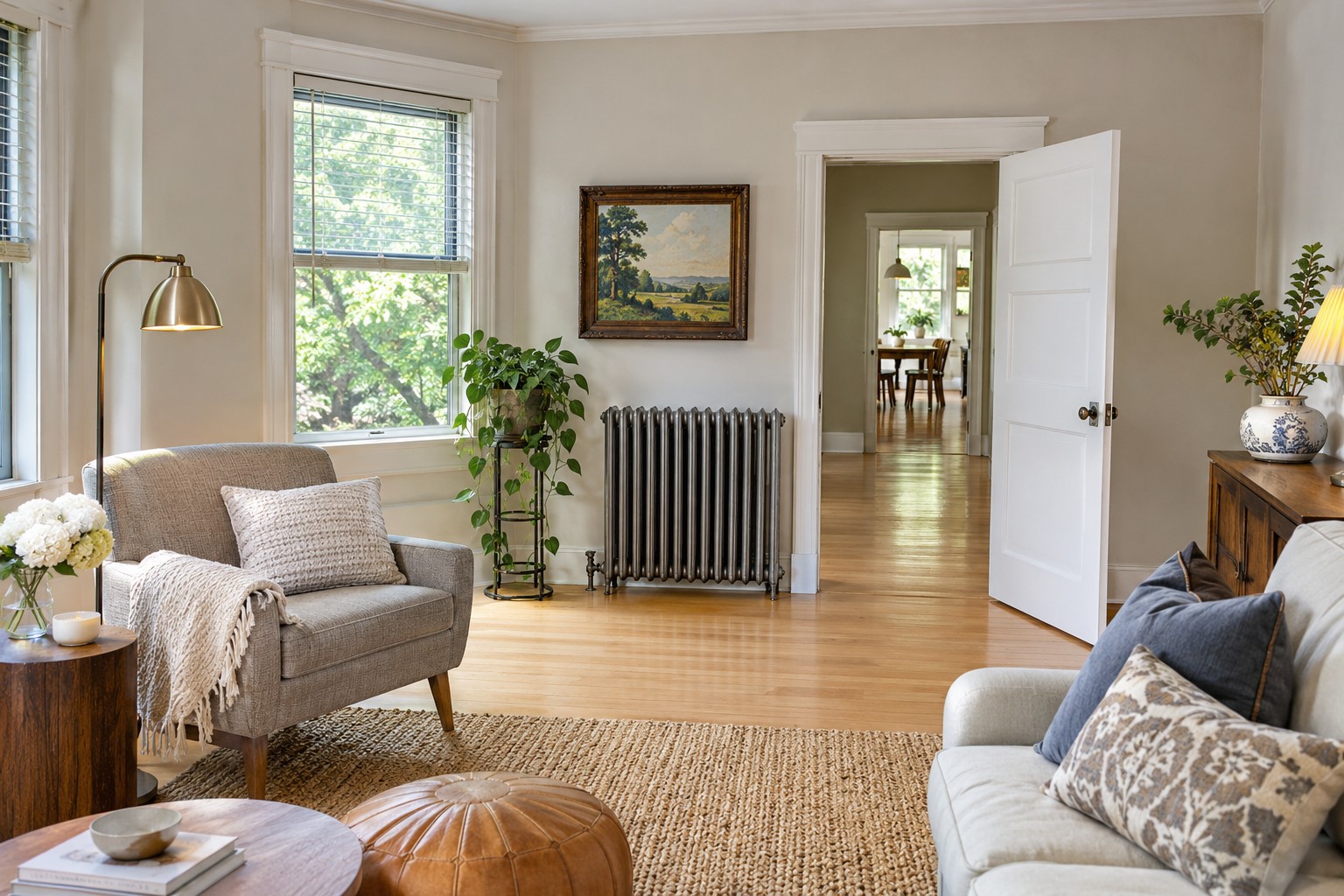
When a radiator and a nearby doorway share one wall, draw the door swing and the heater clearance together before deciding where to group the seats. On the opposite half of the room, angle one small chair toward the sofa. Leave the route from the opening outside the seating group so people can pass without walking between everyone’s knees.
Try this layout with the door fully open, then with someone getting out of the chair. Add the smallest useful table inside the group if there is room. If the edge of the group cuts into the route, move the chair inward or keep the entry side furniture-free.
10. Build a Soft Conversation Pair Across the Room
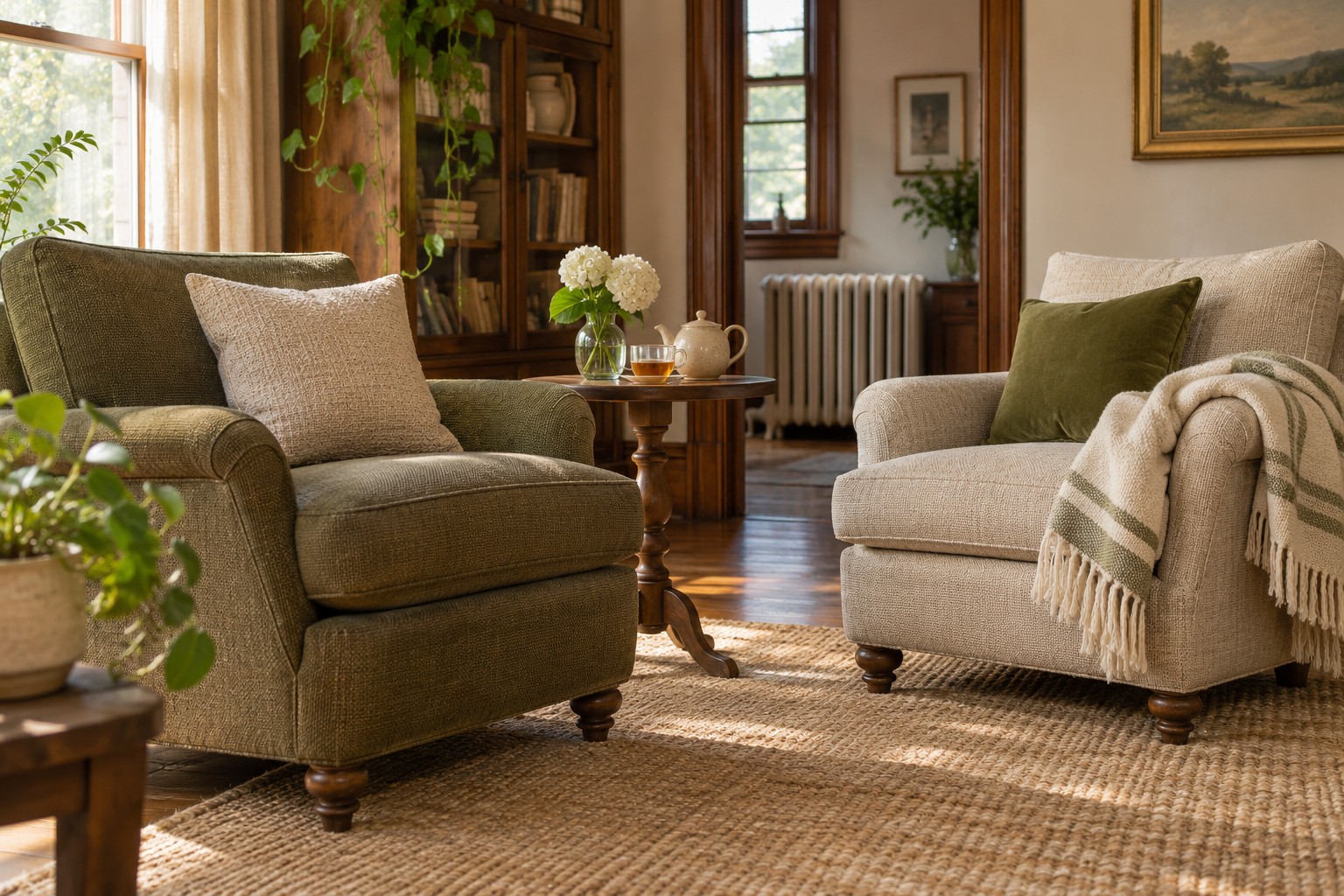
Use two upholstered chairs opposite or across the room from the radiator. Give each a supportive back and put a small table between them only if it leaves legroom. A quiet patterned rug can define the seats on that side of the room and keep the open heater side visually separate. Choose a rug position and size that leave the unit’s zone and access route clear.
A lamp placed behind one chair can light both seats if its shade disperses the light gently. Sit at the quieter end and decide where you’d actually rest your arm or set down a cup. A soft throw at the seat is more inviting when someone can reach it without leaning across a table.
11. Replace Long Curtains With a Fitted Shade
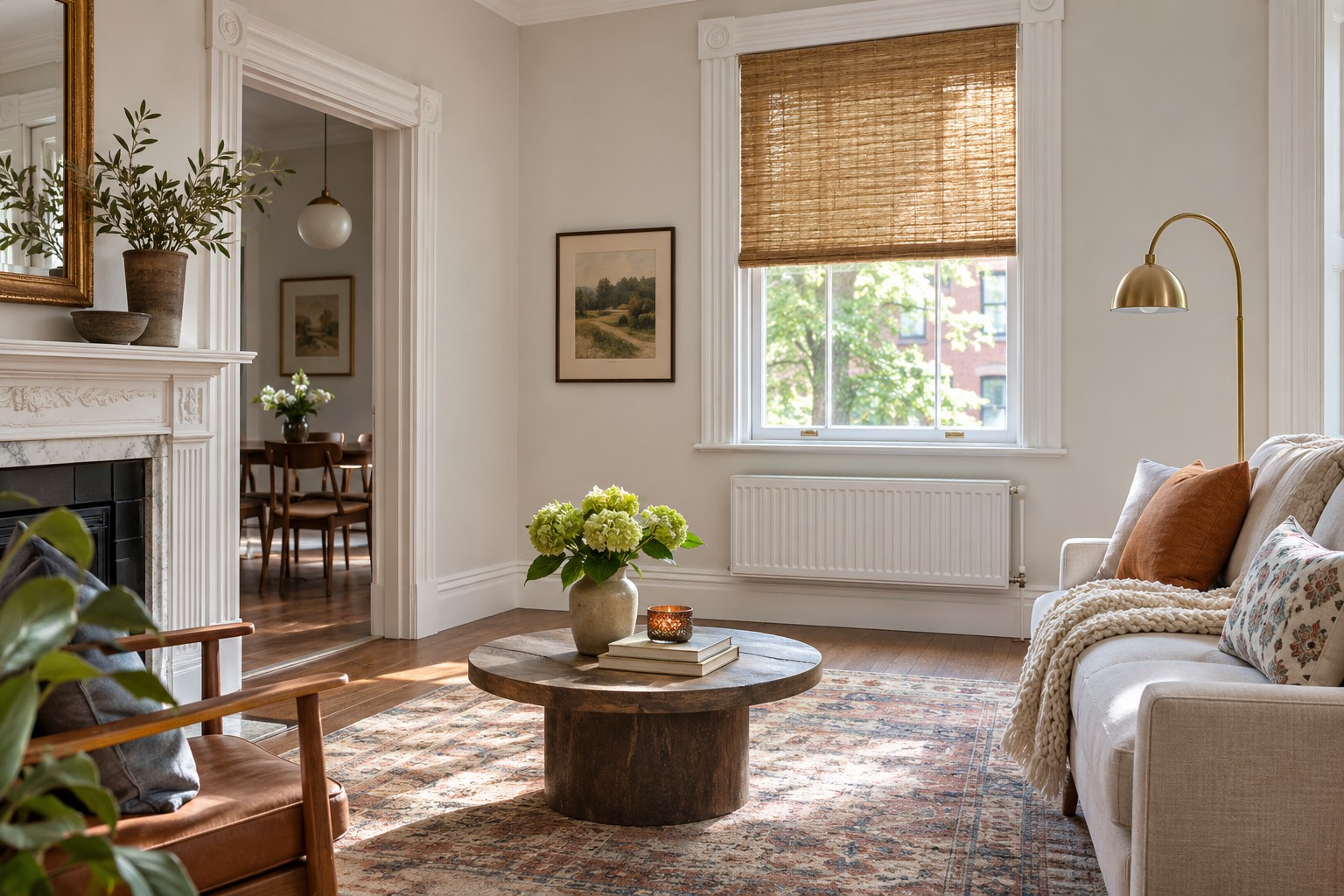
Consider a fitted window shade when long curtains fall into the heater’s required clearance area. It needs to fit and operate within the window position allowed by the heater and shade instructions. Check it at its lowest normal setting, and look for hardware that works with the actual frame and window handles. Keep the result easy to open for cleaning or ventilation.
Test the look in daylight and at night. A gently textured shade can soften a bare window without returning fabric to the area where it hung before. If you have doubts about space or mounting, ask the building owner or an installer which window treatment the setup can support.
12. Leave a Visible Route to a Corner Valve
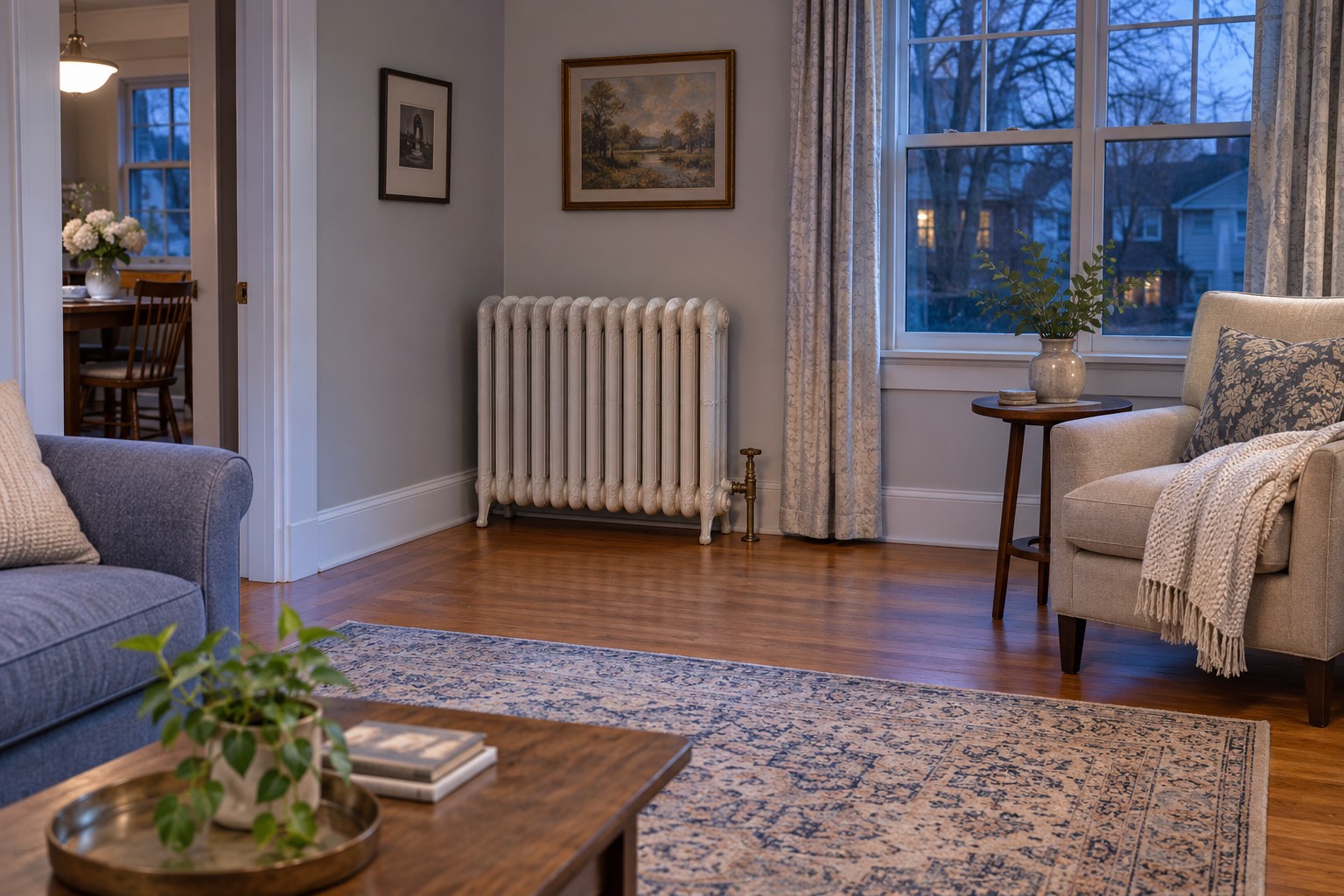
A valve tucked into the corner can be easy to forget when planning the furniture. Look at how someone needs to approach the unit for adjustment, cleaning, and service. Then place the facing chair or table on the far side of that route, even if a symmetrical arrangement would look a little tidier on paper.
Try the approach while the chairs are already in use. If the valve can only be reached by moving furniture or stepping over cords, revise the layout. Follow the applicable instructions for who can operate or service the valve. Keep the pathway itself clear so access is possible when it’s needed.
13. Put a Floating Sofa on the Room Side of the Walkway
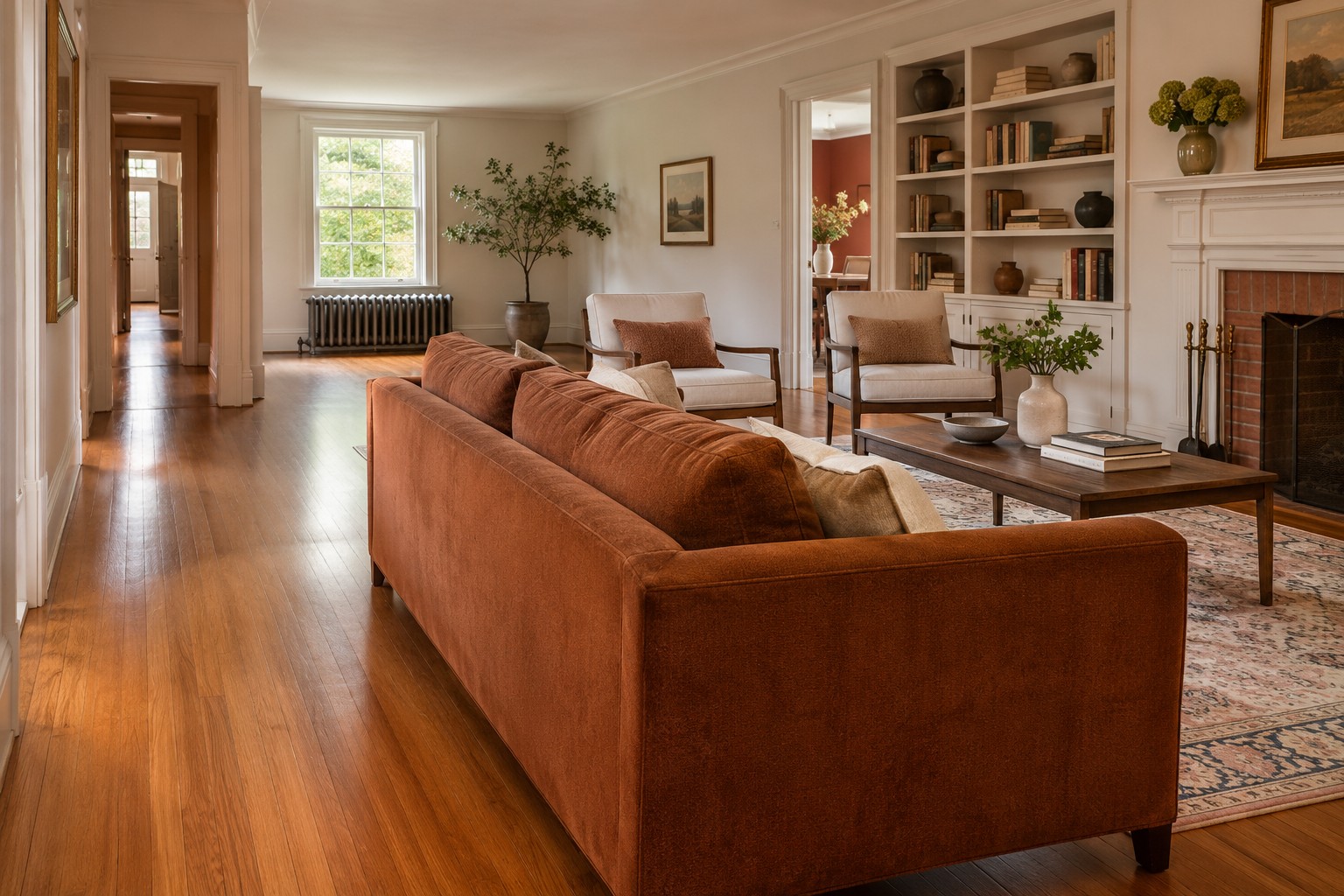
In a long room, try the sofa farther into the room where the taped plan leaves a clear route on the unheated side. Mark its full footprint, then check the walk around both ends with the matching chairs or table in their real positions. A floating sofa works best when the main passage is obvious from the doorway.
Put the table on the seating side, where it’s useful from the sofa. If the piece that would usually stand behind the sofa narrows the route or approaches the radiator, leave that space open. The back of the sofa already supplies the visual boundary.
14. Let the Second Radiator Decide the TV Wall
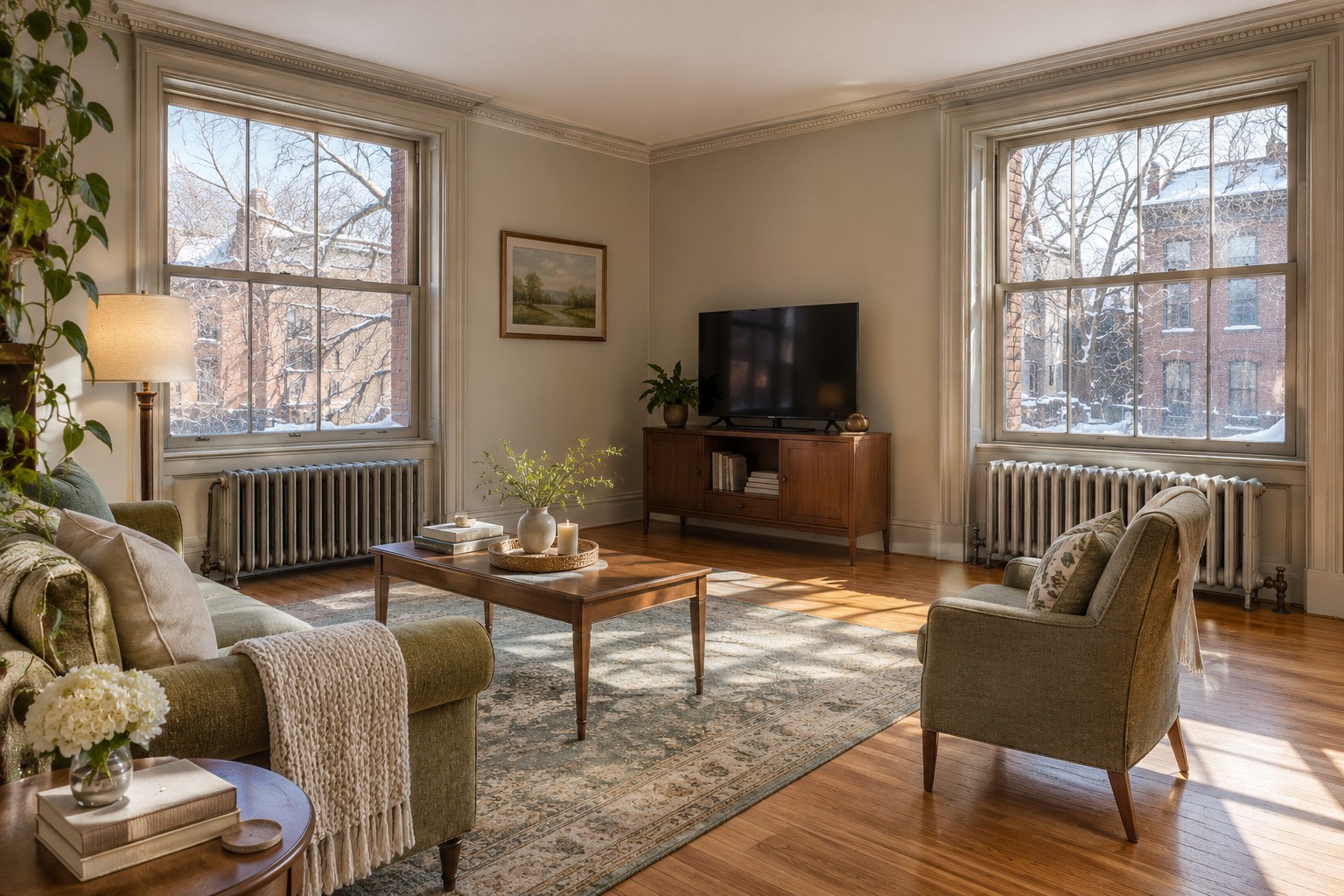
When two radiators take up two walls, label them on the same plan. Check clearances for both, then look at the remaining walls from the most useful sitting position. A shorter console on a third wall may give the TV a better home than a bigger cabinet near either unit.
Look at the windows when you decide where the screen goes and check glare from the main seats. Keep the route to both heaters accessible once the media unit and cable runs are planned. The better TV wall is the one you can use without designing the rest of the room around reaching past it.
Once you’ve found a layout, leave it in place long enough to use the lamps, open the doors, and sit in every seat. If the radiator is easy to reach and you stop noticing the furniture on the way through, the room is doing its job.
Discover more from HomeTrendora
Subscribe to get the latest posts sent to your email.