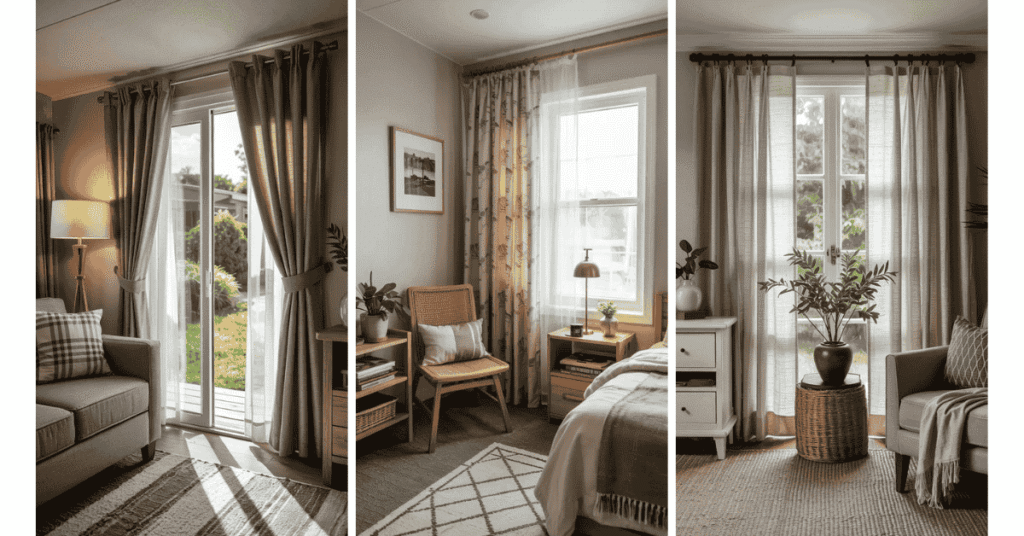
1. Choose the Centerline You Actually See From the Sofa
Sit in the usual place and look straight ahead. The visible center may be the wall, the middle of the sofa arrangement, or a wide opening behind the furniture. Mark an approximate midpoint with a small piece of removable tape on a suitable surface. Step to the doorway and look at the same mark again. Use the line that does the most to settle the wall from both places. A grouped seating arrangement can feel centered on the room even if the curtain composition is slightly wide on one side. If the shift creates a large unbroken panel where there’s useful daylight, make the glass itself the main focus instead.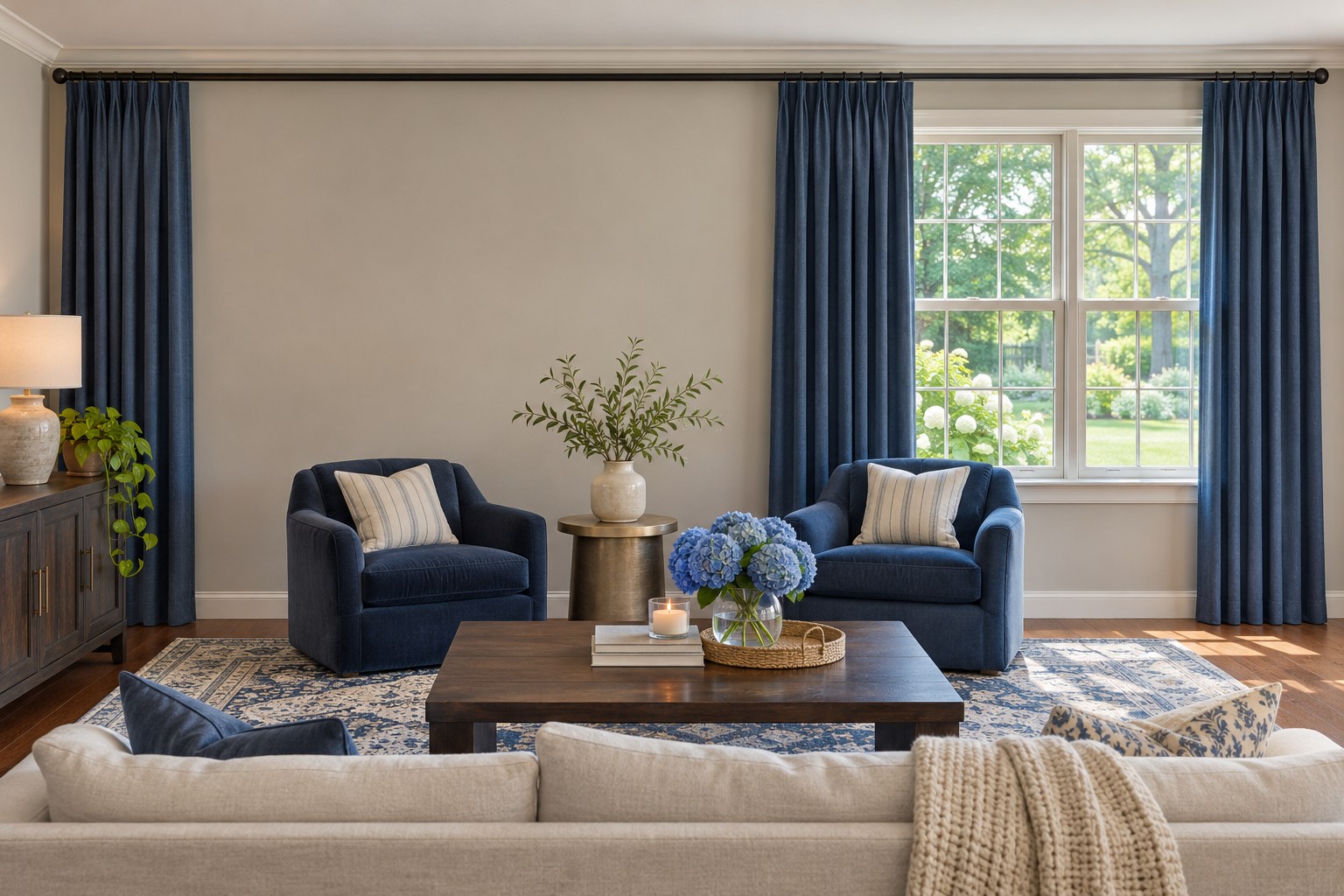
2. Measure the Bare Wall Beyond Each Window Casing
Write down the width of the casing and measure the usable wall on each side. The longer side may end at a light switch, bookcase, or perpendicular wall before it reaches the next obvious edge. Use the first real obstacle in that direction as the measurement. Look above the window for room at the bracket height, too. Measure the sweep of any door or swinging window near the proposed drapery. The numbers will tell you whether matching panels can open to a similar width, or whether you need a narrower stack on one side. Keep a drawing that shows both ends separately while you look at rods and curtains.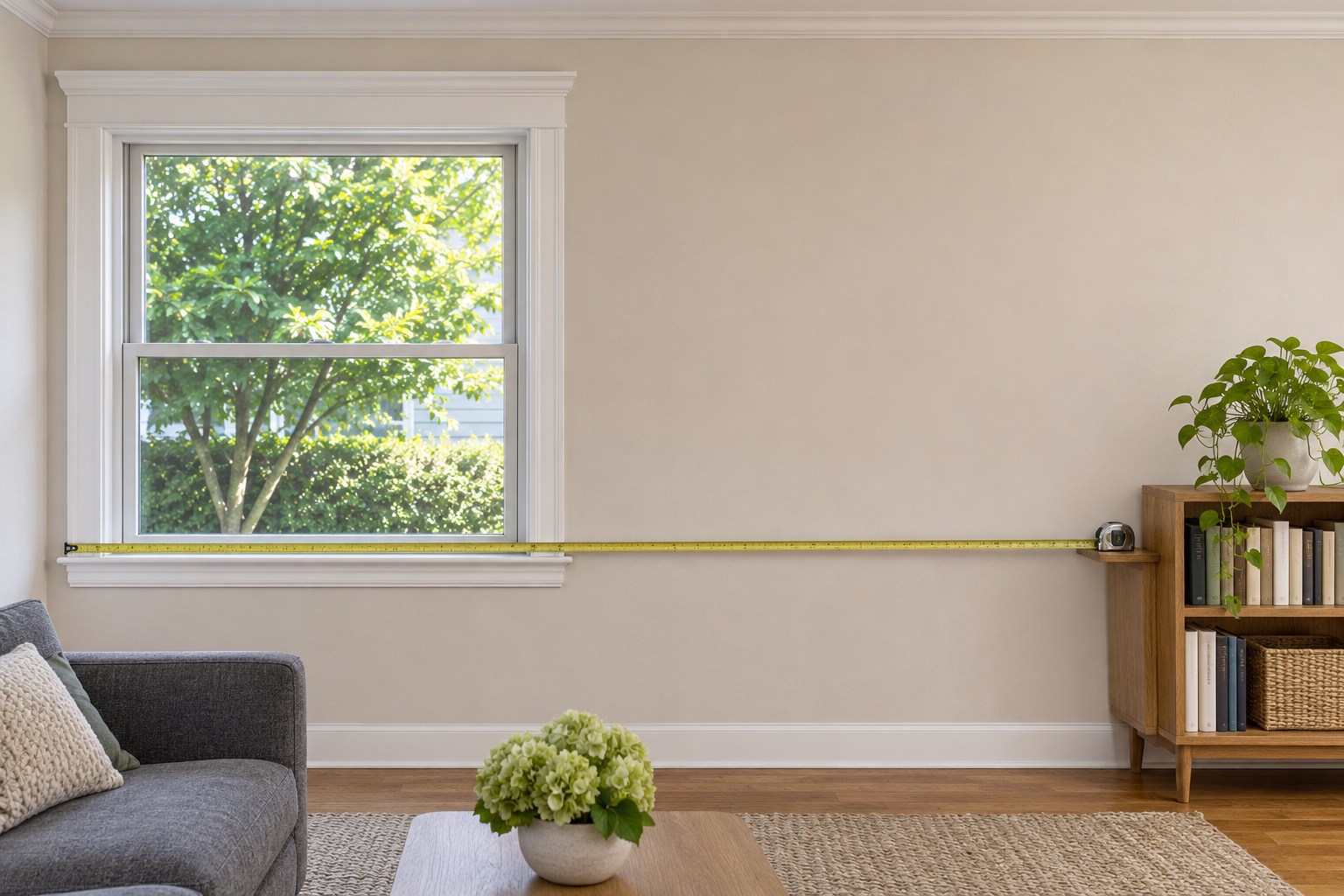
Turn the window measurements into a plan
Put both wall widths and your curtain choices on paper before you order hardware. The HomeTrendora eBook PDF, fillable room planner, and Excel budget tracker help you organize the measurements and budget for the pieces you choose.
GRAB 10% DISCOUNT
Coupon code: HOMETRENDORA10
Use this code at Payhip checkout.
Bonuses included with your eBook purchase.
3. Use a Wall-Wide Rod to Frame a Single Offset Window
On an almost empty wall, try carrying the rod across more of the room so it reads as a deliberate horizontal line. Start with the longer bare side. Mock up the left and right stopping points and leave room for the fabric to gather beyond the glass where it can. Use supports suitable for the span and the combined hardware and curtain weight. Pull the panels open in your mockup design and decide what happens to the section of wall between the glass and the far stack. It can be a quiet blank patch in the same color as the rest of the room. For examples in tight floor plans, see the curtain guide for compact homes.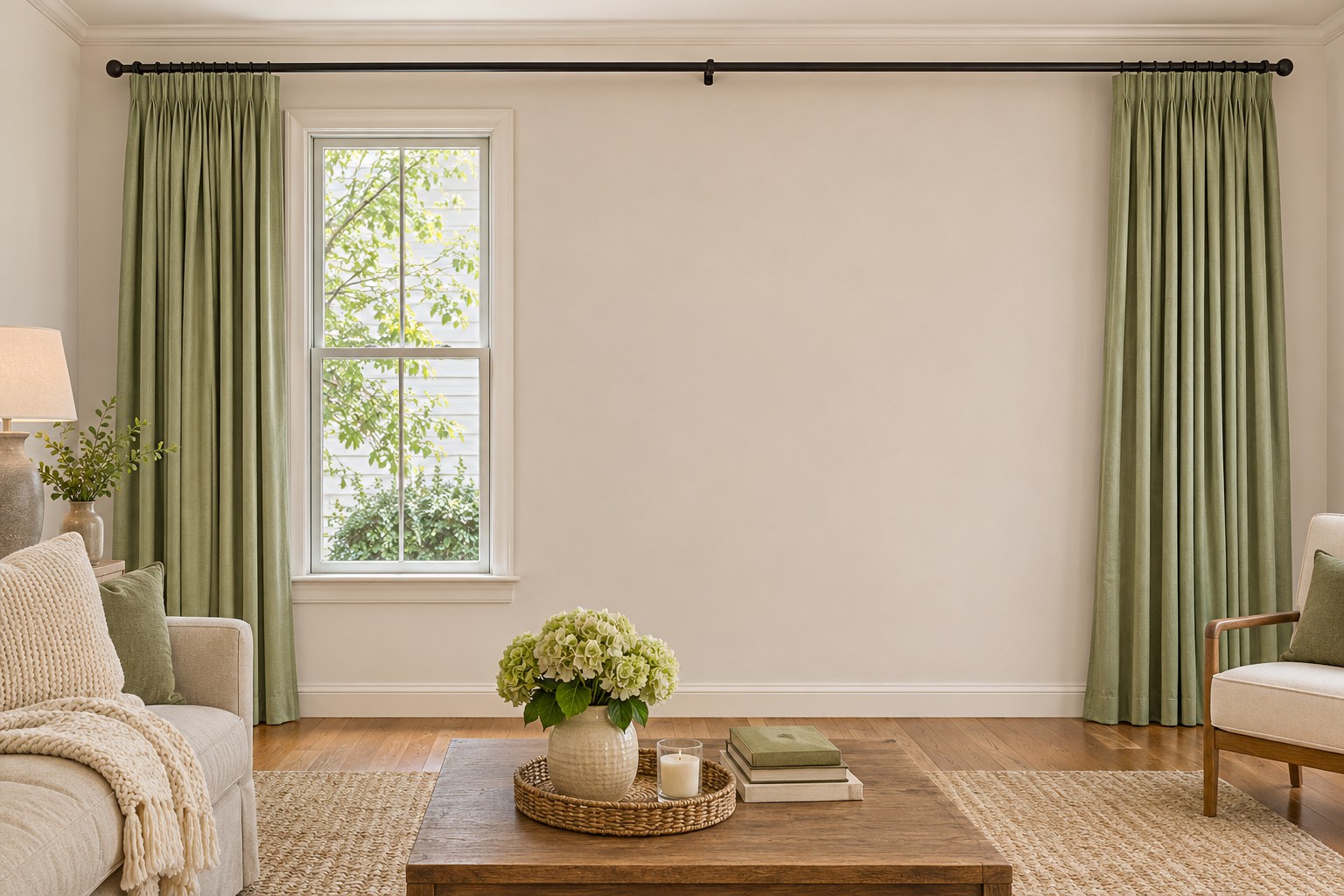
4. Stack One Stationary Panel on the Short Side
If the corner has only a few inches beyond the casing, a small decorative panel can give the wall a fabric edge. Look for a narrower panel with a fold that still has some depth when gathered. Keep its inner edge where it only softens the side of the opening. If a shade gives you the privacy you need, a single rod can carry the fabric layer. Measure its whole span separately from the few inches the small panel occupies. Make sure the hanging fabric fits its short space without pushing against the casing or blocking the window latch. From the sofa, see whether the fold is wide enough to feel related to the other side. A small difference suits an uneven room when both fabrics share a color or texture. For a shade-and-curtain setup on a narrower opening, this black single rod adjusts from 36 to 66 inches. Measure the whole span and allow room for the finials at the short end.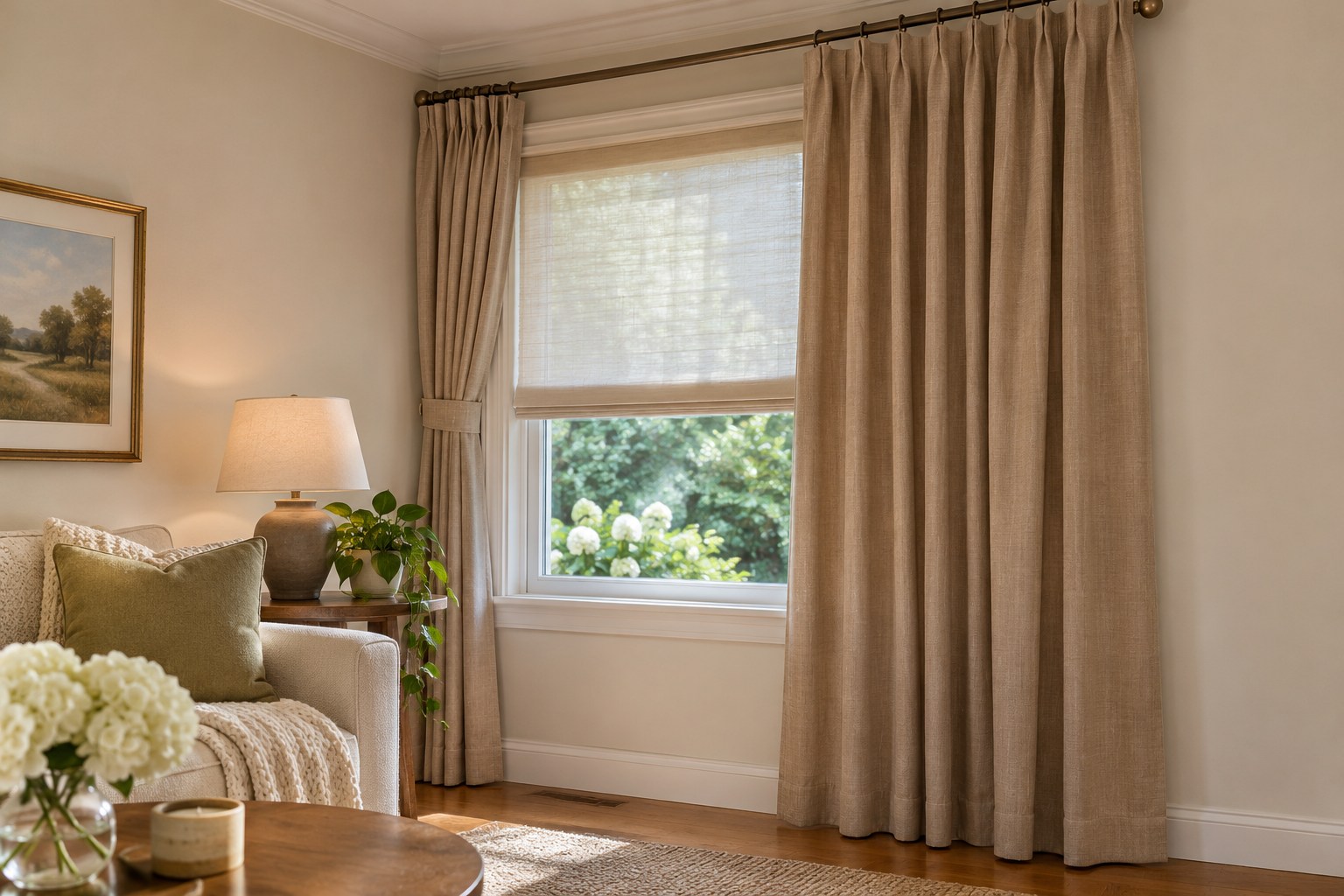
Check the adjustable single curtain rod(paid link)
5. Give a Sheer and a Working Curtain Their Own Rods
Use a sheer closer to the glass when you want soft daylight during the day. A working front panel can stay open on the longer wall until you need more evening privacy. Check that both tracks or rods can hold the intended panels and leave room for the two sets of folds to pass each other. Use the sheer to see how much of the active glass is still giving you light. At night, plan to close the layer that actually gives you the privacy you need. Measure the mounting span and the projection from the wall with both layers in mind, and check the rod instructions for support and curtain weight.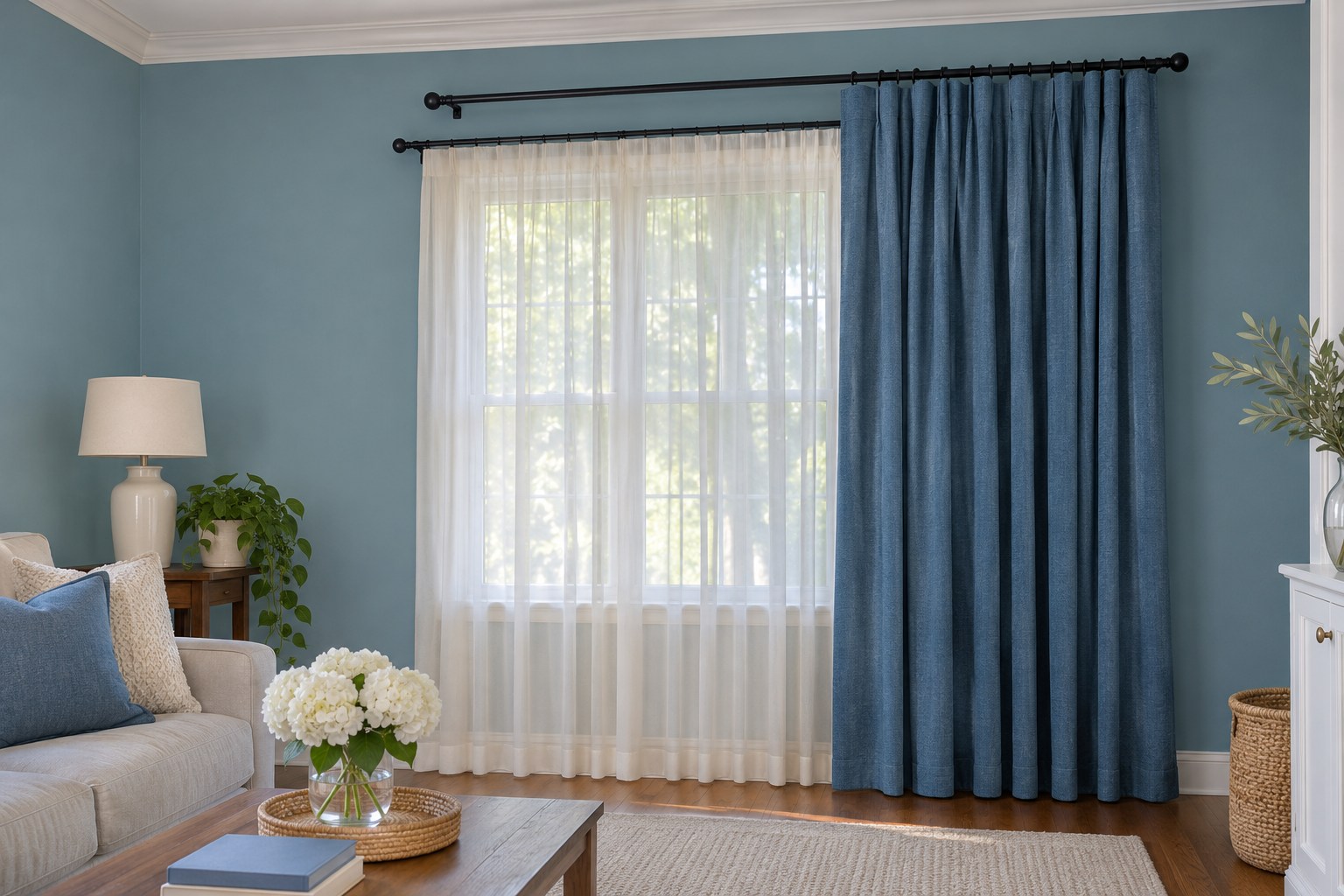
6. Use a Shade When the Wall Can’t Hold a Long Rod
A shade can serve a window that sits hard against a tall bookshelf or directly beside a short return wall. Choose a suitable inside-mount treatment when the opening has enough depth and the controls and sash will stay accessible. A modest fabric texture can make the visible glass feel intentional without needing another panel at the corner. Tuck the seating into its normal position and see whether the shade can go all the way up and down from the approach you have. Use a cordless option especially where children will be present. If fixed heat or other fixtures shape your room, check the actual clearances and see these living room layouts around a radiator.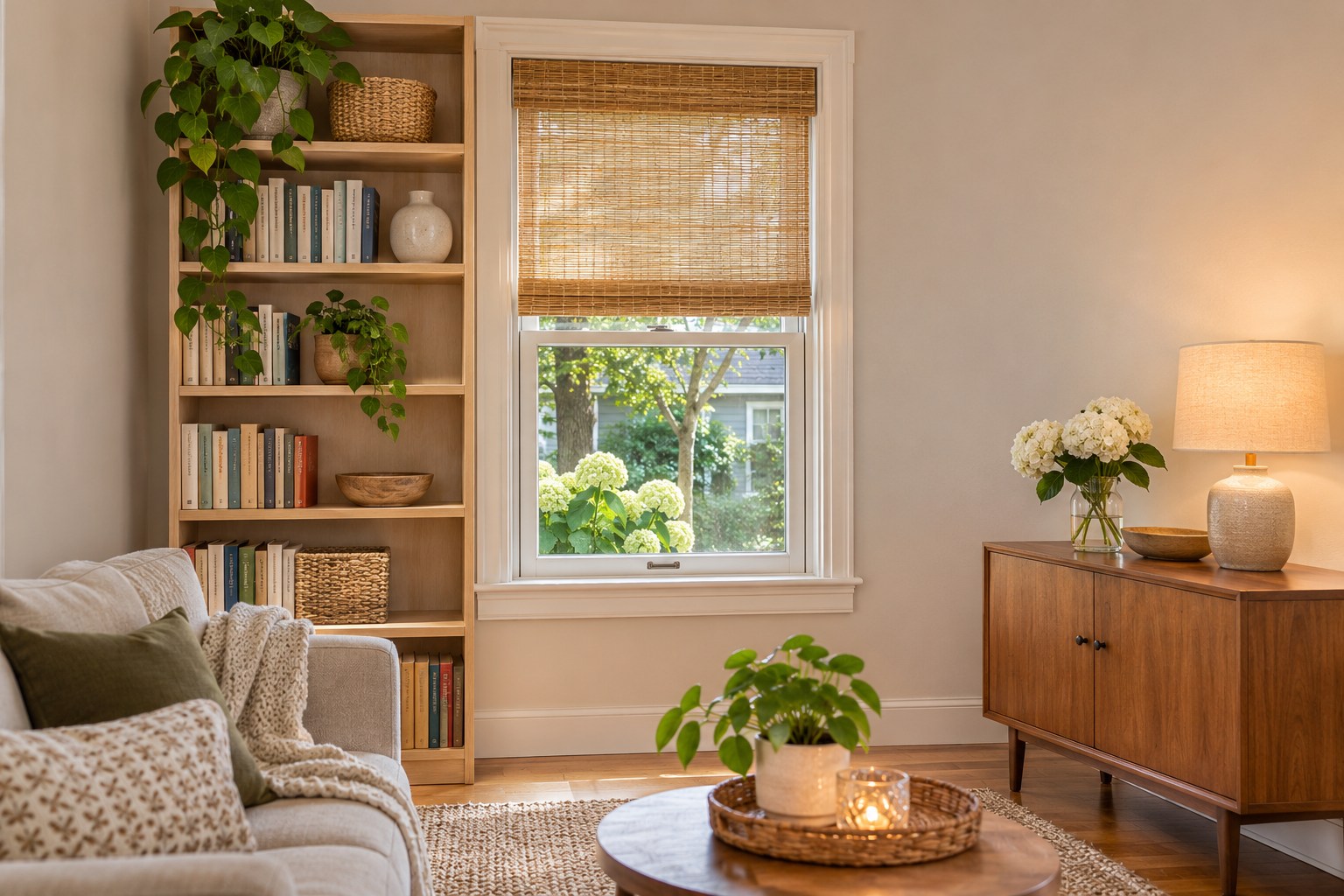
7. Align Hem Heights Across Drapes of Different Widths
Two drapes can look like a considered pair even when they’re different widths. Match their length and heading style first. Check the floor below both drops, since a slight change in the floor height can make the hems look uneven from the doorway. Hang the panels temporarily or hold a full-size sample at the intended row before ordering alterations. A finish just above the floor is easier to open and close where people walk close to the drape. Choose the finish using the surface actually below the fabric, including a thick rug if it will stay there.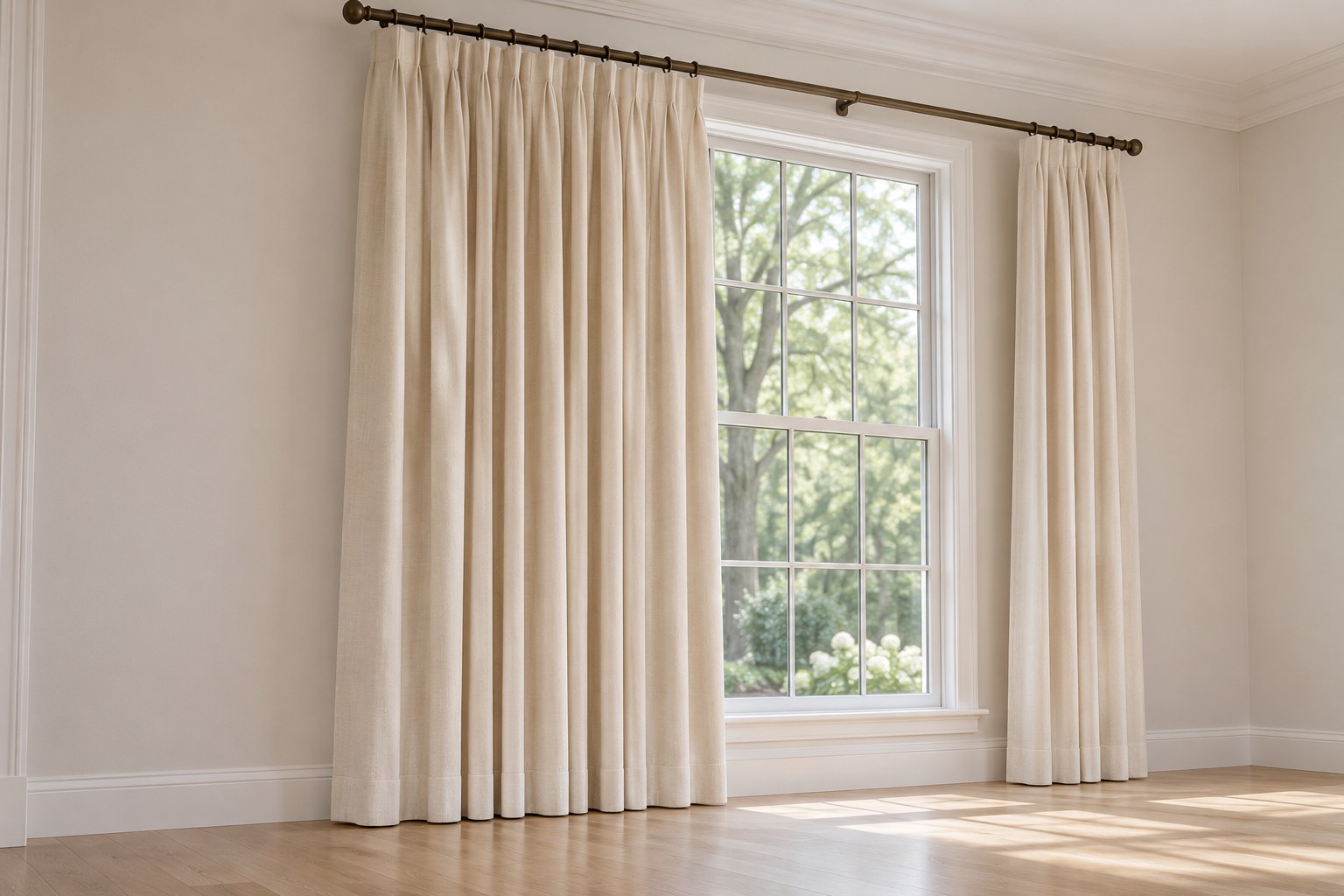
8. Give a Linen Panel Space to Stack off the Glass
Open a sample of your chosen linen or linen-blend panel to see how thick the folds get. A heavy lining can make the open stack wider than the face fabric alone. If you can, hang a sample and gather it the way you’ll use it. Write down that parked width, including the part that overlaps the casing. Give the longer side the deeper stack if the room allows it. This is a good place for a warm flax or clay color that makes sense beside wood and matte plaster. Once you know how much glass remains clear, choose a lining with the light and privacy performance you want for the room.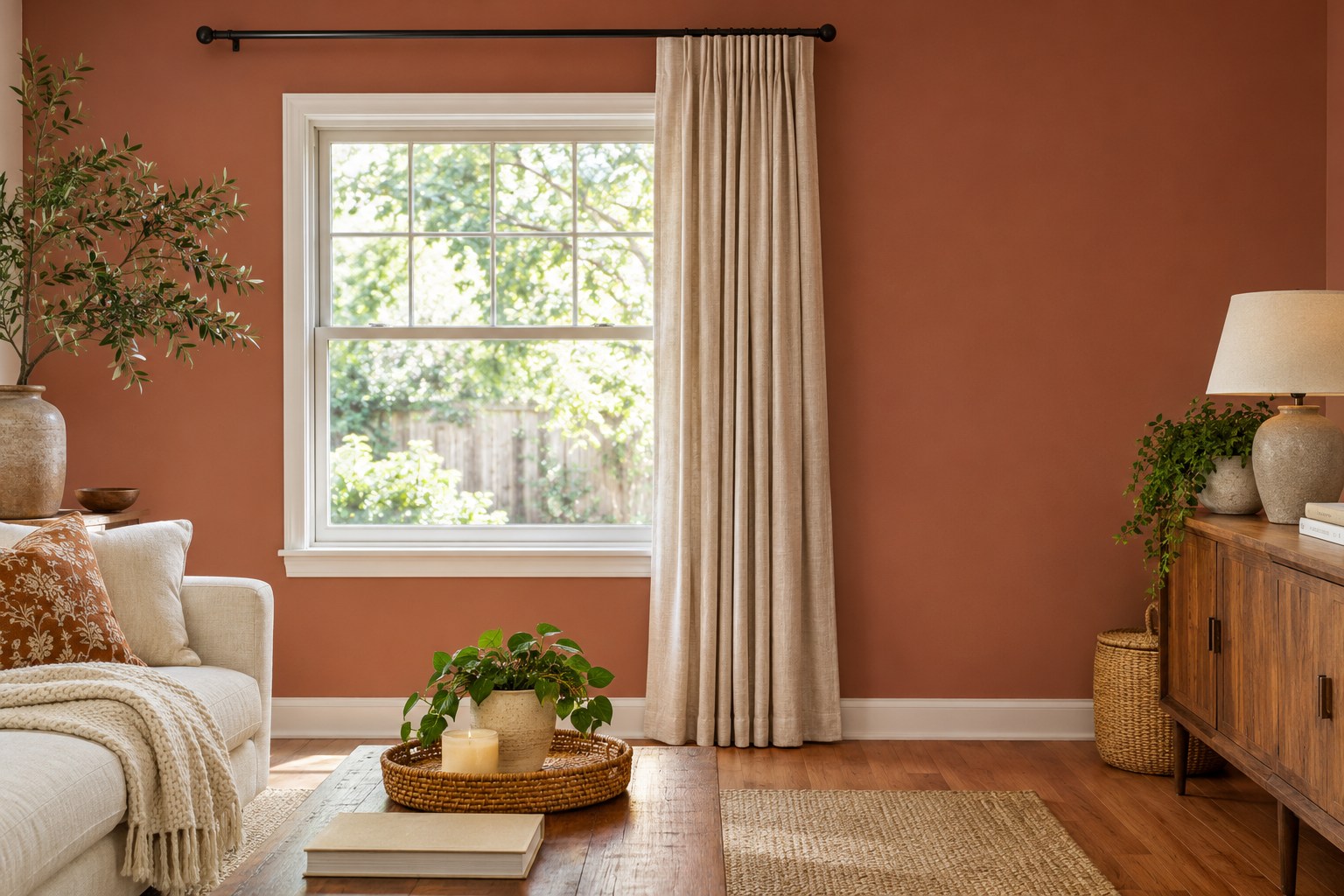
9. Choose a Trim Color for the Casing That Stays Visible
Work from the small parts of the casing that you’ll see when the drapes are open. A bright surround can draw a hard rectangle on the short side where only a strip of wall remains. Tape a paint sample to a safe spot on that edge. Compare a warm trim close to the wall with a slightly more distinct shade. Move the panel through its full range and check the paint from your usual seat. Aim for a transition you still enjoy with the cloth parked. The window outline can keep its own character when the spare wall area and the curtain already have enough in common.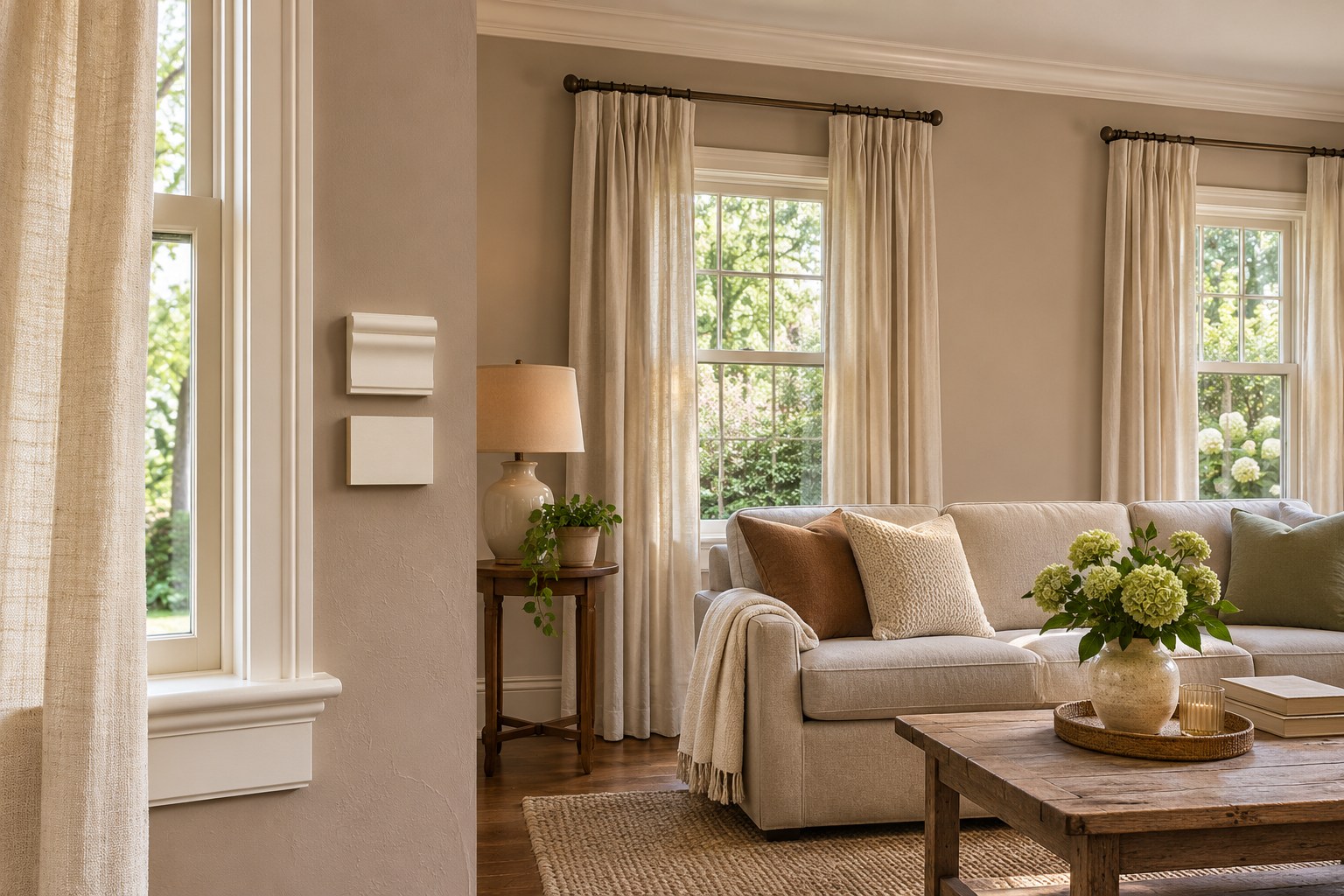
10. Let the Evening Lamp Light the Open Side
Set a shaded lamp near the longer bare stretch of wall so it gives the room a soft edge after dark. Keep the shade well clear of fabric and use a stable surface with a suitable power route. Sit down and check the near and far ends of the window so the light fills an empty patch instead of drawing attention to the glass reflection. Aim the lamp toward the wall or the surface you use, where its shade gives the light a comfortable boundary. A clear gap between lamp and panel makes both easier to use. The guide to brightening a dark room has more ways to carry light across the rest of the room.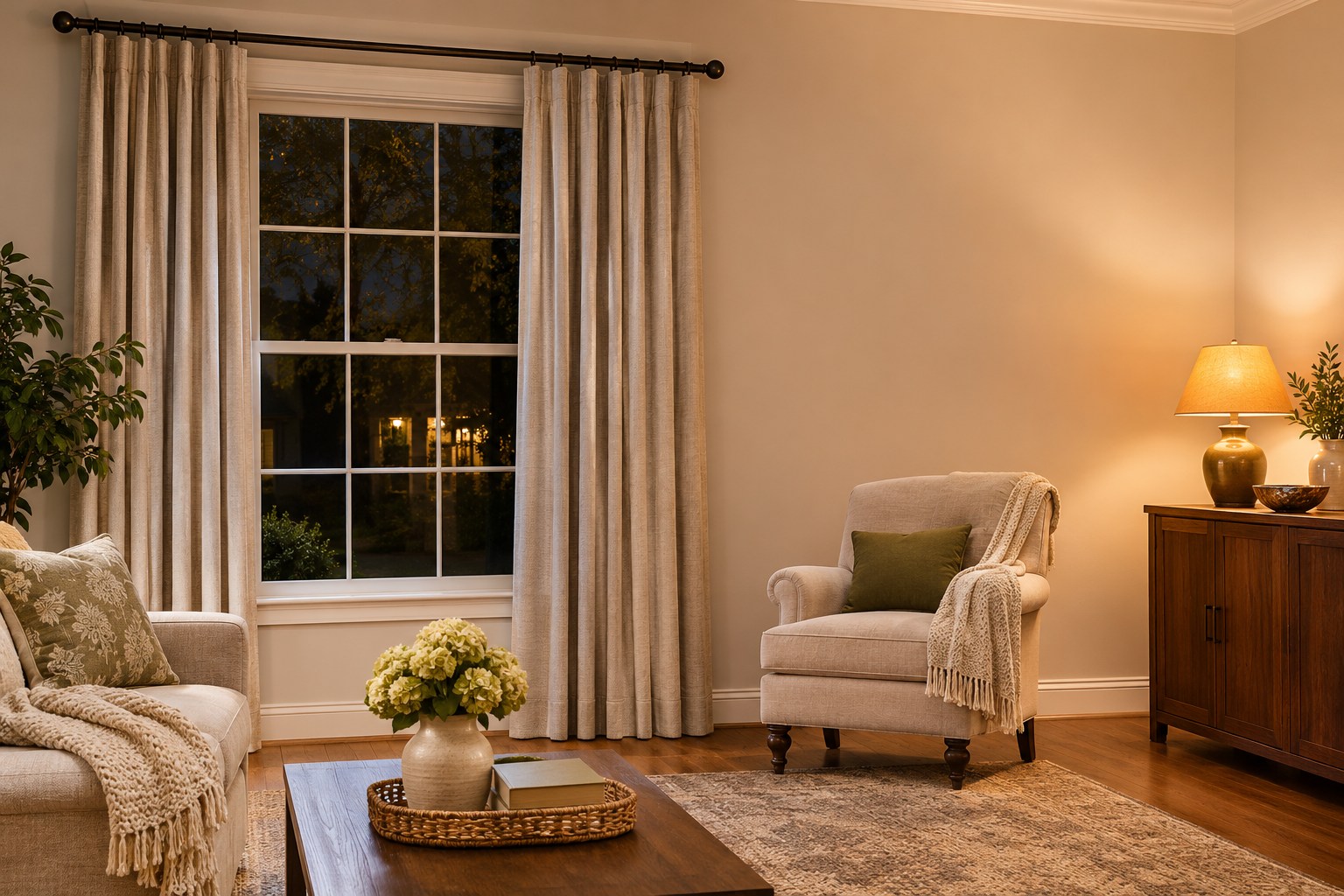
11. Keep Air Vents and Outlets Clear When the Panels Park
With the curtains all the way open, check where the thickest part of the stack sits. Floor registers, heater clearances, and wall outlets may be most visible when the glass is open. Mark their locations on your sketch. If a panel would rest over a vent or plug, move its stopping point or try a narrower stack. Watch the bottom few inches again with the drapes closed. Follow the directions for any heating equipment and the clearance it requires. A change in hem length or treatment style can restore access where an outlet or vent is too close for a full panel.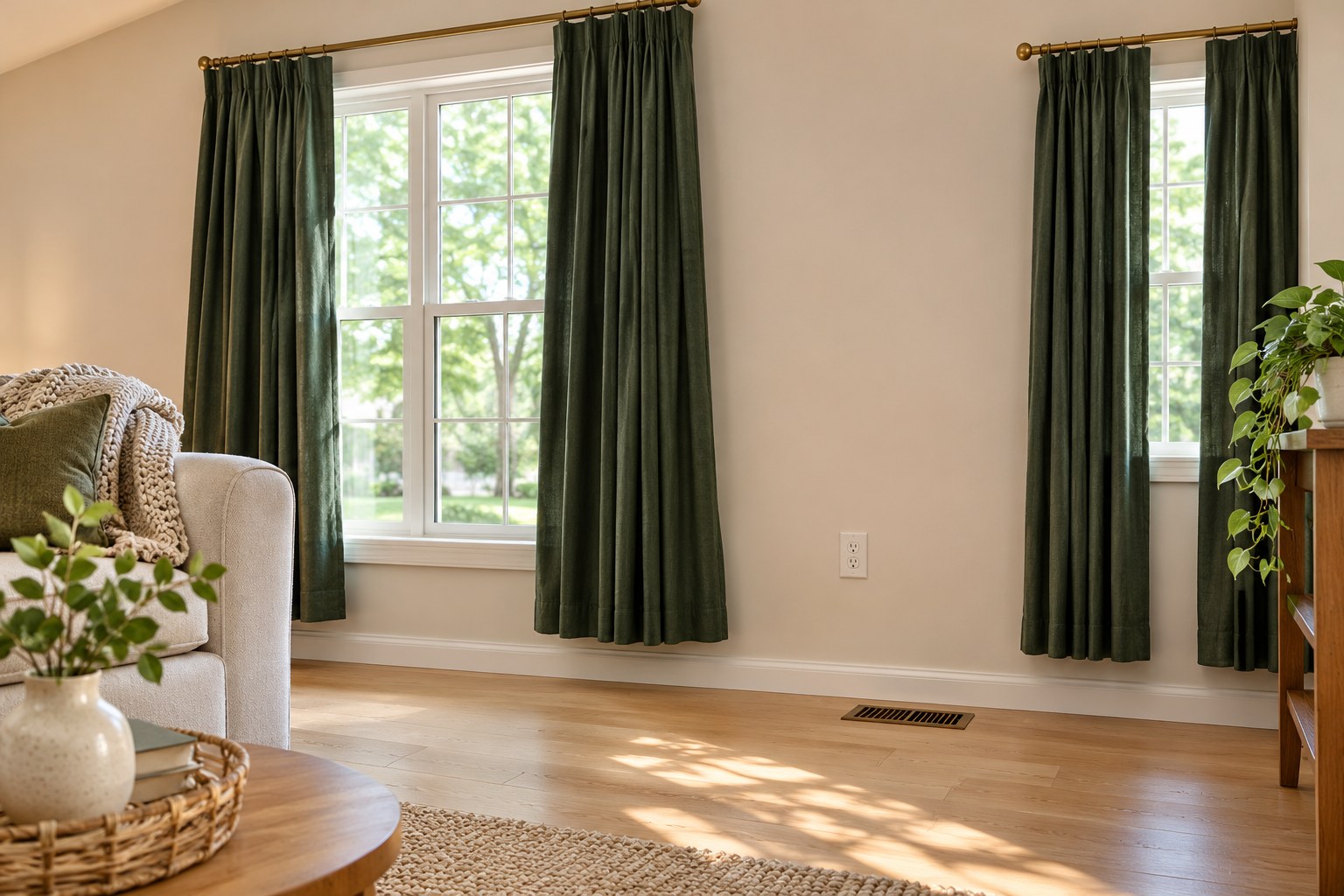
12. Treat Two Offset Windows as One Group When Both Still Work
When two windows of different widths share a long wall, compare one common rod line with separate treatments. A long shared line can make the wall feel calmer. Give each active sash its own clear space and leave a place for any middle folds if they have to park between the windows. Open both windows and check the two light levels before choosing. Where the space between the casings is narrow, two closely packed inner stacks may get in the way. Use separate shades and fewer outer panels if that arrangement lets you control each window when you actually need it.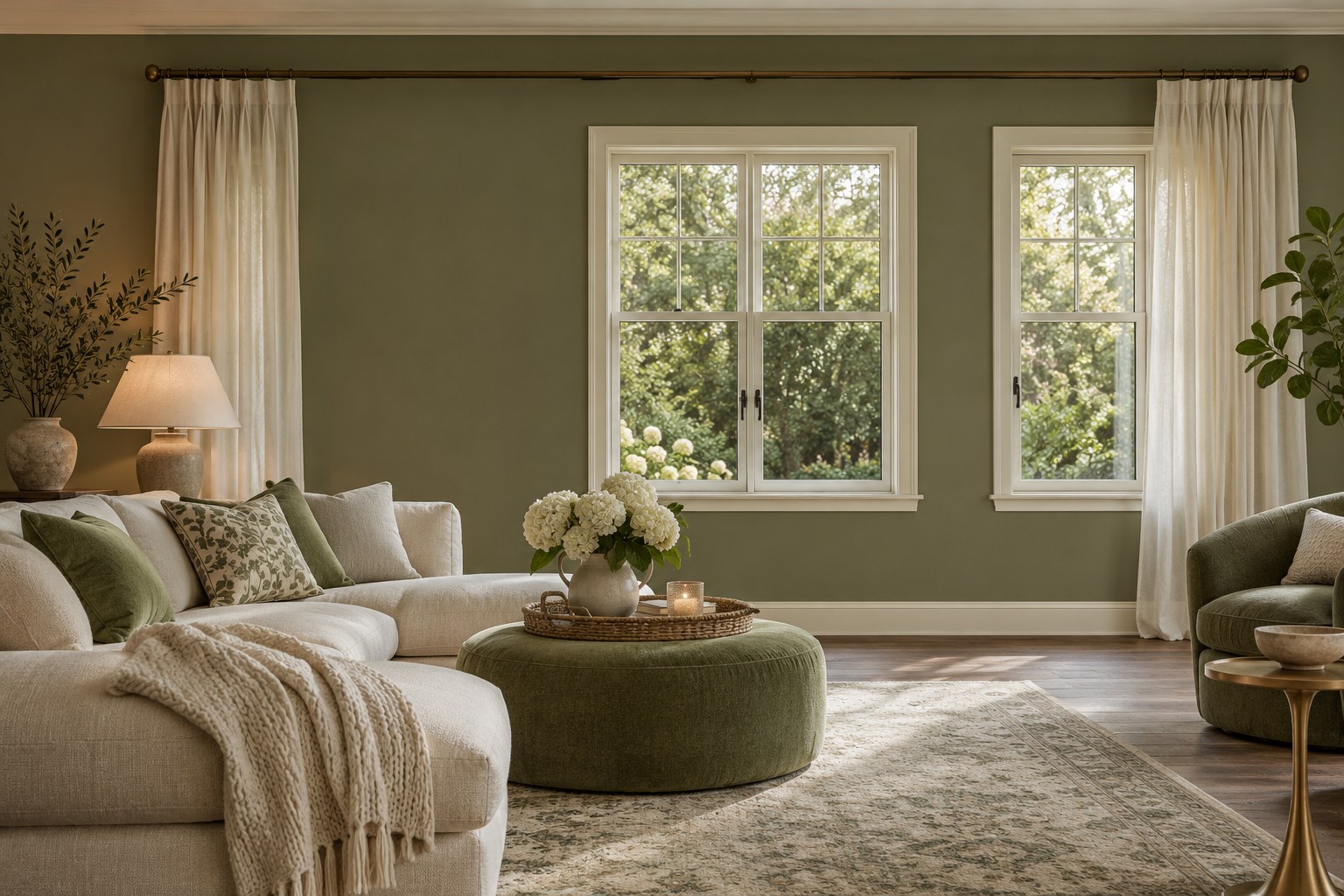
13. Mark the Rod Endpoints Before You Drill
Put two small temporary marks at the heights and widths you’re considering using a wall-safe method. View them from the sofa, the doorway, and the shortest side of the room. Ask someone to hold a length of scrap fabric in the approximate stack position if you need a better sense of its size. Use the final view to choose the endpoints, then follow the hardware and wall fixing directions for installation. Keep the measurements with the room sketch. When the rod, window and panel each have a known place, the wall can feel balanced even though its opening sits off to one side. An off-center window works well when the curtain has somewhere sensible to go in both positions. Choose the view you want to preserve, then give the hardware and fabric the room they need to do their jobs.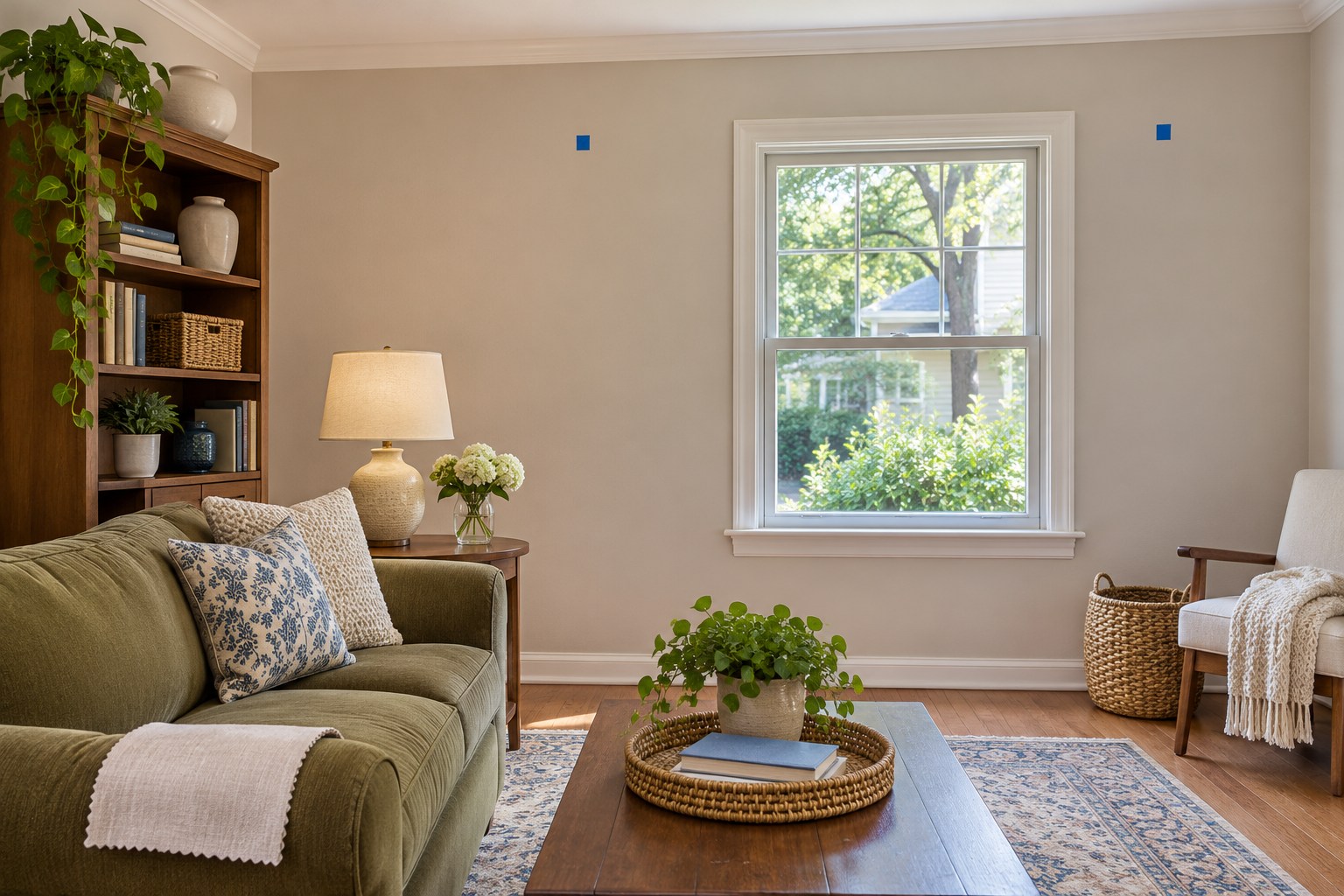
Discover more from HomeTrendora
Subscribe to get the latest posts sent to your email.