Barbie storage gets frustrating when the dolls, clothes, shoes, and large play pieces all disappear into one deep bin. These ideas help you choose a home for each kind of item, then decide what should stay ready for daily play and what can be put away.
Start by measuring the largest doll or accessory you need to store. Fashion dolls, vehicles, and playsets vary, so the useful measurement is the space inside the container, not just its outer size. Follow the toys’ age guidance, keep small parts away from children under three, and secure storage furniture according to its maker’s instructions. The goal is a system that is easy to return things to after a game.
1. Start With One Shallow Underbed Doll Box
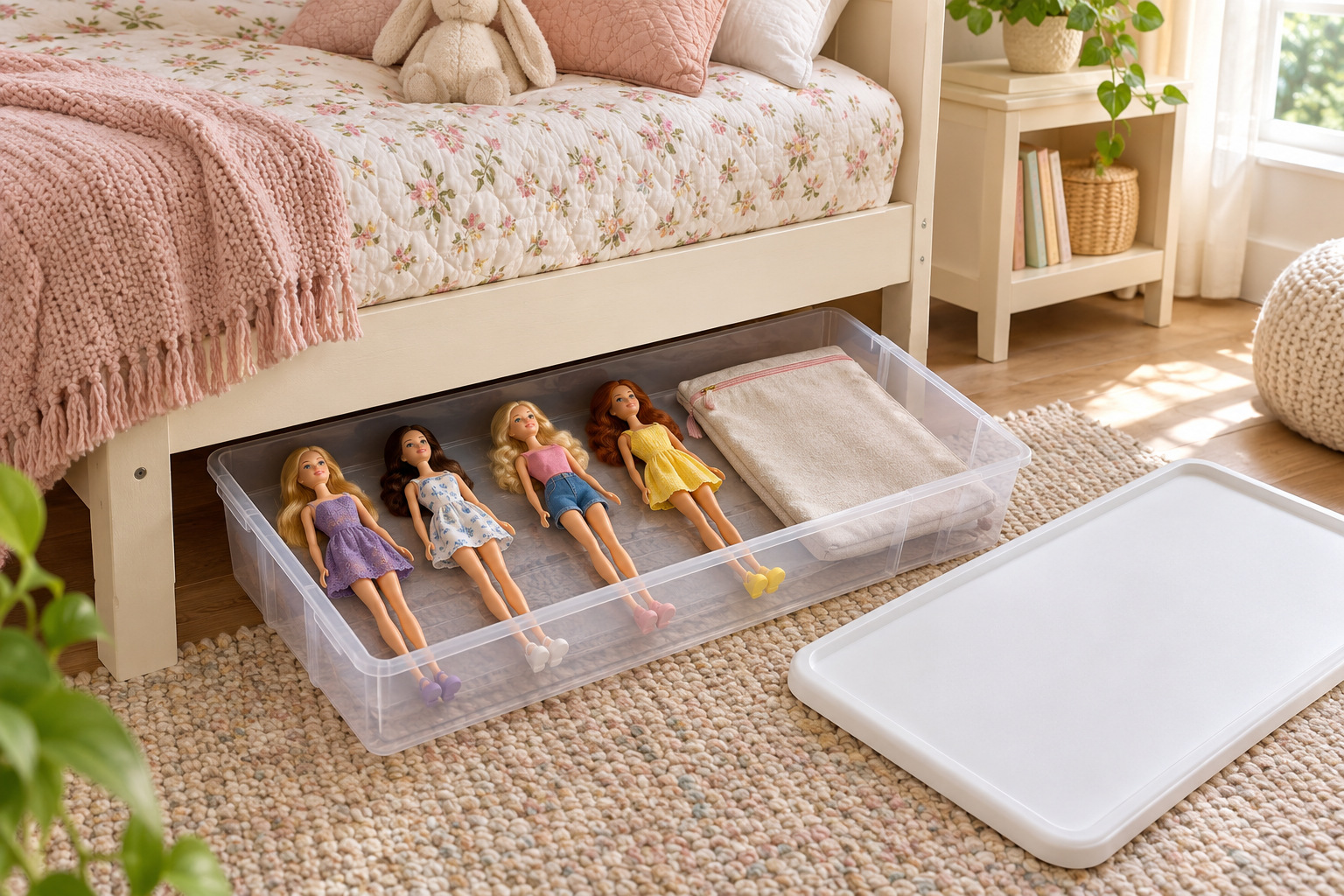
A shallow box lets you lay dolls in one visible layer instead of searching through a tangled pile. Measure the available clearance beneath the bed, including any center support or low side rail. Allow room to slide the box out and lift its lid without moving the bed.
Check the container’s internal length against the tallest doll, including shoes and styled hair. If you need two rows, leave enough space between them that arms and hair do not catch when a doll is lifted. Keep loose clothes in a separate pouch rather than filling every gap around the bodies.
Try one container before buying a matching set. A box that is easy to pull out and put back is more useful than several that fit only when perfectly aligned. Move delicate hairstyles to a taller storage option if lying flat would crush them.
For a similar shallow setup, this two-pack is useful if you also need a separate rotation box; compare the 6.54-inch exterior height and usable interior with your bed and dolls before ordering.
Compare the clear lidded storage boxes (paid link)
2. Keep a Small Play-Session Caddy Ready
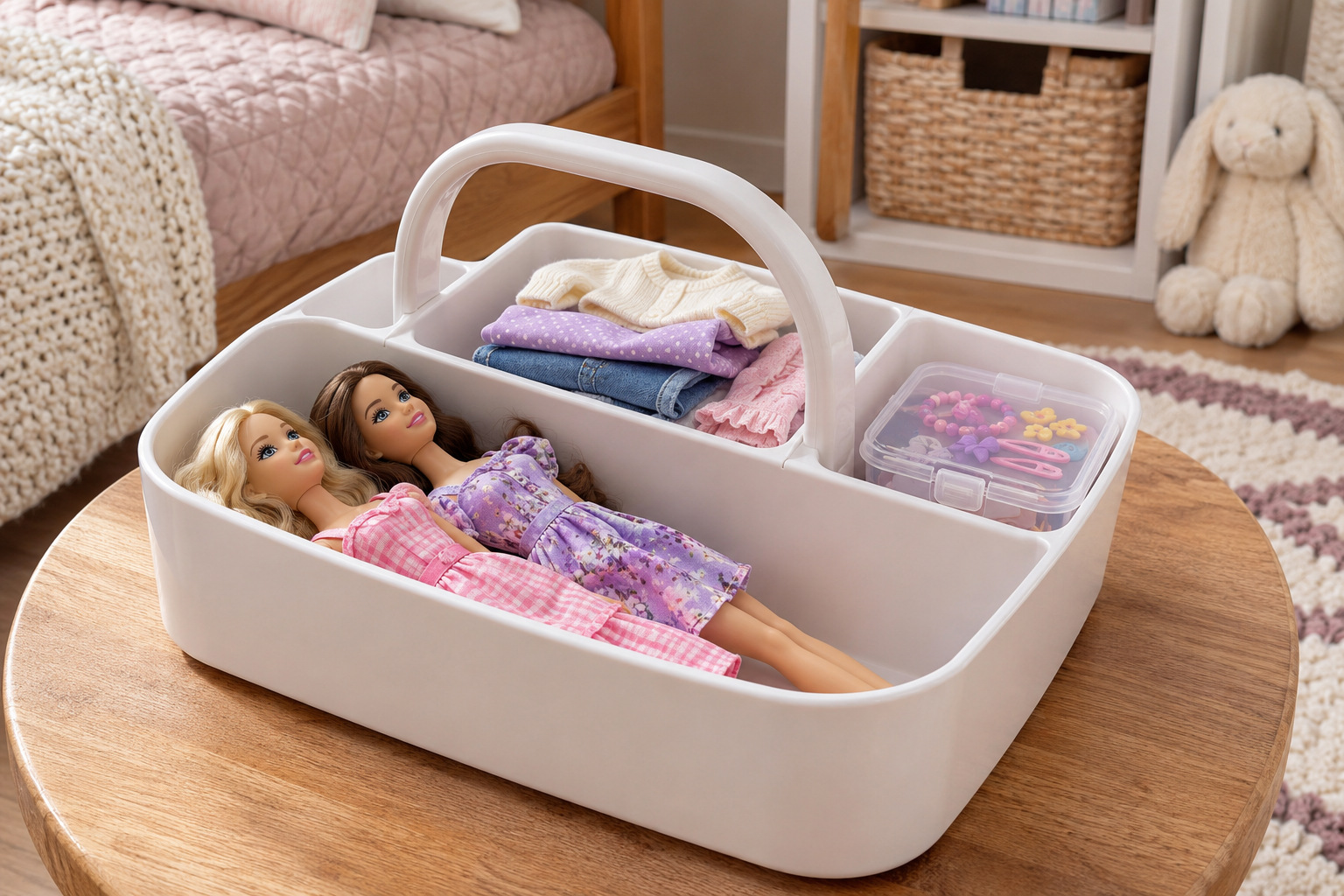
A handled caddy can hold the dolls and larger pieces needed for one game, with separate areas for clothes and a closed small-parts case. It is a portable selection, not the entire collection. Keep enough empty space to remove a doll without pulling out everything around it.
Check the usable compartments around the handle, since the outside dimensions do not tell you whether a doll can fit comfortably. A general-purpose household caddy is an organizer, not a toy or a promise of child-safe storage. Use a clean one dedicated to play supplies, follow its instructions, and let an adult carry a loaded caddy when needed.
Return it to one low, stable parking spot after play. If the caddy becomes too heavy or crowded to manage, reduce the contents rather than choosing an even larger container.
3. Stand Everyday Dolls in Divided Low Cubbies
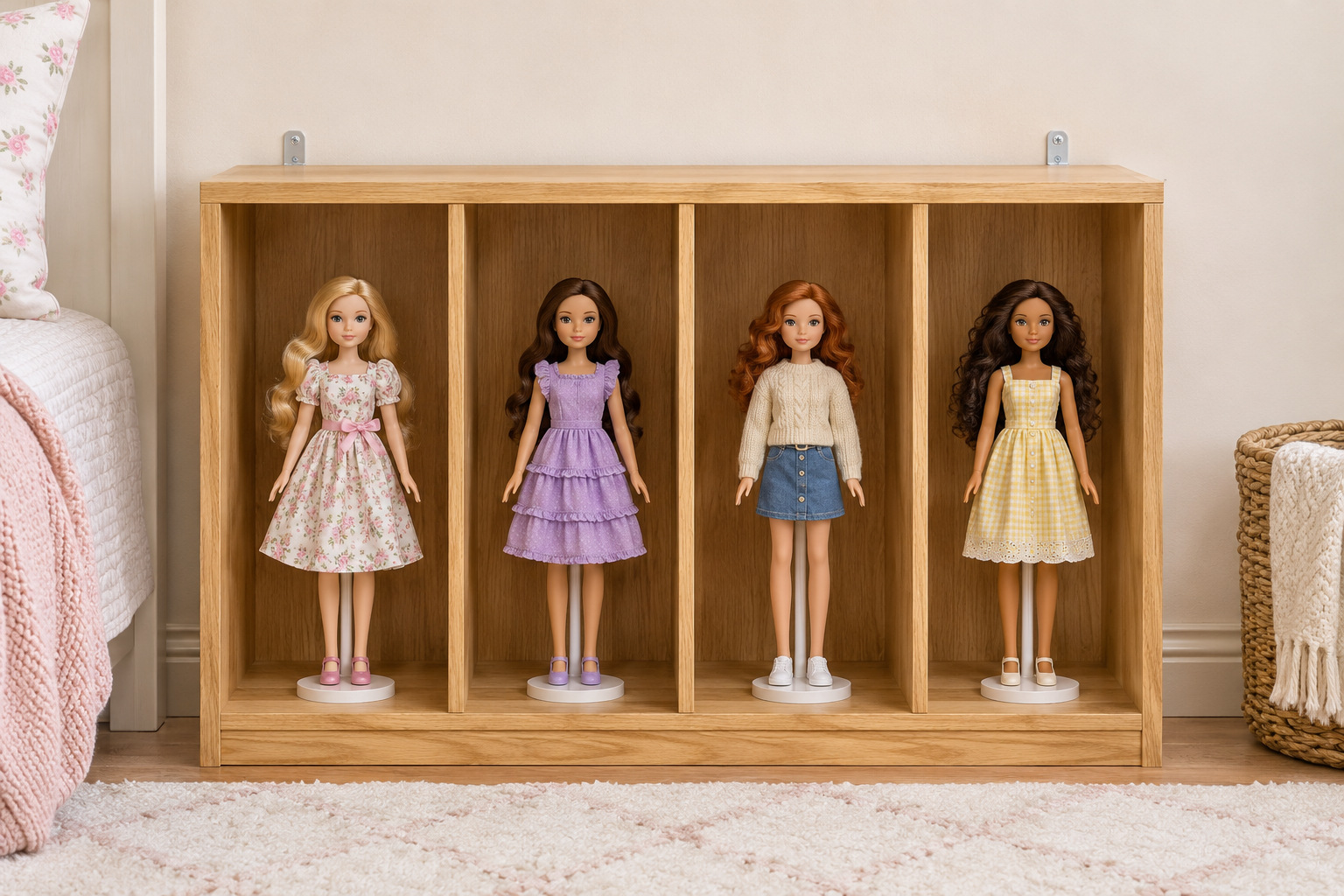
Low open cubbies can keep a few favorite dolls visible and individually accessible. Measure each bay’s clear height and depth with the dolls you want to display. A shelf that fits a small seated doll may not fit a taller standing one with a hat or hairstyle.
Use appropriate individual doll stands where needed, checking the stand base and fit as well as the doll height. A wide cubby may benefit from removable dividers that remain stable during use. Do not assume stands or dividers come with the shelf unless the listing explicitly includes them.
Secure the storage furniture according to its maker’s instructions and keep tempting display pieces off high furniture tops. Leave a few bays less full so that returning one doll does not turn into rearranging the whole shelf.
4. Use Door Pockets Only Where the Door Still Moves
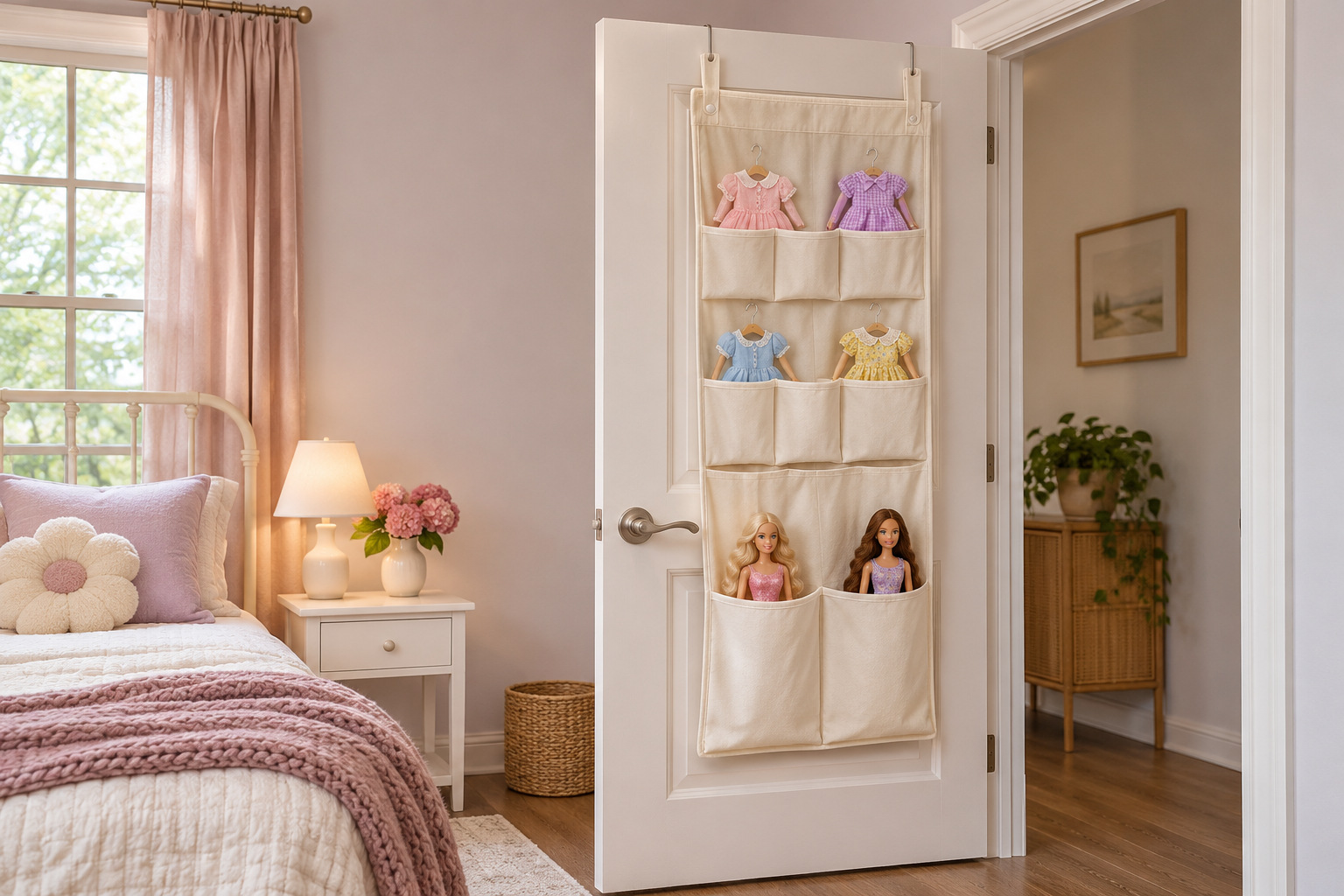
Door pockets can use otherwise empty vertical space in a small bedroom, especially when there is no room for another floor unit. Choose pockets with enough usable depth and height for the items you plan to place inside. Flatter accessories and folded doll clothes may fit better than whole dolls in some organizers.
Before filling it, open and close the door through its full normal movement. Check the top clearance, handle, nearby wall, and anything the loaded pockets could strike. Use an organizer and attachment method suitable for the door, and keep the weight within the maker’s guidance.
Put suitable daily-use items within easy reach without encouraging climbing. Small accessories still need adult-controlled storage where younger children share the space. If the door becomes awkward to use, a different location will serve the room better.
5. File Doll Outfits in Clear Zip Pouches
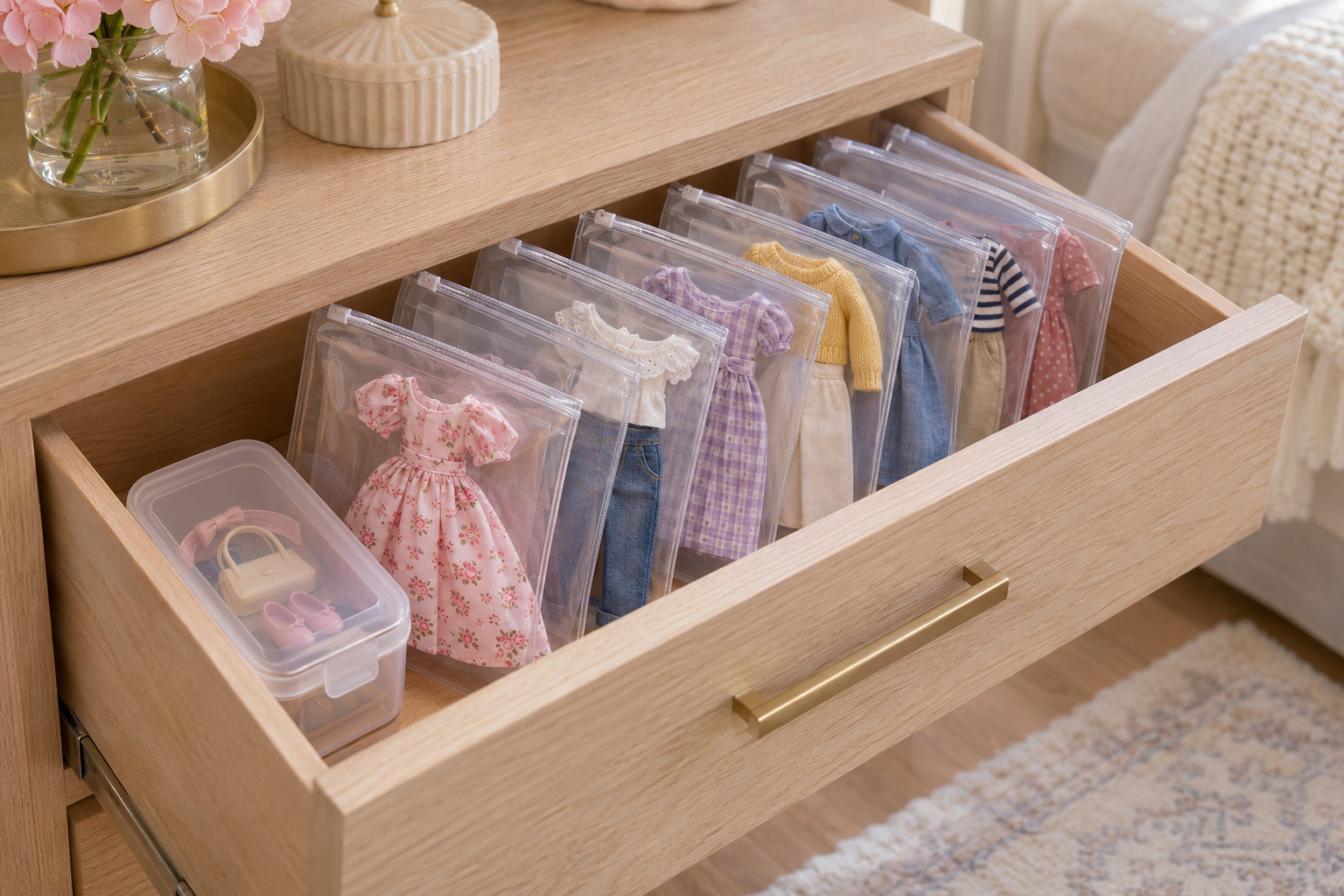
Keep one complete outfit in each clear zip pouch, then file the pouches upright in a shallow basket or drawer. A dress, jacket, and matching accessory stay together, while the transparent front lets you identify the set without emptying the drawer. Leave enough room to flip through the pouches.
Choose a pouch that closes without sharply folding a stiff garment or catching delicate trim in the zipper. For small shoes or jewelry, use a separate appropriate little case inside the adult-managed outfit set rather than letting pieces collect at the bottom of every bag.
Start with outfits that are usually worn together. Everyday mix-and-match basics can have a separate pouch, so the system does not require rebuilding an exact outfit every time someone changes a doll’s clothes.
6. Give Shoes Their Own Removable Compartment Case
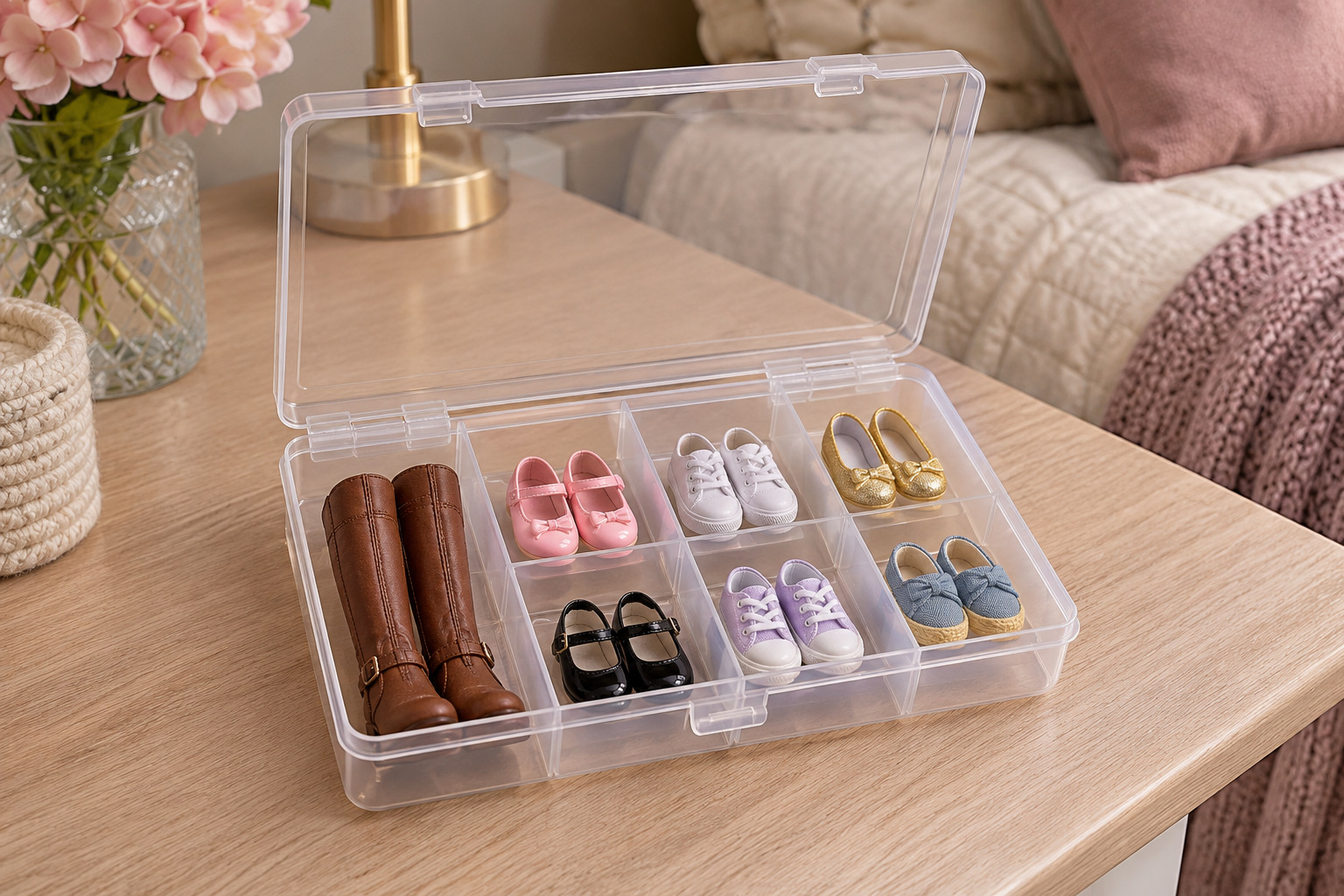
A small compartmented case can separate doll shoes from other accessories and make missing pairs easier to spot. Test the divider spacing with the largest shoe or boot before buying. Some adjustable cases leave gaps under dividers, allowing very small pieces to move between compartments.
Keep the case removable so it can come to the play area and return as one unit. Use a stable surface for sorting, and close the case before carrying it. A clear lid helps identify the contents, but it does not make the container childproof.
Keep small parts inaccessible to children under three and follow the toys’ age guidance for older children too. Where ages are mixed, an adult can bring out the appropriate accessories for a supervised play session and put the closed case away afterward.
7. Make a Mini Wardrobe for Clothes That Need Hanging
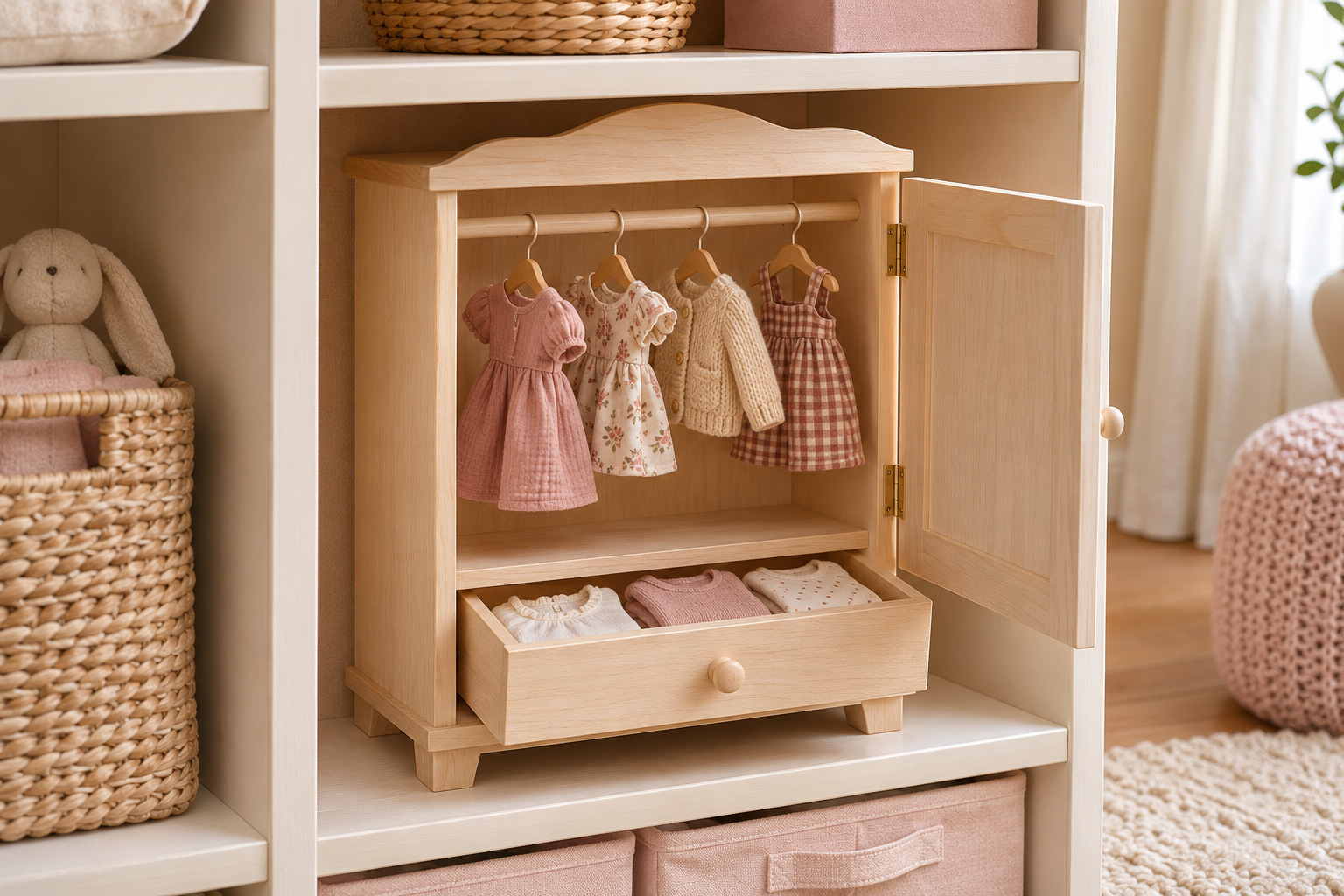
A miniature wardrobe is useful for selected doll garments that lose their shape in a flat pouch. Use a purpose-made doll wardrobe or a stable storage box with a suitable miniature hanging rail and hangers. Check that the doors close without crushing sleeves or longer hems.
Hang only the pieces that benefit from hanging. Sweaters, loose basics, and spare accessories can stay in shallow drawers or pouches below, keeping the tiny rail easy to browse. A full wardrobe with a little space between hangers is more usable than a packed display where every outfit comes out together.
Place the wardrobe in the main storage area rather than on a high shelf that needs climbing to reach. Its doors and drawers should open fully without hitting neighboring boxes.
8. Protect Styled Hair in a Taller Lidded Box
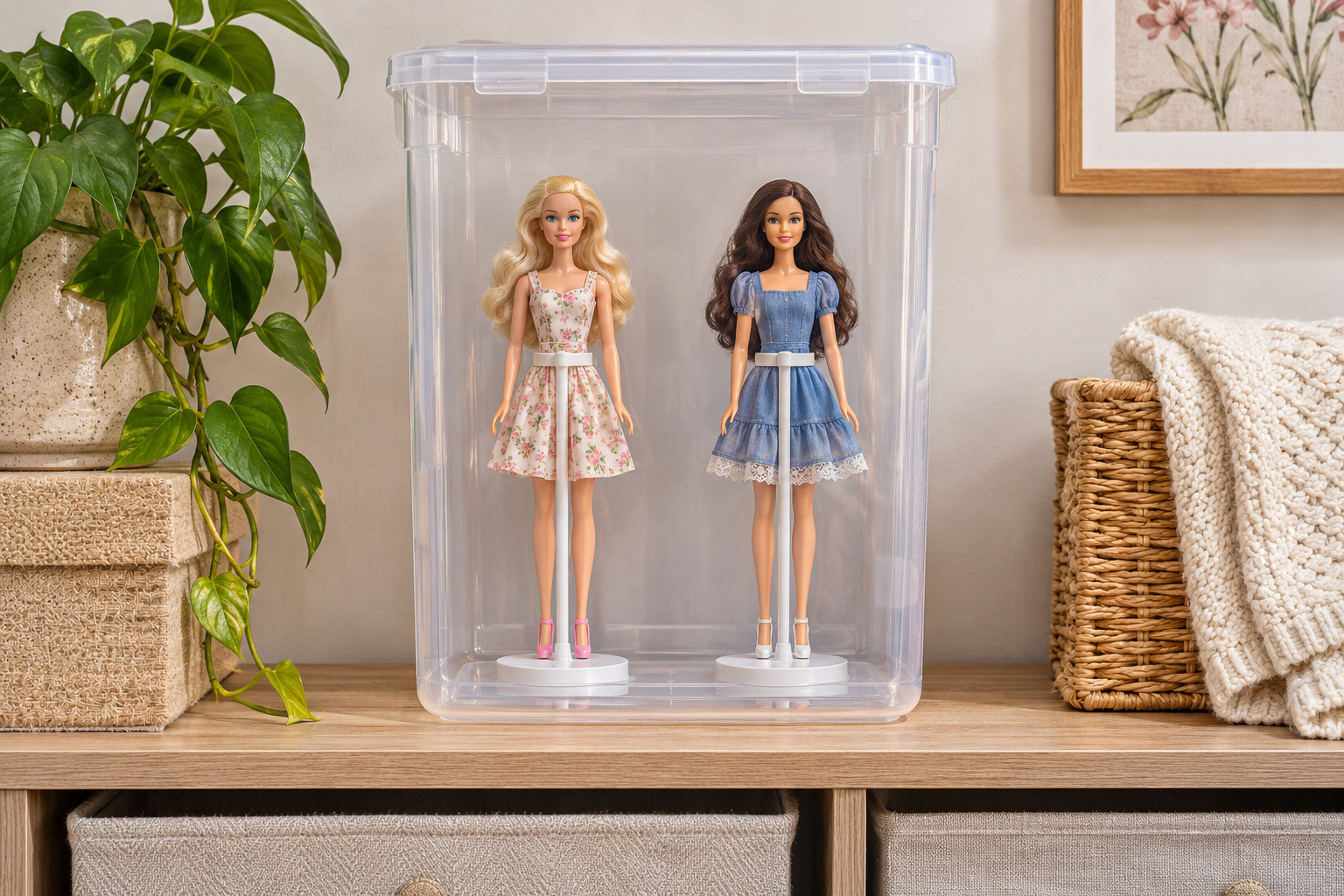
Some dolls need headroom rather than the lowest possible container. A taller box can hold a few dolls with elaborate hairstyles, leaving empty space above their heads and between them. Use suitable supports if the dolls need to remain upright, and check that the lid closes without touching the hair.
Keep separate accessories outside this box so they do not fall into the hairstyles when the container moves. Store dolls clean and fully dry, following the maker’s care directions rather than adding an improvised treatment before putting them away.
Choose a shelf where the box can sit level and be lifted down comfortably. A taller container is not automatically a better stacking surface; follow its load guidance and avoid pressing a heavy box down onto a flexible lid.
9. Leave One Wide Bay for the Doll Car
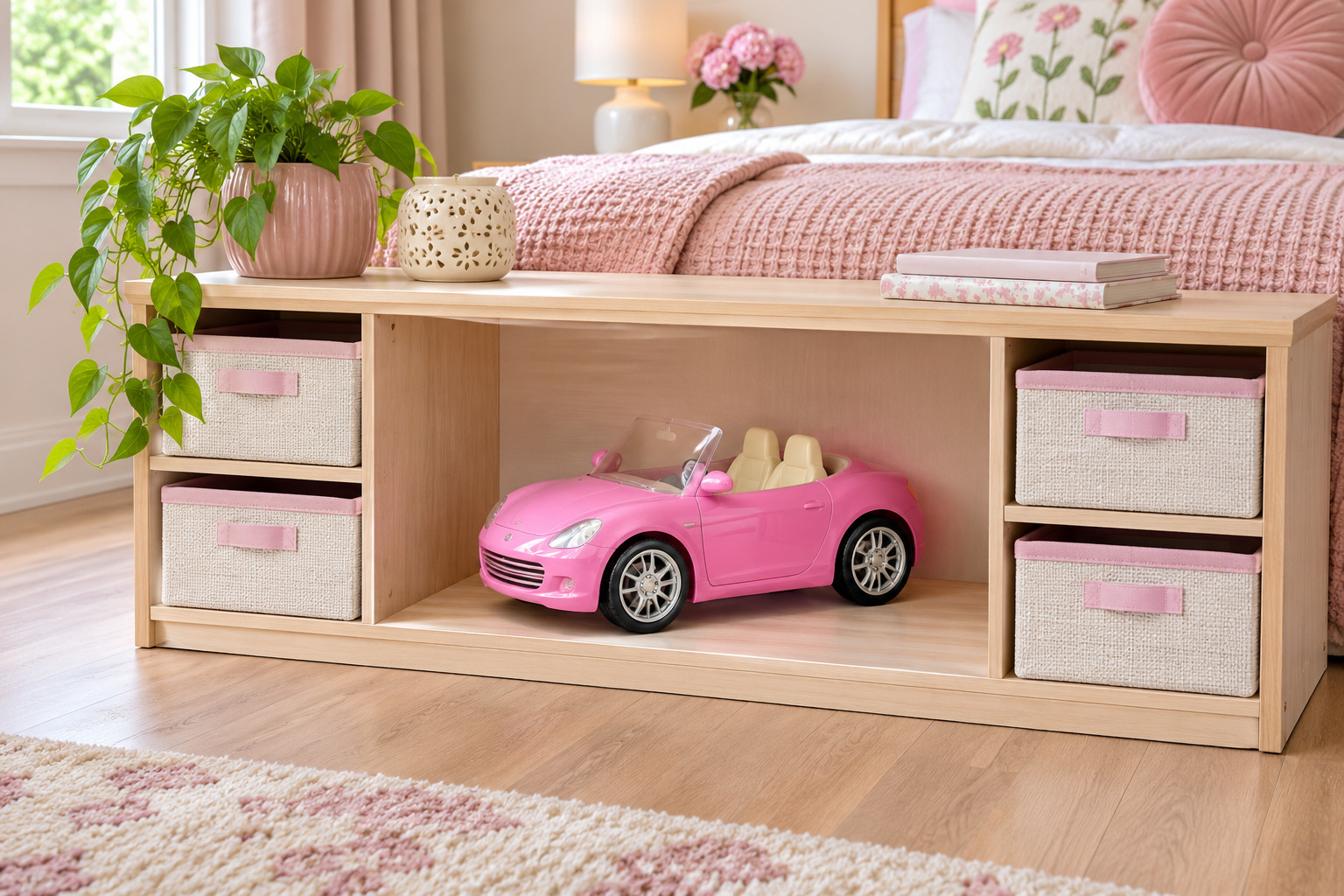
A doll car needs its own parking bay, not the last narrow space left between small bins. Measure the vehicle’s full width, length, and height, including mirrors or a raised roof. A low open bay lets it slide in without unloading the dolls, clothes, and miniature furniture stored nearby.
Use a simple visual boundary on the shelf or floor so the car has a clear return spot. Keep the bay outside the room’s walking route and away from a door that could strike it. If the wheels make it roll out on their own, choose a suitable contained storage surface.
Do not fill the car with all the accessories at cleanup time. Keep those in their separate containers so the next game starts without emptying the vehicle first.
10. Store Dollhouse Furniture on Lift-Out Room Trays
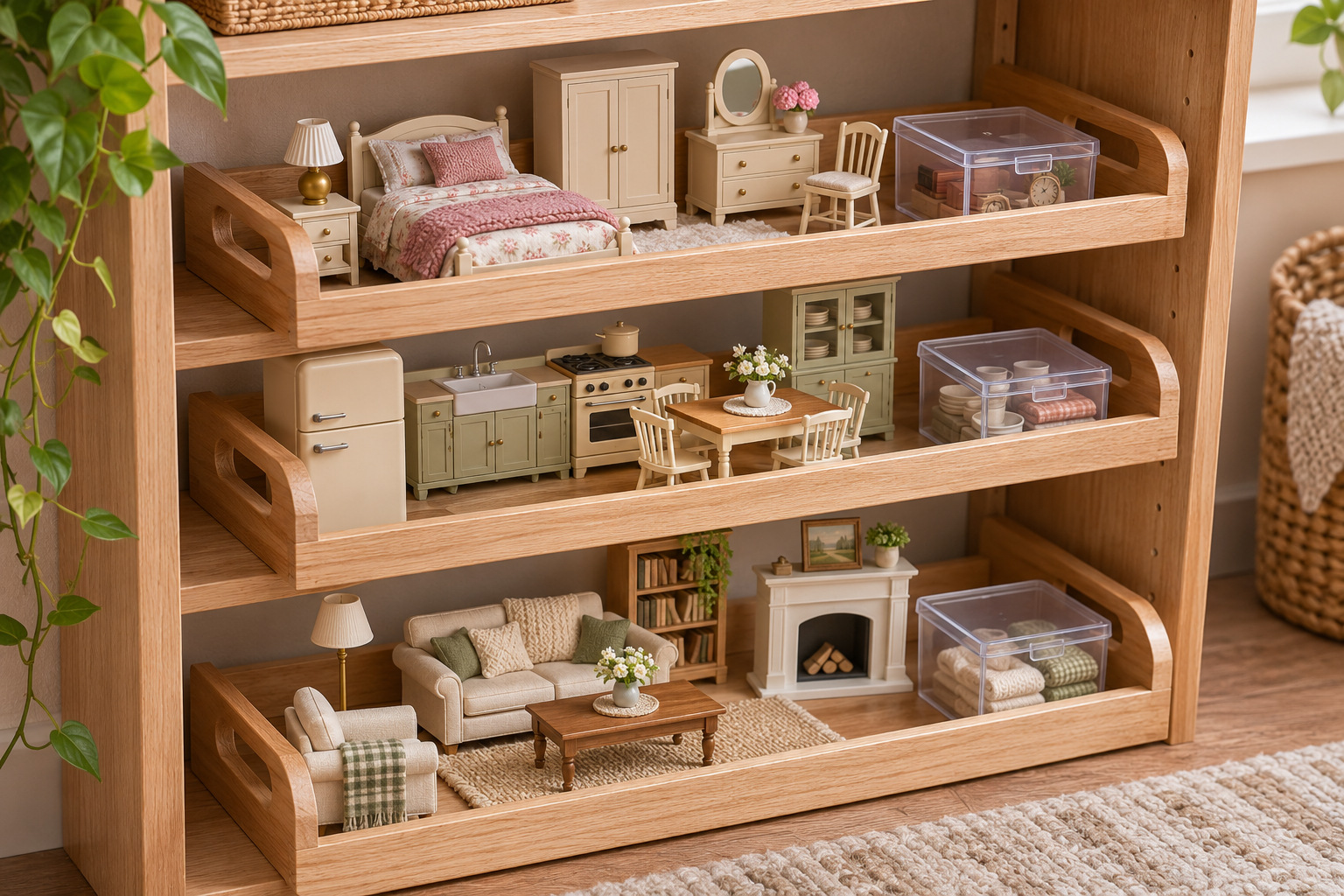
Separate miniature furniture by room on shallow, sturdy trays: one for bedroom pieces, another for kitchen pieces, and another for living-room furniture. Each tray can move to the play area as a set. It also gives larger accessories a defined footprint on the storage shelf.
Check that the tray is firm enough to carry its contents without bending. Keep tall pieces low and balanced, and store delicate items in a way that follows their care instructions. Tiny accessories can stay in a separate closed case rather than rolling around the tray edges.
Leave space above each stored tray for fingers to lift it out comfortably. If you must move several other trays first, a shallower stack or a different shelf arrangement will be easier to maintain.
11. Turn One Open Cubby Into a Display Room
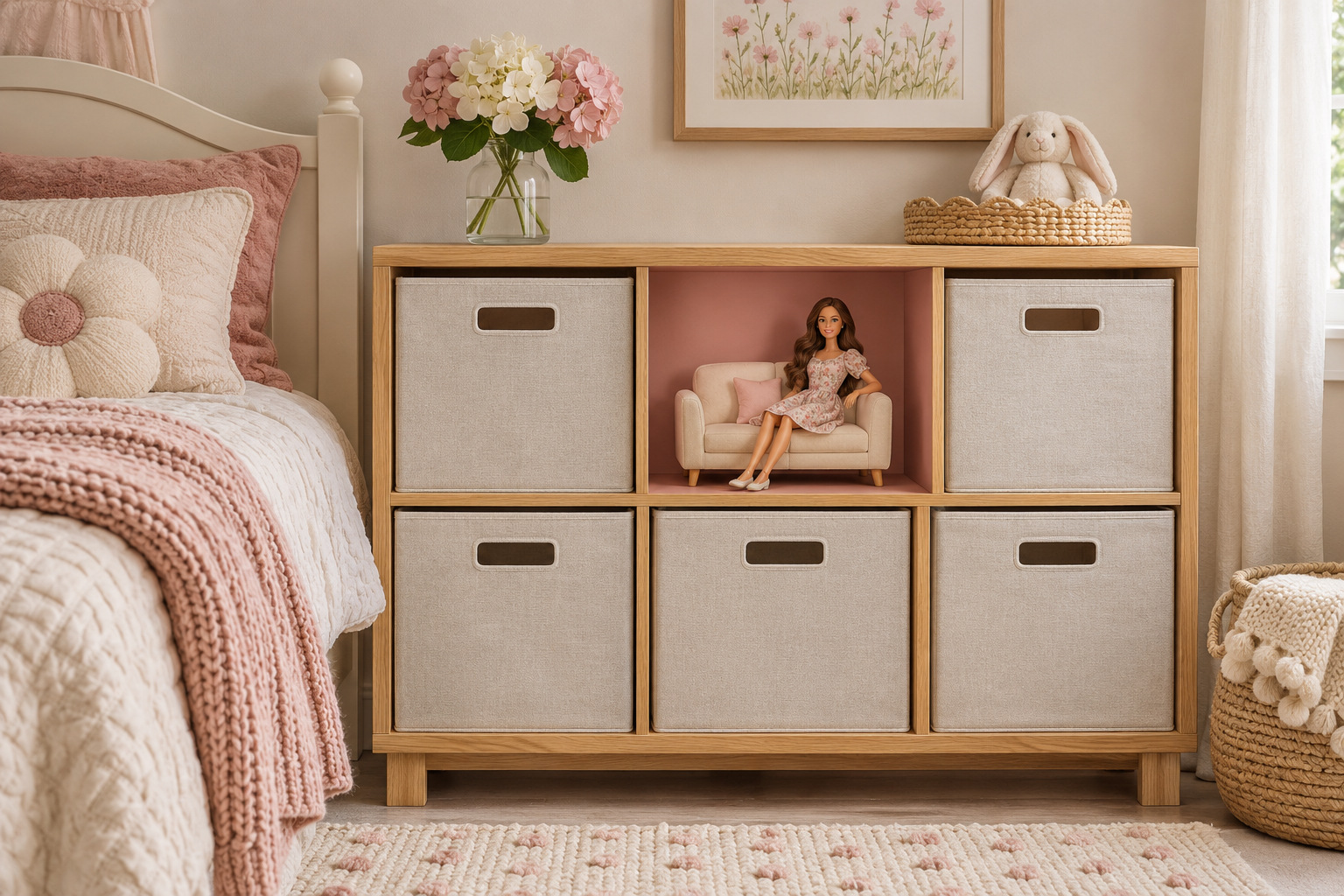
One open cubby can become a small doll room that doubles as a child-room focal point. Use a quiet removable backing, one miniature seat, and room for a favorite doll. Keep the display within the cubby’s edges so it still feels part of the storage furniture rather than spilling over every nearby surface.
Choose colors that connect with the bedroom: a muted pink backing, pale wood shelf, and cream miniature furniture can make the display feel intentional. Leave enough open space to lift the doll out for play. The goal is a usable little scene, not a setup that cannot be touched.
Secure the furniture as directed by its maker. Put the display at an appropriate accessible level, keeping small accessories adult-controlled if younger children use the room.
12. Give a Rolling Cart a Separate Bin for Each Job
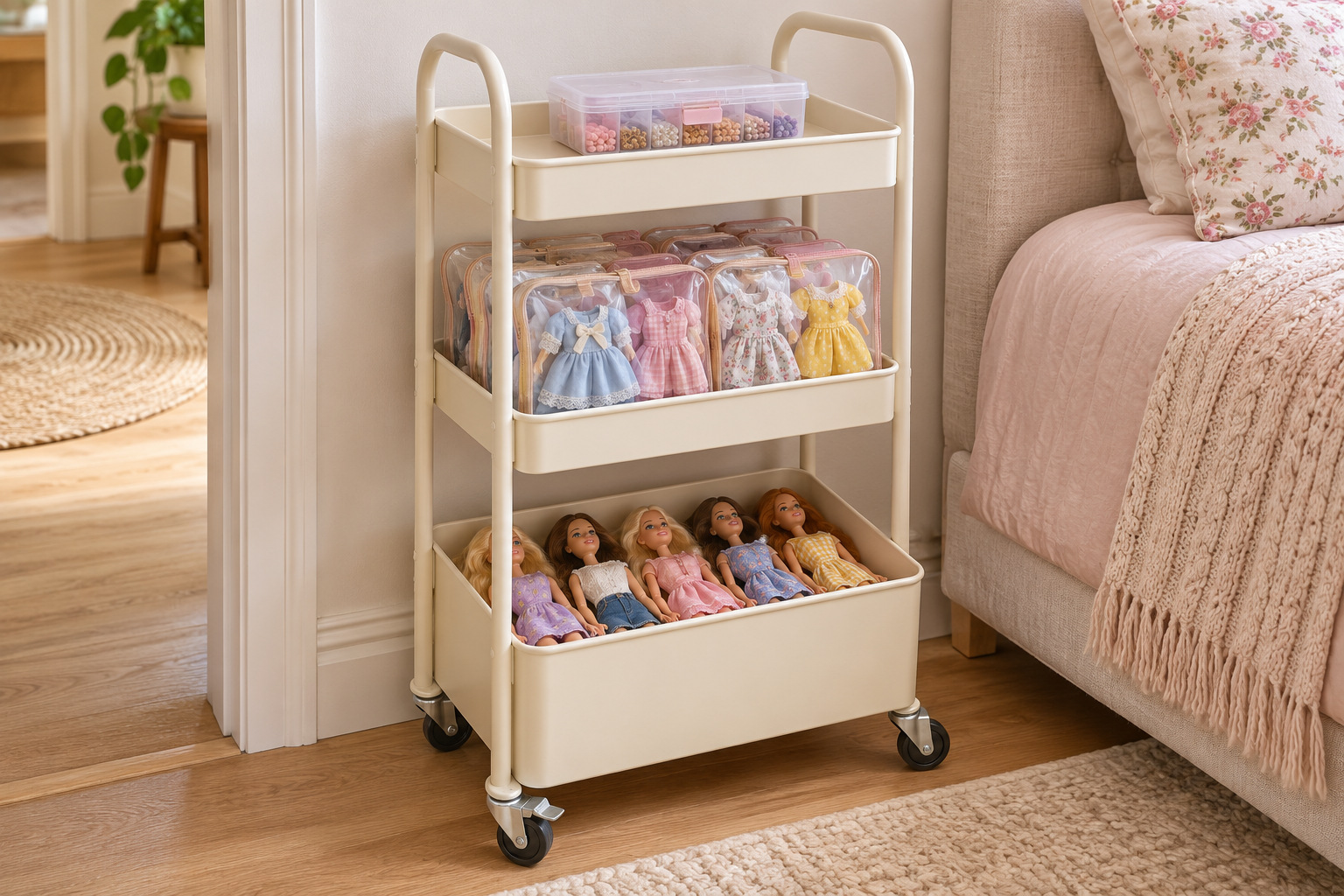
A rolling cart works best when each level has a clear role. Try whole dolls in a suitable larger bin, clothes in flat pouches, and tiny accessories in a closed case stored separately as needed. Check the space between shelves, not just the height of the cart, before choosing containers.
Keep heavier items low and remain within the cart’s weight limits. Use the brakes if fitted, and have an adult move a loaded cart when appropriate. A storage cart is not a ride-on toy or a climbing frame, even when it sits in a playroom.
Give it a parking place clear of doorways and walking routes. If it normally stays in one room, keeping the contents organized matters more than rolling it around after every game.
13. Keep Shared Pieces Apart From Personal Collections
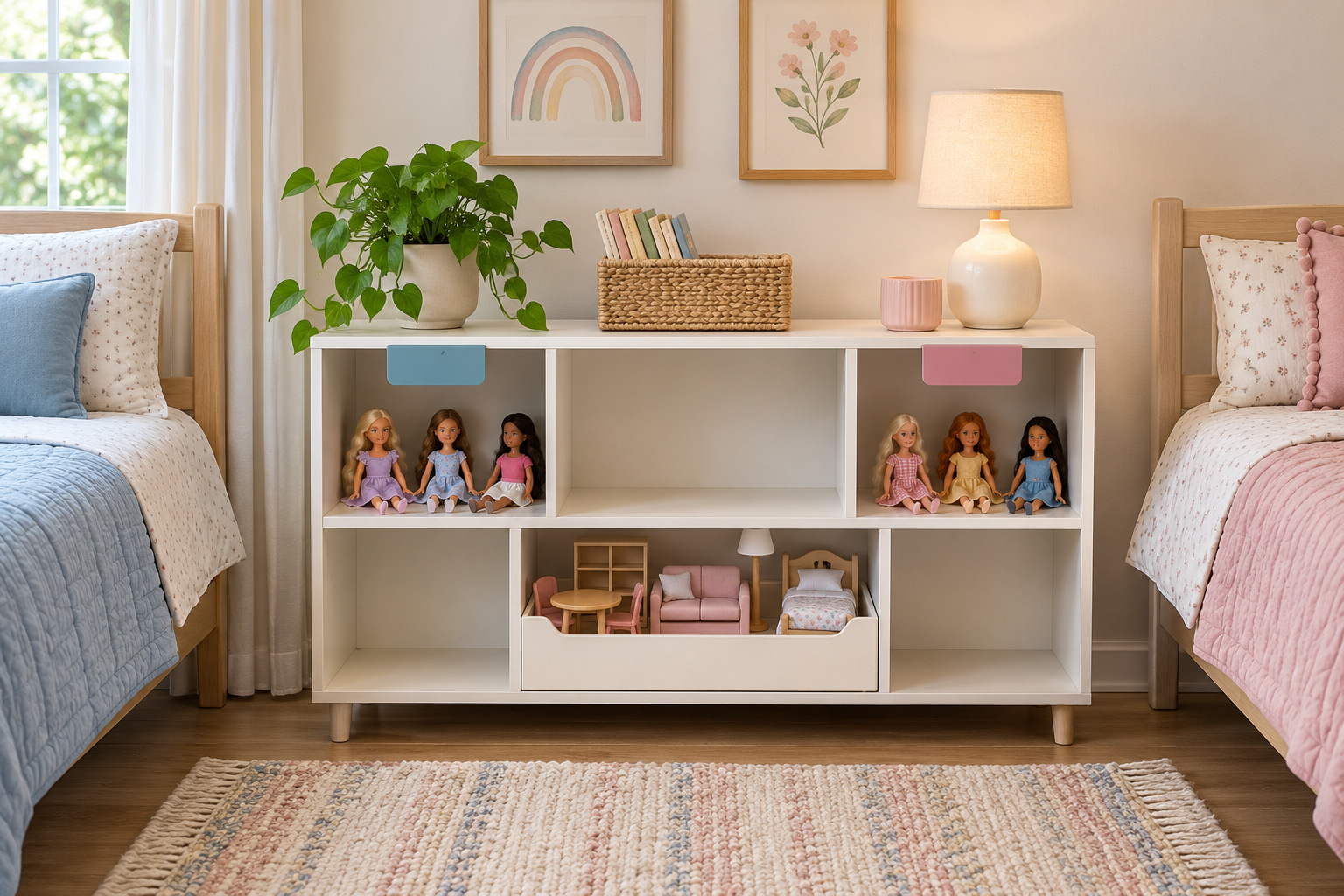
In a shared bedroom, divide storage by ownership as well as by item type. Each child’s personal dolls can have a distinct bin or cubby, while shared doll furniture and play accessories return to a separate central area. Use clear names, pictures, or consistent color markers that the family understands.
Agree on the return spots before filling the containers. A beautiful matching system will not solve cleanup if nobody knows whether a particular doll belongs in a personal box or the shared area. Leave room in each personal space for the collection it actually holds.
Keep this separate from everyday clothing storage. These girls’ closet ideas for a shared reach-in can help plan the clothing side of the room while the doll collection keeps its own simpler return system.
14. Rotate Spare Sets in a Labeled Adult-Access Box
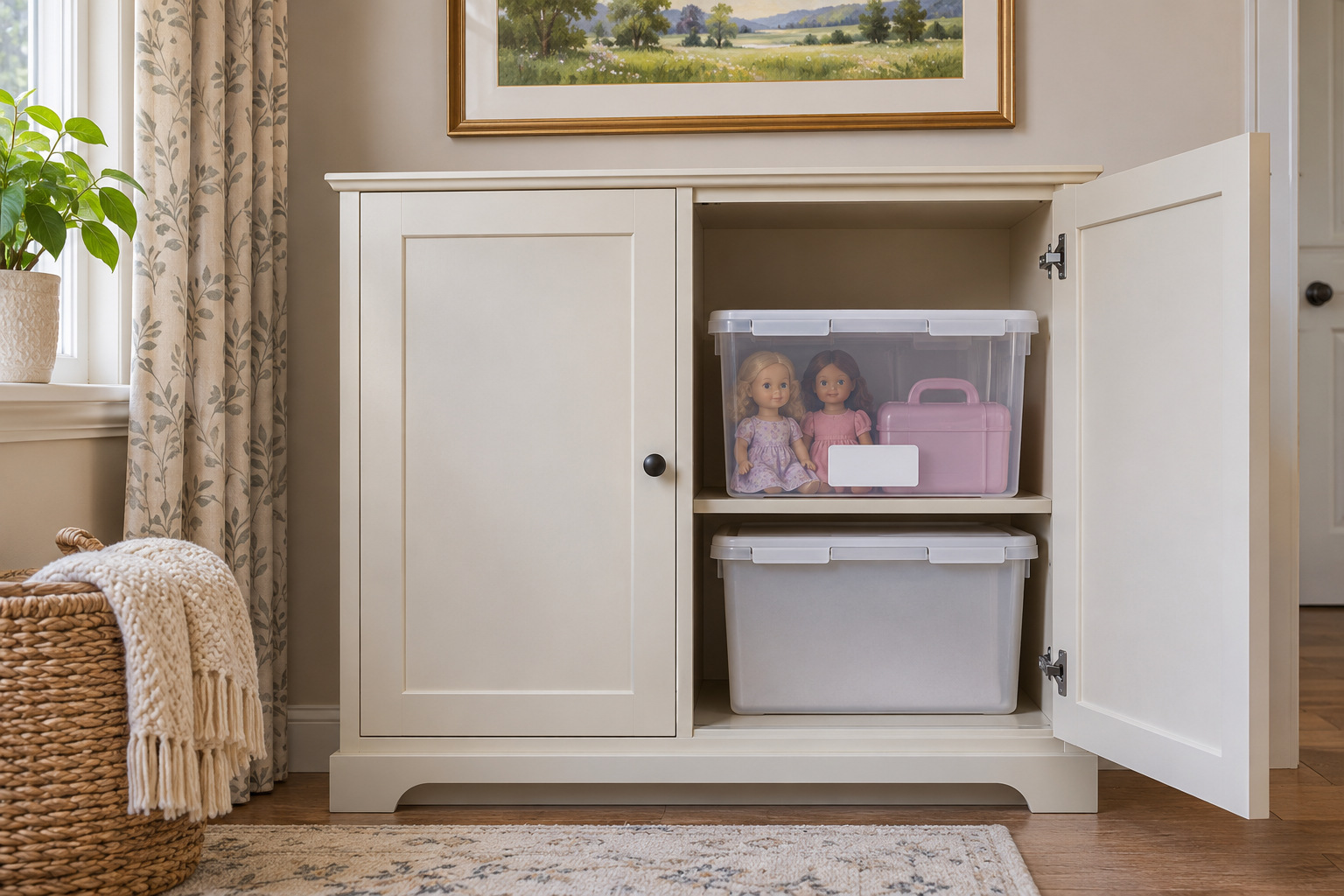
Keep a smaller everyday selection available and store spare dolls or duplicate playsets in a labeled box managed by an adult. Group complete sets together, with a simple contents photo or list so you can choose what to bring back without emptying every container.
Store the box in a secure adult-access location, following the container and furniture instructions. Do not make a high open shelf full of attractive toys the rotation system, since it may encourage climbing. Small accessories still need appropriate control, even when their container has a lid.
When you swap sets, remove one selection before adding another. The point is to keep the active collection manageable. If the available storage stays full after every rotation, review what is actually used before buying more organizers.
Choose storage around the largest item first, then give clothes and tiny accessories their own clear homes. One manageable daily-play selection, a place for bulky pieces, and a simple return routine can do more than a room full of identical bins. Add another container only when you know exactly what it needs to hold.
Discover more from HomeTrendora
Subscribe to get the latest posts sent to your email.