A door can hide a surprisingly useful strip of space, until its knob hits something or it stops opening all the way. These behind-the-door storage ideas help you decide whether to use the back of the door, the wall it swings toward, or the small part of the trim it never touches.
Start with a few light things you reach for often. Test the route with the door fully open and nearly shut before buying a rail, bag, or cabinet.
1. Measure the Space the Door Actually Sweeps Through
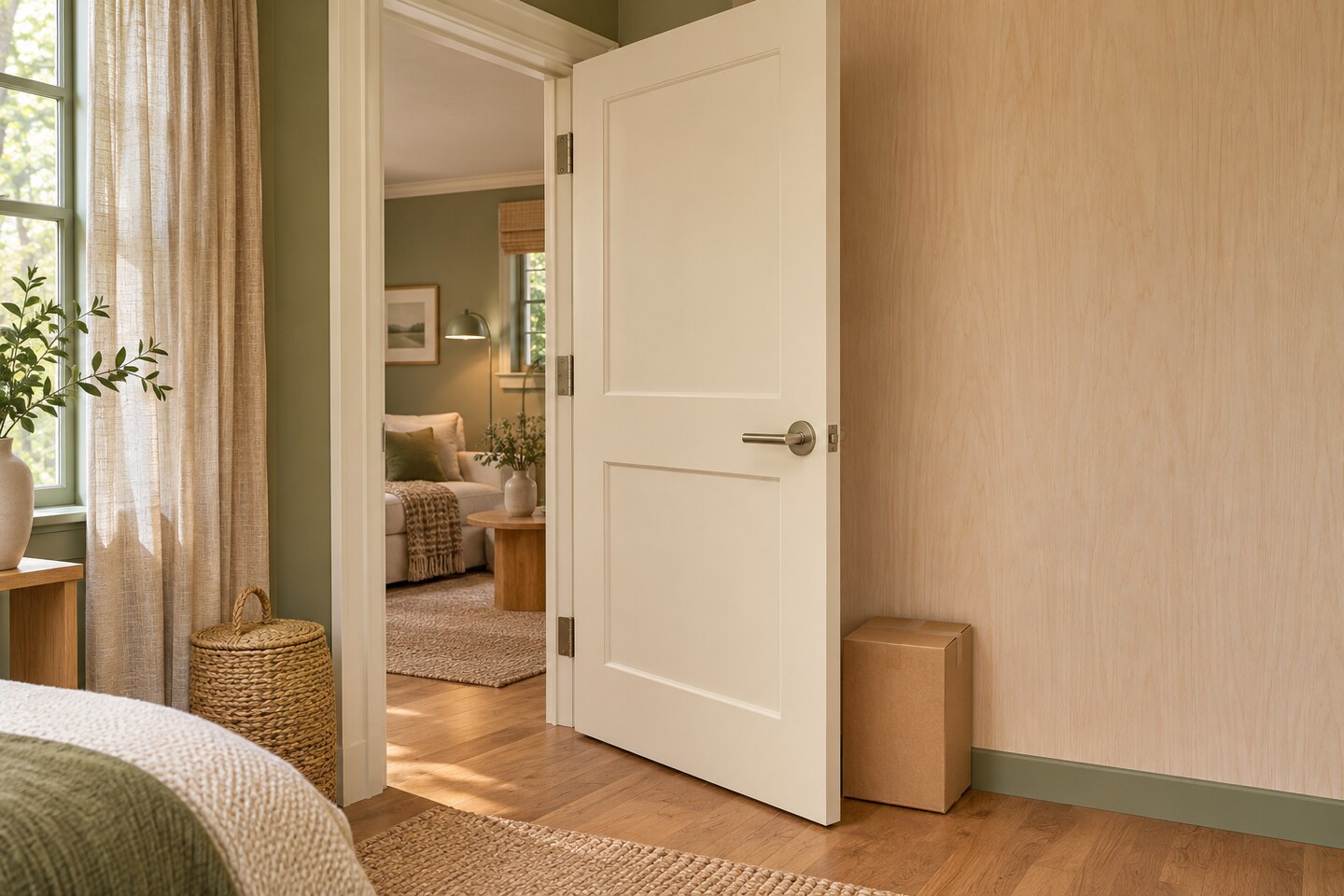
Open the door as far as you usually need it to go. Watch where the handle travels, then find the part of the wall that stays free through the movement. Pay special attention to the depth right at the stop, since that small space can look larger when the door is shut.
Hold an empty box with the proposed depth against the wall and move the door slowly. For anything that hangs over the top, test the latch and frame clearance with the bracket fitted before loading it.
Know what fits before you buy.
See measured layouts, sketch a plan for your room, and budget the pieces you actually need. Take a look inside the eBook and see both bonuses.
Bonuses included with your eBook purchase.
2. Use Shallow Entry Bins for Gloves and Outgoing Mail
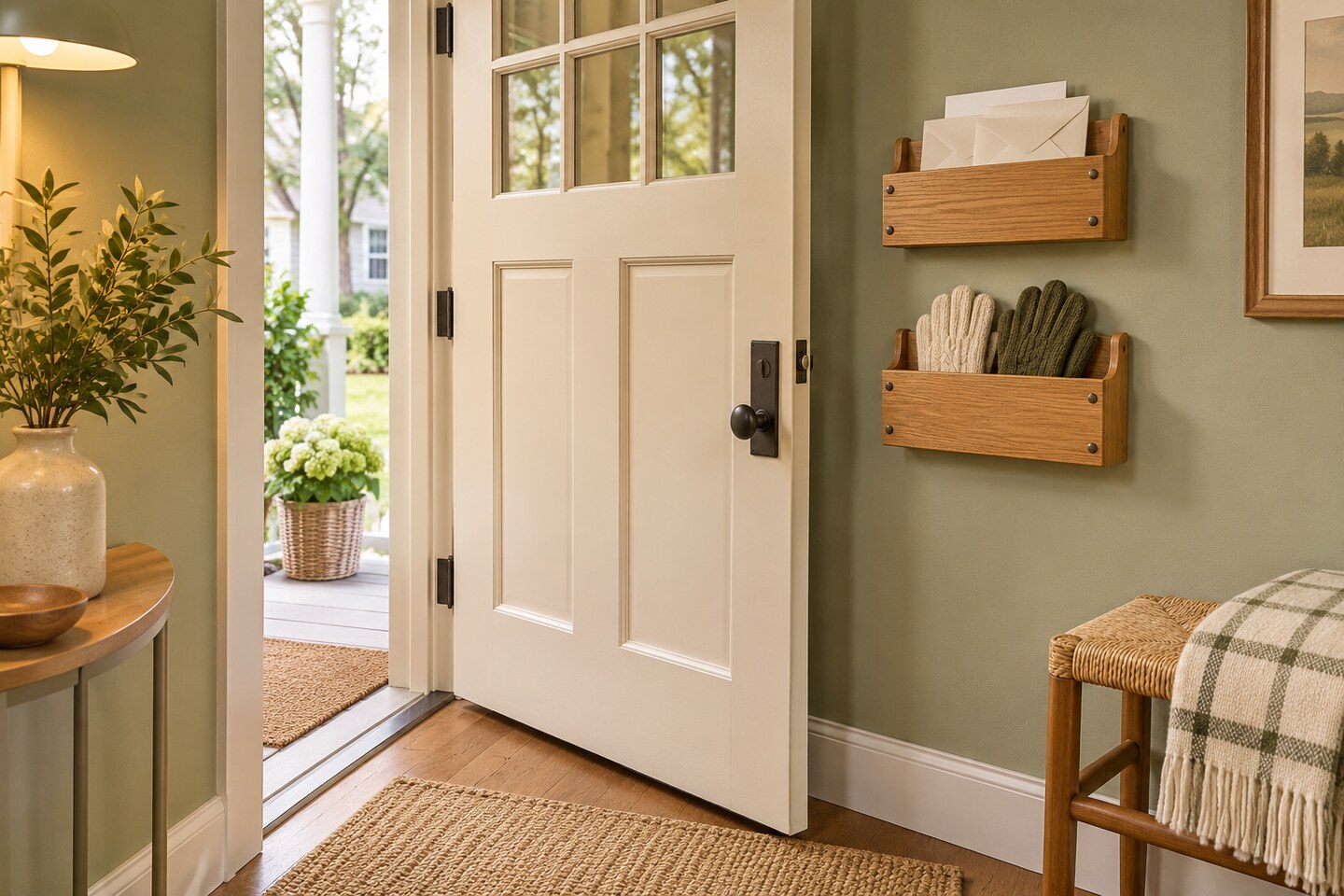
Install two shallow bins on the part of the entry wall the door never touches. Give the upper one outgoing mail, then keep winter gloves in the lower bin where they can be reached when your hands are full. Choose a shallow lip that makes the contents easy to see.
Keep the wall area below the bins empty if that is where you stand when opening the door. More entryway storage ideas can help with the bulkier things that need a separate home.
3. Spread Bath Towels Along a Slim Door Rail
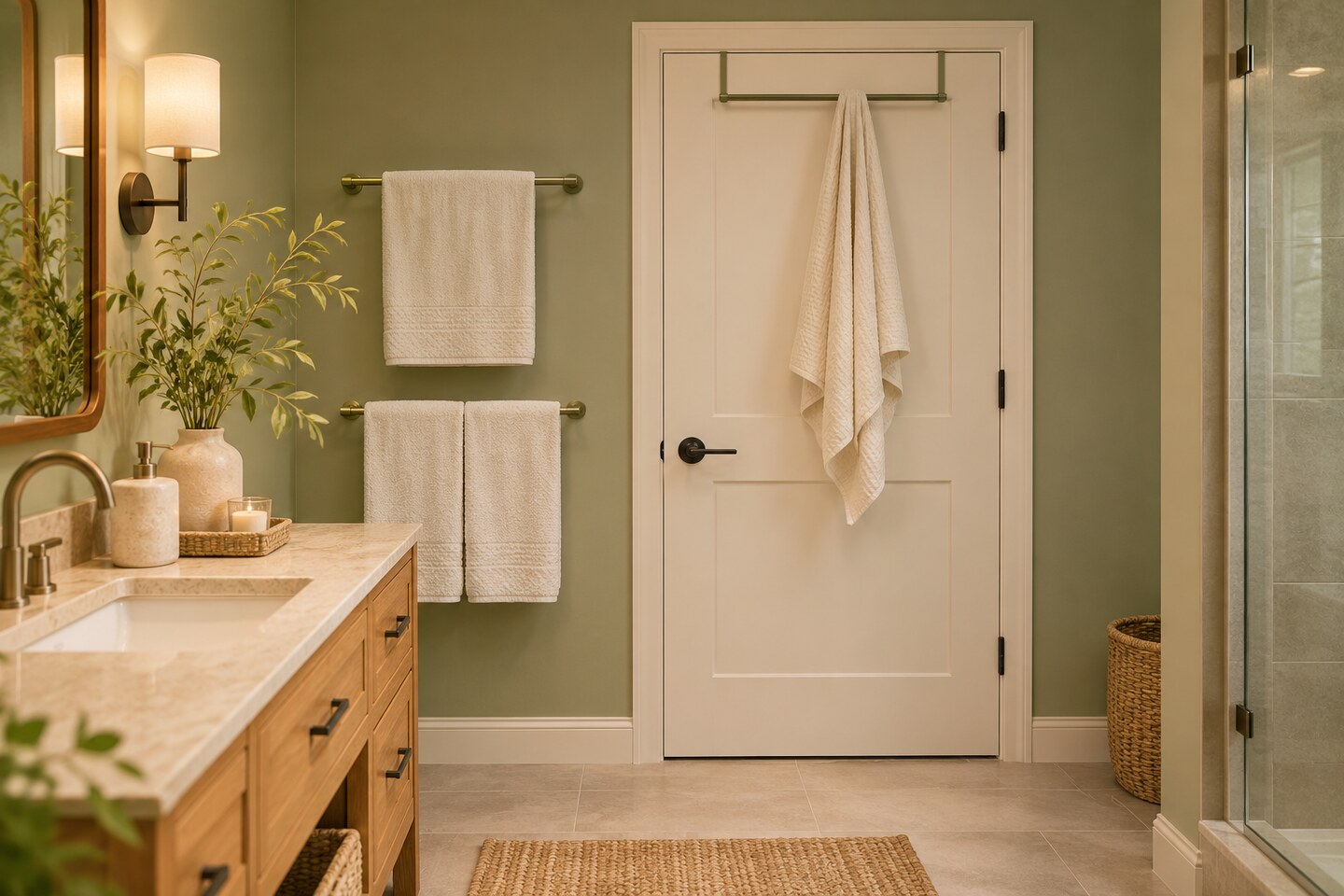
Put a slim towel rail on the door only after you’ve checked the fit with the towel on it. Choose a rail that lets a cotton towel spread out, and keep a second towel somewhere with room to air. The layers of a thick folded bath sheet can take more space than the rail itself.
Soft ivory cotton and warm wood tones make the arrangement feel considered when the door opens. If you use the wall instead, reach for the towel from the side where you step out.
4. Put a Mirrored Jewelry Cabinet Behind the Bedroom Door
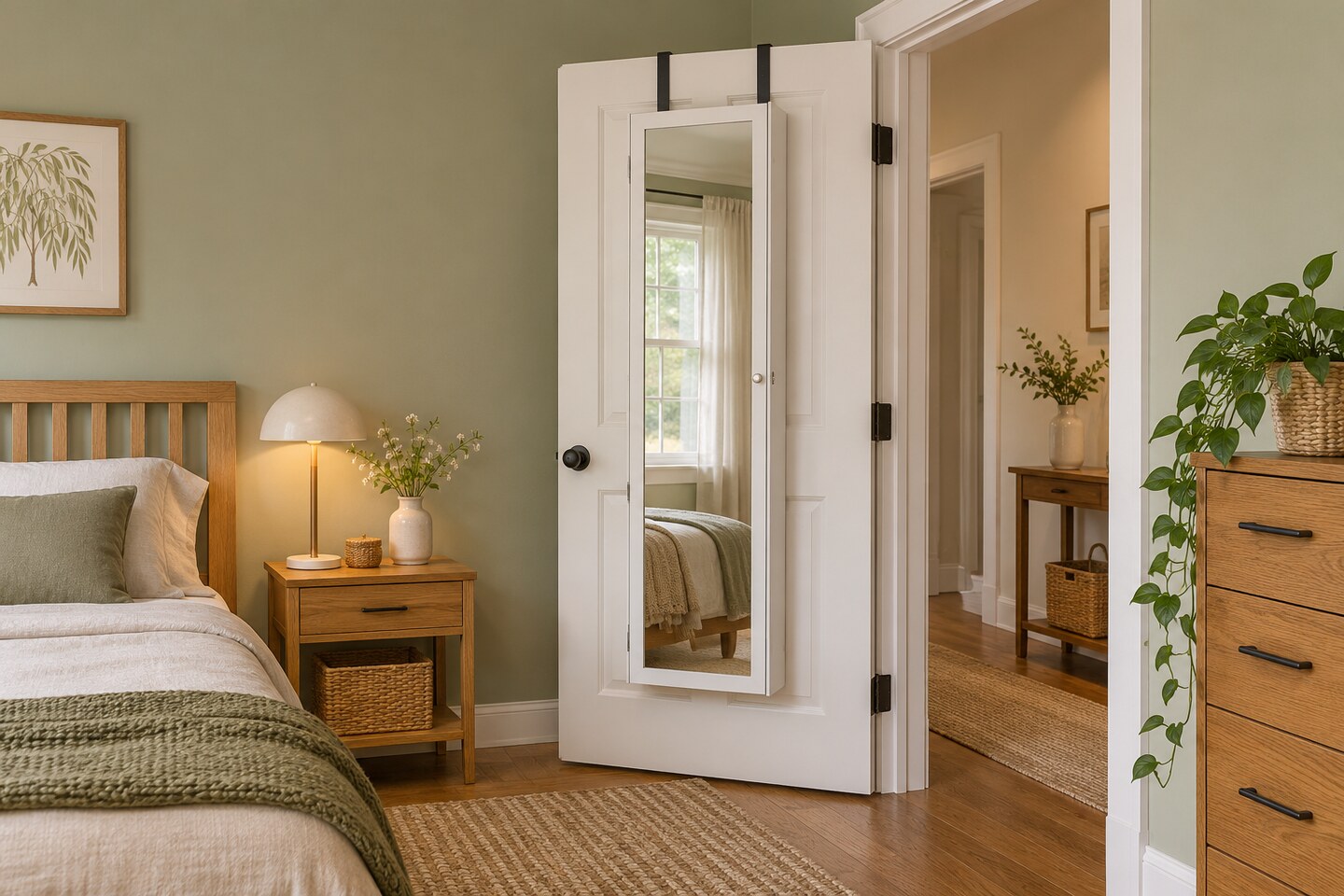
Use a mirrored cabinet where you have space to stand back and open the mirror door without blocking the bedroom entrance. If you plan to mount it on a room door, check the door’s condition, weight limit, and bracket fit first. A suitable fixed wall beside the back of the door gives you a second mounting option.
Start with the jewelry you wear weekly. Keep pendants hanging separately and put the tiny pieces in the shallow inside drawers so you can open the cabinet without rearranging the dresser.
This slim white cabinet combines jewelry storage and a full-length mirror. Its hardware supports mounting on a door or a wall. Check the cabinet and bracket projection against your available depth before choosing where to hang it.
View the slim mirrored jewelry cabinet(paid link)
5. Make a Low Pocket for the Dog’s Walking Gear
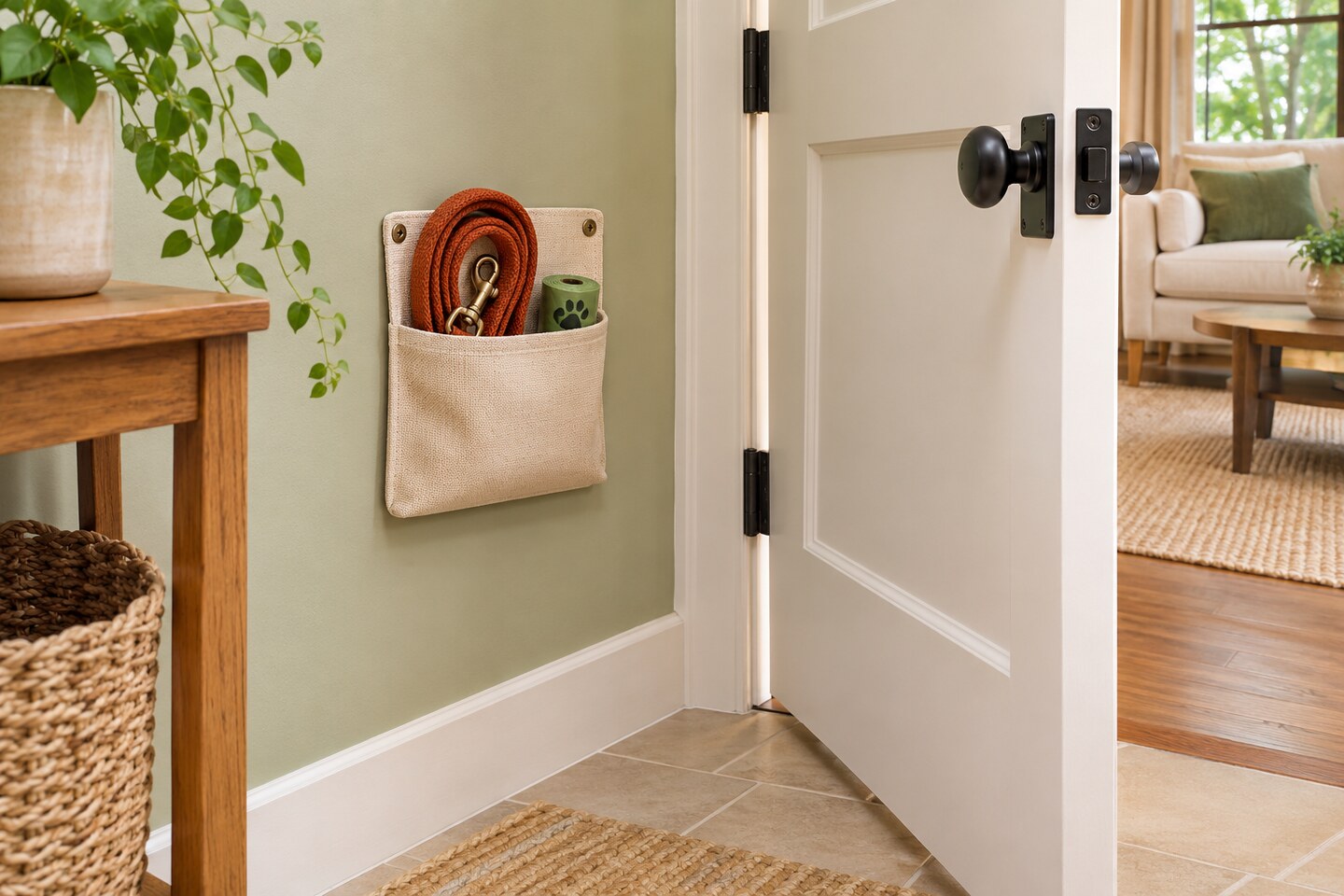
A low fabric pocket near the exit can hold a light leash and bag roll so a dog walk starts in one place. Choose a firm pocket that lies close to the fixed wall or securely against a compatible door. Tuck the leash clip into the pocket to keep it from scraping the paint.
Keep the pocket within reach when the door is open. Fold the leash once or twice instead of hanging a long loop into the walking path.
6. Fit a Slim Packet Rack to the Pantry Door
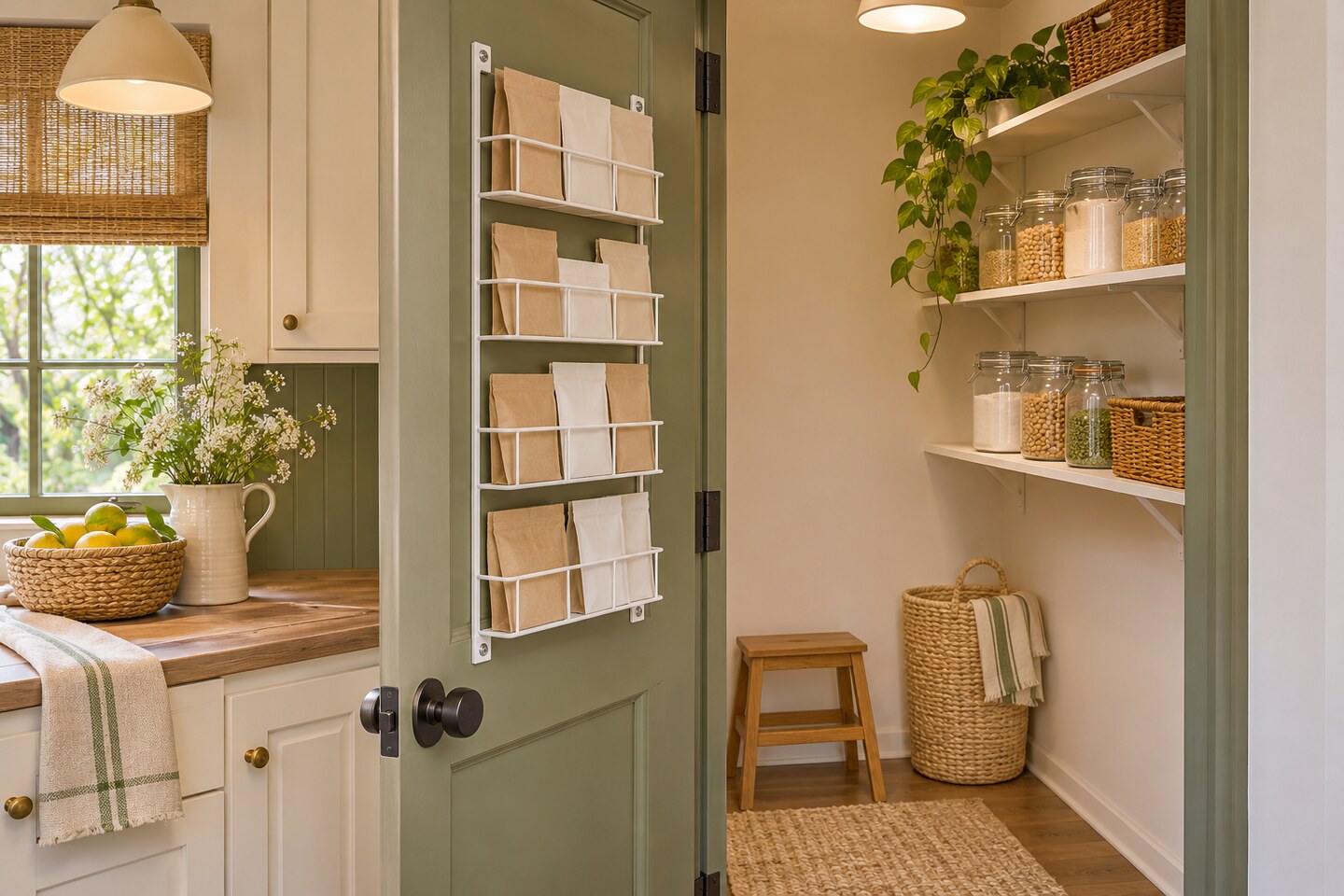
Set a shallow rack on the pantry door to gather packets that get lost behind taller pantry goods. Place the rack in the gap beside a short row of items and test the door with your tallest usual box where it belongs. Keep the paper packages upright so you can lift them out by a corner.
Pick just one type of packet for each row. The small pantry layout ideas help give the items on the far side a real place as well.
7. Clip the Dustpan to the Wall Beside the Door Stop
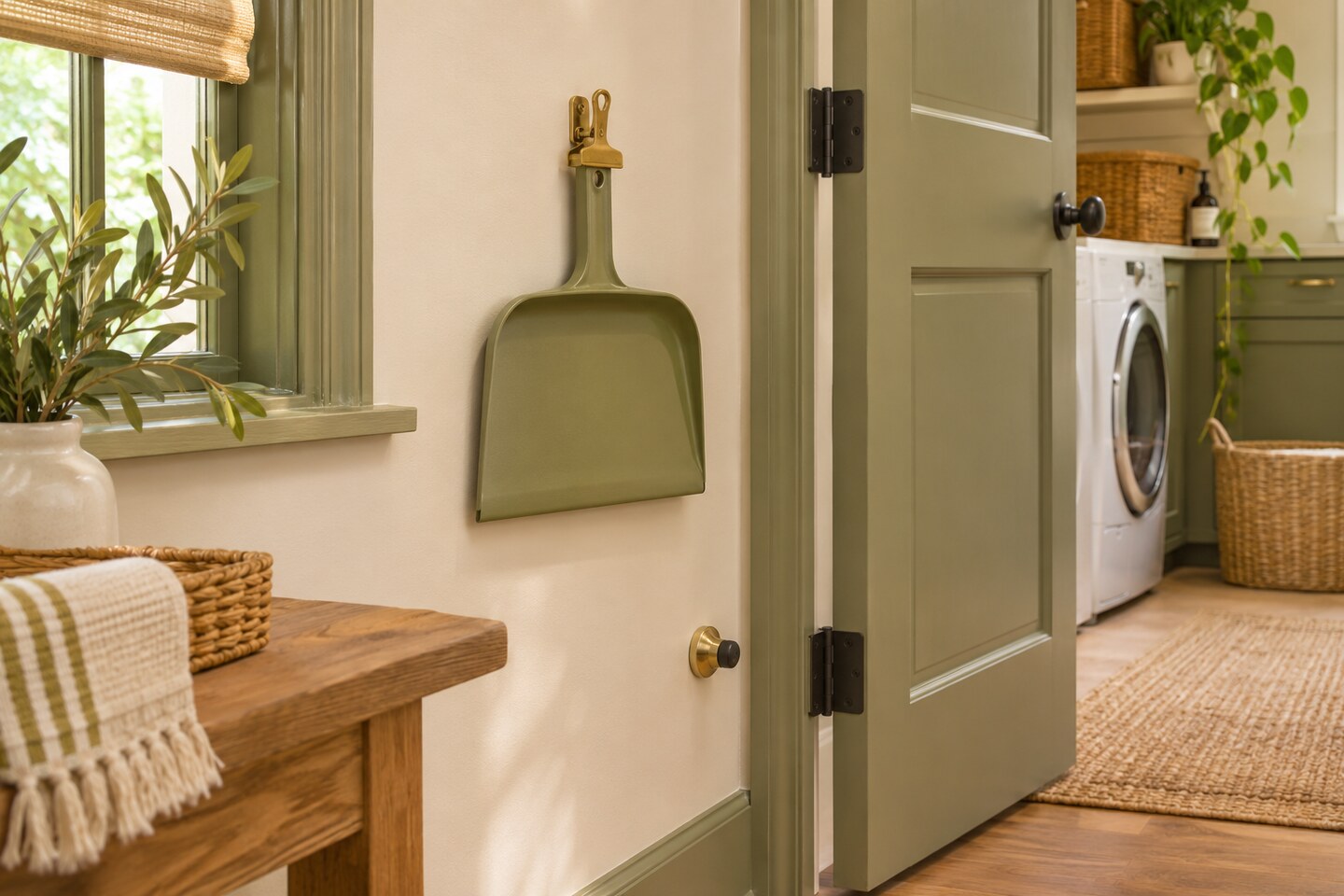
If the handle reaches the corner of the utility room wall, move the dustpan a little farther toward the hinges where it still sits outside the door’s path. A shallow fixed clip keeps the pan from shifting every time you reach for the brush.
Hang the pan with its broad face toward the wall. Check that the handle and clip still clear the door stop when you use the full swing.
8. Use a Flat Fabric Organizer for Scarves in a Narrow Closet
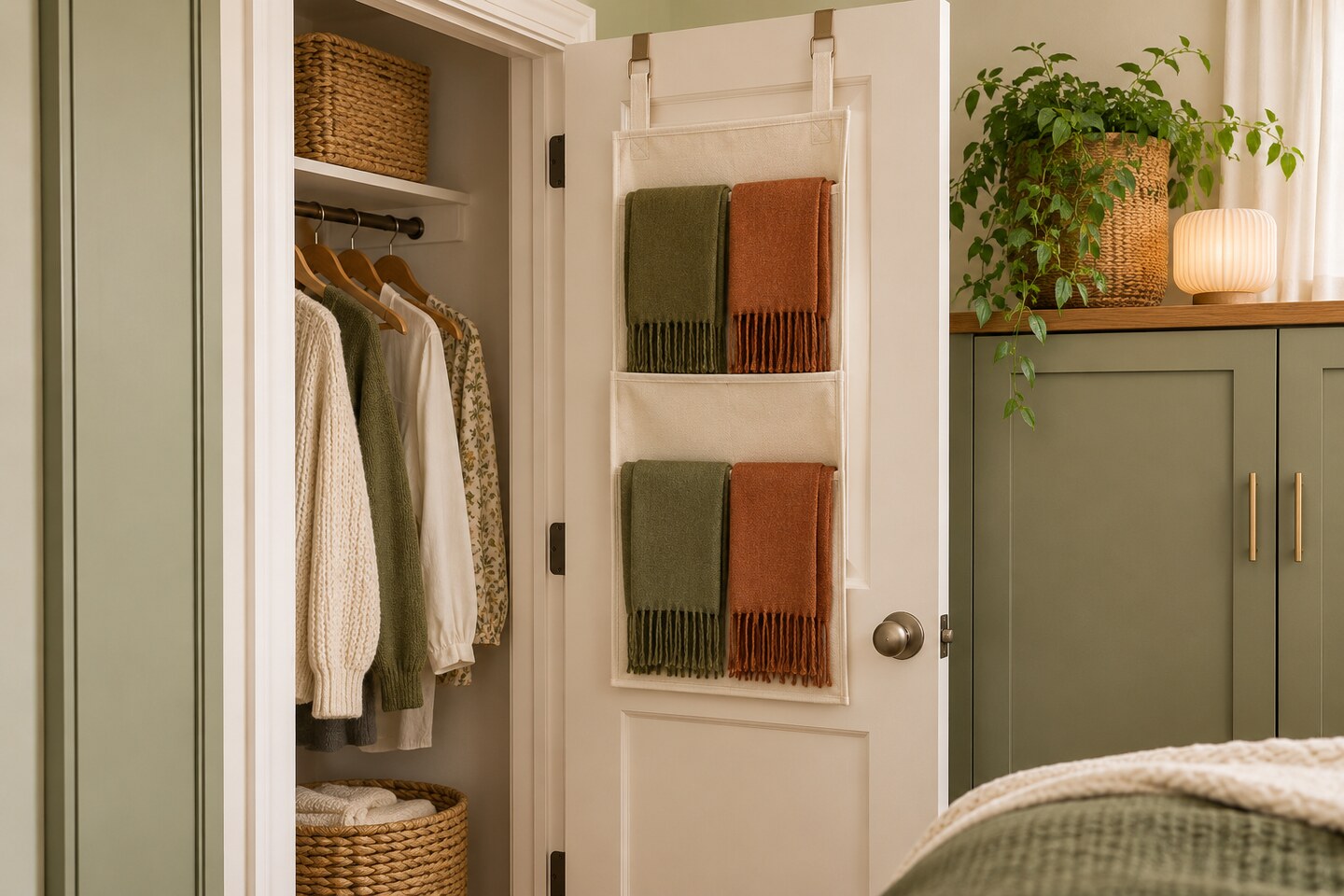
A flat fabric organizer can hold scarf folds that would make hangers bulky in a narrow closet. Check whether the fabric stretches forward when it’s filled, and start with one fold per pocket. Put smooth scarves in one row and the thick ones in a lower, wider pocket if it fits.
Look from the side before you close the door. Keep loose ends inside the organizer and leave space between the pockets and anything on the wall or shelves opposite.
9. Give the Laundry Door a Mesh Bag for Small Dry Items
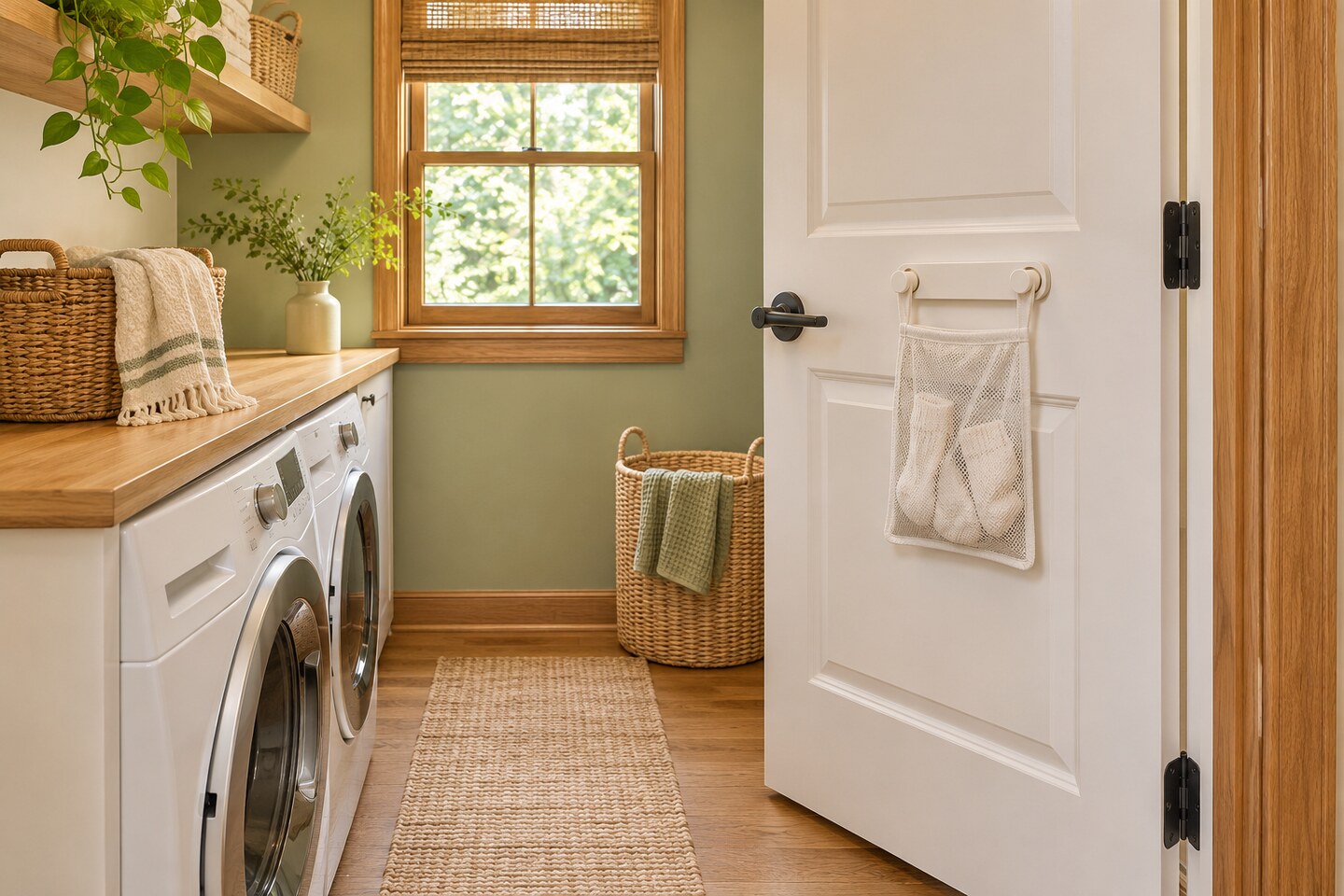
Use a small mesh bag for the clean socks or cloth items waiting to be matched. Skip a heavy hamper in this spot. A light bag lies closer to the door, and its contents can be carried straight to the folding surface once it’s full.
Keep the bag’s strap short and the fill well below the handle. If you already sort spare sets nearby, put the matching bed-linen storage on a separate shelf.
10. Put Keys on a Narrow Cork Strip Beside the Trim
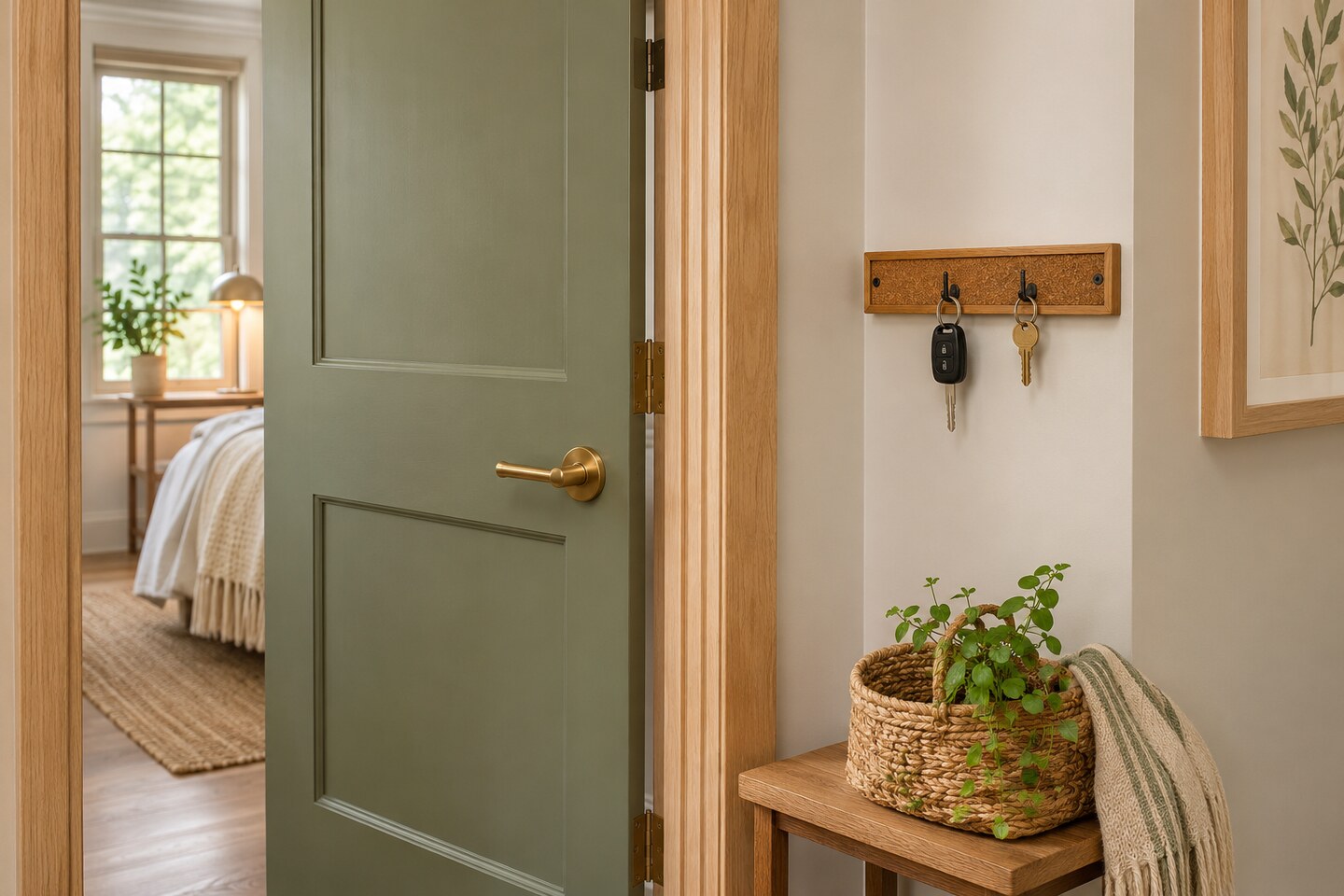
Give spare keys a thin strip of cork with hooks that sit beyond the door handle’s travel. Mark the farthest position of the lever, then leave the strip in the clear. Check that you can lift a key ring by pulling it toward you while the door is open.
Use a cork-backed strip or mounting system designed for the wall and weight. A natural cork face next to warm wood trim gives a small set of hooks a finished edge.
11. Gather Soft Toys in One Low Fabric Pocket
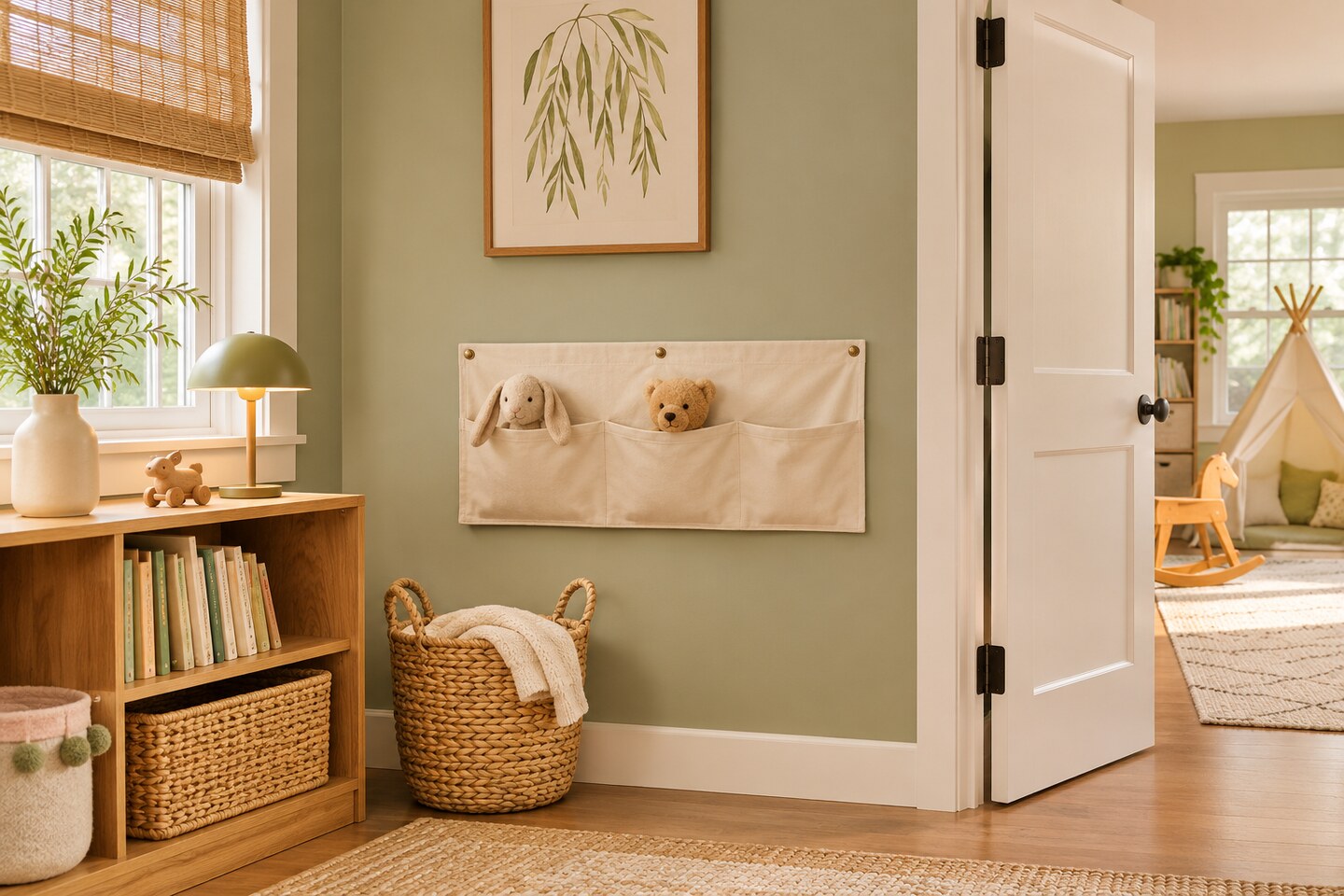
Set a small fabric pocket low on a fixed wall beside a child’s room door for a few soft toys. Choose a mount and location suited to the room and keep the pocket clear of the hinge edge and swing. A flat pouch with a wide opening is easier to reset than a deep bin with hidden toys.
Use soft items that fit inside the opening with no pressure. Keep attachments short and secure and leave bulky pieces in their regular toy storage.
12. Hang Repeat-Wear Linen on a Wood Rail
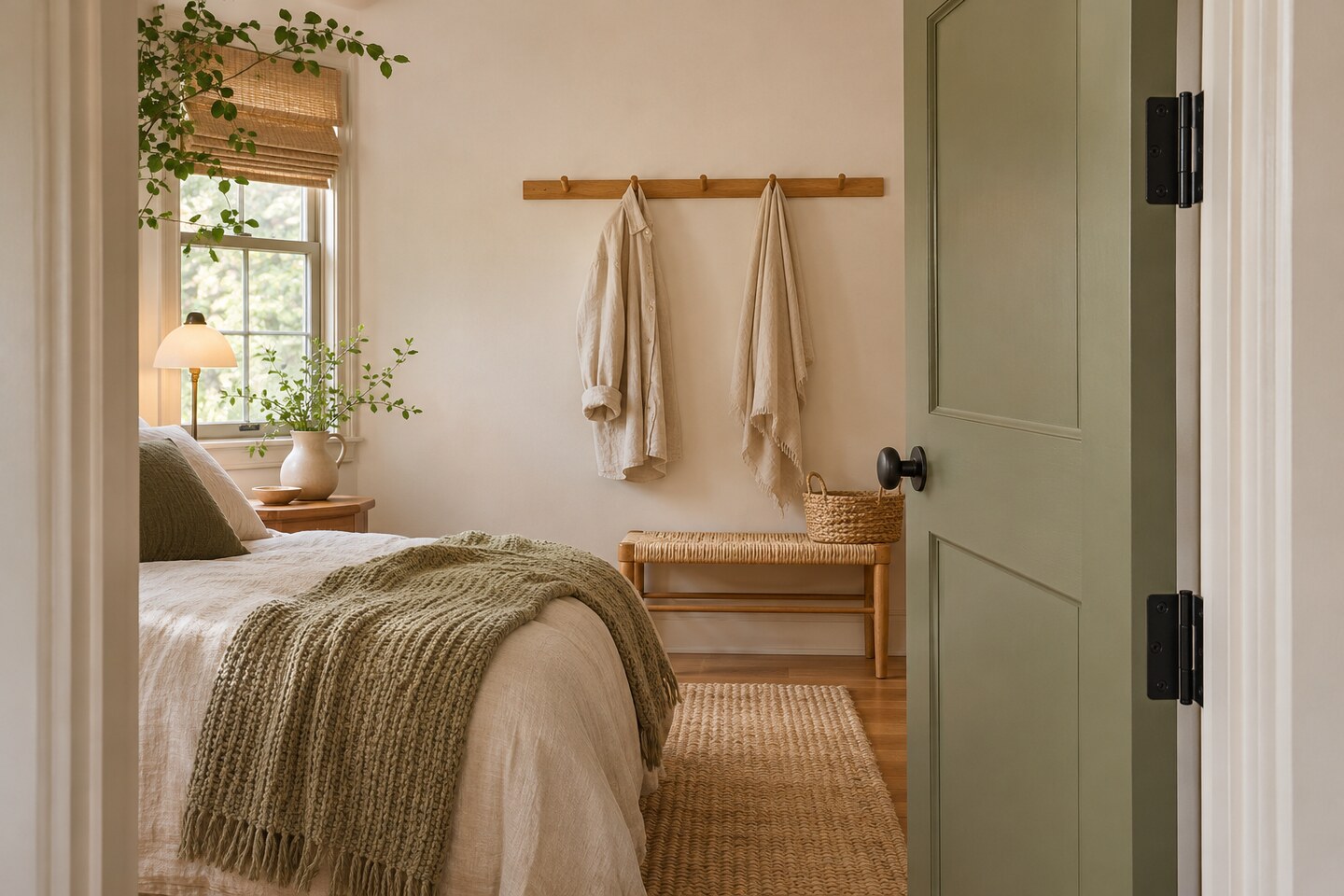
A pale wood rail behind the bedroom door can hold the linen shirt or light robe you intend to wear again. Set the hooks far enough apart to leave the cloth visible. Stop before filling the whole wall, especially if the door already opens close to it.
Keep the material palette simple so the rail looks as though it belongs beside the furniture. Let each garment hang lightly instead of stacking it into a tight bundle.
13. Keep a Few Utility Tools on a Shallow Wall Panel
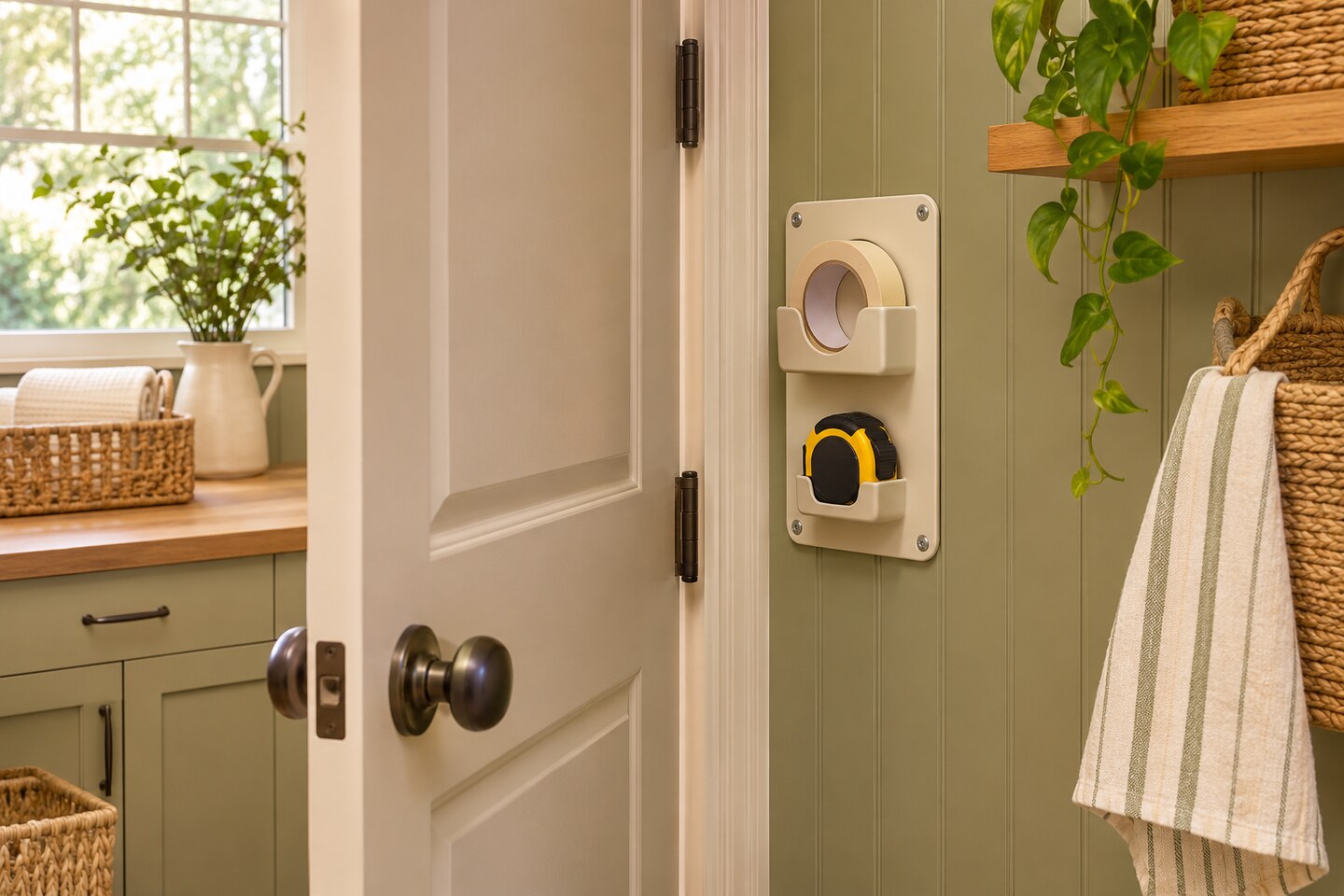
Put a narrow panel on the wall beside the utility-room door where it will hold only the tools you reach for often. Give tape, a pencil, and a small measuring tool their own supports so they stay flat. Check each item at its deepest point with the door fully open.
Store heavier or sharp tools in their regular closed storage. A small panel works best when it is easy to see what is missing and nothing sticks out farther than the supports were made to carry.
14. Give Mending Supplies a Lipped Rack on a Craft-Room Door
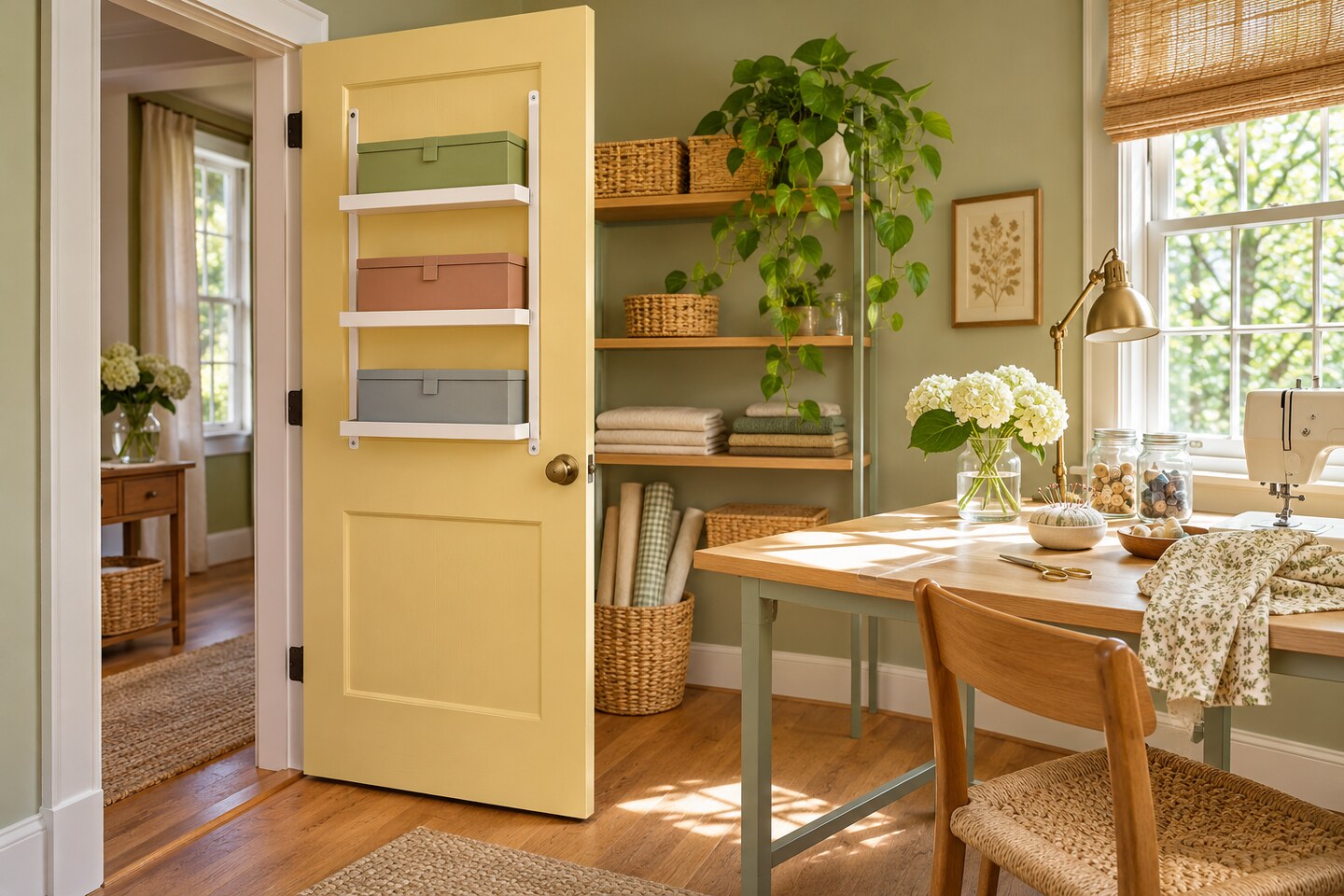
A lipped rack on a compatible craft-room door can hold flat mending kits in small closed boxes. Use it for the handful of tasks you repair often. Arrange the boxes so you can take one out with the door in its ordinary position.
Open and close the loaded door gently to check that the contents stay in place. Leave a stable work surface nearby for the kit once you take it down.
Make the first test with the items in place. Open the door the way you do when you’re carrying something, then see whether you can reach the contents. One good pocket in the right spot is often enough to make the area earn its keep.
Discover more from HomeTrendora
Subscribe to get the latest posts sent to your email.