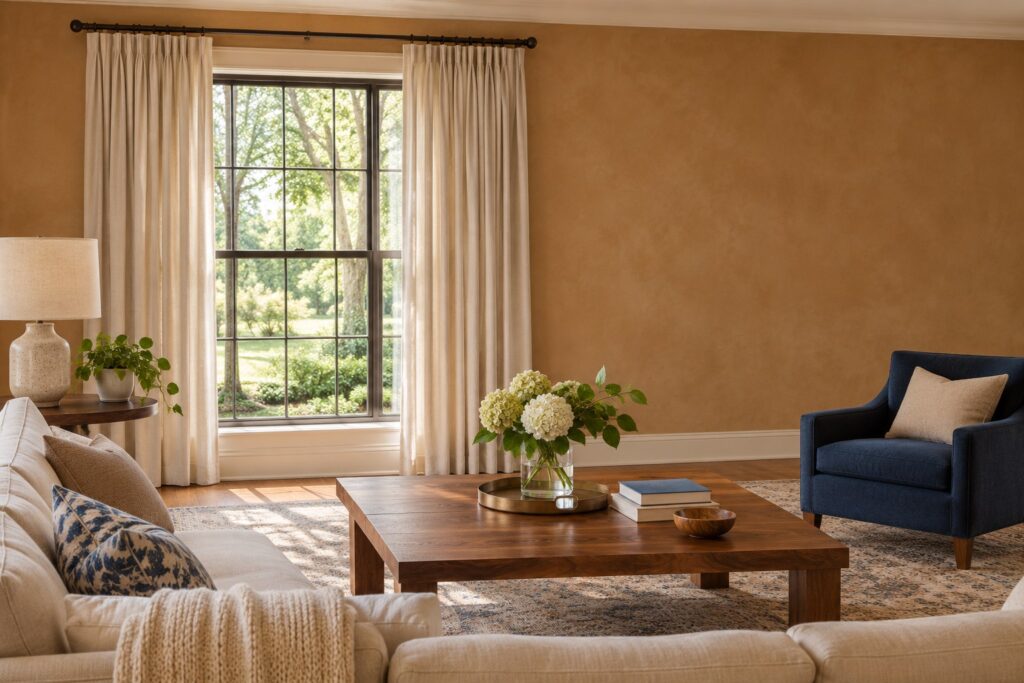
Dining room curtains have to share their space with chair backs, serving furniture, and the route to the table. These 14 ideas help you choose a fabric and an arrangement that still work when everyone sits down for dinner.
Pull the nearest chairs out before measuring. Open the window or patio door, check the full length of any heater or floor register, and mark where the fabric can hang and stack. Measure from the attachment point of your chosen heading, and follow the hardware maker’s support and weight guidance. A good-looking panel earns its place when it can move without getting caught in the room’s ordinary activity.
1. Let Linen Panels Clear the Pulled-Out Chairs
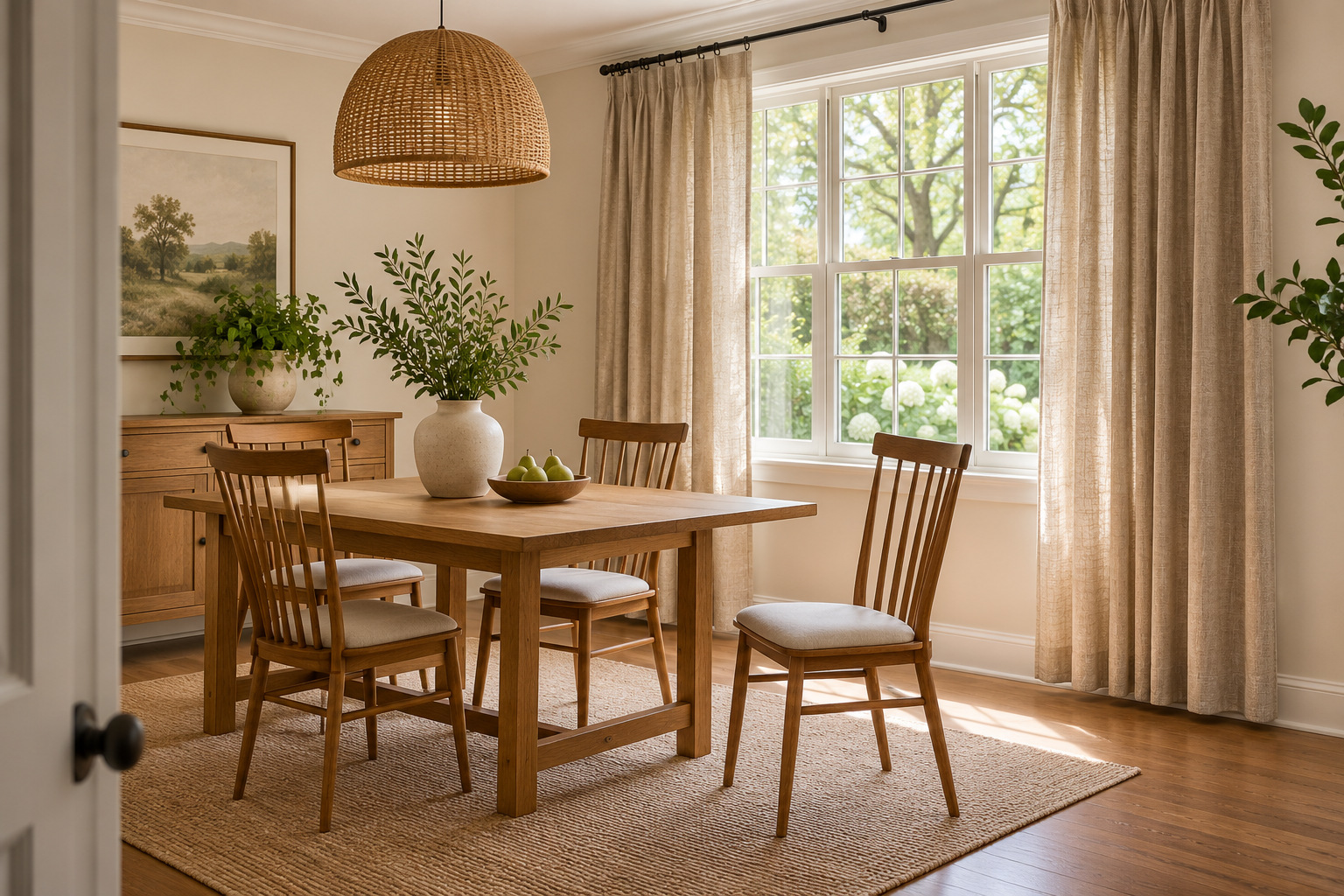
In a dining room with a wood table and hard flooring, a substantial linen weave gives the window a softer outline. Start with a sample in flax, warm white, or oatmeal and hold it beside the table while daylight comes through it. The cloth should contribute something different from the wood grain rather than match it exactly.
Then pull out the chair nearest the window and sit down. Mark the path of its back before deciding where the panel will fall. A curtain that looks beautifully full behind a pushed-in chair may be the first thing someone catches when standing up. Give the open panel a resting place beyond that movement, with the hem clear of the floor. For the surrounding palette, these warm neutral dining room ideas show how fabric can sit alongside the table and chair finishes.
For a similar light-filtering look, compare this two-panel option with your rod-to-floor measurement and chair clearance; semi-sheer fabric is not a promise of nighttime privacy.
Compare the semi-sheer curtain panels (paid link)
2. Give Daylight and Dinner Privacy Separate Layers
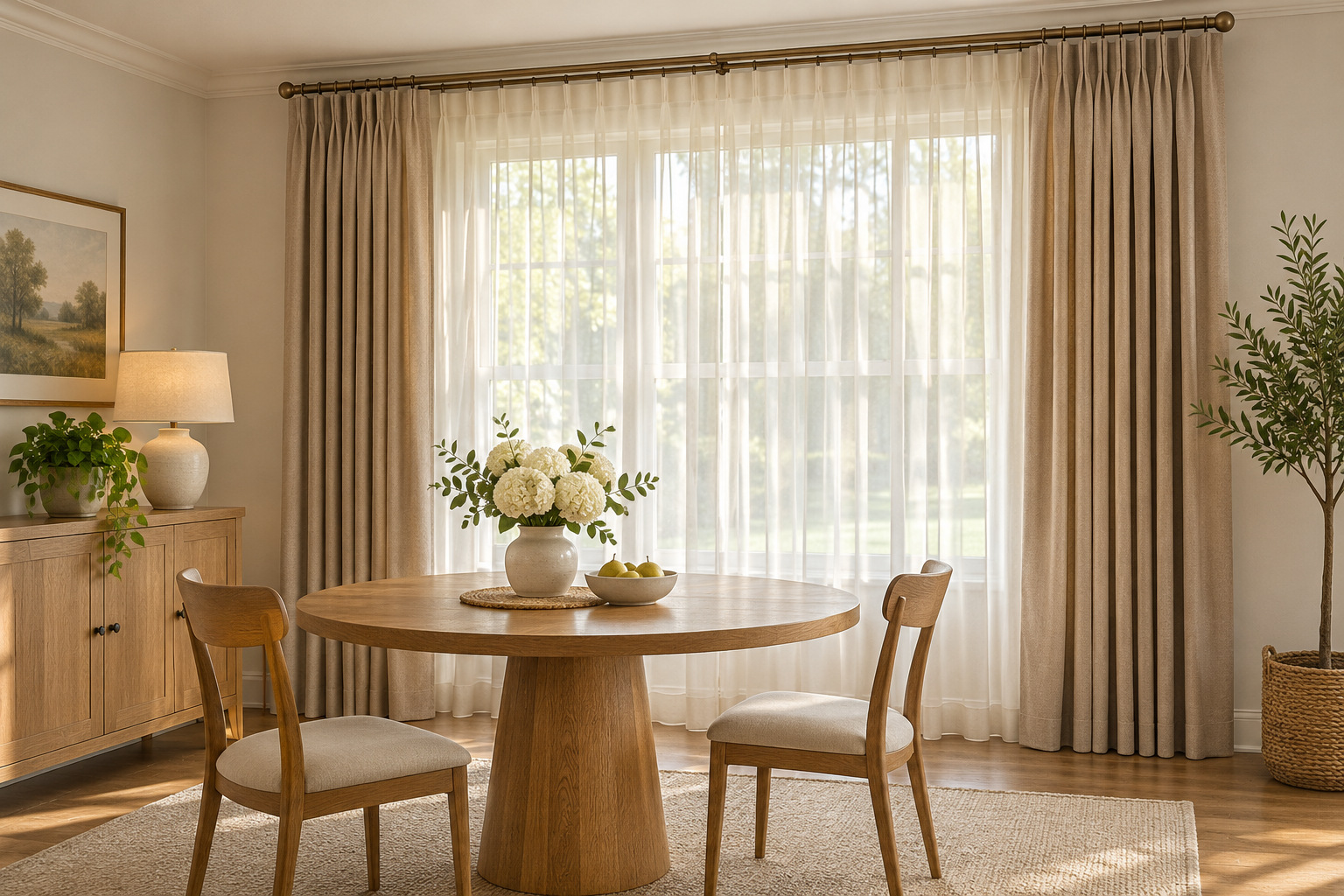
Use a sheer nearest the glass when you want a softened daytime window, with a separate outer curtain for the hours when the room lights are on. Choose the outer cloth by the privacy you actually need. A pale sheer can reveal far more after sunset than it does on a bright morning.
Check both layers together before fixing the hardware position. There needs to be room for the folds to move without dragging through one another. In a dining room used as a daytime workspace, the light layer can stay drawn while the heavier curtain rests at the sides. At dinner, close the outer layer and look at the room from the window side as well as from a seat. The change should be easy to make without reaching across a full table.
3. Reserve Stack Space for Velvet
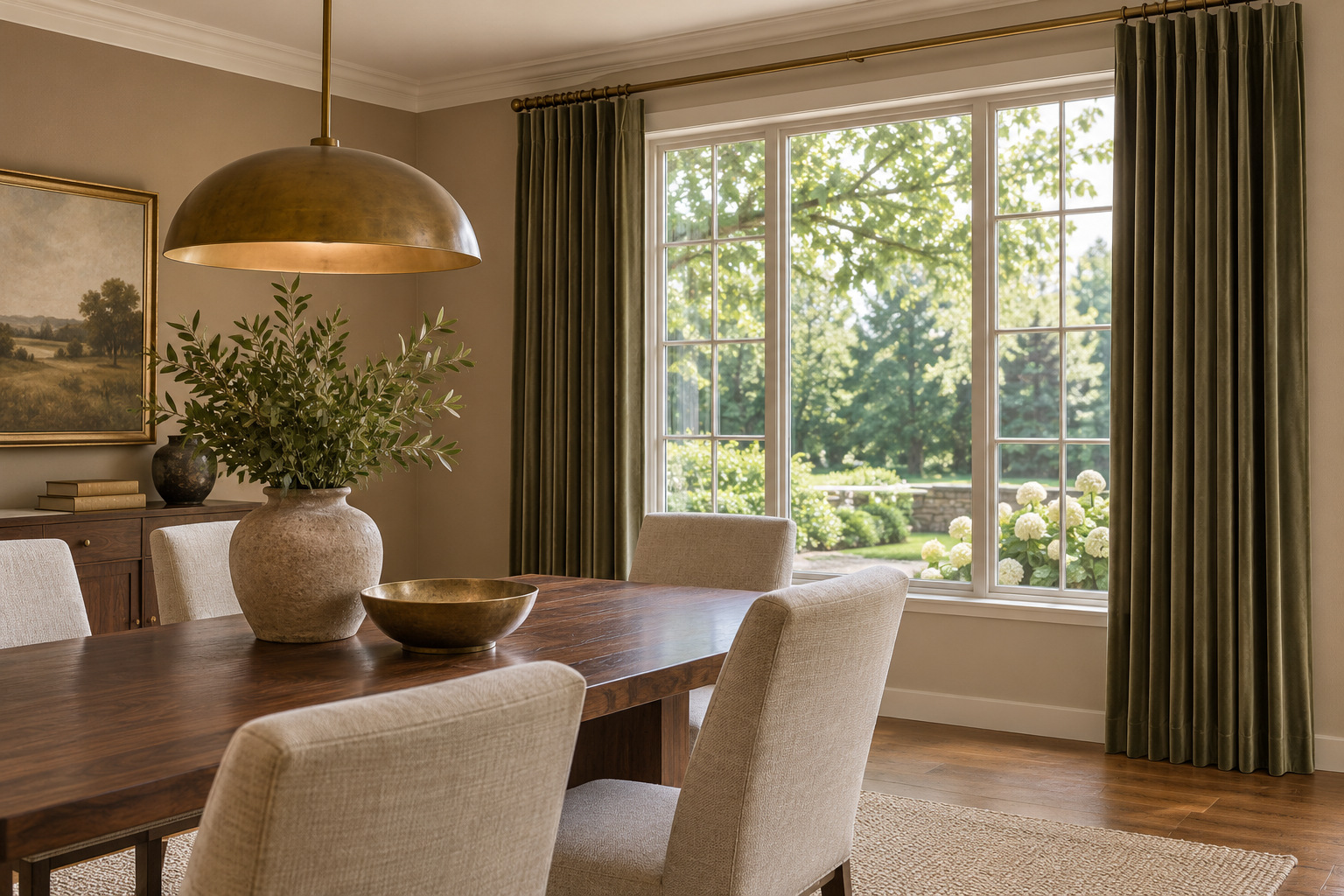
Velvet gives a plain dining room a deeper, more formal fabric surface, especially in a muted olive, tobacco, or wine shade. It also makes a substantial stack when open. Gather a sample or a comparable panel at the intended side of the window so you can see how much room its folds occupy.
Leave that stack clear of the nearest buffet corner and chair back. Choose a rod or track rated for the completed treatment and the support spacing it needs. Where the room has room for it, a generous velvet panel beside a tailored dining chair can feel soft and composed with very little extra decoration. Test the color with the pendant on: the pile may look darker or lighter as you turn the cloth. Avoid adding a long floor puddle where chairs need to move through it.
4. Put Cafe Curtains at a Street-Facing Breakfast Window
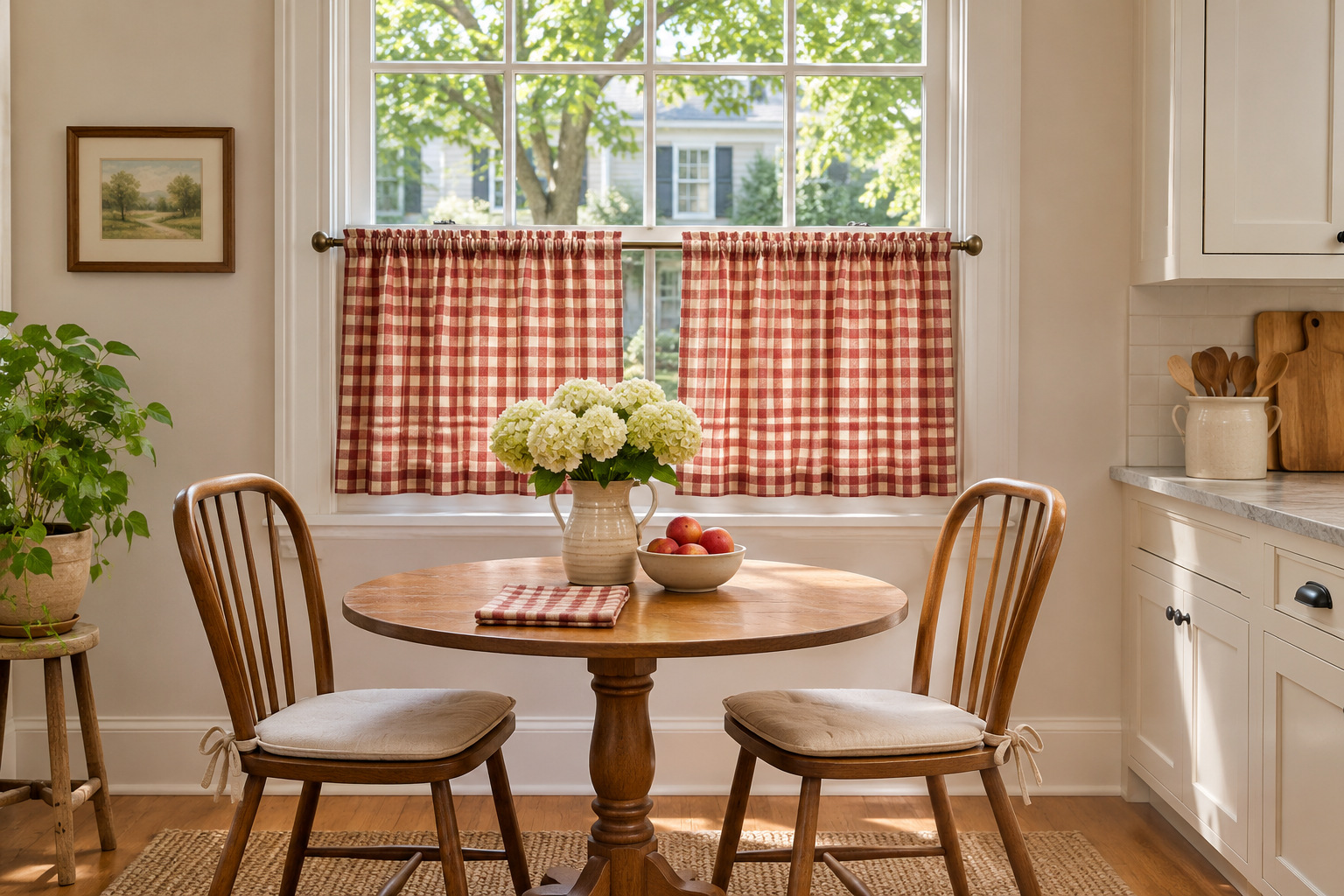
A cafe curtain can cover the lower view while leaving the upper glass open to daylight. Decide the height from the chair you use, then check the view from outside where appropriate. The useful dividing line depends on the window, the street, and what someone can see into the room.
Try a simple small check or a plain light weave that relates to the breakfast table. Keep the heading and rod suited to the frame and the fabric’s weight, with the sash and handles still working. This approach can be more comfortable beside a compact kitchen table than a full curtain stack at the floor. It does not promise complete privacy; choose a more opaque cloth or a separate appropriate treatment if the lower view still feels exposed at night.
5. Stop the Fabric Above a Window Banquette
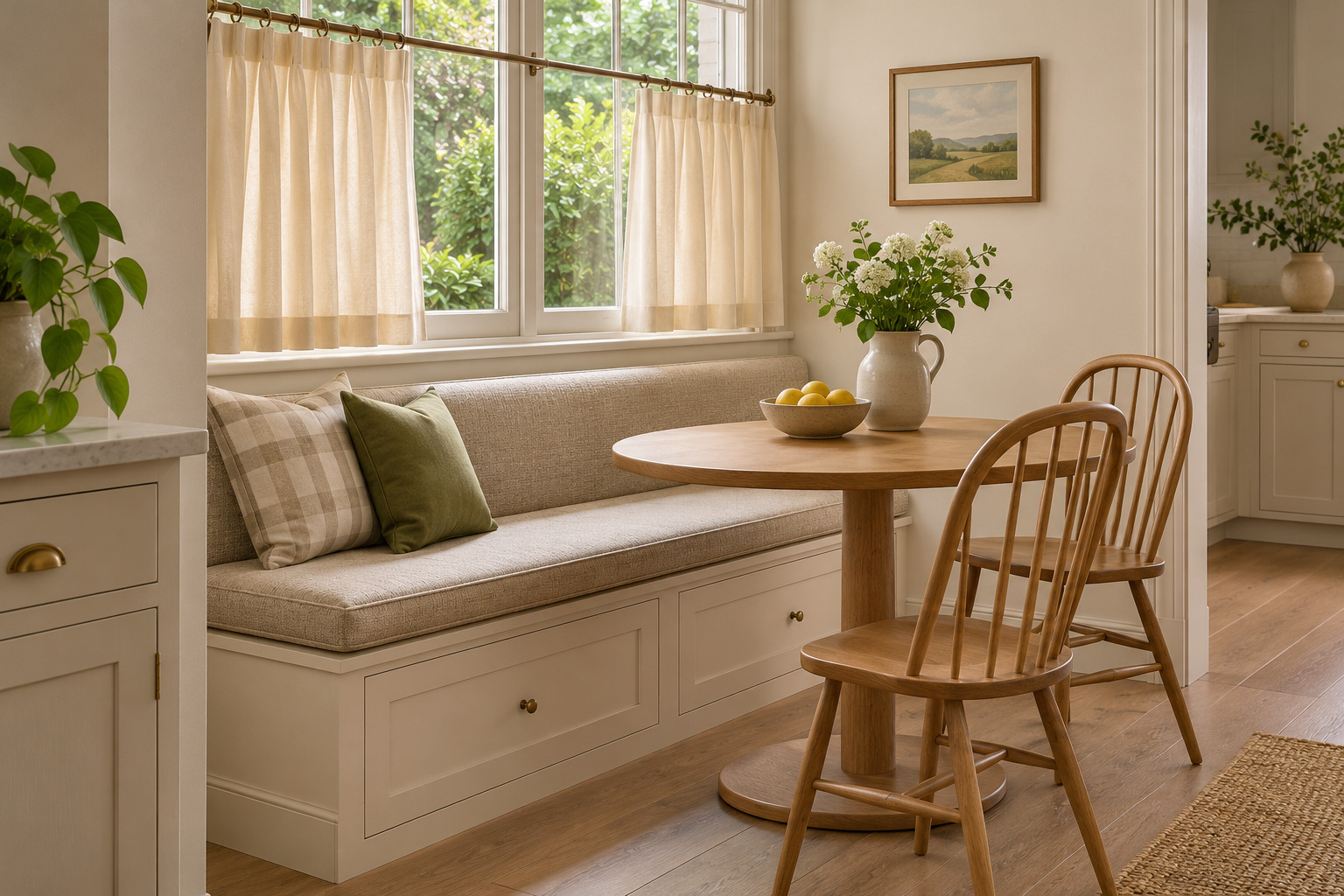
When a bench sits directly under the window, floor-length curtains can disappear behind cushions or get trapped beside seated shoulders. Use a short treatment whose finished edge stops clear of the seat and its movement. Test the length with someone sitting at the outer end, where the fabric is most likely to meet a shoulder.
A modest hem and a restrained heading keep a small nook from becoming a wall of gathers. Match the curtain’s warmth to the seat cushion while letting one of them remain plain. If the bench contains storage, open it with the curtain in its usual position. Maintain the clearances required by any nearby heating equipment, and choose a different treatment where hanging fabric cannot meet those requirements. The improvement is a usable seat beside a dressed window, not extra cloth tucked behind the bench.
6. Use One Moving Panel at a Tight Corner
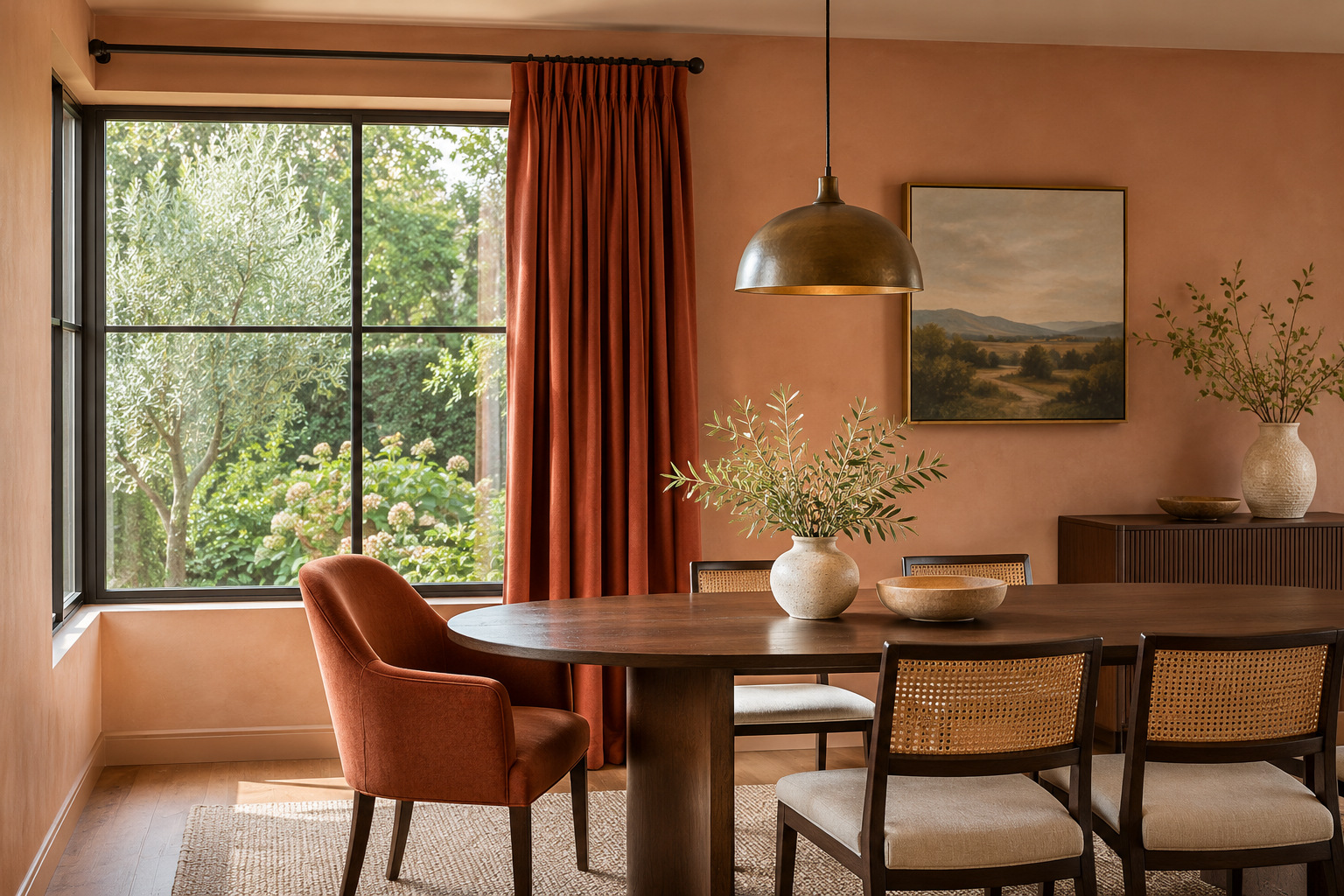
A window close to a side wall may have room for a stack on only one side. Instead of squeezing two equally full panels into unequal spaces, try one curtain that draws toward the open side. Check whether its closed width covers the intended area with the fullness the heading needs.
Balance the window from across the table. A single panel can look deliberate when its color connects with a broad object elsewhere, such as an upholstered end chair. The opposite side of the glass does not need another decorative bundle to pretend the wall is symmetrical. Make sure you can reach the curtain without leaning over a chair, and check that the open stack does not occupy a doorway. Use appropriate support across the whole span, even if the fabric rests at just one end.
7. Frame Patio Doors Outside Their Opening
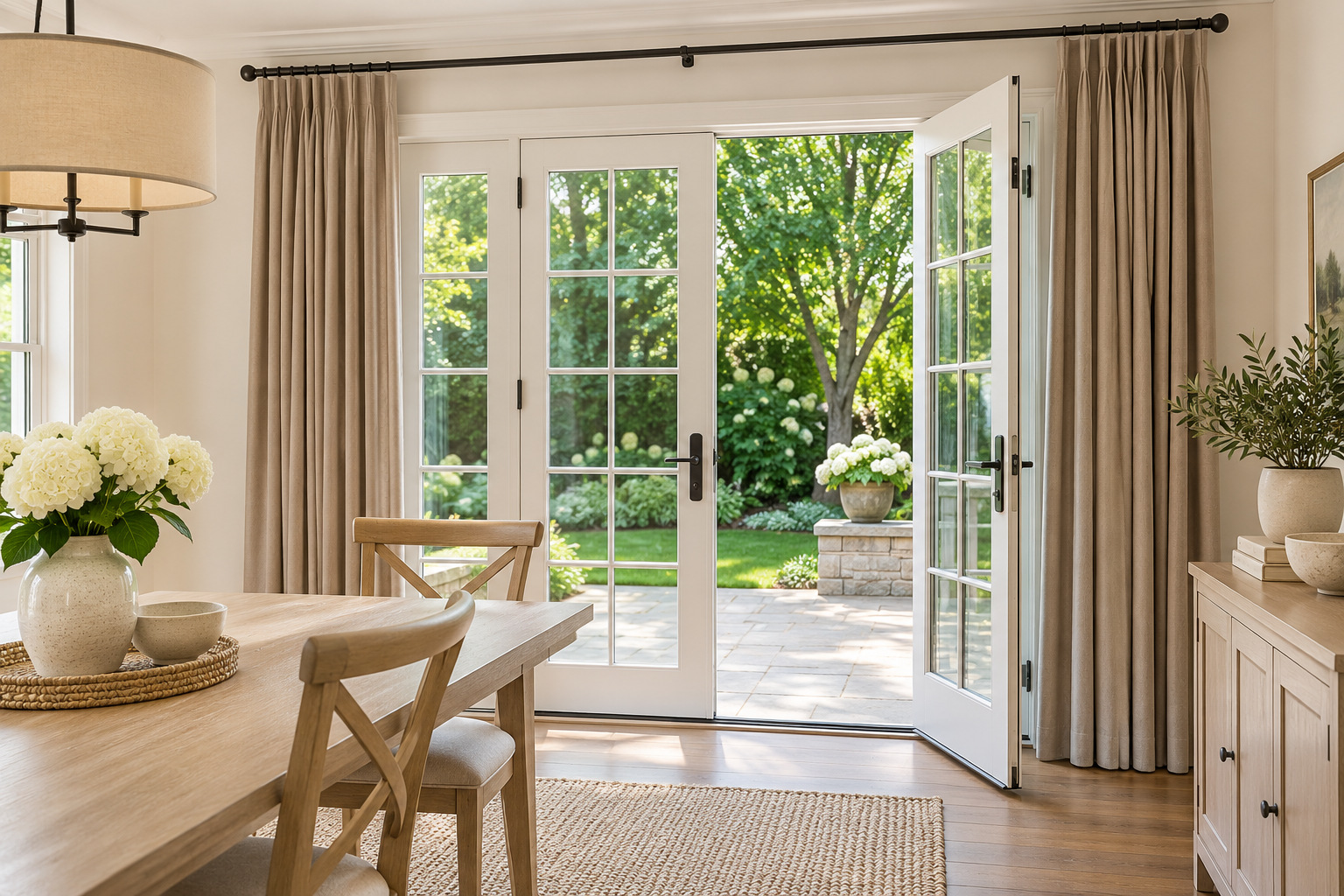
At doors used for carrying food outside, begin with the entire opening rather than the central glass. Mark the handles, the moving leaf or sliding panel, and the space you need to step through while carrying a tray. Put the open curtain stack beyond that working area where the architecture allows it.
An unobtrusive heading and a cloth that gathers predictably are easier to manage here than heavy tiebacks that project into the route. Check the full door movement after the hardware position is planned. Leave required exits and controls accessible, and keep the curtain off the floor where people cross the threshold. If there is no suitable side space, choose a door-appropriate shade or blind rather than forcing a long panel into the opening. The door needs to remain useful on the busiest meal of the week.
8. Let a Solid Curtain Quiet a Patterned Dining Wall
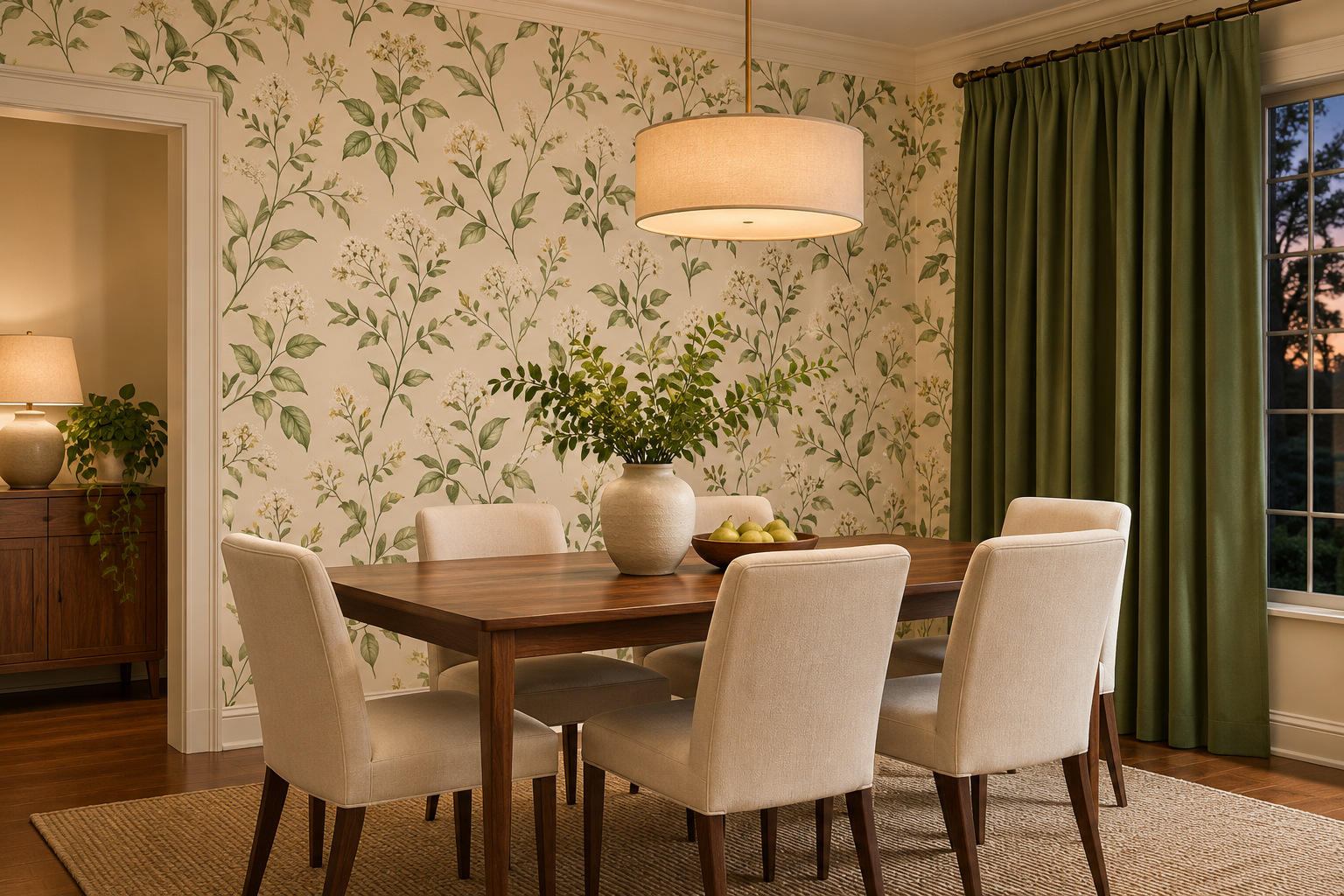
When wallpaper already provides the room’s main pattern, use the curtain as a large, quiet color. Take a background tone from the paper instead of trying to match its busiest leaf or flower. A plain moss panel beside a cream botanical wall can hold the two surfaces together while leaving the print readable.
View the cloth gathered and extended. In a fold, a darker fabric may become almost a solid vertical shape, which can be useful beside a detailed wall. Put the sample next to the actual trim and chair fabric under evening light before ordering. If the wallpaper is glossy, a more matte curtain gives it a different kind of surface to sit beside. Let the curtain fill its own window area; you do not need to repeat the wallpaper motif in another layer of fabric.
9. Work With the Room’s Existing Picture Rail
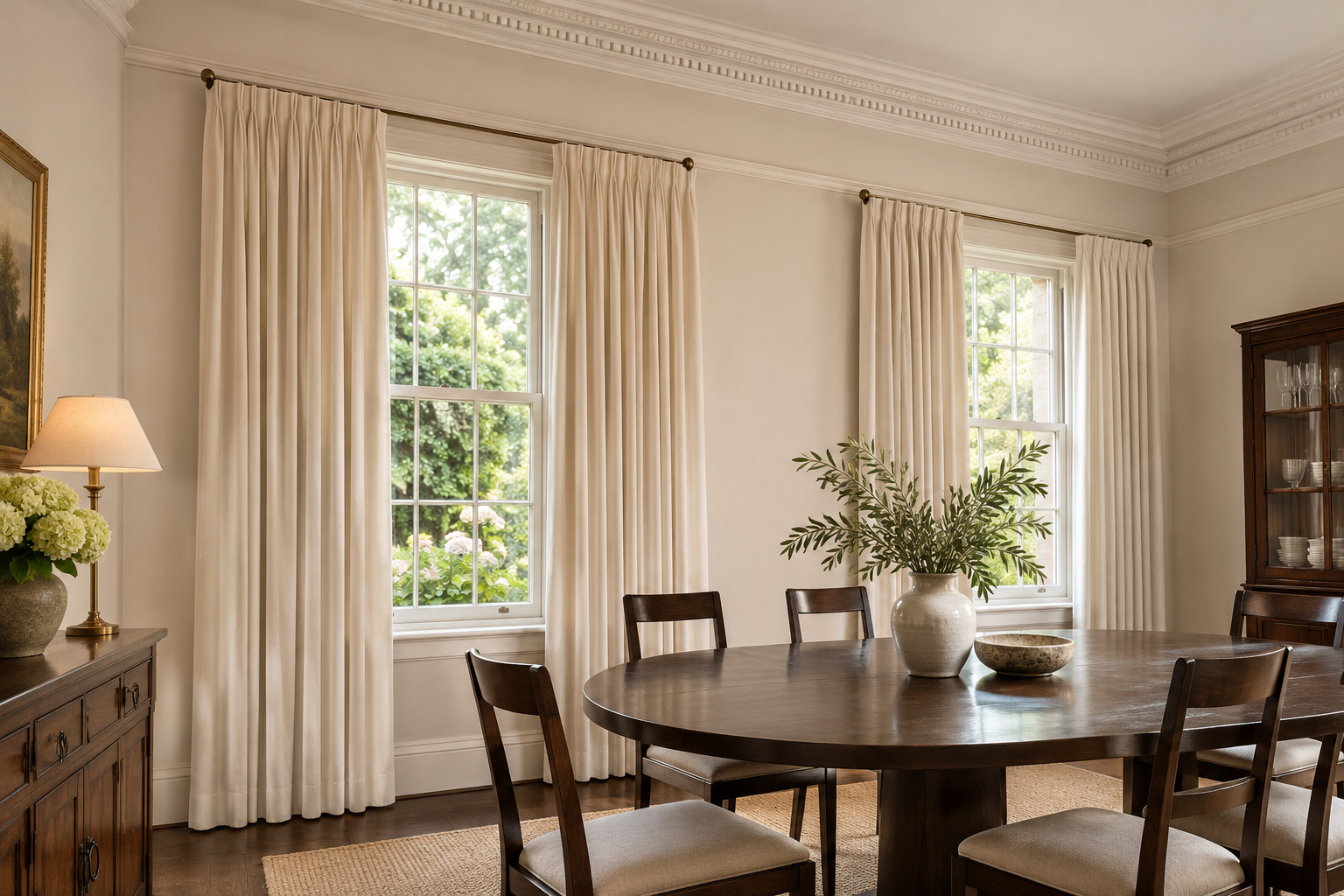
In a dining room with a picture rail or another strong horizontal molding, compare the curtain heading with that line before choosing its height. Hold a fabric strip at two possible positions and look from the room entrance. A heading that clearly relates to the architecture often looks more settled than one stopping just below it by accident.
The rail is a visual reference, not an assumption about structural support. Have the curtain hardware secured appropriately for the wall, span, and fabric load. Leave enough space for the heading to move without rubbing the molding. A simple pleat suits a room where the trim already has detail. Keep the rest of the window treatment restrained so the old joinery can remain part of the room’s character.
10. Use a Bold Stripe Beside a Long Plain Table
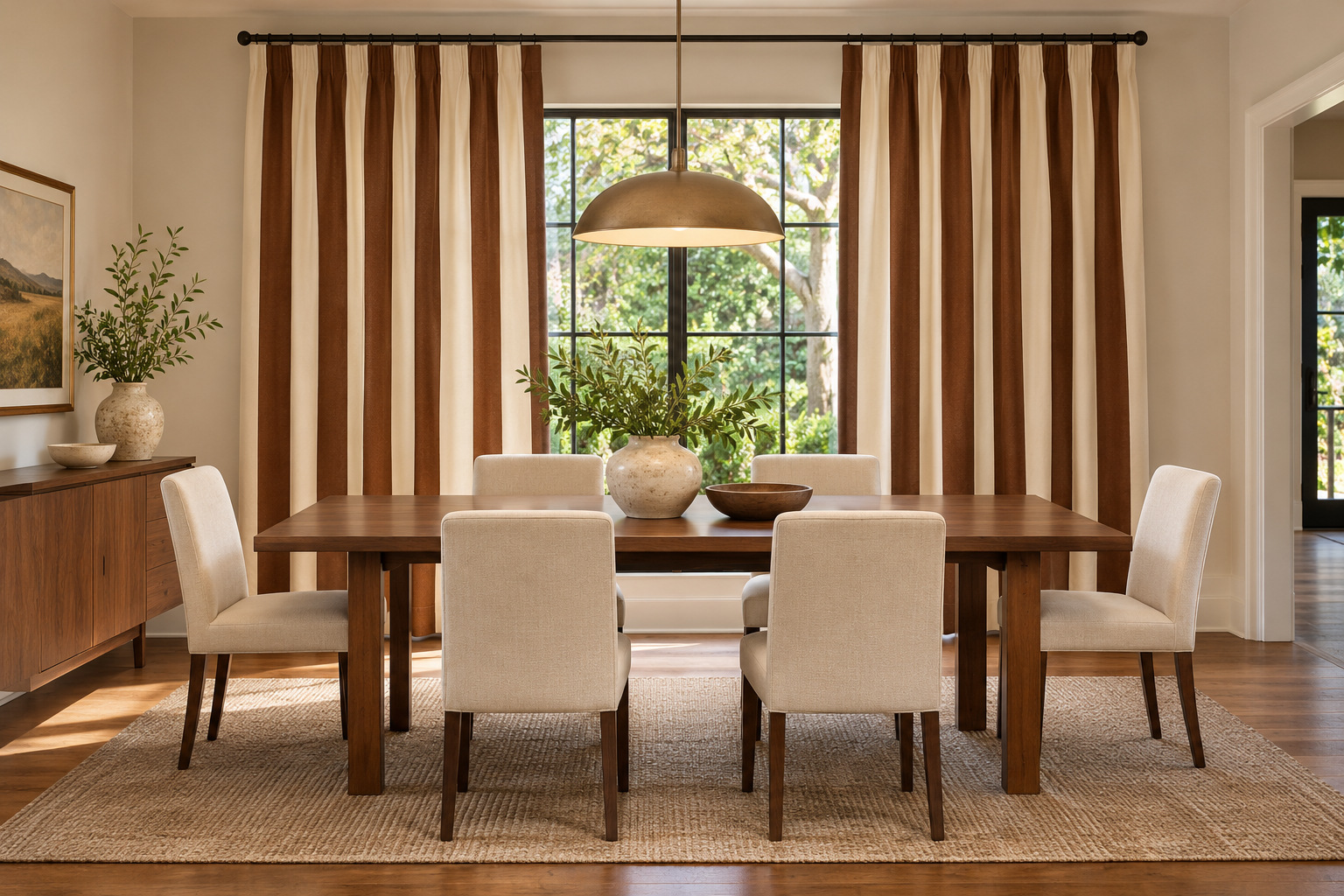
A broad stripe can give a plain dining arrangement a clear fabric rhythm. Try a warm ivory cloth with a tobacco or olive stripe beside a long unpatterned tabletop. Spread enough of the sample to see a complete repeat, then gather it to check how much of the stripe survives in the folds.
Keep the chair upholstery quieter if the stripe is the feature you want to notice. A very tight pattern may turn into visual noise behind a row of chair backs, while an oversized band can disappear into a single fold. Judge the scale from the entrance and from the table rather than at arm’s length alone. Let the shape of the dining table stay visible below the fabric pattern, with the curtain hem and open stack clear of the chair movement.
11. Let Each Side of a Bay Window Work Independently
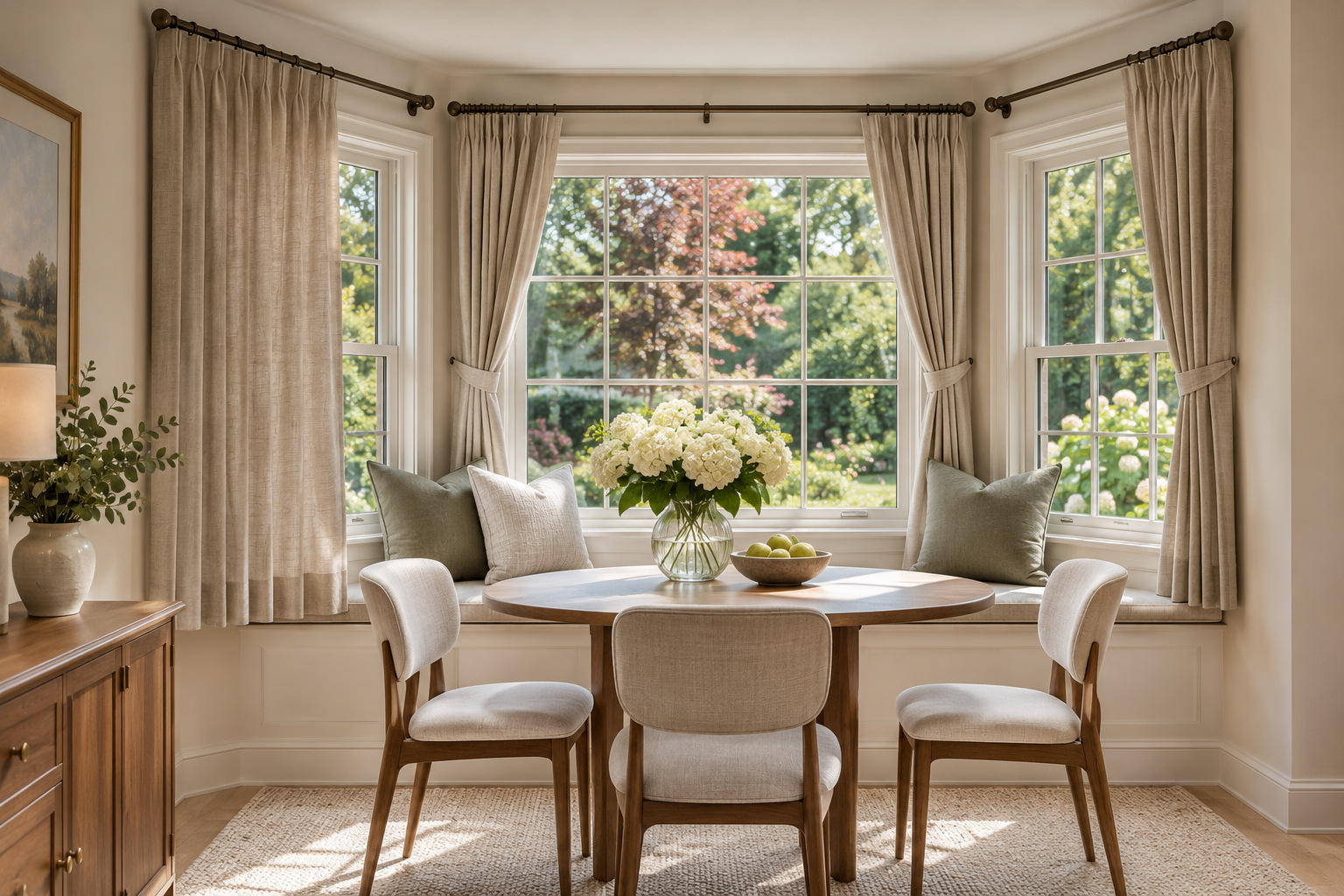
A dining bay can have several different jobs: one pane brings in a view, another faces a neighbor, and the side nearest the table may be hard to reach. Plan the treatment for those positions individually instead of making one long curtain drag around the entire seating arrangement.
With suitable bay hardware, separate panels or sections let you close the side that needs privacy while leaving another part open. Check bracket positions, moving handles, and the room needed for each stack with the supplier. If a bench occupies the bay, compare a short curtain or shade within each opening. Look at the whole bay after the practical choices are settled. Repeating one cloth and heading can connect the sections even when you open them differently through the day.
12. Repeat One Chair Color in a Smaller Curtain Print
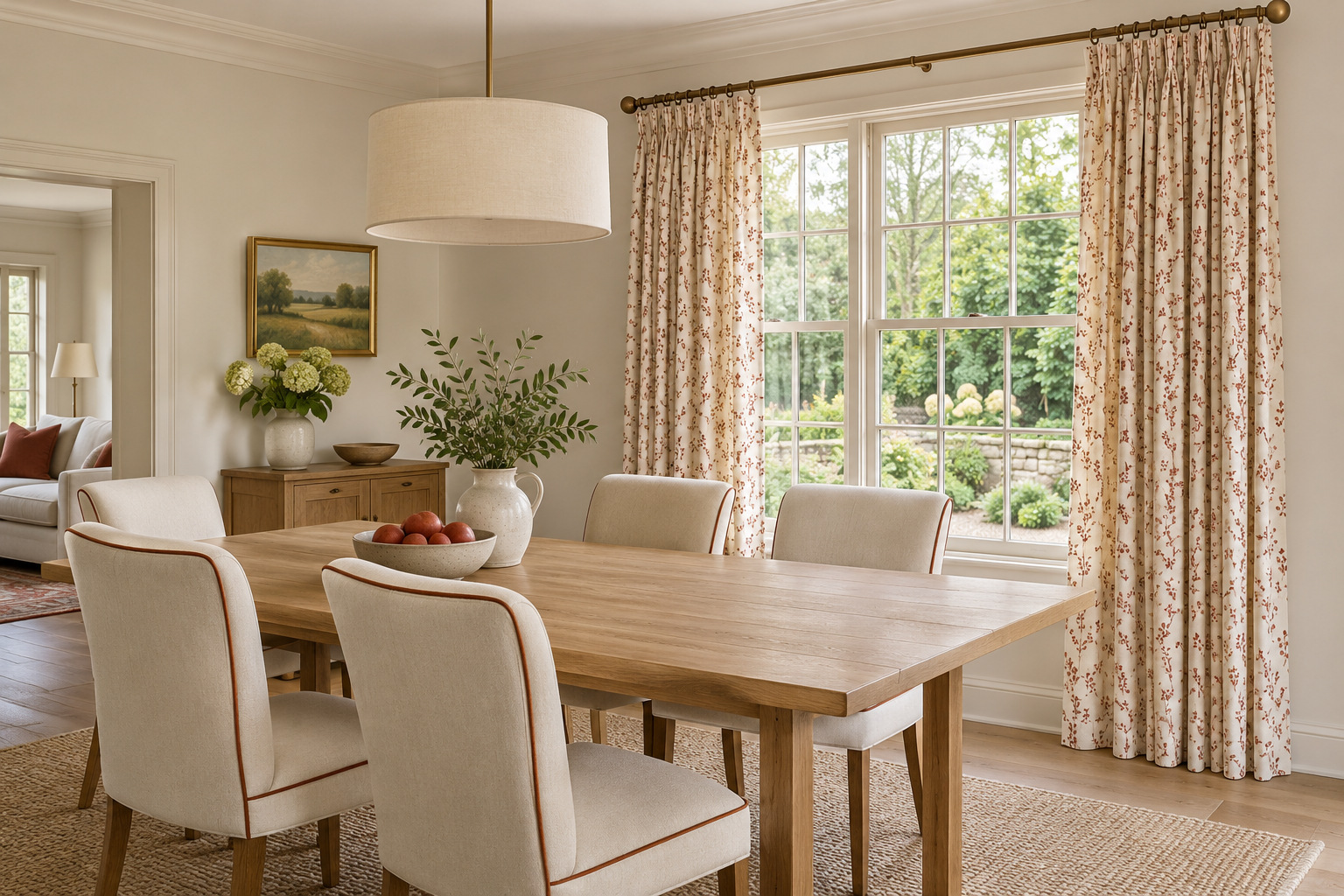
A curtain can relate to the chairs without looking like the upholstery continued up the wall. Choose one chair color and find it in a smaller proportion within the curtain print. Rust piping on a dining chair might become a few small rust flowers over a pale curtain ground, for example.
Set the sample beside the actual chair at the window. The two fabrics can share a color while their pattern scales and backgrounds remain different. If the chairs already carry a lively check, give the curtain a more open repeat or use a plain weave instead. Check the result with the fabric hanging in folds, since gathering changes the amount of each color you see. The tabletop then becomes the quiet space between the two textile areas.
13. Connect an Open Dining Area With a Shared Fabric Tone
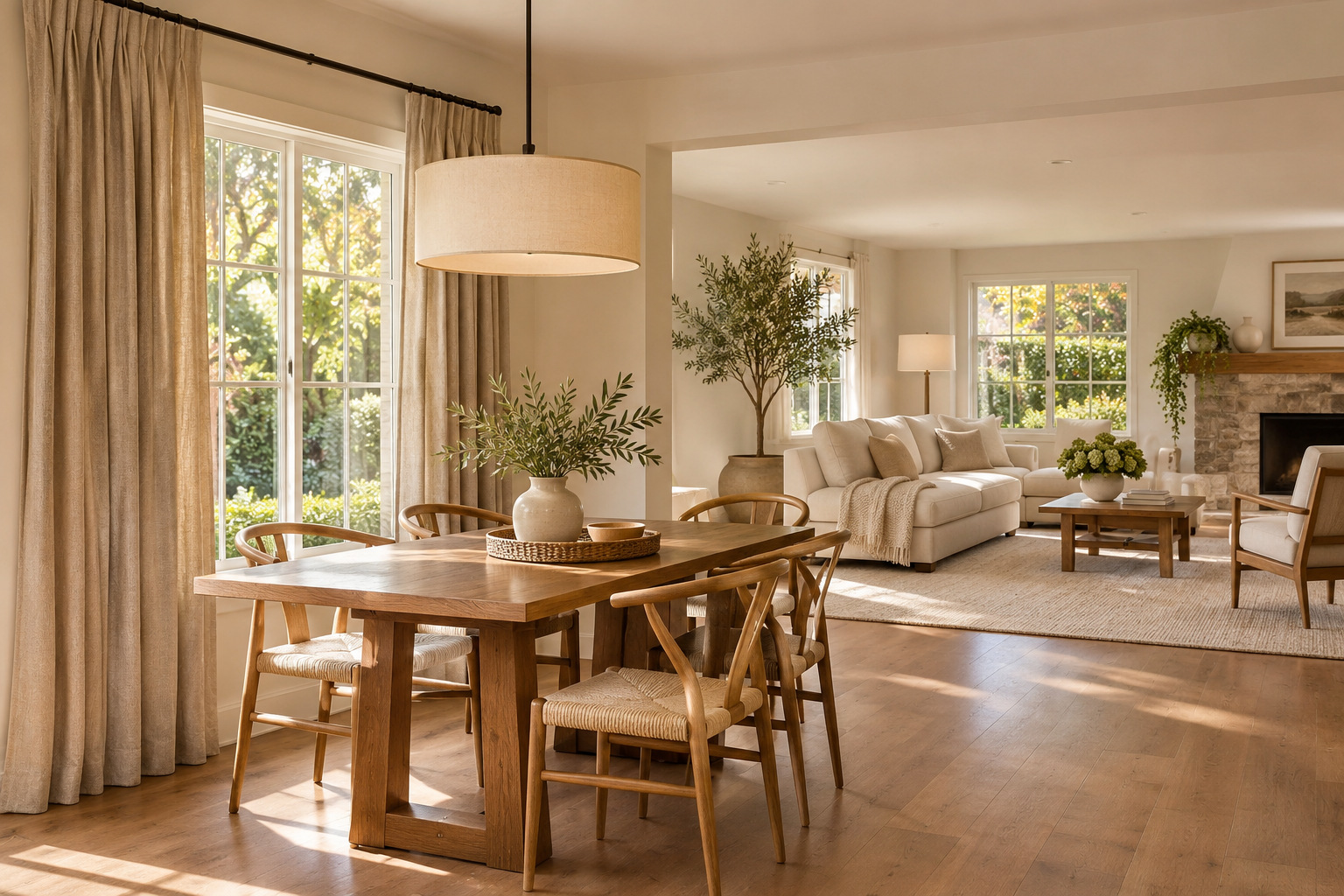
Where the dining table sits within the living room, take one fabric tone across both areas rather than treating the dining window as an unrelated feature. A warm flax curtain can connect with a woven chair seat near the table and a small cushion beyond it. The repeated tone gives the shared room a thread to follow without matching every piece.
Keep the dining side’s practical requirements in charge. Its curtain still needs to clear the nearest chair, and a door beside the table still needs a usable opening. Look at the room from the sofa as well as from the dining seat. You may need less repeated fabric color than you expected because the one window is visible from both places. Let a rug or the furniture arrangement define the areas instead of adding a curtain across the walking route.
14. Add a Shallow Valance Above an Existing Shade
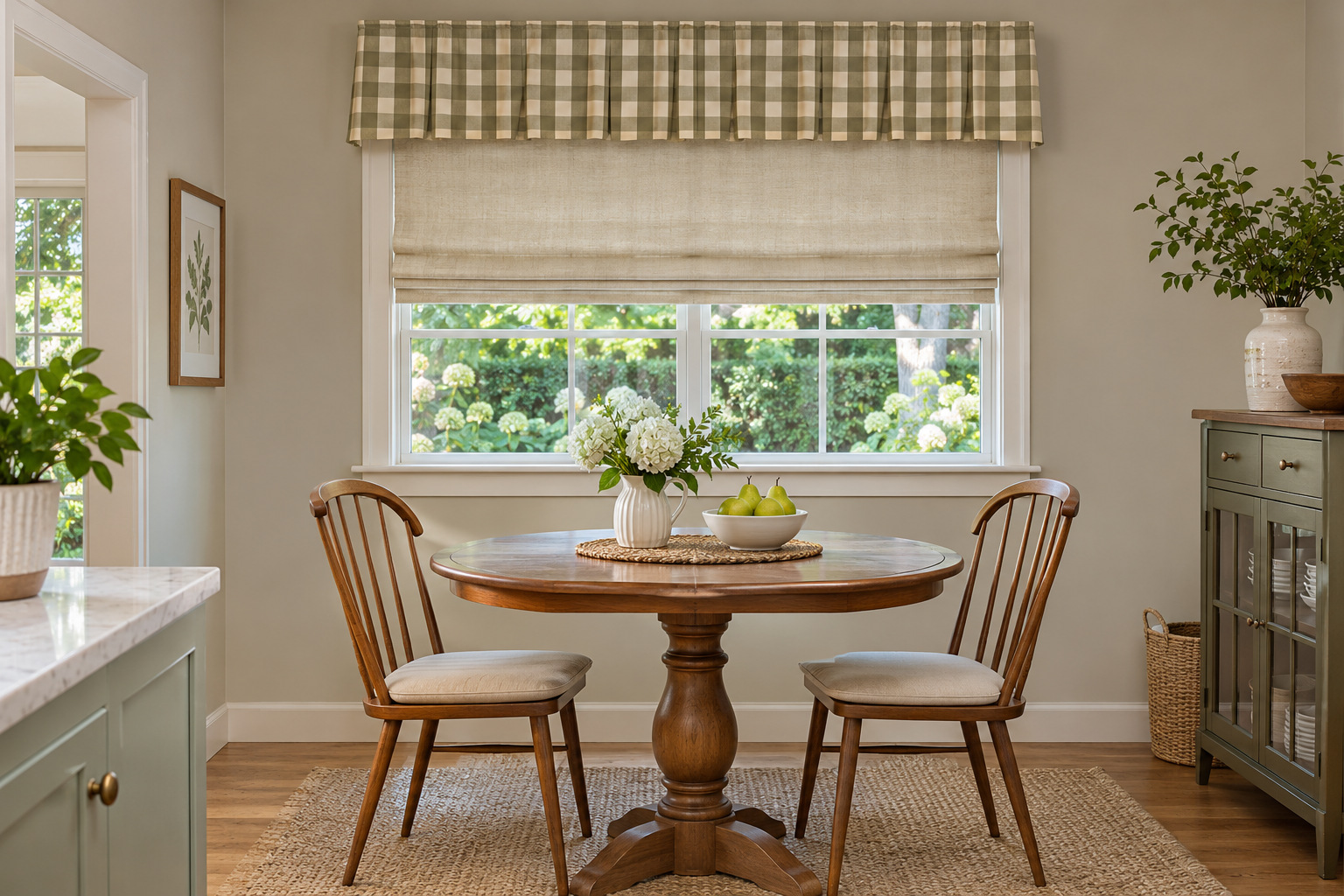
If a cordless shade already manages the window well, a shallow fabric valance can soften its upper edge without bringing another panel down beside the table. Choose a simple straight or gently curved lower line and keep enough of the window visible for the shape to make sense.
Plan the valance around the shade’s actual movement and access needs. It should not conceal a control, stop the shade from raising, or make servicing awkward. A small-check fabric can give a breakfast corner a tailored finish; a plain linen-look cloth suits a quieter dining wall. This is a useful update when the lower area needs to remain entirely clear for chairs or a banquette. Sample the depth before having one made, and keep the supporting hardware separate from the shade unless the system is designed for the combination.
Set the table as you normally use it and move the nearest chair one more time. The right curtain treatment gives you the texture, light control, or privacy you wanted while letting dinner happen around it.
Discover more from HomeTrendora
Subscribe to get the latest posts sent to your email.