A table can look beautifully set until the hot dishes arrive and someone has to find room for them. These natural table setting ideas show you how to use linens, wood, stoneware, and a few seasonal details while leaving a clear place to serve the meal.
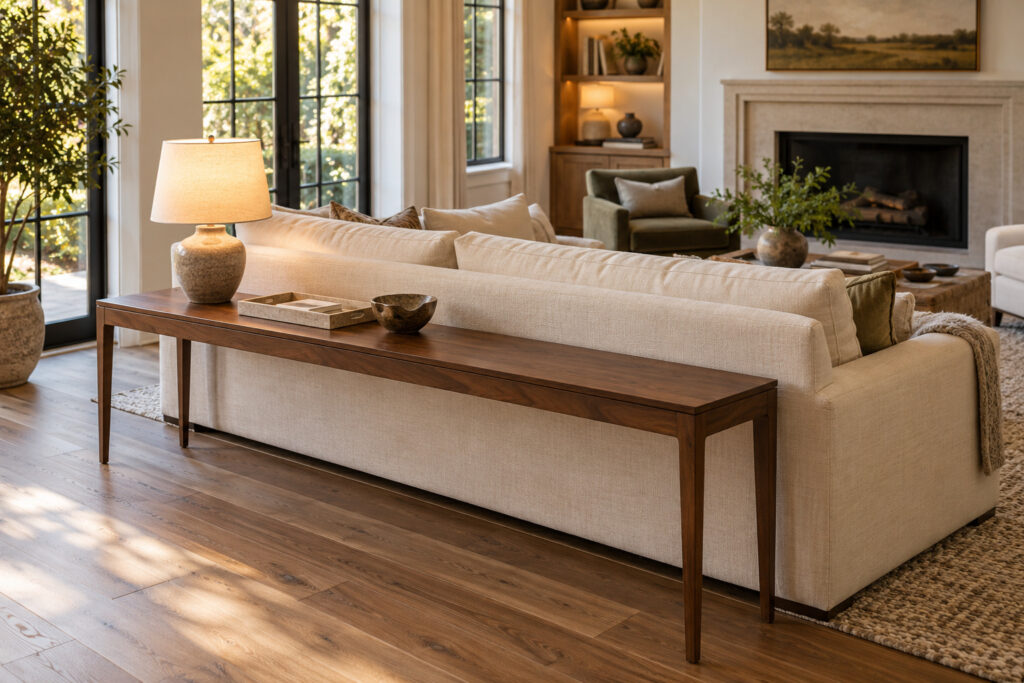
Put your largest serving dish on the table first. Pull a chair out and check how far a guest can comfortably reach. A cup, plate, and napkin can do most of the visual work on a narrow table. If you need a second surface nearby, these dining room sideboard ideas cover how to keep one ready to use.
1. Use Stoneware and Wood at Each Seat
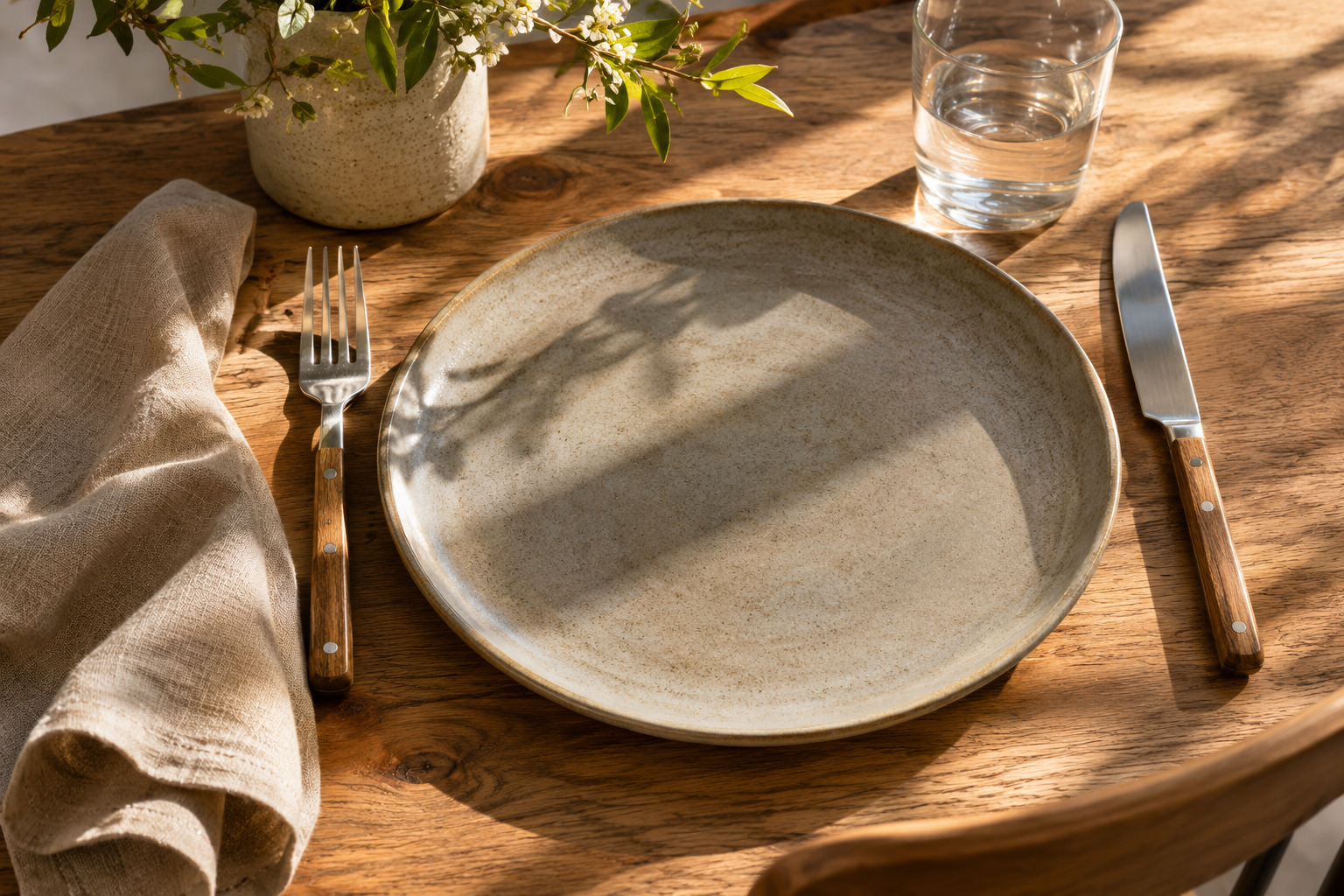
Set a stoneware dinner plate beside wood-handled flatware and let the two surfaces establish the color of the table. A soft sand glaze works with oak handles, and warm gray glaze can make darker wood feel less formal. Set one place completely before choosing the linens for the rest of the table.
If wood-handled flatware is unfamiliar to you, check the maker’s care directions before buying a full set. A small wood rest or a serving spoon can bring in the same material if you already have flatware you like.
2. Fold Flax Napkins Along the Side of the Plate
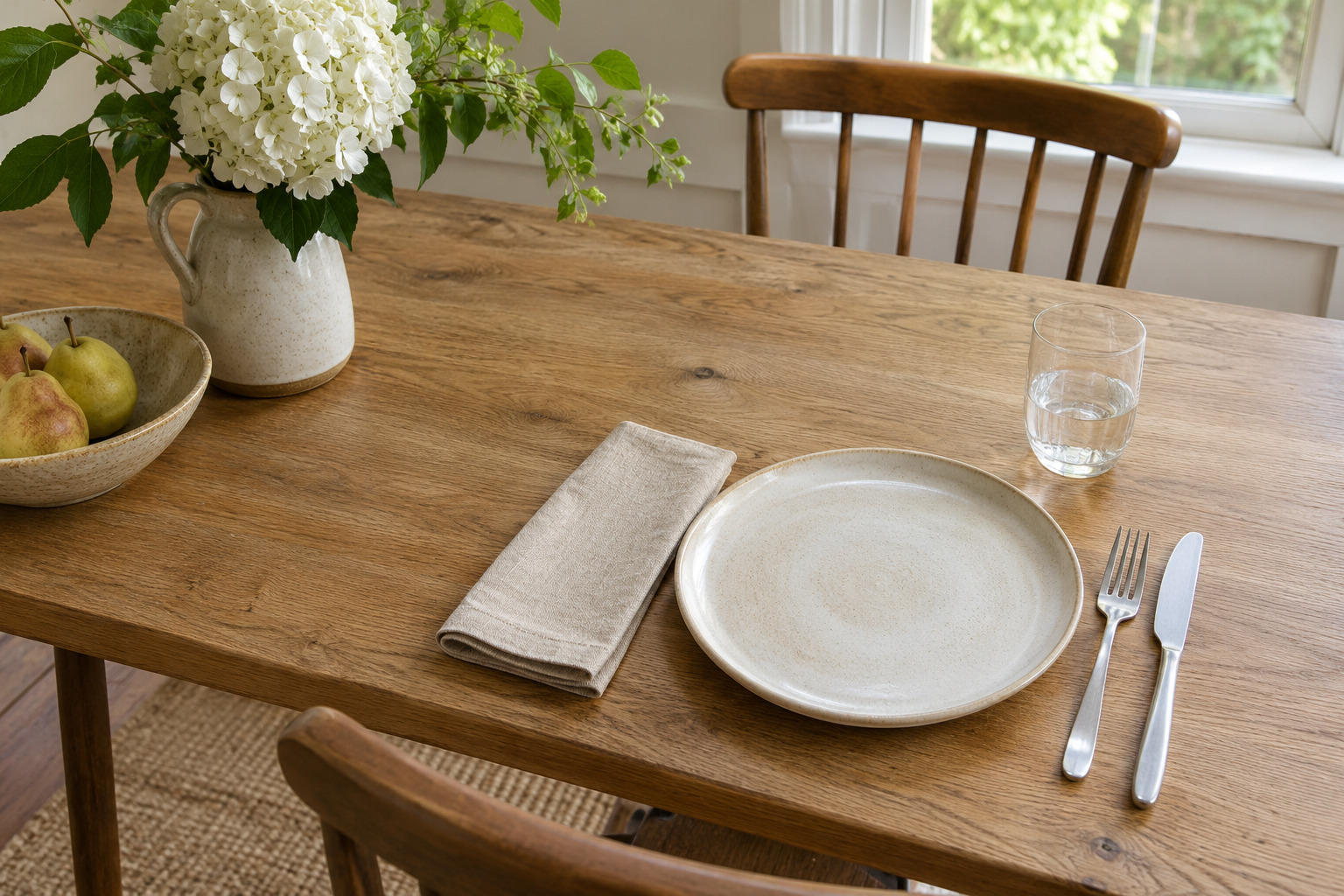
Fold a square flax napkin into thirds and lay it next to the plate. Fold it once more if the long edge hangs into the place to the left. On a narrow table, that slim rectangle gives the cloth a clear shape and leaves the center open for the serving dishes.
Test the fold on one complete place setting with the flatware and glass. Let one slightly uneven edge show if you like a softer finish. A plain fold is quicker to reset after someone sits down.
Before ordering a set, fold one 20-inch square you already own and set it beside the plate to check whether that size leaves enough room for the glass.
See the natural linen napkins (paid link)
3. Put One Herb Sprig Beside Each Place Card
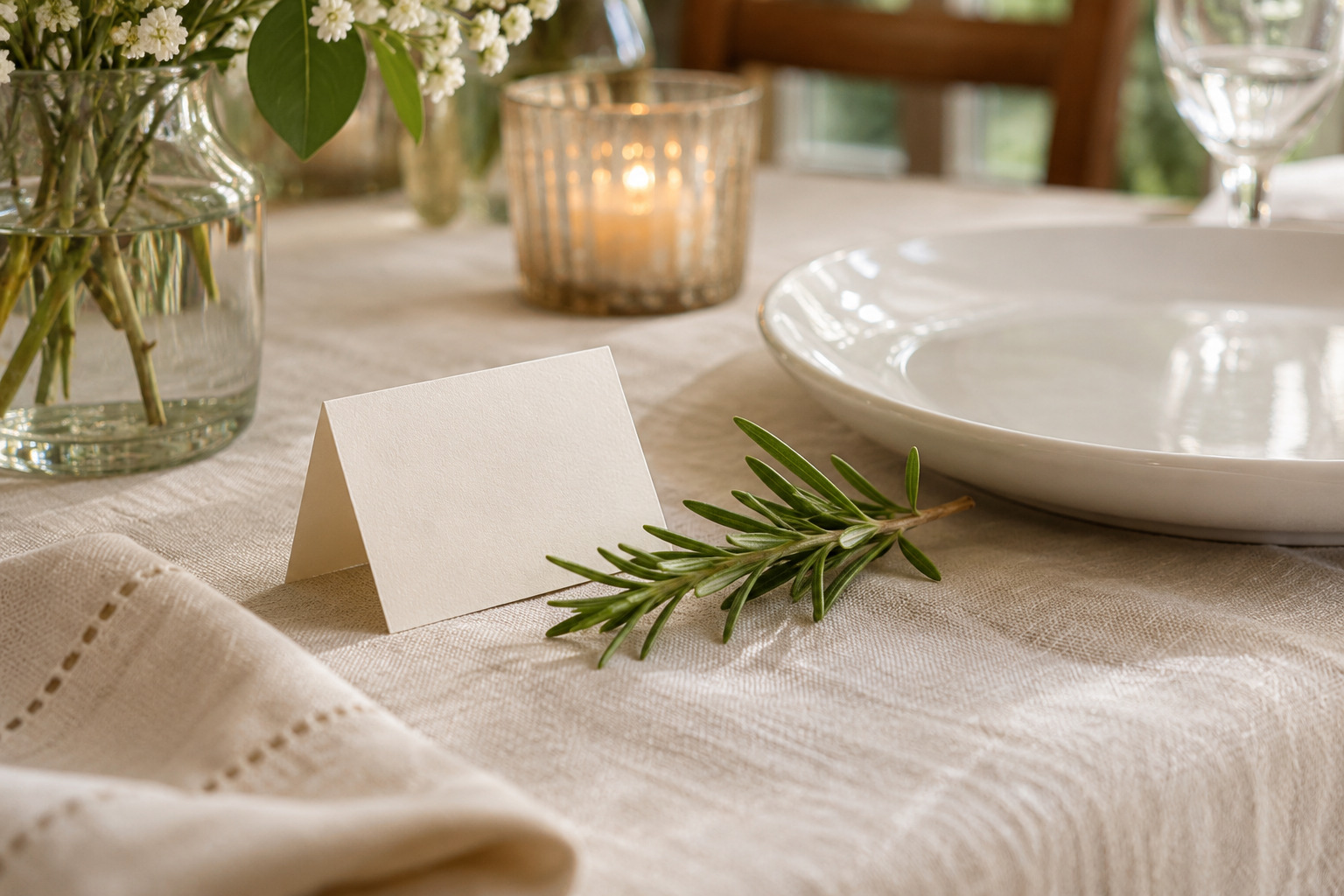
Set a small rosemary or thyme sprig beside the paper name card. Turn the stem outward so it doesn’t get picked up with the fork. Use clean culinary herbs if you want them available for the meal and keep greenery treated for ornamental use separate from food and dishes.
The foliage can do the color work on a plain table. Try rosemary with an ivory cloth and black ink cards, or thyme with pale blue stoneware. A shorter sprig works under a low light.
4. Make One Serving Board the Center of the Table
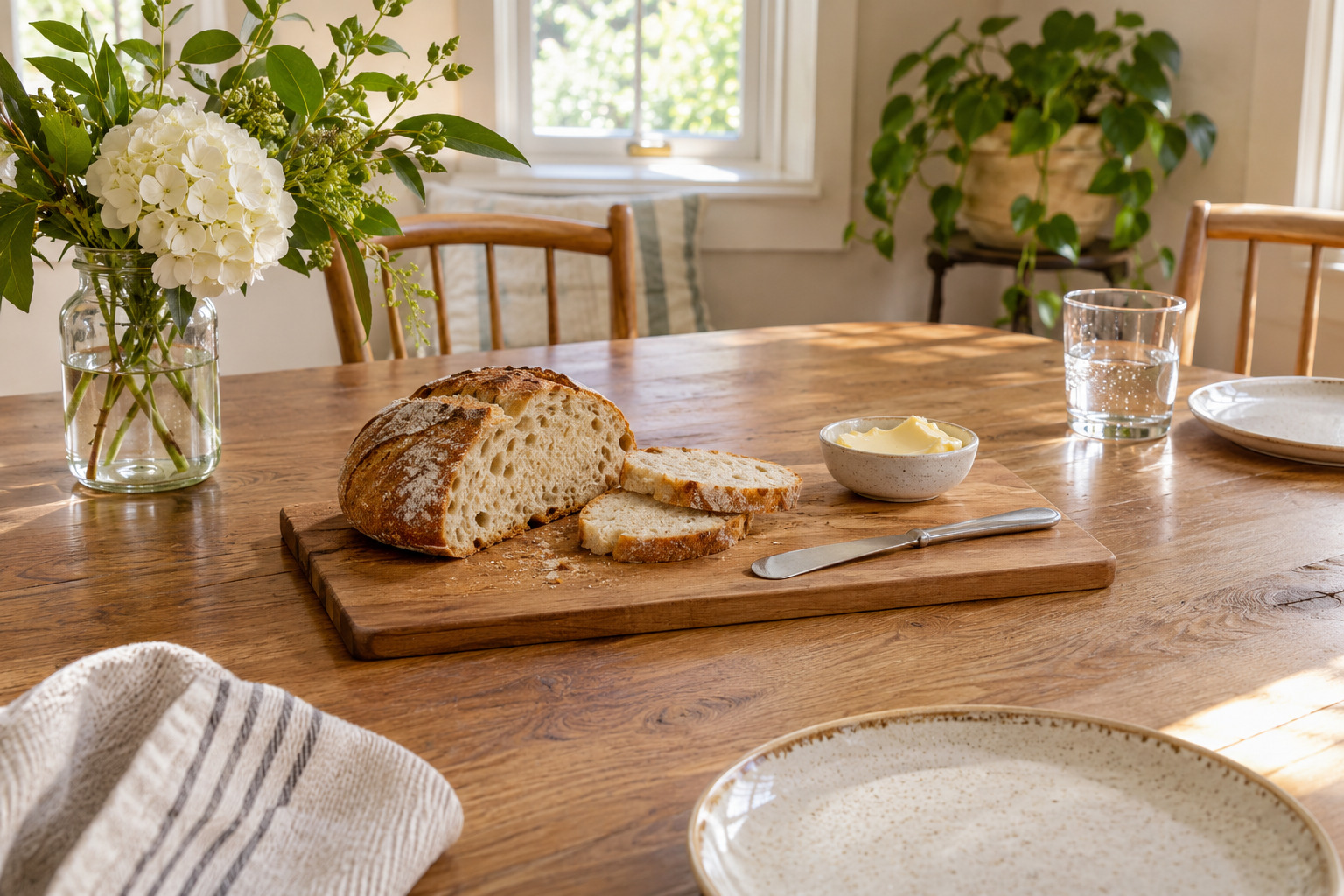
Use one board rated for food contact as the central serving spot for bread or a few shared accompaniments. Orient it so the shorter side is easy to grasp and the food can be reached from both sides. Put small spreaders or serving forks beside it once the board is in place.
Avoid scattering little dishes into the gap where the board will land. Bring out the whole thing after everyone sits down and clear it in one move before dessert.
5. Build a Short Runner With Three Woven Placemats
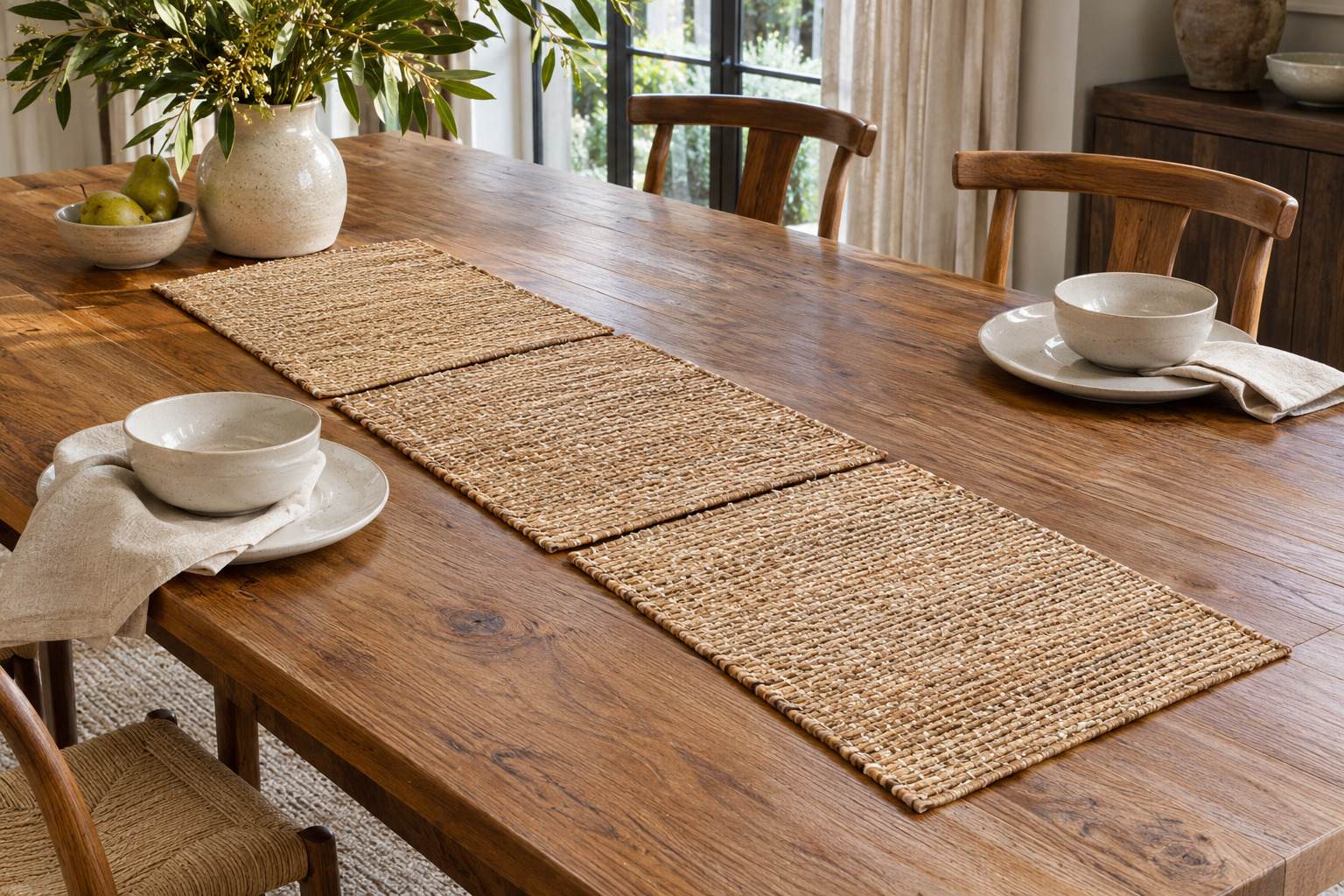
Lay three thin woven mats end to end along the middle of a broad table. Stop the ends at least one place setting before the end seats if you need room for drinks or serving bowls. The repeated weave gives the effect of a runner in a length you can change.
Check that corners meet without lifting under a dish. If they curl easily, separate the mats by a small, deliberate gap and keep fragile glasses on a flat, stable surface.
6. Stack a Soup Bowl on the Dinner Plate
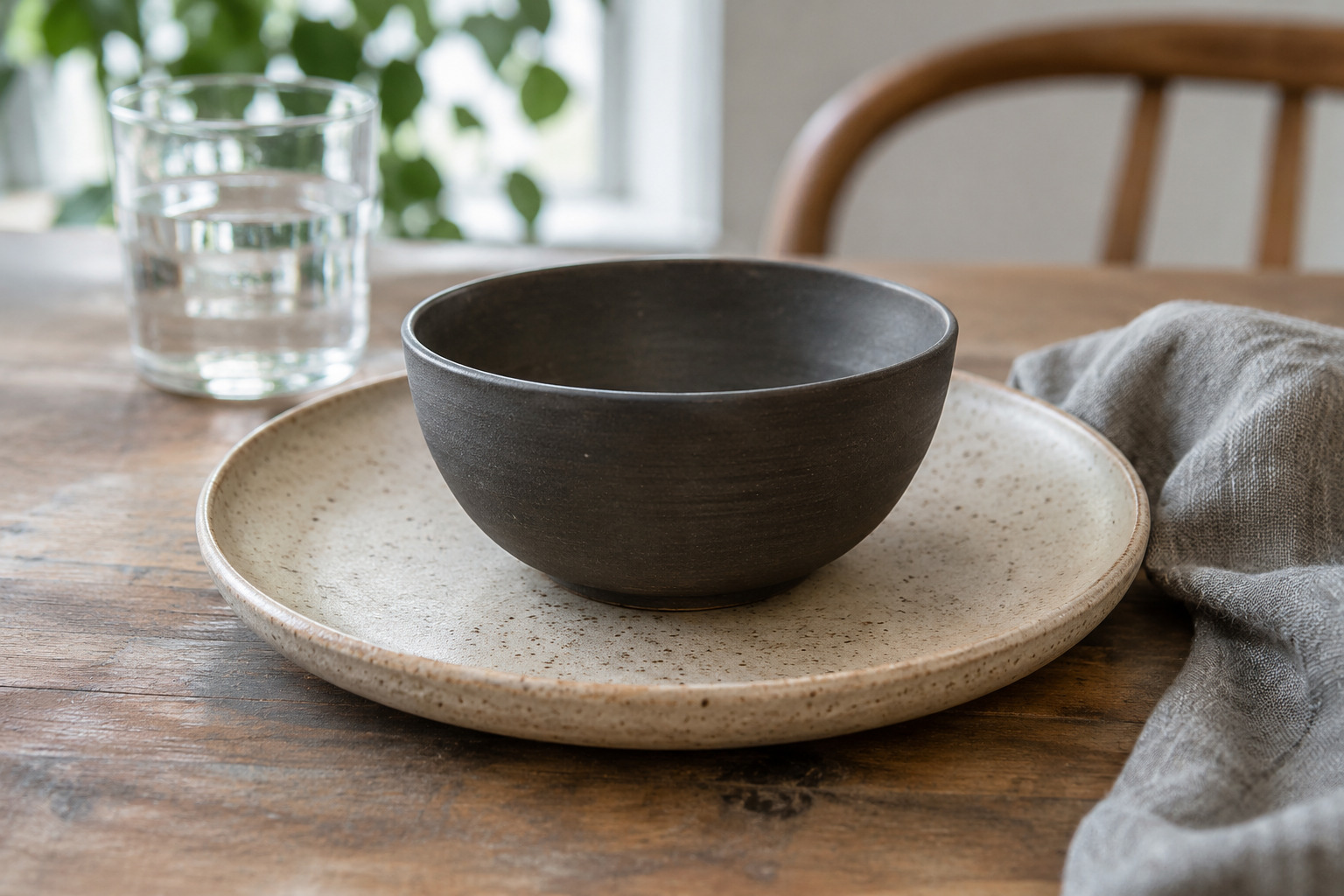
Set a soup bowl on the dinner plate before guests arrive. Center it so the rim underneath remains visible. For an earthy palette, try a small charcoal bowl on an oatmeal plate. Choose two pieces that sit together steadily before setting all the places.
When the bowls go back to the kitchen, the table is already set for the main course. Stack only the dishes you’ll use in sequence so guests have a place to put the flatware.
7. Put Low Bud Vases in the Gaps Between Serving Dishes
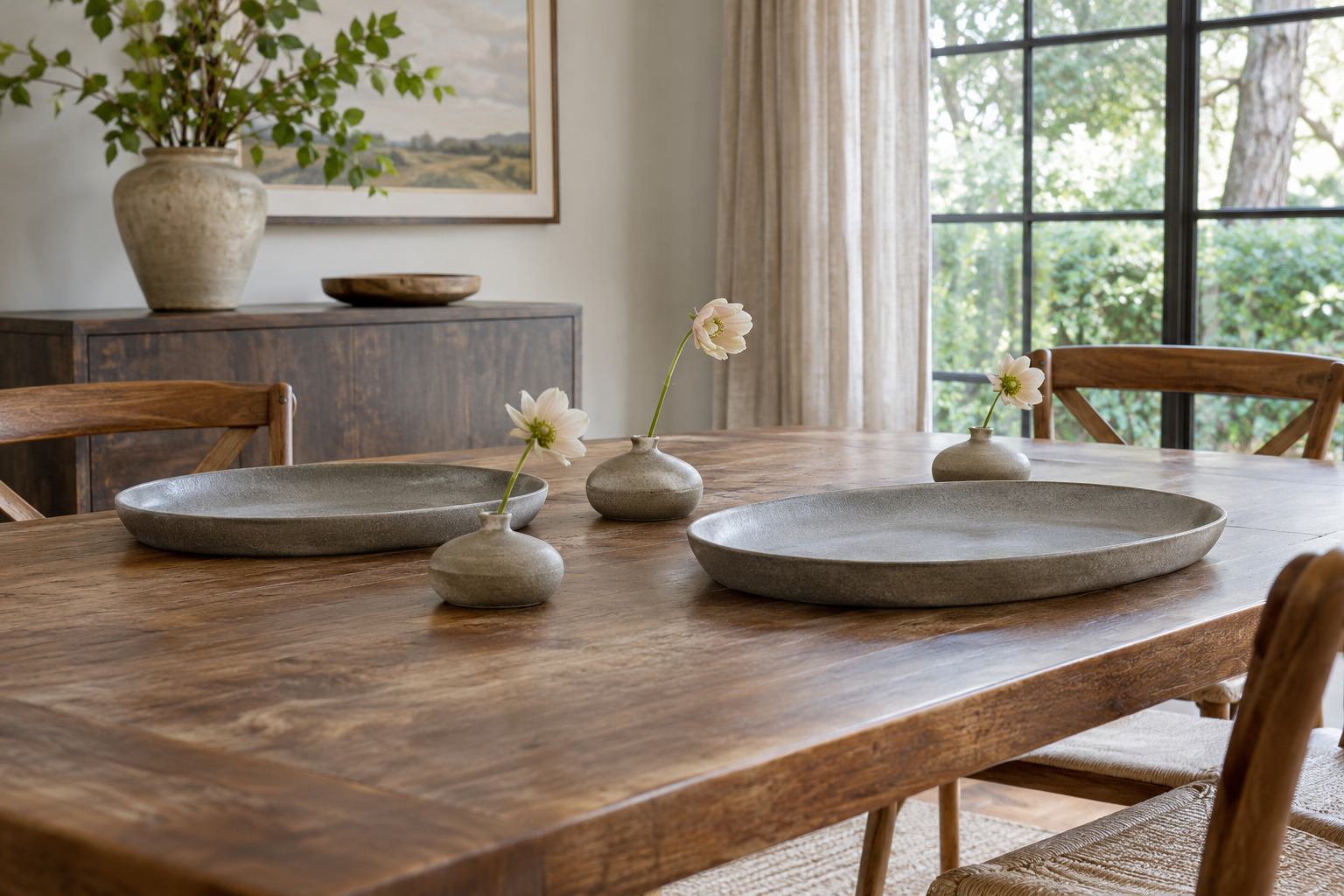
Before filling a small vase, set the platters where they’ll actually be used. Put two or three low bud vases between those shapes. One stem or small branch in each is enough. If they end up in a straight line, move one toward a gap between places.
Check the height from a chair and keep vase bases away from the edge. A little breathing room around each dish makes it easier for a guest to reach the handle.
8. Put Seasonal Pears at One End of the Table
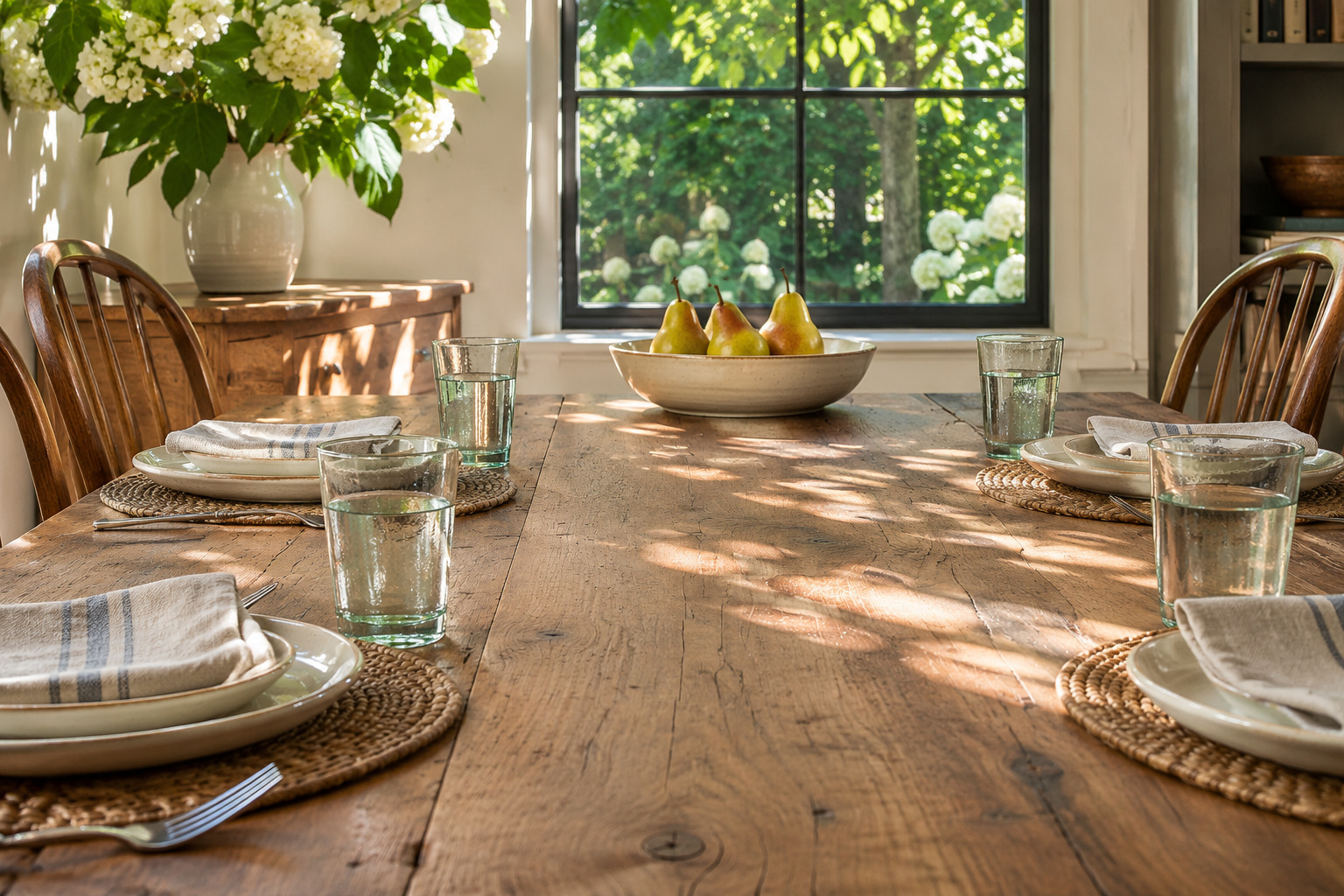
Set a shallow bowl of pears beyond the last pair of plates. Leave the center for the main dish and choose fruit that is firm enough to hold its shape. An odd piece turned sideways can bring out the differences in skin color and texture.
Serve the pears afterward if they’re ripe and suitable to eat. On a small table, three pears in a shallow bowl can give you the same tonal variation as a bigger arrangement.
9. Fold a Short Runner Across a Square Table
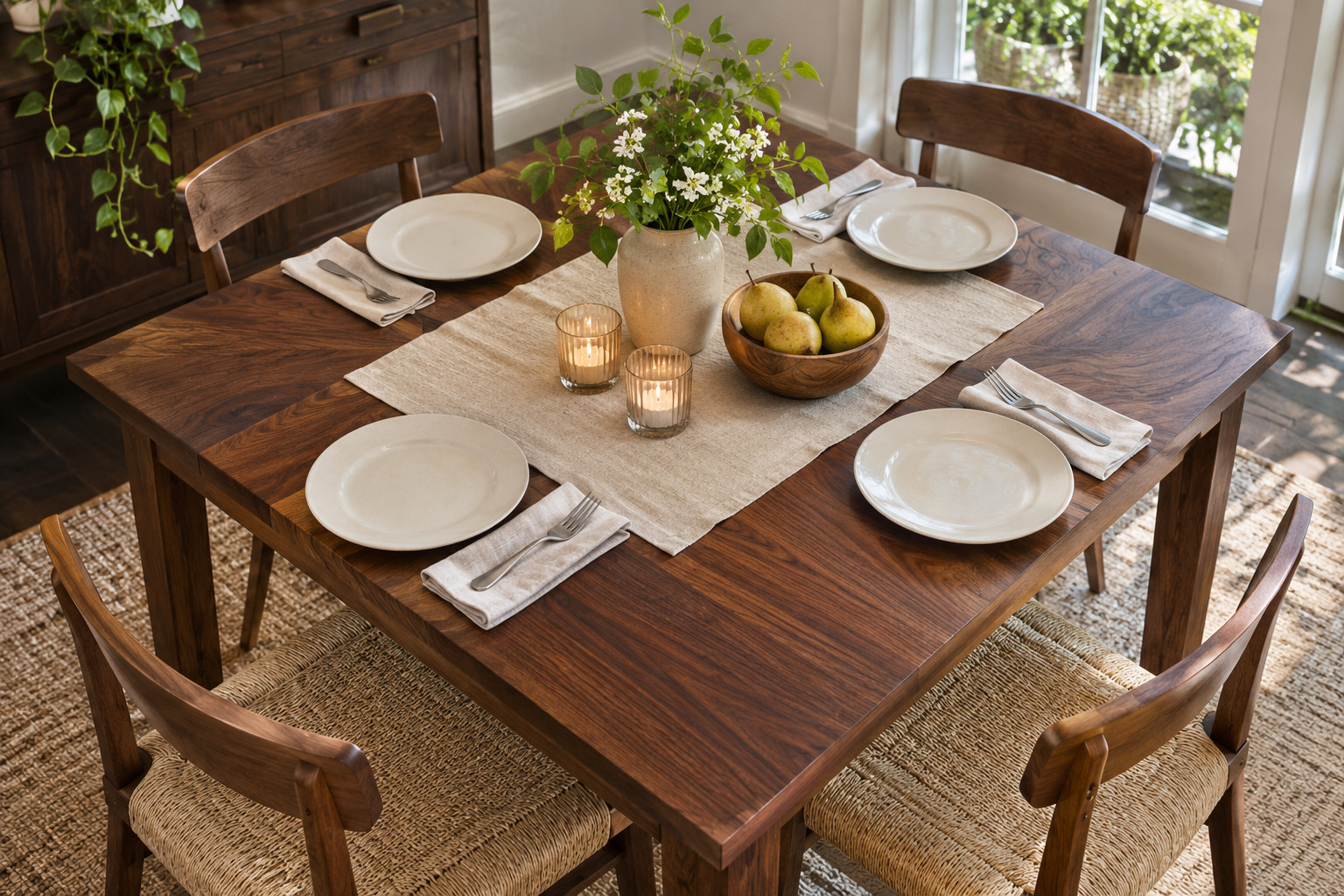
Fold an ordinary piece of linen to a broad band and lay it across the center rather than along an edge. Keep the corners of the square table clear for cups and plates. Let one strip of wood show between the band and each place opposite it.
Flatten the fold before putting a pitcher on top. A square table looks particularly comfortable with a short band in the middle because each person keeps roughly the same share of the visible wood.
10. Let a Green Glass Pitcher Supply the Color
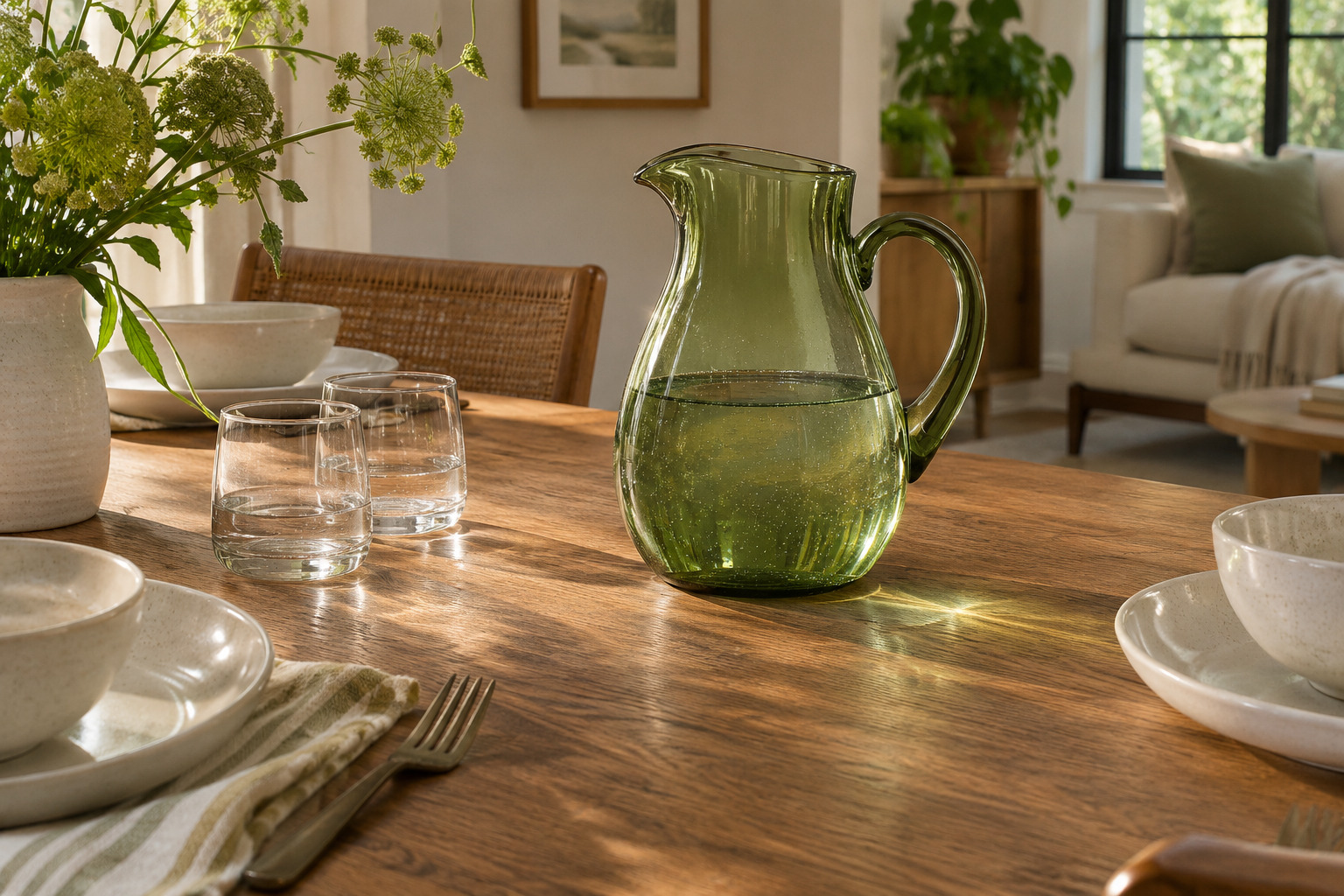
Set a green glass pitcher beside a pair of clear tumblers. The green stands out with warm wood or off-white plates, so the other pieces can be as plain as you like. Use a pitcher with a handle that’s comfortable when the vessel is full.
Leave a stable spot where the person pouring can put the pitcher down between servings. Pick a position far enough from the edge that it won’t be knocked when a plate comes through.
11. Pair Oatmeal Linen With Dark Pottery
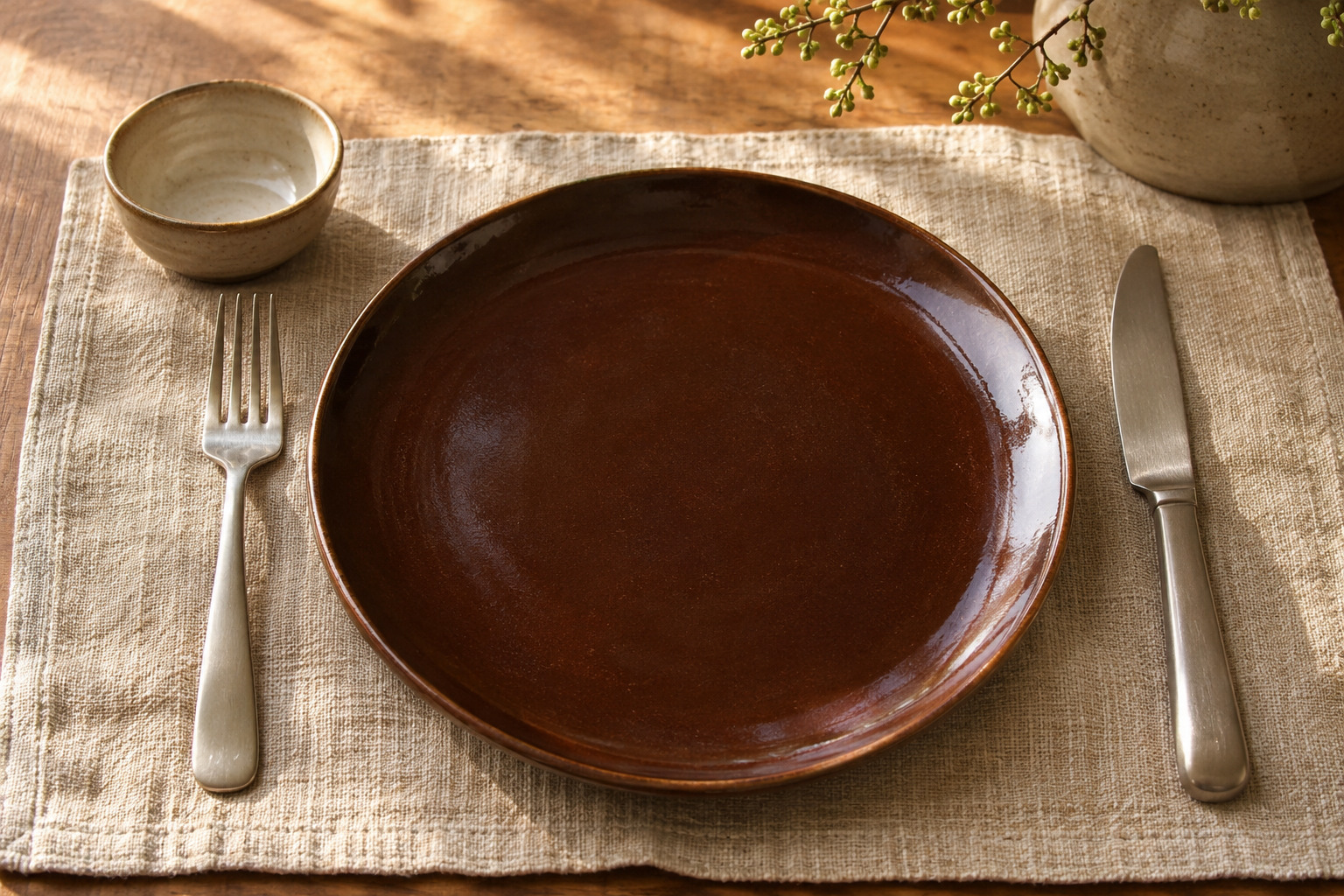
Place a dark ceramic dinner plate on pale woven linen. Judge the contrast in the light you use for the meal. A deep brown glaze can look nearly black at night, so a little light on the rim makes the shape clearer. Add one brushed metal piece if you want a quiet highlight.
Test the setting with the napkin both open and folded. If a smooth cloth looks too bright, a textured oatmeal mat can make the transition from dark glaze to the table surface gentler.
12. Set White Soup Bowls Next to Brown Bread Plates
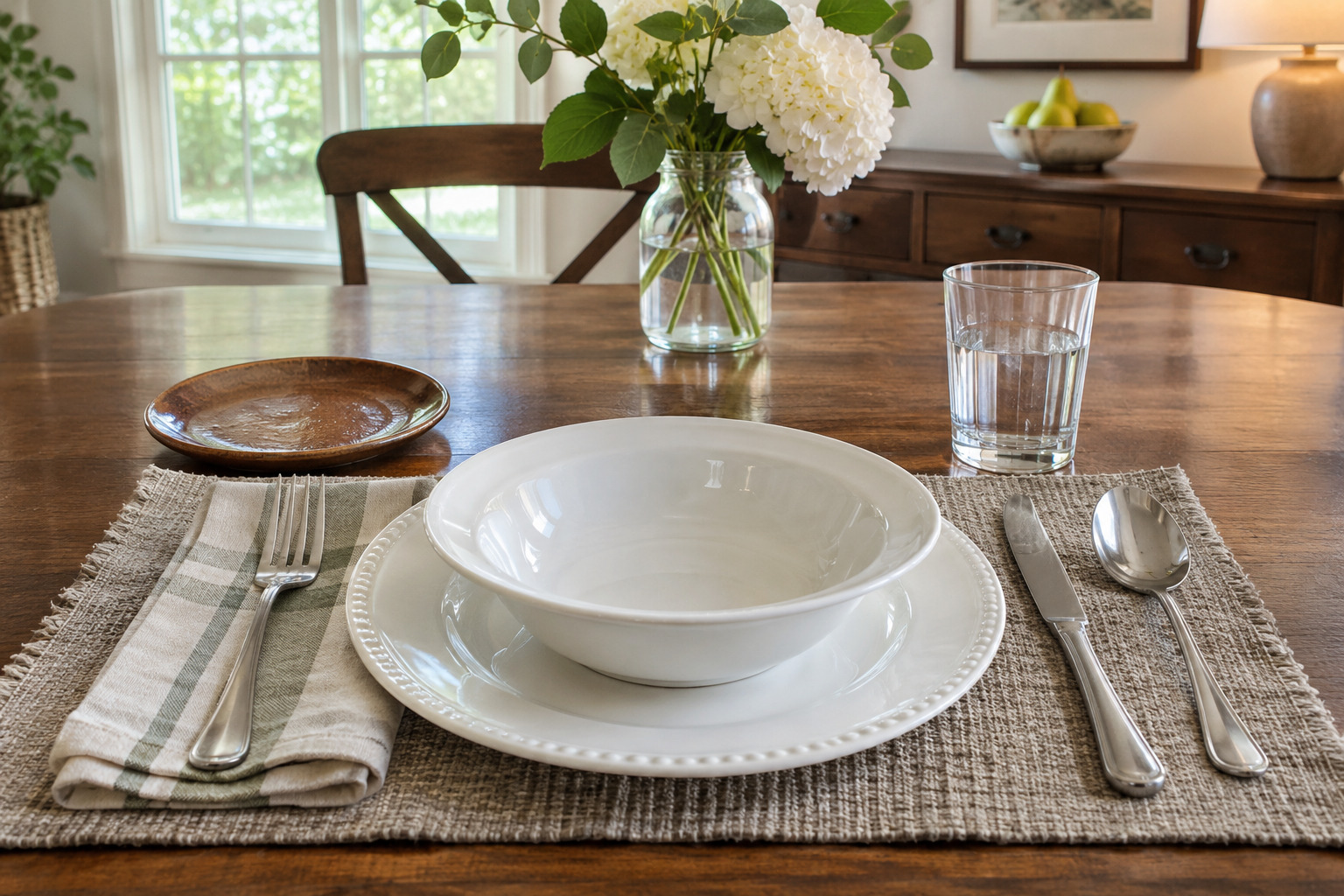
Put a small brown bread plate near the top left of each setting if you have the width, and set the white soup bowl at the center. Let the grain or glaze on the small plate be the warmer note. The lighter bowl will keep the whole place from reading as too dark.
On a narrow setting, set out one shared bread board after the bowls arrive. Bring it within reach of the guests who want it and return it to the table end.
13. Give Old Oak a Quiet Place Setting
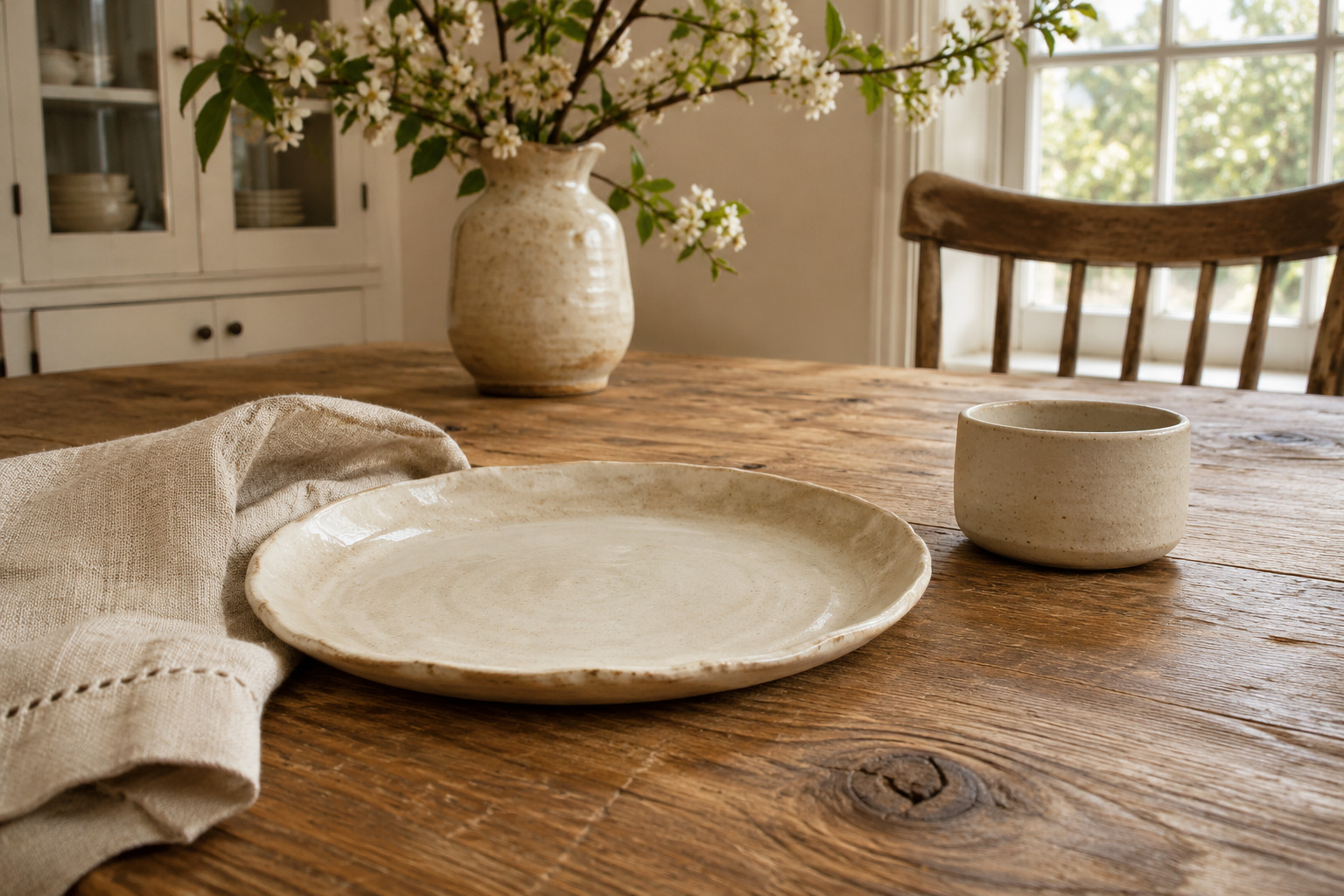
On a well-worn oak table, use a plate, napkin, and low drinking glass in a tight range of warm neutral tones. Leave wood showing between the settings. The shape of a darker seam or knot can be the strongest detail, especially when afternoon light runs across it.
Use stable mats or trivets where a hot dish will rest. On an older table, check what care the existing finish needs before using wet runners or leaving drinkware in place after the meal.
14. Stand Paper Place Cards in Small Wooden Clips
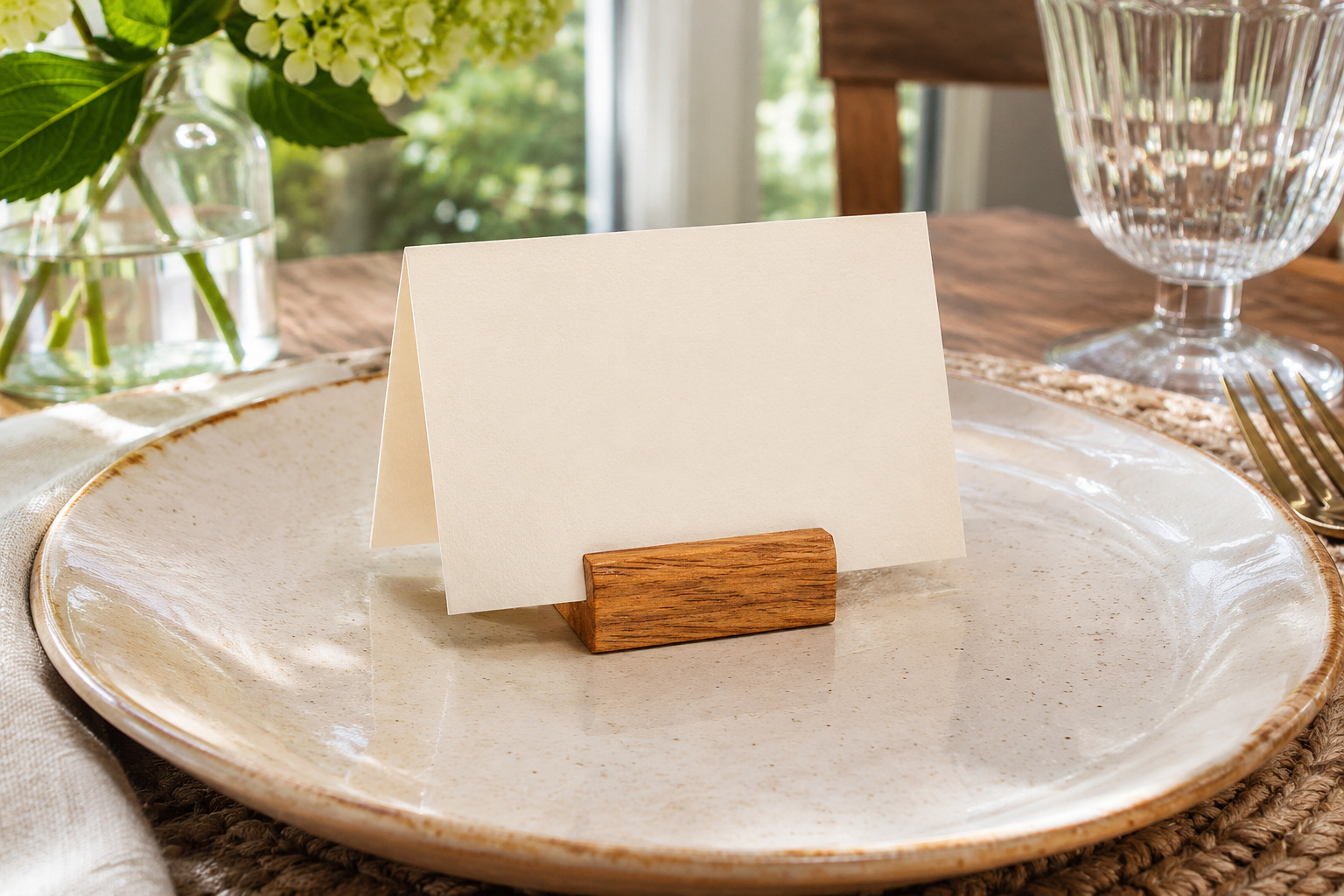
Stand a paper name card in a wooden holder near a plate where you can read it from the chair. Make the fold or cut on a test piece first so all the cards stand at the same angle. Low cards leave the sightline open across a small table.
Choose clips with a flat base that won’t tip when someone adjusts a napkin. Put the card just beyond the plate rather than in the gap where a serving dish arrives.
15. Give Tiny Flowers a Row of Short Glass Bottles
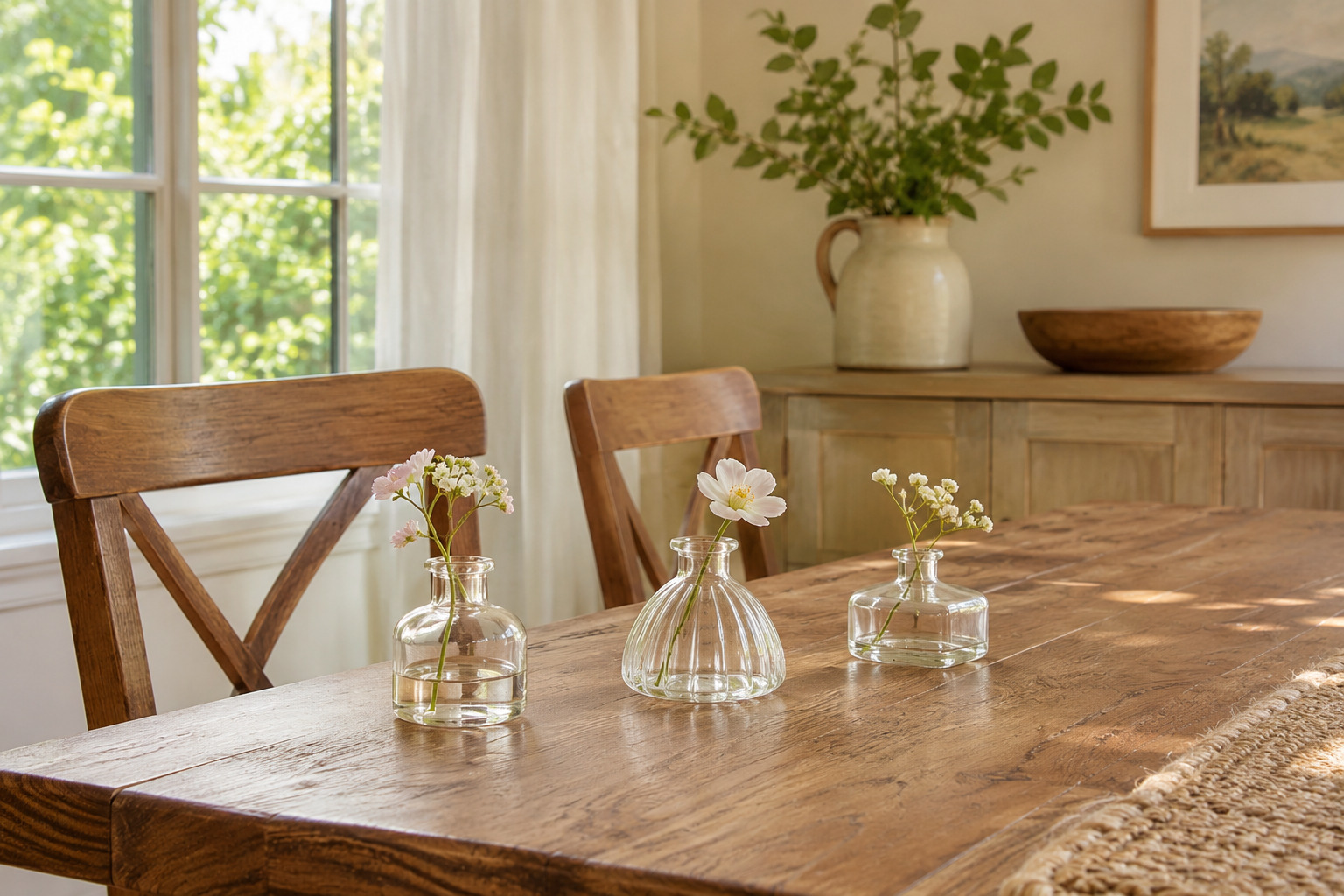
Choose three short glass bottles with different profiles and fill them with a little water. Put one small flower stem in each. Keep the bottles low enough that the heads seem to float just above the tabletop. Your eye can follow a line of clear glass without seeing a large centerpiece.
Place the bottles along the side where guests have the fewest reasons to reach in. If one bottle feels unstable, replace it with a wider one before adding flowers.
16. Give Dessert Smaller Pieces and More Space
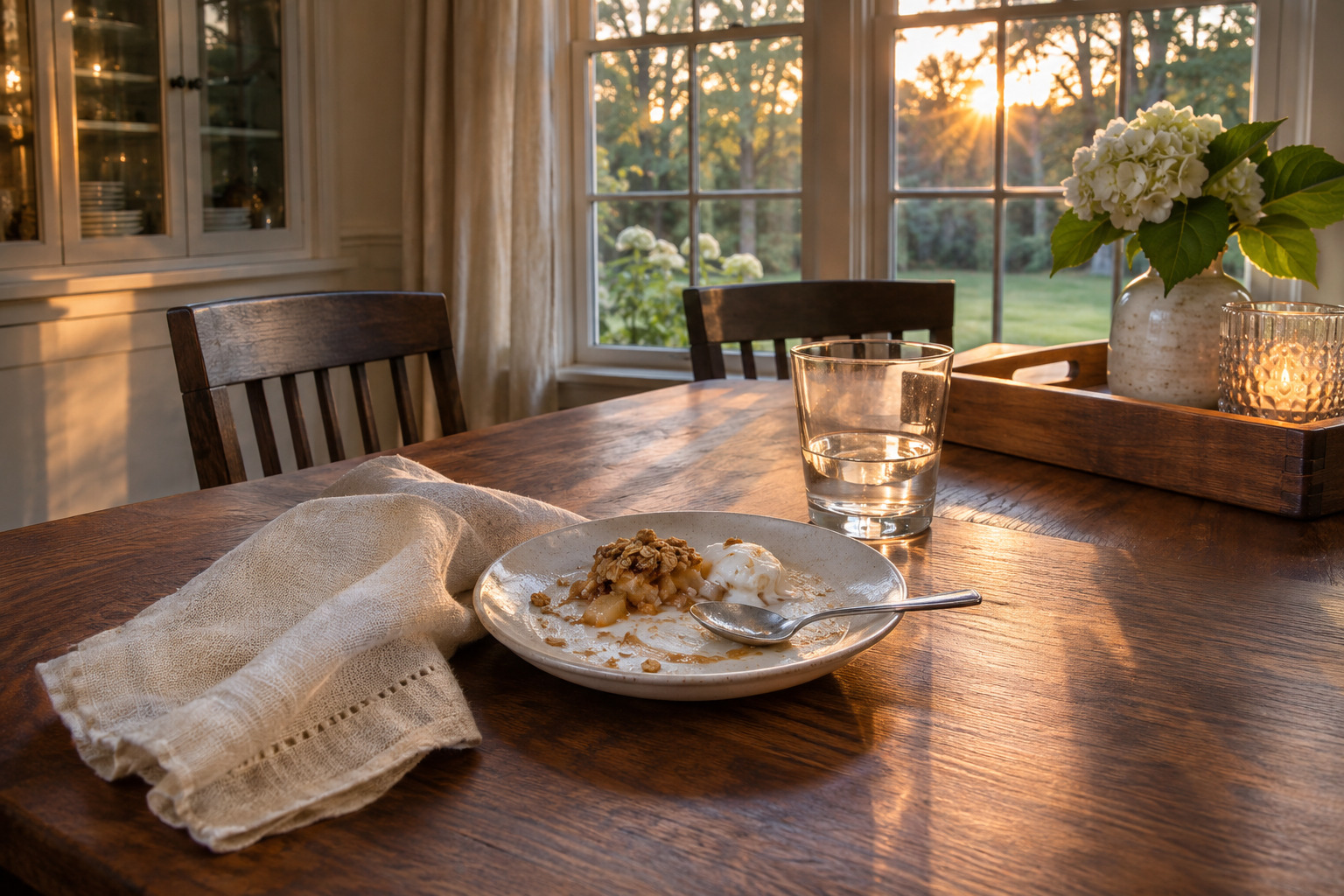
Once the main plates are clear, set out an unbleached napkin, a small dessert plate, and a short glass. A light wood tray can carry each group to the table. Reuse one small flower or cloth color from dinner so the new setting still feels related to it.
Leave room for the coffee pot or the dish that needs slicing. The smaller scale of dessert makes any leftover decoration around it more visible, so leave out one of the earlier pieces if the table feels crowded.
Start with one complete place at the seat with the least room. If the glass, hands, and dishes all have comfortable space, repeat the arrangement at the other seats. You can add the flowers or the extra serving piece once you know where dinner is going to land.
Discover more from HomeTrendora
Subscribe to get the latest posts sent to your email.