The space behind a couch often sits between two jobs: it belongs to the seating area, but it may also border the route to a doorway, dining table, or kitchen. A sofa table works best when it gives that edge a clear purpose. It might hold the reading lamp you keep reaching for, hide the family room supplies, or provide a place to put down keys without crossing the rug.
These 17 sofa table ideas behind a couch start with the way the room is used. Before choosing one, check the table against the sofa’s back height and walk the route around both pieces. Test drawers, doors, seats, and folding leaves in their open positions, too. An attractive arrangement should still leave the furniture comfortable to sit on and the surrounding room easy to use.
1. Start with a Slim Table Below the Sofa Back
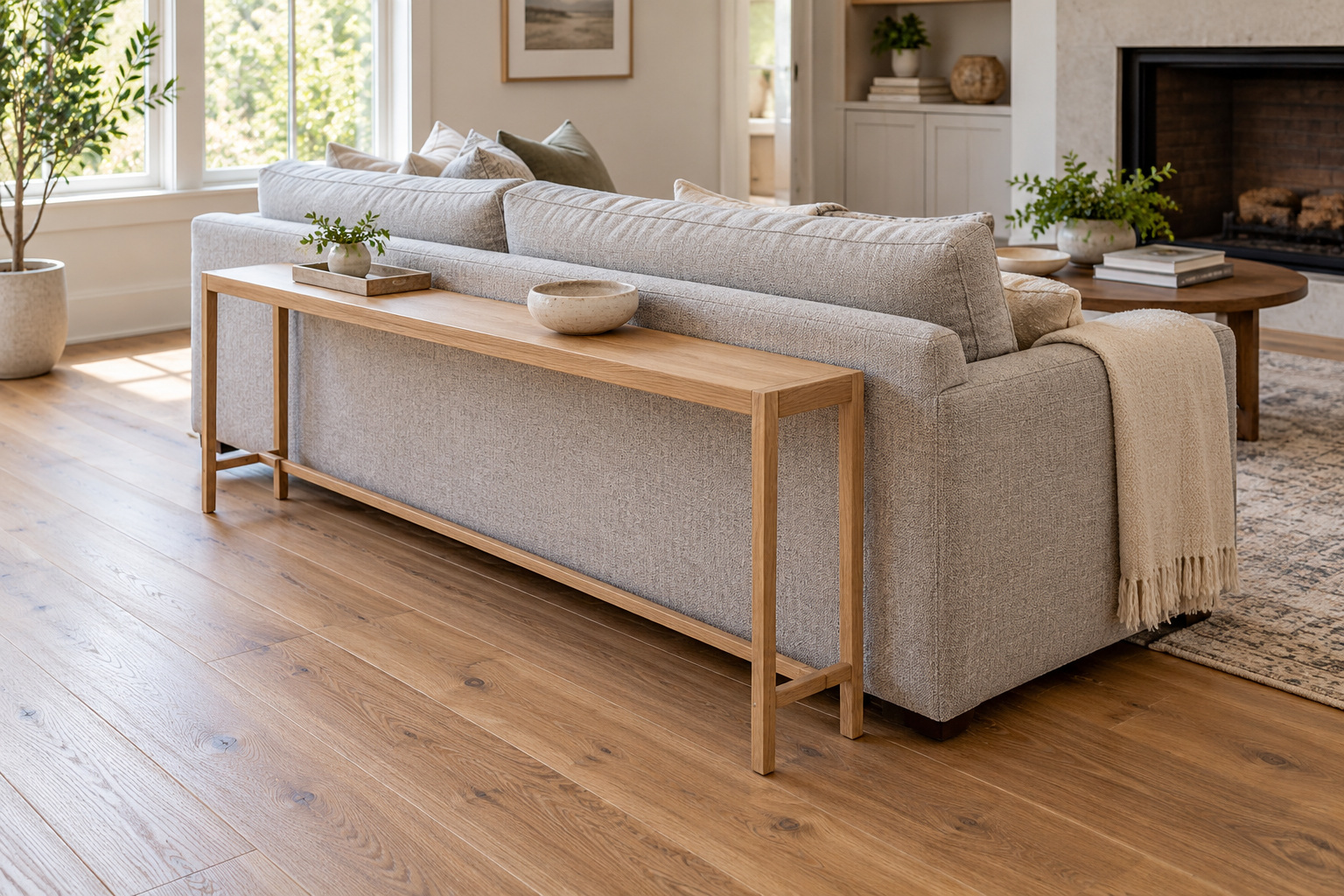
A slim table can give a floating sofa a finished back without becoming a second large piece of furniture in the room. Begin with a top that sits below the upholstered back and a length that leaves the sofa’s ends visible. An open base helps you see the floor, which is useful when this edge borders a small living room’s main walkway.
Mark out the table’s footprint before bringing one home, then walk past it carrying the things you normally move through the room. Leave breathing room around the sofa cushions rather than pushing the furniture tightly together. A small tray and one low ceramic piece are enough to give this first arrangement a purpose while the narrow profile does the main work.
If the seating arrangement itself still needs work, our small living room layout ideas can help you decide where the sofa and its walking routes belong.
2. Use Two Lamps to Frame a Floating Sofa
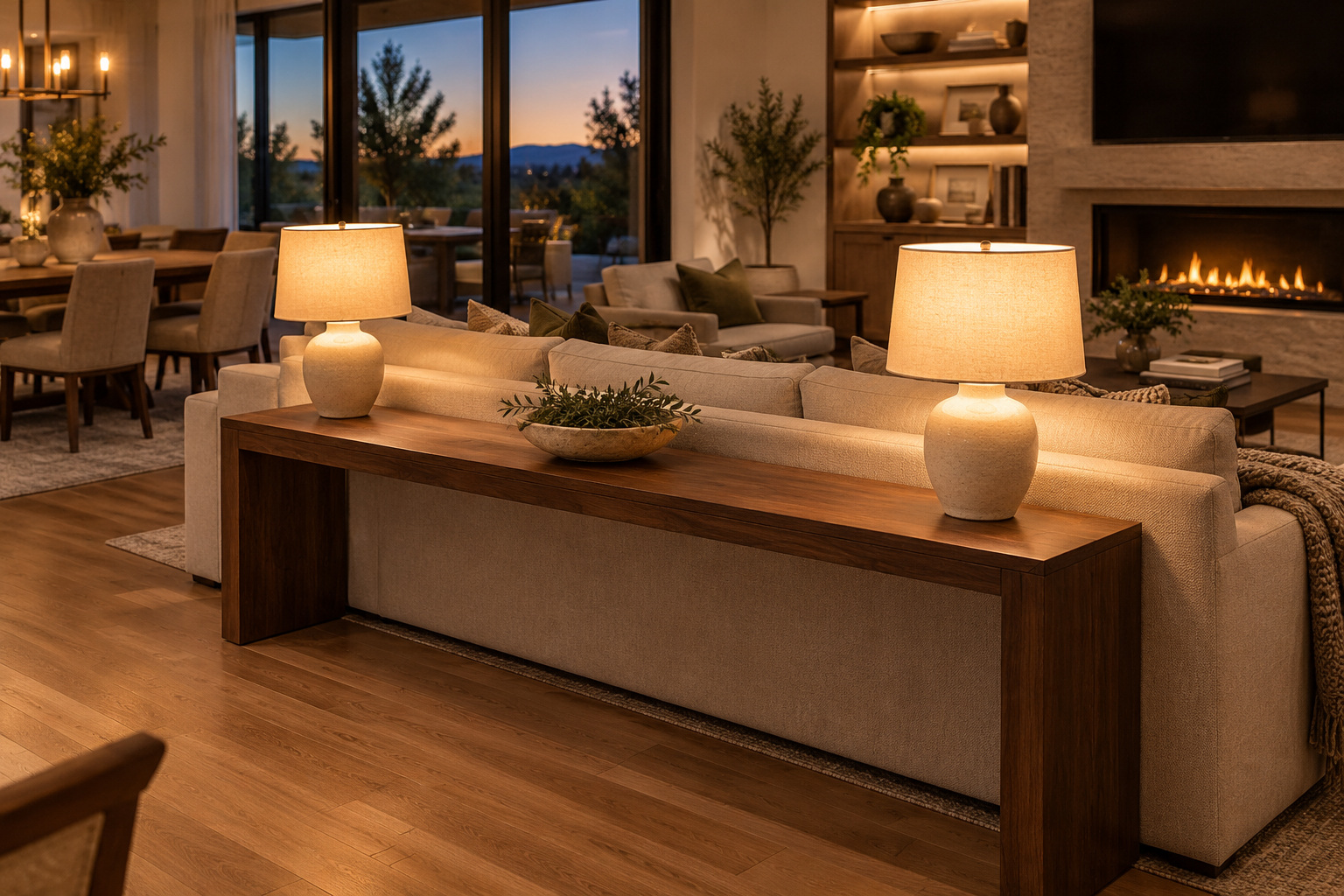
Two table lamps can make the back of a floating sofa read as a deliberate room boundary. Place them near opposite ends of a long console, with their bases fully on the top. Matching shades create a calm outline when the living area is seen from the dining room or entrance. The furniture below can remain simple because the pair already provides a strong visual rhythm.
Use warm light for an inviting evening atmosphere, and check the shades from the seats as well as from behind. They should not crowd a person’s head or block an important view across the room. Plan the power connection before settling the layout; cords need an appropriate route that stays off the walkway. Keep the center low and open so the lamps frame the sofa instead of forming a wall behind it.
3. Make One End a Reading Light Station
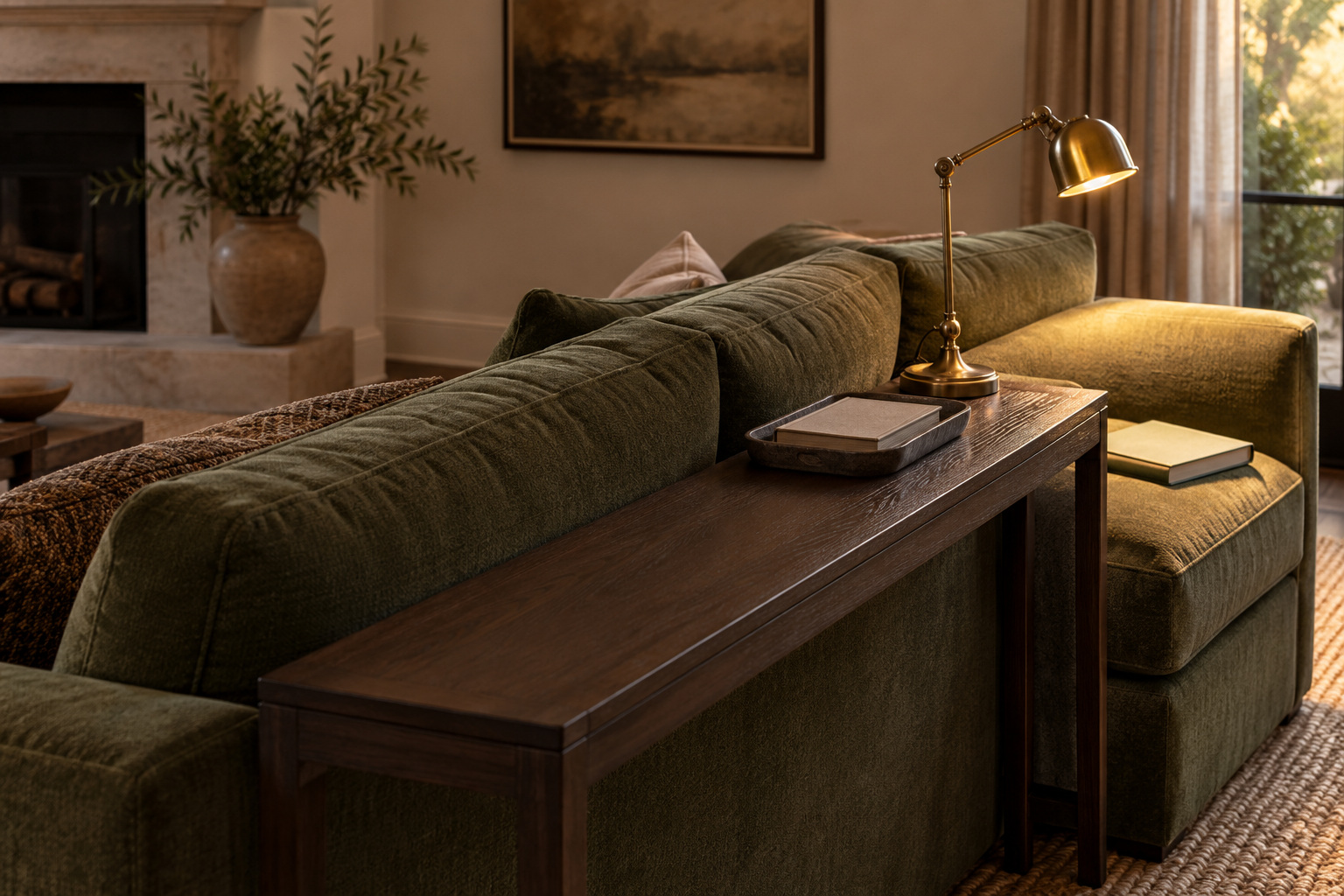
If one end of the couch is the favorite reading seat, use the console to support a light there. A compact adjustable table lamp can sit behind that corner with its light directed toward the seat. This gives the table a specific job and can free the floor beside the sofa from another lamp base.
Try the arrangement while seated with a book before committing to the position. The switch should be reasonably accessible, the shade should stay out of the way, and the light should fall where it is needed. Keep a current book on a low tray nearby rather than stacking several tall piles behind your head. Leave the remaining table quieter; an asymmetric arrangement can work well when the room’s needs are asymmetric, too.
4. Keep Remotes in a Shallow Drawer
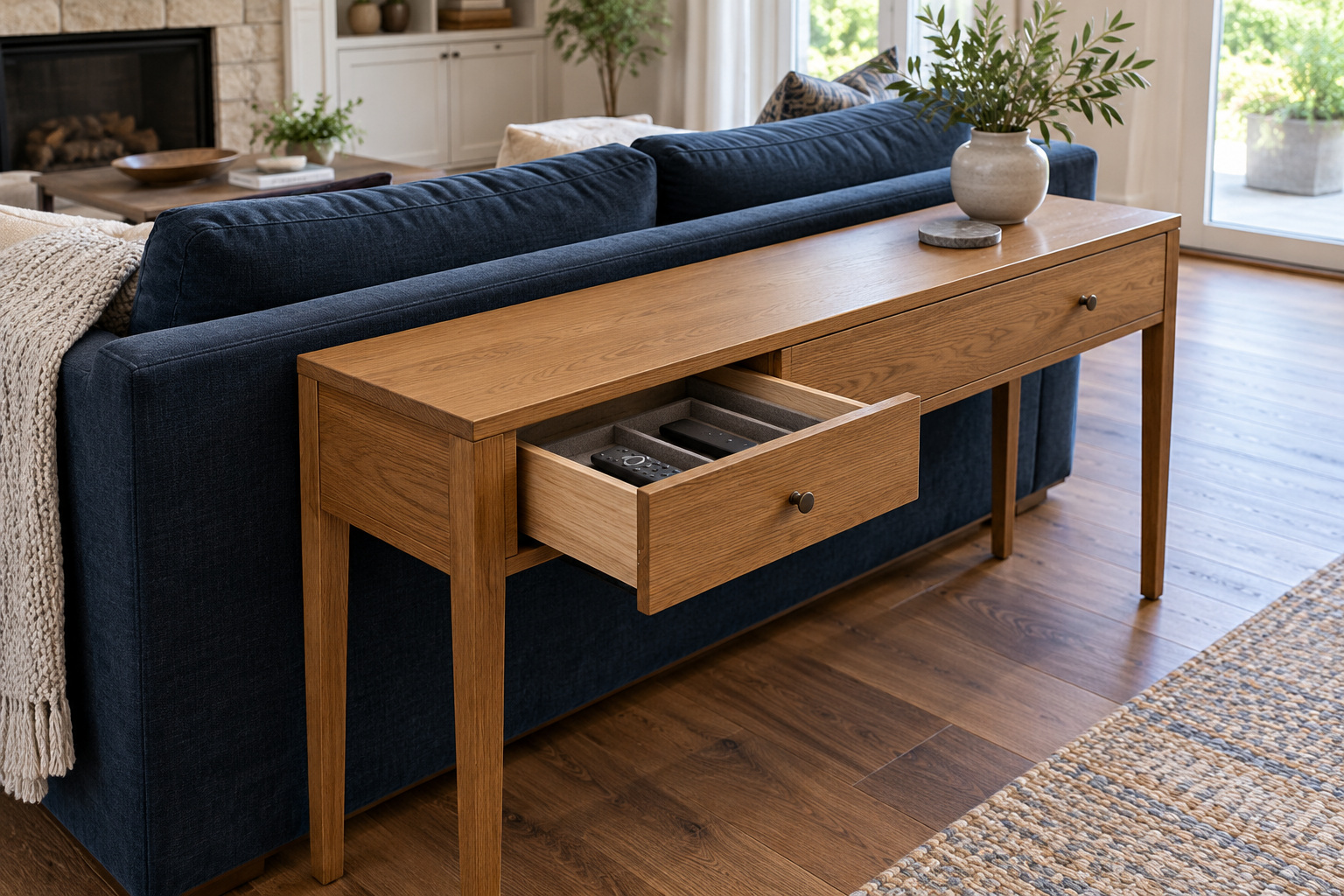
A sofa table with a shallow drawer gives remote controls and other small family room items a home outside the cushions. Choose a drawer that opens toward the walkway, then divide its interior with a small organizer. Keep the items used together in the same compartment so putting them away is a quick habit rather than a sorting project.
Check the open drawer against the route behind the couch. It should be easy to stand there, retrieve something, and close it again without squeezing between furniture. Avoid filling the drawer with everything that has no other home; its value comes from holding a short, useful set. With the drawer closed, the console top can stay available for a lamp or drink coaster instead of becoming a line of loose electronics.
5. Use Low Baskets for Throws Below the Table
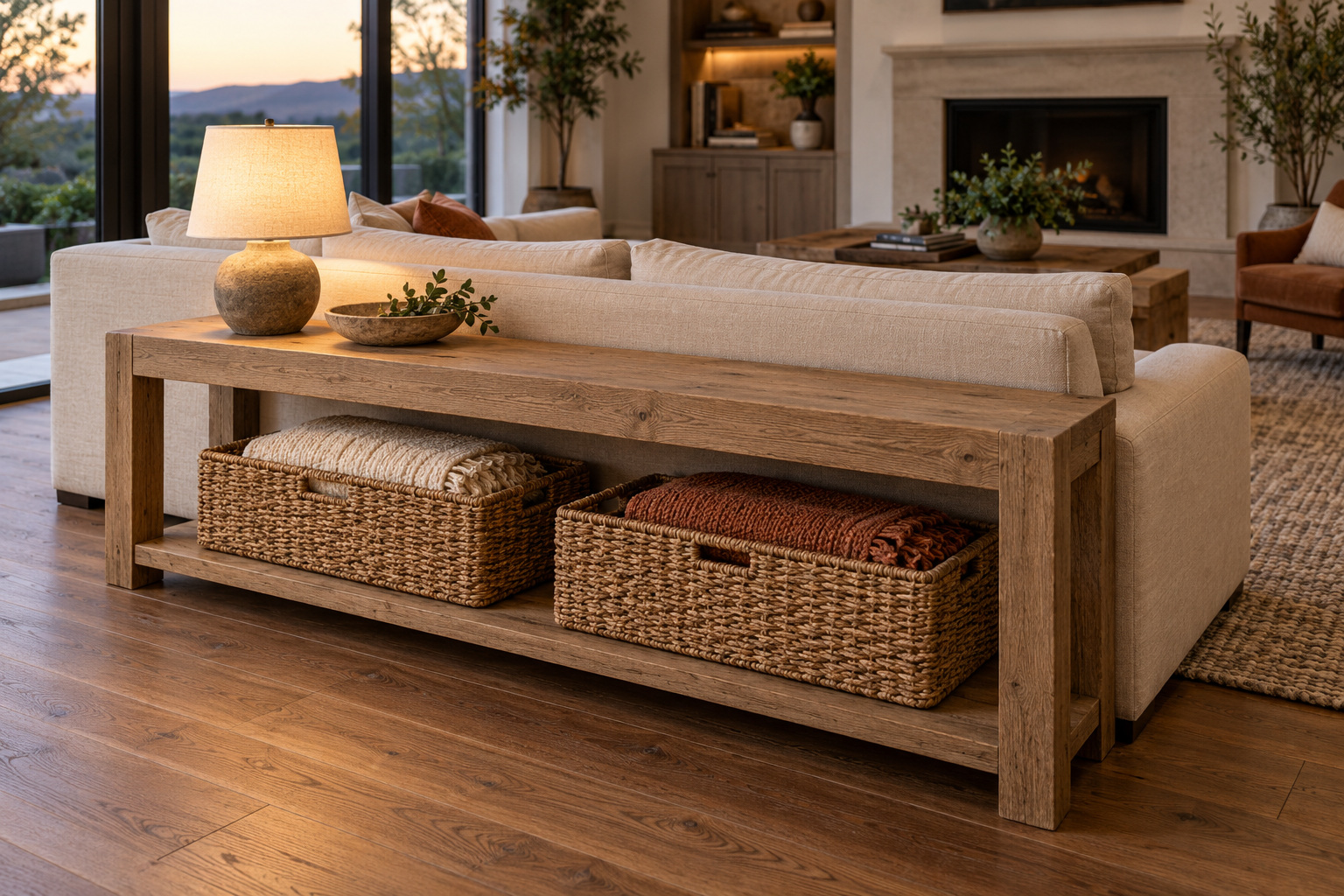
An open lower shelf can hold the soft things that otherwise end up over every sofa arm. Put folded throws in low baskets that fit fully within the table’s base. Woven texture beside upholstered furniture creates a cozy living room detail while giving the extra layers a defined place when they are not in use.
Choose baskets you can lift or slide out from the walkway side without moving the whole console. Leave a little room above the folded fabric so the shelf does not look jammed. This arrangement is most useful for a small rotation of everyday throws, rather than bulky bedding. Repeat one basket shape and let the blankets supply the variation in texture; the storage can feel settled without requiring a decorative object on every part of the top.
6. Tuck Compact Stools Under an Open Base
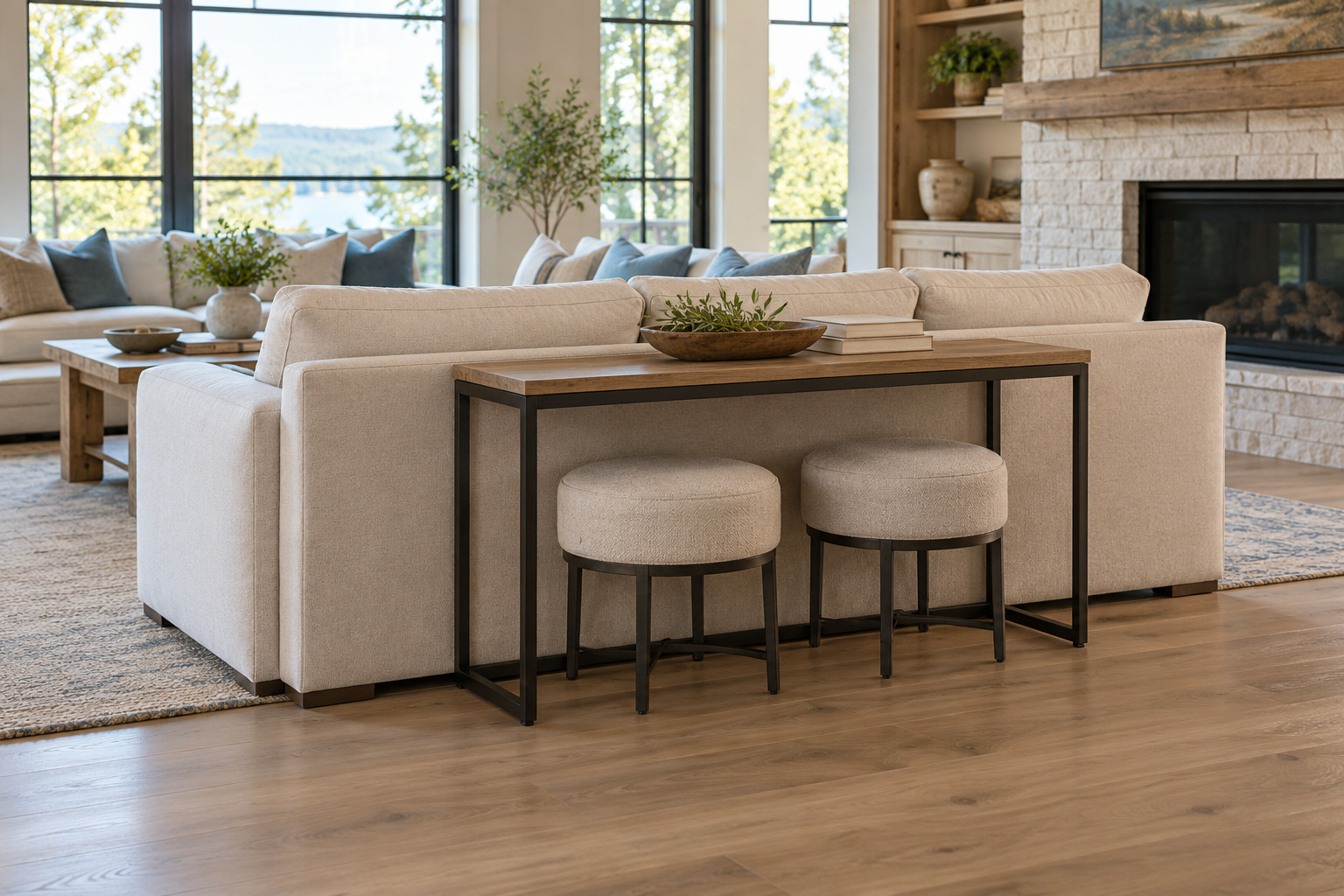
A console with an open base can park a pair of compact stools behind the couch. They stay close to the seating area for the moments when another perch is useful, then tuck away when the room returns to its usual arrangement. Pick stools that fit under the actual table rather than assuming a narrow seat will clear every stretcher or drawer.
Think of these as movable extra seats, not a reason to squeeze a permanent row of people into a circulation route. Pull one out and test where it will be used before buying a pair. The console needs to remain stable on its own, and the stools should sit fully inside its footprint when stored. Upholstered tops can repeat a sofa cushion’s texture without making the whole furniture group match.
7. Turn the Walkway Side into a Drop Zone
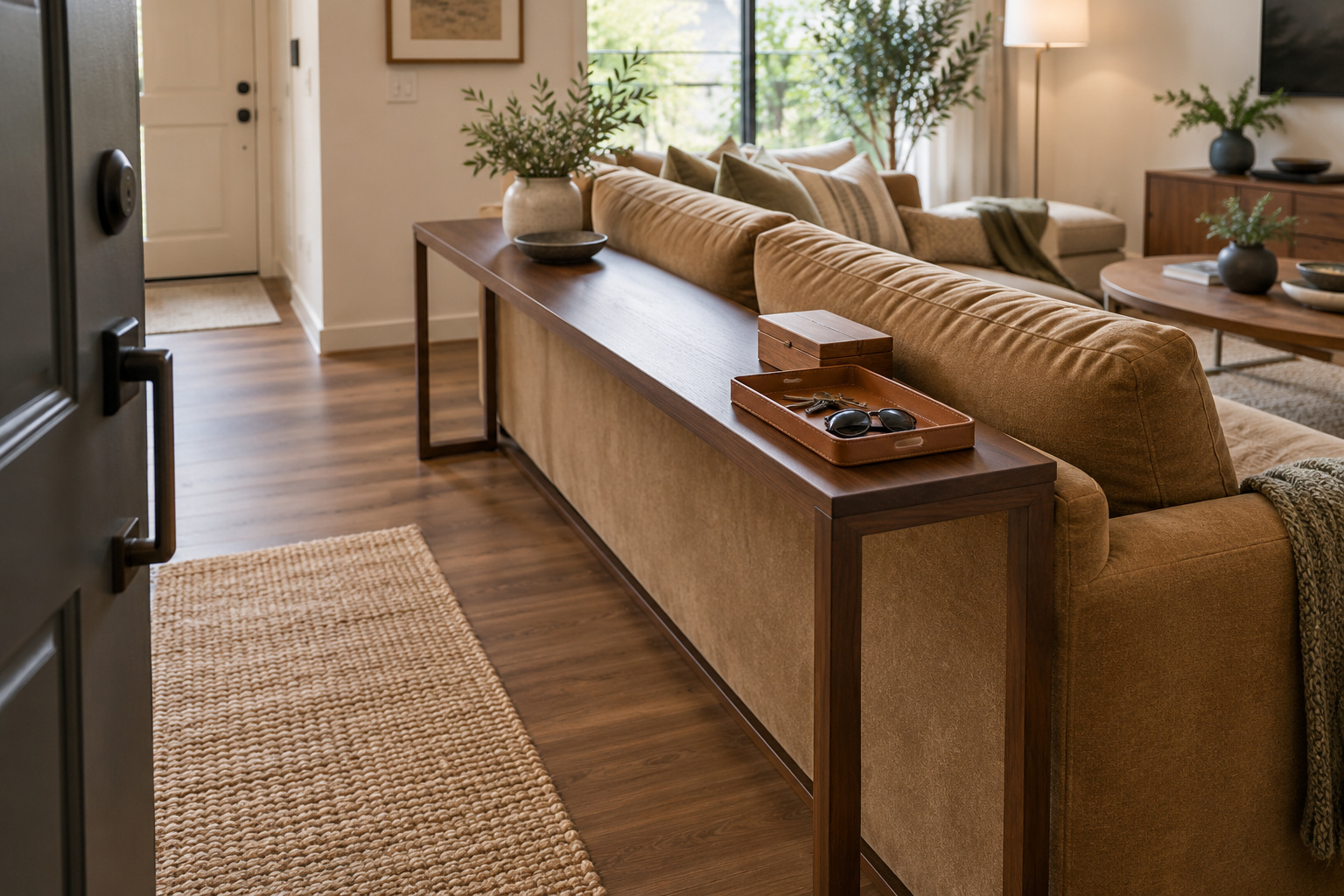
When the entrance opens behind the couch, the sofa table can catch the things that arrive with you. Place one shallow tray at the end nearest that route for keys and sunglasses. A small lidded box can handle the few items you prefer out of sight, leaving the rest of the top available instead of treating the full length as a landing strip.
Give the drop zone a limit that suits the household. It works best for immediate essentials, with mail, bags, and shoes going to their own places. Use the table from the walkway side so there is no need to reach over the sofa back. This makes the furniture an extension of the entrance while allowing the seating area to keep its quieter character.
8. Add an Outward Facing Shelf for Books
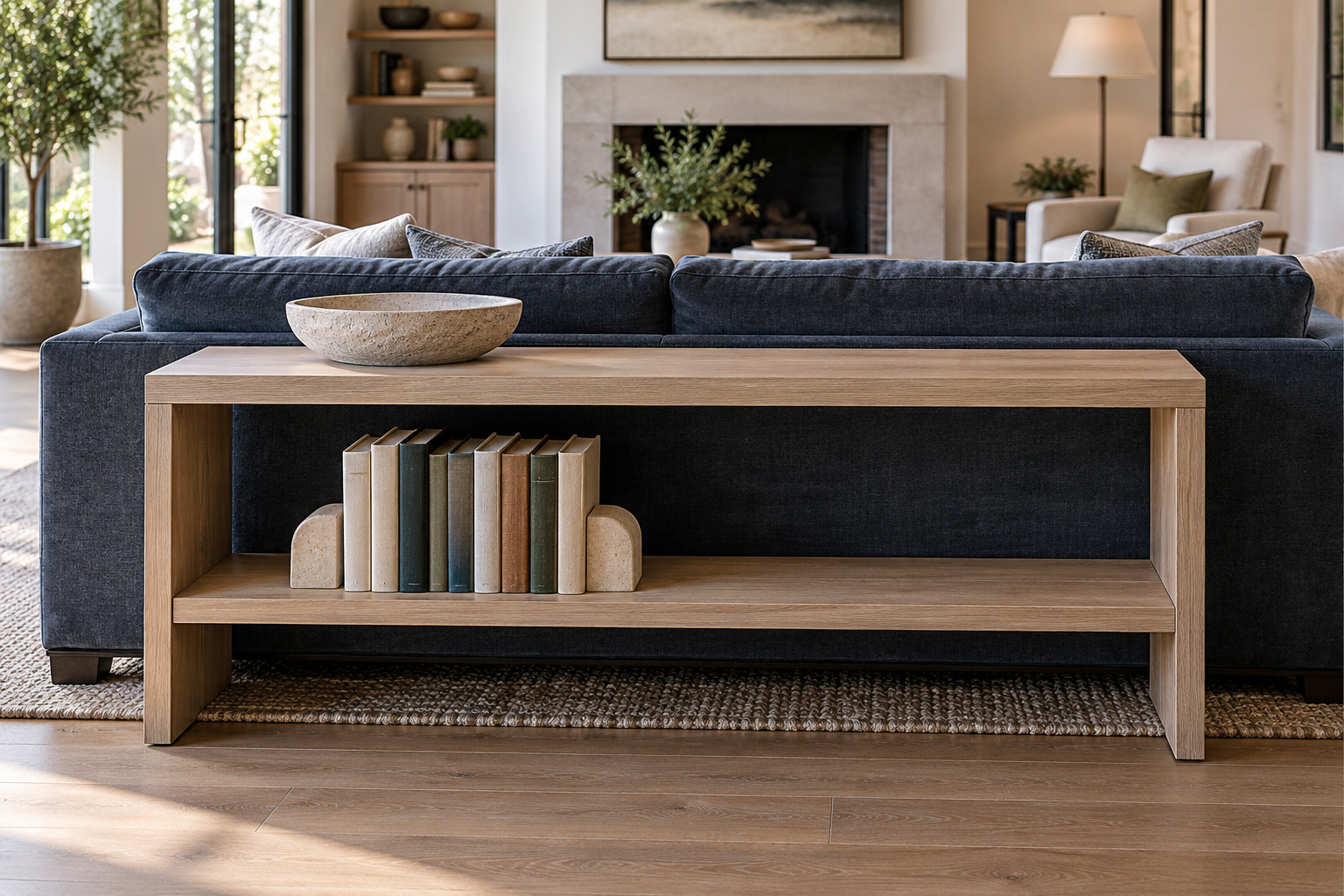
A sofa table with an outward facing book shelf makes the room’s dividing edge useful from both sides. Keep a small selection of books on the lower shelf, with their spines facing the route behind the couch. Bookends can hold a short group upright while an open section beside them keeps the furniture from looking like a packed bookcase.
Check shelf depth against the books you actually own, and leave enough room to lift one out without dragging the whole row. Heavy volumes belong on furniture designed to hold them. A low shelf is useful for a rotating reading collection, while books that need more storage can stay elsewhere. The table top can then hold one simple object, leaving the books to bring color and character at the lower level.
9. Choose a Low Cabinet to Hide Family Room Supplies
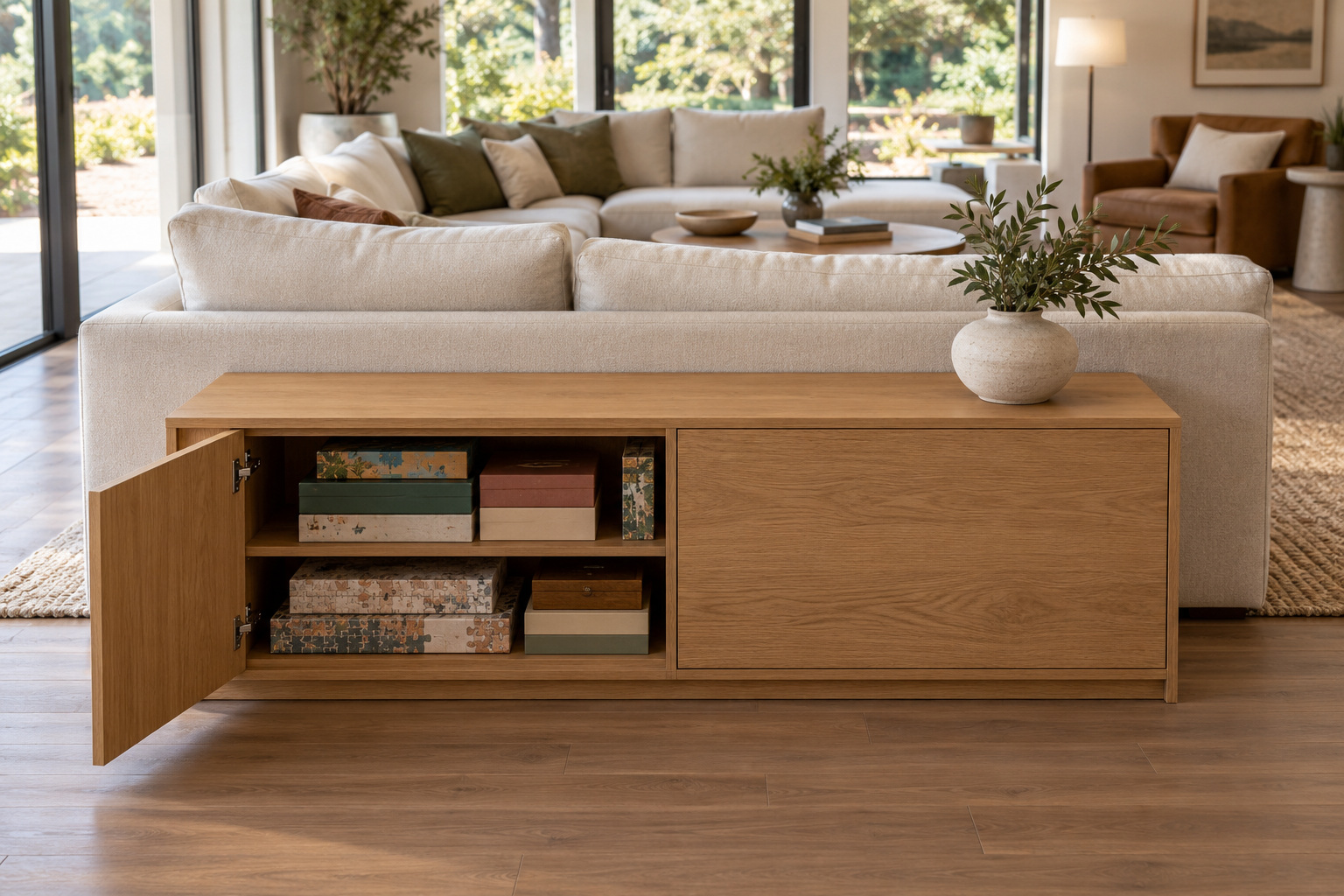
A low cabinet can take the place of a leggy sofa table when the room needs closed storage. Behind the couch, it can hold board games, puzzles, or spare cushion covers without displaying every box. Choose a finished back and sides if they will be visible, and keep the cabinet below the sofa’s back so it reads as a supporting layer.
Put the doors on the side people can approach, then test them fully open. The cabinet needs usable space in front, not just enough clearance to fit when shut. Group the contents by activity so one shelf can be opened and used without emptying another. This is a furniture change with a clear payoff: the back of the sofa becomes a useful boundary, and the family room gains storage that closes at the end of the day.
10. Use a Rounded End Where People Turn the Corner
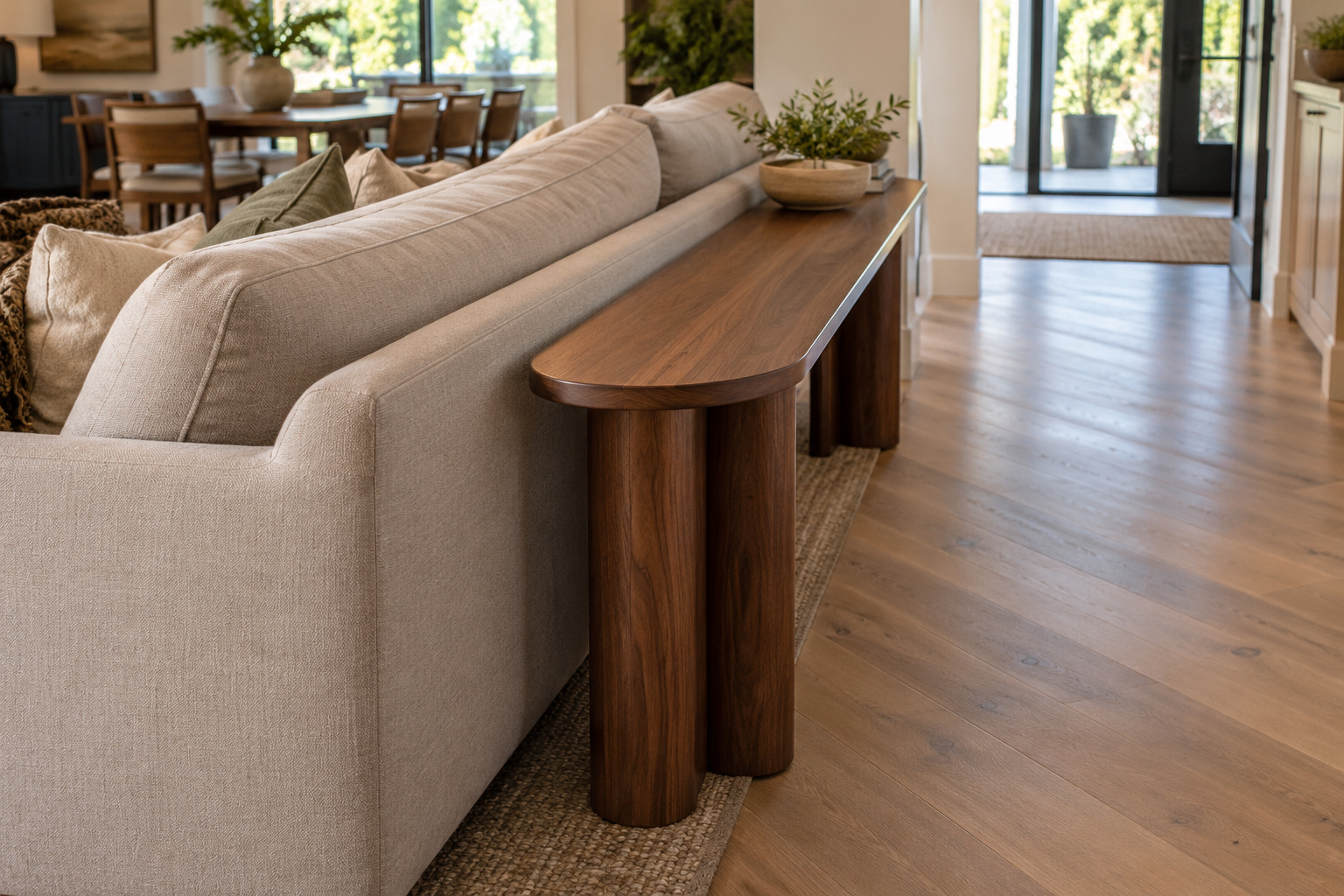
The end of a sofa table matters when the walking route bends around it. A narrow console with a rounded end can soften that turn and make the furniture’s outline less abrupt. Look at the full shape, including the legs; a curved top does little for the route if an angled base projects farther into the same space.
Try the turning movement from both directions before deciding on the length. The end should sit comfortably inside the route rather than forcing a sidestep around it. Leave that portion of the top free of fragile objects that could be brushed in passing. This is especially useful beside a doorway or the junction between a living and dining area, where the corner is encountered repeatedly through the day.
11. Place a Low Art Display Behind a Wall Facing Sofa
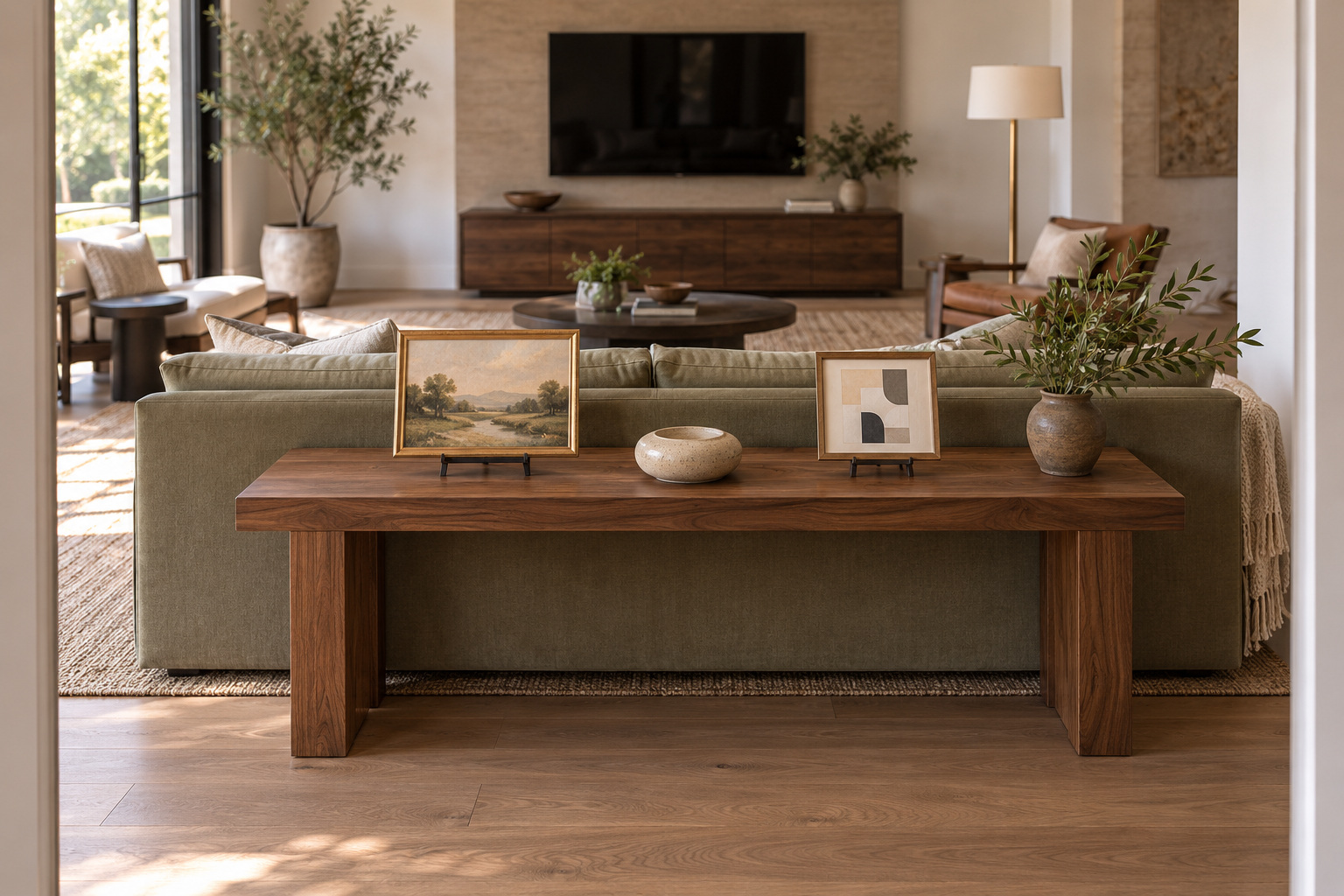
When the couch faces a television or focal wall, its back may be the first view from another part of the room. A console can give that view a small art display of its own. Use one or two modest framed pieces on stable tabletop stands, keeping them low enough that the seating area still feels connected to the space behind it.
Choose art that can be enjoyed from the approach rather than only from a seat in front of the television. A small landscape and a simple abstract can share a color without becoming identical. Keep frames supported well inside the top, away from the couch cushions and passing elbows. This turns the furniture into a display surface without needing a tall divider or a collection of frames balanced against soft upholstery.
12. Add a Washable Runner to Soften a Hard Top
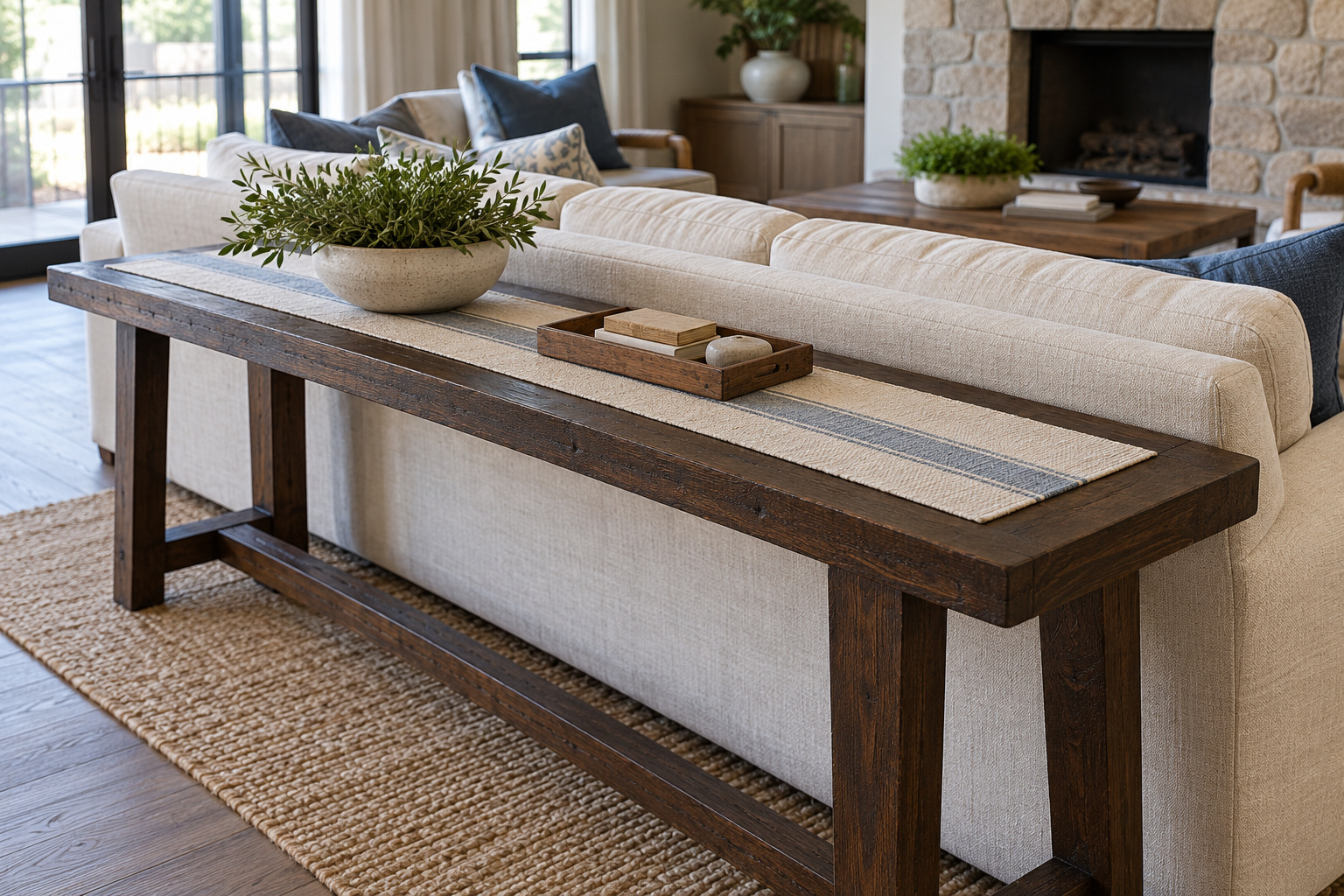
A washable runner can make a hard console top feel more at home beside a fabric couch. Choose a fabric labeled for the cleaning routine you want, and let its weave add texture without covering the full table shape. A narrow cotton runner in a subtle stripe or small pattern can link the sofa cushions to the wood or painted finish below.
Keep the fabric within the table’s edges where people walk; a long hanging end can catch as someone passes. Set accessories on a stable part of the top and avoid loose fabric under anything that could wobble. The runner is an easy layer to remove for washing or change with the room’s textiles, so it is useful when the furniture itself is right but the surface feels a little severe.
13. Build a Small Plant Display Near a Bright Window
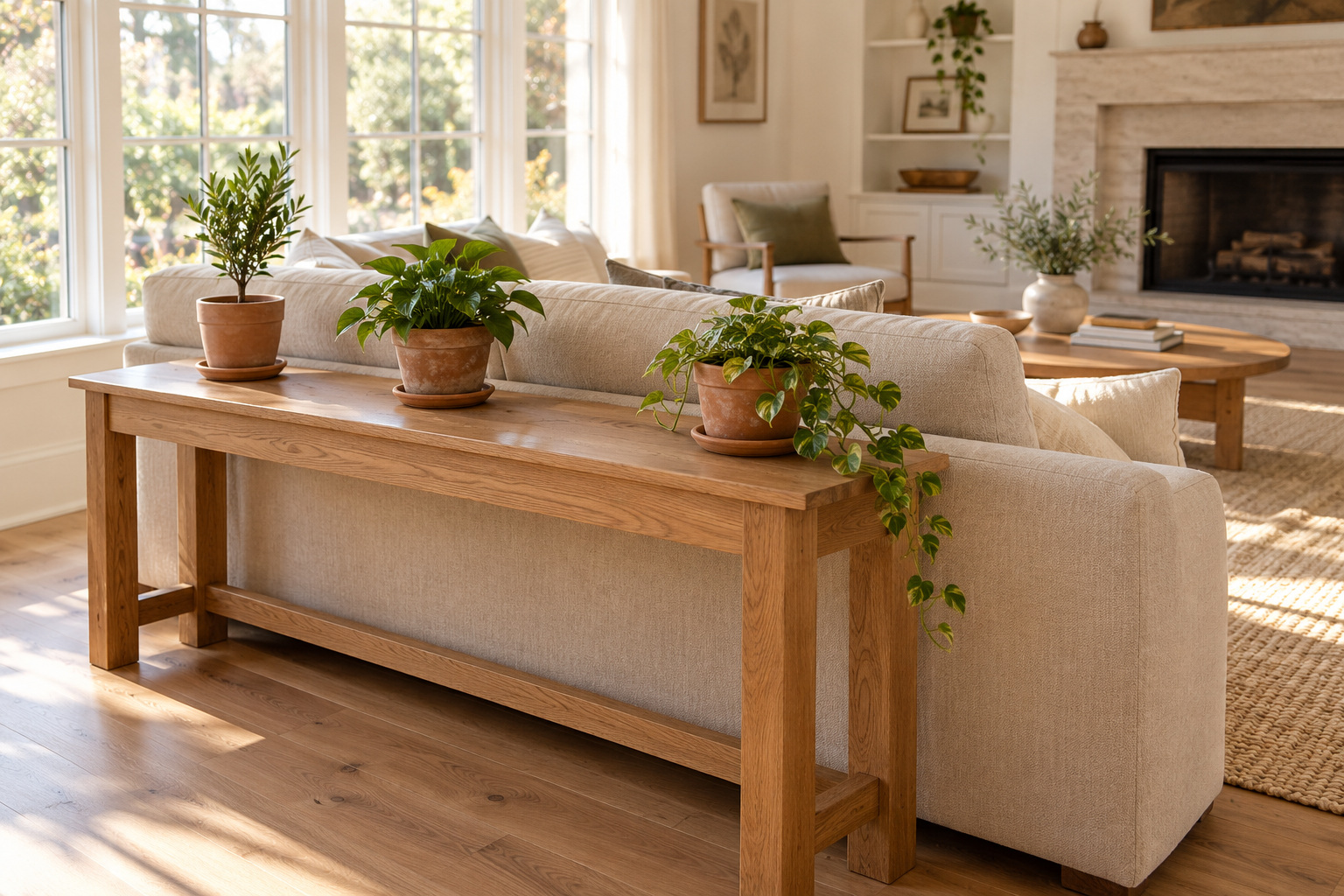
A sofa table near a bright window can support a small plant display without putting pots along every windowsill. Choose plants suited to the actual light at that position, then use a few contained pots rather than a continuous row. A wood console, clay pots, and visible green leaves can give the back of the couch an organic modern character.
Use saucers or other suitable protection for the furniture and move plants for watering when needed. Keep foliage clear of the sofa cushions and leave a space between pots so each plant is reachable. Check the arrangement from the seated side as well; branches should not brush someone’s head. This works as a living layer when there is real light available, rather than as a reason to place a large plant collection in a dim corridor.
14. Use a Stone Top as a Refined Focal Point
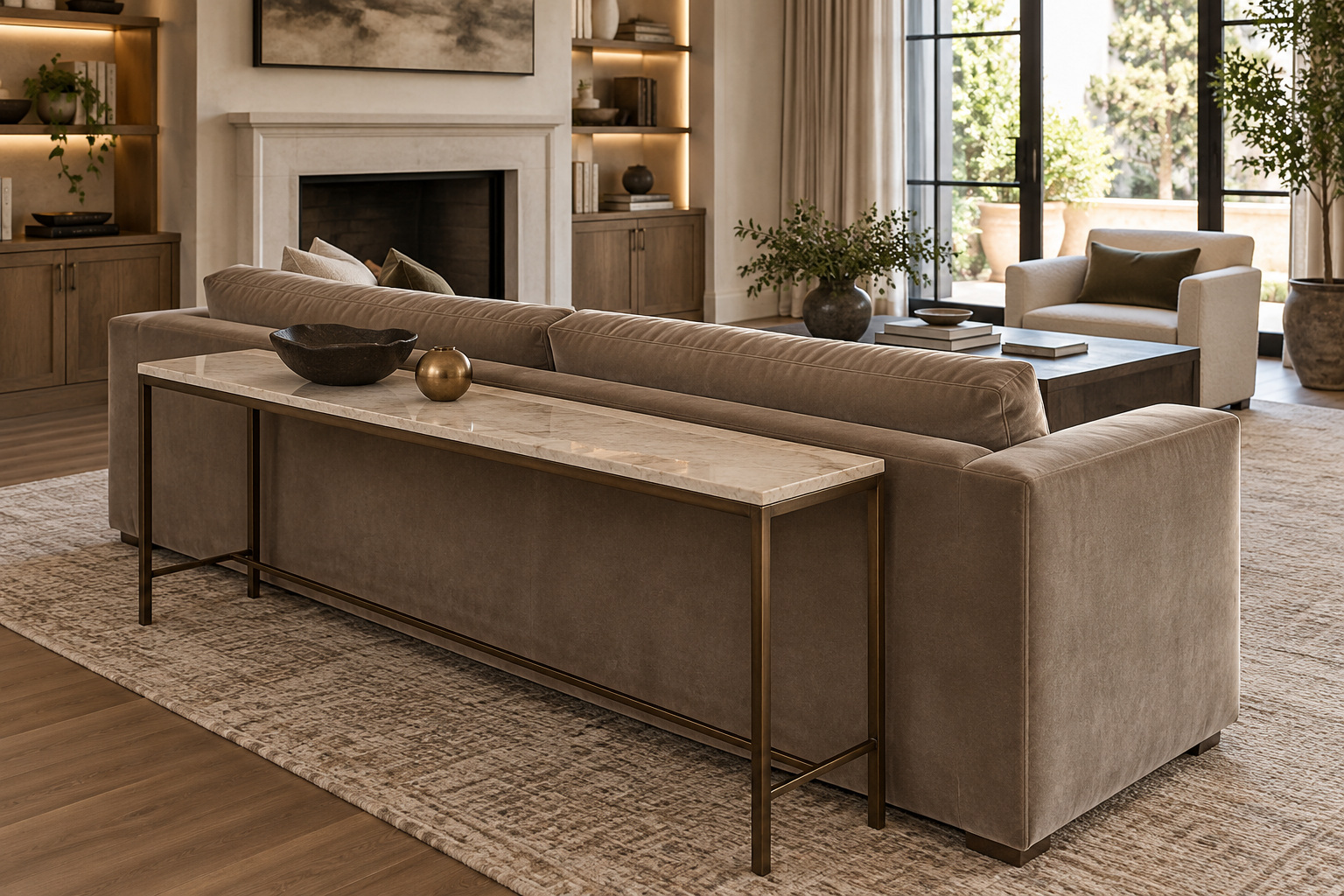
A stone topped console can give the back of a simple couch a more refined presence. Let the material do most of the decorating: visible veining or a softly textured surface needs little company. A top with a restrained profile and a properly supporting base keeps the piece from feeling heavier than the sofa it sits behind.
Choose furniture designed for its stone top rather than balancing a loose slab on an unrelated base. Follow the finish’s care guidance, including appropriate protection beneath objects. In an elegant living room, one sculptural bowl and a small brass detail can be enough. Keeping the accessories low lets the surface and its edge remain visible, while the route around the furniture still feels like part of the room rather than a display area to avoid.
15. Match the Table to the Sofa with a Tonal Palette
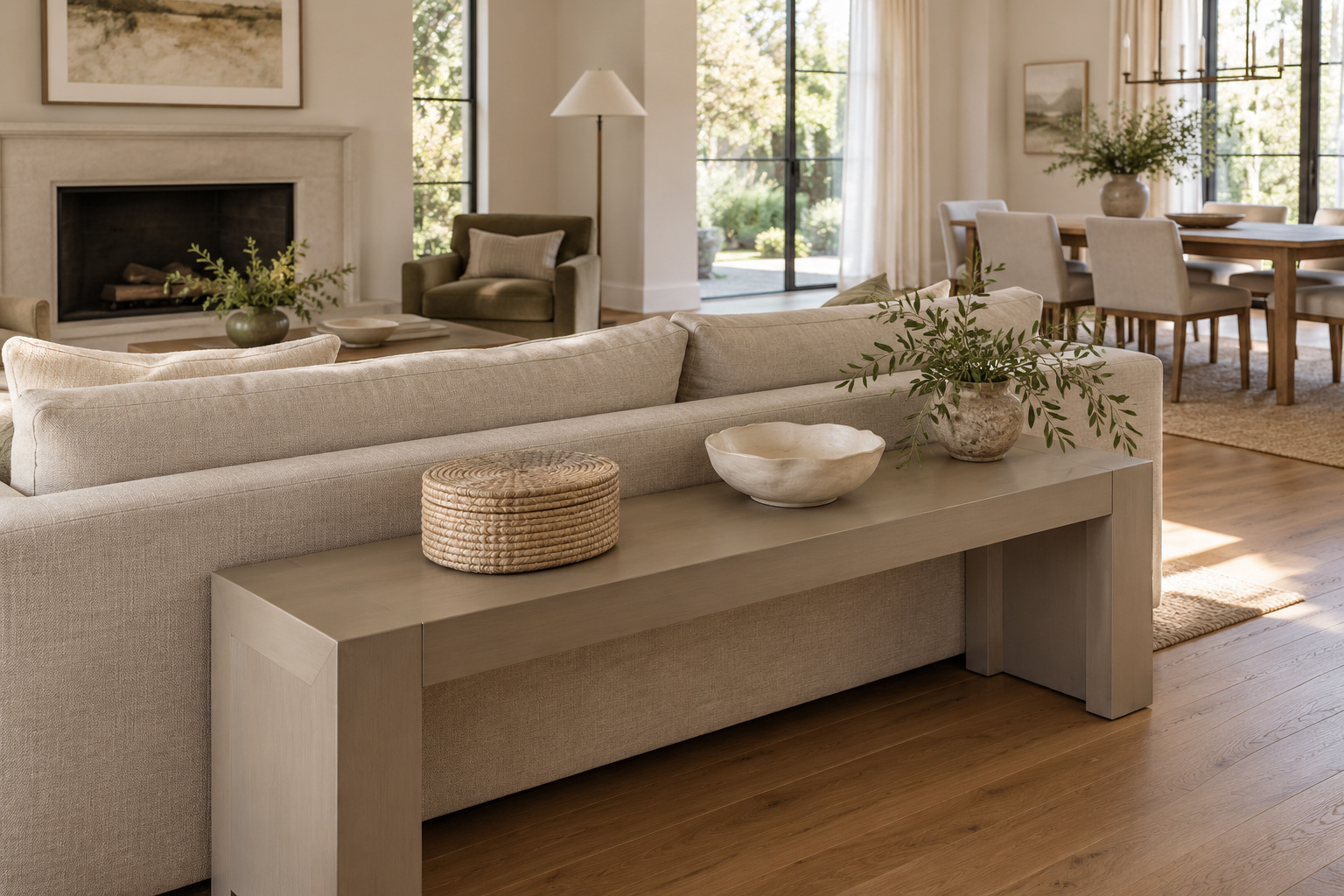
A tonal palette can help a necessary sofa table sit quietly in an open room. Repeat the sofa’s color family in the table finish and one or two accessories, then use different textures to keep the group from looking flat. A putty colored couch, mushroom painted console, pale woven box, and nearby warm neutral wall create a coordinated view from the adjoining space.
Compare the actual finishes together in the room’s daylight and evening light. A sample that looks warm on its own may read cooler beside the upholstery. Keep enough difference between the table and sofa for both outlines to remain clear. This is useful when several living and dining pieces share one view and you want the behind-sofa furniture to connect them without introducing another competing wood tone or strong accent color.
16. Use a Drop Leaf Table for Occasional Extra Surface
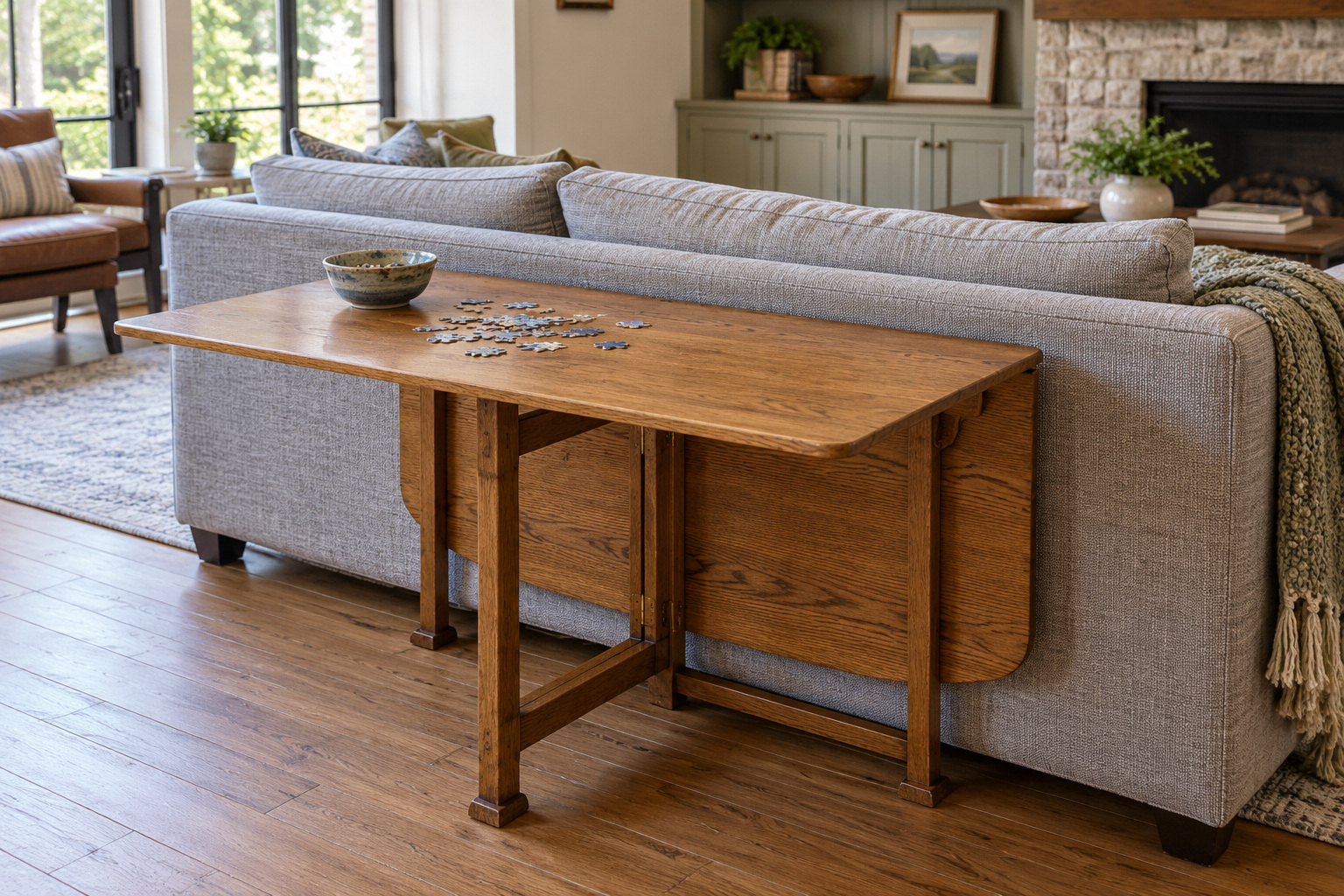
A purpose built drop leaf table can sit behind the couch with a narrow everyday footprint, then open when an extra surface is useful. The leaf should expand toward the space behind the sofa, where there is room to use it. This can provide a temporary place for a puzzle, sorting photographs, or another short project without leaving a large table open all week.
Test the fully opened configuration, including its legs or supports, before choosing the location. Follow the furniture’s instructions and load limits, and keep the route through the room available while it is in use. Clear the project before folding the leaf away. A working hinge and proper support are part of this idea; a narrow fixed console cannot take on the same job simply by adding an unsupported board.
17. Make a Narrow Work Perch Behind the Sofa
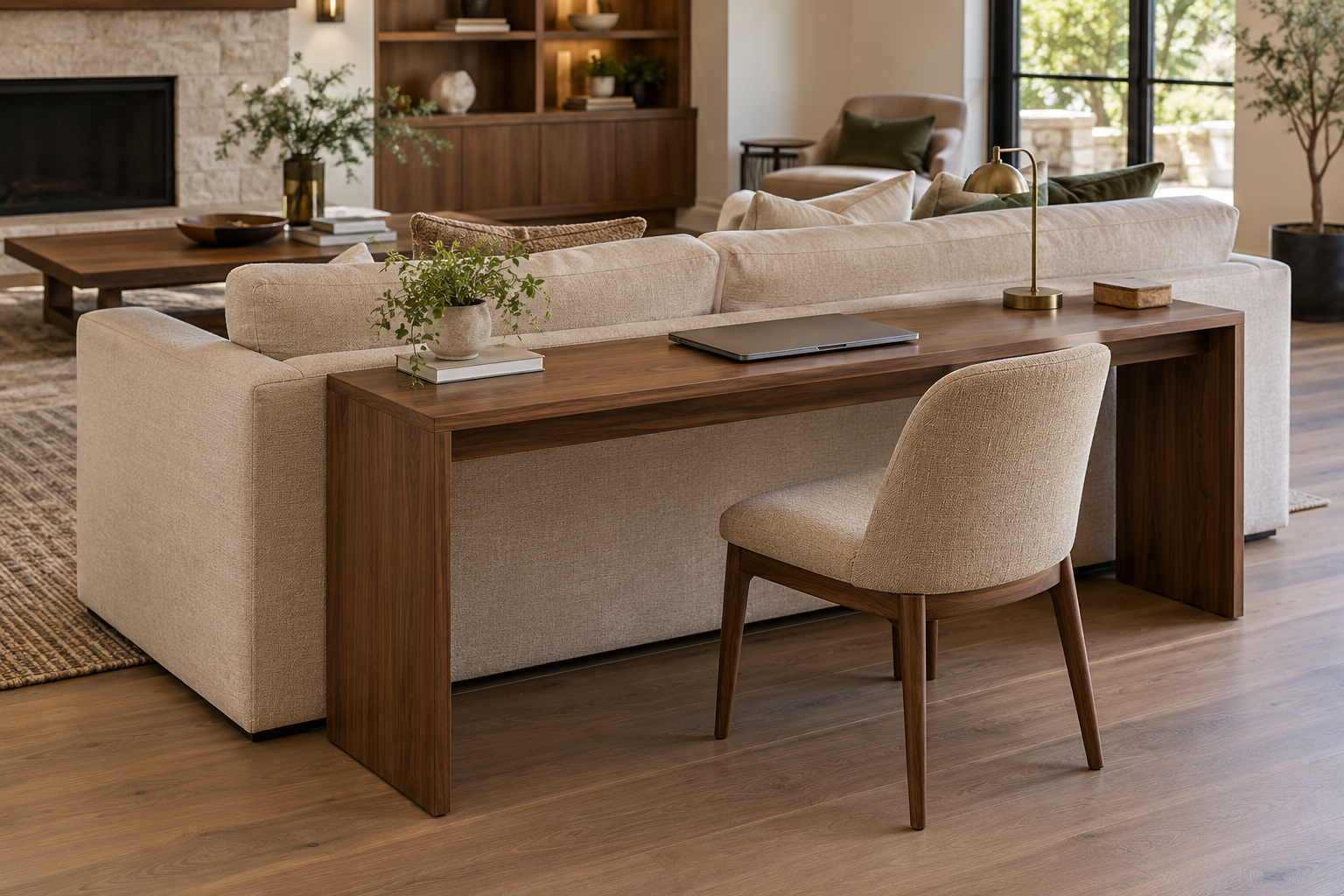
If there is enough space behind the couch, a narrow desk-like table can provide a short work perch. Choose a top and seat intended to work together, with real knee space under the table. The chair faces the sofa’s back, while the approach remains on the outward side. A laptop and one small task light may be all the surface needs.
Try sitting, pulling the chair out, and walking behind it before deciding this will fit. Store the chair fully under the top when it is not in use, and arrange power without trailing a cord across the route. This is useful for a brief household task or a short session, provided the seat and table suit you. If the room cannot accommodate the occupied chair comfortably, choose another function for the console instead.
Choose the sofa table’s job before choosing its accessories. A shallow drawer can solve a daily clutter problem, lamps can give a floating couch a finished outline, and closed storage can make a family room easier to reset. Once the function is right, keep the top simple and test the space around the furniture in use. The best arrangement earns the area behind the couch without making the rest of the room work around it.
Discover more from HomeTrendora
Subscribe to get the latest posts sent to your email.