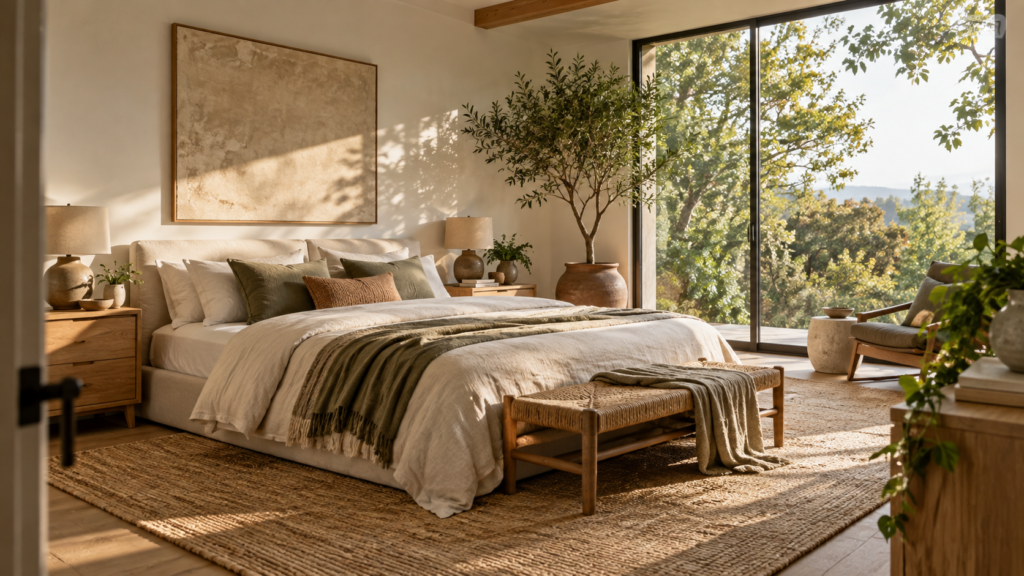
Biophilic interior design connects a room to nature through things you can see, touch, and use. It can start with the tree outside a window, daylight that moves across a wall, or the feel of a wood rail. Begin with the parts of your home that already let you notice the outdoors.
These 20 biophilic interior design ideas cover views, light, plants, natural materials, and the path between a room and a garden. Try a change that fits the way you use the room. Choose a place where the natural detail will be easy to enjoy and maintain.
1. Put a Green View in Your Everyday Line of Sight
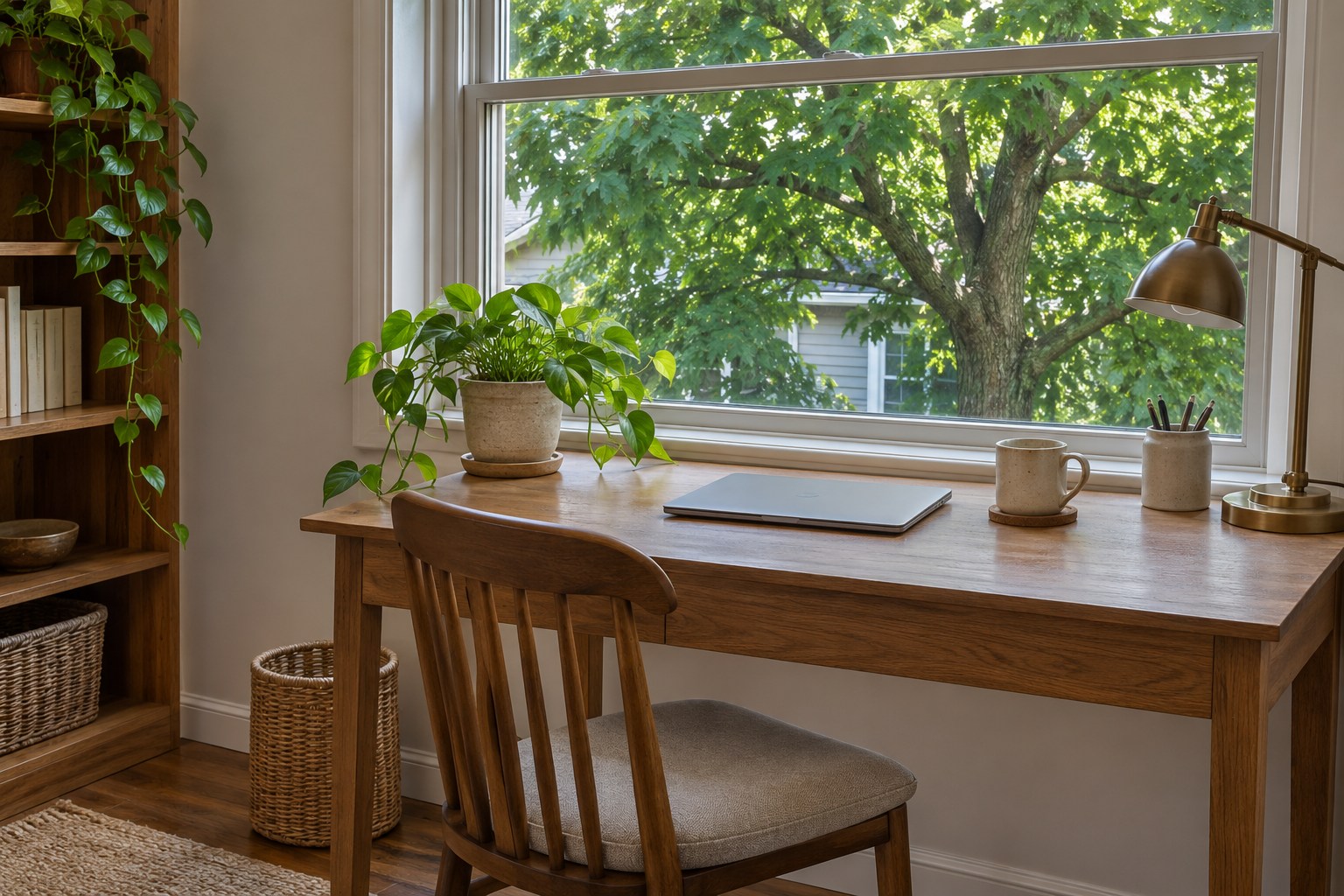
Choose the window with a patch of greenery you can see regularly. It might be the canopy of a street tree or the shrubs outside a kitchen window. Sit where you normally work or read and turn the chair slightly so the view falls within your usual line of sight. You can often do this without moving the desk or buying another piece of furniture.
If you work on a screen, check the view with the screen open and look for reflections. Try a sideways desk position so you can see part of the window when you look up. Keep enough room to reach the window or shade. The greenery becomes part of a normal routine when you can see it from a place you already use.
2. Let Daylight Move Across One Plain Wall
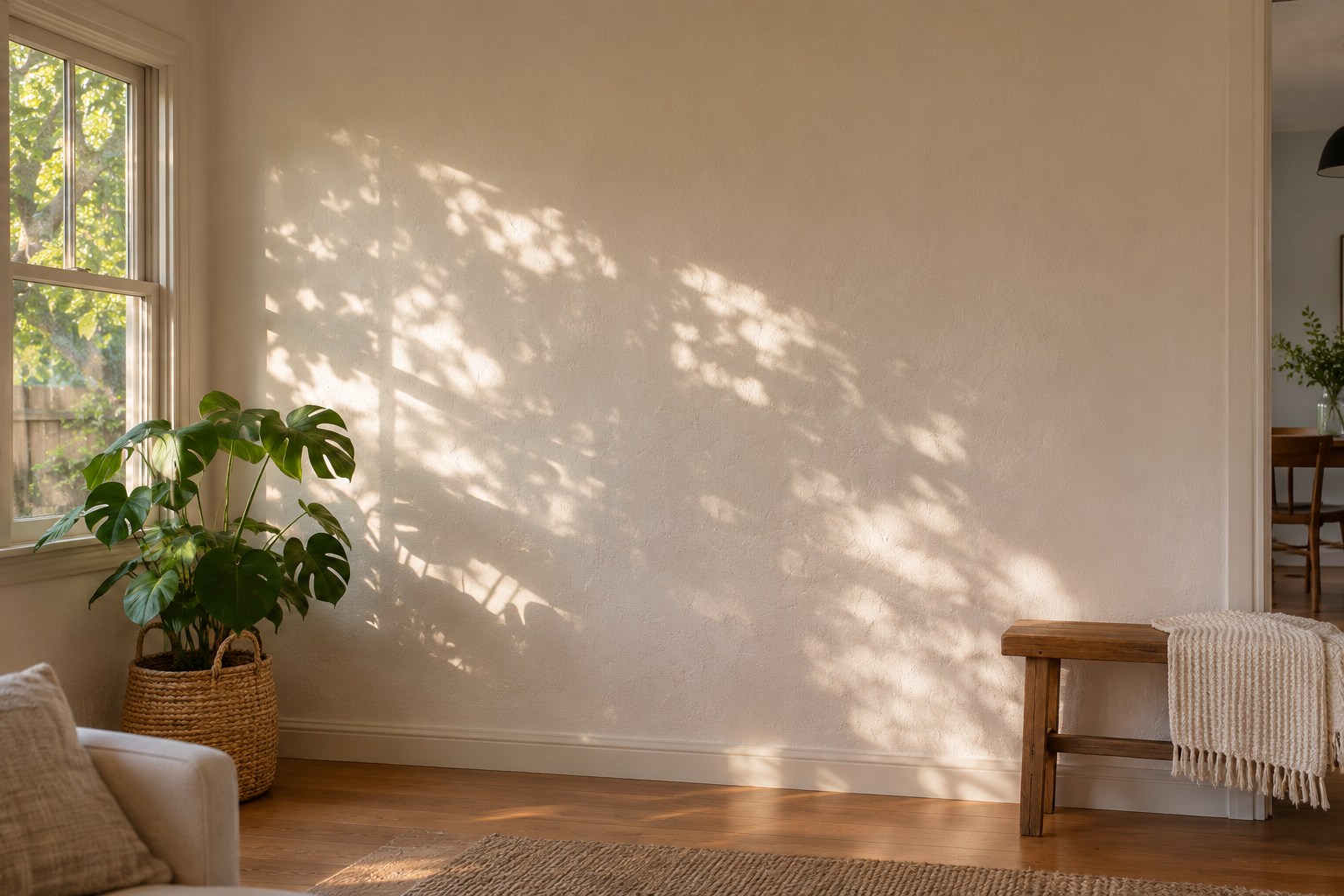
Leave a stretch of wall open where light changes during the day. A pale painted surface beside a window can pick up the soft movement of leaves outside. Watch where the light lands in the morning and again in the afternoon. Move a crowded picture group or a tall piece of furniture if it covers the part of the wall where the light is most visible.
Give the wall a useful quiet area, such as the stretch beside a bench or near a doorway. Keep brighter patches away from the places where you need to read or work without glare.
HOMETRENDORA PLANNING BUNDLE
Turn the ideas you like into a room plan.
Choose what to keep, check what will fit and decide what to buy first. The Home Design Book, fillable room planner and budget tracker guide you through those decisions with worked examples and practical checks.
160-page PDF + fillable room planner + Excel budget tracker
Bonuses included with your eBook purchase.
GRAB 10% DISCOUNT
Coupon code: HOMETRENDORA10
Use this code at Payhip checkout.
3. Soften a Bright Window With an Adjustable Shade
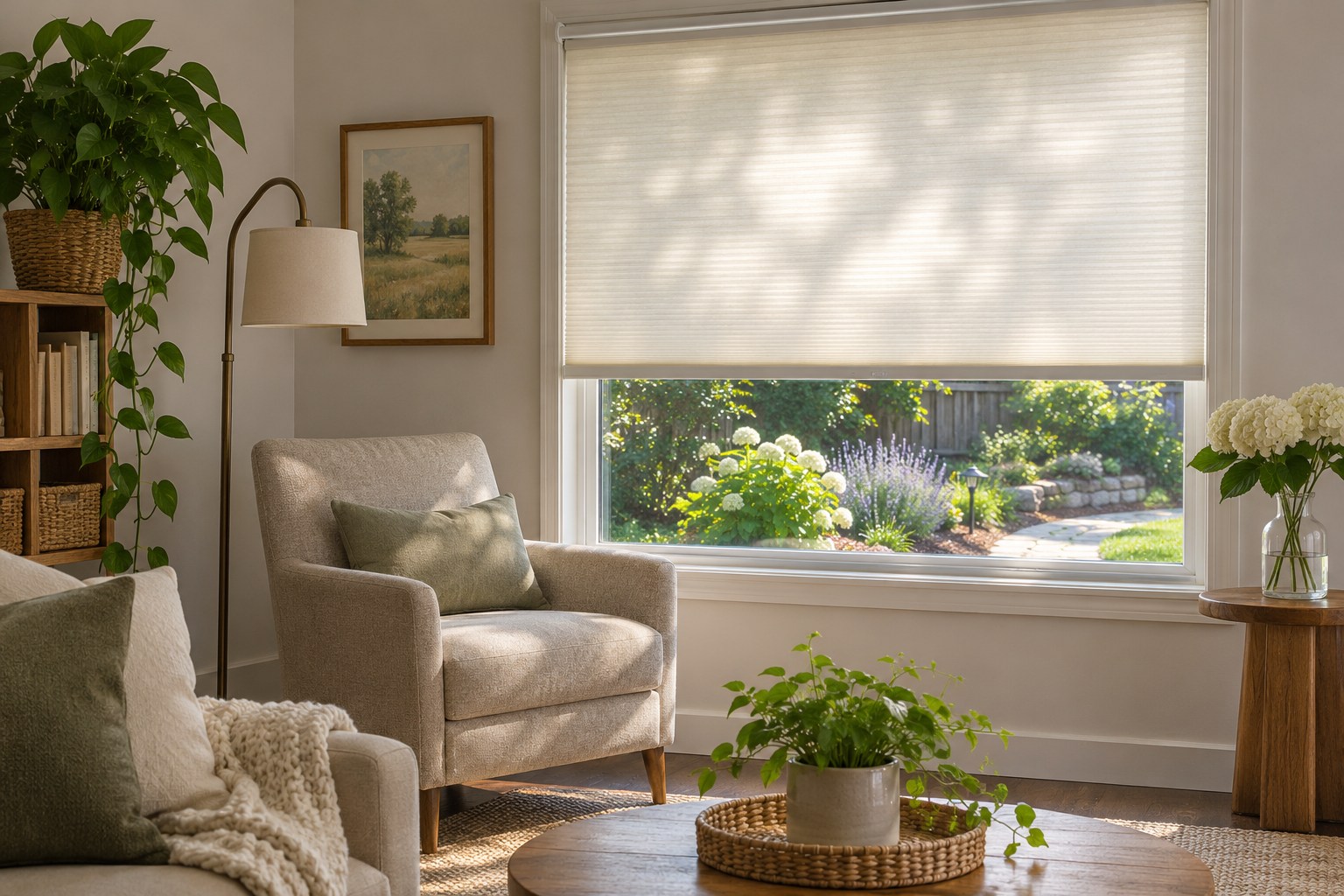
Use a shade you can adjust when a window gets bright. A light-filtering fabric can soften sun on a chair or a desk and still allow some view at a different shade height. Look at the shade in the window at the time glare is strongest. Check the fabric from where you sit before deciding how far to lower it.
Consider what else you need from the window, including privacy after dark. A fabric can look quite different with a room light behind it. Leave the controls and window hardware easy to reach. If the brightest part of the window moves over the course of the day, try changing the shade position before moving the furniture.
4. Group Plants That Need Similar Light
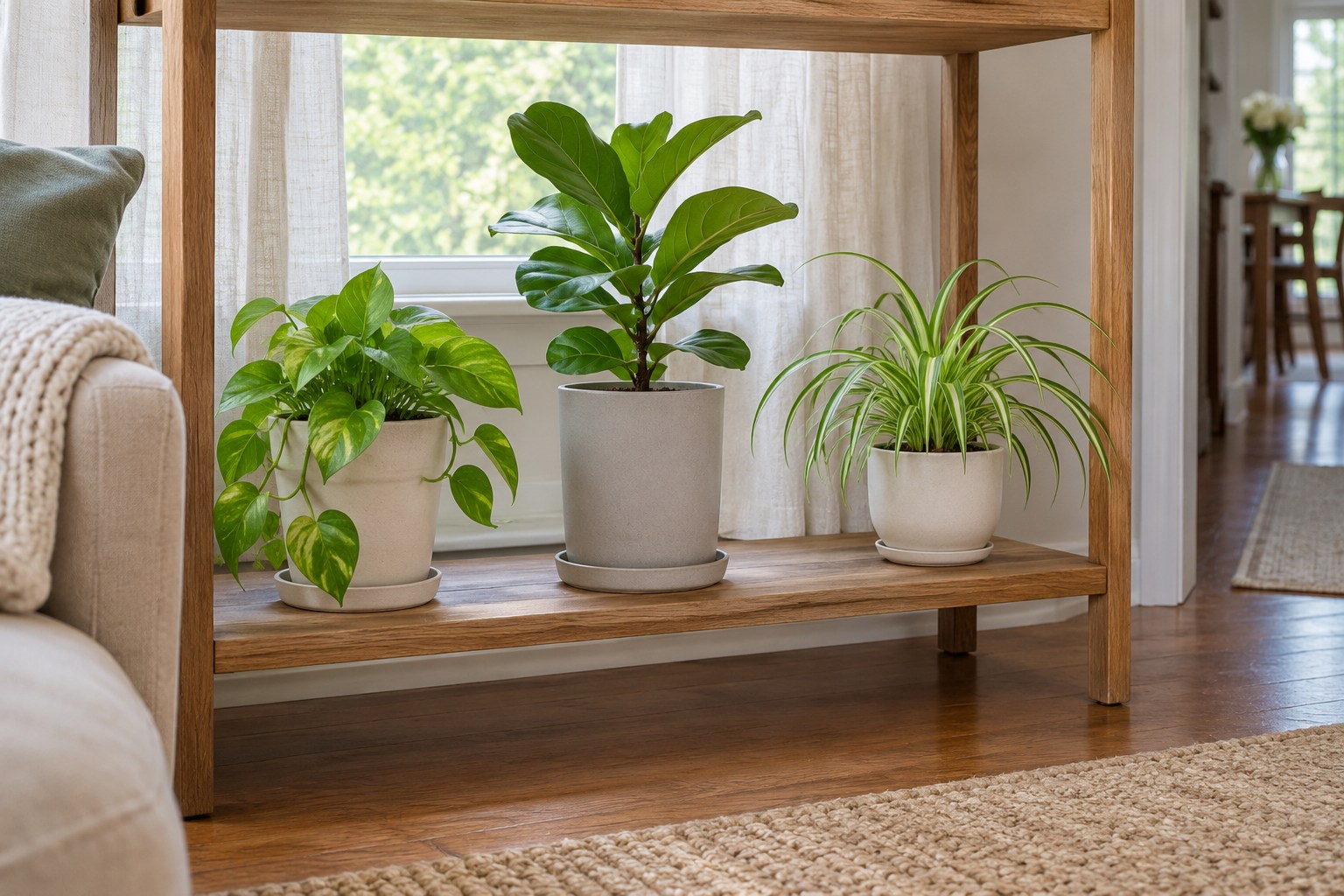
Put plants together when they suit the same light. Observe the shelf at different times of day and see how long direct sun reaches it. Give a plant that prefers filtered light a place away from the strongest patch. Different leaf forms can still share a shelf if the plants need similar conditions. Leave enough room to pick up a pot or check its soil.
Use the plant’s care information to decide where it belongs. If the room gets less light in winter, see how the window changes before you move every pot.
5. Give a Tall Plant Room for Its Leaves
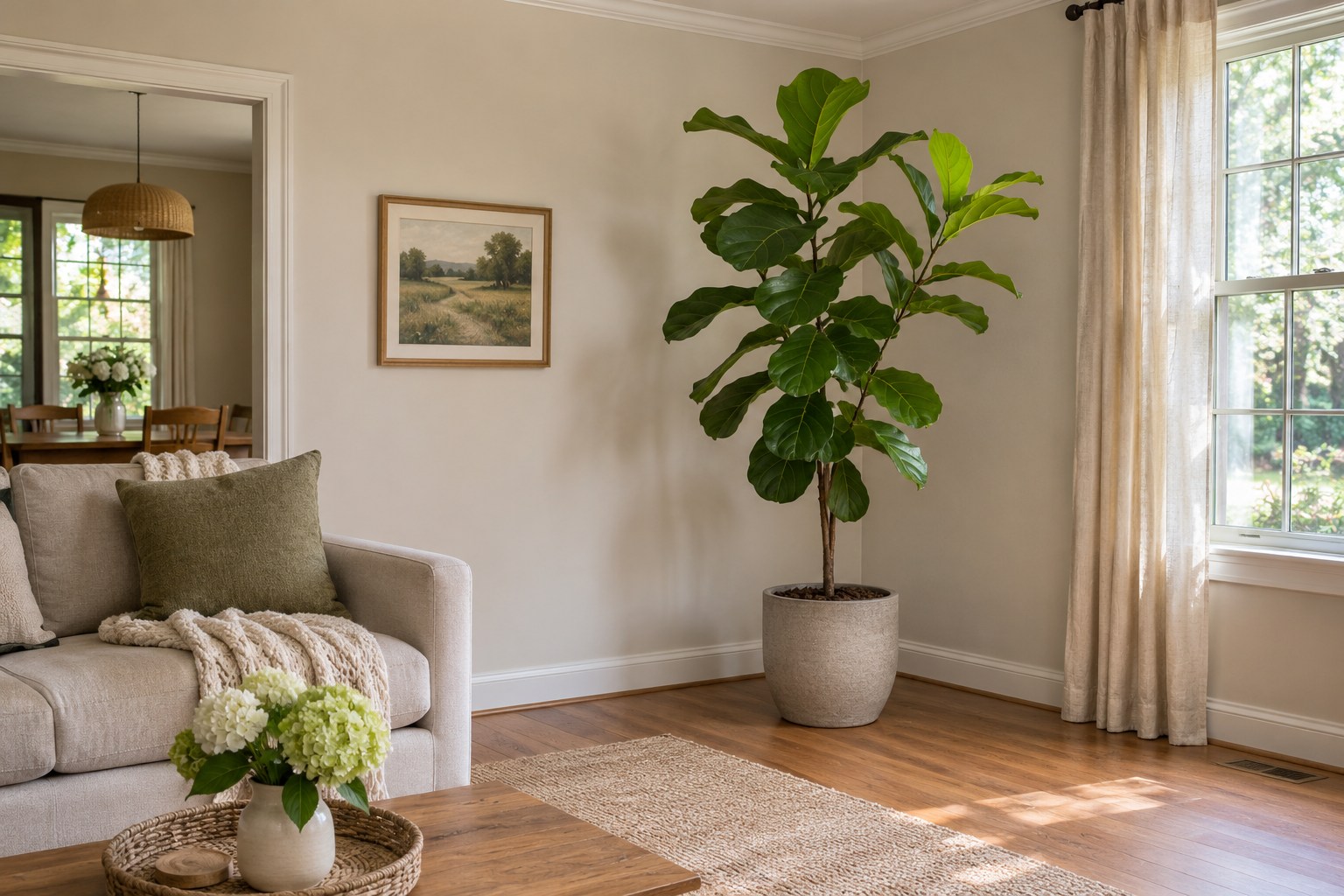
Measure the room around a tall houseplant as well as the pot. Broad leaves can reach into a walkway or brush a curtain even when the container fits in the corner. Look for a bright enough spot with a little space around the sides. Stand near the window and make sure you can still reach the controls and open it if you use it.
Think about how the plant may grow and how you will water it. Choose a stable pot appropriate for the plant and a surface that can handle the weight. Leave room to move or turn the container when you need to. One well-placed tall plant can give a corner an unmistakably natural shape.
6. Set a Small Plant Where You Can Check It
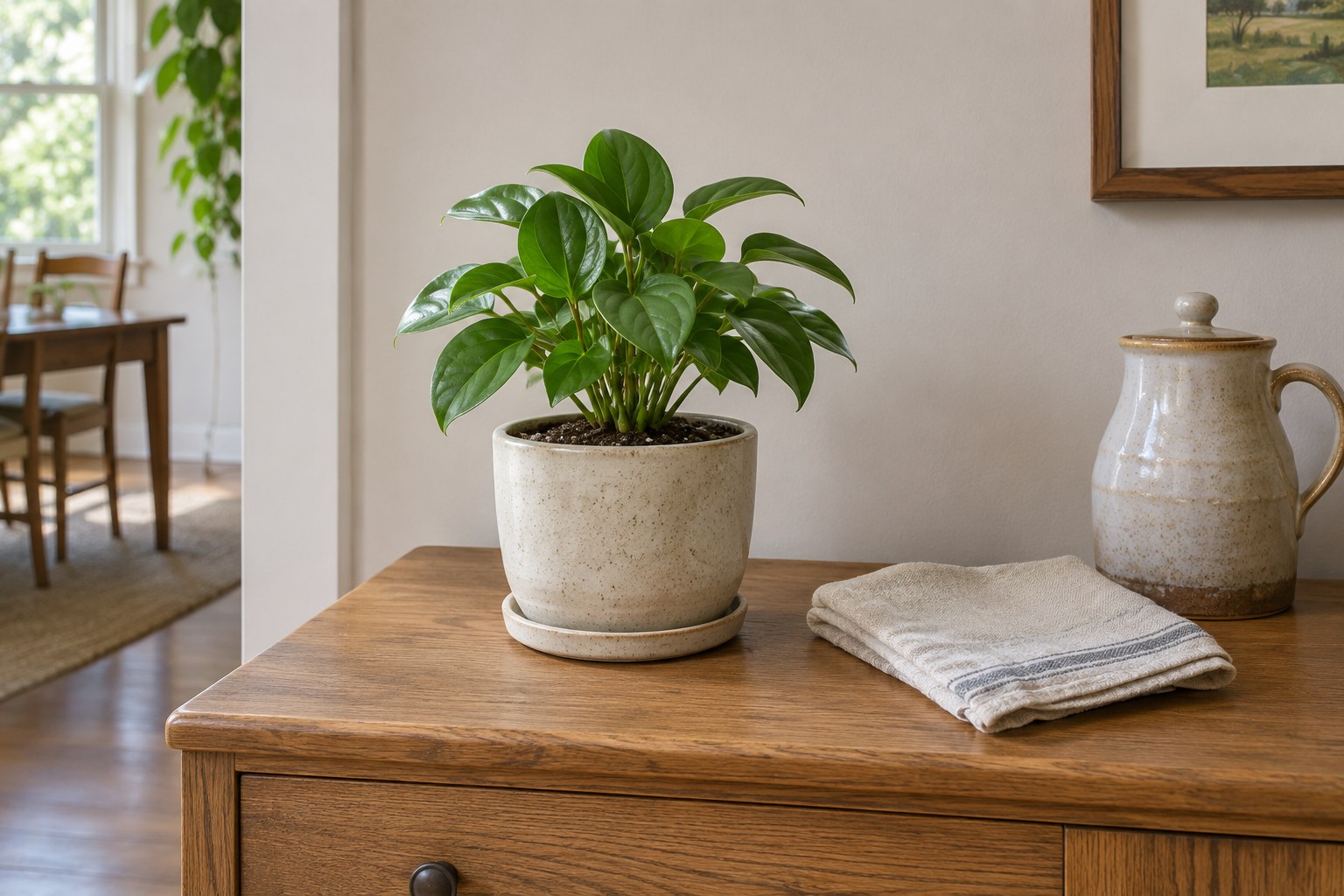
Give one small plant a spot where you can see the soil and pick up the pot easily. A waist-height sideboard in appropriate light can work well. Leave space around it so you can remove a dead leaf or check whether the plant needs water. A plant tucked deep behind books is harder to remember and care for.
Tie the check to something you already do, such as clearing a desk at the end of the week. Look at the plant and its potting mix before deciding whether to water. Follow the needs of the particular plant. If the table is difficult to wipe around or the pot is in the way, try a smaller plant or a better position.
7. Give a Draining Planter a Removable Saucer
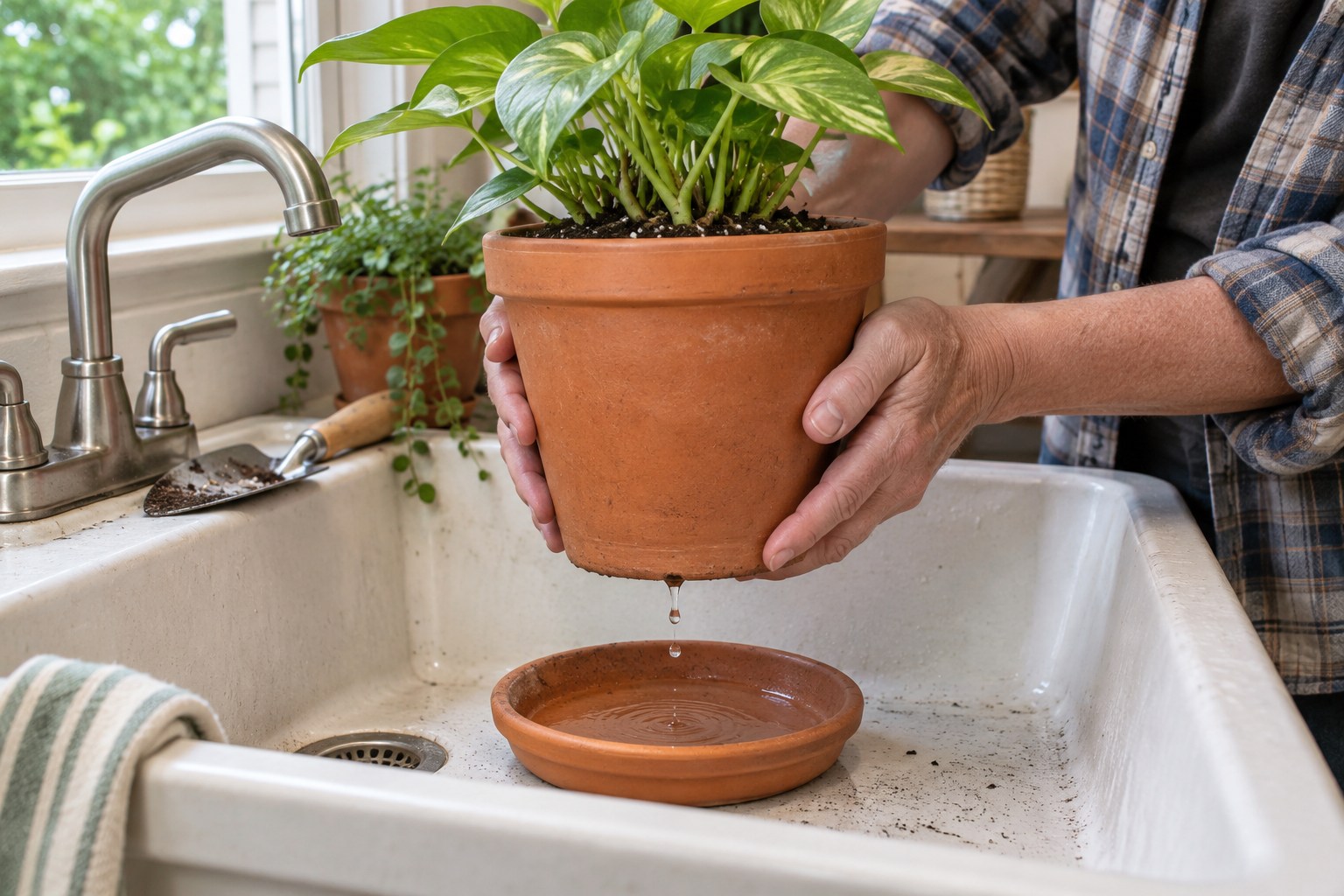
Use a pot with a drainage opening and a separate saucer you can lift out and empty. Check that the planter base sits fully inside the saucer and stays steady. For a small plant you can carry, let it drain in the sink before returning it to a finished table or cabinet. Wipe the outside of the pot and the bottom of the saucer before setting it down.
Empty standing water after the pot has drained. Follow the plant’s needs and check how the saucer and pot work together before leaving them on wood.
The D’vine Dev black planters with saucers come in a four-pack. Compare the 6.5-inch size with your plant and the surface where it will sit, then lift the pot away to empty standing water from the saucer.
Explore D’vine Dev black planters with saucers (paid link)
8. Bring a Few Seasonal Branches Indoors
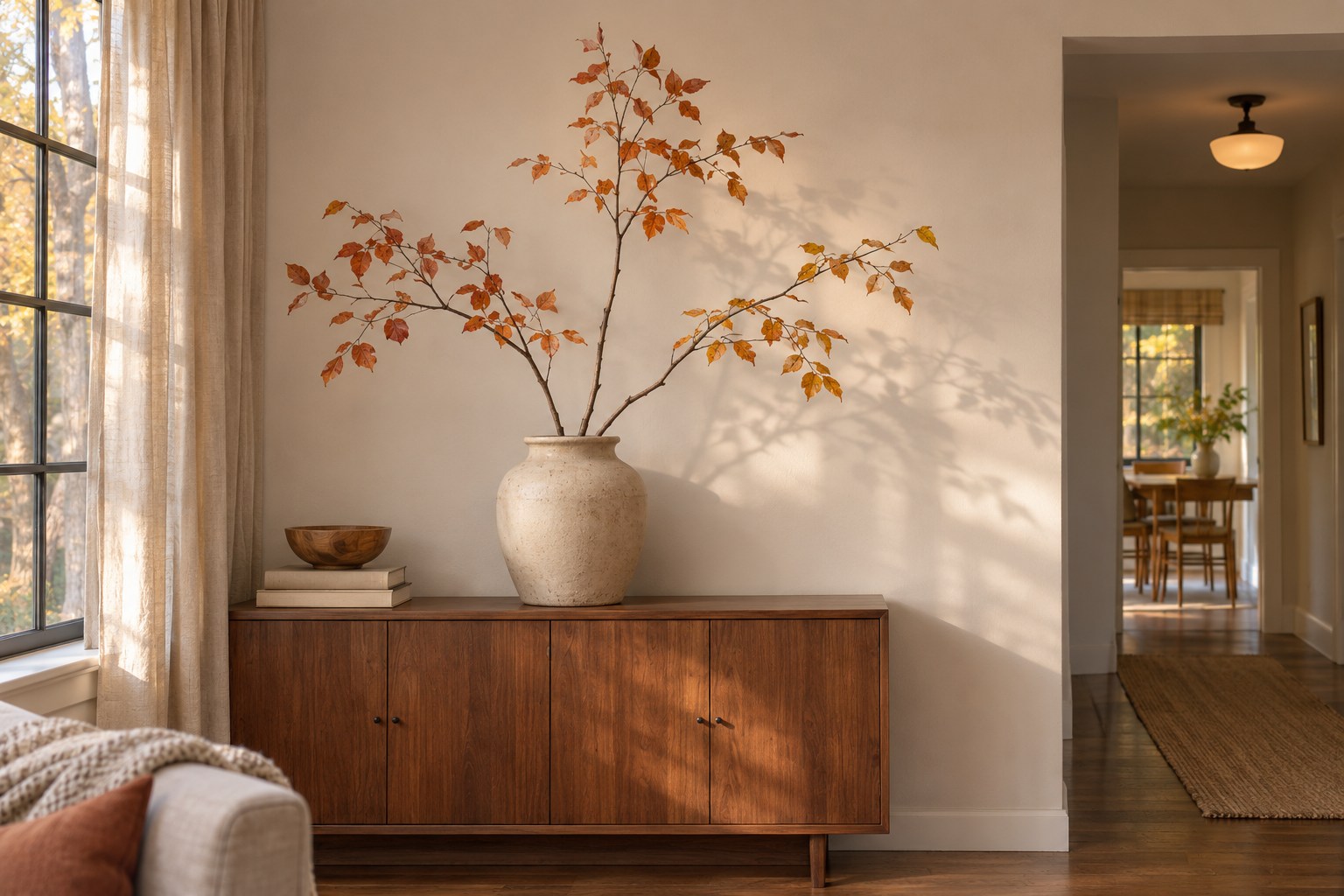
Bring a few seasonal branches inside from your own garden or a source you can use. Three stems in a heavy vase can show the shape of the season, from bare twigs to autumn leaves. Give them a plain wall behind them so you can see the outline. Trim the arrangement to suit the vessel and keep it away from doorways and lights.
Set the vase on a surface that can support it and check that it stays steady with the stems in place. Use a liner or suitable vase if the cuttings need water. Change the arrangement as the branches or leaves change. A small group lets you follow the season without finding storage for a whole room of decorations.
9. Put Natural Wood Where Your Hand Meets It
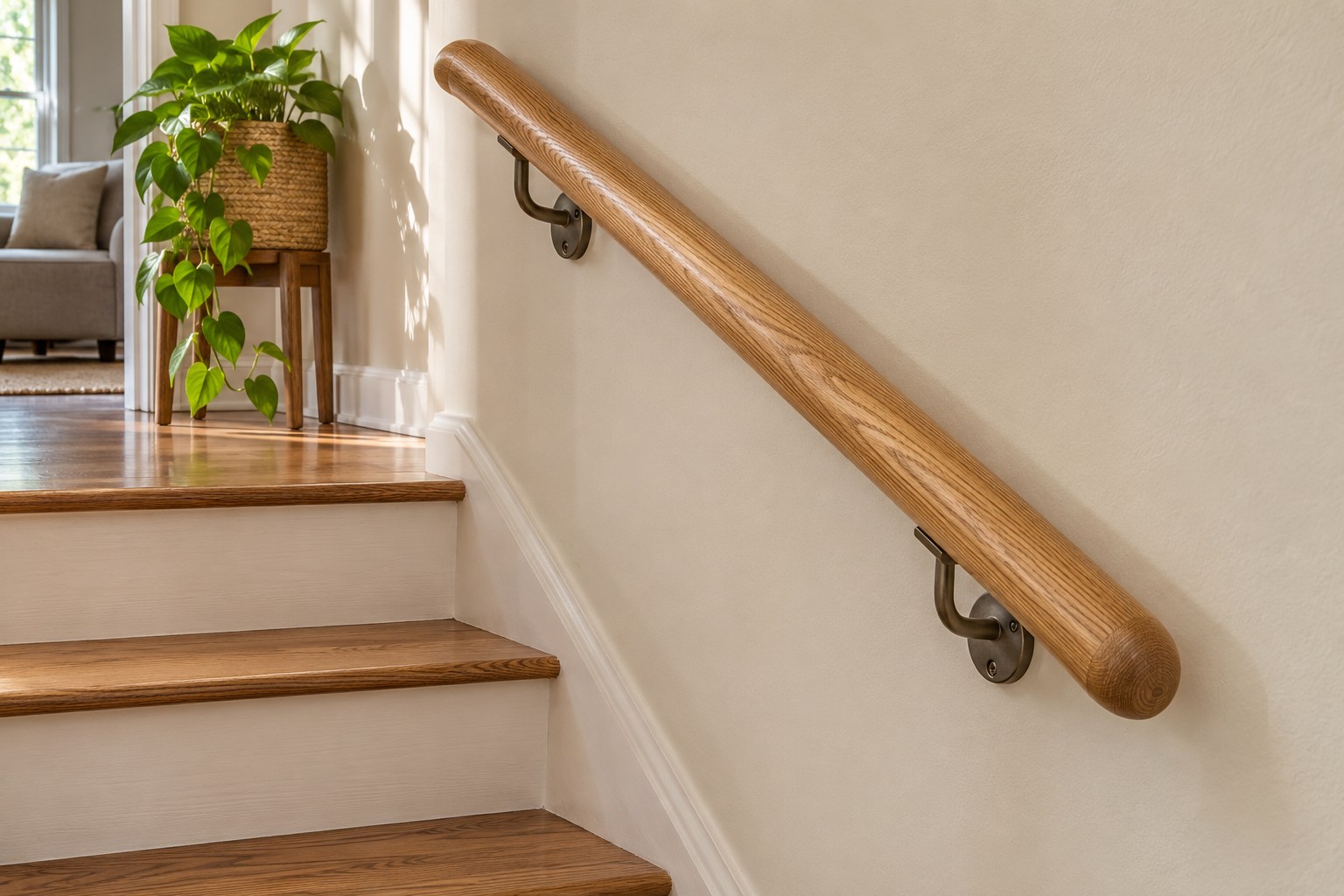
Put visible wood grain on a surface you use often. A wood handrail, a table edge, or a drawer pull can give you both the look and feel of the material. Look at how the finish feels under your fingers and how it will hold up to the way you use it. A smooth piece with grain you can see can be enough in a room with painted walls.
If you already have a wood rail or table, move nearby objects so you can see the grain in the light. Follow the maker’s care guidance. Use a rail and its fittings as intended, and get suitable installation help if the stair needs a new one. Let the wood be useful every day.
10. Use One Stone Surface Beside the Sink
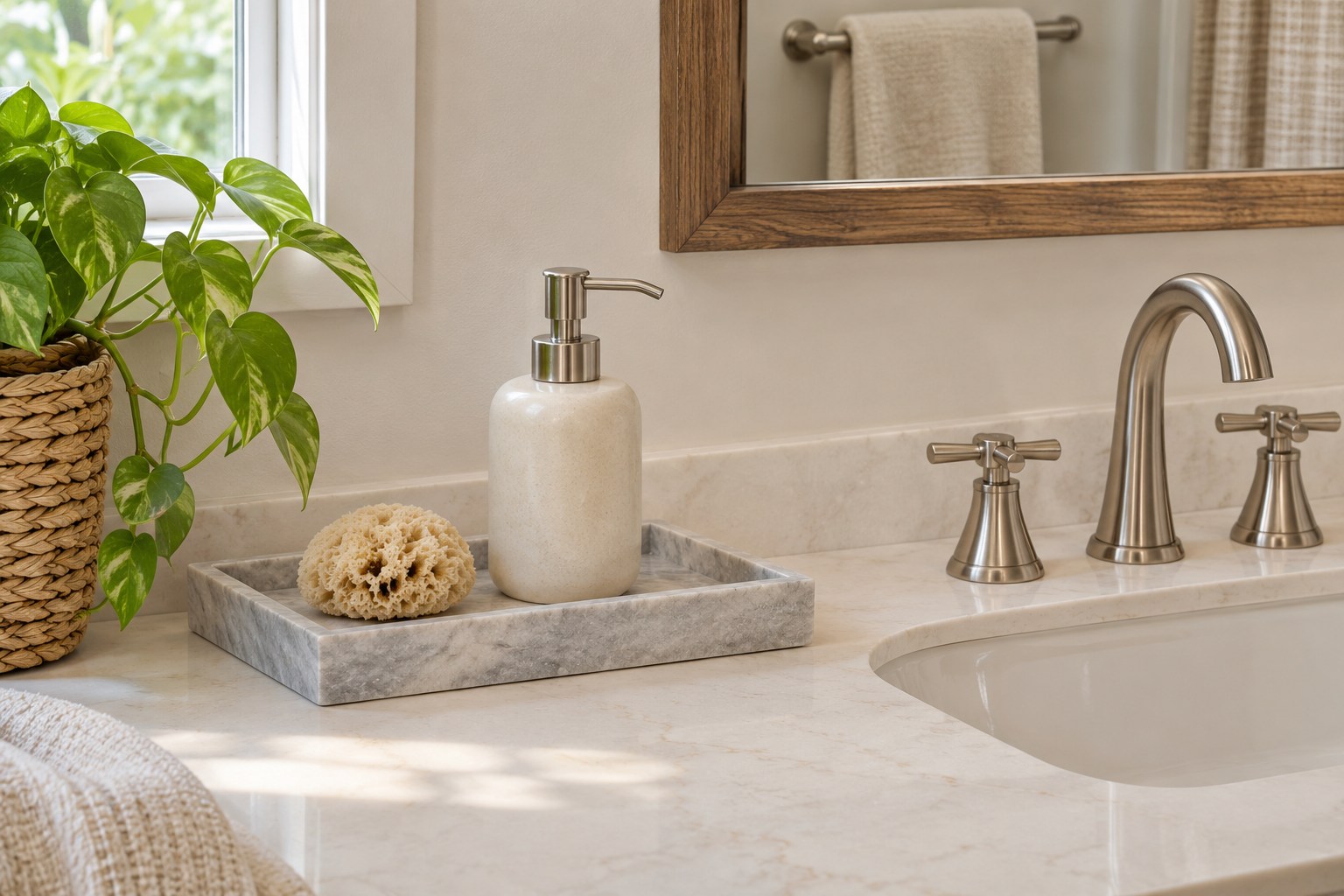
A small honed stone tray can bring an irregular mineral surface to a plain bathroom counter. Choose a spot next to the sink where the tray sits flat and leaves enough room to use the handles. A pale gray stone can show its small changes in tone against a cream counter. Keep the group on it small.
Check the tray maker’s care guidance before putting soap or water on it, and protect the counter as appropriate. If the surface needs more care than you want at the sink, move it to a drier shelf. A single stone piece gives you a chance to see how that material works in your own routine.
11. Put a Woven Texture Where Side Light Finds It
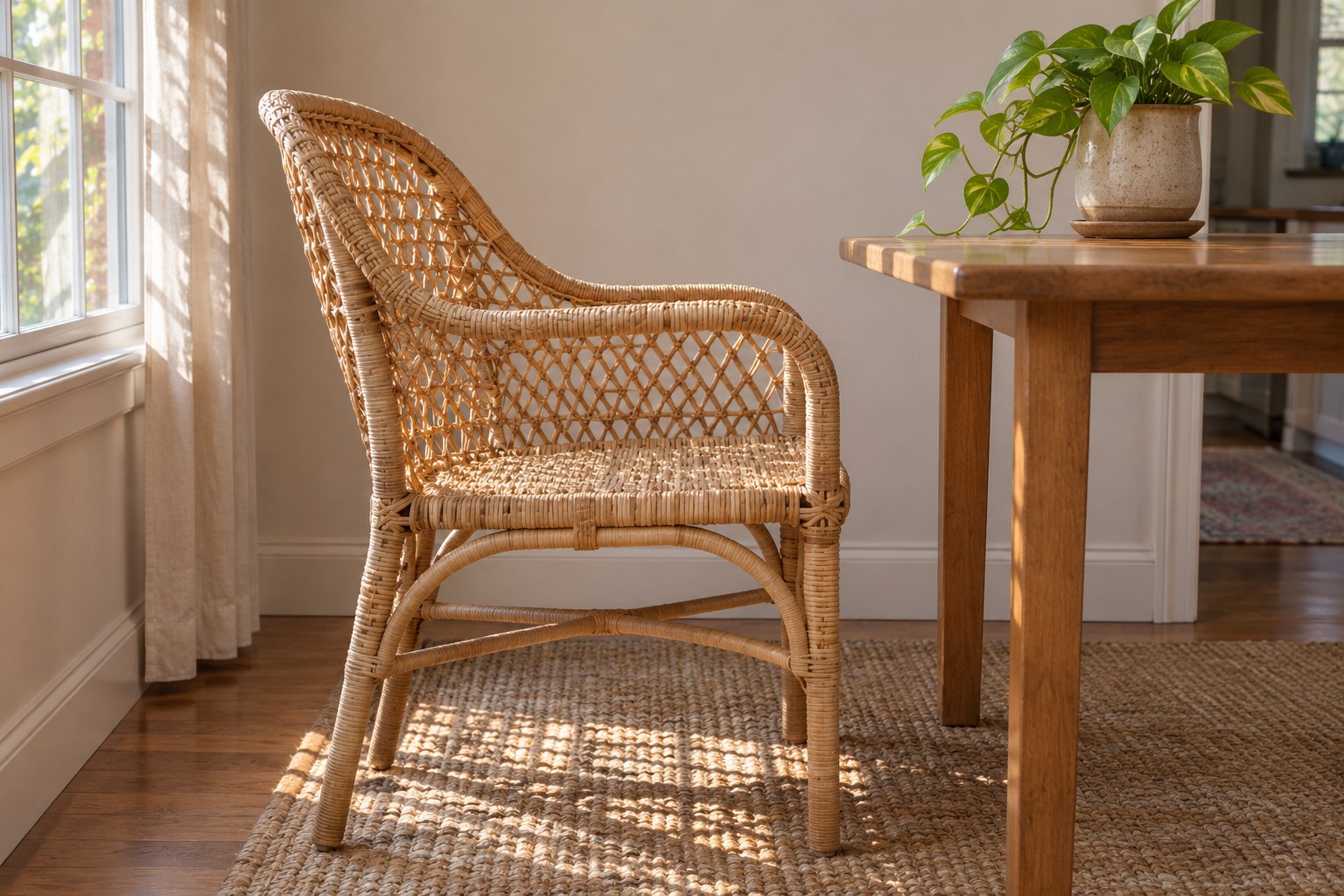
Move a woven chair or basket to a place where daylight crosses the surface. You can see the small gaps and changes in fiber when light comes from the side. Set it against a plain wall or near a quieter table. Natural rattan or another plant-based weave can be the most visible texture in a small corner.
Check the view from the direction you usually enter. If strong light washes out the weave, move the chair a little or try a softer time of day. Choose a natural-fiber item that suits how you will use and clean it. Leave the seat comfortable to use with the neighboring table and route unchanged. These ways to use texture in a room show how woven surfaces can work beside quieter finishes.
12. Use a Leaf Pattern on One Quiet Surface
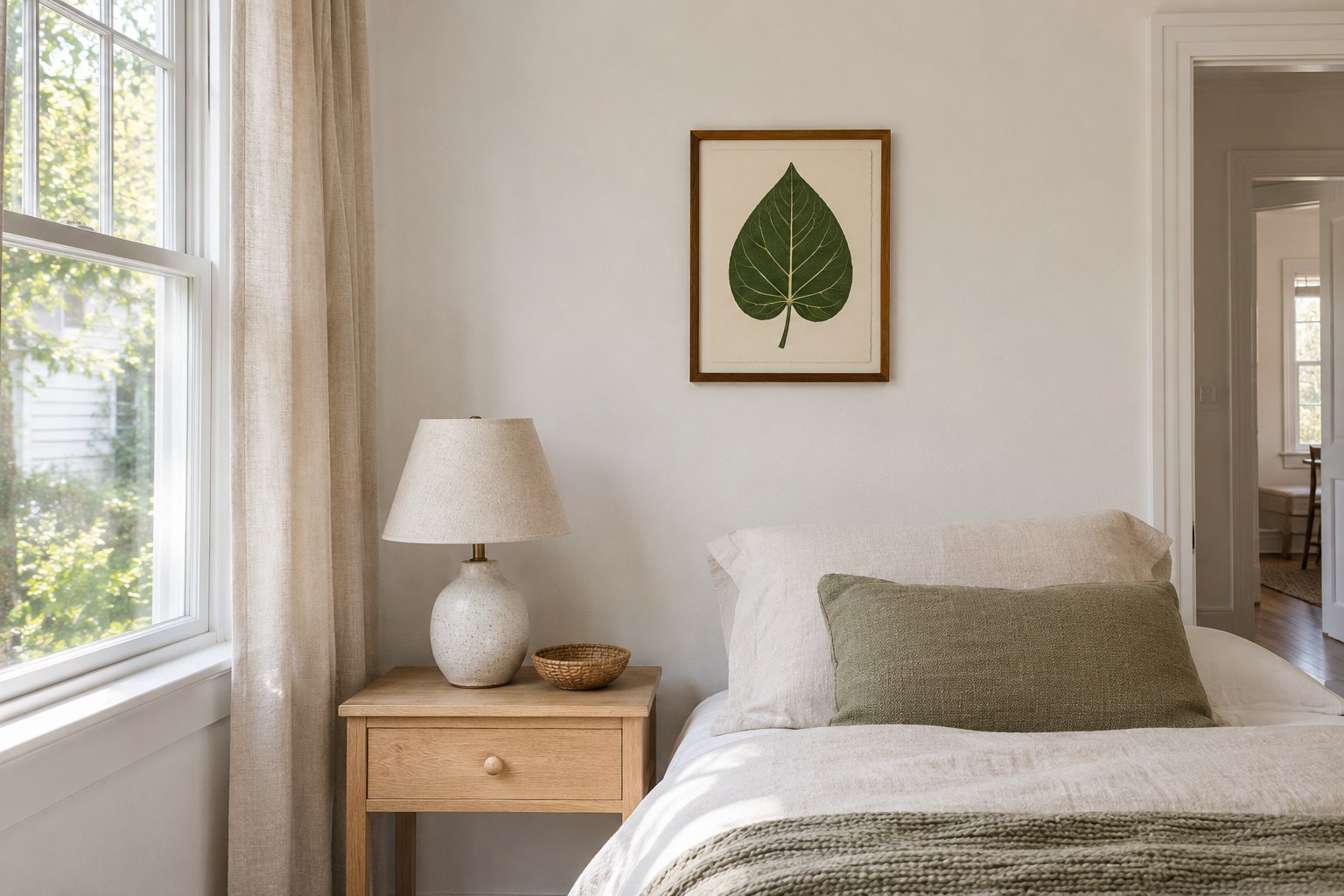
Choose a leaf shape or branch pattern for one small surface. A simple botanical block print on a quiet wall can make the pattern visible from a bed or chair. Look at how much detail you can see from across the room. A clear leaf outline and a few veins often read better than a large field of tiny repeated marks.
Try a print or a removable textile in one place first. Use a light wall or plain bedding beside it so the pattern has room. These nature-inspired bedroom ideas offer more ways to combine art and natural materials where you sleep.
13. Keep a Window Easy to Open for a Breeze
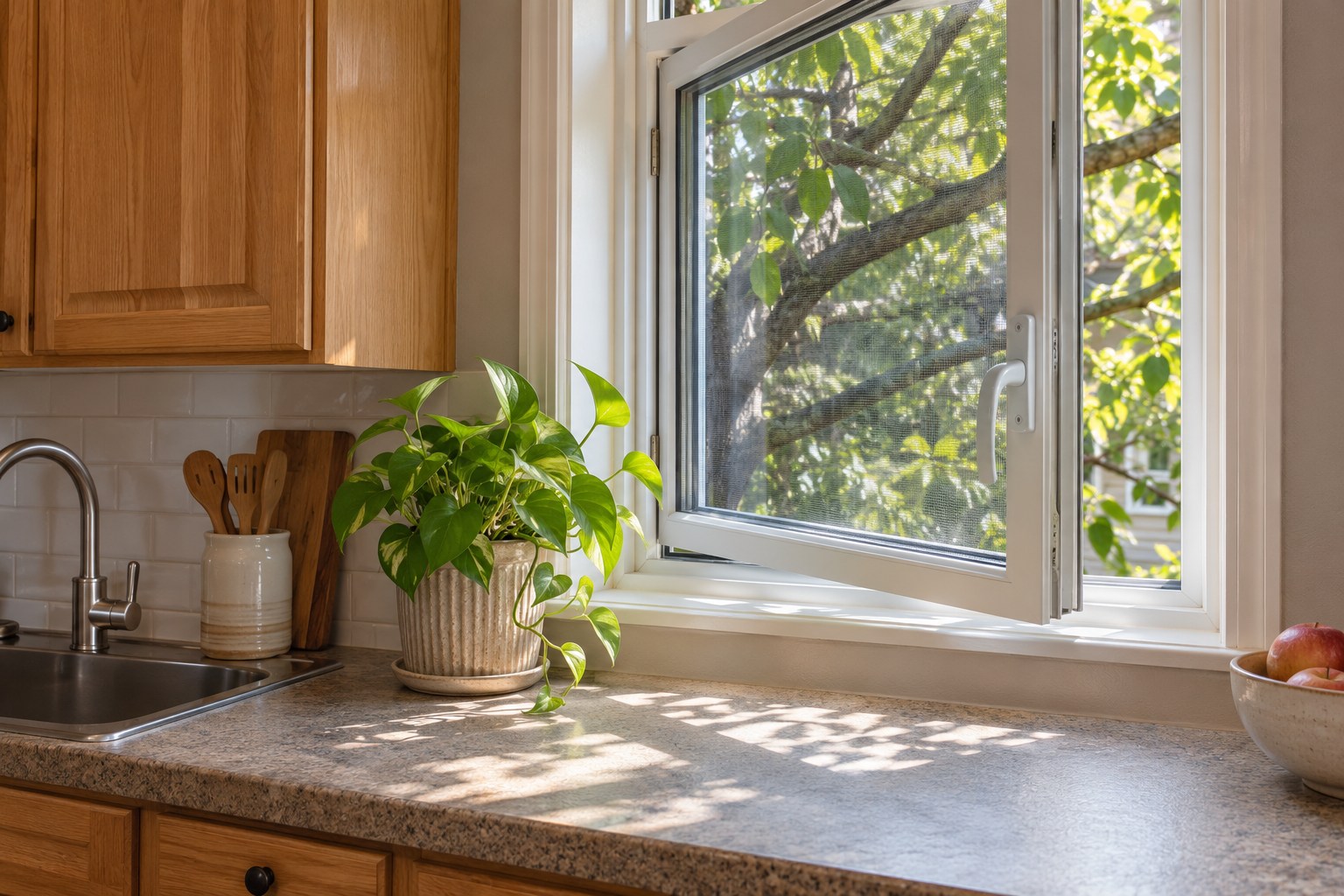
Clear the reach to an operable window you like to open. Move a vase, appliance, or taller plant that makes the handle awkward to reach. Check the path of a casement or sash as it opens. Keep enough room for the shade and any screen that normally belongs there.
Choose a window you can open when outdoor conditions are suitable. Stand beside it and notice how the air moves before arranging anything fragile nearby. A plain, clear sill can be more useful than a narrow row of objects. Keep the place where you need to stand open so opening and closing it stays easy.
14. Find a Seat Near an Outdoor Sound You Like
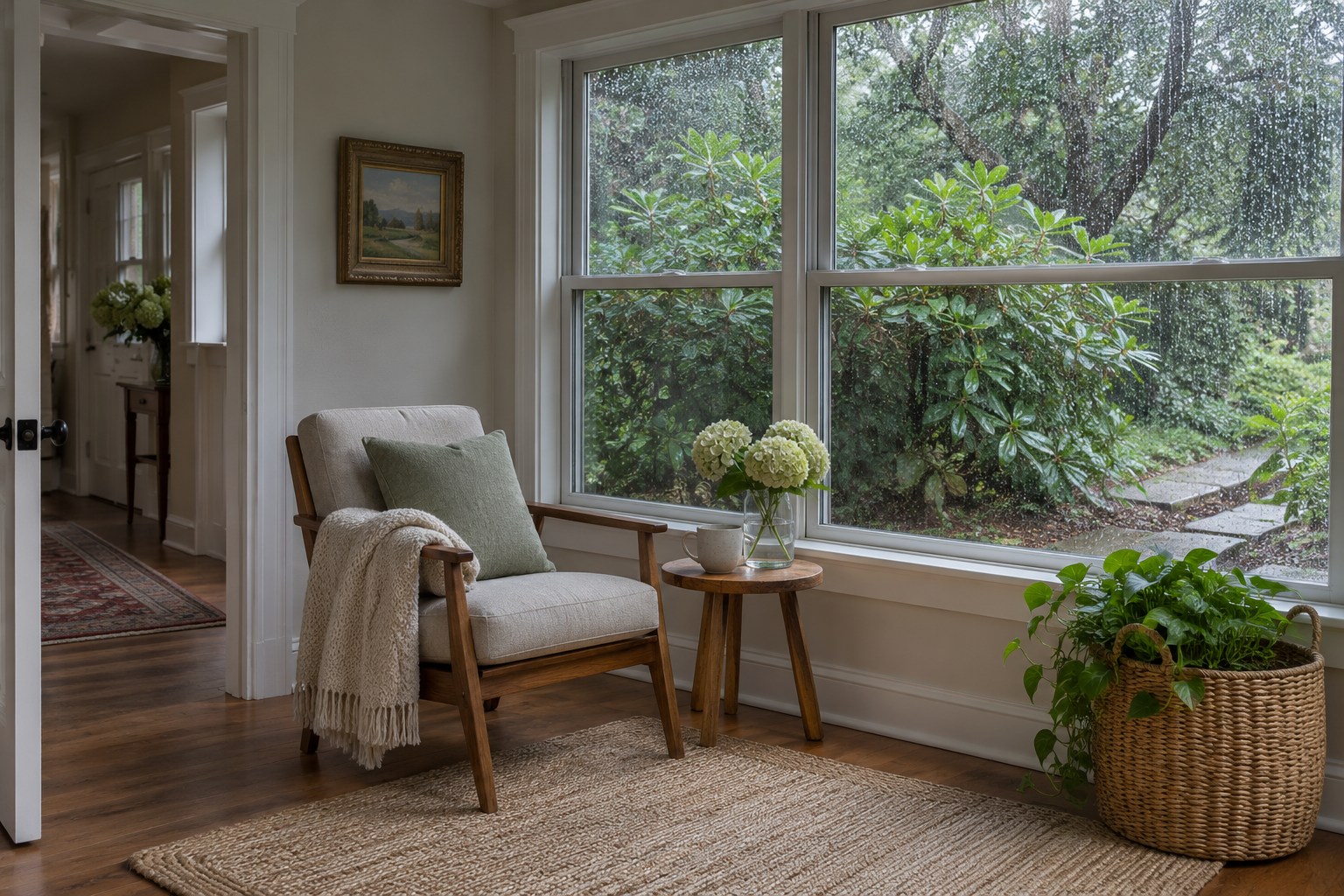
Find a seat where you already hear something you like outdoors. It might be rain on leaves beyond a protected window or birds from the garden early in the morning. Sit there at the time you normally pause or read. A small shift in the chair position can help you notice the sound without changing the whole room.
Try the spot for a few days. Close the window when the weather or outside noise makes that more comfortable. Give the chair a place where you can still see into the room or reach a book. An occasional sound from outside can become part of a familiar corner when the seat is easy to use.
15. Make a Small Seat Feel Sheltered
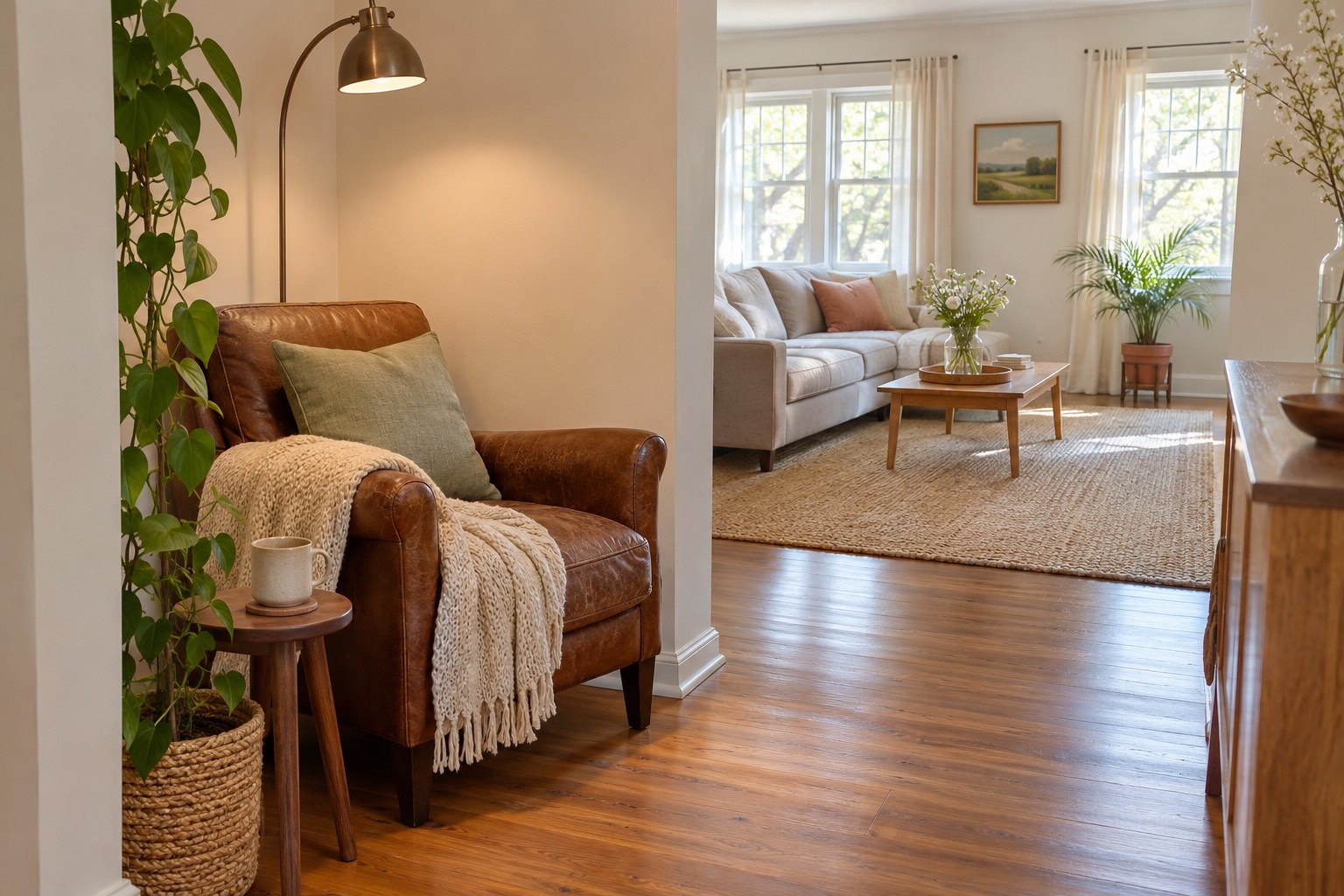
Put a chair where a wall is behind it and part of the room is open in front. An alcove or a shallow corner can give the seat a little shelter without closing it in. Sit there and see what you can look toward. A patch of daylight or a long view into the room can keep the corner connected to the rest of the house.
Keep one side easy to enter and leave room for the chair legs and a small table if you need one. Try reading there before buying more furniture. If the seat feels cut off, turn it a little toward the room. The wall can remain a backdrop while the opening gives your eyes somewhere to go.
16. Keep the Route to the Patio Open
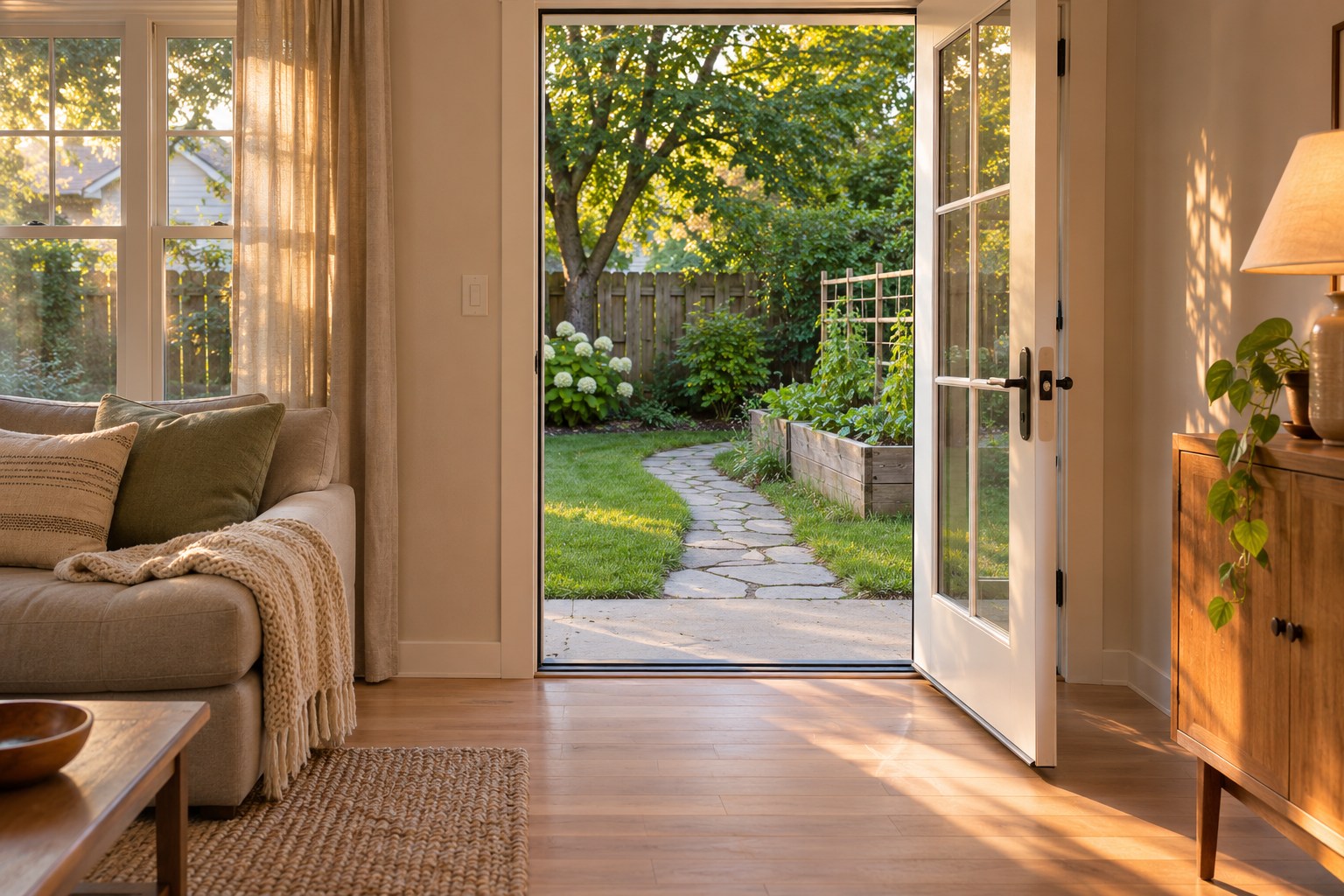
Look at the route from the room to the patio or balcony. Move any chair, large planter, or basket that makes it hard to reach the door. Try the route while carrying a cup or a folded blanket. Check the door swing and the place you need to stand while you open it.
Keep the threshold free of loose decor and put one natural detail where you can see it on the other side. A pot of greenery set back from the doorway can give the view a clear destination. Leave enough room to use the door and move between the two spaces without rearranging furniture.
17. Pick One Indoor Color From the View Outside
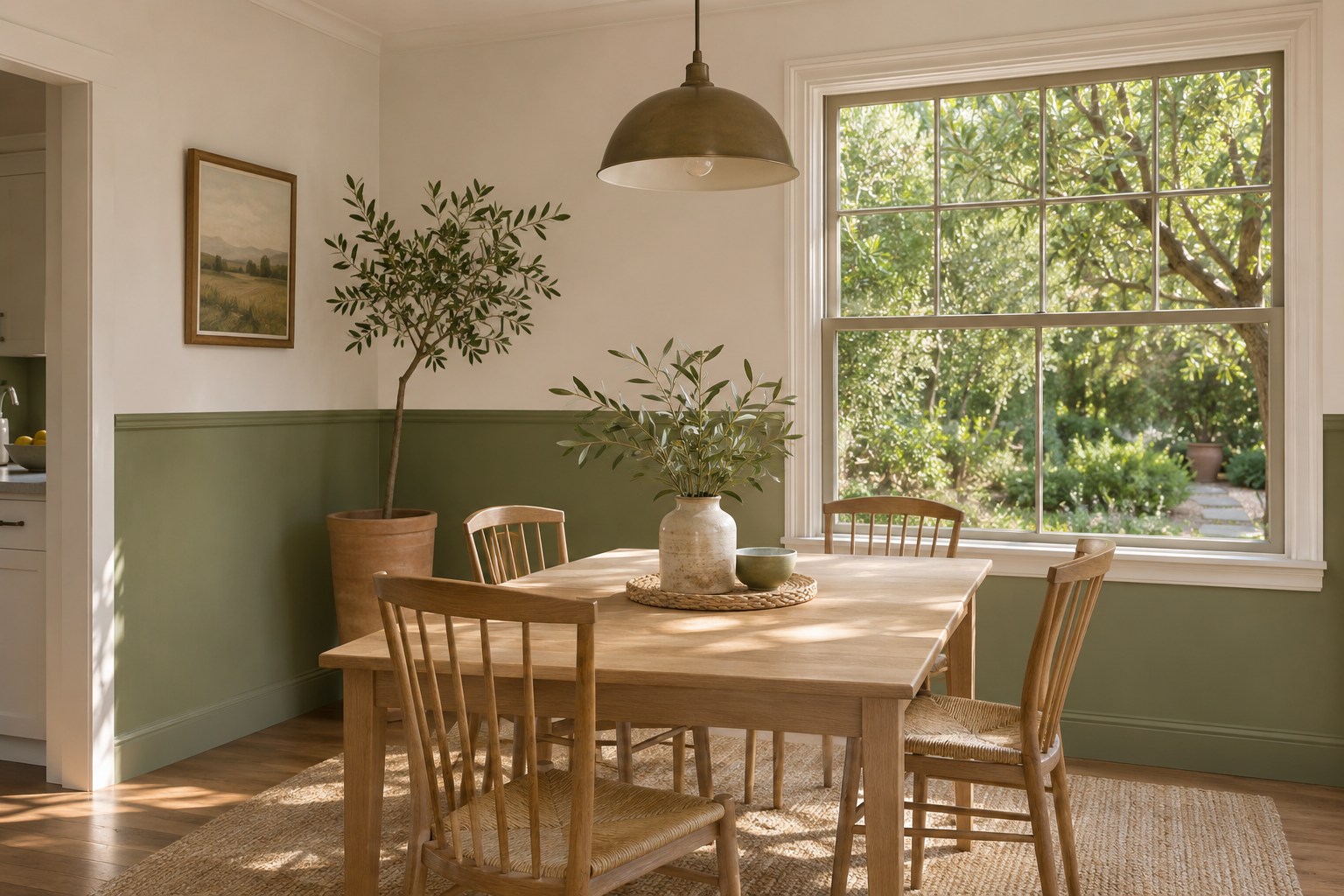
Choose one color you can actually see outside, such as the muted olive of a shrub or the warm gray of a stone path. Hold a sample near the window, then try it on a lower wall, a cabinet, or another surface you see from the room. Check whether the outside color and the sample still look related when the outdoor light changes.
Use a quieter version indoors if the first sample feels too strong on a large area. A small stretch of wall may be enough to connect the room to its view. These earth-tone color ideas show more colors to try beside wood, stone, and natural fabric.
18. Reflect a Garden View Into a Dimmer Corner
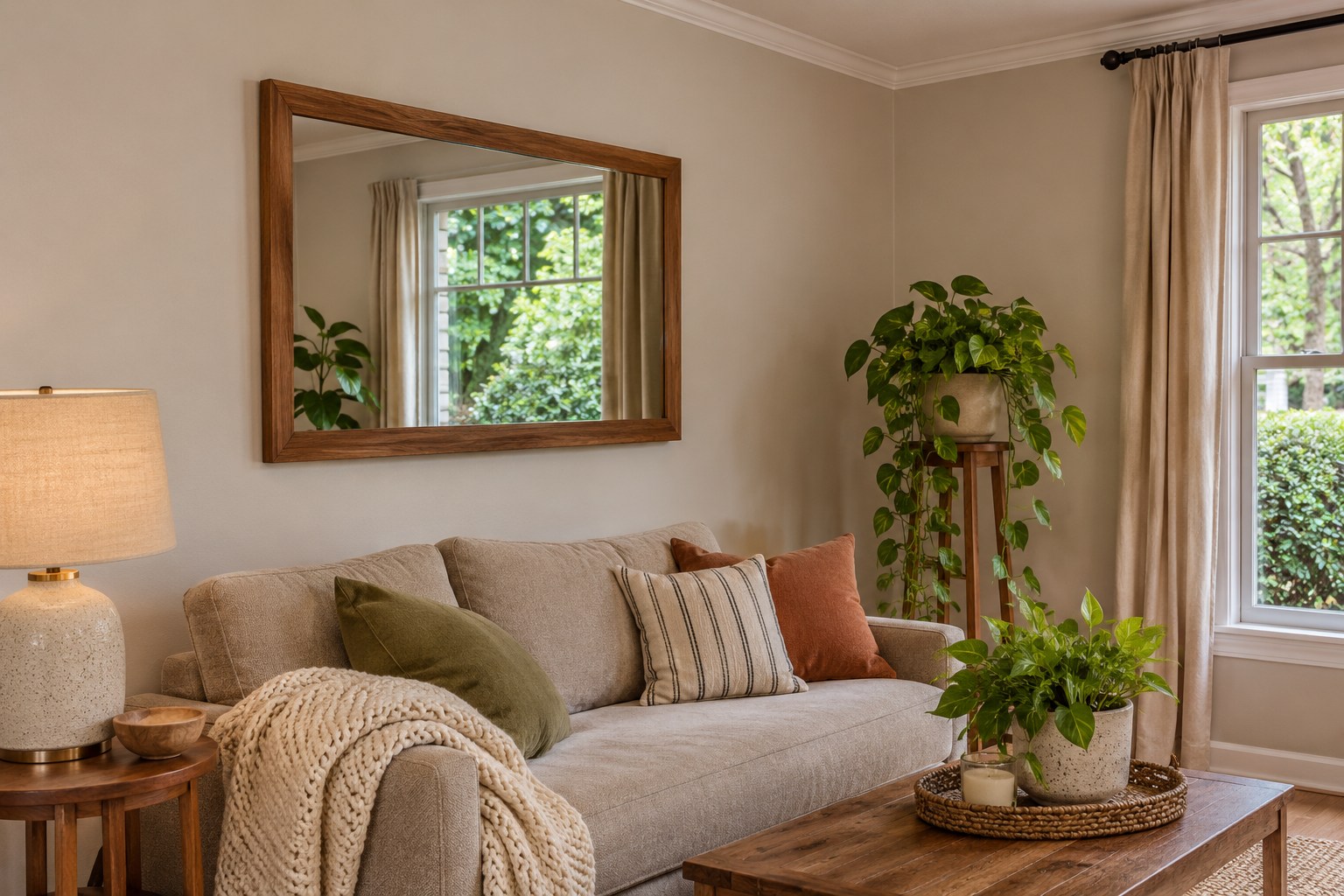
A small mirror can bring a view of greenery into a dimmer corner. Stand where you normally sit and hold a lightweight sample or use a helper to test the reflection before mounting the mirror. Try a place where it picks up leaves or a patch of open sky without throwing a bright spot into your eyes.
Check the reflection again at a different hour. Move the mirror if it mostly shows a walkway, a bright lamp, or another part of the room you don’t want to emphasize. Use mounting hardware appropriate for the wall and mirror. A modest reflection can be enough to make a darker corner feel connected to the window.
19. Use a Landscape Image Where the Outdoor View Is Limited
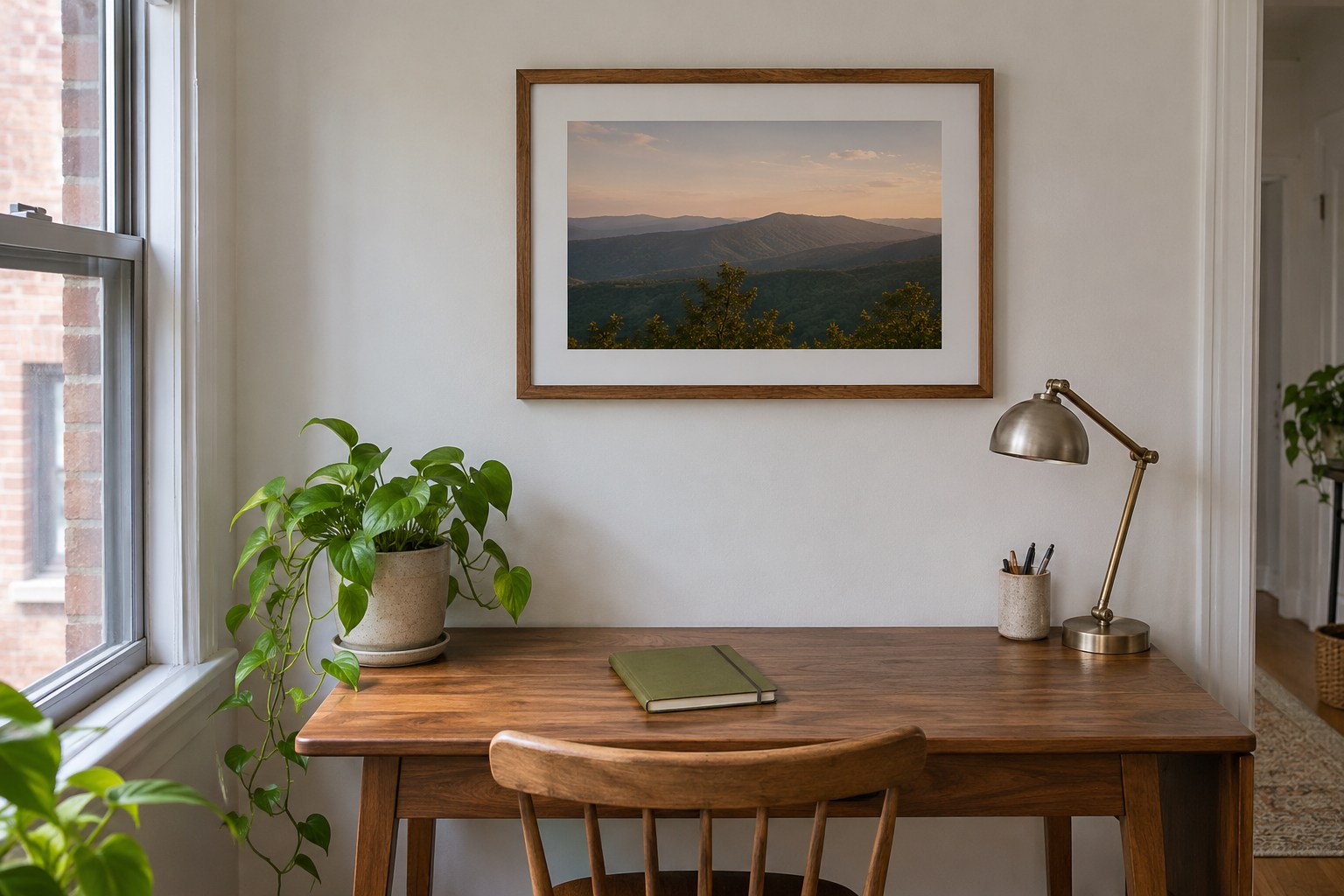
If your window mostly faces a wall or another building, try one landscape image where you can see it easily. A photograph of a mountain ridge, coast, or local woodland can bring a natural form into a daily view. Choose a size that reads from your normal seat. A print with a clear horizon often has enough detail without needing a full gallery wall.
Check for glare on the glass and try a different wall if the main window reflection sits across the picture. Leave a quiet area around the image so its shapes are visible. Pick a place you recognize or would like to look at regularly. The picture can carry its own quiet view.
20. Bring Out One Natural Texture After Dark
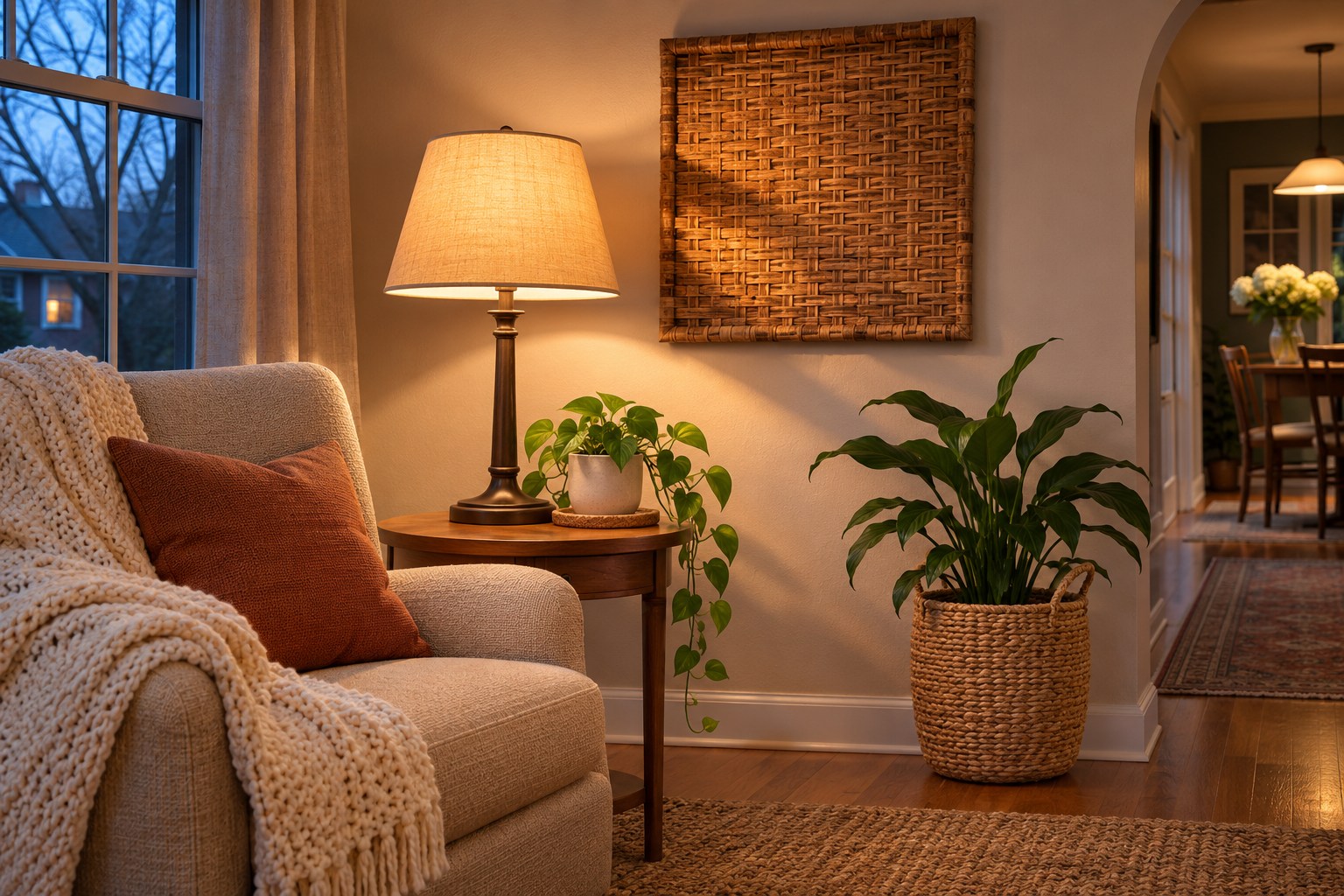
Use a shaded lamp to reveal a little natural texture after daylight fades. Try lighting the edge of a woven panel, the grain of a wood cabinet, or a low pottery vessel. Put the lamp on a stable surface and move it a little to the side so you can see where the shadows fall. The material should still read from the seat you use most.
Check how bright the lamp looks at eye level and keep the fixture clear of surrounding materials as directed by its maker. Leave the area open enough to use its main surface. One natural detail can remain visible after dark even when the garden view has gone quiet.
Pick one room and pay attention to what nature already brings into it. Clear a view, give a plant a reachable place, or bring light across a natural material you use. Live with the change for a few days. Keep the detail that still feels useful when you are busy and the light has changed.
Discover more from HomeTrendora
Subscribe to get the latest posts sent to your email.