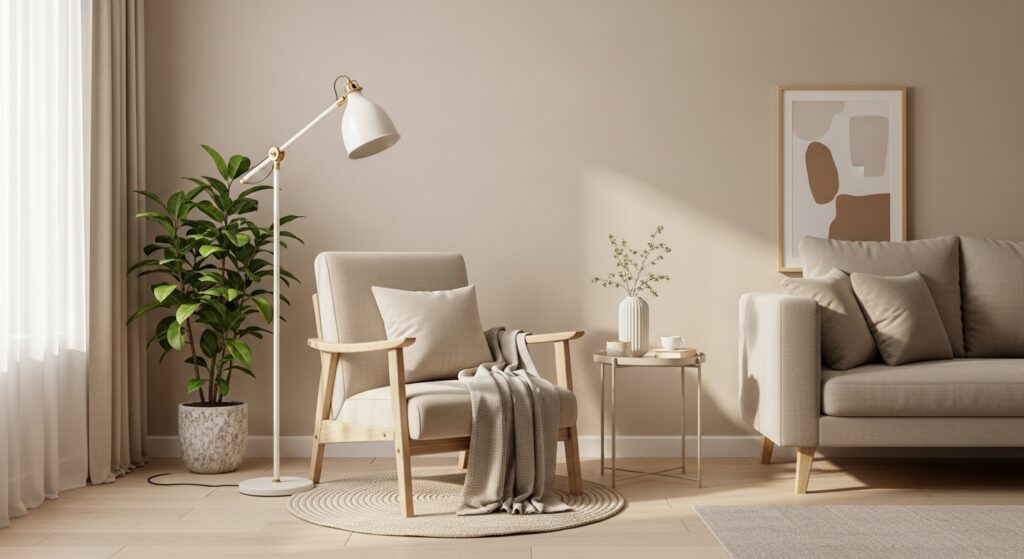
Industrial decor can leave an ordinary room feeling hard and unfinished when every new piece is metal, brick or gray. These 26 industrial chic interior ideas help you choose where to add structure, where to soften it and which changes will serve a real purpose in your home.
You can work with the room you have. Look for one strong material already present, such as wood flooring, an old brick wall or dark window frames, then build around it. Choose furniture for its storage and seating job first. The contrast between a useful steel frame and a comfortable fabric surface often does more than a collection of factory-themed ornaments.
Browse all 26 ideas
- 1. Start With One Useful Steel-and-Wood Storage Piece
- 2. Use a Curved Metal Console to Break Up Straight Lines
- 3. Let an Existing Brick Wall Stay the Main Texture
- 4. Paint One Recess a Soft Charcoal
- 5. Try a Concrete-Look Finish on One Small Plane
- 6. Repeat Black Trim in Just a Few Places
- 7. Bring Window Geometry in With a Framed Mirror
- 8. Soften Large Windows With Full-Length Linen-Look Panels
- 9. Ground Thin Metal Legs With a Textured Rug
- 10. Choose a Round Coffee Table for a Tight Seating Route
- 11. Use Cognac Leather as the Warm Midtone
- 12. Add One Upholstered Chair in Muted Olive
- 13. Warm a Gray Room With Clay-Colored Textiles
- 14. Put an Adjustable Task Lamp Where You Read
- 15. Choose Diffused Pendant Light Over Exposed Glare
- 16. Light Textured Walls From a Useful Angle
- 17. Keep Wood Shelves Shallow and Purposeful
- 18. Hide Busy Supplies Behind Fluted Glass
- 19. Use a Metal Cart as a Dry Work-Supply Station
- 20. Organize a Work Wall With a Simple Wire Grid
- 21. Pair Industrial Stools With a Warmer Counter Surface
- 22. Give a Dining Bench a Fitted Seat Cushion
- 23. Choose One Large Graphic Artwork
- 24. Use a Low Closed Cabinet to Quiet Open Shelves
- 25. Bring in Greenery With One Substantial Planter
- 26. Finish With Hardware That Repeats the Room’s Metal
1. Start With One Useful Steel-and-Wood Storage Piece
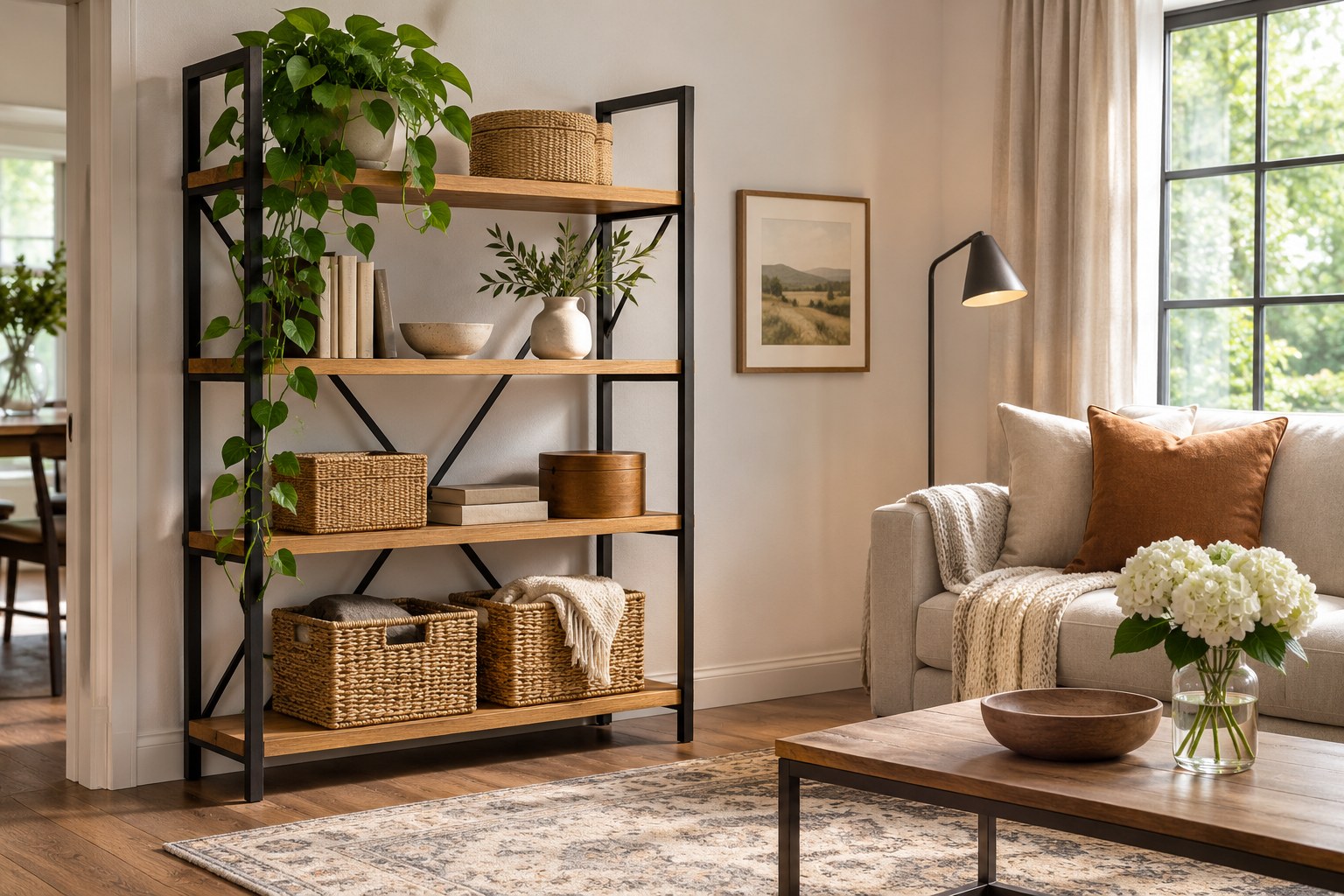
Choose one storage piece with a clearly visible metal frame and a warm wood or wood-look surface. Give it a real task, such as holding books beside the sofa, rather than buying several matching pieces at once.
Measure what it needs to hold and how you will reach the lowest shelf. A few closed boxes can contain mixed supplies while leaving part of the frame visible. Keep the neighboring wall and large upholstery simple enough for the material contrast to show. If every shelf needs another basket before you can use it, a partly closed cabinet may suit the room better. Follow the maker’s load and anchoring instructions, particularly for tall storage. The industrial character should come from a useful form, not from filling open shelves with unrelated props.
2. Use a Curved Metal Console to Break Up Straight Lines
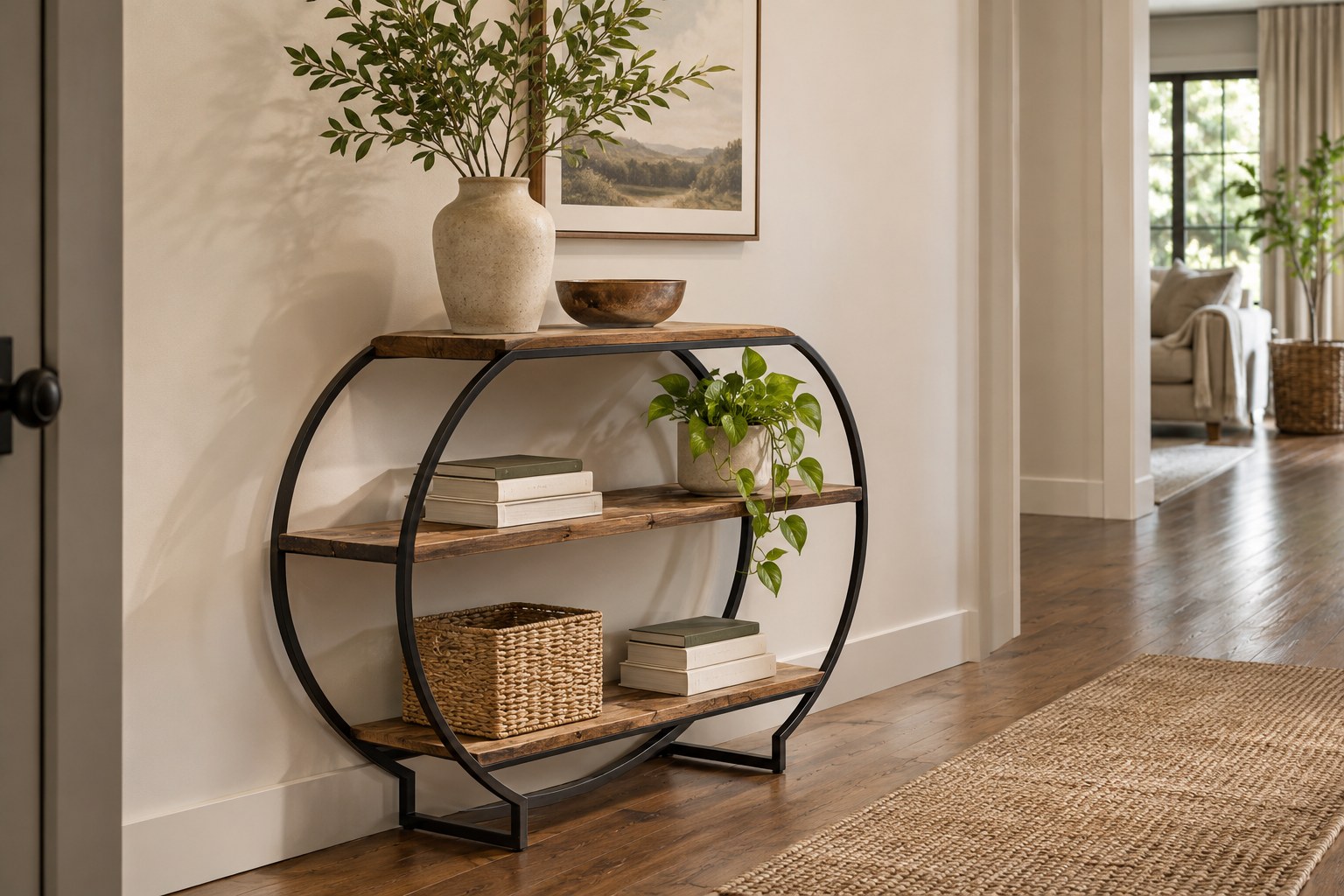
A console with a curved or circular metal frame gives an industrial room a softer outline without introducing a different furniture style. It can hold a small collection of books and everyday objects while the structure remains visible.
Check its depth against the actual passage, including anything that projects from the shelves. A console that looks slim in a photograph still needs room for someone to pass and reach its contents. Use the widest shelf for a few stable objects, then leave smaller openings partly empty. Warm brown shelves work comfortably beside cream walls and a simple black frame. Avoid describing a wood-look manufactured panel as reclaimed timber; the visual effect and the material’s actual construction are separate decisions.
3. Let an Existing Brick Wall Stay the Main Texture
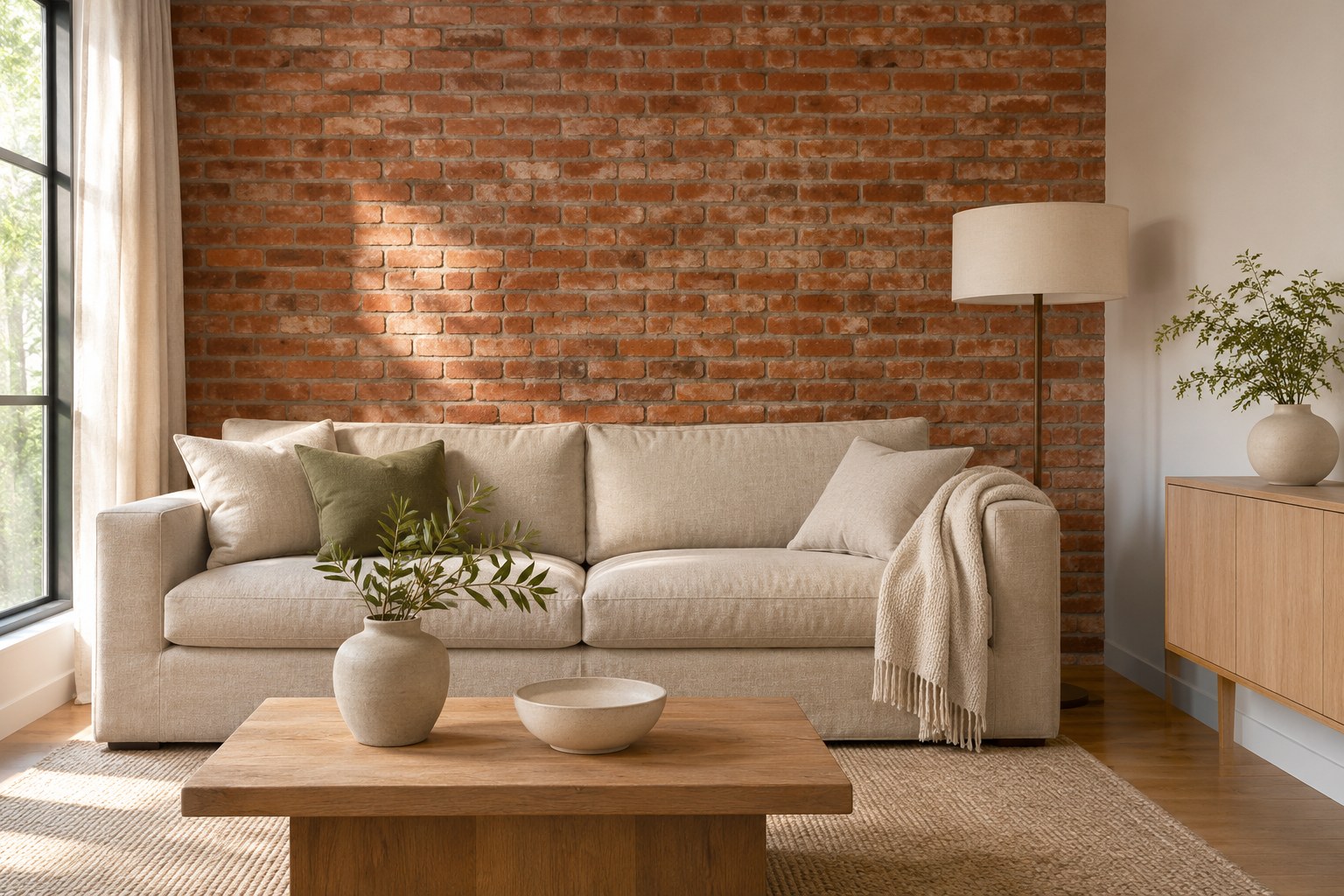
When the room already has exposed brick, treat it as the busy surface. Place a sofa with a plain upholstery weave against it and let nearby tables have quieter tops. This makes the wall readable without adding more rough textures at every height.
Look at the brick in the light you normally use. Orange-red masonry can already supply much of the room’s warmth, so a softer neutral rug may work better than another reddish pattern. Keep artwork large and selective if you hang it there, using supports suited to the masonry and the item’s weight. Check any cleaning or finish treatment with a product intended for that substrate. There is no need to strip a sound finished wall simply to manufacture a brick feature.
4. Paint One Recess a Soft Charcoal
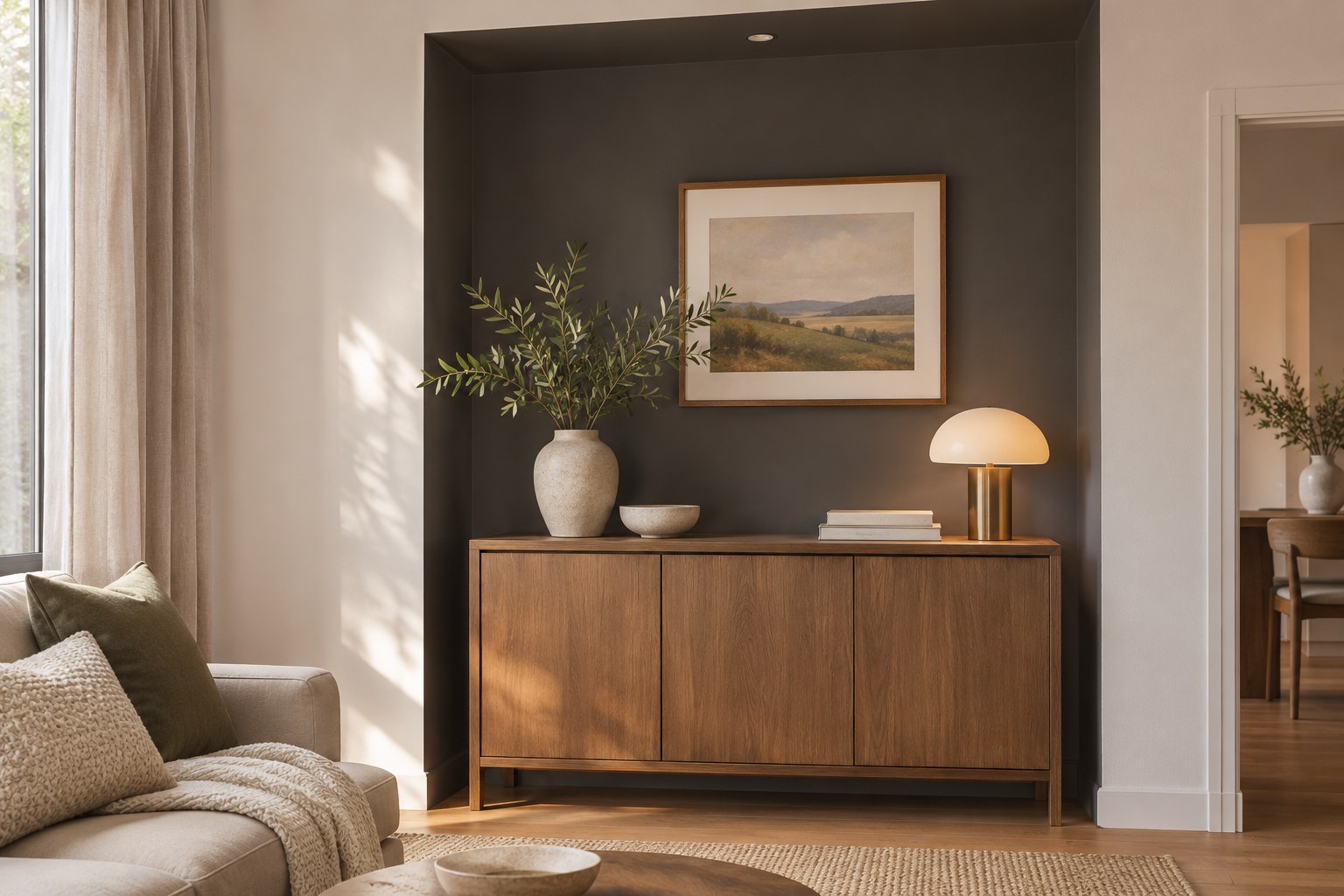
A shallow alcove provides a natural boundary for charcoal paint. The darker surface can sit behind a wood cabinet or a few pale ceramics, with lighter walls continuing around the rest of the room.
Test a large sample beside the floor and the furniture that will remain. Charcoal can lean blue, brown or green, and the shift matters beside warm wood. Check the sample in daylight and under the evening lamps before painting. Keep the alcove’s contents restrained so its depth does not disappear behind a dense display. If the room is dim, try the color on the back panel of a smaller recess first. Our interior paint color ideas show other ways to give a strong color a deliberate stopping point.
5. Try a Concrete-Look Finish on One Small Plane
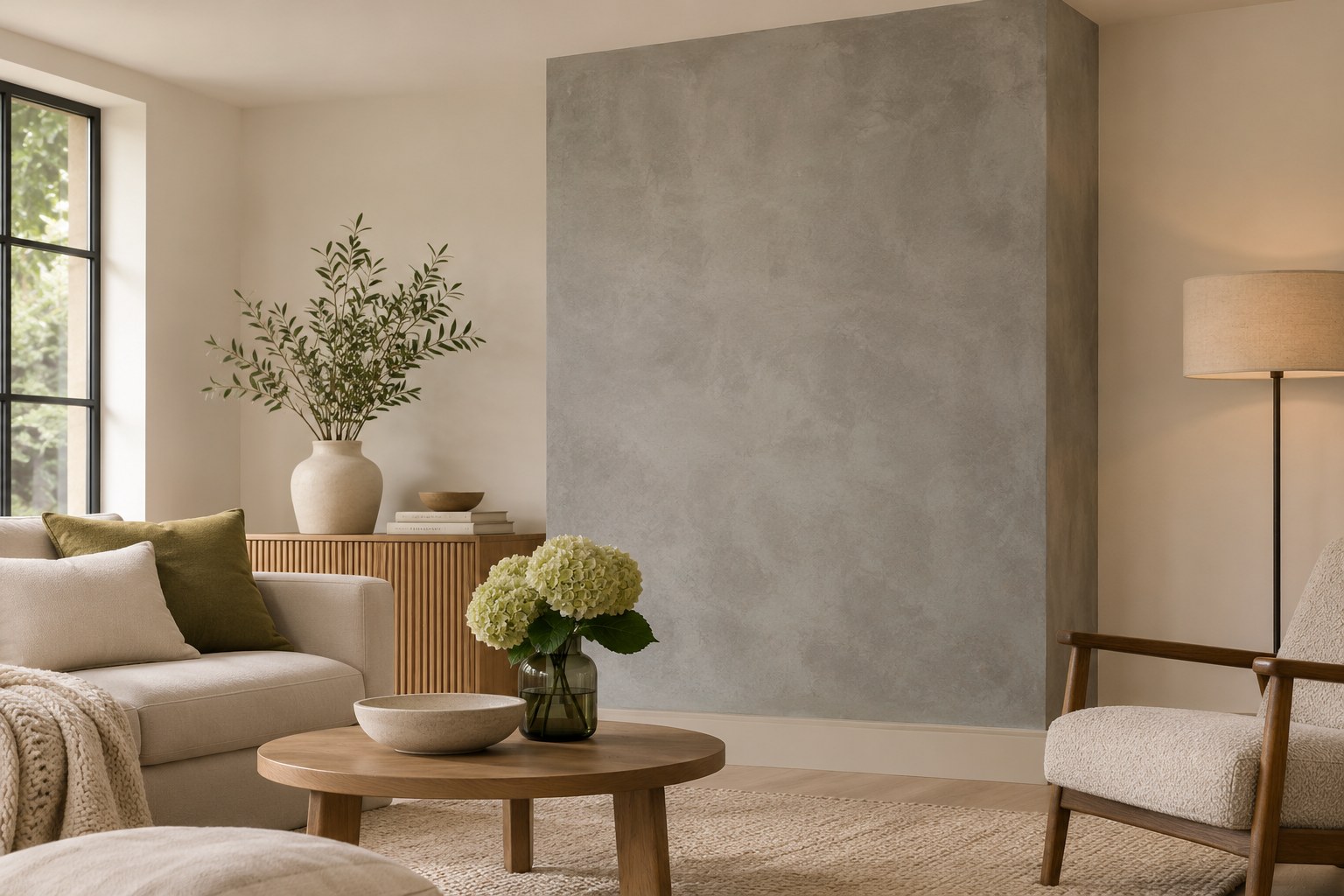
A concrete-look finish can introduce a quiet mineral surface on a chimney breast, a short wall or a furniture panel. Choose a coating system intended for the existing substrate rather than assuming any gray paint will produce the same effect.
Make a sample board with the actual application method and look at it beside the room’s wood and fabric. A heavily mottled finish can compete with brick, so use a calmer version when the room already has strong texture. Follow the product’s preparation, drying and suitability instructions, including any limits around heat or moisture. Leave structural concrete work and uncertain wall conditions to the appropriate professional. The goal here is a manageable decorative surface that relates to the room, with smooth neighboring areas to keep it from feeling crowded.
6. Repeat Black Trim in Just a Few Places
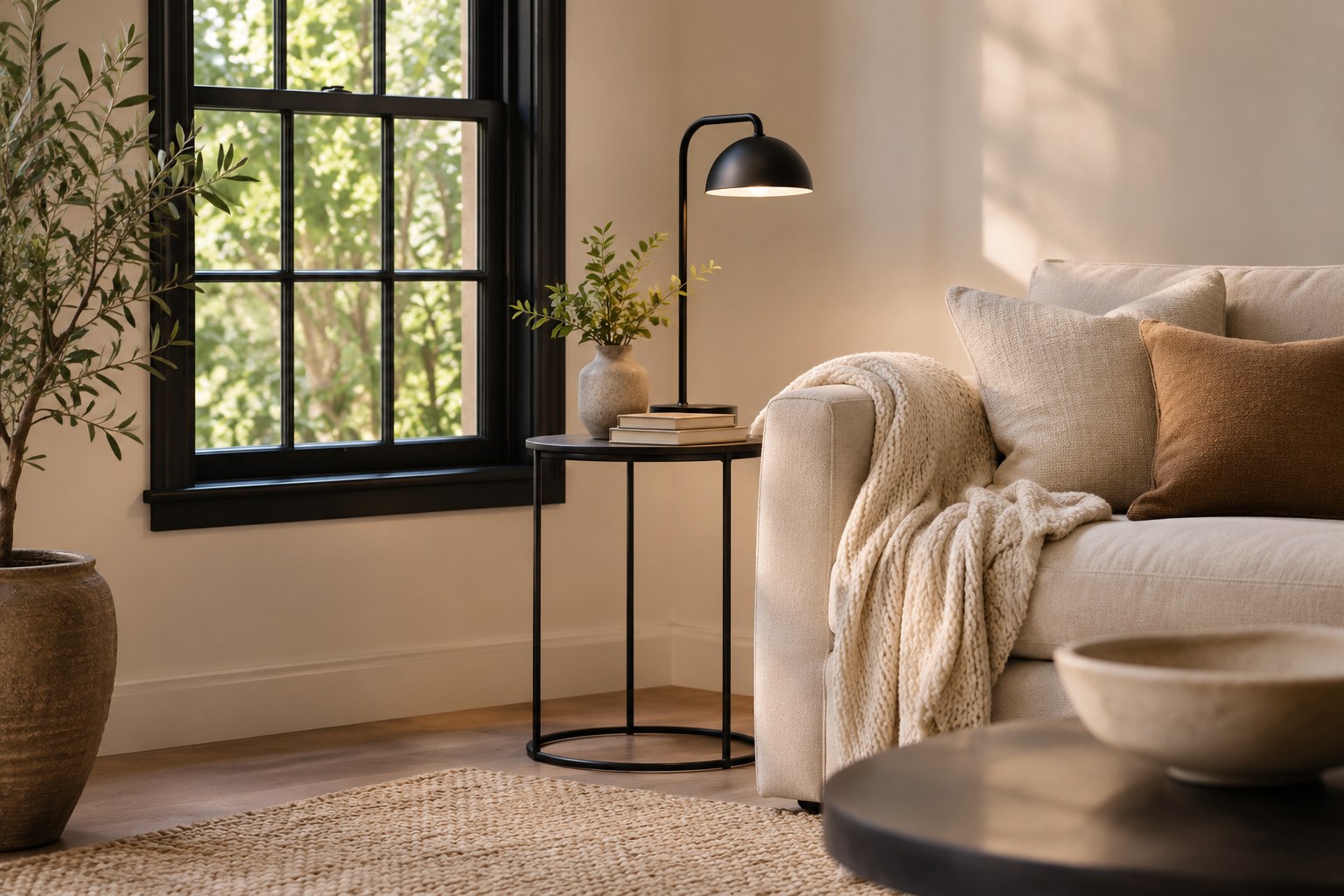
Connect a black window frame to a small lamp and a table base, then stop and look at the whole room. A few repeated dark lines can establish a material relationship without outlining every doorway, shelf and object.
If you plan to repaint trim, check its material, condition and the coating requirements before choosing a finish. A black sample may appear much sharper against creamy walls than it does on a screen. Keep the largest furniture comfortable and relatively quiet so the room has something besides dark edges. You can achieve the repetition with existing furniture and frames even when changing the window finish is impractical. Try removing a black accessory if the room begins to look like a collection bought as one matching set.
7. Bring Window Geometry in With a Framed Mirror
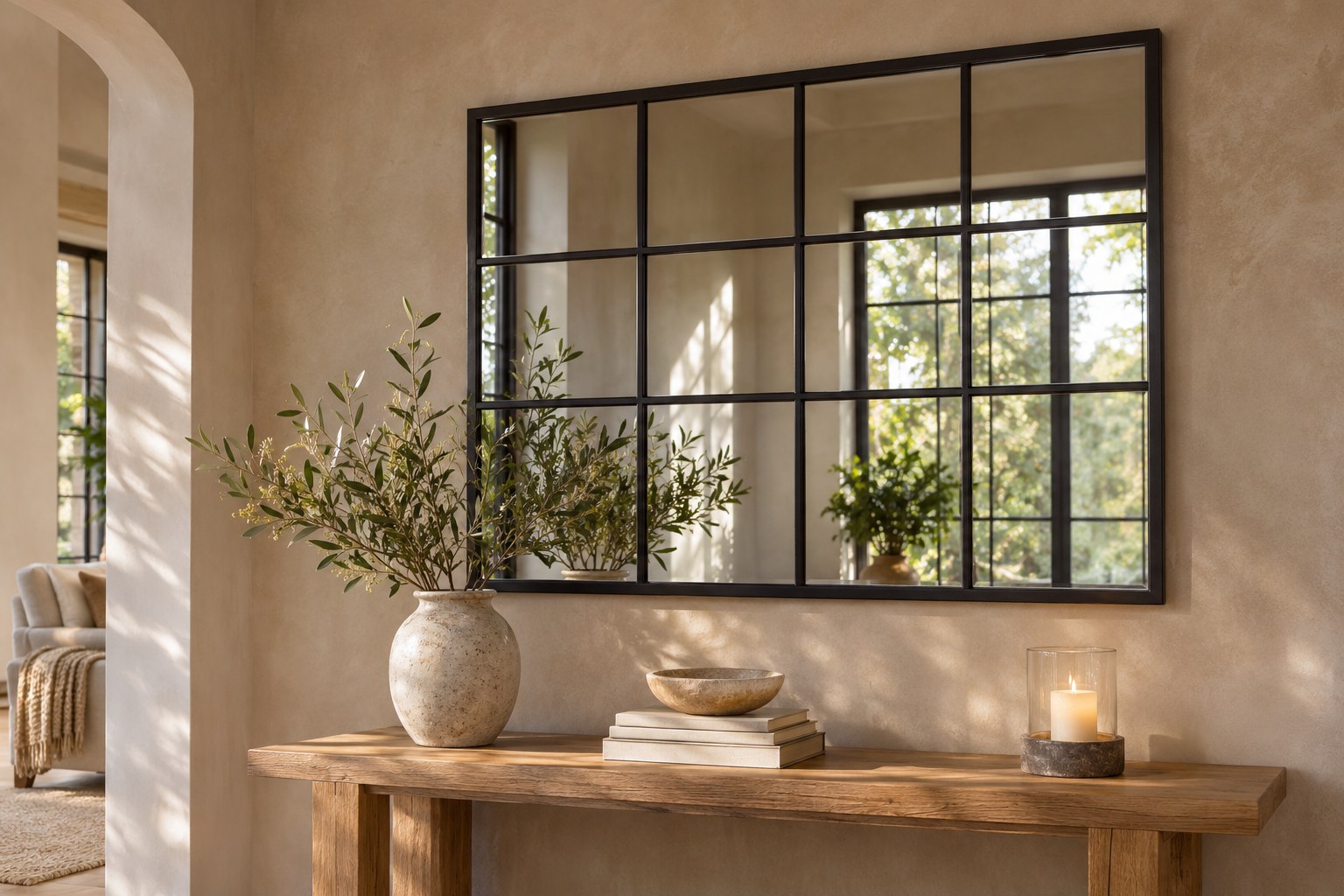
A mirror with a simple grid frame can suggest industrial window geometry without changing the real glazing. Put it where the reflection contributes daylight or a useful view, rather than reflecting a crowded storage wall.
Test the shape with a paper outline and check it from the main seat as well as the doorway. A grid has more visual activity than a plain mirror, so give it space from small patterned artwork. Use the mounting method recommended for the mirror and your wall; a heavy frame should not depend on decorative trim for support. A warm wood console below can keep the black geometry from feeling severe. In a small room, one clear reflected view is usually more useful than several mirrors competing with one another.
8. Soften Large Windows With Full-Length Linen-Look Panels
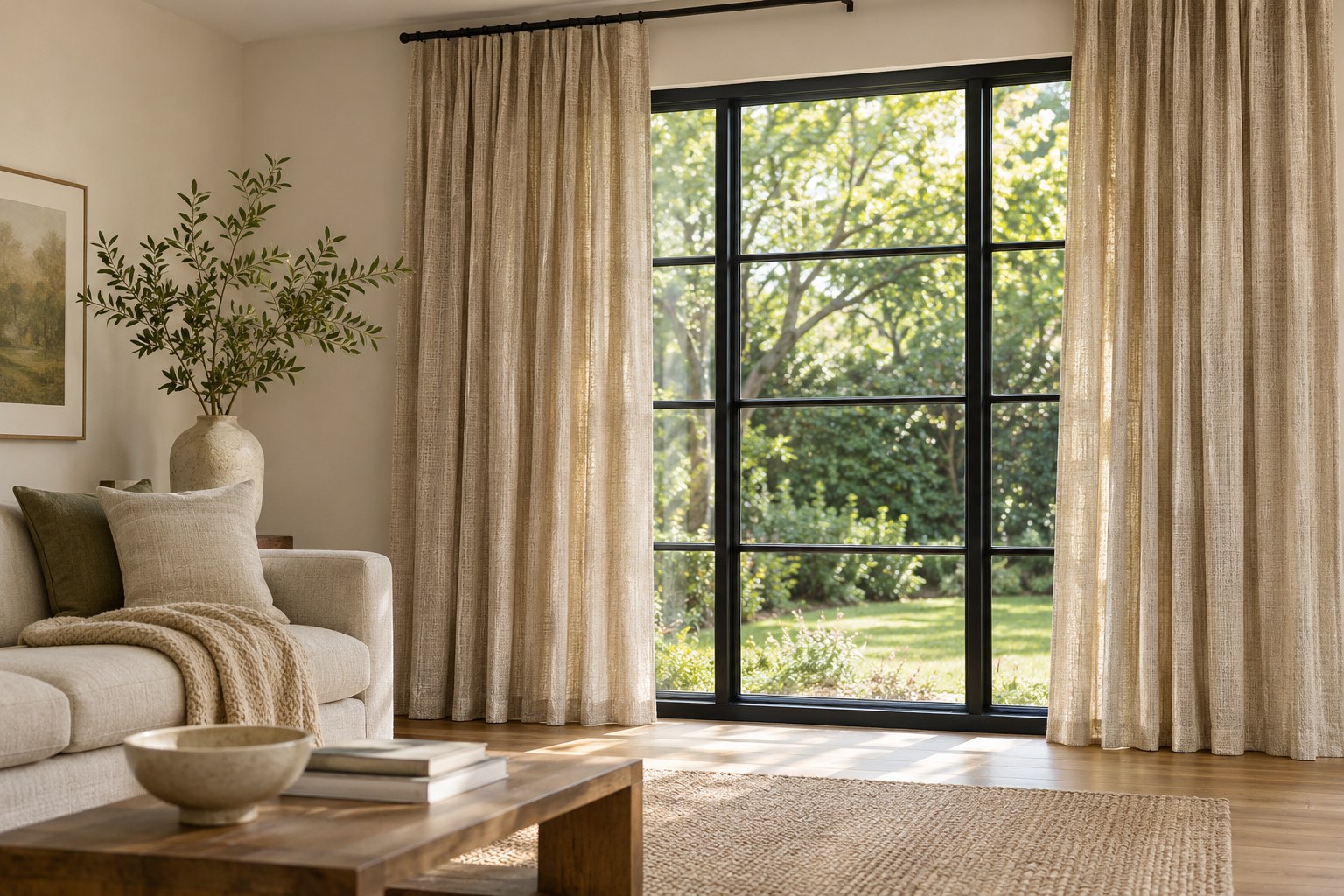
Fabric can soften a room full of straight metal lines. Choose an oatmeal, flax or warm white weave that remains distinct from the wall, then check the curtain’s opacity against the privacy you actually need.
Give the panels enough usable room to open and stack without covering the window controls. Check heaters, vents and door movement before settling on the hem and rod position. A simple heading suits the restrained geometry; the texture can supply the detail. If the window is off center, our living room curtain ideas for an off-center window explore how to choose the visual center and account for the different wall widths. Keep the industrial frame visible where it is a feature rather than hiding it under many layers.
9. Ground Thin Metal Legs With a Textured Rug
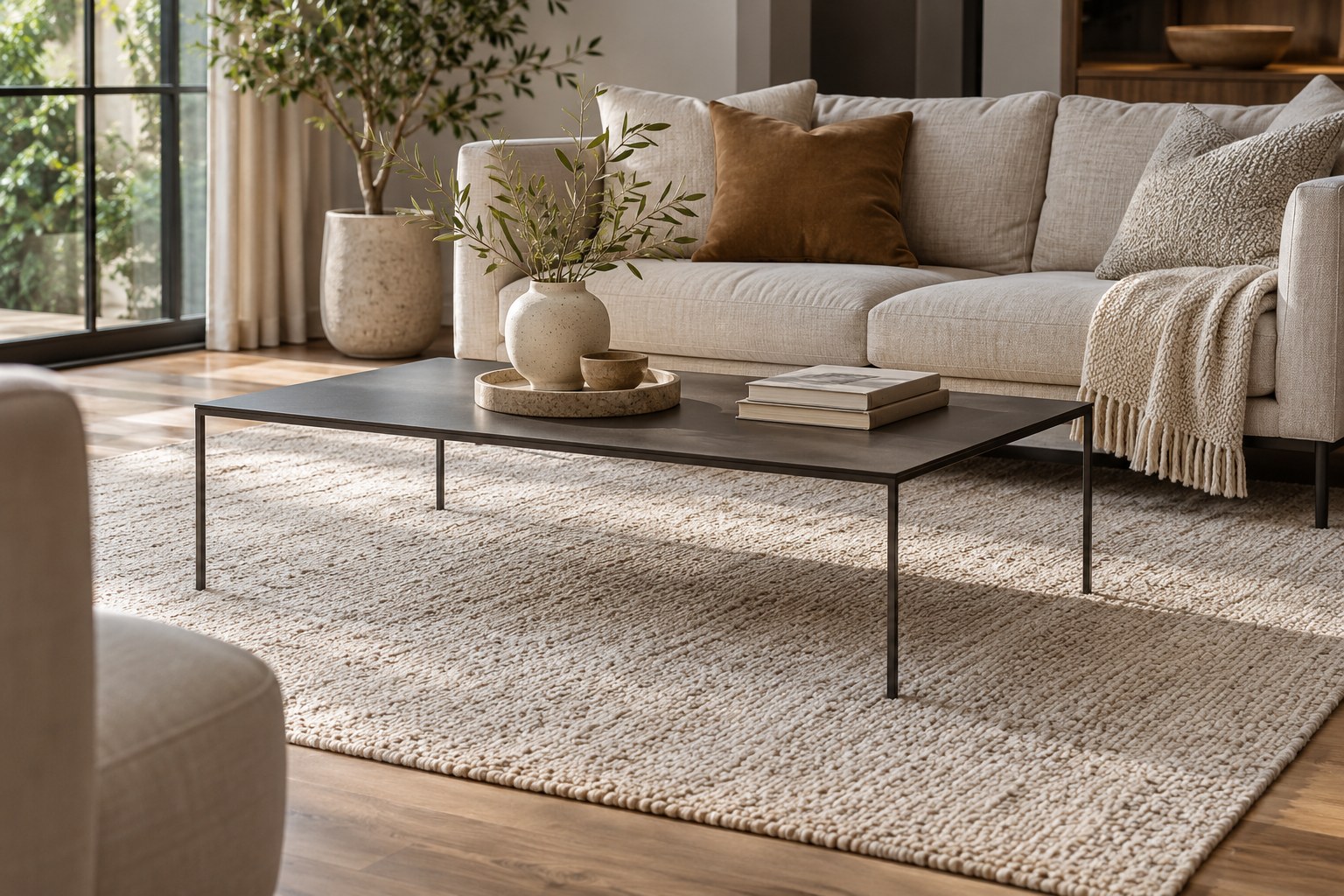
An open steel coffee-table base can look disconnected on a bare hard floor. A textured rug gives the seating area a softer surface and a defined place to gather, while leaving the furniture’s frame visible.
Mark the intended rug boundary on the floor with a temporary method suitable for the finish. Check the sofa and chair positions as you actually use them, not with everything pushed against the wall. Choose a rug and any underlay appropriate to the floor and traffic, and keep exposed edges out of the main walking route. A quiet woven texture works well when the brick or shelving already provides pattern. Make sure the table’s feet sit steadily on the finished surface instead of balancing across an awkward ridge.
10. Choose a Round Coffee Table for a Tight Seating Route
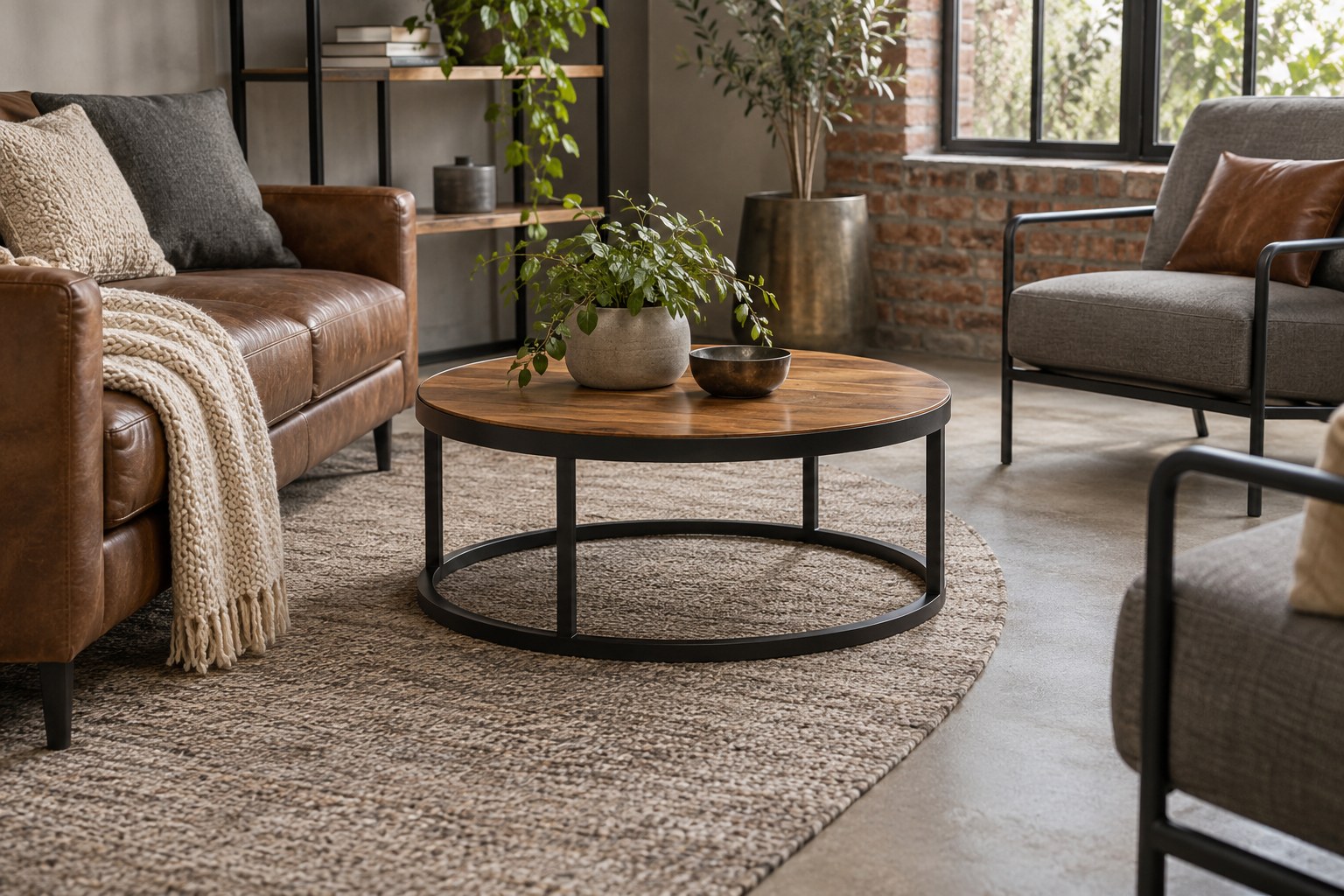
Keep the steel-and-wood material combination but change the table’s shape when a sharp corner sits in the route to the sofa. A round top can make that particular turn feel less obstructed, provided the diameter suits the available floor space.
Mock up the footprint with paper and walk around it with the chairs in their normal positions. Check that a seated person can reach a drink without leaning across the entire table. A lower shelf is useful only if you can get to it without moving the table every time. Choose a stable piece with a usable top, and keep the display low enough that the surface still works. The curved outline is the decision here; buying an undersized table simply because it is round will not solve an inconvenient layout.
11. Use Cognac Leather as the Warm Midtone
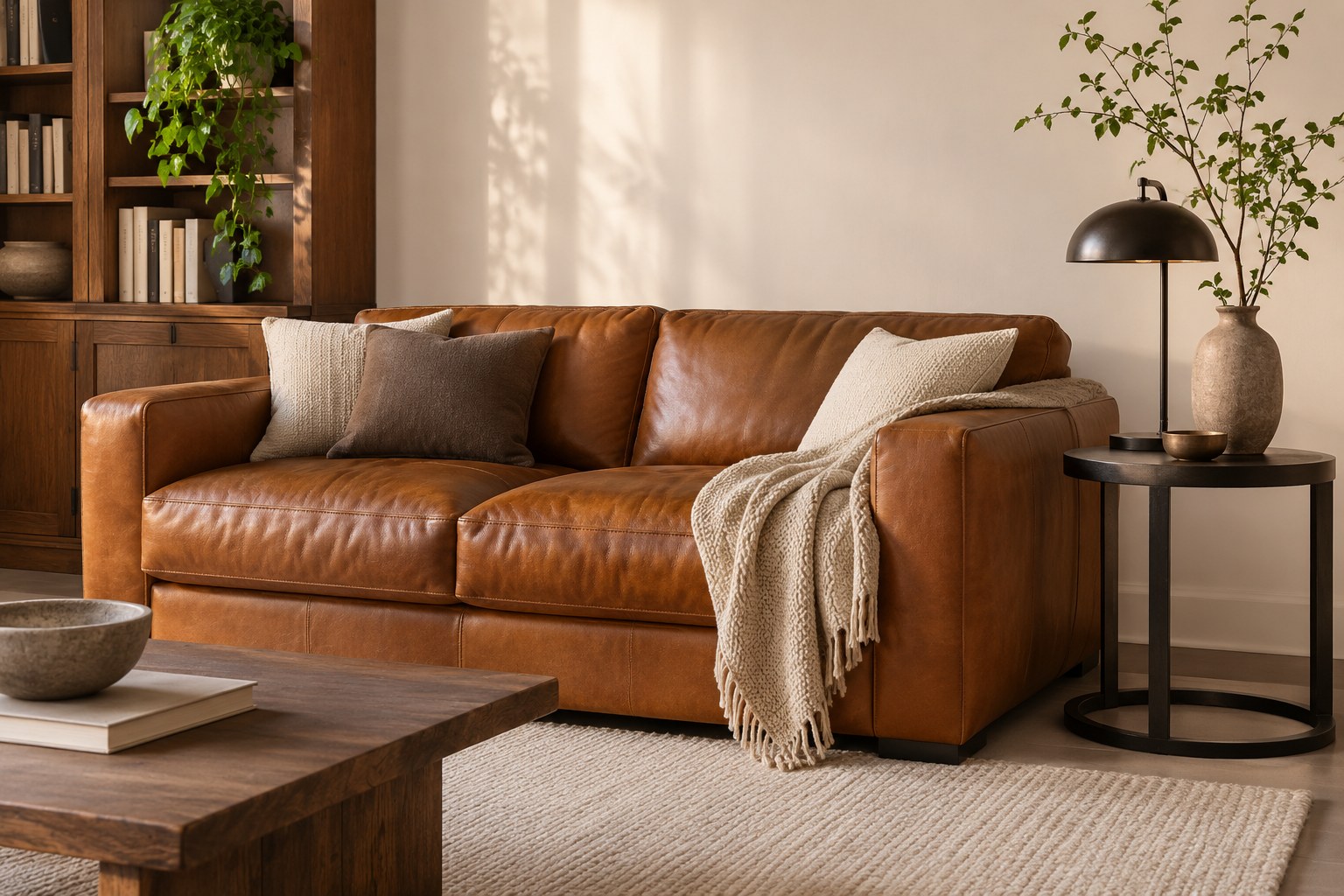
One substantial cognac or warm brown seat can connect dark metal to wood flooring. Let its soft surface carry much of the room’s color instead of adding several smaller brown ornaments.
Compare the upholstery sample with the actual wood. A very orange leather finish may exaggerate orange flooring, while a quieter brown can make the combination feel calmer. Choose a seat for comfort, dimensions and care requirements before choosing its decorative role. If you prefer another upholstery material, keep the same midtone relationship and introduce warmth through its color and weave. Pair the seat with a pale rug or wall so its shape remains distinct. Avoid buying artificially worn furniture on the assumption that every industrial room needs distressed surfaces.
12. Add One Upholstered Chair in Muted Olive
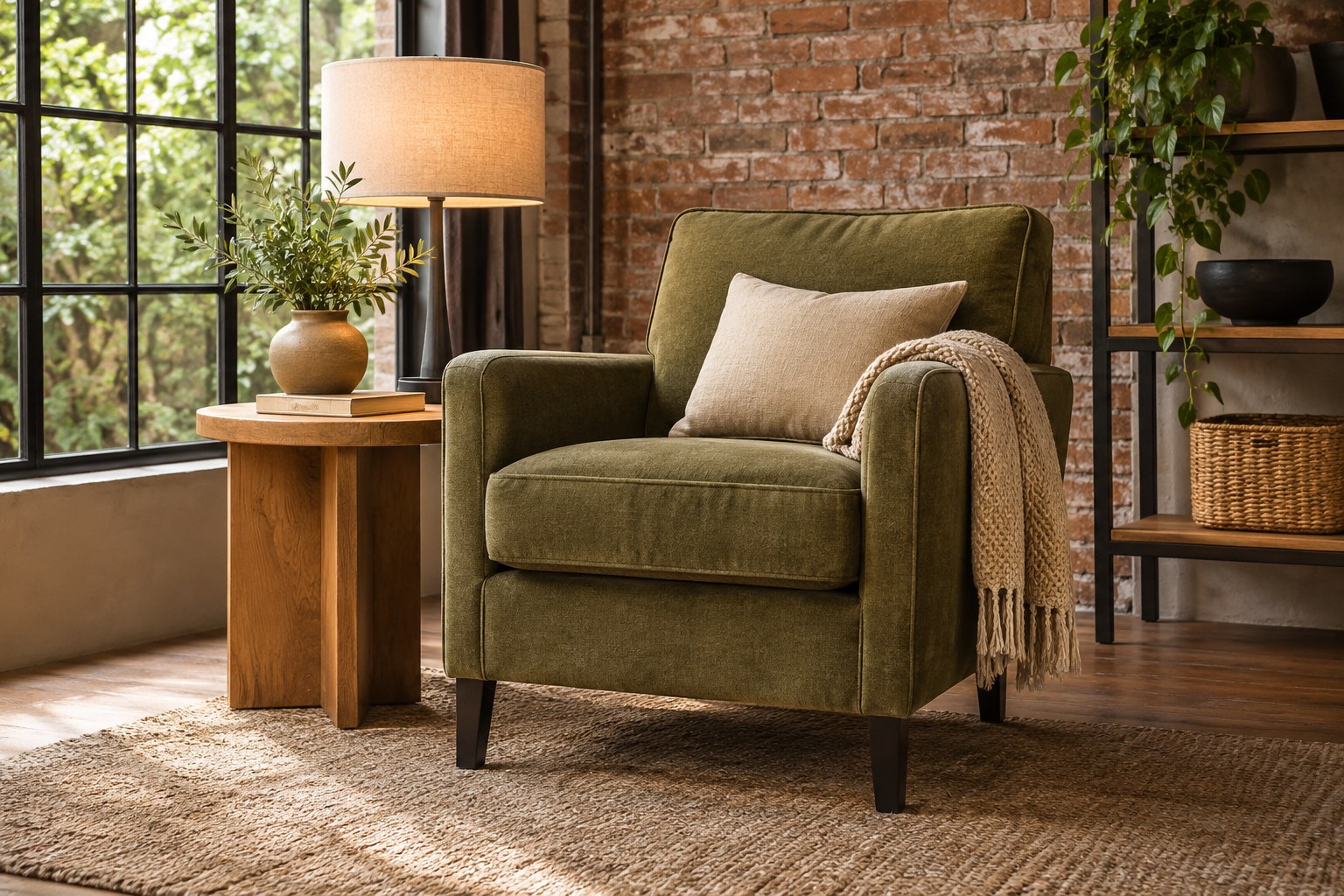
A muted olive chair brings color and a soft place to sit into a room dominated by black frames and brown wood. Choose a simple upholstered shape that gives the eye a break from exposed structure.
Place it where the seat has a useful view, a reachable side table and room to get up comfortably. Try the fabric sample beside the wood and the room’s main neutral; some greens become much yellower in warm evening light. Repeat the green in one small item only if the room needs a connection. A chair should not have to squeeze between a console and the sofa merely to complete a palette. Keep the surrounding side table light in outline so the chair remains the comfortable focal point.
13. Warm a Gray Room With Clay-Colored Textiles

Clay and muted rust work well as replaceable textile accents when a gray industrial room feels flat. Start with one cushion cover or throw and compare its warmth against the sofa before adding a larger patterned piece.
Choose a texture the room lacks. A woven cushion can complement smooth leather, while a softer throw can temper a rigid metal chair. Keep its placement useful rather than draping fabric across a walking route or piling up cushions that must be removed to sit down. The color should form a deliberate small group, not appear in every accessory. If the walls and brick are already warm, a quieter flax or oatmeal textile may provide the balance you need instead.
14. Put an Adjustable Task Lamp Where You Read
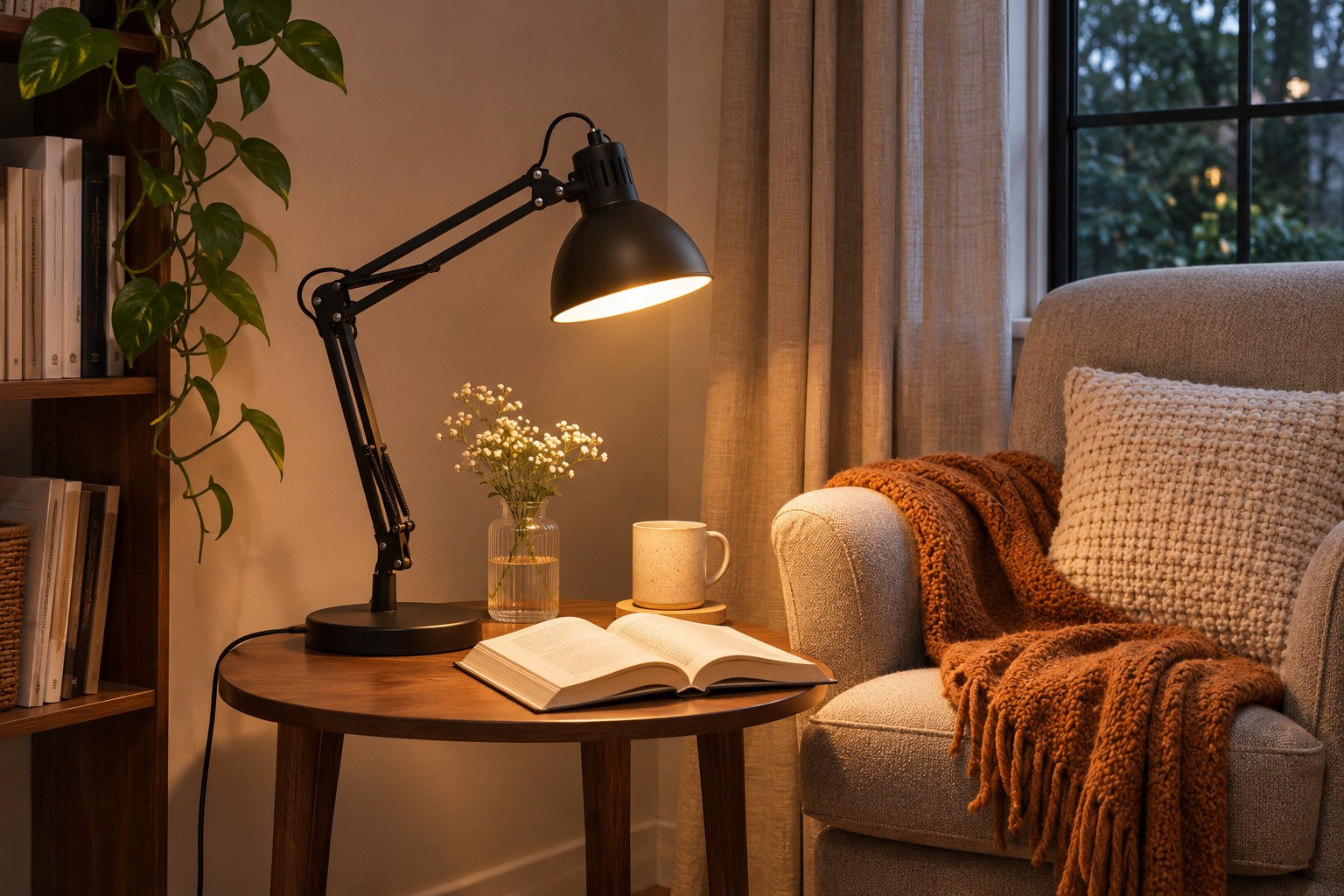
An articulated metal lamp earns its industrial form by directing light at a real task. Place it beside a reading chair or on a desk where the shade can move without hitting the wall or the person using the seat.
Try the light with a book open in your usual position. Adjust the angle until the page is lit without an exposed bulb shining into your eyes. Use the bulb type and rating specified for the fixture, and keep the cord out of the route to the chair. A dark metal body can connect to nearby shelving while warm wood and upholstery soften the corner. Choose the lamp’s reach and stability over a dramatic shape that only illuminates the wall behind you.
15. Choose Diffused Pendant Light Over Exposed Glare
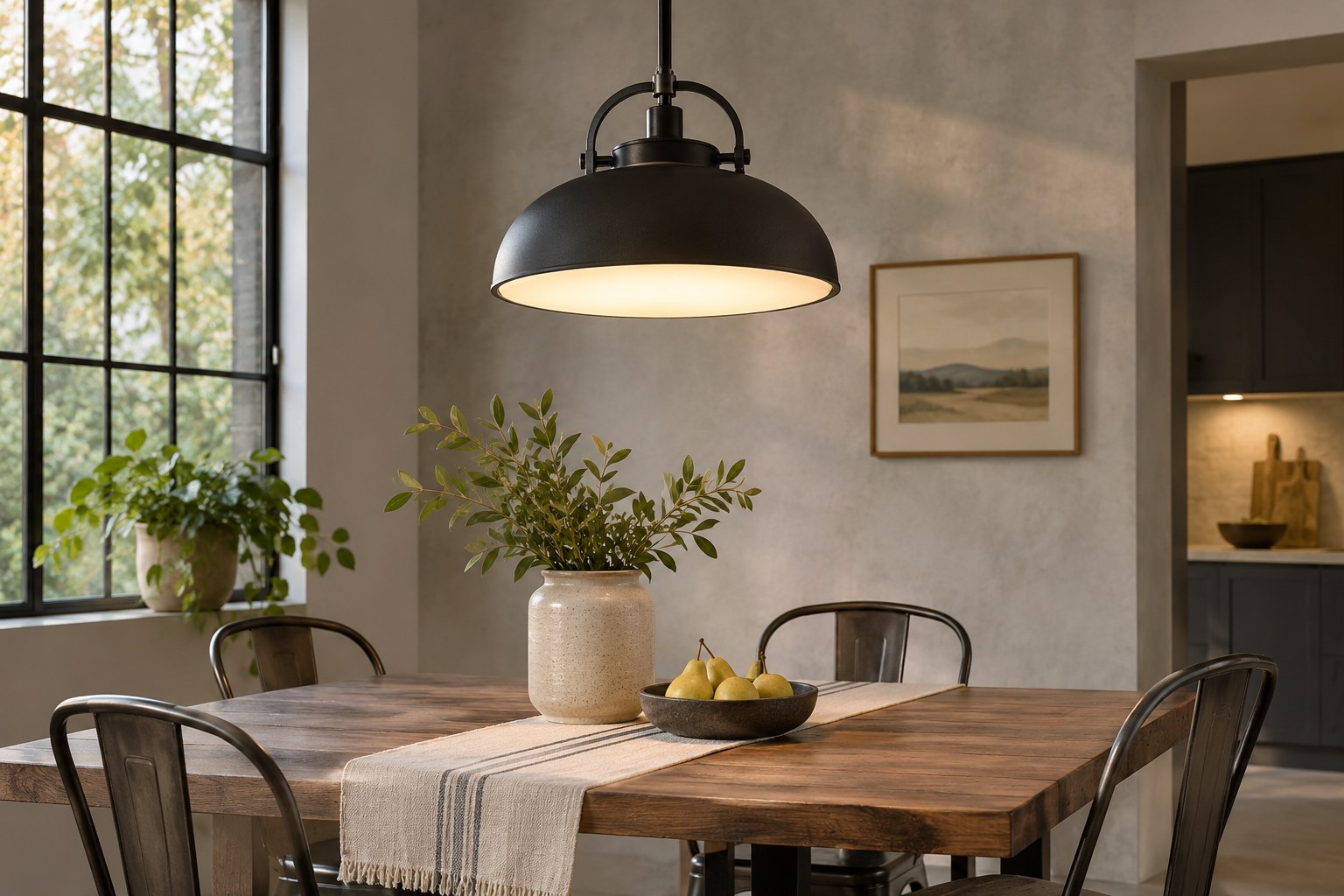
A dark metal pendant can have an industrial silhouette and still feel comfortable at dinner. Look for a design with an appropriate shade or diffuser, then evaluate the light from seated eye level.
Center it over the table arrangement rather than automatically over the room, and consider how much of the shade is visible from adjoining seats. A simple opal diffuser can sit comfortably beside walnut, stoneware and softly upholstered dining chairs for a more refined interpretation of the style. Use fixtures suitable for the location and have new hardwired work installed appropriately. A photograph of a glowing bare bulb does not tell you how the light will feel during an evening meal. Test dimming compatibility where that is part of the plan.
16. Light Textured Walls From a Useful Angle
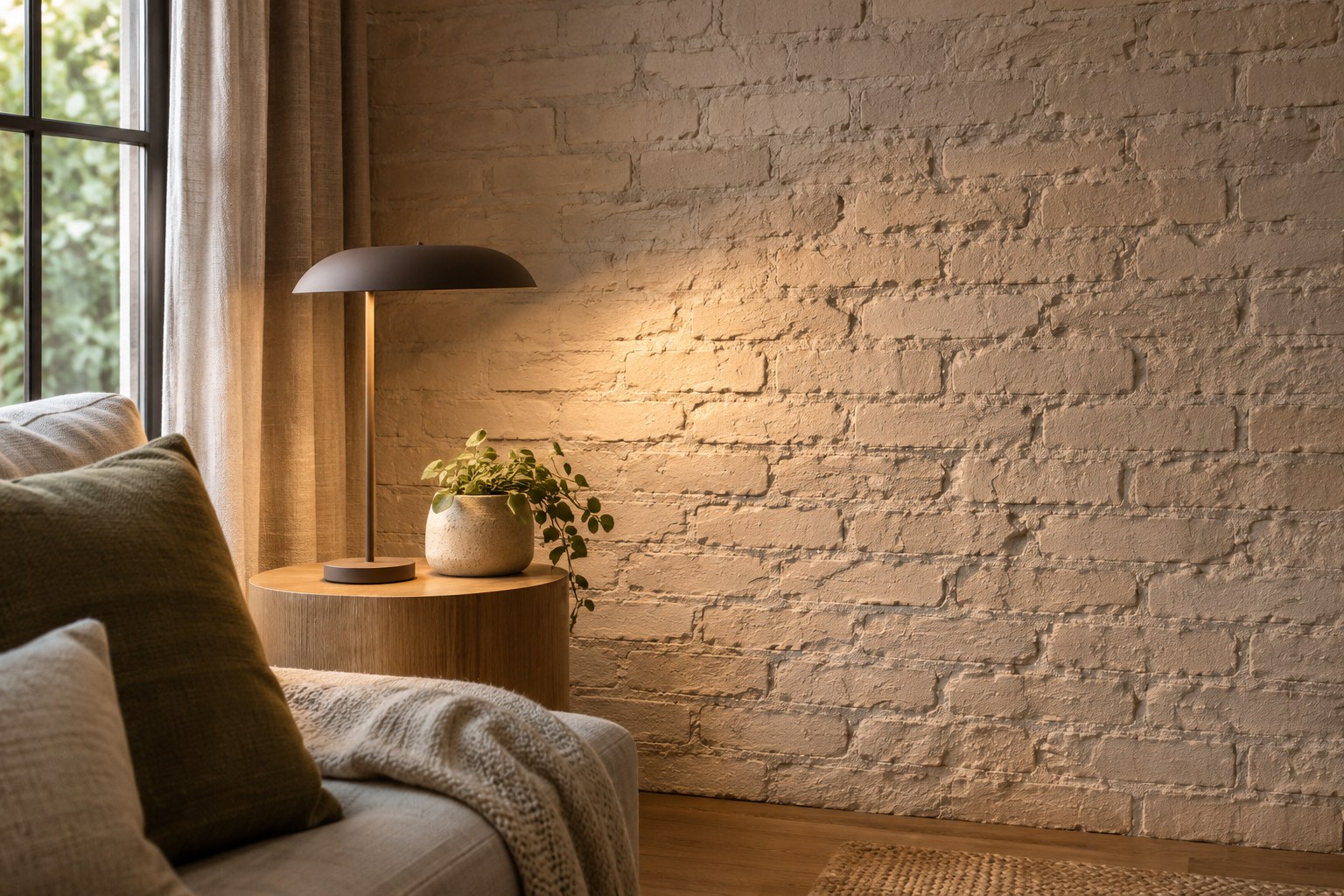
Before committing to fixed wall lighting, move a portable lamp near the textured surface and observe the effect. A gentle side angle can reveal brick or plaster detail without flooding the whole room with a bright hotspot.
Look from the sofa and the doorway, not just from beside the lamp. If the light creates harsh ridges or glare, change its position or soften it. Keep a portable fixture stable and its cord clear, and follow its placement guidance. Permanent fittings need their own appropriate installation. This approach helps you decide whether the texture deserves emphasis at night or whether the room is more comfortable with light concentrated around the seating. The lamp should support the way you use the room, rather than exist solely to dramatize a wall.
17. Keep Wood Shelves Shallow and Purposeful
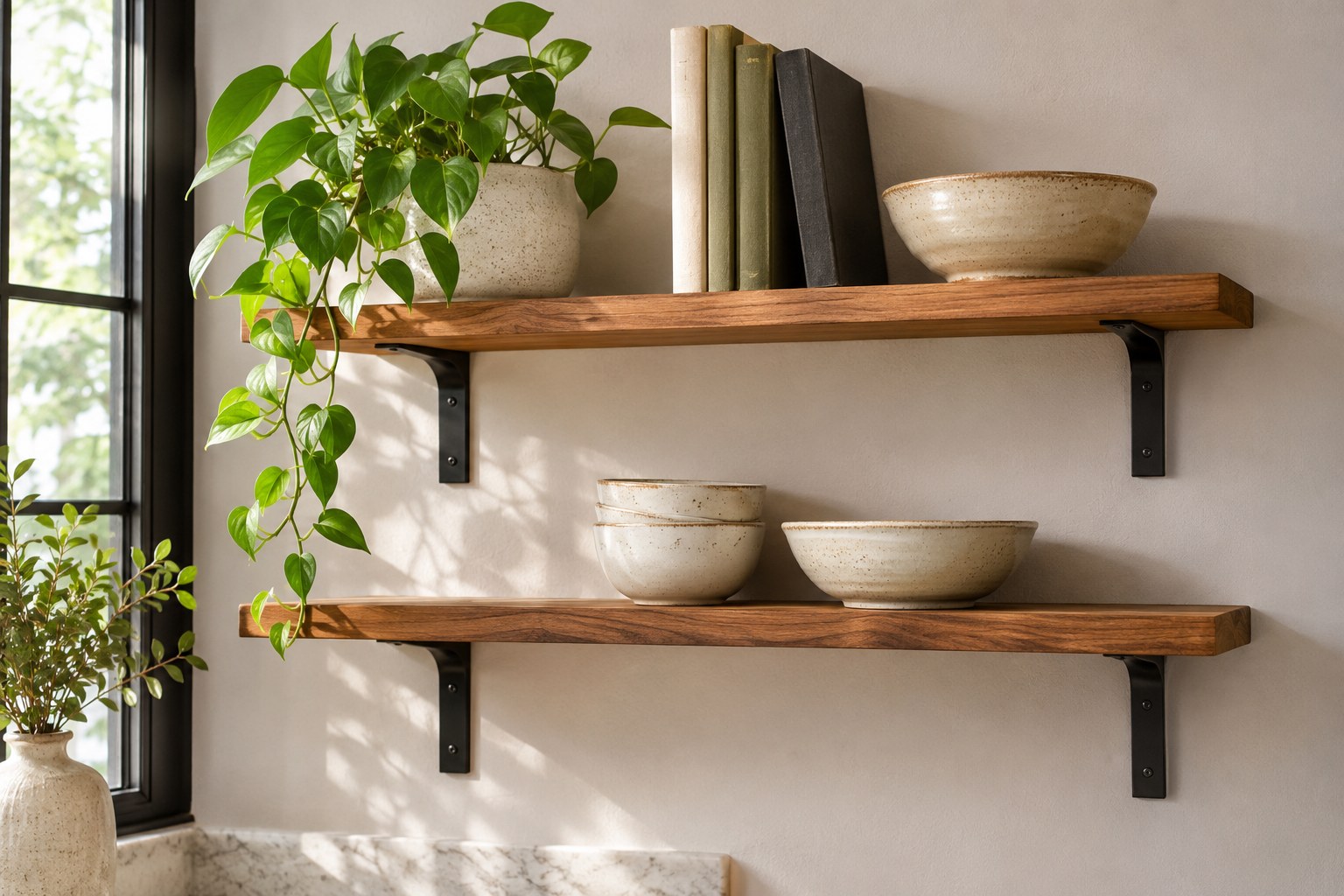
Two restrained wood shelves on dark steel brackets can introduce industrial structure without building an entire wall of storage. Choose the depth around the books or objects you actually want to keep there.
Check the shelf, bracket, fixing and wall requirements as one system. A thick-looking board does not establish the load capacity by itself. Put a small number of objects where they are easy to reach and dust, and leave open stretches between groups. Visible grain against pale plaster keeps the natural material legible. If the shelf has to project into the route past a desk or doorway, use a shallower arrangement or closed furniture elsewhere. Useful storage should not require ducking around it.
18. Hide Busy Supplies Behind Fluted Glass
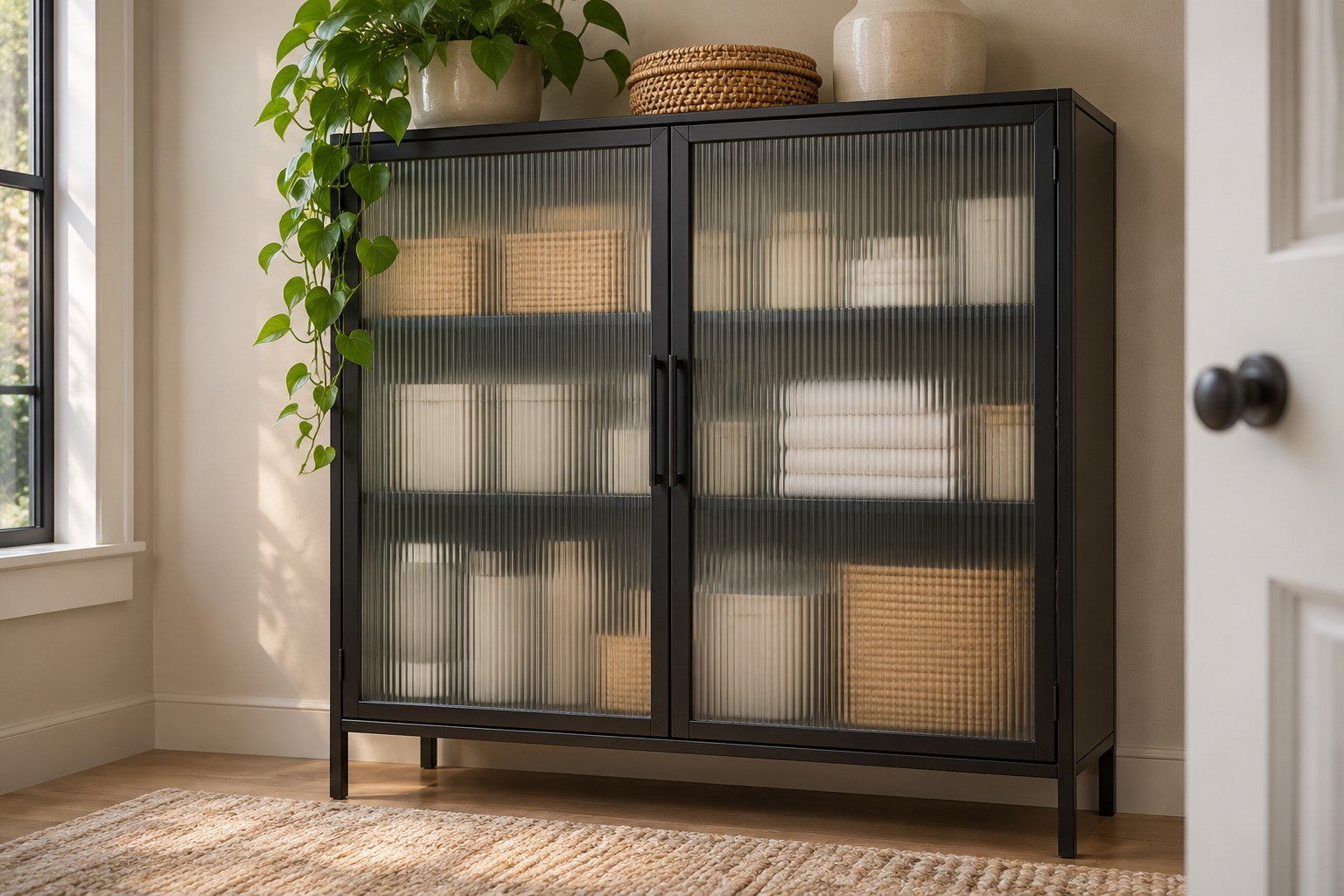
Fluted glass can soften the view into a framed metal cabinet when you like the utilitarian outline but do not want every cable and paper box on display. It blurs detail rather than making the contents invisible.
Organize the cabinet before deciding how much visual screening you need. Plain containers behind the glass will look calmer than bright packaging pressed against it. Check door movement and the usable shelf depth, and follow anchoring and load instructions. A cabinet with partly opaque doors may work better when the contents are very mixed. Leave the top clear enough for one useful lamp or a modest display so the piece does not become another open storage surface.
19. Use a Metal Cart as a Dry Work-Supply Station
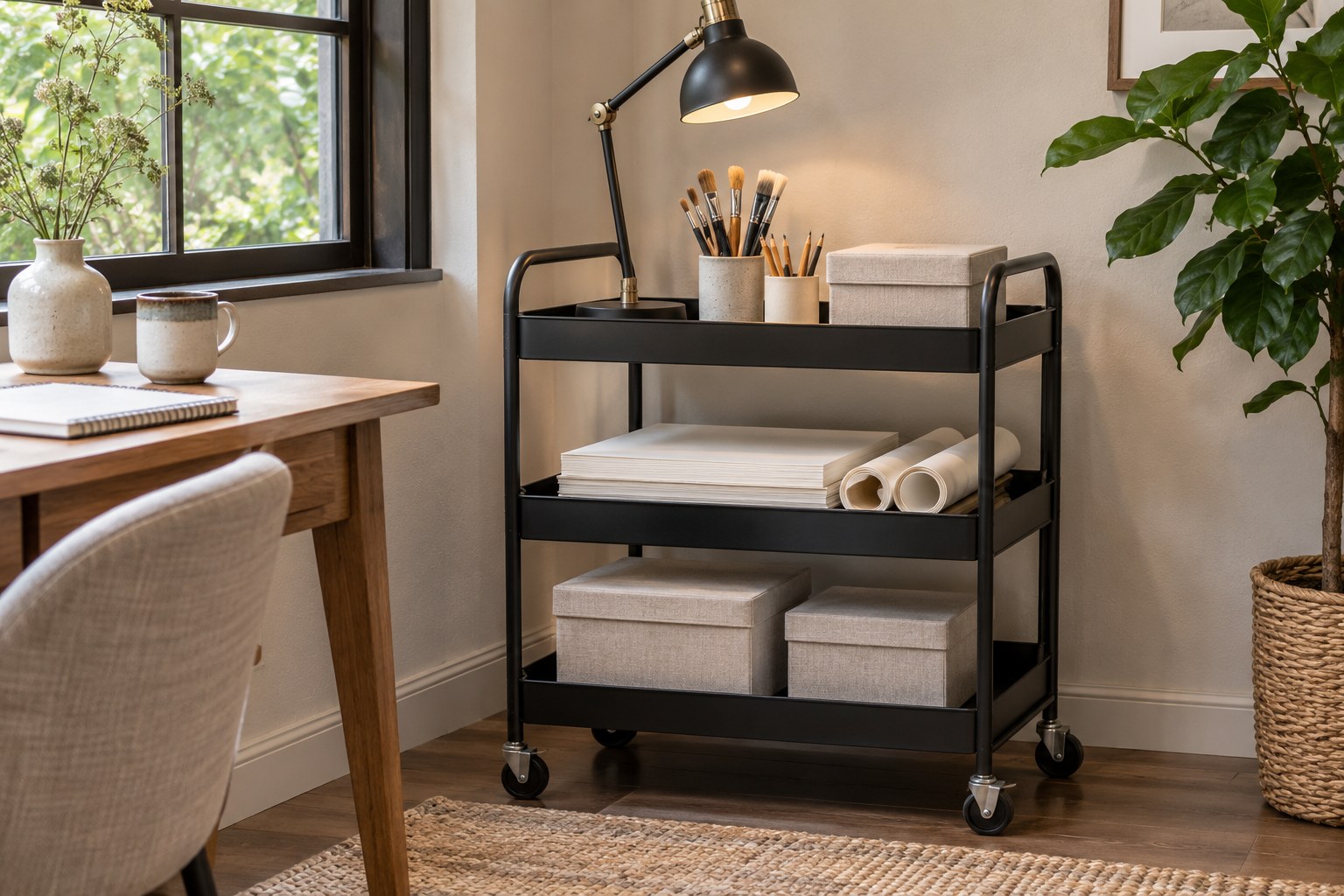
A small metal cart suits the industrial preference for useful, movable furniture when it has one defined job. Put drawing paper, closed craft supplies or desk materials on it beside the place where you work.
Measure the parked footprint and leave access to the actual drawers or shelves. Store heavier items low, observe the maker’s load limits and secure casters as instructed. Clear unstable pieces before moving the cart. Keeping the top partly free gives you somewhere to set down a working item instead of another permanent display. Choose a cart that can remain useful when the activity changes; a simple metal frame can fit naturally beside a warm wood desk without needing matching themed accessories.
20. Organize a Work Wall With a Simple Wire Grid
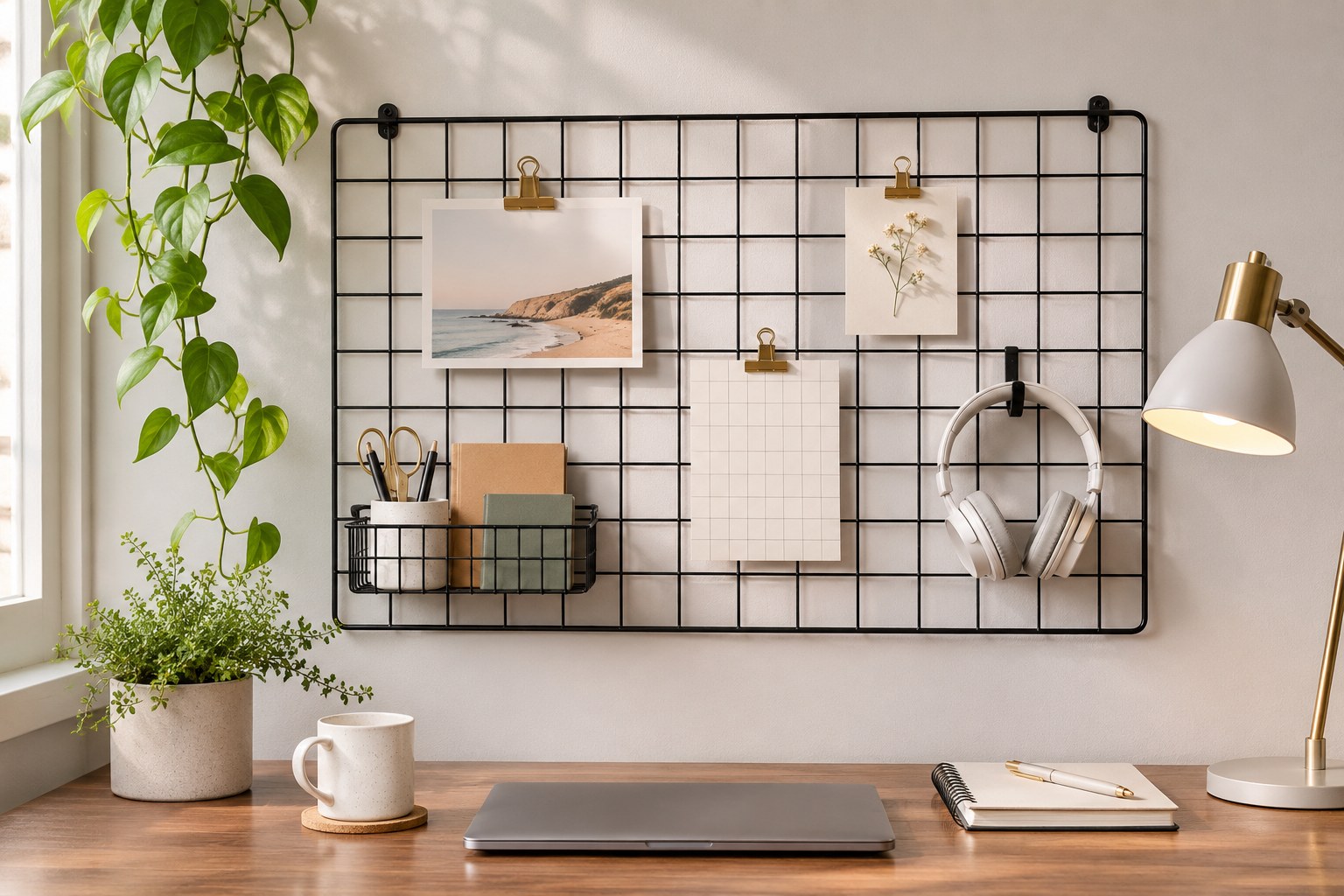
Use a small wire grid for the few notes or light supplies you need to see while working. Hang it over a desk with enough open space around the edges that its geometry stays clear.
Check the grid and mounting system’s capacity before adding baskets or tools. Heavy equipment belongs in a suitable drawer or cabinet. Keep the most important note easy to read and use a limited number of clips so the grid does not become a second filing system. A wood desk, soft chair and a plain wall help balance the black metal lines. If you only need one reference sheet, a simpler clipboard may do the job with less visual activity.
21. Pair Industrial Stools With a Warmer Counter Surface
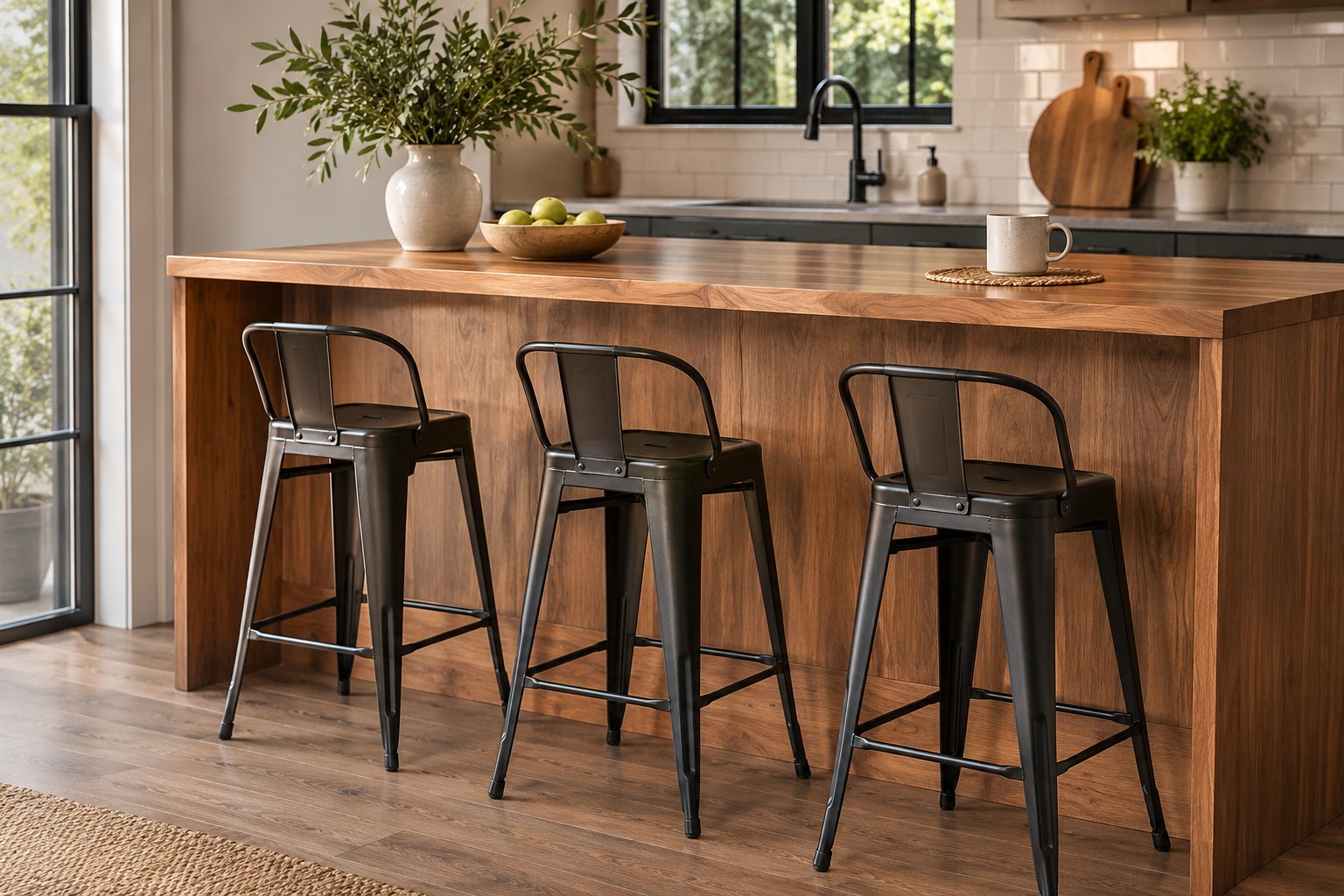
Black metal stools can bring an industrial note to a kitchen that already has a warm wood counter or peninsula. Choose the seat height, back support and footrest around the actual counter and the people who will use it.
Measure the underside clearance and the space between neighboring seats, then try sitting at a comparable setup if possible. Make sure the stools can move without catching a cabinet pull or blocking the main kitchen route. A wood seat may look right but feel different from an upholstered one during a longer meal. Let the counter provide the grain and keep the surrounding metal finishes restrained. Practical seating fit matters more than matching every stool leg to every appliance handle.
22. Give a Dining Bench a Fitted Seat Cushion
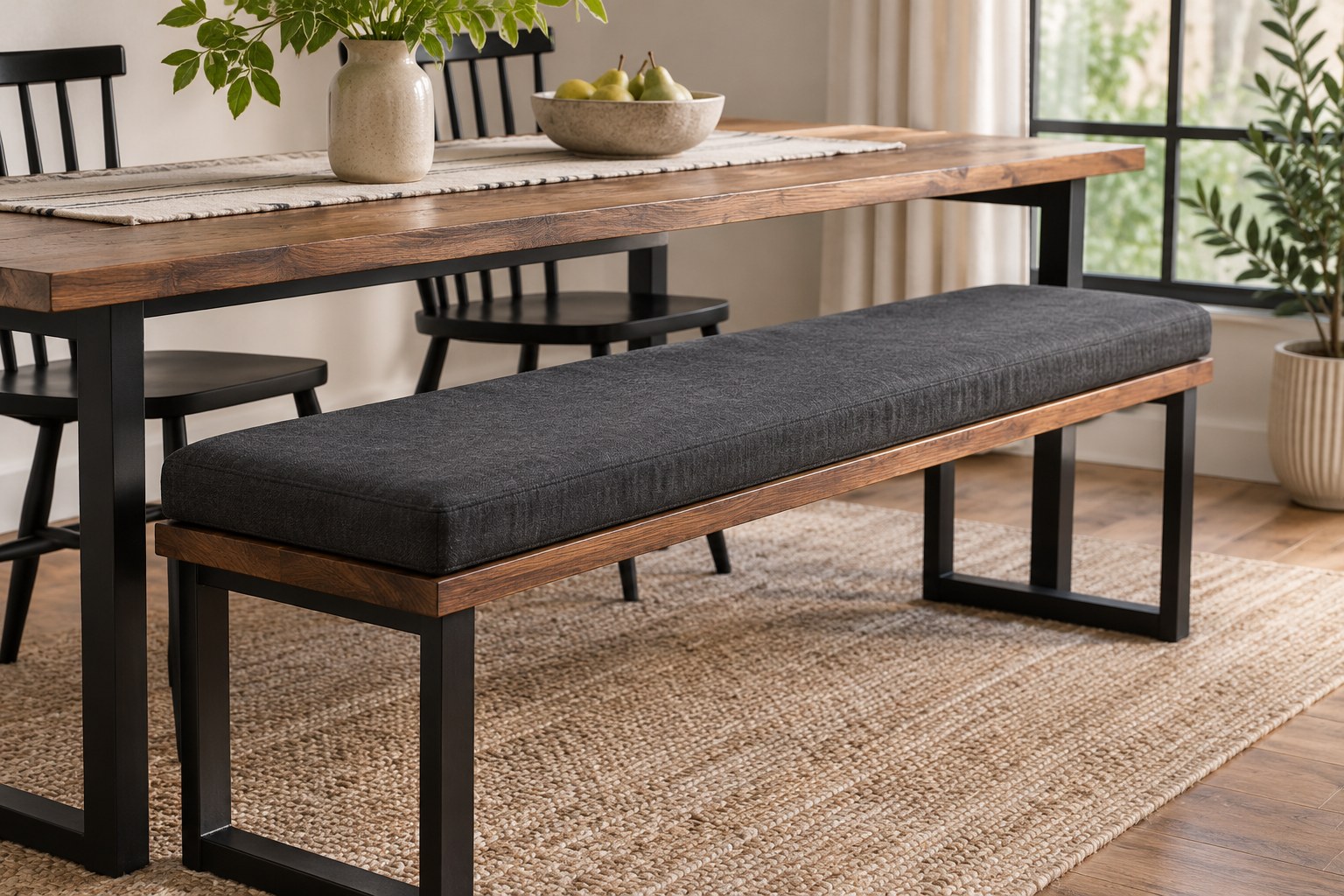
A plain wood bench with dark steel legs can feel more comfortable with a well-fitted cushion. Choose a pad that suits the bench’s usable seat and stays in place during ordinary sitting.
Measure the seat itself rather than the furniture’s full width, especially if the ends curve or rails project. Use a suitable attachment method and check the cushion’s care instructions. A quiet charcoal or oatmeal fabric can soften the silhouette while leaving the leg structure visible. Pull the bench out and sit at the table before finalizing the arrangement. If the bench is difficult to get into or lacks the support someone needs, individual chairs may serve the household better.
23. Choose One Large Graphic Artwork
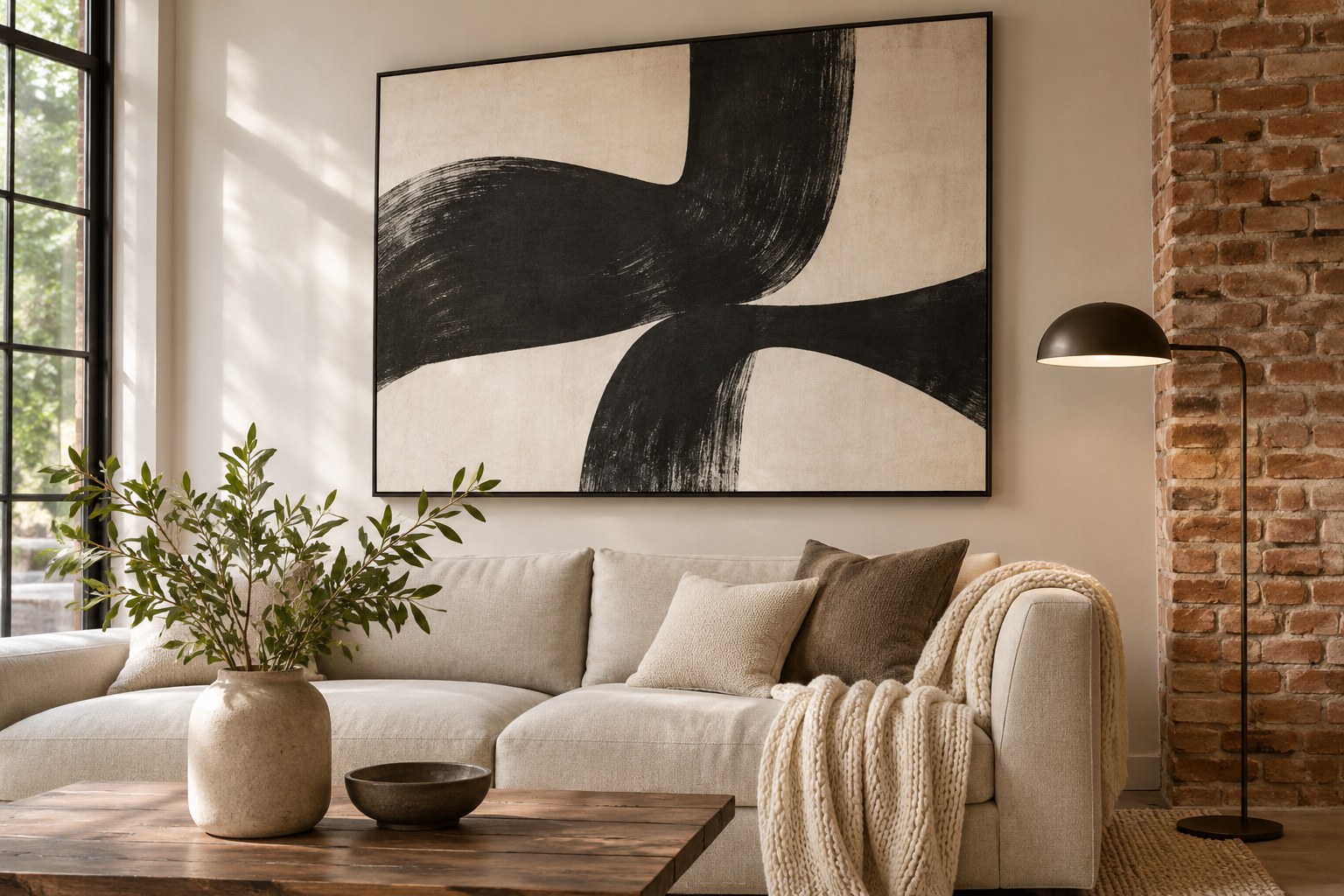
One generously scaled graphic print can calm a room full of small brick joints and shelf lines. A broad monochrome shape on a smooth wall offers a different kind of visual detail without adding another rough material.
Use a paper rectangle to test the outside frame size against the furniture below. The artwork should be visible from the main seat without being hidden by a tall lamp. If you already own several smaller pieces, our living room gallery wall ideas explain how to organize them instead. Choose a frame that relates to one existing metal finish and use mounting suited to the wall and weight. Avoid buying generic factory signs simply because the room has industrial furniture.
24. Use a Low Closed Cabinet to Quiet Open Shelves
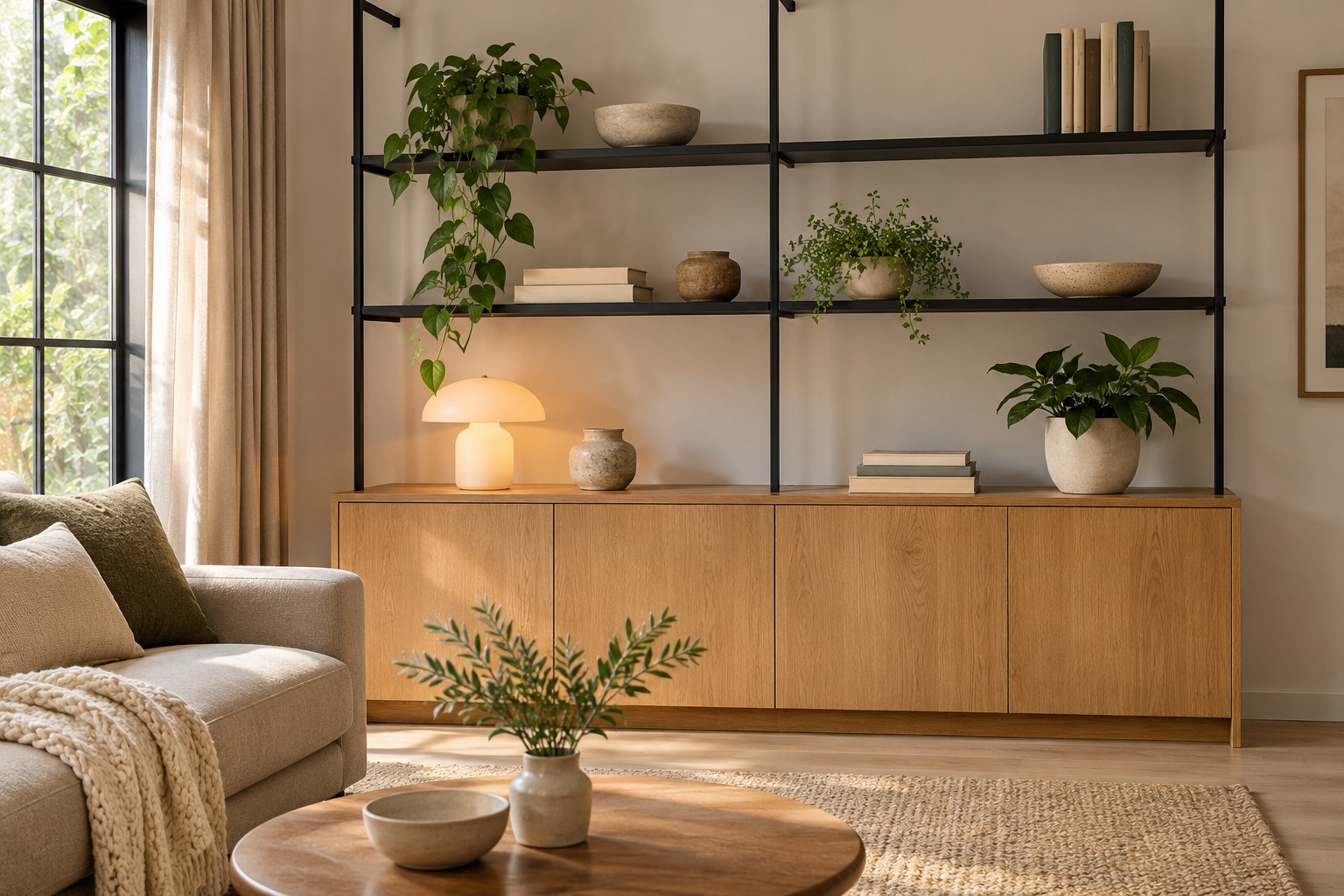
Balance visible shelving with a closed cabinet for mixed supplies. Books and a few ceramics can stay in view while cables, spare chargers and paperwork have somewhere less conspicuous to go.
Check the inside dimensions and the door movement before choosing the piece. A low warm wood cabinet can add a substantial horizontal surface beneath lighter metal shelving. Leave enough clear top to lift items in and out of the shelves above, rather than covering it with a second row of ornaments. If electronics go inside, follow their ventilation and operation guidance rather than treating any closed cupboard as suitable equipment storage. The contrast between open and closed sections makes both parts easier to understand and use.
25. Bring in Greenery With One Substantial Planter
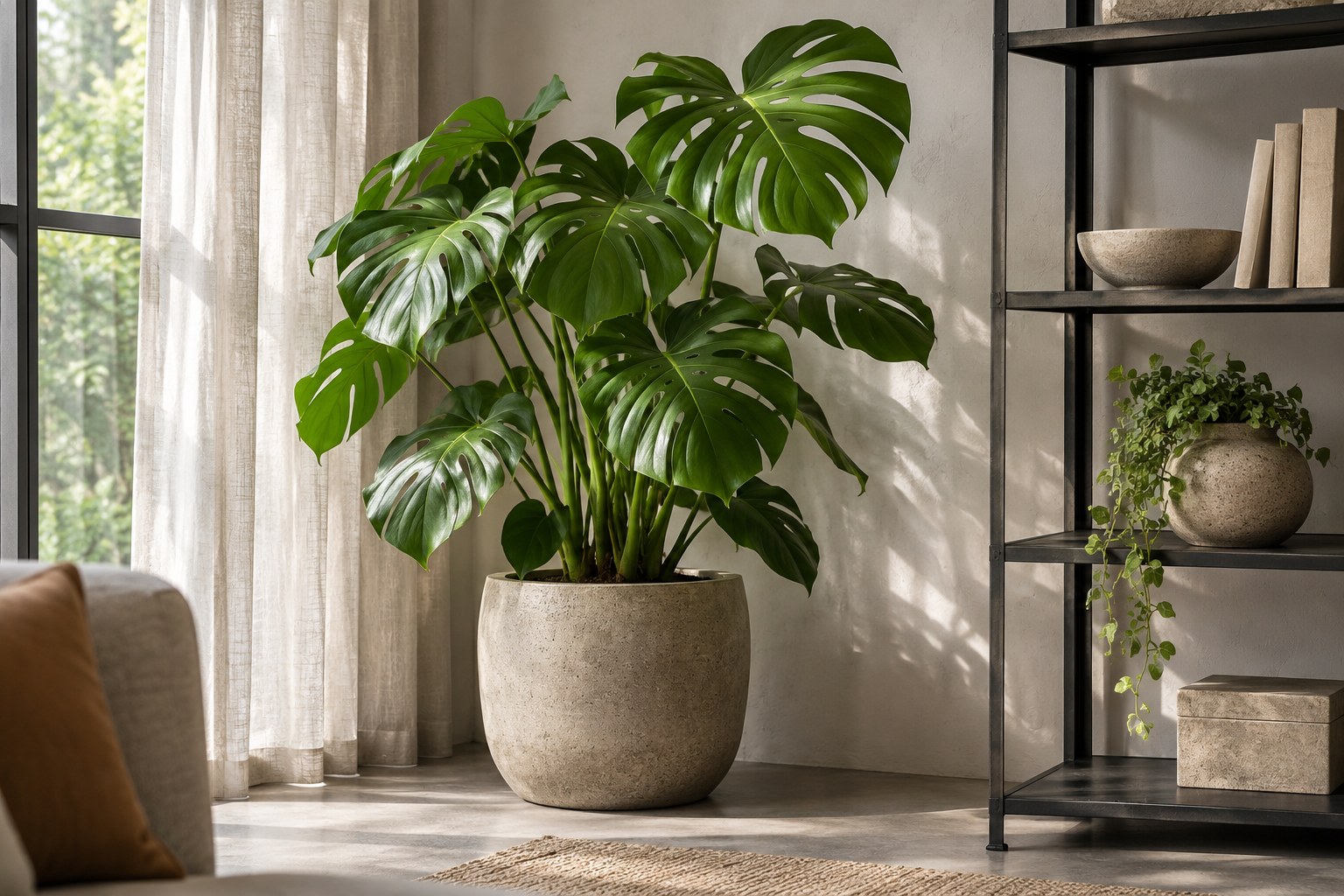
A leafy plant can balance a hard masonry or metal corner without another collection of small accessories. Choose the position for the plant’s light and care needs, then check the size of its mature outline against the furniture nearby.
Use a stable planter and an appropriate way to manage drainage and protect the floor. Keep watering accessible so you are not lifting a heavy wet pot over books or electrical fittings. A plain stoneware container and a warm wood surface can soften a dark steel shelf while keeping the room’s materials straightforward. Leave enough space for leaves to grow without hiding a lamp or blocking the route past the chair. A healthy plant in a suitable spot contributes more than several crowded pots in poor light.
26. Finish With Hardware That Repeats the Room’s Metal
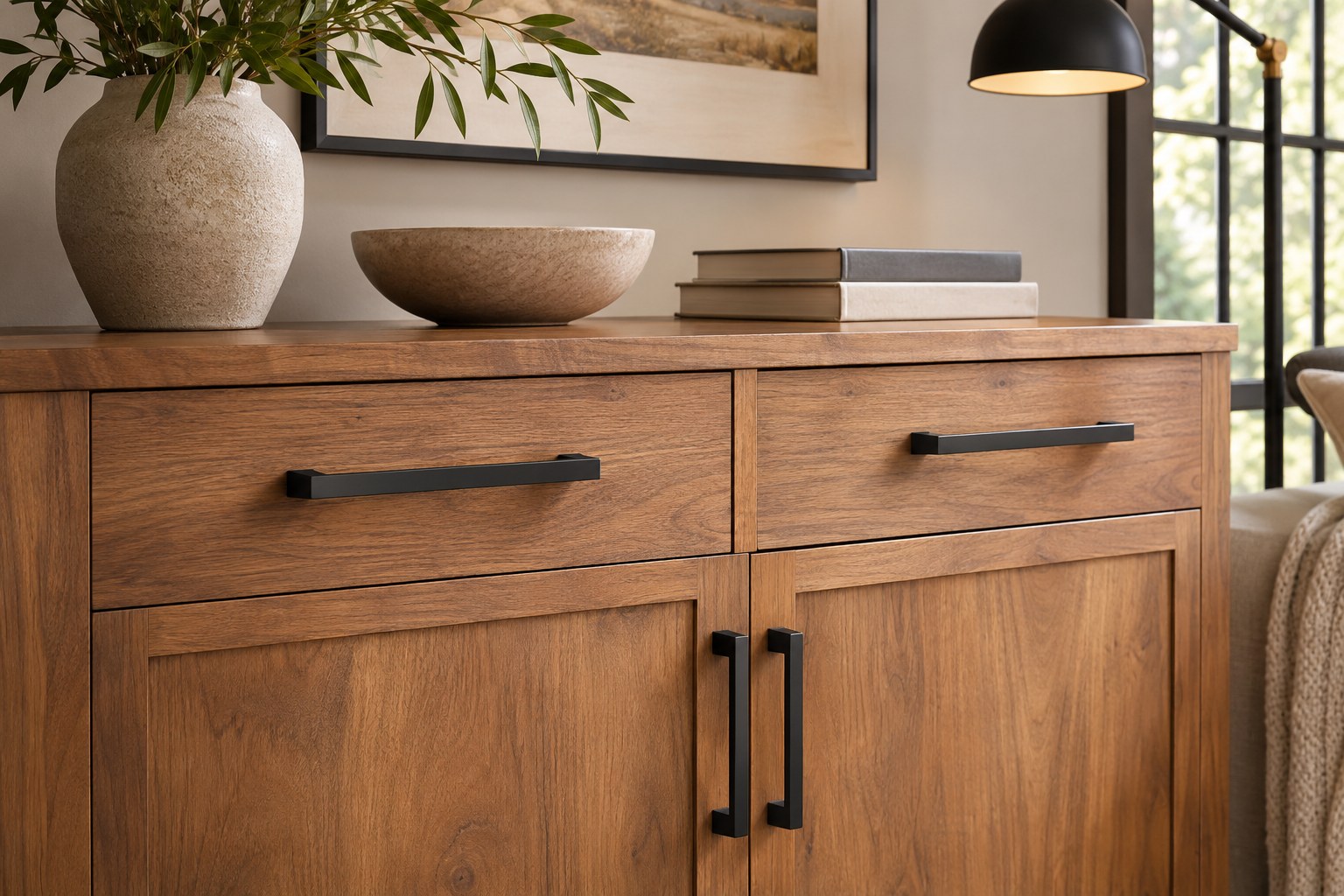
Simple dark handles can connect sound existing furniture to the room’s steel frames. Start with one cabinet and compare the proposed handle with the existing hole spacing, door thickness and mounting hardware.
Try a sample against the actual wood or painted finish before ordering a full set. Check that the handle leaves comfortable finger room and clears adjoining doors. You may be able to keep the furniture’s warmer surface while changing only the small point of contact. Keep the original hardware in a labeled bag until the new handles fit and the doors open freely. A restrained final detail is enough; the room does not need another new furniture purchase to make the material relationship clear.
Choose the change that helps your room function first: a better storage piece, a more comfortable light or a clearer route around the seating. Then soften the hard surfaces where you sit and touch them. Industrial chic feels settled when its strong structure supports ordinary life and the room still has room to breathe.
Discover more from HomeTrendora
Subscribe to get the latest posts sent to your email.