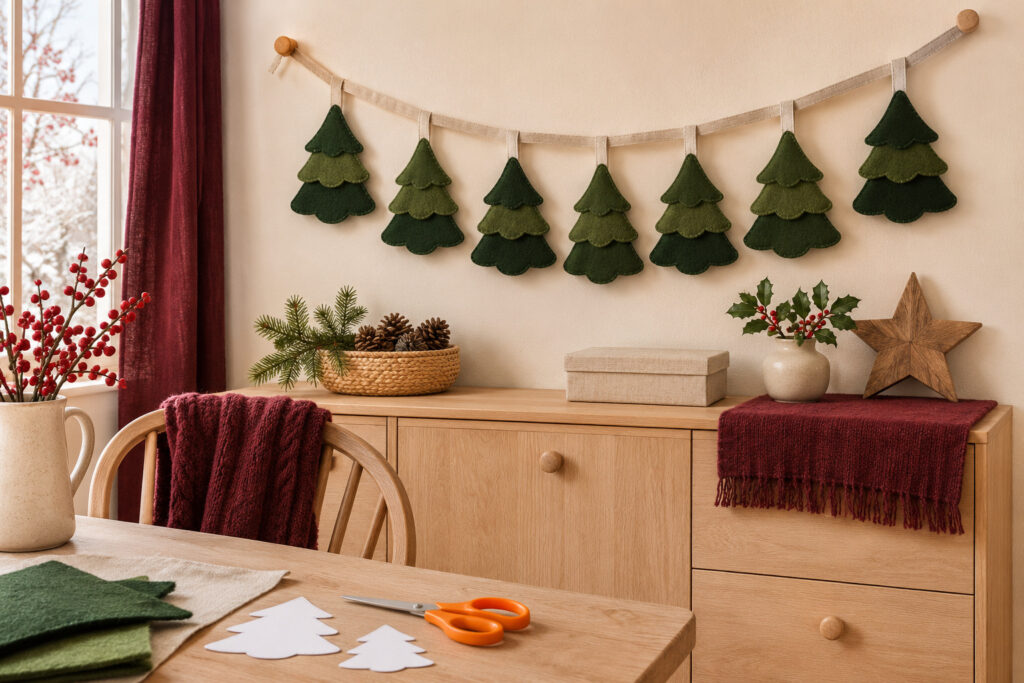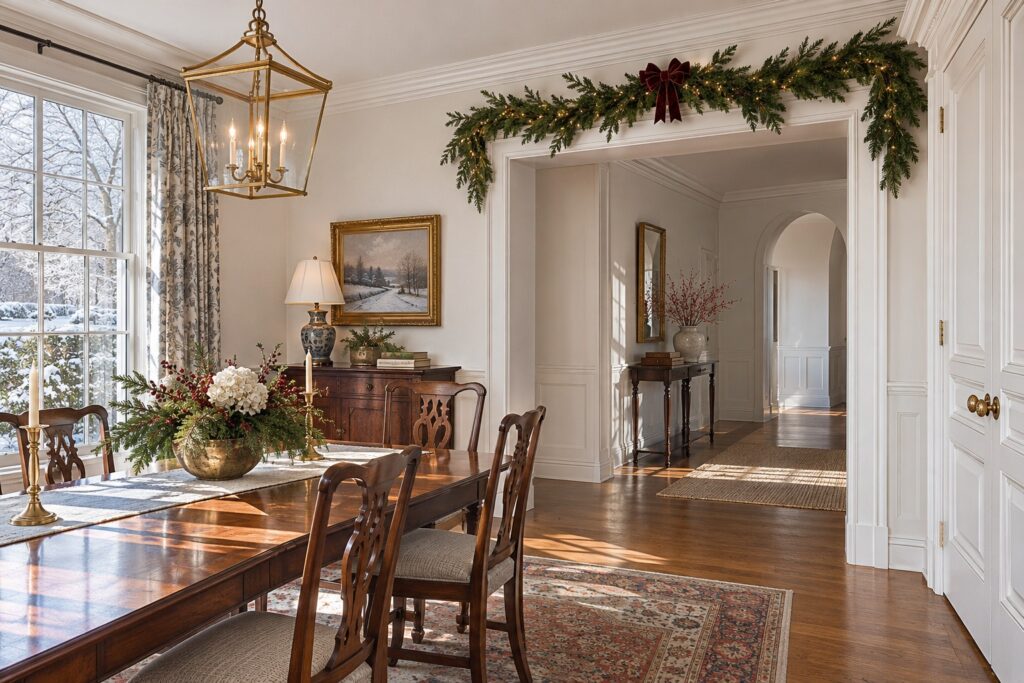
Dried orange slices can twist, crowd together, or disappear into a Christmas garland once it is hanging. These 14 ideas help you choose a construction and a place where the citrus remains easy to see, from a simple threaded strand to a small vertical wall piece.
Start with fully dried slices that have cooled completely. For homemade pieces, cut even rounds, blot away surface moisture, and dry them in a single layer using a suitable low-heat method; oven drying at around 200°F needs regular checking rather than a promised finish time. Set aside torn or damp pieces. The arrangements below are decorative, and dried fruit, cord, and paper belong away from flames and heat.
1. Thread a Simple Two-Hole Citrus Strand
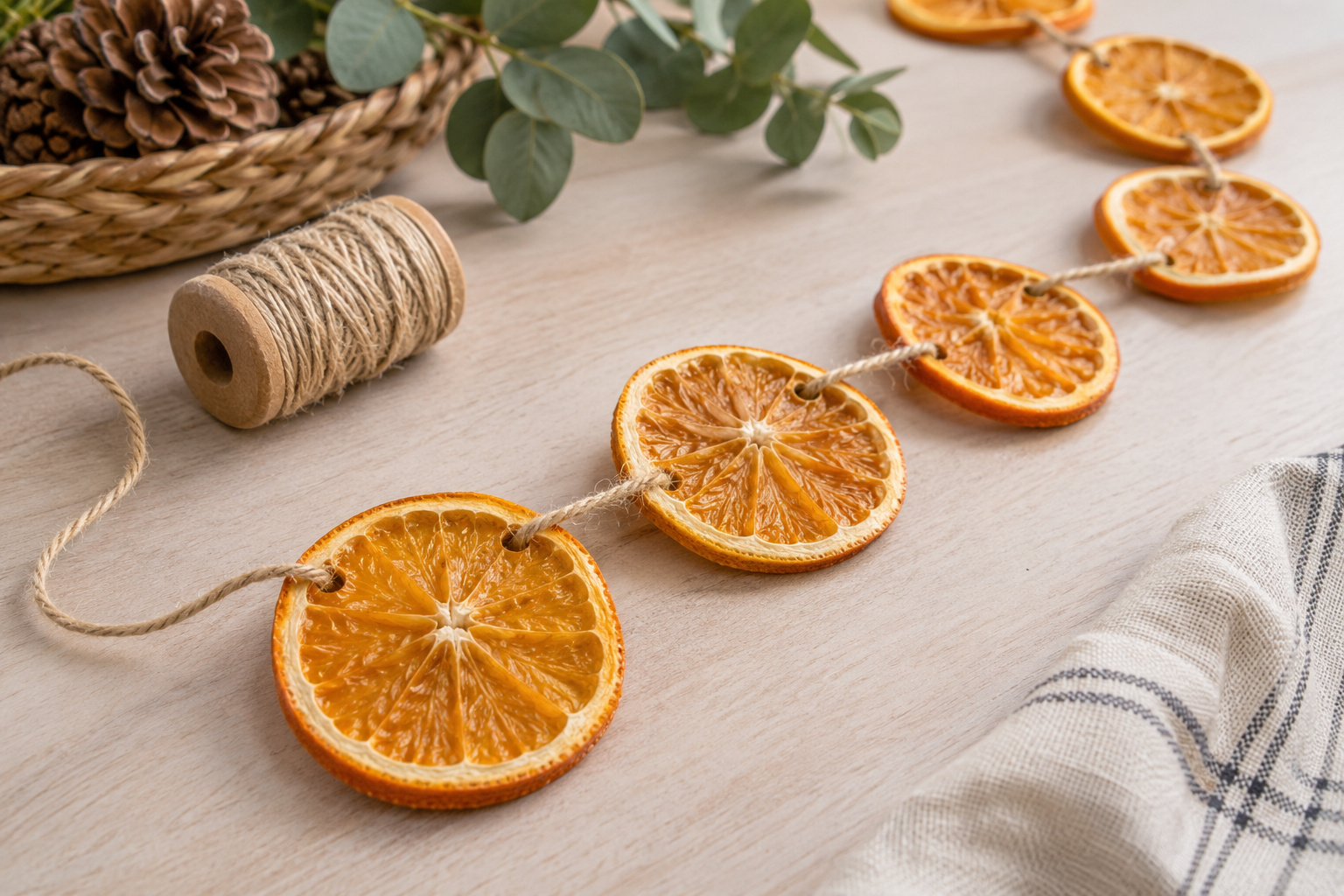
Lay out the slices on a table before cutting the cord. Arrange them with a little space between their edges, then add extra cord at both ends for fastening. Make two small holes through sound flesh near the rind of each slice. Passing the cord in and out through that pair helps the round face forward instead of turning edge-on.
Work gently and replace a slice if a hole tears toward its edge. The first strand is a useful test: lift it between your hands and see whether the slices slide together. Small positioning knots can hold the spacing where you need it. Plain brown cord leaves the citrus as the main detail, particularly against a pale wall.
For this plain-cord version, choose a twine thickness that passes easily through the two holes without pulling at the rind. Check the reel length against your planned strand and its tying ends before ordering.
Choose plain jute cord (paid link)
2. Alternate Orange Wheels With Plain Wooden Beads
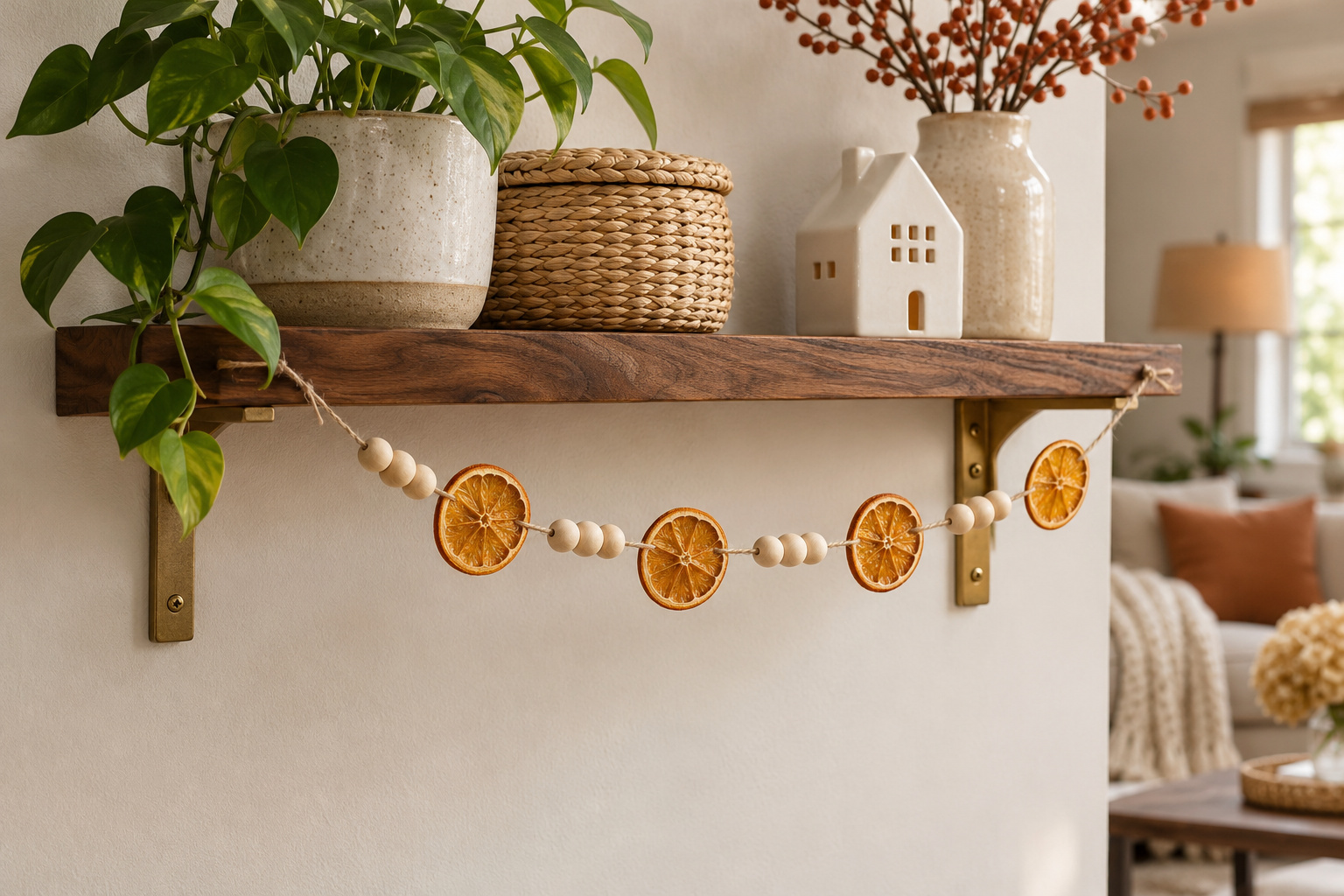
Put a short group of unfinished wooden beads between neighboring slices. The solid beads give the eye a pause between the translucent fruit and keep the line from becoming one continuous orange band. Test the bead opening against the actual cord before assembling a long length.
Keep the beads smaller than the citrus rounds so their roles stay clear. Three little beads can read as one interval, while a larger bead works better alone. Use the same sequence through the strand and finish with a secure end knot. On a dark wood shelf, pale beads make the connecting line visible even when the slices sit in shade.
3. Tie Individual Citrus Drops to a Linen Ribbon
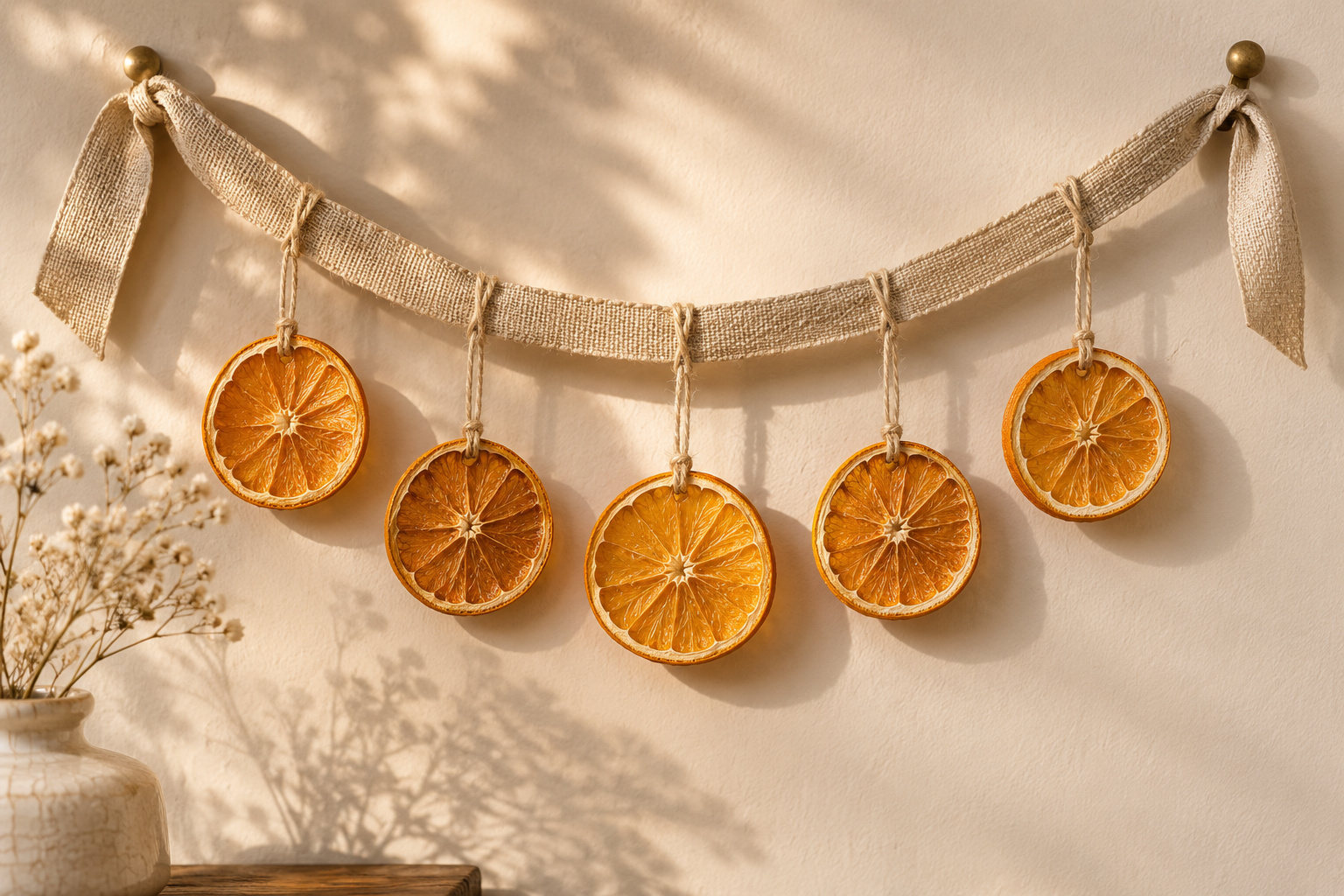
A flat linen ribbon can carry several short citrus drops while remaining a visible part of the decoration. Tie each slice on its own small cord loop, then fasten those loops to the ribbon at separated points. Keep the drops short enough to hang neatly rather than wrapping around one another.
The ribbon brings a softer, woven surface beside the papery fruit. Let it form one gentle curve across a plain background, with the citrus hanging below its lower edge. Leave the ribbon tails short and secure. Because the slices are attached separately, you can replace a damaged one without taking the entire piece apart.
4. Frame the Upper Part of a Kitchen Window
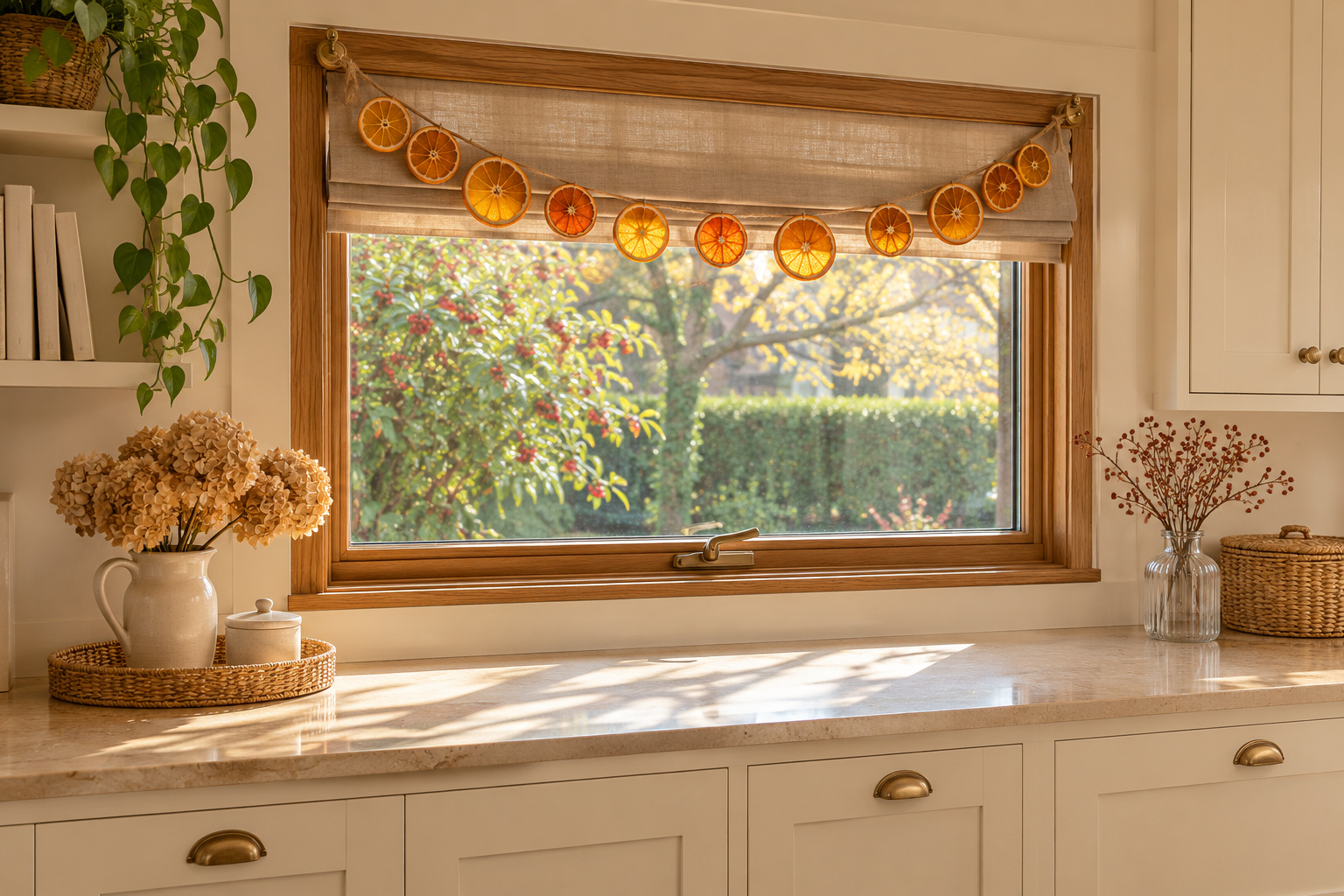
Hang a light citrus strand across the upper section of a kitchen window where daylight can pass through the rounds. Use suitable supports on an approved surface and keep the ends outside the path of the handle, shade, or opening sash. This works best at a window away from the stove, sink spray, and a heat source.
Leave the lower view open instead of filling the glass with ornaments. A few widely spaced slices can supply the Christmas detail while the counter stays available for work. Open the window and operate the covering after hanging the strand. For a separate decoration on the cabinetry, compare these Christmas kitchen cabinet ideas.
5. Build a Short Strand for a Small Wall Shelf
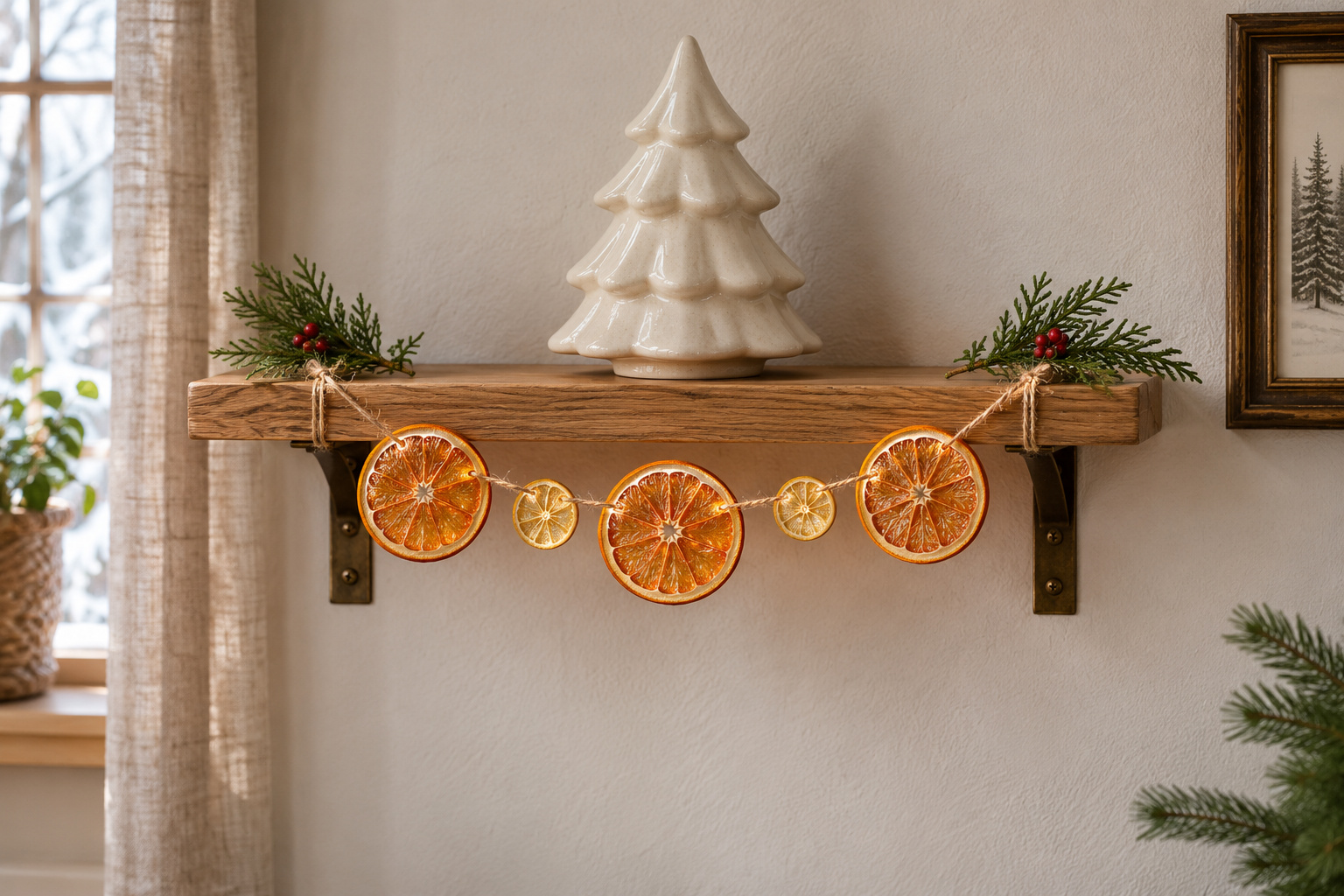
A narrow shelf rarely needs a full room-length garland. Make a short strand that fits the shelf’s front span, with its lowest slice still above the objects below. Secure it to appropriate points rather than pinching the cord beneath a heavy object. Keep the attachment separate from books you regularly remove.
Try a simple sequence of three larger citrus wheels with smaller rounds between them. Their curved edges soften a straight shelf without hiding the wood. Keep one shelf object, such as a little plain ceramic tree, and remove the extra ornaments you cannot see clearly. The short line should look designed for that particular shelf.
6. Let Blood Orange and Lemon Change the Rhythm
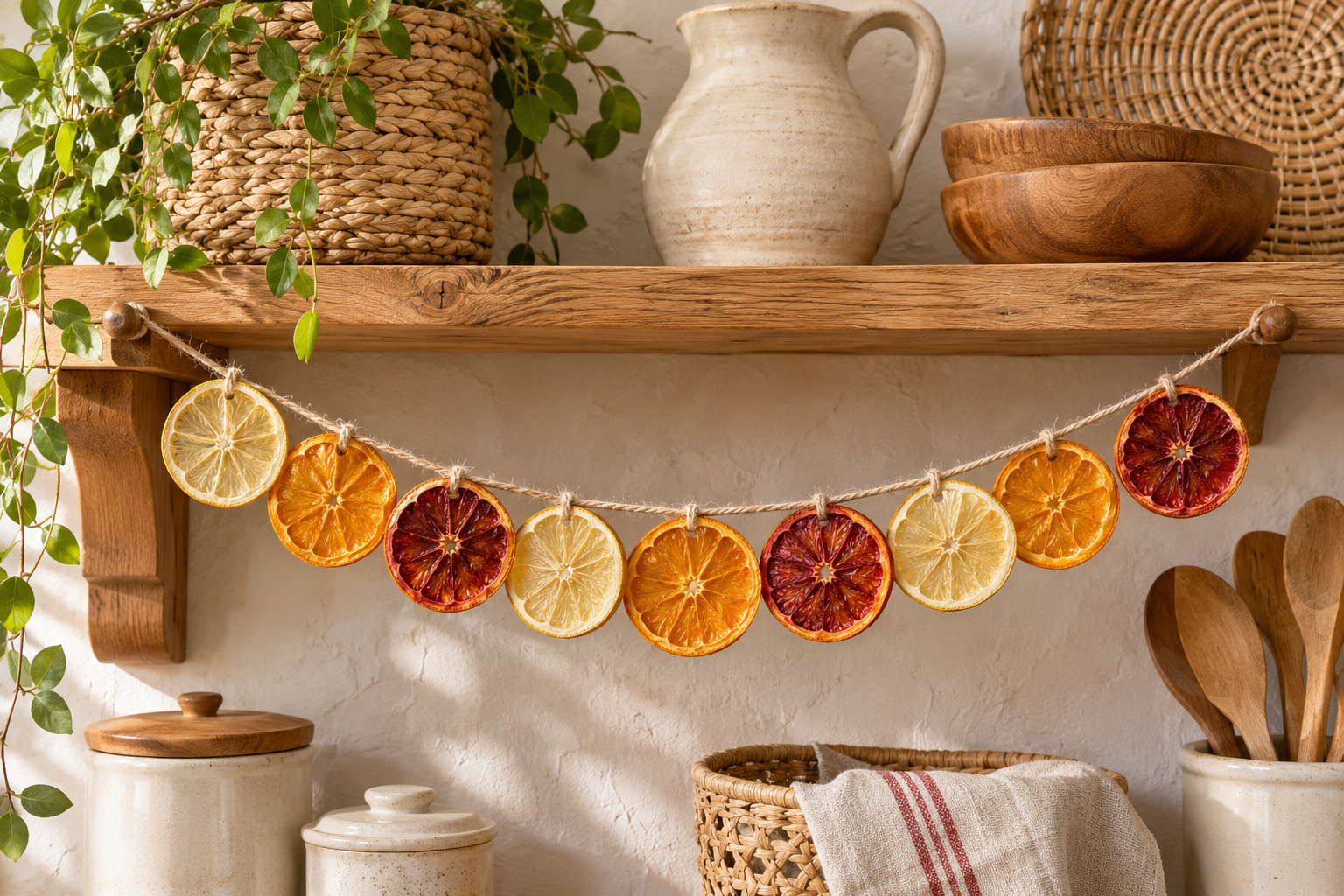
Use the fruit itself to vary a kitchen-shelf garland. Alternate pale lemon rounds with deeper orange and blood-orange slices, choosing pieces with clearly different tones. Lay them beside the shelf’s wood and ceramics before threading so the darkest rounds do not disappear into a dark backing.
A repeating light–dark–orange sequence gives the strand an intentional rhythm without adding glitter or a second kind of ornament. Let the uneven natural sizes remain visible. Plain cord and an unglazed bowl nearby keep the focus on the materials. If you want another natural texture elsewhere in the room, these pinecone Christmas decorations offer a separate, more sculptural direction.
7. Add Flat Paper Stars Between the Slices
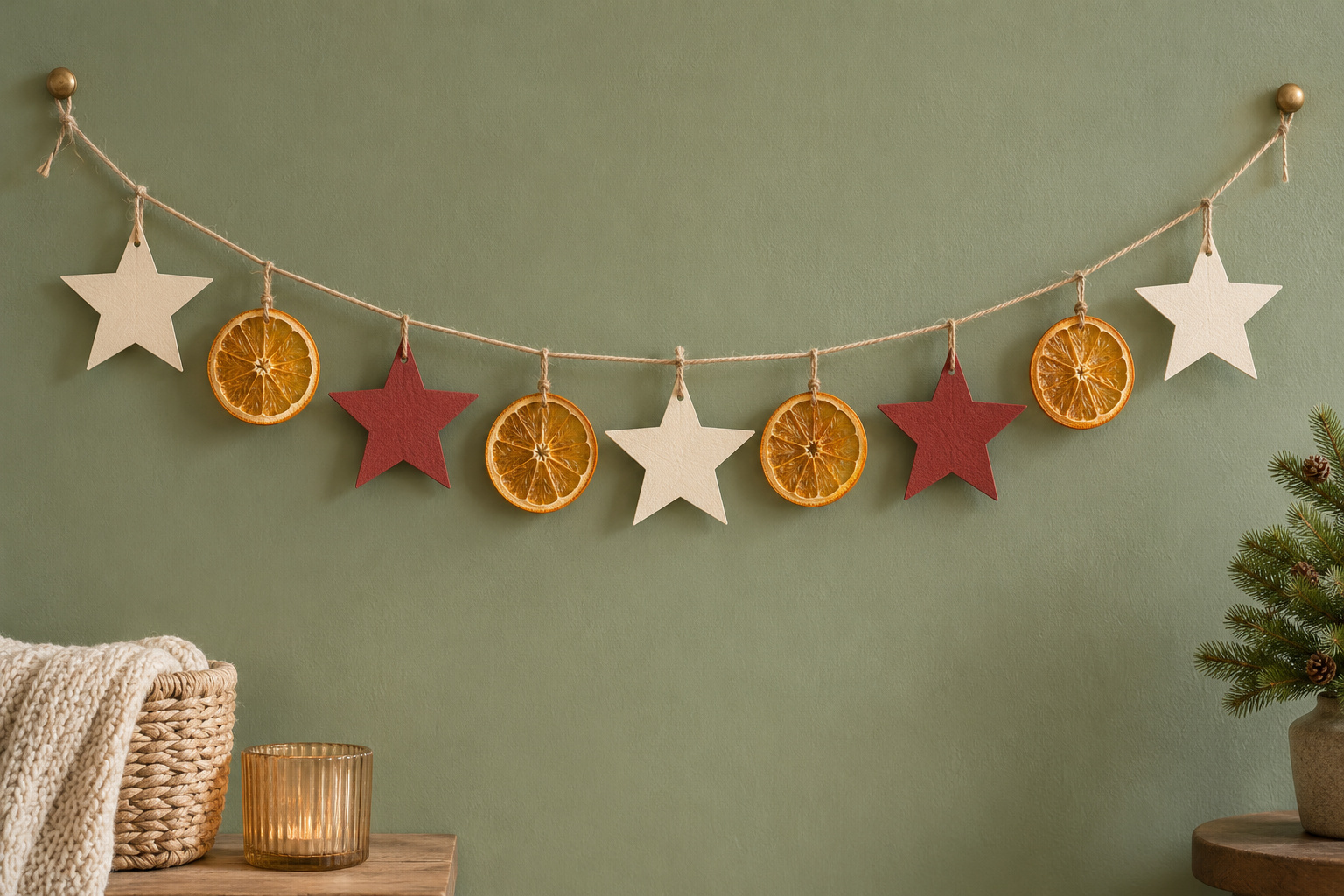
Cut simple stars from plain cardstock and give each one a short attachment of its own between the citrus rounds. A flat star produces a clear change of outline without adding the depth of a large hanging ornament. Use a restrained paper color, such as cream or a muted red, and leave both shapes readable.
Turn the stars before fastening them permanently. A point directed upward looks different from the same star tilted beside a round slice. Use that small variation sparingly; the line needs a rhythm to hold it together. This is a good place to use sturdy paper offcuts, provided they are clean and large enough for the shape.
8. Make a Narrow Vertical Wall Hanging
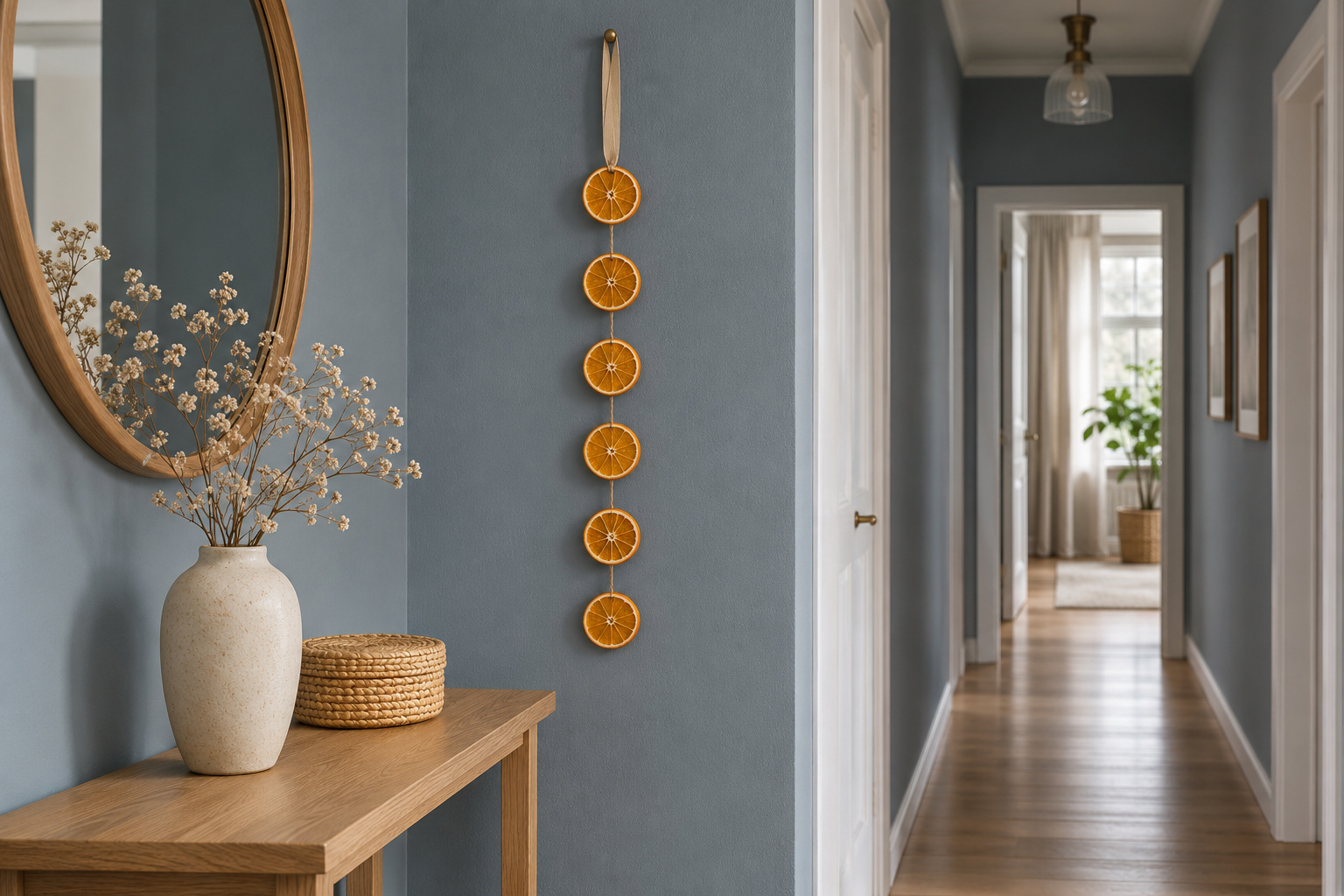
A short vertical line suits a stretch of wall that has no room for a tabletop Christmas display. Suspend several citrus rounds from one cord, with individual knots or ties keeping them apart. Choose a wall position outside the passage itself so the strand hangs close to the surface and cannot brush a shoulder.
Look at the wall color behind it. Amber slices stand out against a muted blue-gray or deep olive; a pale cream wall makes the brown rind more noticeable. Use one small ribbon at the top and let the rest remain simple. The vertical shape gives a narrow apartment wall a seasonal focal point without adding furniture to the floor.
9. Set a Shallow Swag Behind a Reading Bench
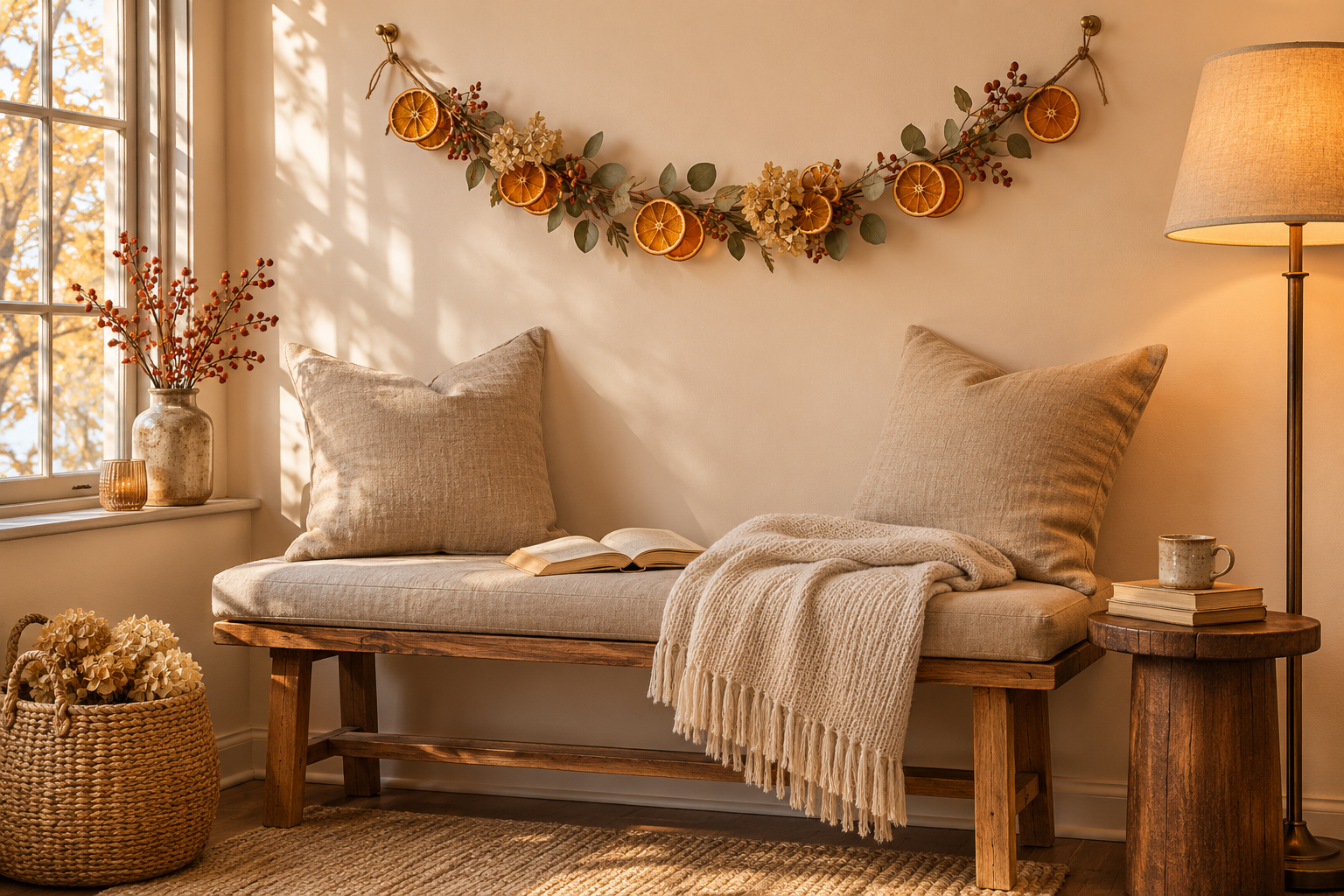
Put a modest citrus swag on the wall above a reading bench, with its lowest point clear of the back cushion and anyone sitting there. A shallow curve feels calmer than several deep loops. Secure both ends to supports suited to the surface and the completed weight.
Use linen cushions and a folded wool-look throw below to make the little seating area feel welcoming, while the citrus supplies the Christmas line above. Keep the garland away from the reading lamp and its shade. Sit on the bench and lean back before deciding the final height; the decoration should remain part of the wall, not the seat.
10. Keep a Tree Strand Open Enough to See the Branches
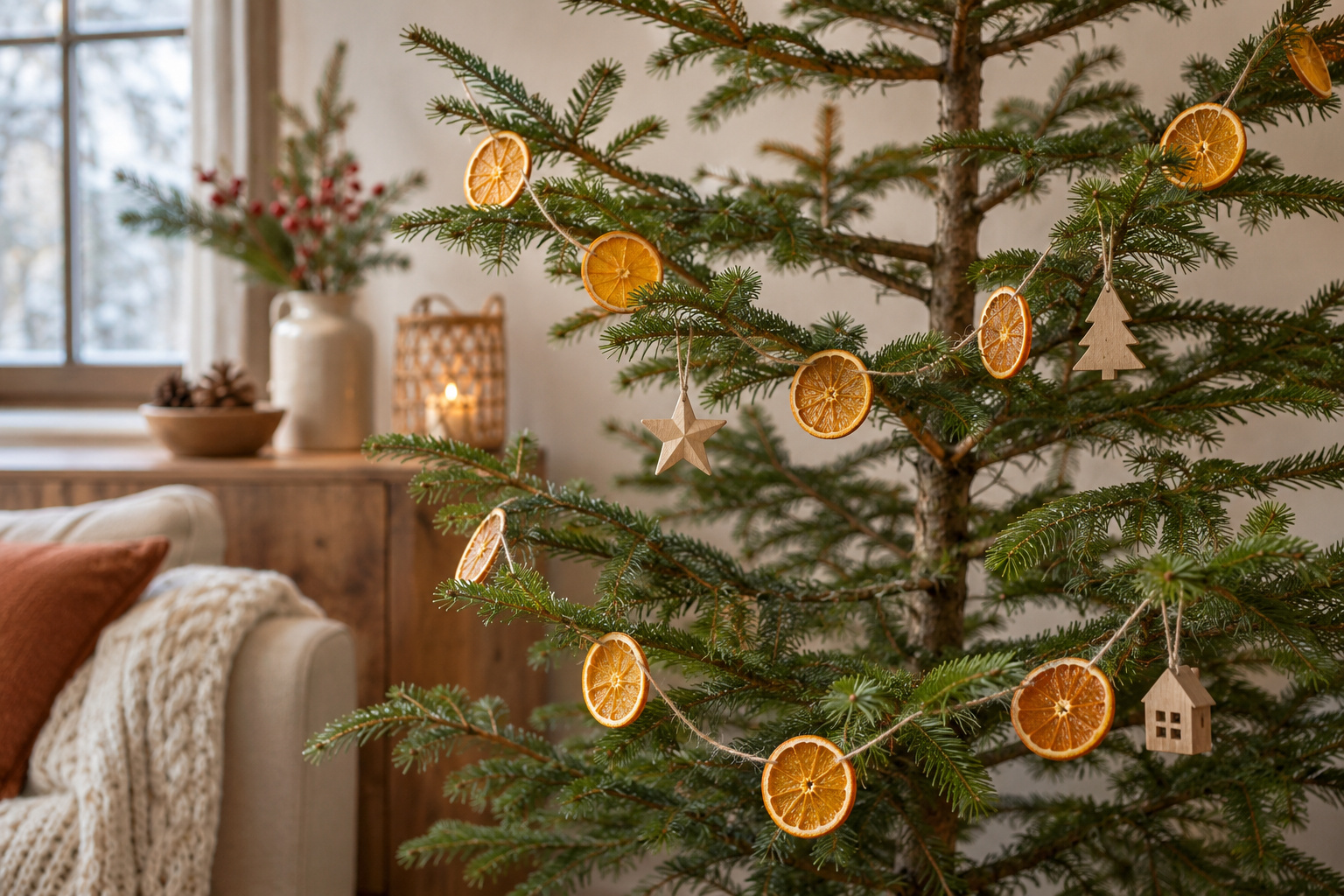
Try a citrus strand on one part of the tree before making enough for the whole tree. Follow a loose route across the outer branches and leave gaps where green tips show between slices. Use light decorations and branches that support them without bending noticeably.
Take a step back and check whether the rounds remain individual shapes. If they merge into a heavy band, increase their spacing or use fewer lengths. Keep the strand independent of light wiring, following the tree and lights’ instructions. A few simple wood ornaments can repeat the natural finish while leaving the citrus as the clearest warm color.
11. Give a Dining Mirror One Asymmetric Citrus Accent
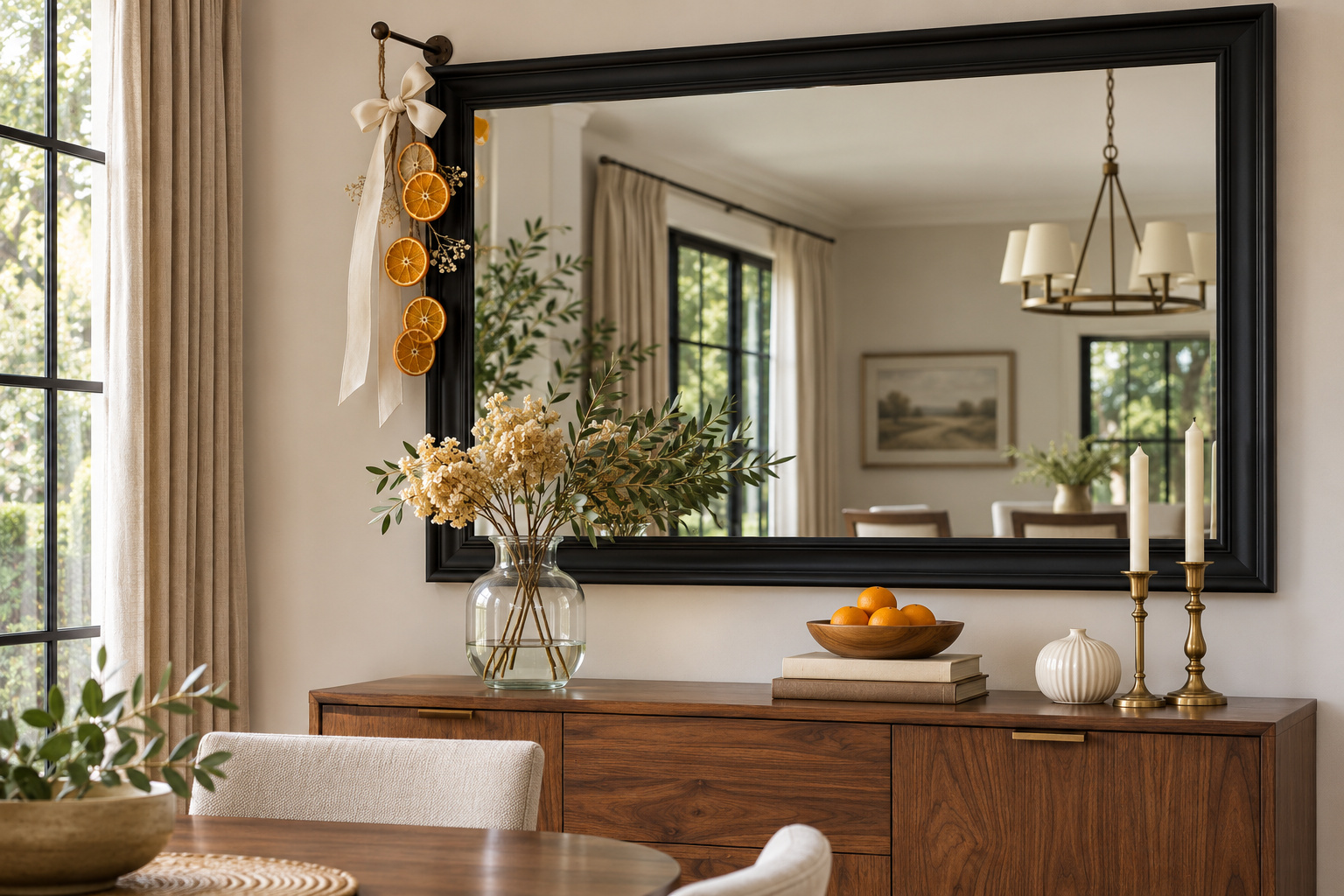
A large dining-room mirror can carry a small citrus accent at one upper corner rather than a complete border. Make a separate short strand, then position it beside a simple ribbon so the line falls toward one side. Use an approved independent support; a delicate mirror frame is not a convenient substitute for hanging hardware.
Leave most of the reflection exposed. The small orange curves look deliberate beside a dark frame, a clear glass vase, and a plain wood sideboard. Keep the accents above anything you reach across during a meal. This arrangement changes the mirror’s outline without turning the entire surface into a wreath.
12. Use Removable Clips for Fragile Slices
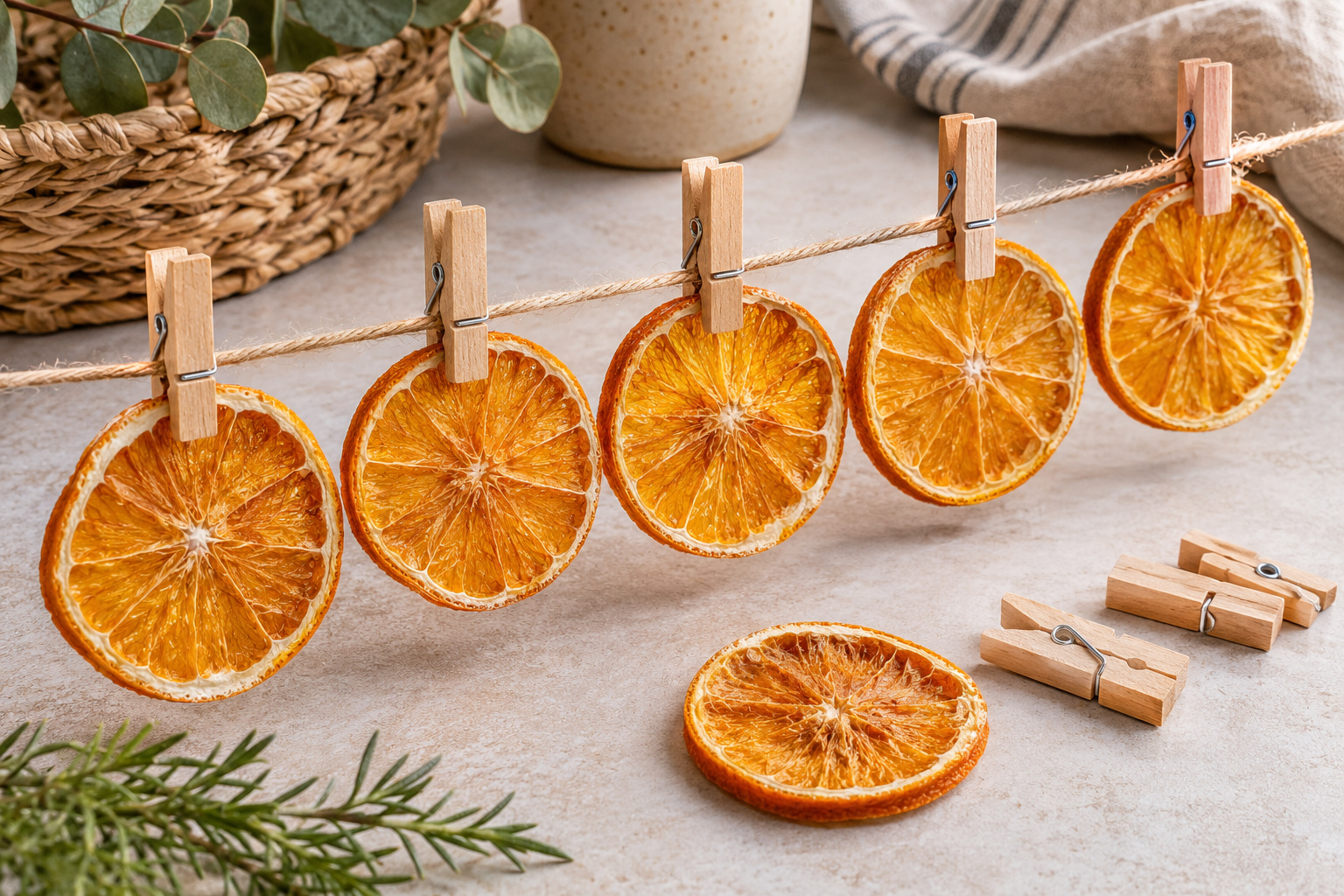
When the slices crack during threading, clip them individually to a cord instead. Use small, smooth craft clips with a grip gentle enough for the dried fruit. Test a single slice first, checking that it hangs face-forward without breaking where the clip closes.
Clips make the arrangement easy to adjust. You can take one slice away, move it to a brighter part of the strand, or change the spacing after it is hanging. Keep the clips visible as a little repeated wood detail rather than trying to hide each one. This construction is especially useful for a short indoor display you want to rearrange.
13. Make Separate Matching Lengths for Two Open Shelves
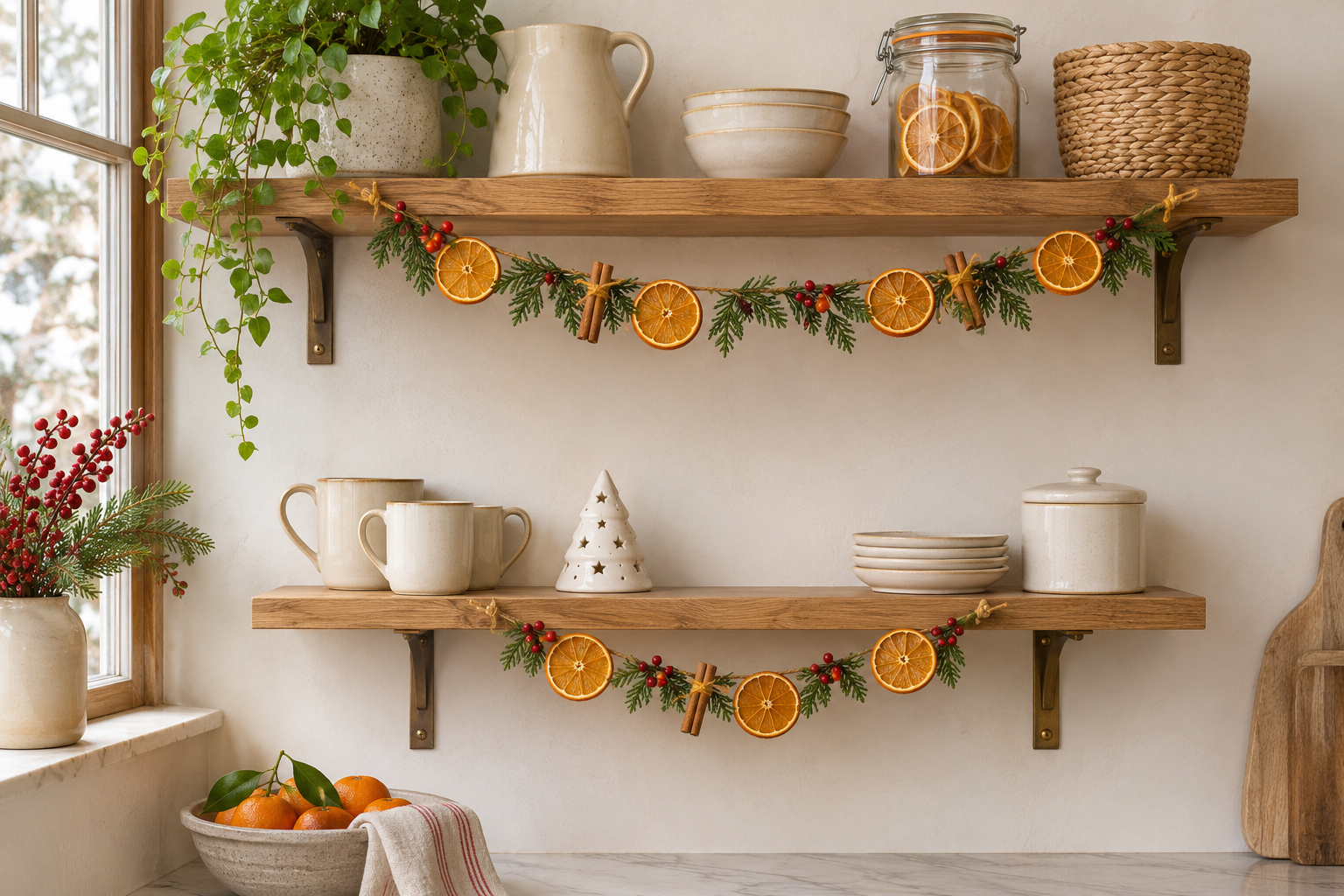
For two separated shelves, build a small independent strand for each one. Repeat a recognizable sequence, such as one large orange round followed by two smaller ones, while measuring each actual shelf span. Separate lengths let you keep the area between the shelves clear.
Let the shelf contents determine where the hanging line can sit. Avoid crossing a book spine you need to read or a place where your hand reaches for a mug. A shared cord and fruit sequence connect the two shelves even if one garland is shorter. You can also remove one length without disturbing the other shelf.
14. Store the Finished Strand in Flat, Cushioned Layers
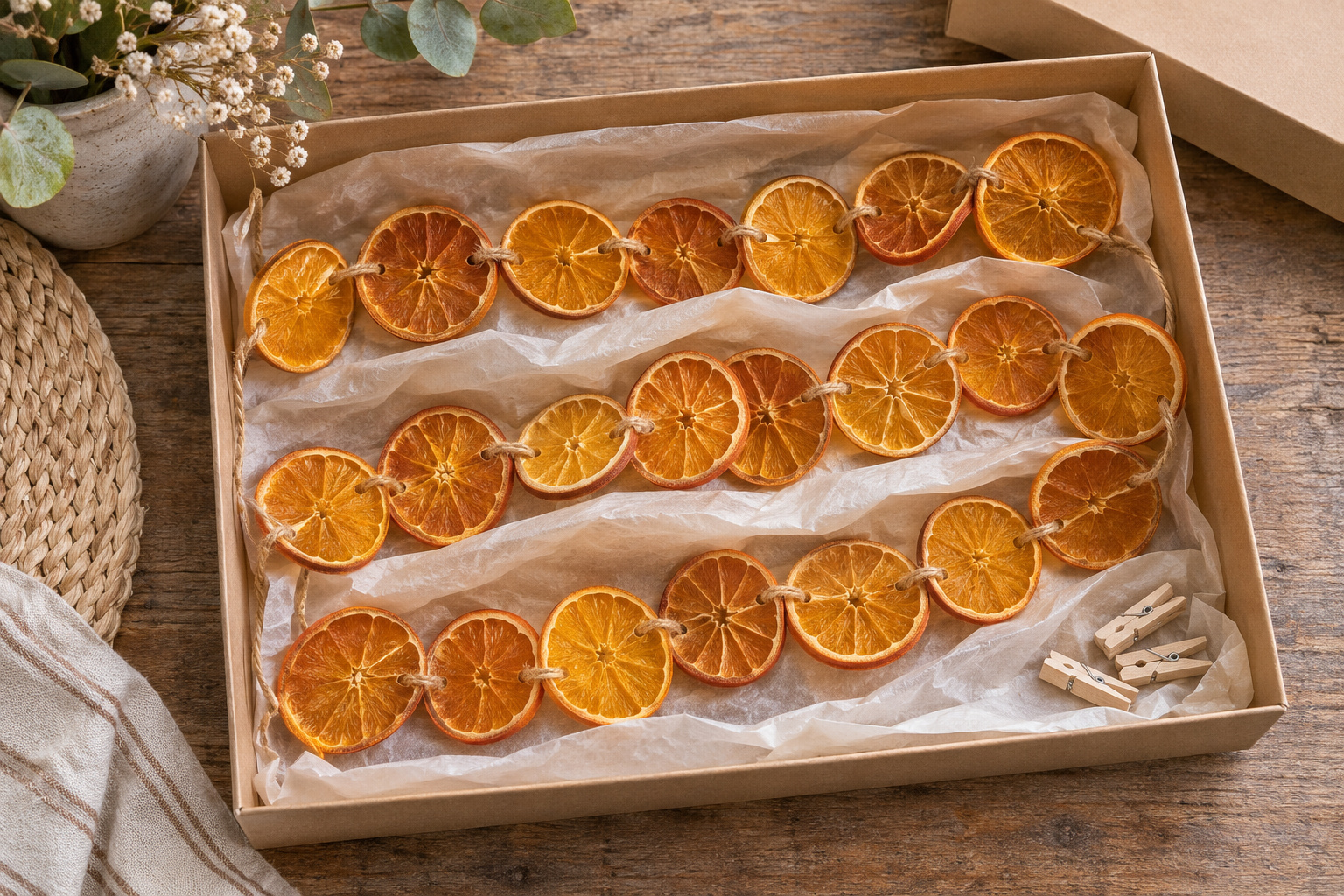
Keep a shallow box large enough to hold the strand without folding the citrus slices. Once the display is completely dry, lay the cord in loose turns with plain tissue between layers. Support fragile pieces instead of pulling the cord tight across them.
Note the display location on a separate card in the box and include any removable clips you used. Store the box in a cool, dry place, checking the pieces before using them again. Discard anything moldy or damaged. The slices may darken over time; keeping them is a decision about their condition and the color you still enjoy, not a promise that they last indefinitely.
Make one short length first and hang it where you can see it in daylight. Adjust the spacing, attachment, and background before repeating the design elsewhere. A garland that keeps its citrus faces visible and its surrounding space usable will feel more considered than a long strand fitted around every edge.
Discover more from HomeTrendora
Subscribe to get the latest posts sent to your email.