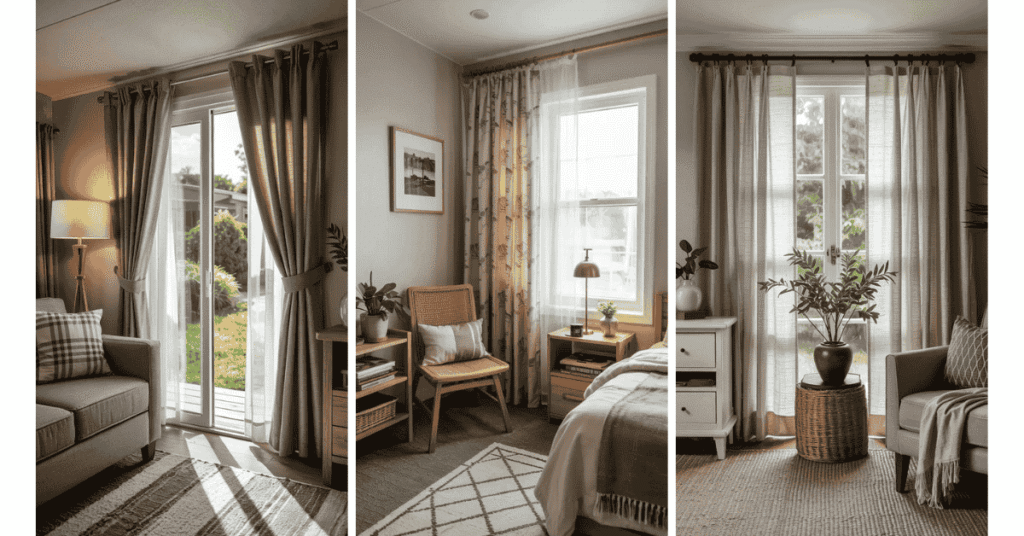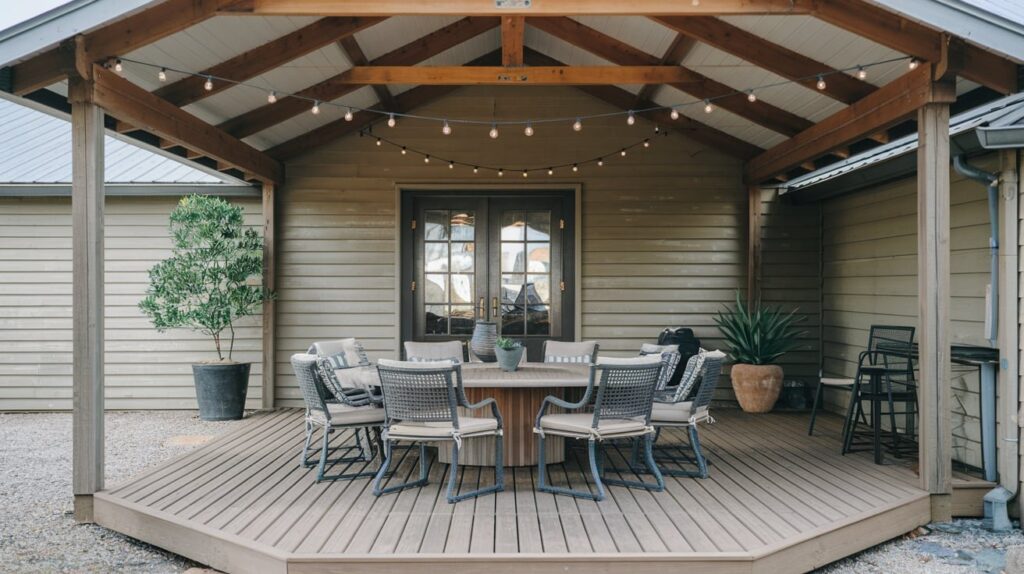
Modern Mediterranean interior design can start with the way a light wall, a warm floor, and a piece of wood look together in daylight. A clay tile at the entry or a blue glazed bowl beside a pale wall can bring that feeling into an ordinary room. Choose a few materials you can see and use every day.
These 15 ideas cover small changes and a few larger finish decisions. Start with the light, floor, or architectural detail you already have, then choose what you want to add beside it.
1. Give One White Wall a Plaster-Like Finish
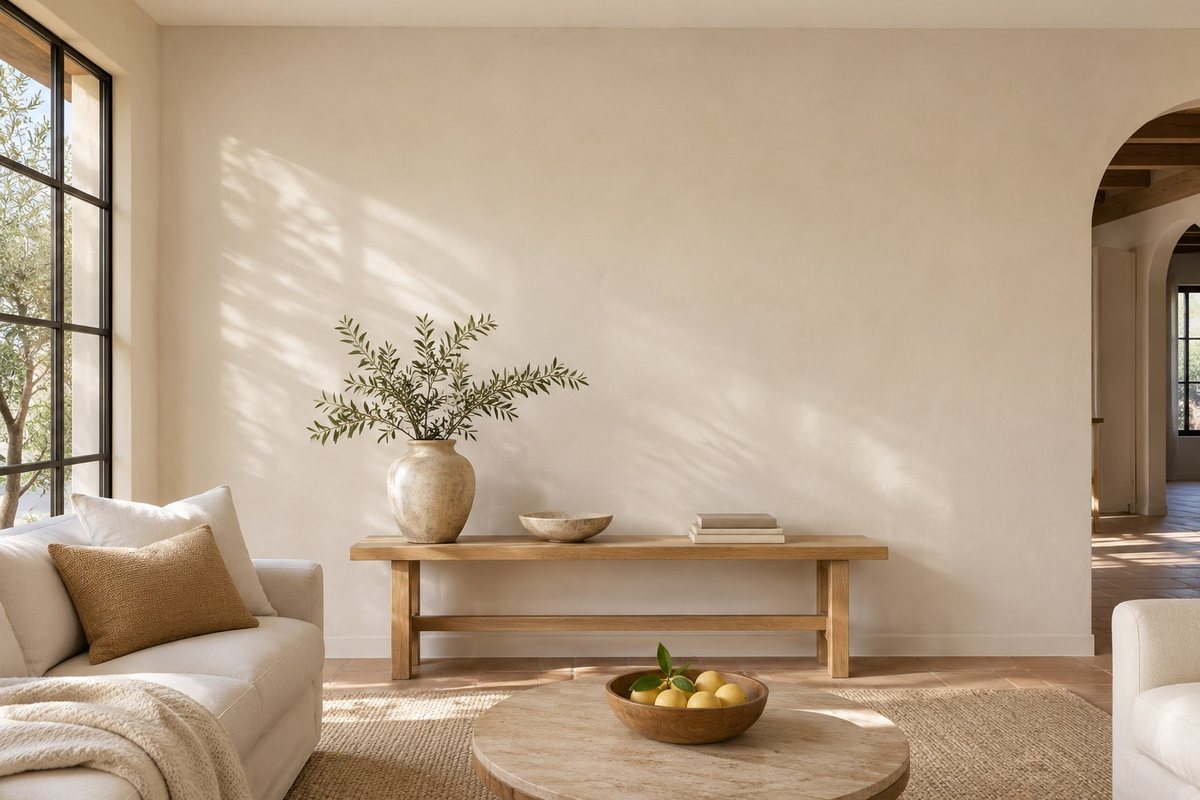
Start with a light wall that catches daylight from the side. A warm white plaster-like finish can show small changes across the surface while keeping the room bright. Try a large sample next to the floor and the nearest wood or trim. Check the finish in both direct and shaded light so you can see how much movement it adds.
Choose a product suited to the existing wall and follow its preparation and application directions. In a small room, use the finish on one broad, uninterrupted surface. A plain chair or bench against it can make the texture easier to notice. Leave enough space around the furniture to see the wall as a single field.
2. Use Terracotta in One Defined Floor Area
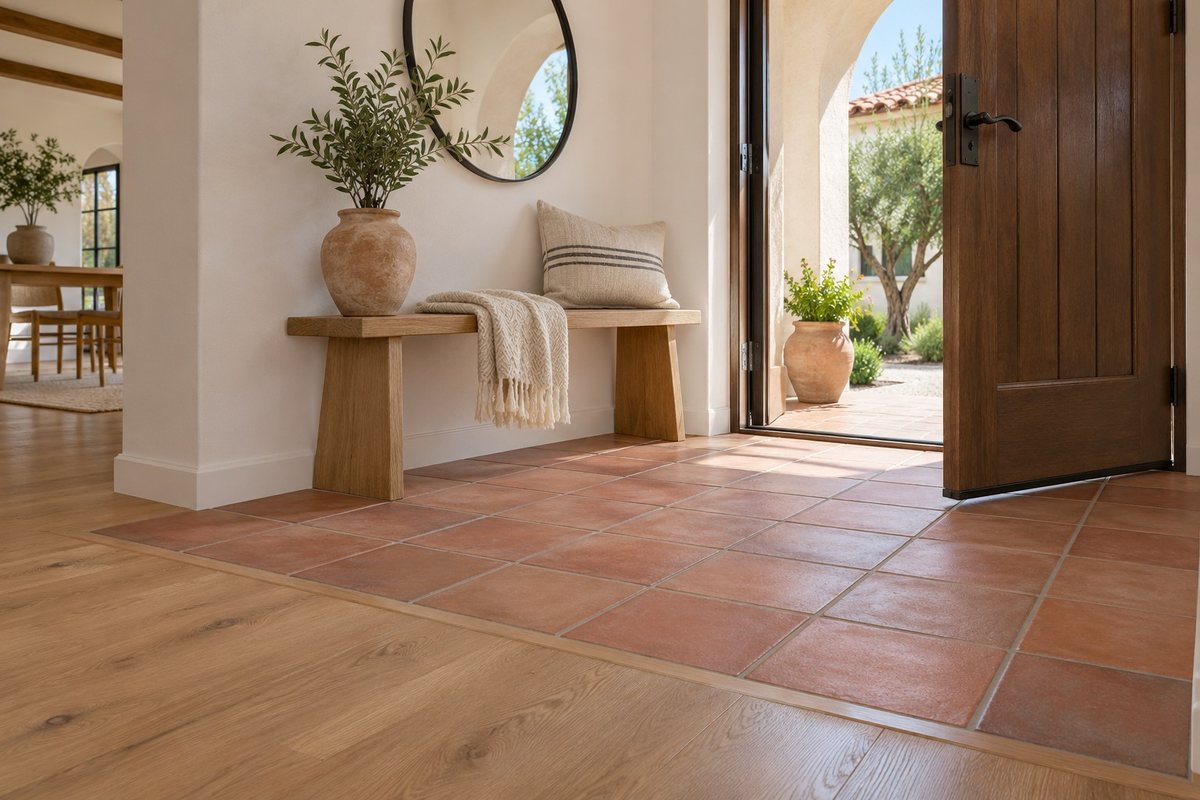
Give terracotta a defined job, such as marking a small entry inside the front door. Look at the size of the area and where it meets the next floor. A small patch can bring warmth into an otherwise pale space. Compare several tiles in daylight, because the color variation can be more noticeable across a group than on one sample.
Confirm that the tile and installation suit the location and expected wear. Check how the floor transition will meet the door and adjoining surface. A simple grout color can keep attention on the clay. These earth-tone color ideas show other ways to balance terracotta and warmer finishes.
3. Keep the Shape of an Existing Arch Visible
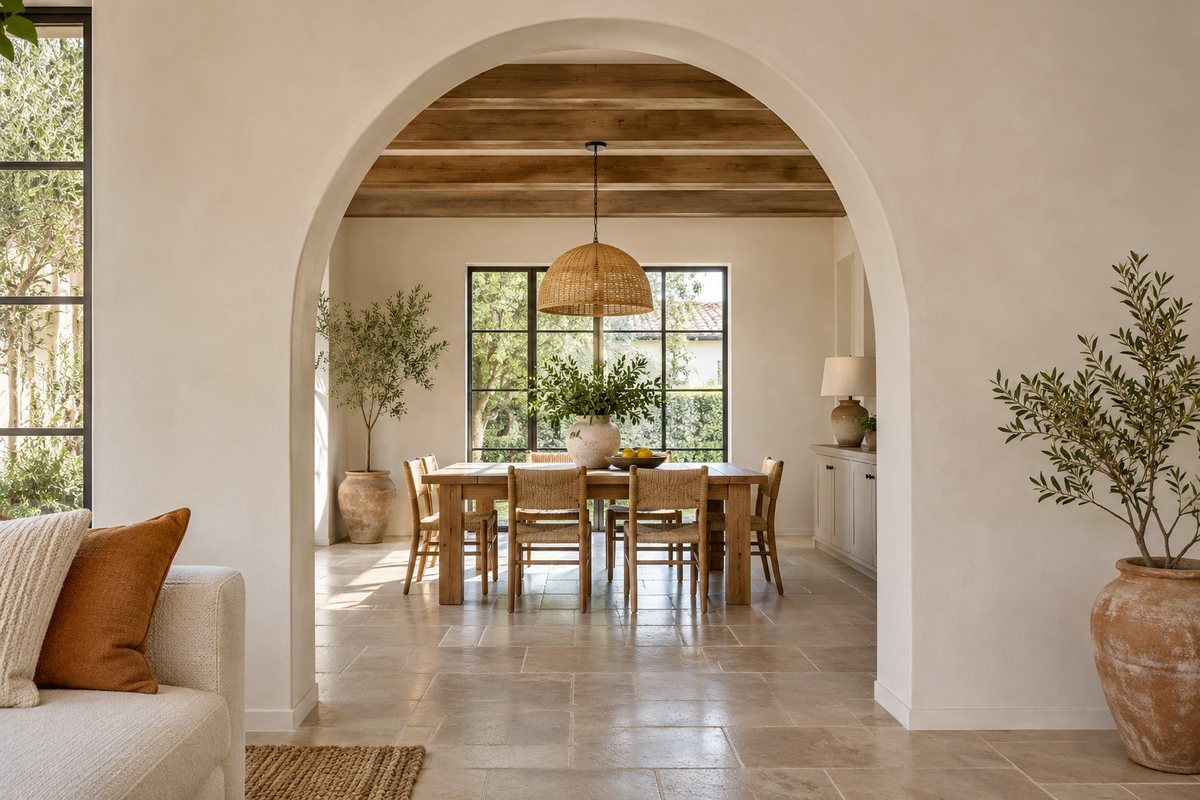
If your home already has an arched doorway, give it some clear wall and floor around it. Remove a tall piece beside the opening if it hides the start of the curve. Stand in the room you enter most often and see what appears through the arch. A wood table or pale wall beyond can give that view a quiet destination.
Choose finishes that show the inside edge of the opening. A soft plaster color can catch the light across the curve. Keep the doorway easy to use and leave space for the furniture on either side. A small existing arch can set the mood of both rooms when the view through it is clear.
4. Use Patterned Tile in One Small Band
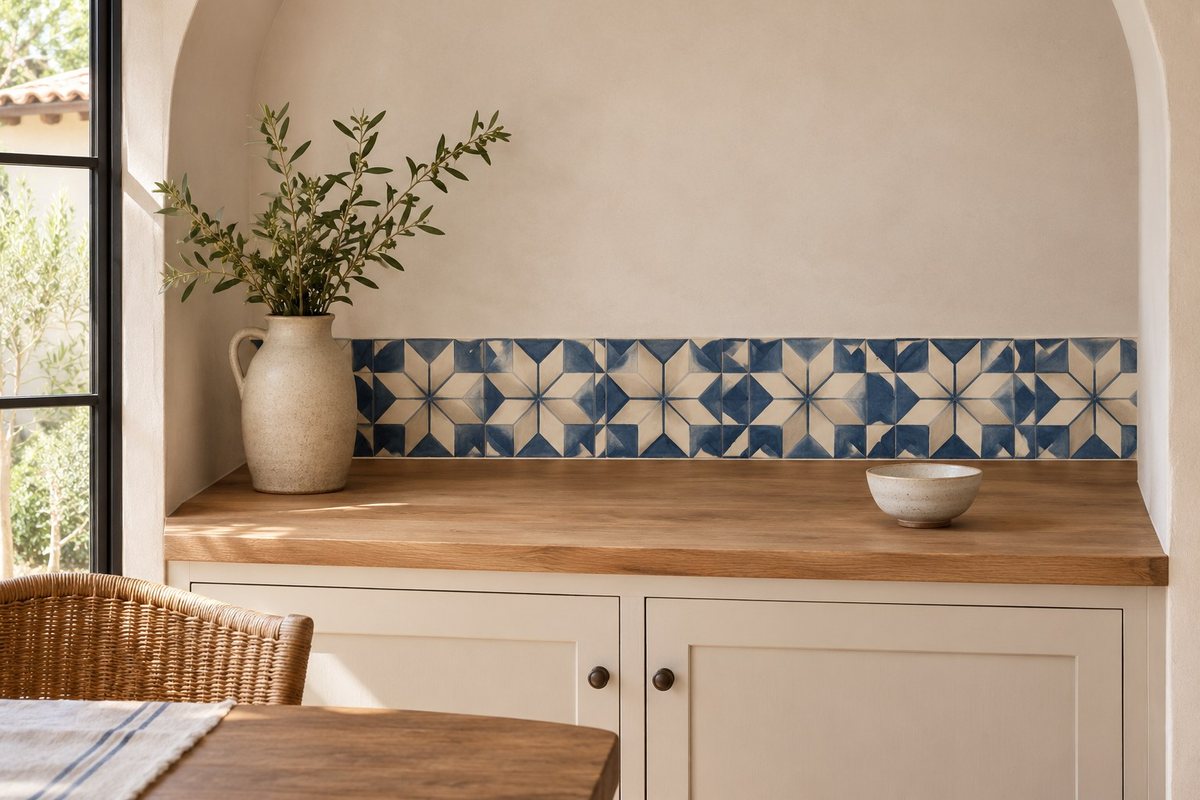
Try a short row of patterned tile behind a dining alcove or serving counter. A dusty blue and cream repeat can bring in color while the rest of the wall stays warm white. Put a few sample tiles side by side to see how the pattern meets at the joints. Give the band a clear place to end at a cabinet or inside corner.
Check how the pattern looks from across the room before you choose the whole layout. If the darker marks start to form a solid stripe, try a softer blue or leave more plain surface nearby. These neutral kitchen backsplash ideas give examples of quieter tile surfaces to pair with a small accent.
5. Let One Existing Beam Carry the Dark Wood
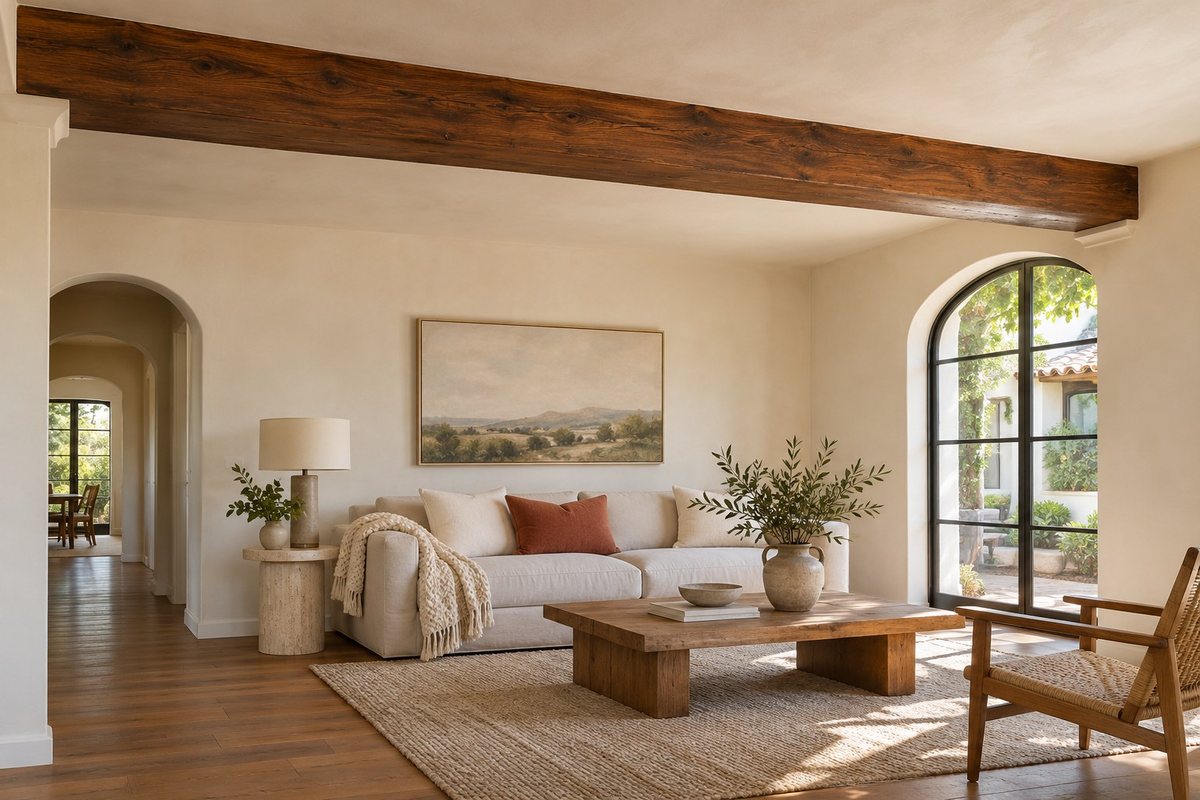
If a room already has an exposed wood beam, make it easy to see from the entry. Pale walls and ceiling can help the wood read as a continuous line. Look at the ceiling and the floor together before adding another dark finish. A medium wood floor can give the beam a visible connection without needing matching dark pieces around the room.
Check how the wood looks at the darkest time of day and choose any care or finish work to suit the existing material. If the room has no beam, try a low table with a similarly deep wood tone. The grain can give a pale room some of the same warmth at a scale that fits the furniture.
6. Set a Small Stone Table Beside Simple Upholstery
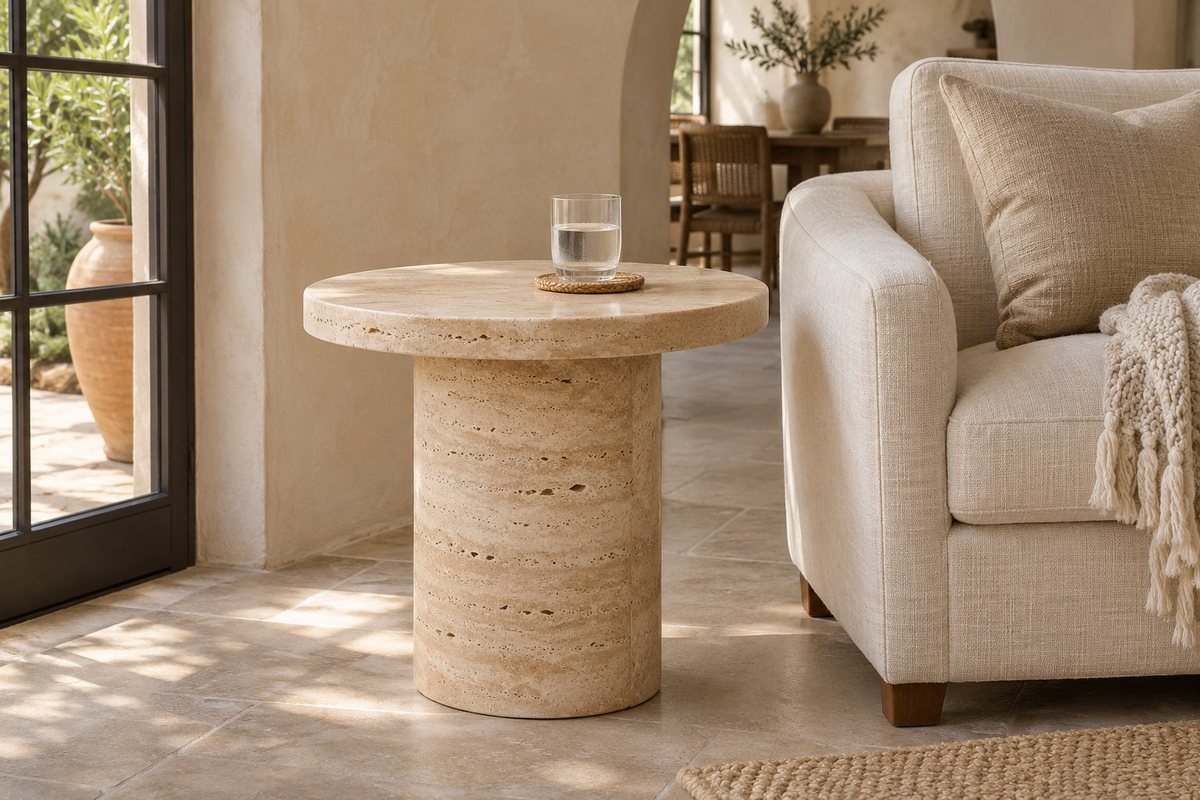
Set one small stone table beside simple upholstery. A pale travertine surface can show a little variation against cream fabric. Put it where you can see the whole top and reach it comfortably from the chair. Compare the stone near the window and under your evening light before you decide whether the tones feel related.
Check the piece’s weight, stability, and care requirements. Some stone finishes are better suited to the way you use a table than others. Use a coaster if the material needs it and keep the top clear enough to set down a drink. These texture ideas for interiors show other ways to pair stone with a quieter surface.
7. Put Olive Oil in a Small Opaque Cruet
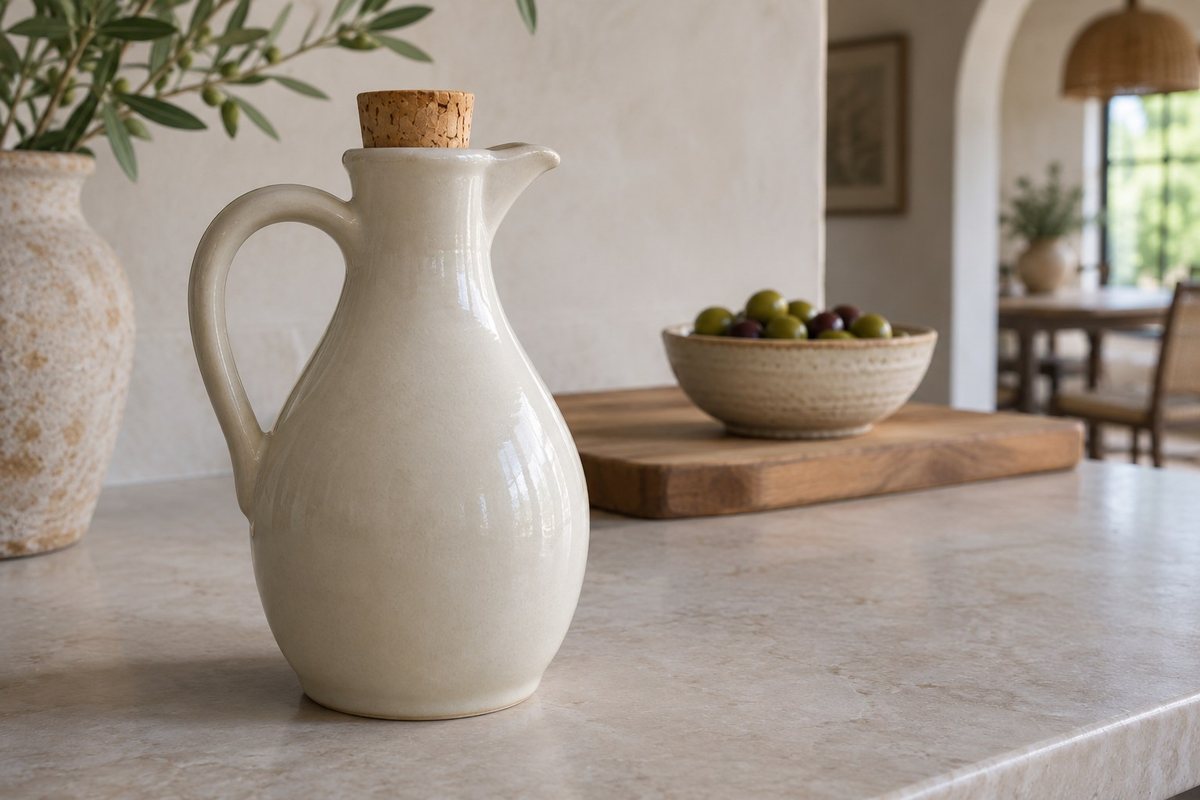
Use a small opaque food-safe cruet for the olive oil you pour regularly. A pale ceramic vessel adds one useful object to a warm white counter. Choose a size you can comfortably grip and a spout you can clean. Fill it with the amount you expect to use soon, and follow the maker’s directions for cleaning and drying it.
Keep the cruet in a cool spot away from the range and direct sun, or in a cupboard if the counter is too warm. Follow the storage directions on the original bottle for the rest. The UC Davis Olive Center’s review of olive oil packaging explains how light and air affect quality.
The 15-ounce Flour White Emile Henry ceramic cruet brings a pale ceramic finish to the table and has a pour spout for dressing a plate. Refill it with the amount of oil you’ll use regularly.
Explore 15-ounce Flour White Emile Henry ceramic cruet (paid link)
8. Control the Sun With a Simple Interior Shutter
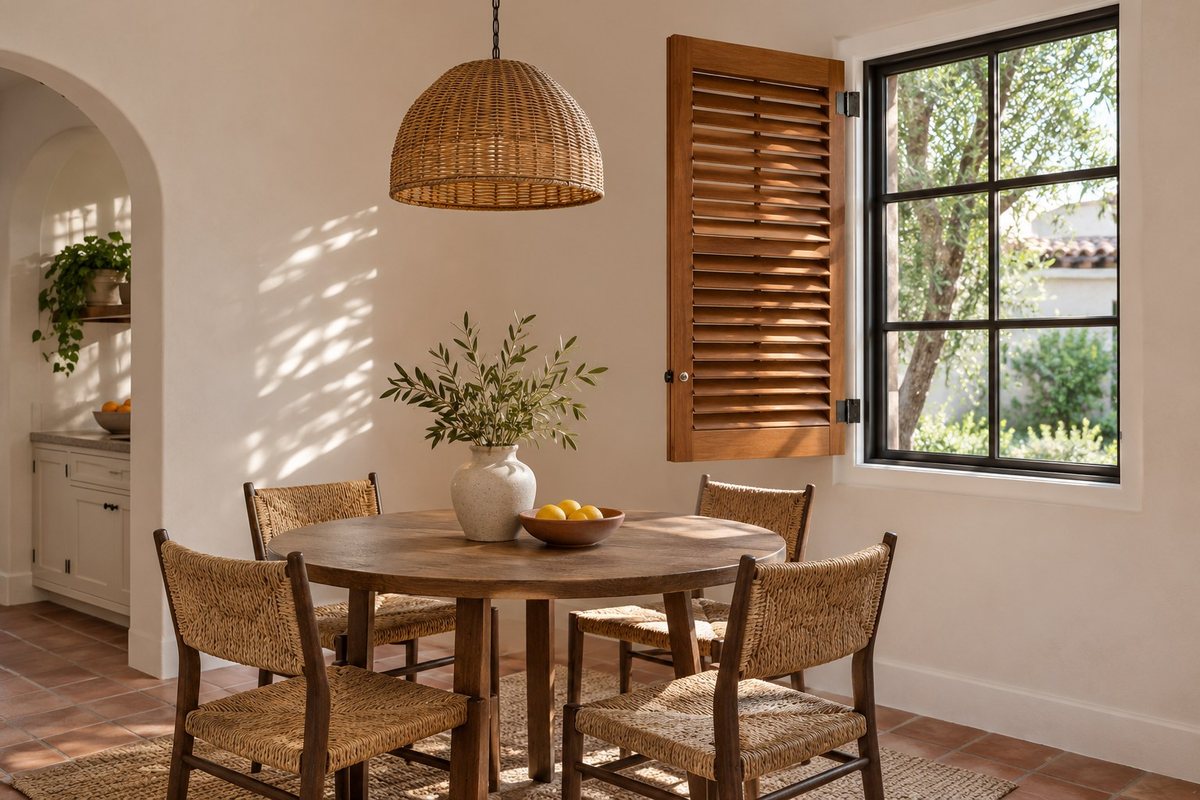
An interior shutter can give a sunny window more than one useful position. Open it when you want the full view, then turn or close it partway when direct sun reaches a chair or table. Pale wood or a quiet painted finish keeps the shutter related to a warm white wall. Look at it when the light is strongest.
Measure how far the shutter projects when it opens. Check nearby furniture, window handles, and trim, and confirm the mounting requirements with the maker. Try the angles you expect to use most often. A small area of filtered light may be enough when the rest of the glass already gives you the view you want.
9. Let Blue Come From One Glazed Piece
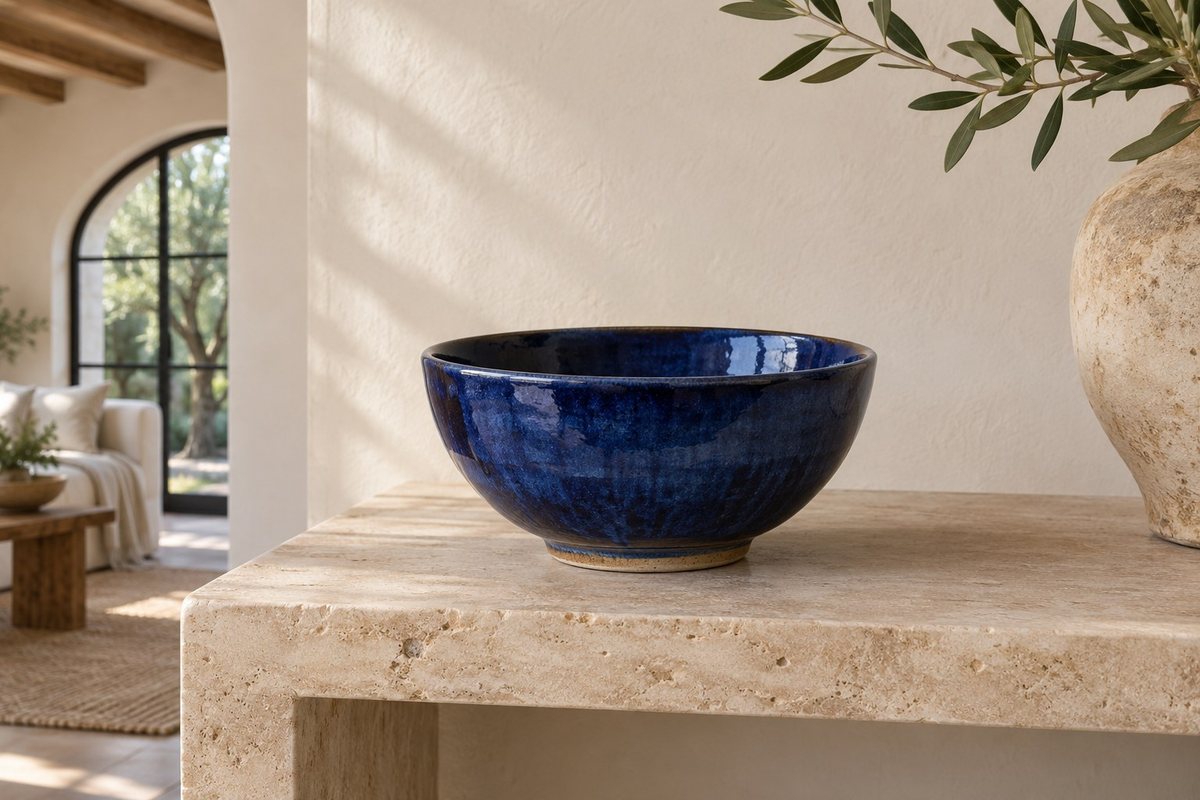
Put one deep blue glazed bowl or vase where a light surface can show its outline. A pale stone console or a warm white wall gives the blue enough separation. Look at the glaze from your usual seat. A dark shade can read almost black in shadow and show more color when light falls across the rim.
Use a simple shape and give it a practical spot. A bowl near the entry can hold keys, or a small vessel can sit on a sideboard where it stays easy to move. Compare it with the rest of the room in daylight. One clear patch of blue can be enough beside clay and warm wood.
10. Give the Dining Table a Warm Pool of Light
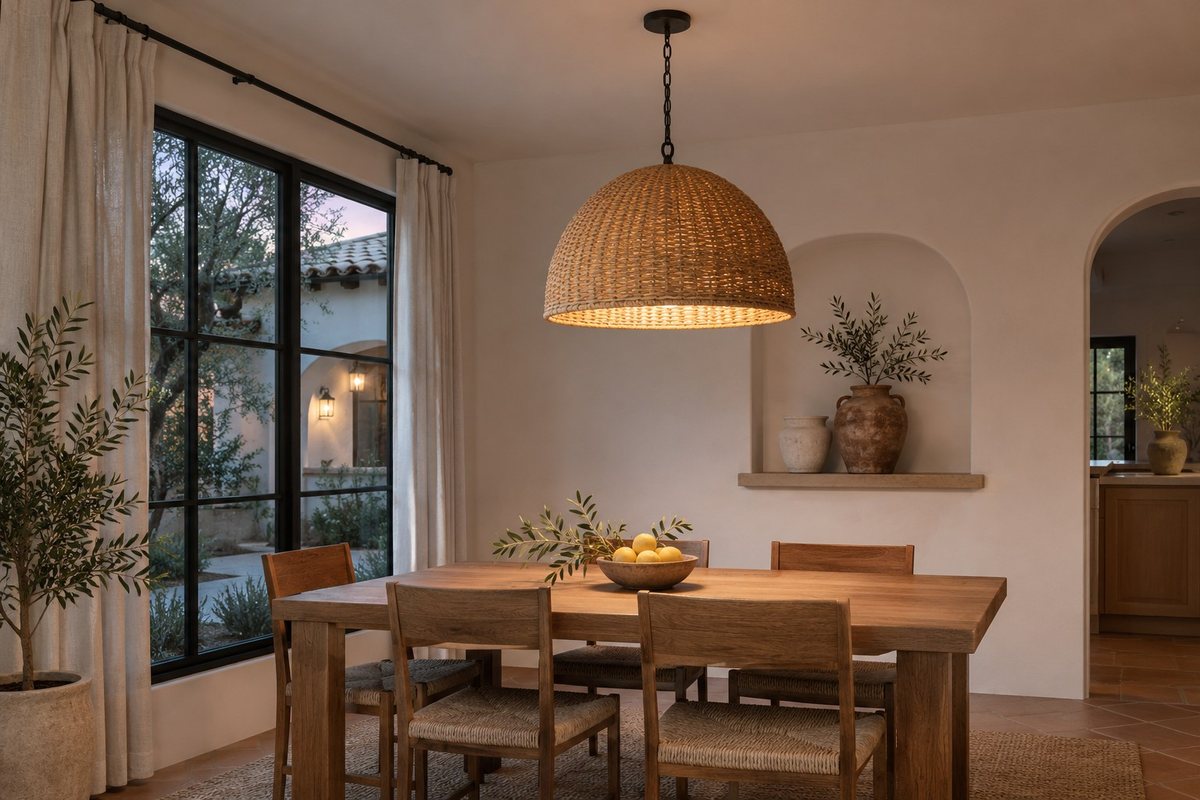
Use a woven pendant to make a small dining table feel like its own place. Check where the shade sits from a chair and where the light reaches the table. A warm pool of light can show the wood and the pattern of the weave. Leave enough visibility to see the faces of the people seated opposite you.
Use a shade and fixture designed to work together and follow the maker’s clearances and bulb guidance. If changing the fitting requires electrical work, have it installed by a qualified professional. Try the normal evening lighting before adding a second source. The main pool should reach the places you set out plates or serving dishes.
11. Use a Bench to Bring a Courtyard Feel Inside
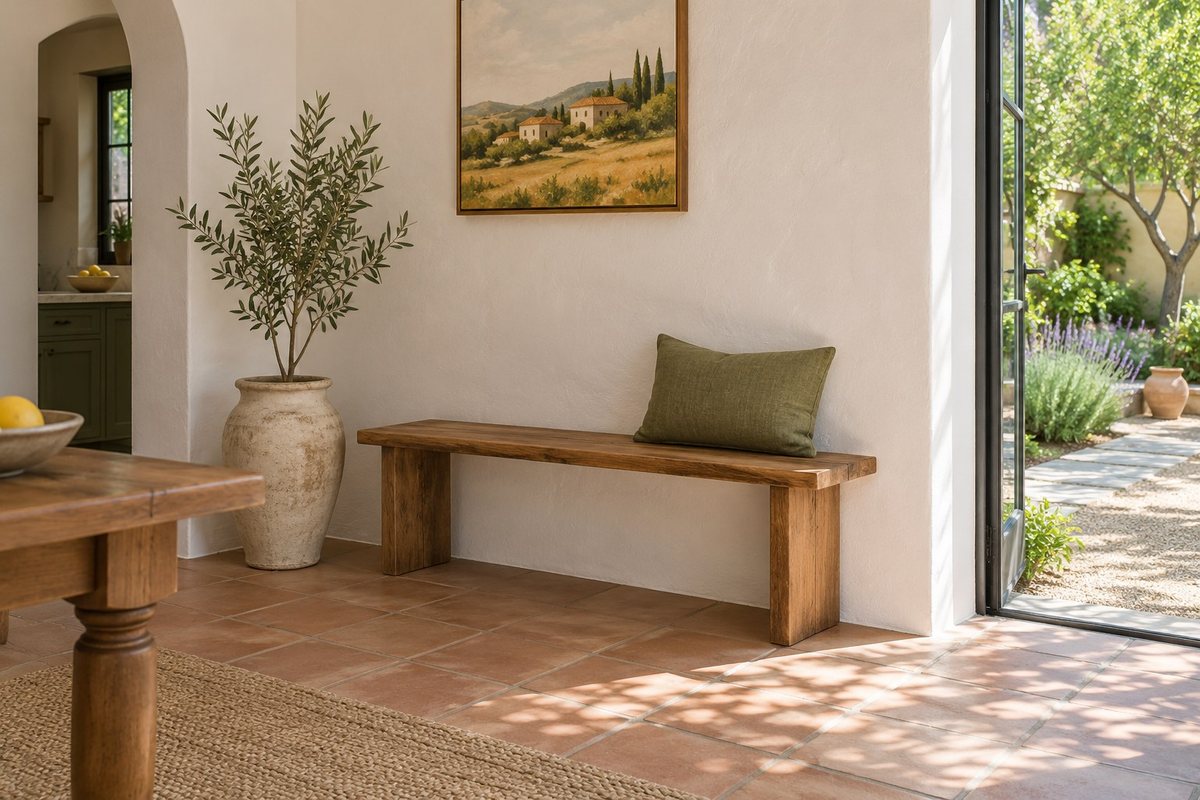
Set a simple bench against a light wall near an entry or garden door. A shallow wood seat and one olive cushion can suggest the feel of a sheltered courtyard. Leave the sides and the floor in front of it open. Sit down and see whether the bench is comfortable for the job you expect it to do.
Check the depth with the nearest door open. If people need to pass through the area, use a shallower bench or put it in a recess where it leaves the route clear. Leave room for a bag or a pair of shoes at the side. The materials can give the corner character while the bench stays useful.
12. Choose a Quiet Warm Metal at the Sink
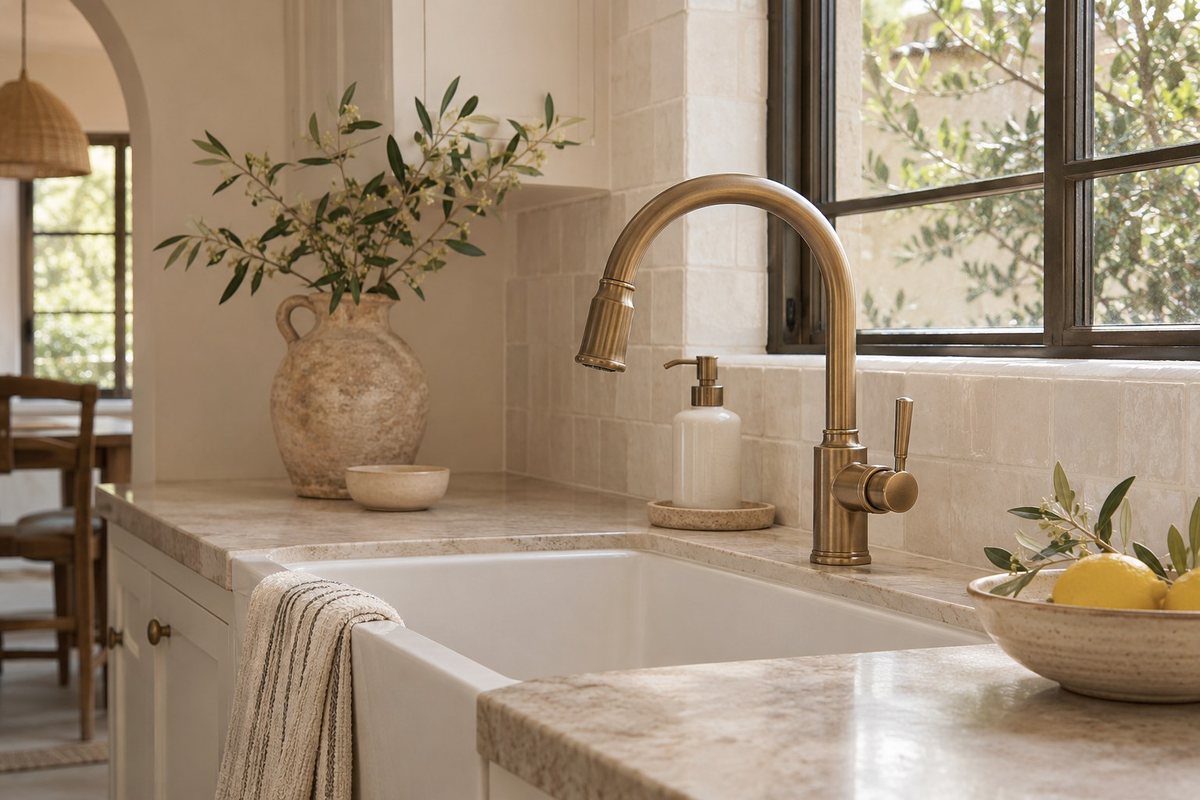
Choose one warm metal finish for a useful fitting such as the kitchen faucet. Muted brass or bronze can give a cream sink area a little depth. Compare a sample with the tile and counter near the window. A low-gloss surface can look quieter when daylight crosses it from the side.
Check how the finish is meant to be cleaned and whether it suits the fittings you already have. For a new faucet, confirm the hole layout, clearances, and practical reach before ordering. A warm metal accent works best when you can still use the sink comfortably. Leave the nearby counter plain enough to see it.
13. Hang One Handmade Textile on a Plain Wall
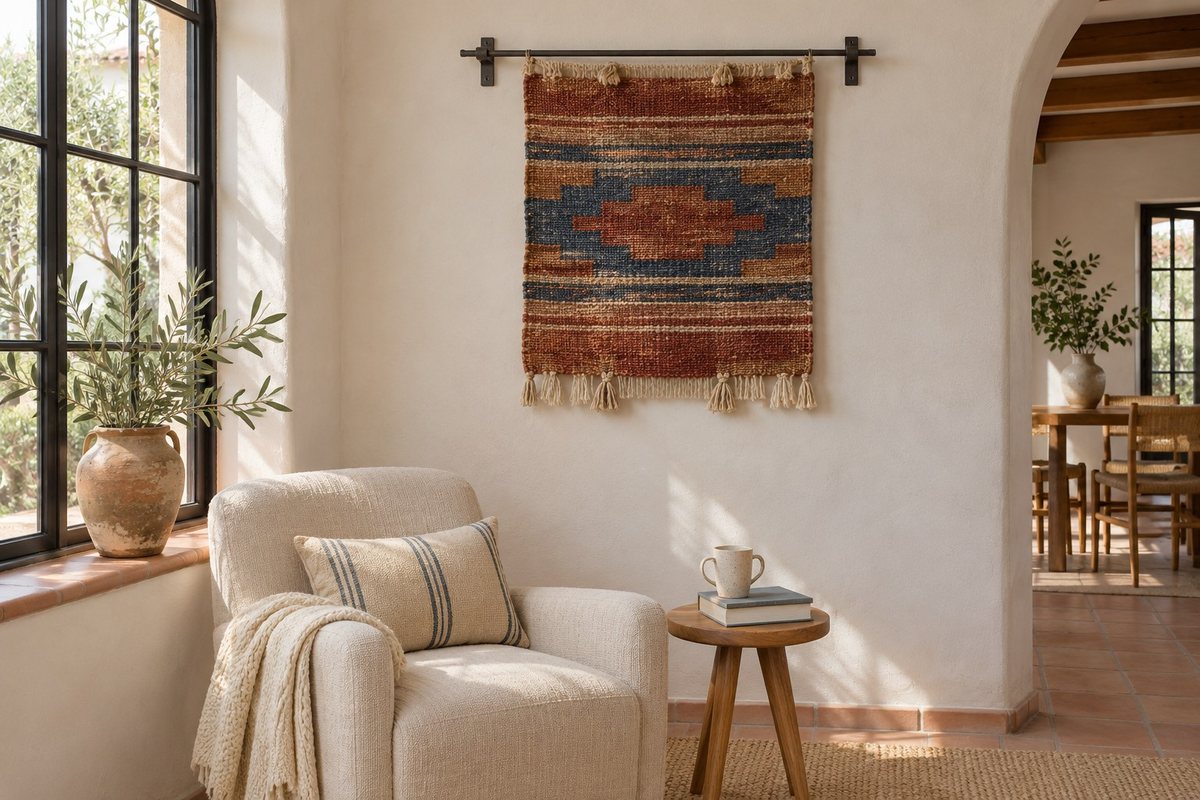
Hang one woven textile against a plain warm white wall. Choose a piece with a pattern you can see from the doorway, such as a quiet stripe or a simple combination of rust and indigo. Hold it up at different heights and see where the fibers show in the daylight. Leave enough wall around it to see its edges.
Use a support suitable for the textile and wall. A fragile piece may need a display method recommended by a framer or textile specialist. Keep it away from heat and strong light if its care requires that. A single fabric can bring pattern and texture into a room that already has a clear shape.
14. Let the Doorway Connect Indoor and Outdoor Finishes
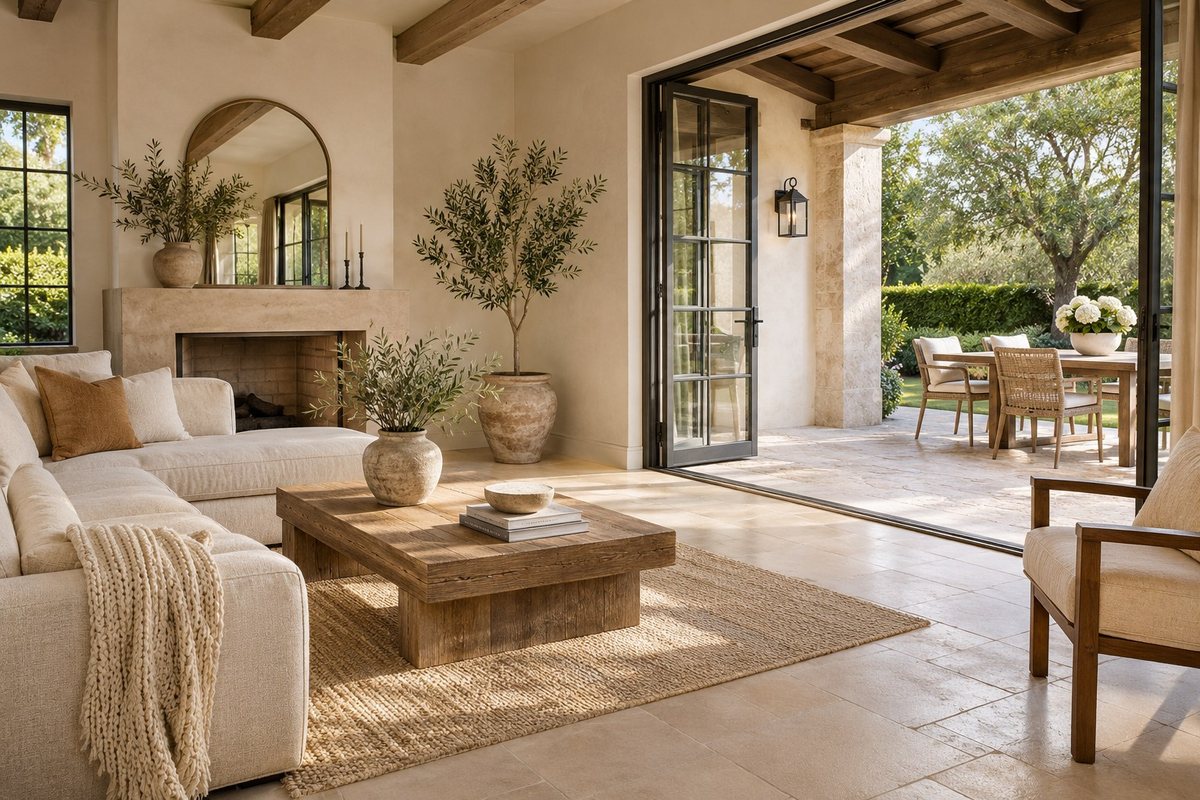
Look at the floor on both sides of a patio door. A light indoor tile and a separately suitable outdoor tile can share a similar warm tone. Set the samples beside each other at the threshold. Check how much they change between the indoor shade and the outside light, and leave the doorway clear when you test the view.
Ask the supplier and installer about the actual tile’s suitability for the outdoor location, including wet conditions and climate. Have the transition and drainage planned for the doorway. The Tile Council of North America’s exterior guidance explains why outdoor assemblies need to account for drainage.
15. Give One Large Ceramic Vessel Space Around It
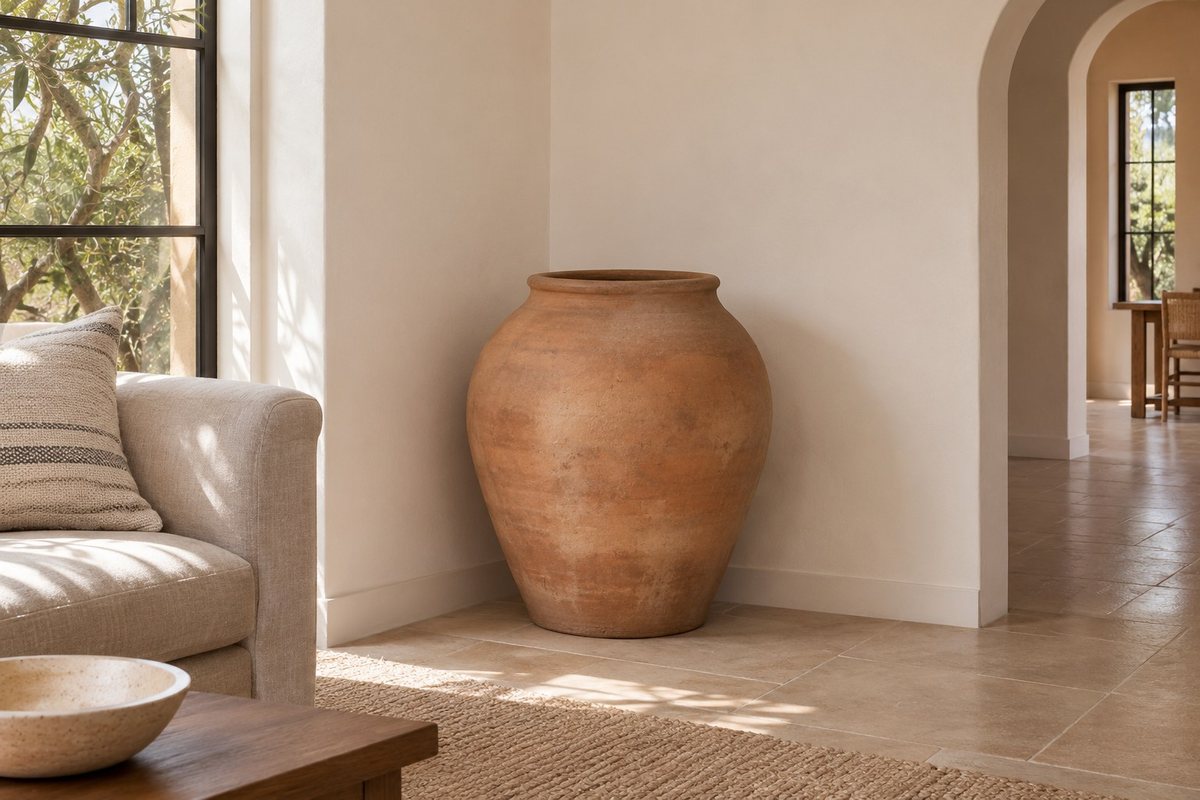
A large clay vessel can give a recessed corner one clear shape. Choose a piece with a broad stable base and room around its widest part. Look at it from the room entrance. A pale wall can show the rim and the shape of the vessel without needing tall branches or another group of objects beside it.
Measure the floor space and move the vessel away from any door, curtain, or narrow route. Check that the surface can support its weight and leave access to clean around it. Try it empty first. The shape and subtle color variation can give the corner enough material presence on their own.
Choose one surface or detail to carry the look first. See how the light changes across it and use the room as you normally do. When the wood, clay, or plaster still feels right beside your existing finishes, bring a related color or texture into one nearby spot.
Discover more from HomeTrendora
Subscribe to get the latest posts sent to your email.