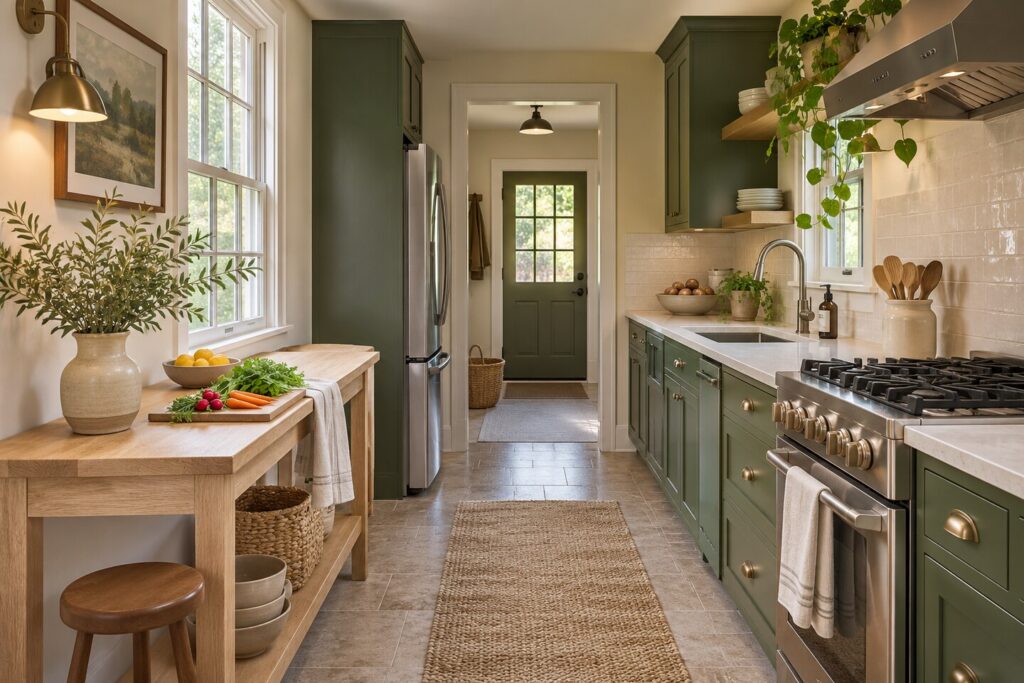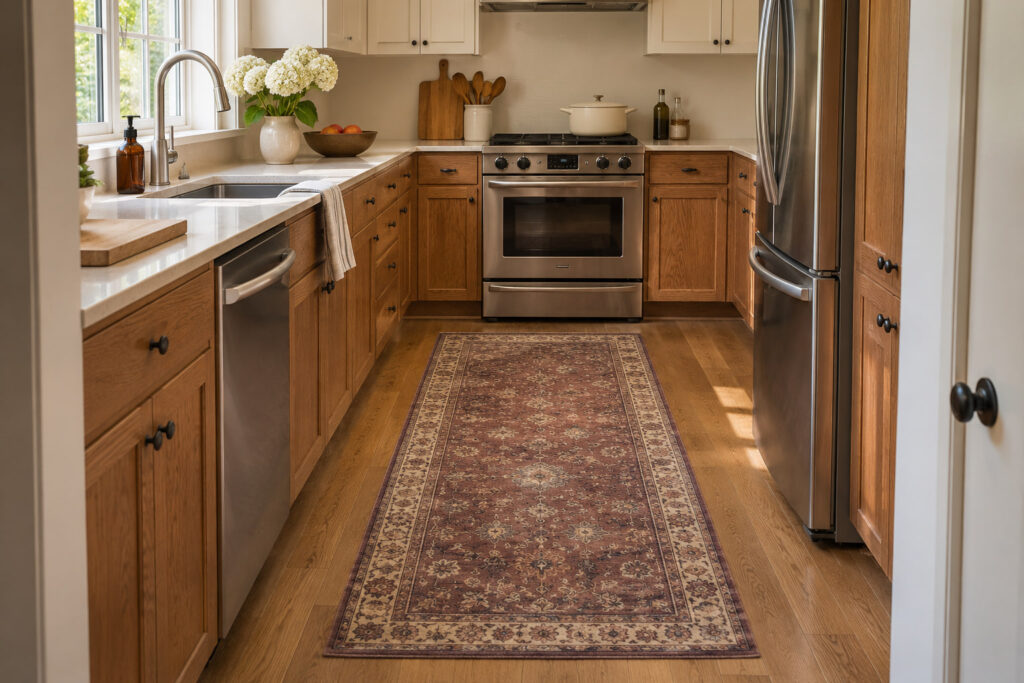
A kitchen can work perfectly well and still feel anonymous. Choose one detail you want to notice first, then let the surrounding cabinets, counters, and everyday equipment support it.
These 20 funky kitchen ideas range from replacement knobs to a more involved cooking-wall update. They belong to different rooms; you can take the idea that suits your kitchen without combining every color and pattern. Measure moving parts, seating, and work areas before committing to a change.
1. Give a Plain Island a Row of Yellow Stools
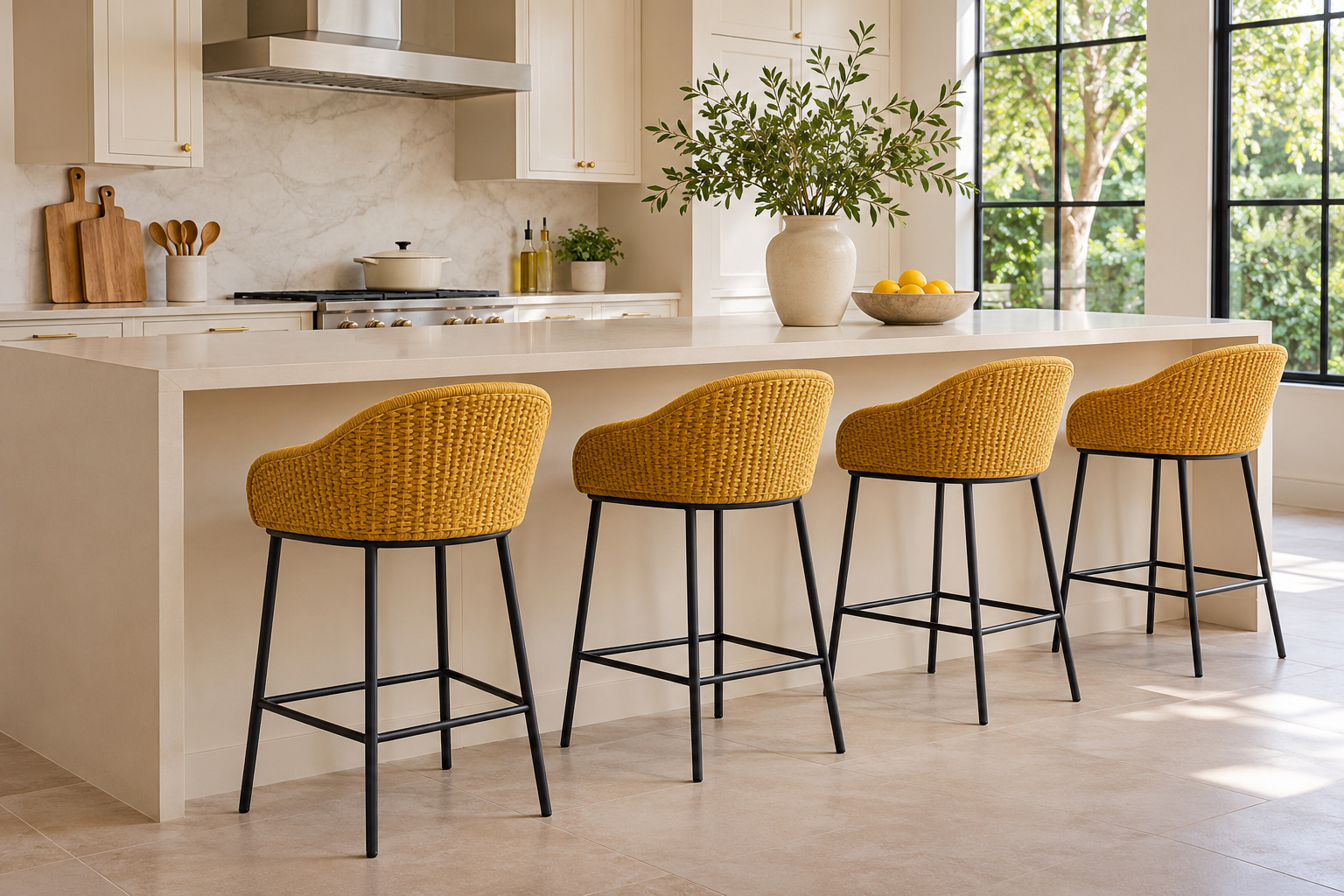
A row of yellow seats puts the color where people gather. Try it against a plain cream island with a quiet countertop, where the stool backs remain visible even when tucked in. Black legs can connect the yellow to existing dark hardware without introducing another large colored surface.
Measure the counter height, the underside clearance, and the complete seating run before choosing stools. The depth of the back matters as much as the seat: pull a chair out to the position someone actually uses and check the route behind it. A four-seat set needs a counter that genuinely accommodates four people.
Keep the nearby pendant and cabinet fronts simple at first. When the seats are the room’s bright detail, a bowl or a small textile can echo their warmth without turning every surface yellow.
This is a four-stool set with 26-inch seats and 20.5-inch overall depth; check counter height, the full row and pulled-out space, and choose a smaller set if you do not need four.
Compare the yellow counter stool set (paid link)
2. Set Colorful Knobs on a Quiet Cabinet Run
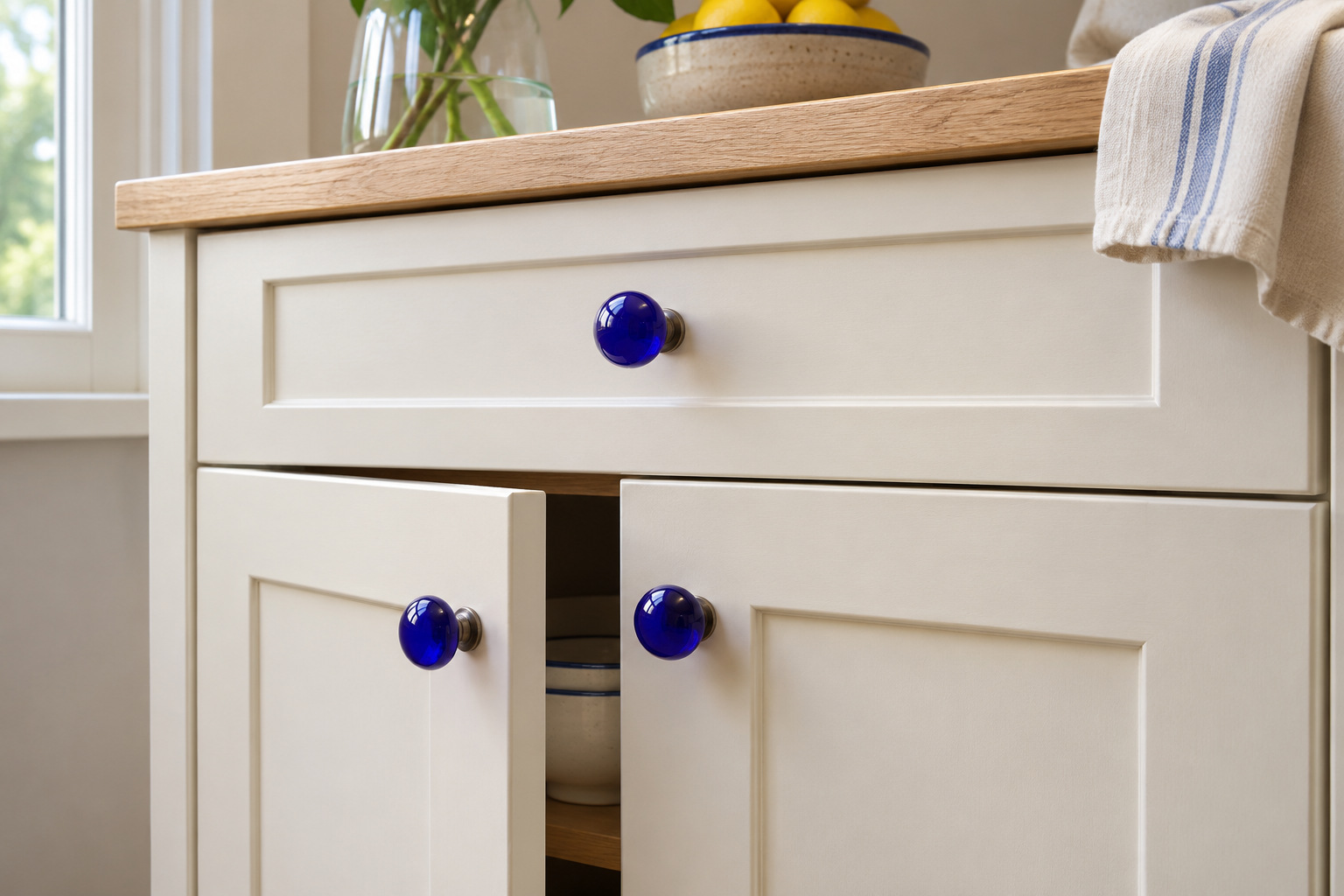
Small handles become surprisingly noticeable when they repeat across plain doors. Pick one color, such as cobalt, for a run of ivory cabinets. Rounded knobs add a different shape to square door frames, while a consistent finish keeps the collection deliberate.
Remove and measure one existing fitting before ordering replacements. Check the screw size and length, the door thickness, and any old marks that a smaller base might expose. For pulls, match the existing hole spacing if you want to avoid filling and redrilling the fronts.
Fit a single sample and use the door normally. Your fingers should have room behind the knob, and adjoining doors should open without their hardware meeting. This is a useful place to begin when the cabinets themselves are in good condition.
3. Use a Checkerboard Backsplash as the Main Pattern
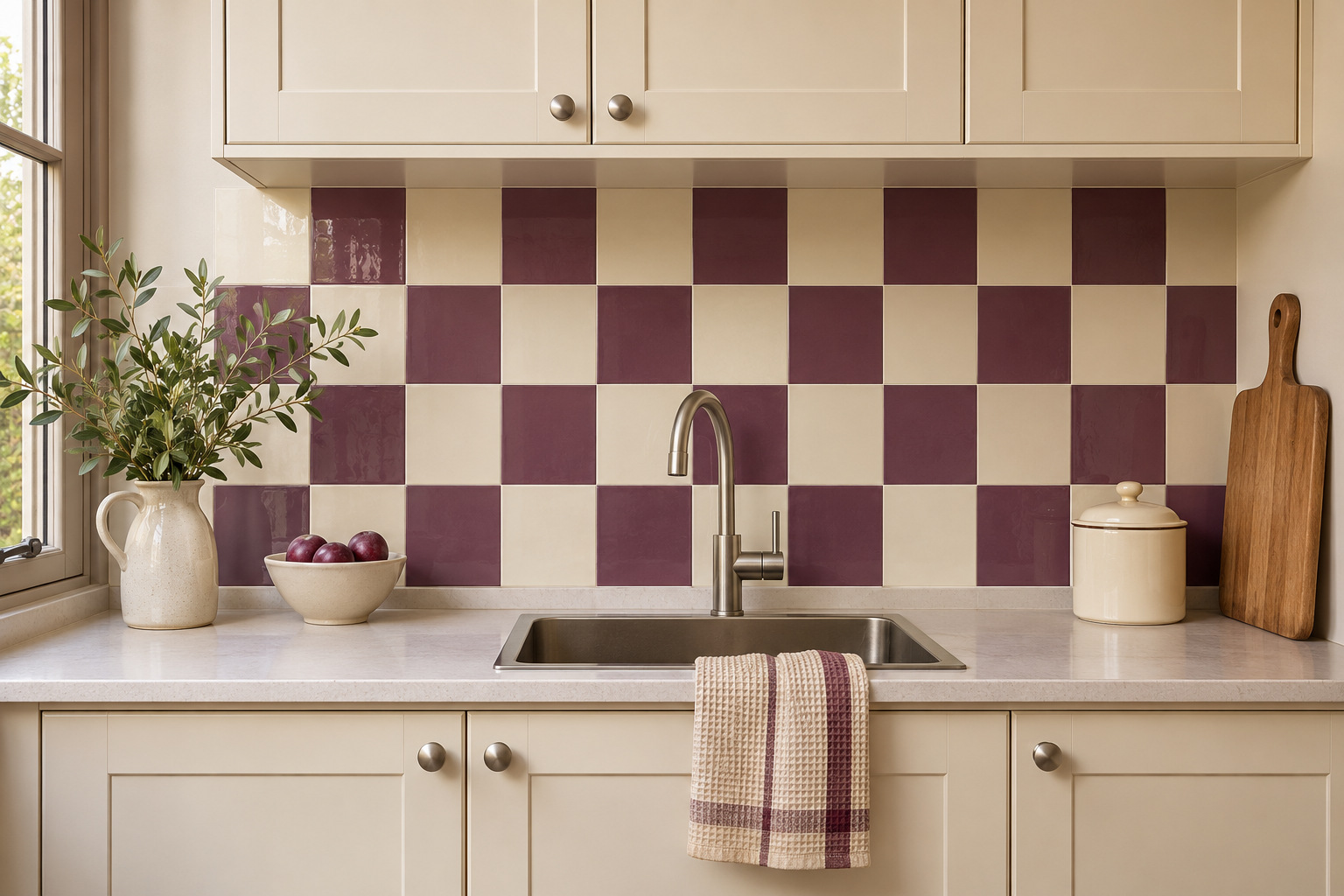
Large cream and muted plum checks can give a straight cabinet run a new rhythm. Sketch the tile grid with the outlets, corners, and upper cabinets included; a checkerboard looks more considered when its edges have been planned. Keep the counter relatively plain so the pattern has a clear boundary.
Choose tile and a complete installation system appropriate to the specific wall and exposure. A sink splash zone and a cooking wall may have different requirements. Have a qualified installer resolve the substrate, cuts, electrical details, and any appliance clearances rather than covering existing problems with a decorative layer.
Bring two actual tile samples home together. Compare them beside the countertop in daylight and under the task lights. A restrained contrast can still read clearly across the kitchen.
4. Put Scalloped Trim on One Display Shelf
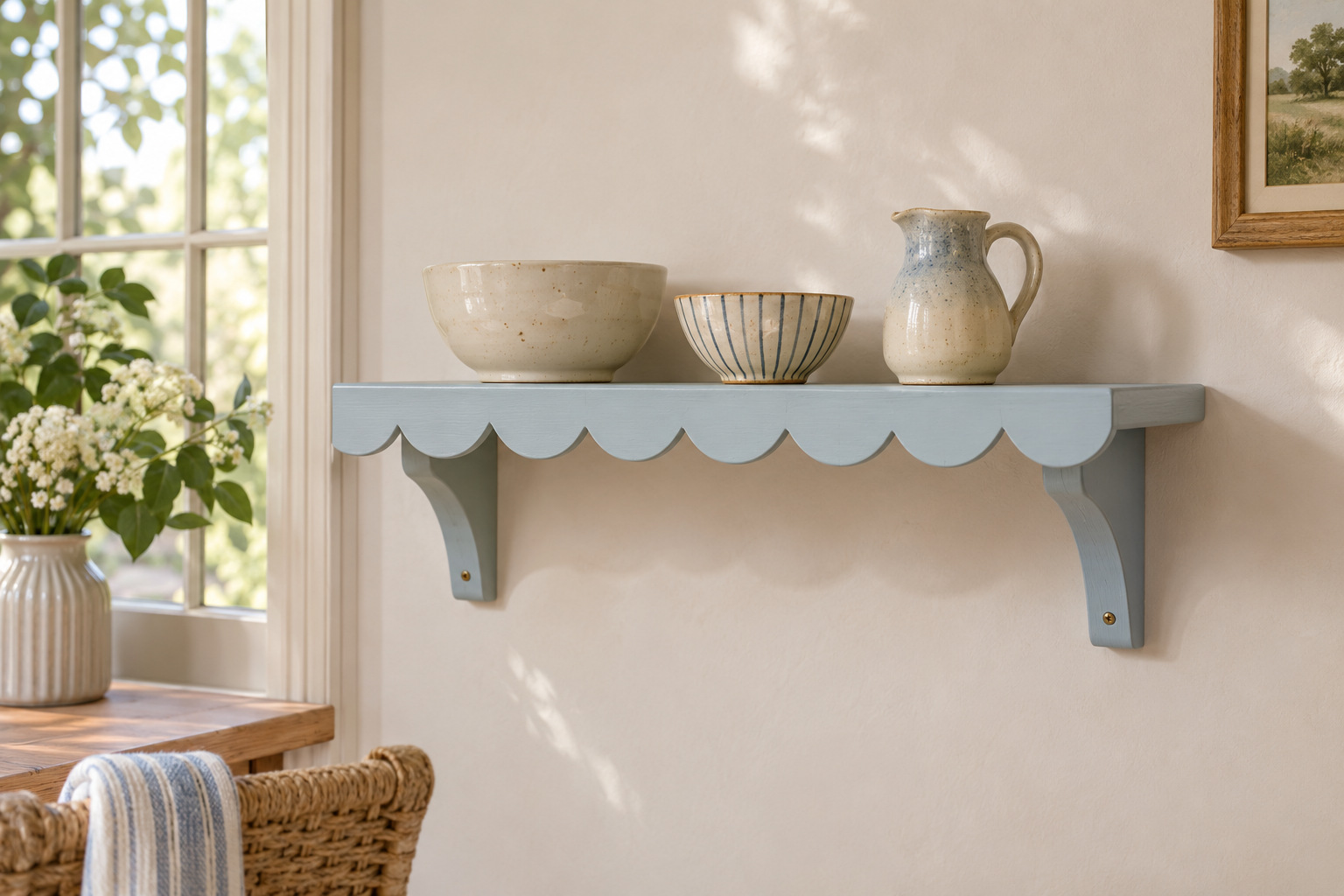
A shallow scalloped edge softens a short open shelf without changing the cabinet doors below it. Keep the curves broad enough to see between the displayed pieces. A pale blue shelf against a warm white wall can carry two everyday bowls and one small jug comfortably.
Start with the shelf’s actual depth and intended load. Decorative trim does not provide structural support. Use a shelf and fixings suitable for the wall and objects, then attach any added trim by a method appropriate to its material. Keep the lower edge clear of the worktop activity below.
Leave some of the scalloped line exposed. Tall stacks all along the front hide the feature and make the little shelf harder to use. Choose this treatment for a display spot away from the cooking splash zone.
5. Turn a Cabinet Interior Into a Color Surprise
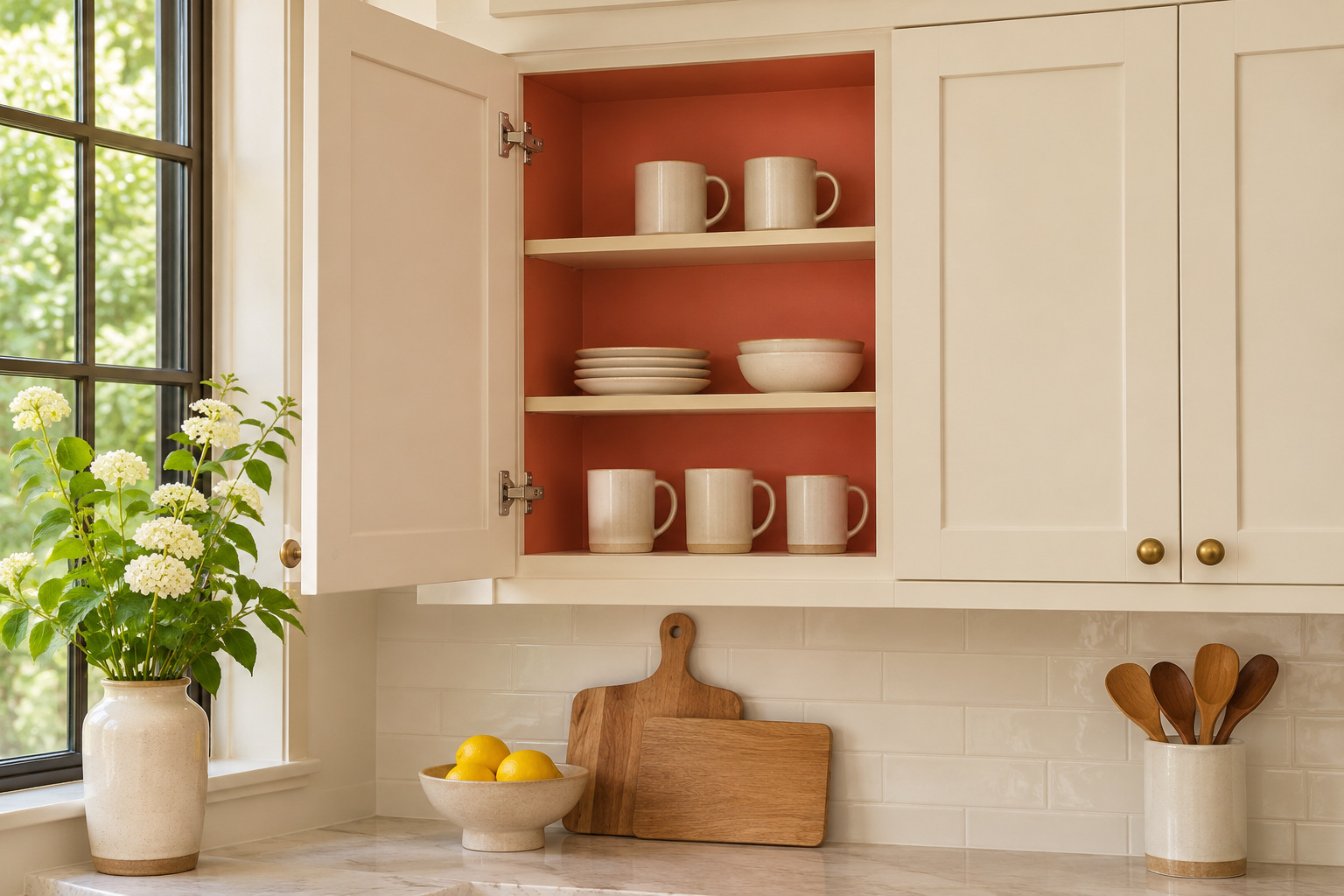
Open a plain door onto a coral back panel, and a familiar cup cabinet feels different. The color stays contained when the door is closed. It works especially well in a cupboard with a small, easy-to-remove collection rather than a tightly packed pantry.
Check the cabinet material and select a coating system intended for it. Remove the contents and hardware that need protection, follow preparation instructions, and allow the finish to cure fully before returning dishes. Keep paint away from hinge mechanisms, drawer slides, and areas the manufacturer says should remain uncoated.
If you are also comparing colors for the visible fronts, these kitchen cabinet color ideas from real kitchens provide named examples to investigate separately. The interior accent can stay much smaller than a full repaint.
6. Warm a Breakfast Bench With Broad Stripes
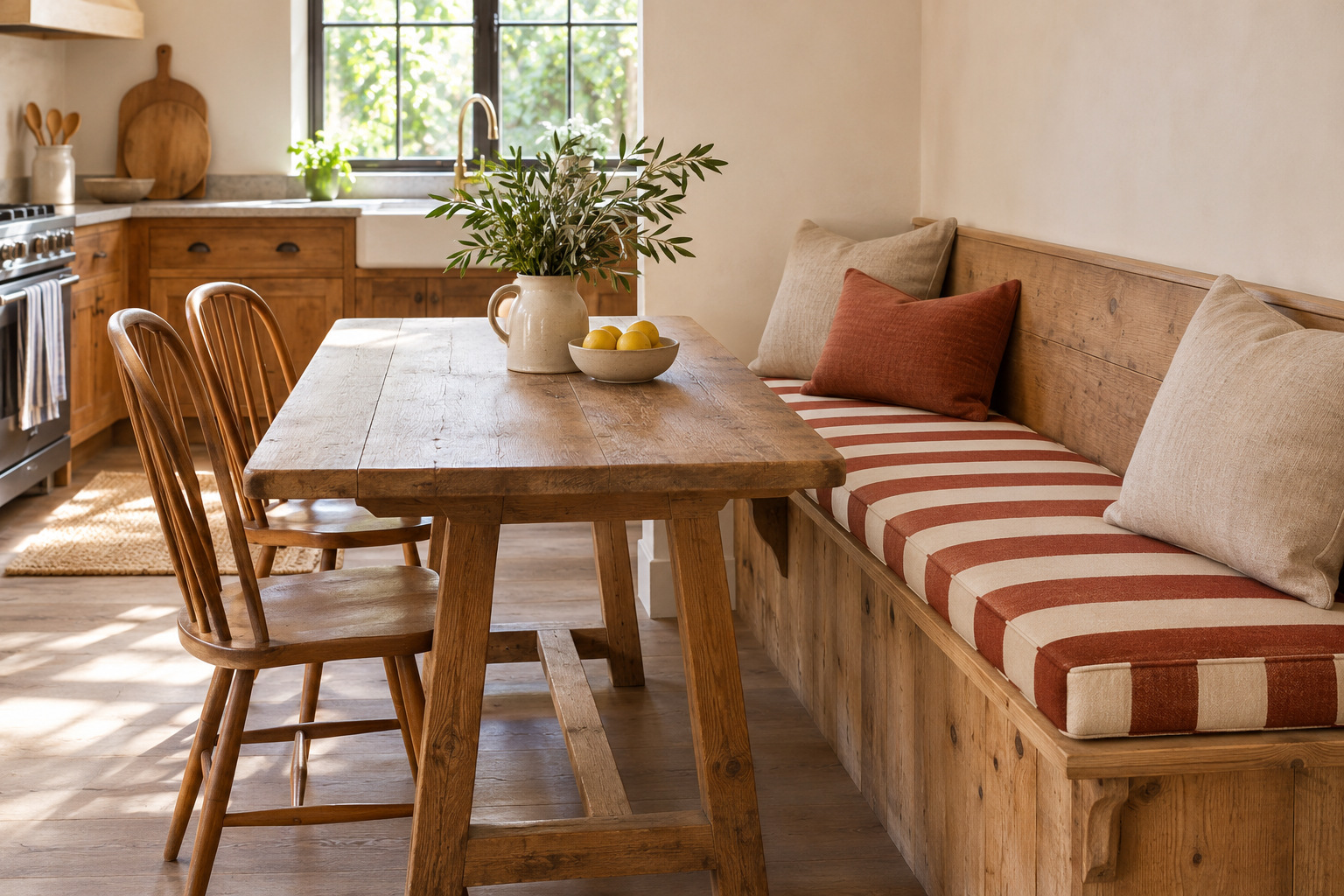
Use a broad rust-and-cream stripe on a removable bench cushion beside a timber breakfast table. The repeated bands give a long seat some movement, and the wood keeps the arrangement grounded. Let the stripe occupy the seat or back cushions rather than covering both automatically.
Choose upholstery suited to daily dining and follow its cleaning instructions. Plan the cover around the actual cushion shape, including corners and any fastening system. Check how the cushion affects seated height and the space between the person, table, and bench back.
A plain wall behind the bench gives the fabric room to show. Pull one quieter color from the stripe into a nearby mug or framed work, then keep the tabletop available for breakfast.
7. Give Daily Notes a Cork Panel
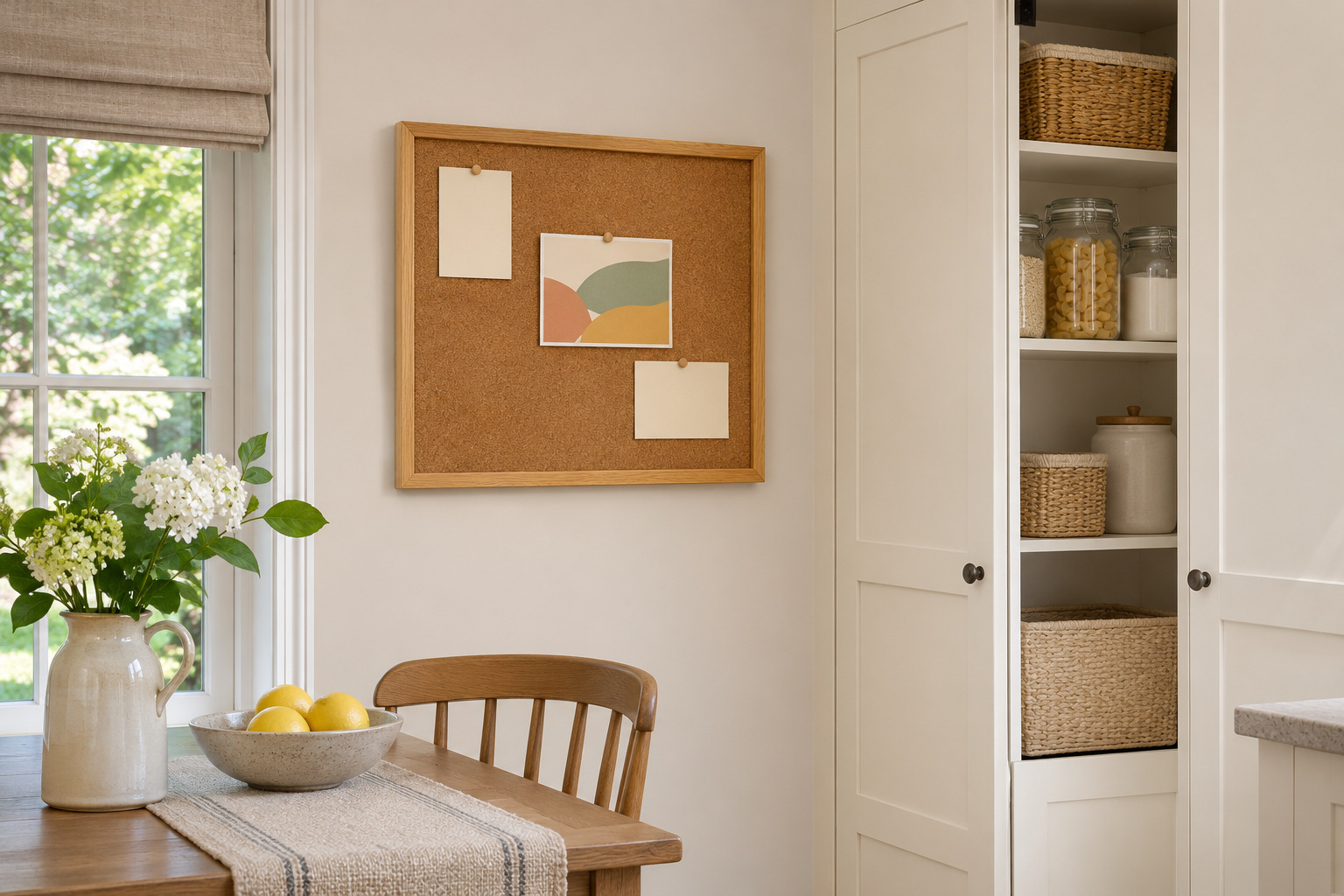
A cork panel beside the pantry can turn the household’s loose notes into a defined part of the kitchen. Frame it in a color already used on a small object, or leave the edge in plain wood. The texture is a useful contrast to smooth cabinet doors.
Choose a position away from the cooktop, splashes, and food preparation. Mount the panel securely using a method suitable for its backing and the wall. Keep its lower edge clear of switches and any counter appliance that needs ventilation or space around it.
Edit the contents as carefully as the dishes on a shelf. A few current notes and one postcard are easier to read than several overlapping layers. Keep pins and other small fixings out of reach where young children use the room.
8. Break a Solid Pantry Front With Reeded Glass
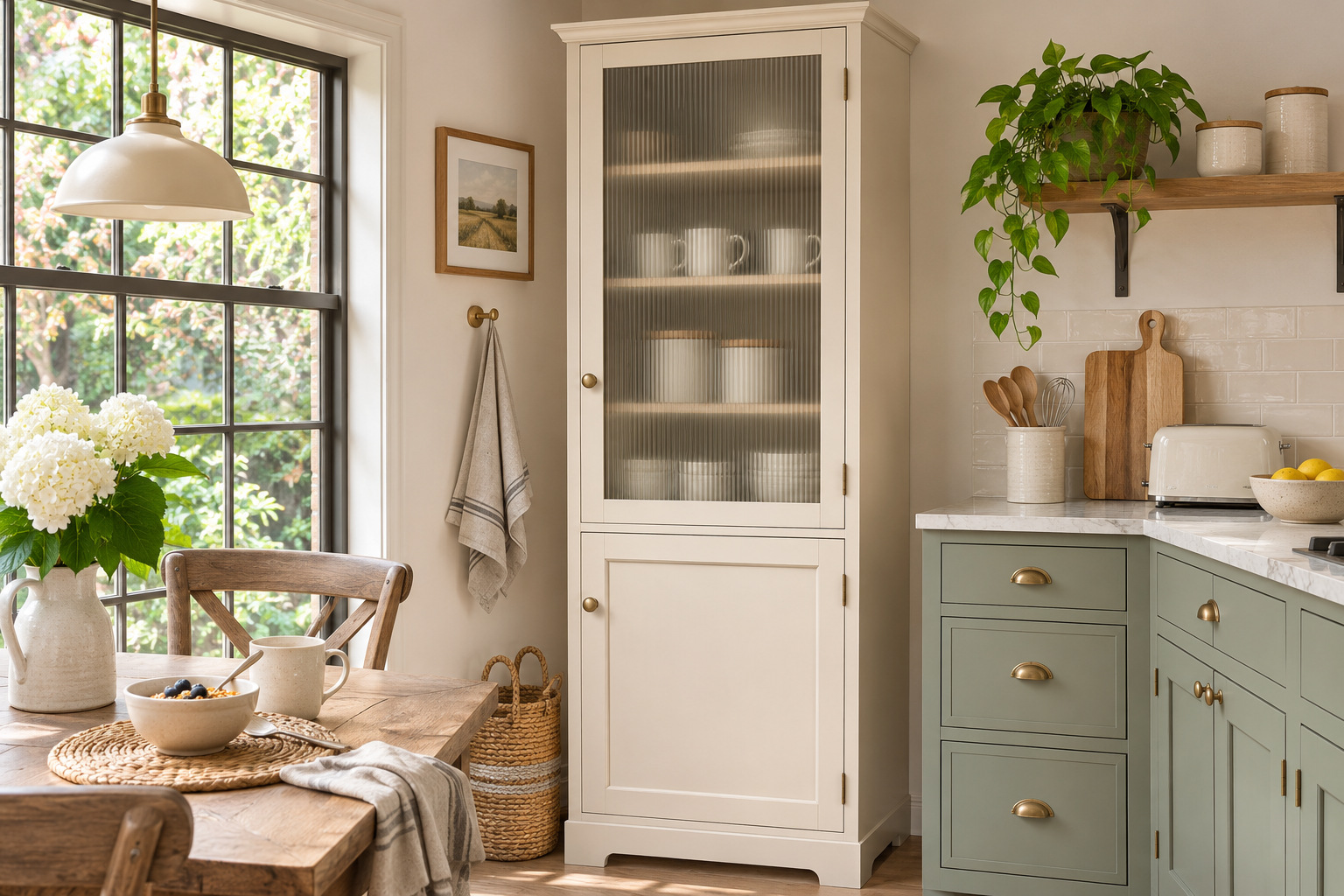
A glazed upper pantry door changes the texture of a tall cabinet without removing its storage. Reeded glass blurs the dishes behind it while leaving a sense of depth. Place everyday mugs and a few coordinated containers on the visible shelves so the interior still looks intentional when lit by daylight.
Use a cabinet door designed for its glazing, with suitable glass, hinges, and retention details. A cabinet professional can assess whether an existing door can be altered. Do not treat a plain wood panel as a ready-made glass frame.
Keep bulky or visually busy packages behind the solid lower doors. The glazed section earns its place when you can find what you need without making the entire pantry a display.
9. Put a Rounded Breakfast Table in a Tight Corner
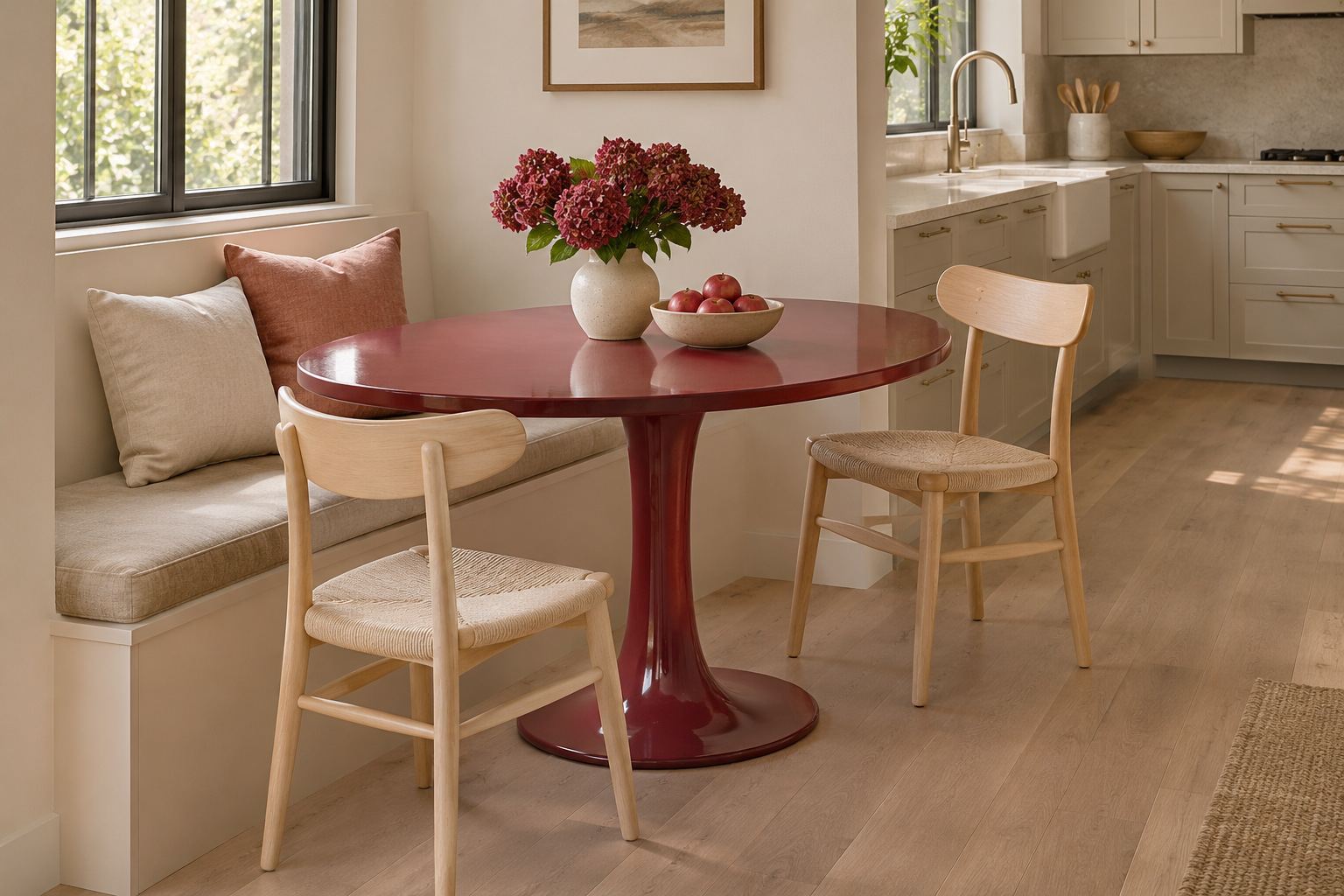
A small round or oval table changes the shape of a kitchen full of rectangles. Try it beside an existing bench, where the curved edge faces the open room. A single pedestal can simplify the look, but the actual base still needs to leave comfortable foot space.
Mark out the full tabletop footprint and pull the loose chairs out before choosing a size. Include the route to the refrigerator and any nearby drawers. A rounded edge does not compensate for a table that is too large for the corner.
Give the table one strong color, such as berry red, against quieter seating. The curved outline supplies enough character that you can keep the wall above it simple.
10. Let a Terracotta Hood Lead the Cooking Wall
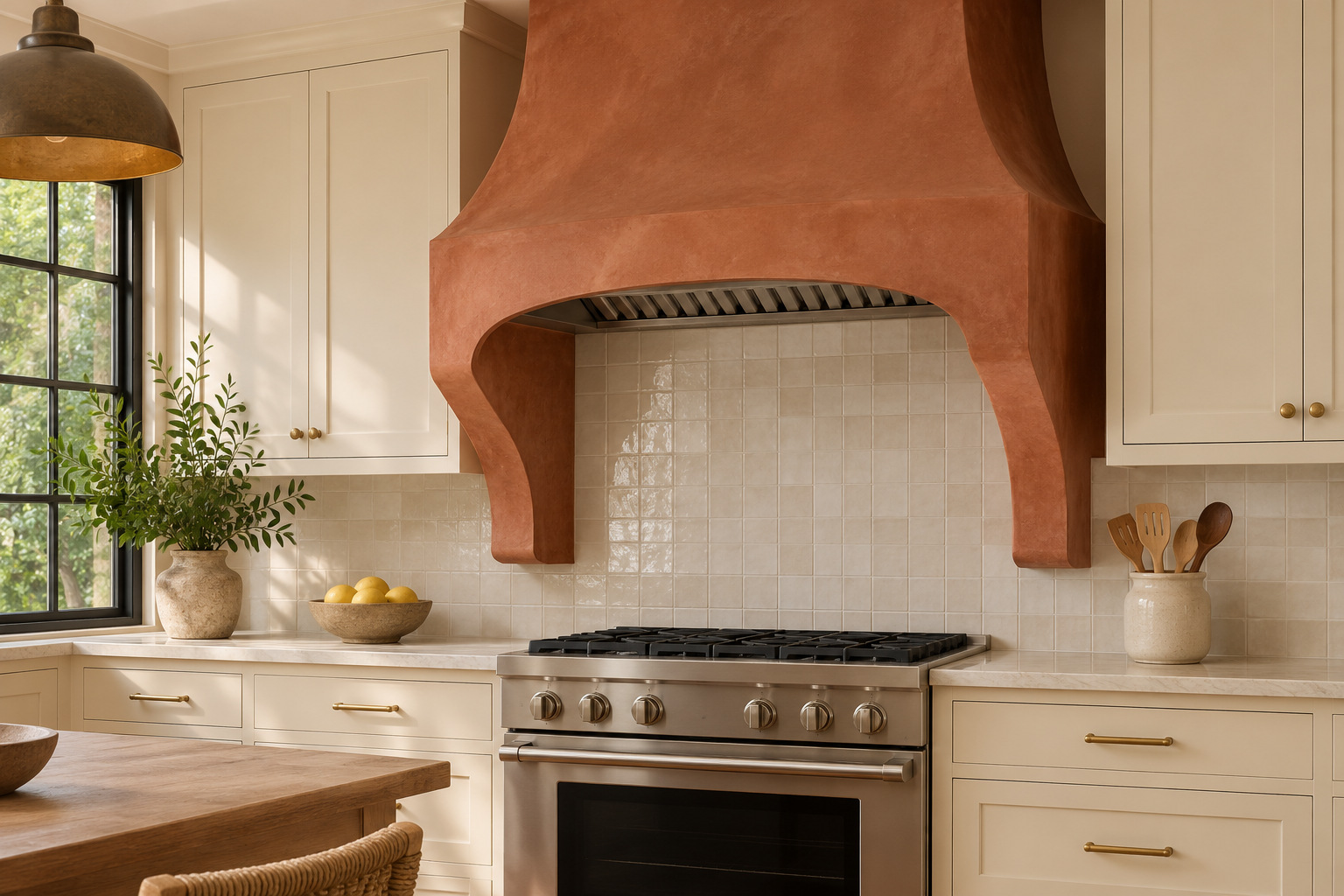
An earthy terracotta hood surround can bring a sculptural shape to a pale kitchen. It creates a vertical focal point above a range, especially when the adjacent upper cabinets stay simple. Use a sample large enough to compare with both the backsplash and the floor.
This is a designed installation rather than a paint-only shortcut. Have a qualified professional resolve the hood, surround materials, ventilation, access, and all appliance and coating requirements. A decorative finish must not obstruct the hood’s controls or airflow.
Repeat a little of the warmth at counter height with a ceramic utensil pot. Keep the rest of the cooking wall practical, with an appropriate cleanable backsplash and clear landing space beside the range.
11. Hang One Oversized Original Print by the Breakfast Table
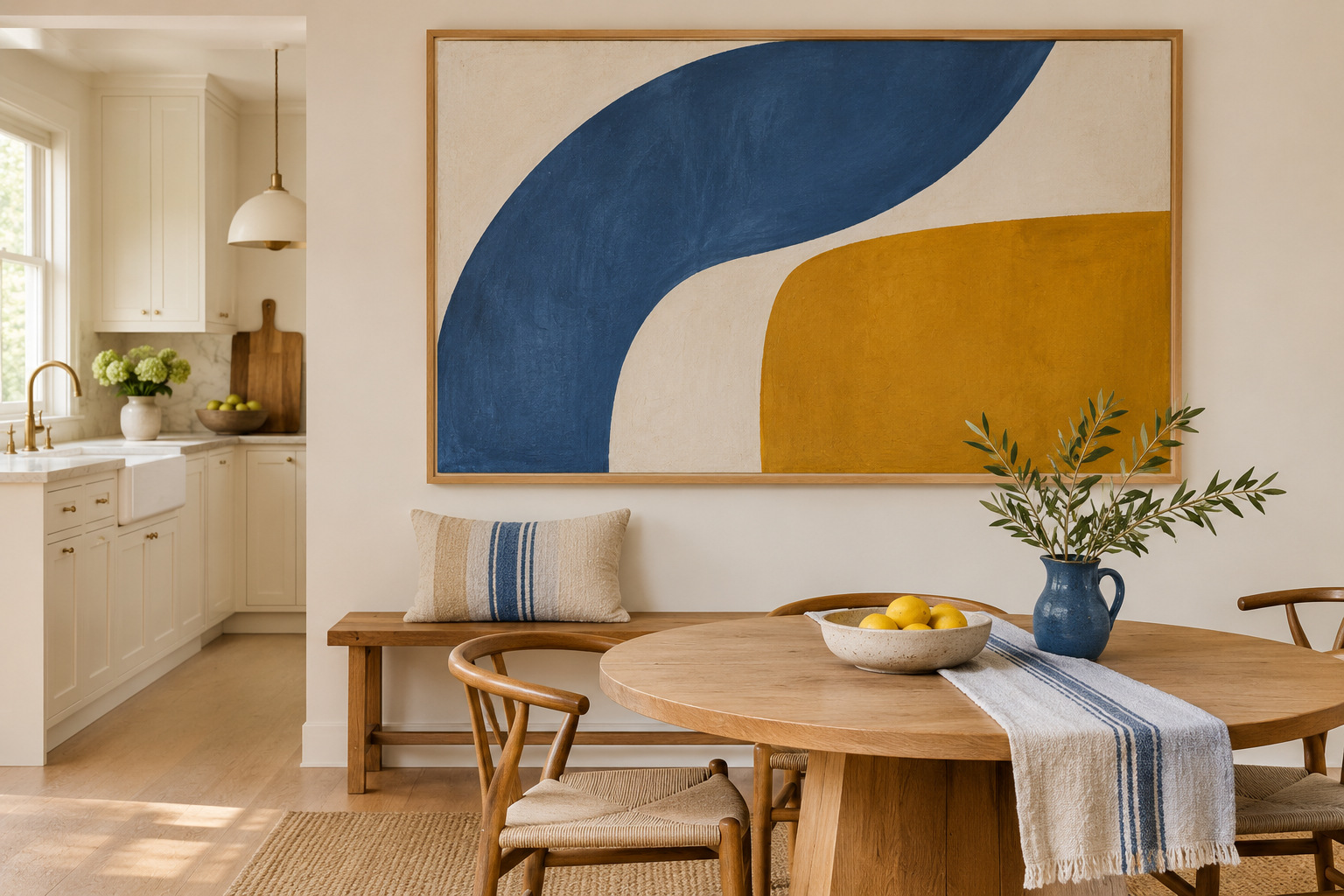
A large geometric print can give the eating area a personality separate from the work zone. Choose original or properly licensed art with a few generous shapes that remain clear from the kitchen doorway. A broad blue curve and one ochre block can carry the wall without a group of smaller frames.
Check the artwork’s outside dimensions against the table and bench, then use wall hardware appropriate to its weight. Keep the frame out of chair-back contact and away from heat or regular splashes. A dining wall usually gives art a more comfortable home than the area directly behind a sink.
Take a color from the print into one everyday object. You can change that small echo later while the larger work stays in place.
12. Paint a Narrow Border on a Compatible Kitchen Floor
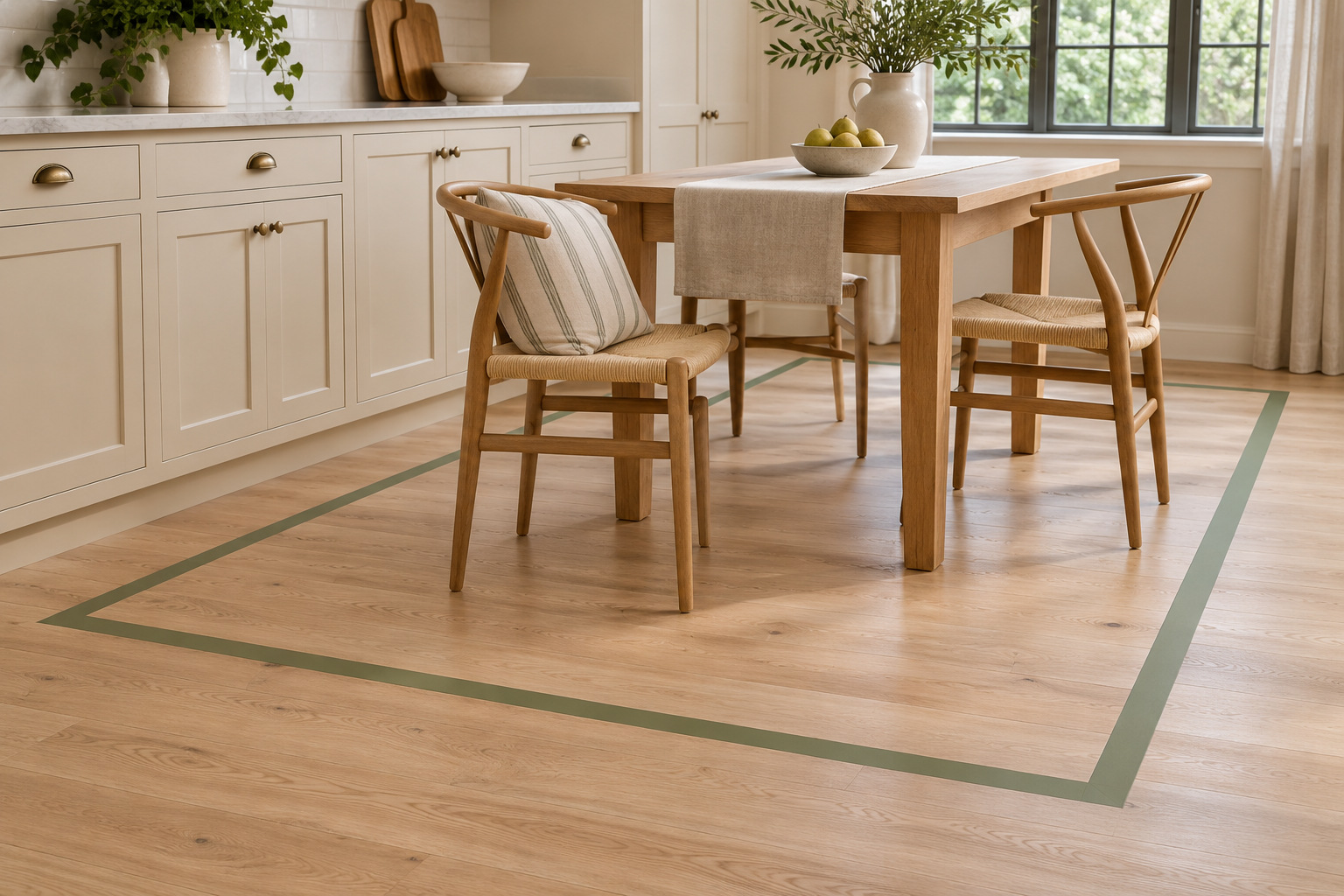
A painted border can outline a breakfast area on a floor that is suitable for coating. Sketch a simple rectangle with generous plain floor inside it. The line should relate to the room or furniture arrangement rather than weaving around every chair leg.
Identify the flooring and its existing finish before choosing a product. Follow the coating manufacturer’s surface, preparation, drying, cure, and slip-resistance guidance; some floors are unsuitable for this treatment. Make a sample in an appropriate test area and plan how the kitchen will remain out of use for the required time.
Keep the border a secondary feature. A muted green line on a pale compatible wood floor can give definition without competing with a patterned backsplash elsewhere in the room.
13. Mix Vintage Chair Shapes With One Shared Color
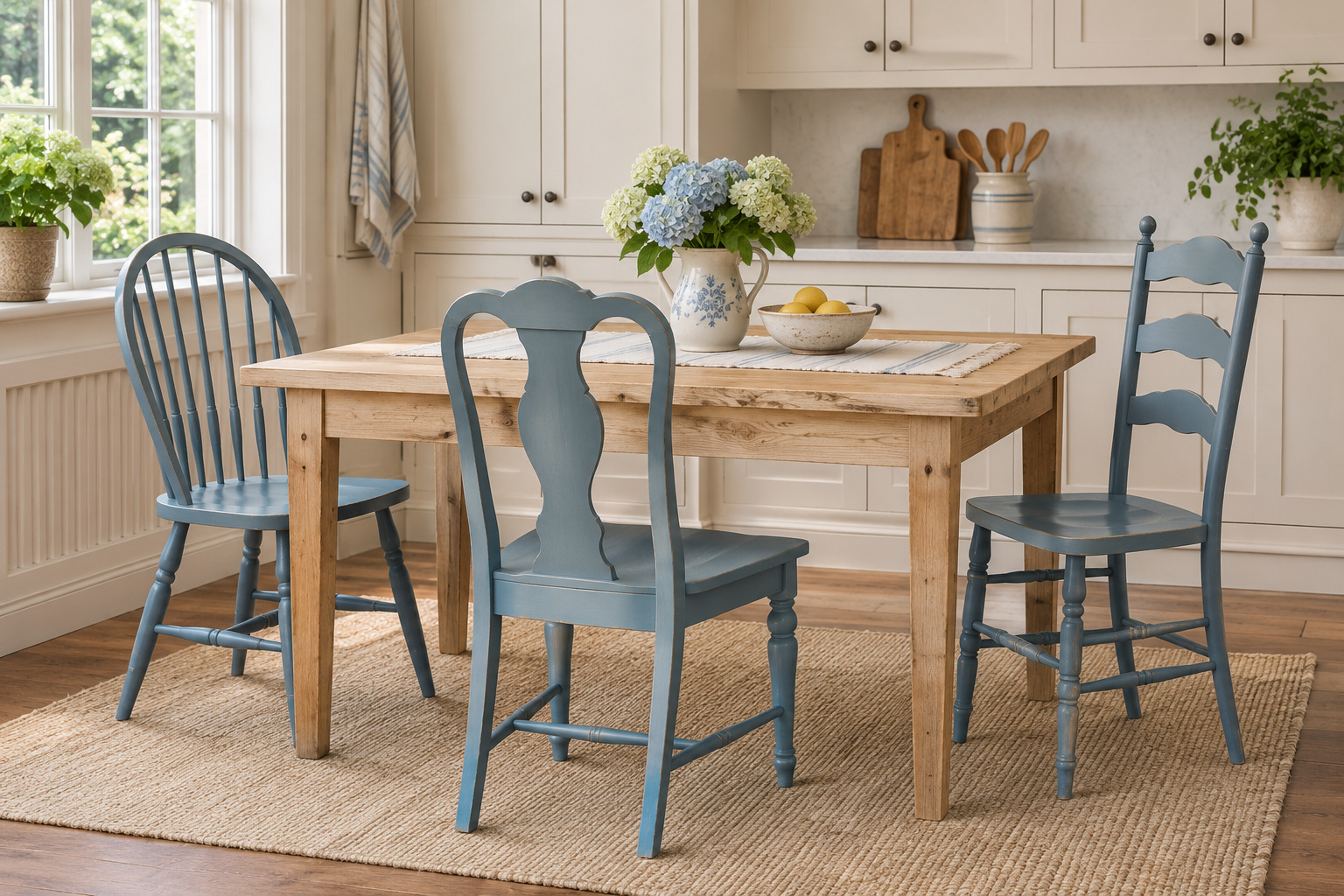
Different chair backs can look collected around a small kitchen table when the finish ties them together. Try three compatible silhouettes in the same dusty blue. The variation stays in their shape, with a plain tabletop giving each back a readable outline.
Assess the chairs’ condition, stability, and seat heights before planning any cosmetic work. Older furniture can have finishes that require special handling, so identify them and use appropriate advice before disturbing the surface. A matching color does not make an unsound chair ready for use.
Sit at the table with each chair in place. Compare the seat-to-table relationship and the room needed to pull out. Keep an especially wide armchair for a different spot if it crowds the dining arrangement.
14. Choose One Sculptural Pendant for a Clear Zone
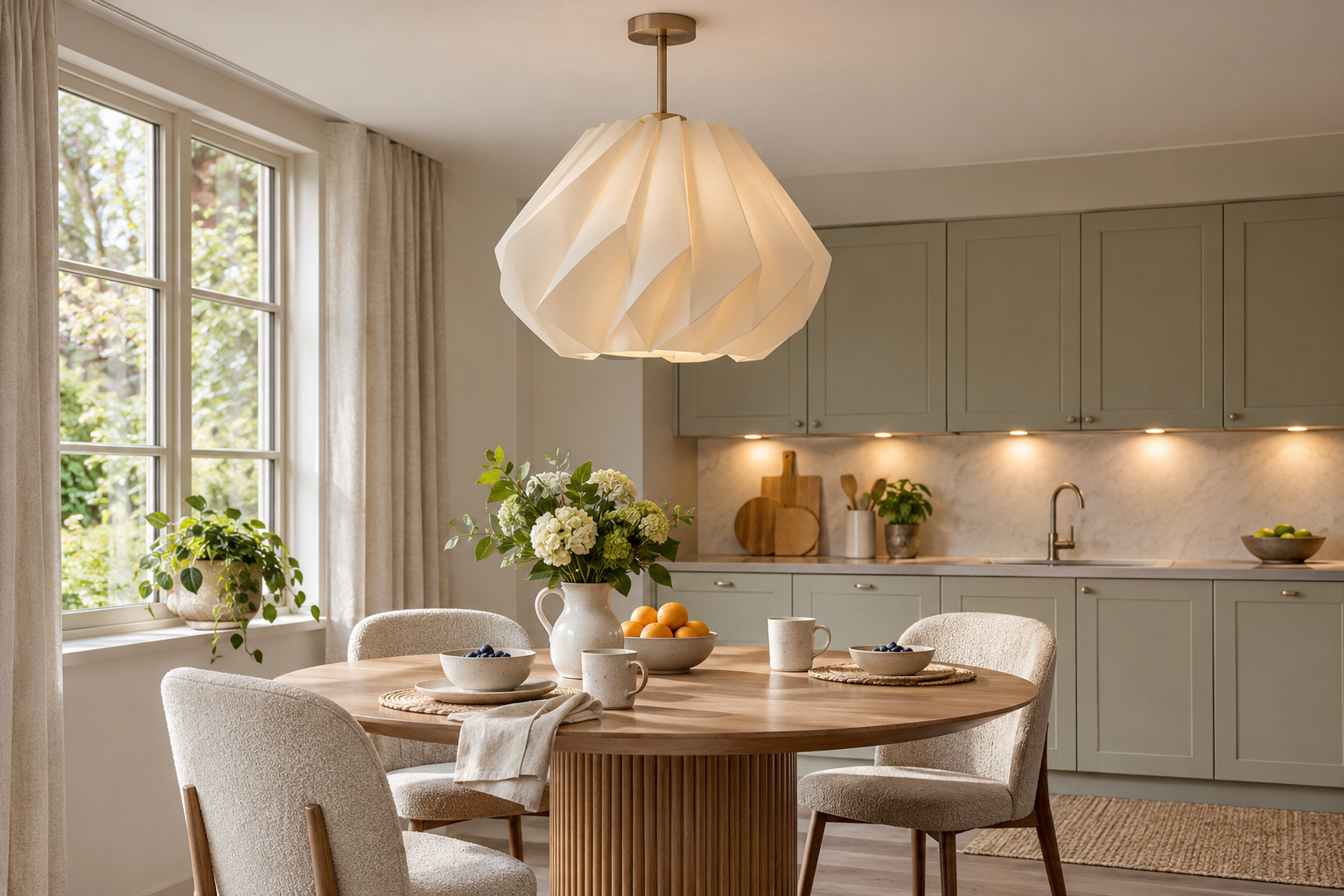
A folded or softly pleated pendant shade can introduce a new silhouette over a breakfast table. Look for a shape that is interesting from the side, since that is often the view from the working kitchen. Quiet cabinet fronts help the light fitting remain visible.
Choose a fixture appropriate to the location and have a qualified electrician handle any wiring or relocation. Follow the fixture and lamp instructions for supported bulbs, heat limits, mounting, and clearance. Check the scale from both seated and standing positions before committing to the shade.
The pendant needs to light its zone usefully as well as look appealing. Keep the kitchen’s existing task lighting part of the plan, especially where people prepare food outside the pendant’s pool of light.
15. Leave a Plywood Pantry Front Visible
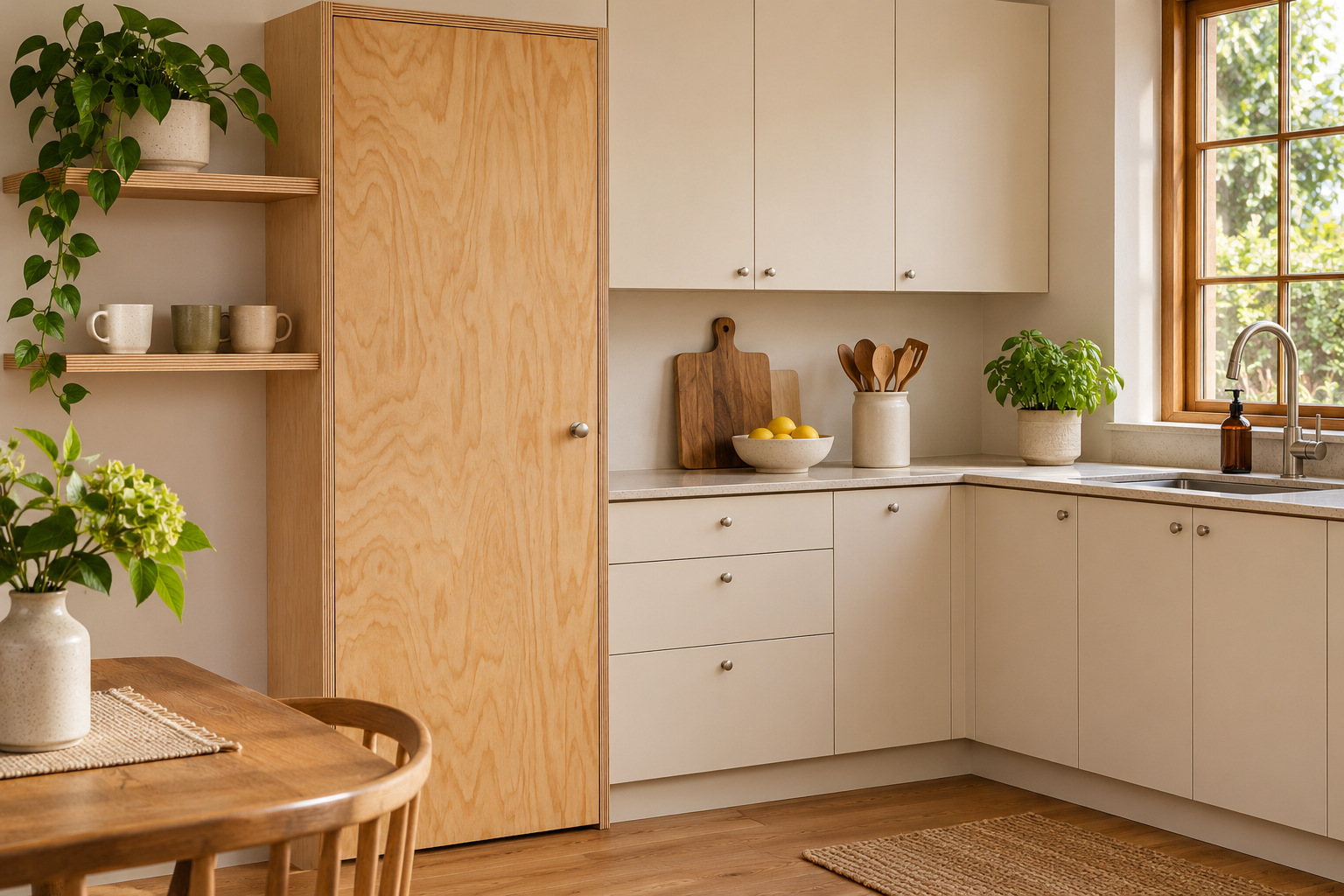
Visible timber grain can be the unexpected detail in a kitchen with smooth painted cabinetry. A well-made plywood pantry front introduces a warm, linear texture, with its layered edge forming a crisp outline. Pair it with a simple knob and restrained adjacent finishes.
Choose cabinet-grade construction and a finish appropriate to kitchen use with the maker or cabinet professional. Panel stability, edge treatment, hinges, and cleaning requirements matter more than the raw-material look. The example is a finished cabinet front, not an instruction to leave exposed edges unprotected.
Use this idea on one tall section if the room already contains several wood tones. A few plain ceramic cups nearby keep the focus on the grain and the pantry’s useful form.
16. Give a Sink Base a Removable Patterned Skirt
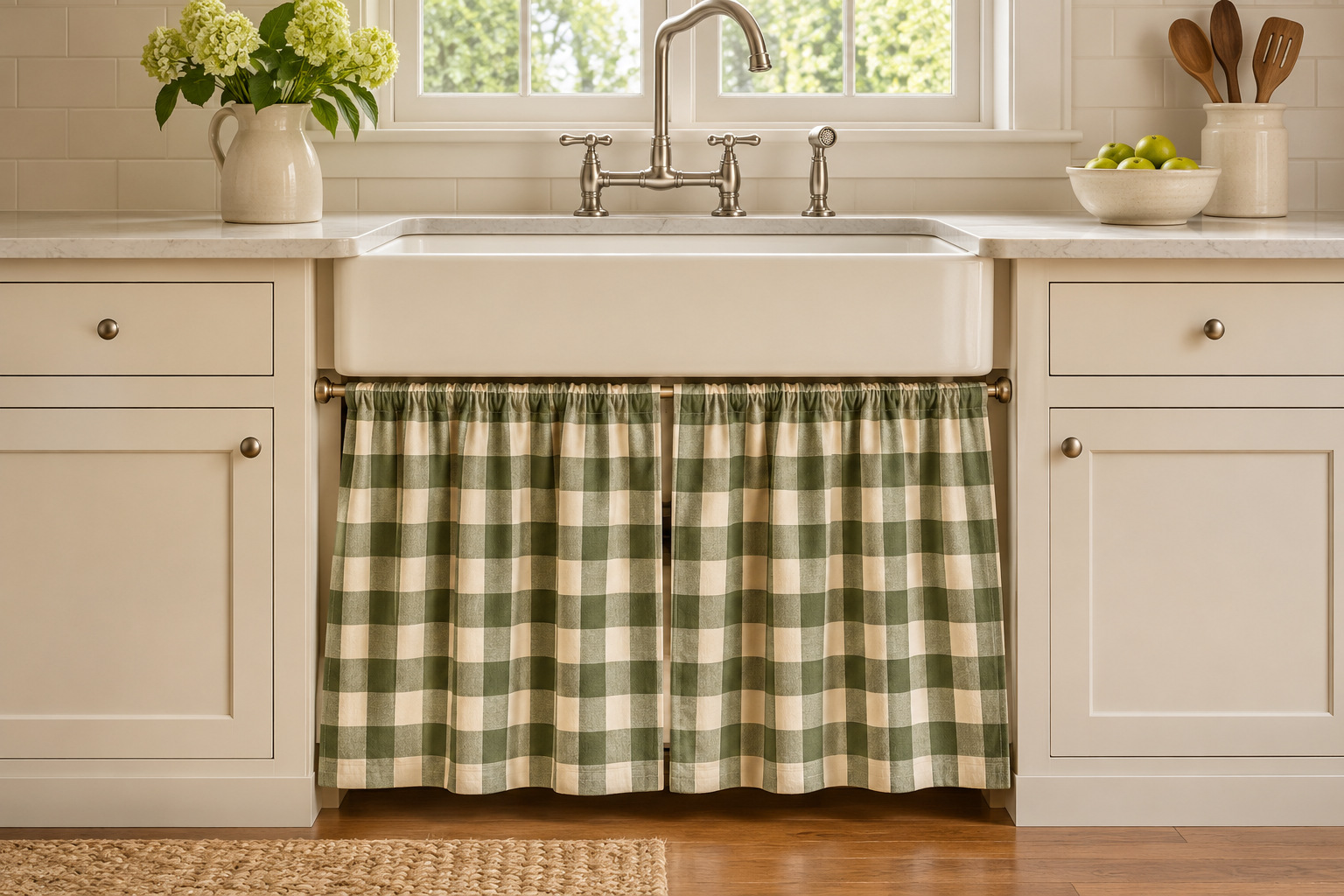
A gathered fabric skirt can soften an open sink base while giving the kitchen a small area of pattern. Try a broad check in warm white and green against plain cabinets. Divide the fabric at the point where you need access so the whole skirt does not have to move each time.
Keep the fabric clear of plumbing components, leaks, heat, and any required ventilation or service access. Use an attachment method compatible with the cabinet and a fabric you can remove and clean as directed. Let the hem clear the floor so it does not drag through damp areas.
The skirt works best when the storage behind it is still organized. These creative kitchen ideas with smart storage offer separate ways to make the working parts of a kitchen easier to use.
17. Pair One Stainless Surface With Soft Pink
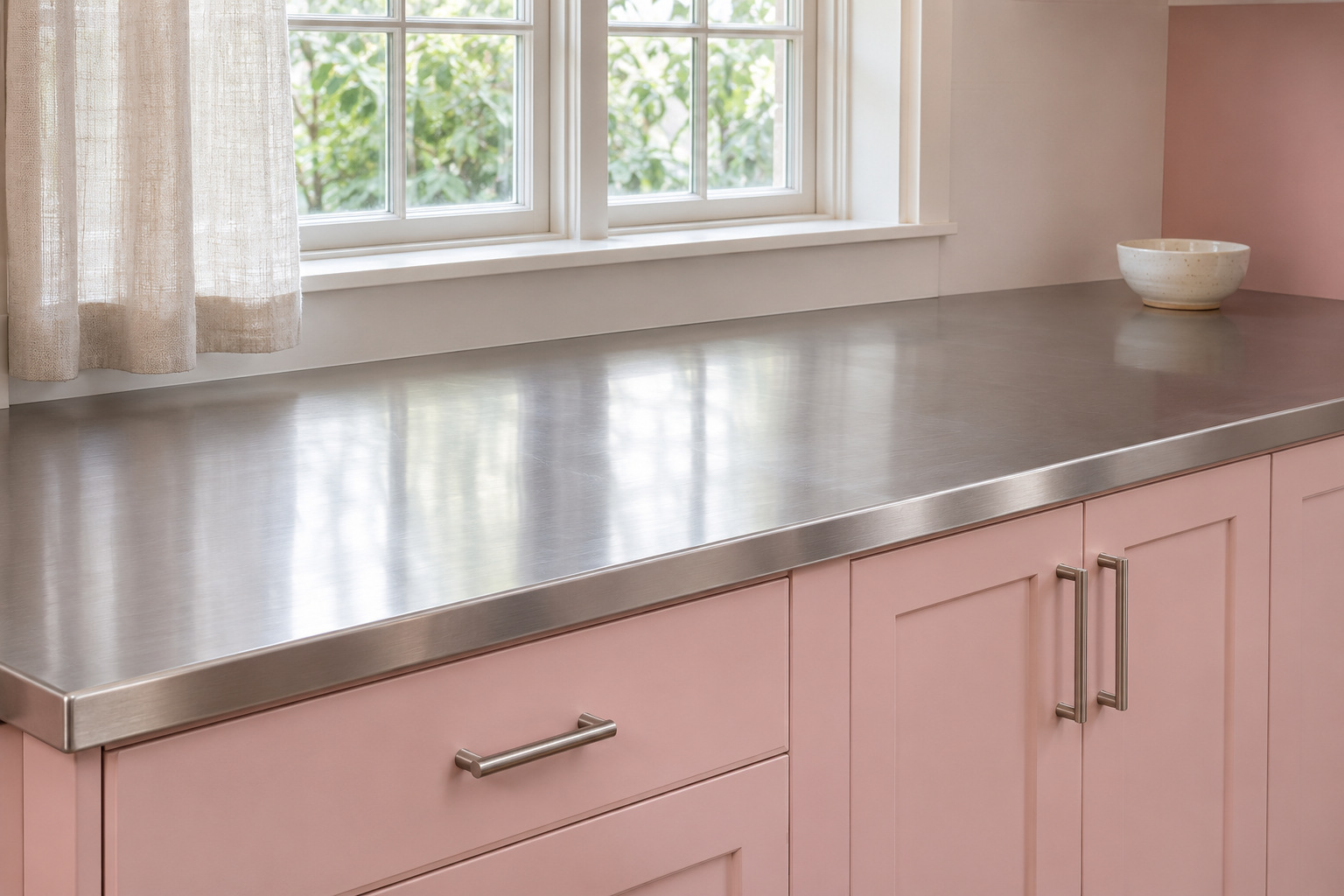
A stainless work surface has a different character beside soft pink cabinetry than it does in an all-metal kitchen. Use the contrast on a small prep area or a single island, letting the pale color soften the metal’s reflected light. Plain handles and a simple edge keep the pairing readable.
Compare real material samples under the lights you use for cooking. Stainless reflects its surroundings, so a warm wall or a bright window can change how it appears. Choose the surface construction, backing, finish, and cleaning method for its actual working role with the supplier.
Leave a clear stretch of the metal visible. A row of decorative containers across it can hide the very contrast that made the combination appealing.
18. Paint the Window Reveal as a Bright Frame
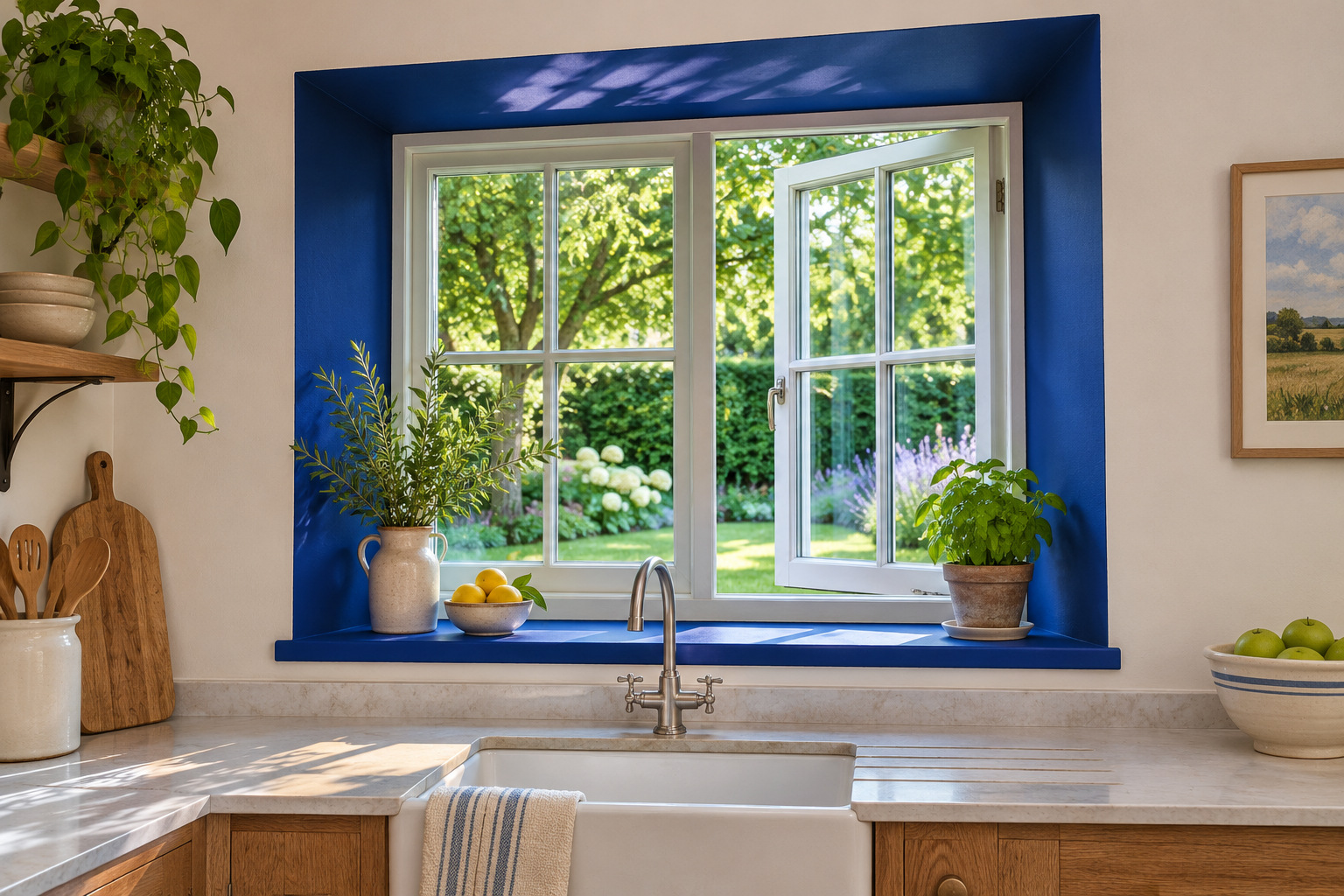
The inside faces of a deep window opening can hold a strong color without covering the whole kitchen wall. A cobalt reveal around a plain white window gives the view a painted frame. Let the color stop at a clear architectural edge so it looks intentional from the breakfast table.
Confirm which surfaces can be coated and use an appropriate system for the substrate and local moisture exposure. Keep paint away from seals, drainage paths, hinges, and other window components that need to work. An operating window must still open, close, and latch normally.
Try the color on a movable board inside the reveal first. The same blue may look darker on the upper face than beside the daylight at the sill.
19. Give a Slim Prep Cart One Bold Color
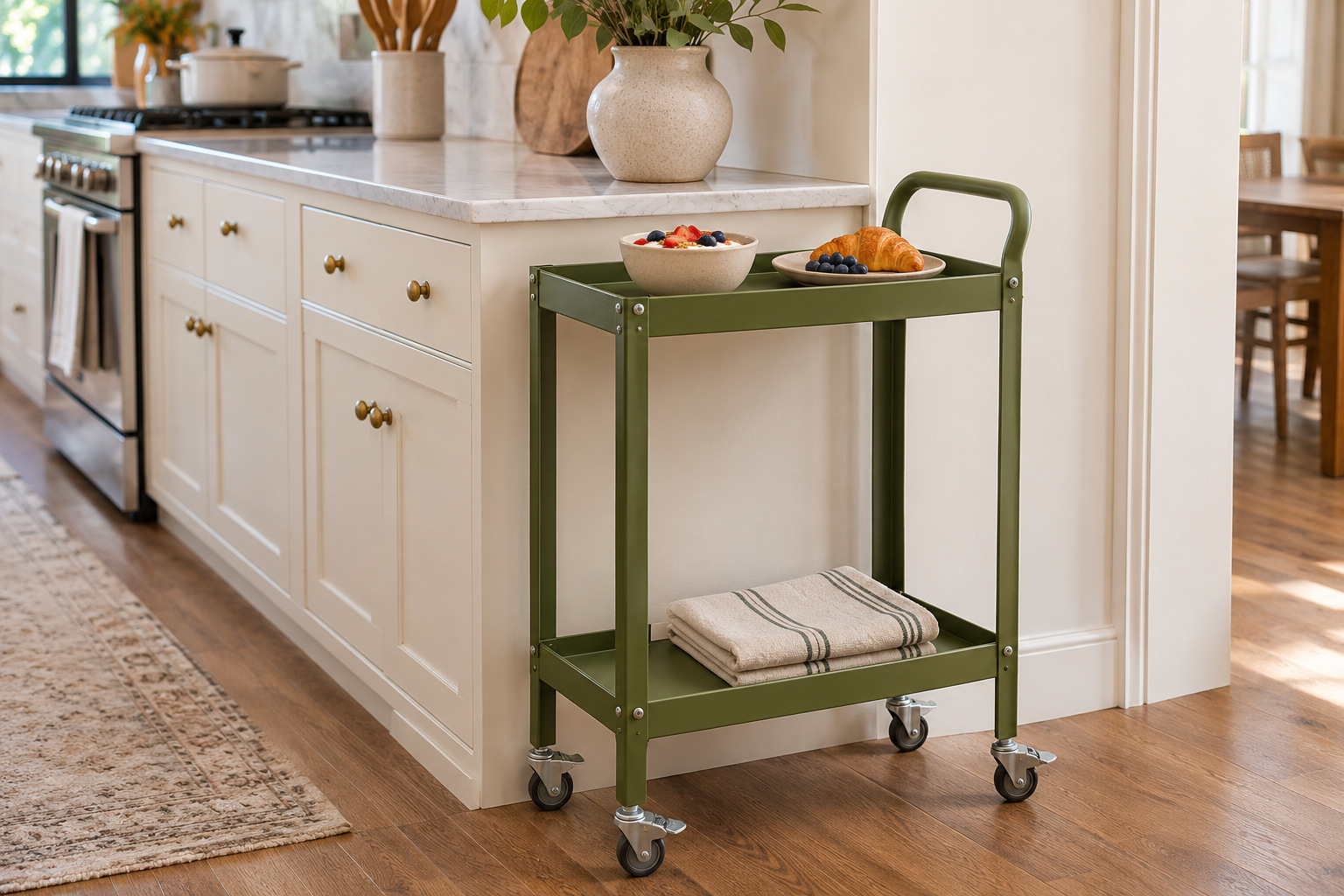
A narrow green cart can act as a small movable accent beside neutral base cabinets. Use its top for a defined task, such as setting out breakfast dishes, and keep the lower shelf simple. The open frame makes the color feel lighter than a full extra cabinet.
Choose a cart intended for the load and use you have planned. Measure its complete footprint, including handles, then check the route with nearby doors open. Follow the maker’s instructions for casters and brakes; move it out of the working aisle when it is not needed.
Paint only components the manufacturer says can be refinished, using a suitable system. Otherwise, choose the color as a factory finish. The cart should remain easy to clean and operate after the update.
20. Repeat an Unexpected Color on a Plate Rail
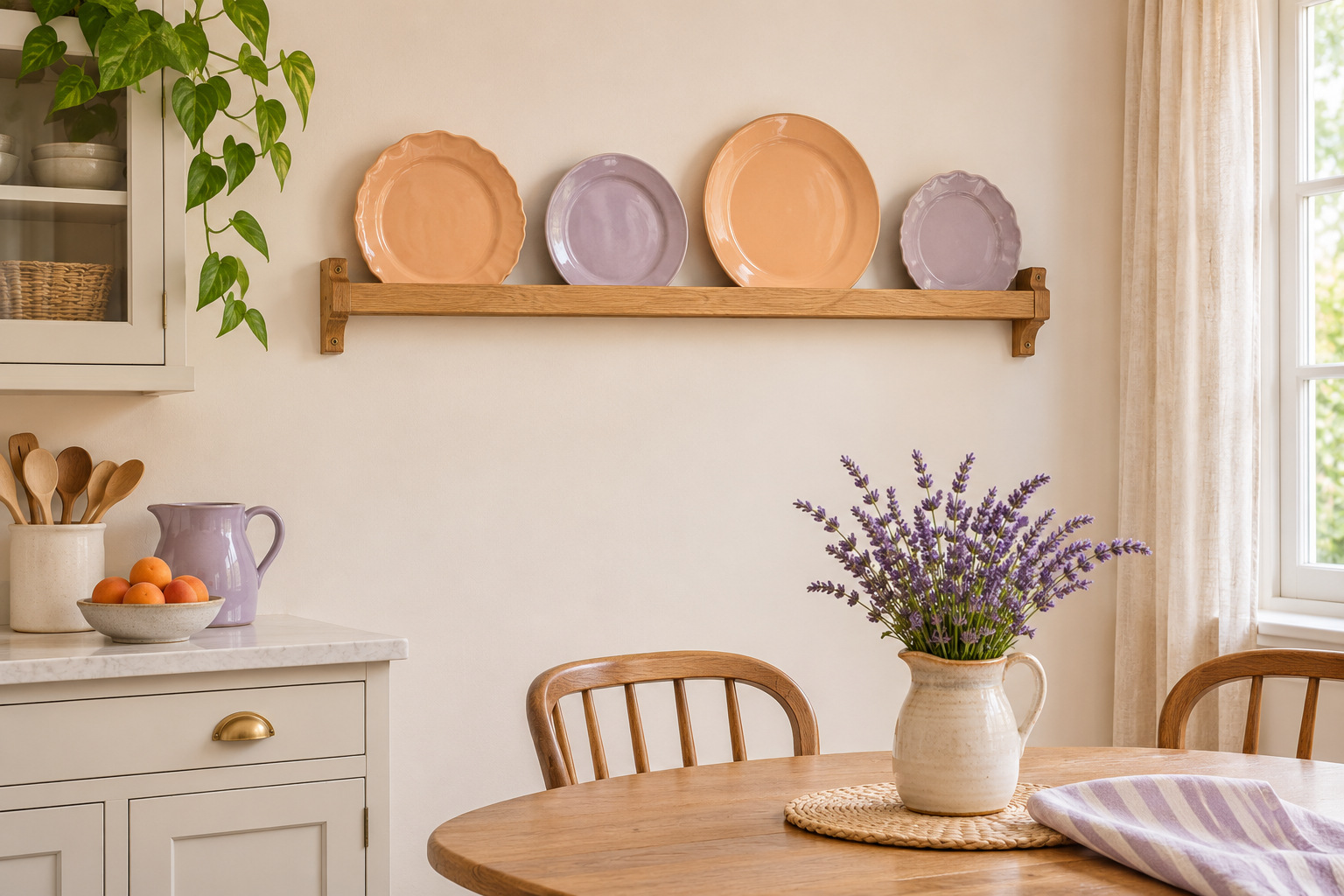
A short plate rail can carry a few apricot or lavender dishes against a plain wall. Repeating the color along one narrow line makes the collection legible without requiring an entire matching dinner set. Let the dishes vary slightly in size, with space between their outlines.
Use a properly mounted rail designed to retain the pieces you intend to display. Check its usable depth and restraint against the actual plates. Keep the display away from places where a chair, door, or everyday appliance can knock it.
Choose dishes for this display from a collection you enjoy seeing. Put the pieces used most often in an accessible cabinet if reaching the rail would make an ordinary meal awkward.
Begin with the kitchen detail that feels easiest to live with every day. Use it for a while, check the room with the counters in normal use, and let that experience decide whether the next change needs more color, a different shape, or nothing else at all.
Discover more from HomeTrendora
Subscribe to get the latest posts sent to your email.