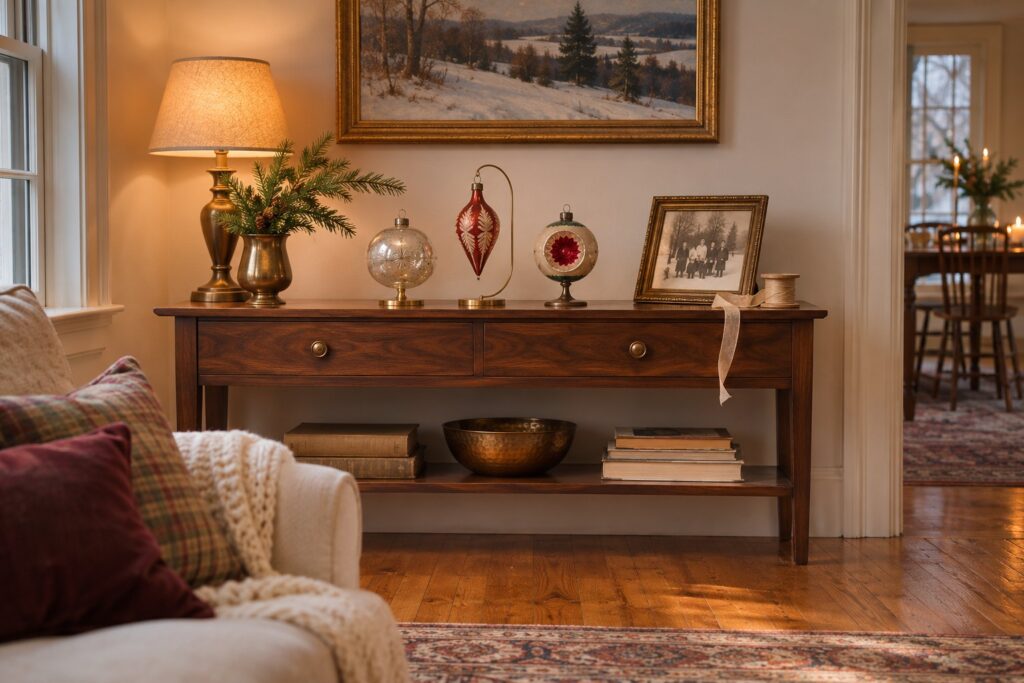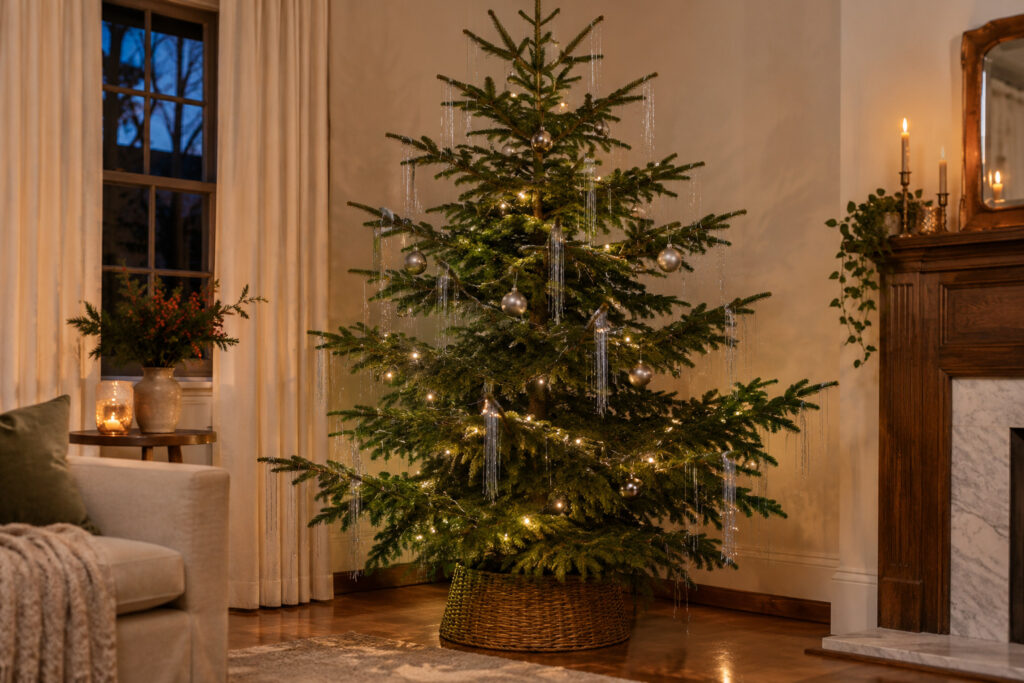
Brown ornaments can disappear into dark branches, while gold can become the only color you see. These 16 brown and gold Christmas tree ideas help you balance the two through shape, finish, and the light in your actual room. The result can be quietly natural, soft with velvet, or more formal.
Lay out the decorations you already have before choosing anything new. Compare the browns and metals together, then try a small group on the tree. Follow the tree, lighting, and ornament makers’ directions, keep the stand accessible, and leave room for branches to open and people to pass.
1. Start With Green Branches Between the Brown and Gold
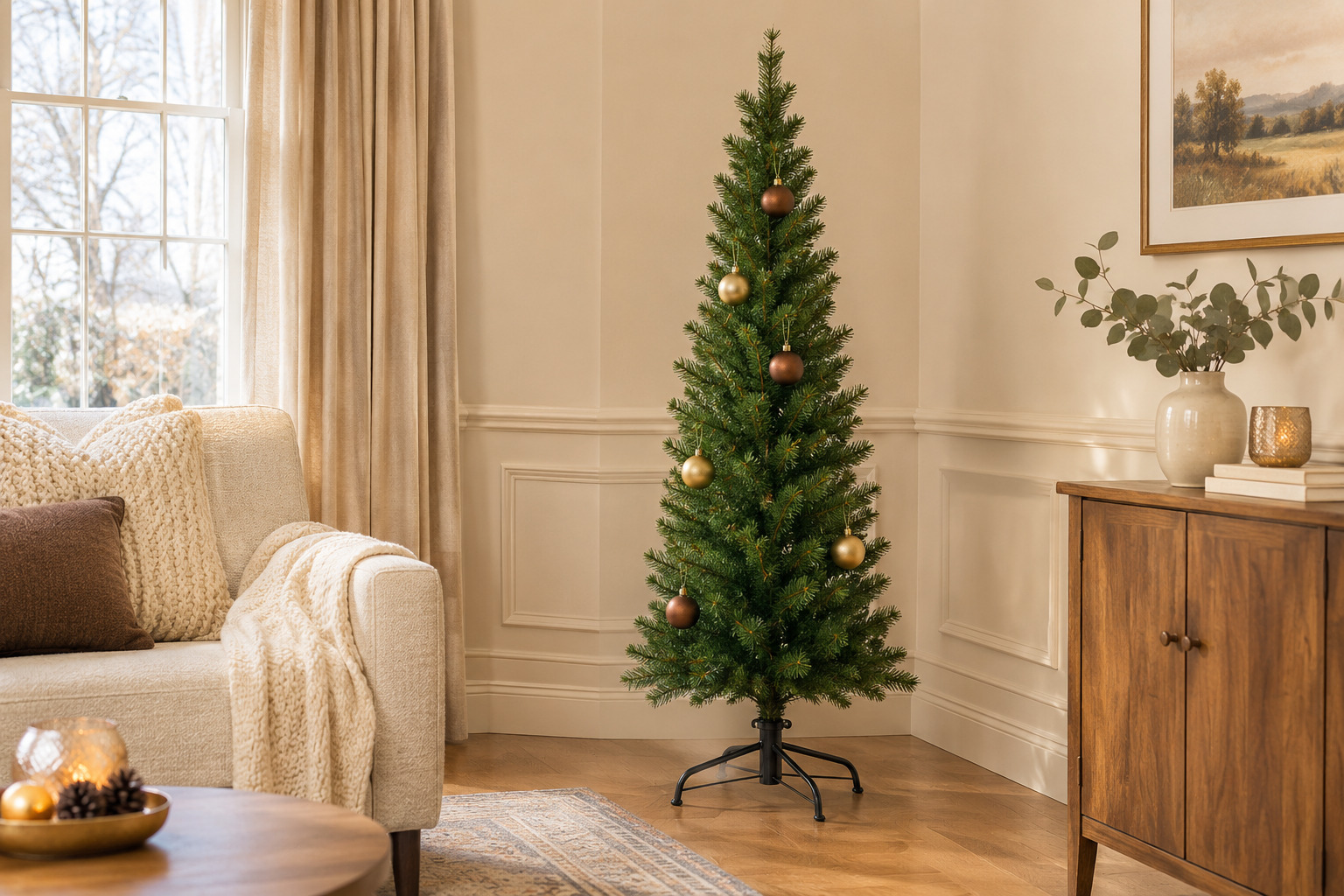
Let the tree’s green foliage be a visible third part of the palette. Open and arrange an artificial tree as its maker directs before hanging the first ornaments. Try a few brown pieces and a few gold ones on separate branches, leaving open green patches around them.
Step back to the entrance and look at the whole outline. A green tree can keep rich brown from looking flat and give reflective gold a darker background. Choose the tree’s width and shape for the room first; the same restrained palette can work on a compact pencil tree or a fuller one without requiring equal quantities of decorations.
Measure the fully opened tree and its stand against your corner before choosing this unlit six-foot pencil shape.
See the unlit slim green tree (paid link)
2. Use Chocolate Velvet Ribbon as a Soft Backdrop
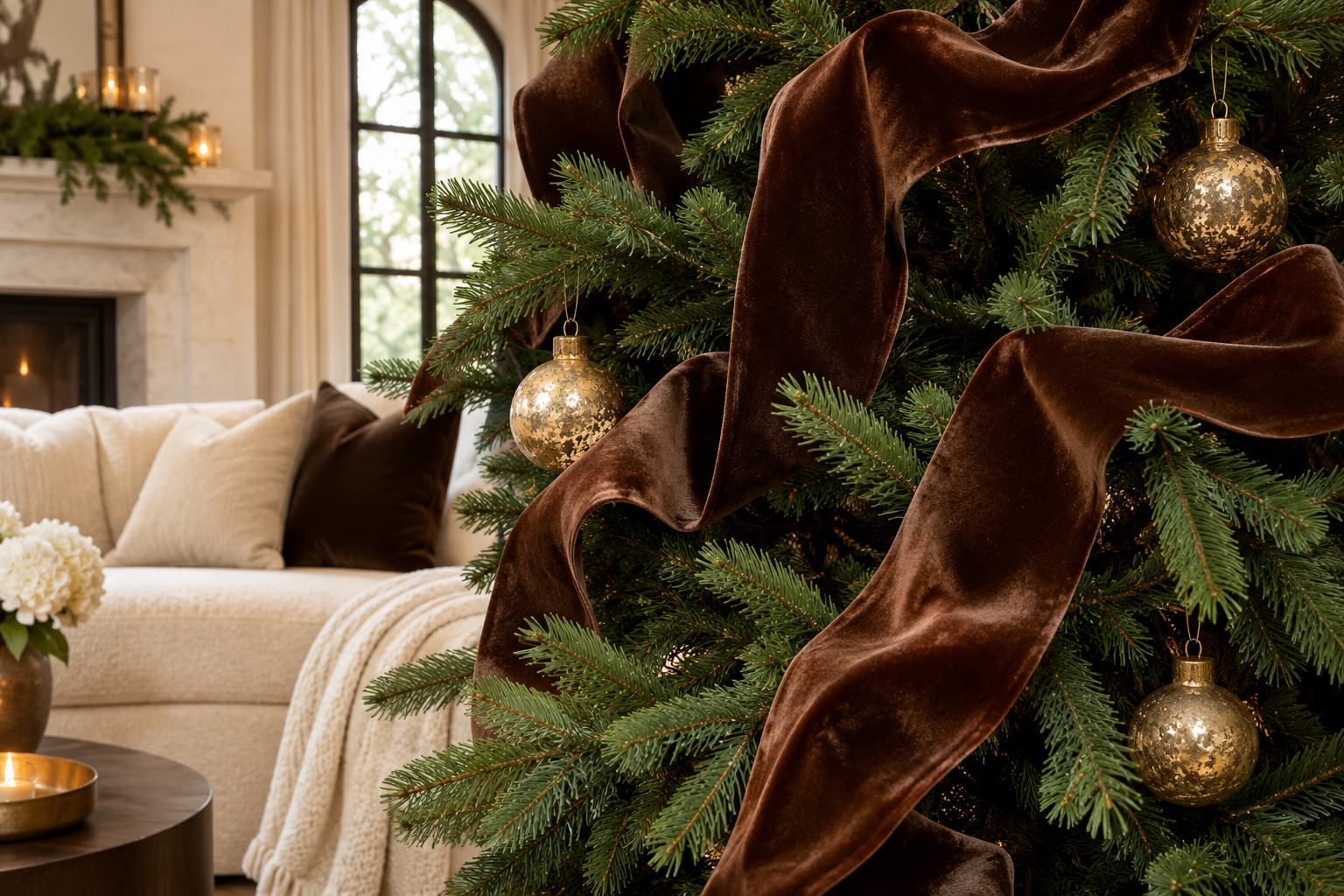
Try short, generous lengths of chocolate-colored velvet ribbon among the branches, supported according to the tree and decoration instructions. Let the soft brown face show rather than twisting it into a narrow edge. Place a few gold ornaments near the ribbon where the different surfaces can be seen separately.
Keep the ribbon’s ends within the tree’s outline and clear of lighting components. Velvet can make the tree feel warmer without adding another color. A cream sofa and a quiet rug nearby give the dark textile some breathing room. Check it with the room lamps on before deciding how much gold it needs.
3. Pair Caramel Ornaments With Quiet Champagne
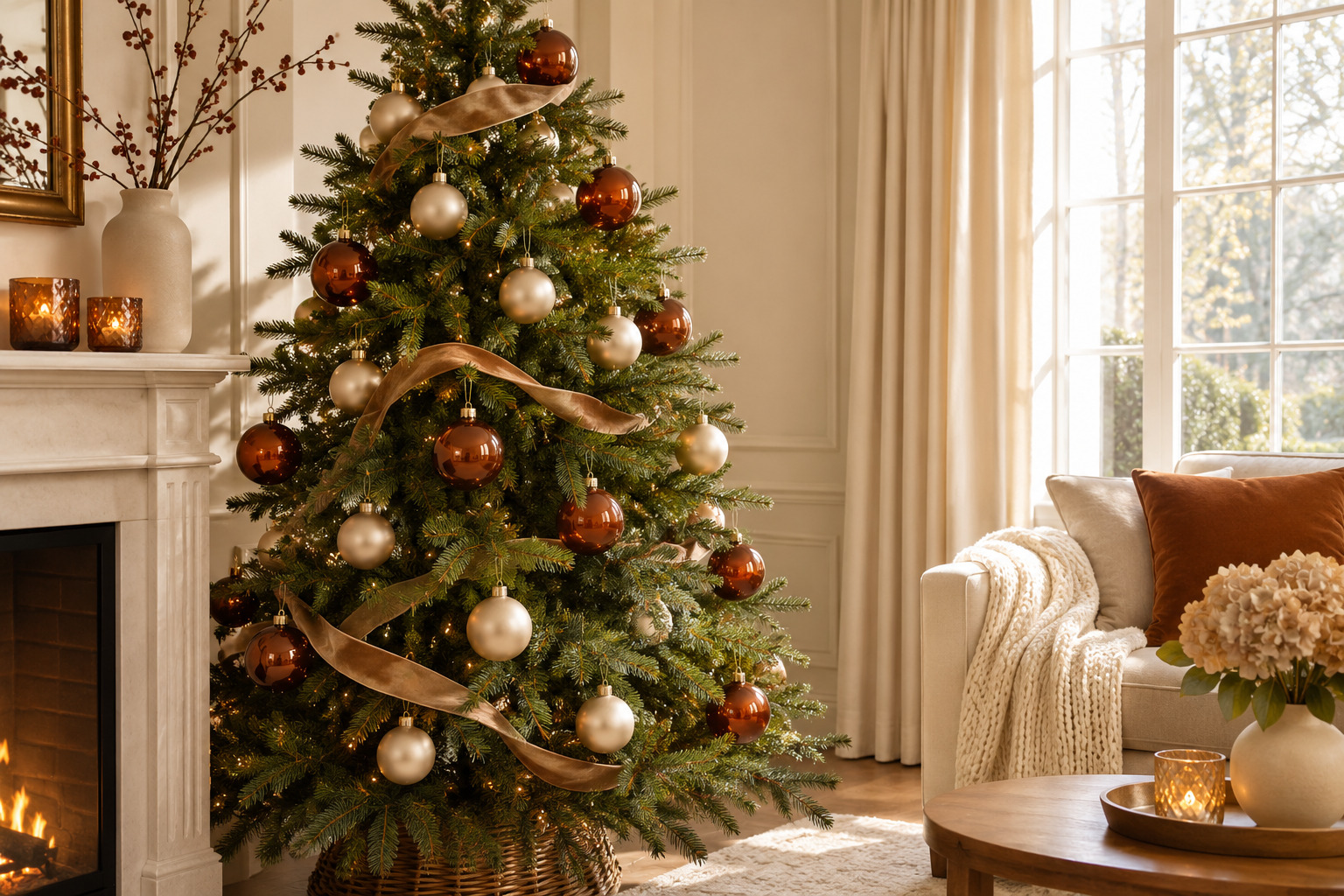
Put a caramel-colored ornament beside a pale champagne one and compare them in daylight and evening light. The warmer brown can give the pale metal a little definition, while champagne keeps the combination lighter than a strong yellow gold.
Repeat the pair in a few separated areas so the colors travel through the tree. Use a plain ribbon close to one of the ornament colors if the group needs connecting. Avoid choosing every item from a bright product photo alone; neighboring walls and lamps can change how warm the finishes appear. The Christmas color scheme ideas explore other room-based palette decisions.
4. Let Matte Brown Sit Beside Brushed Gold
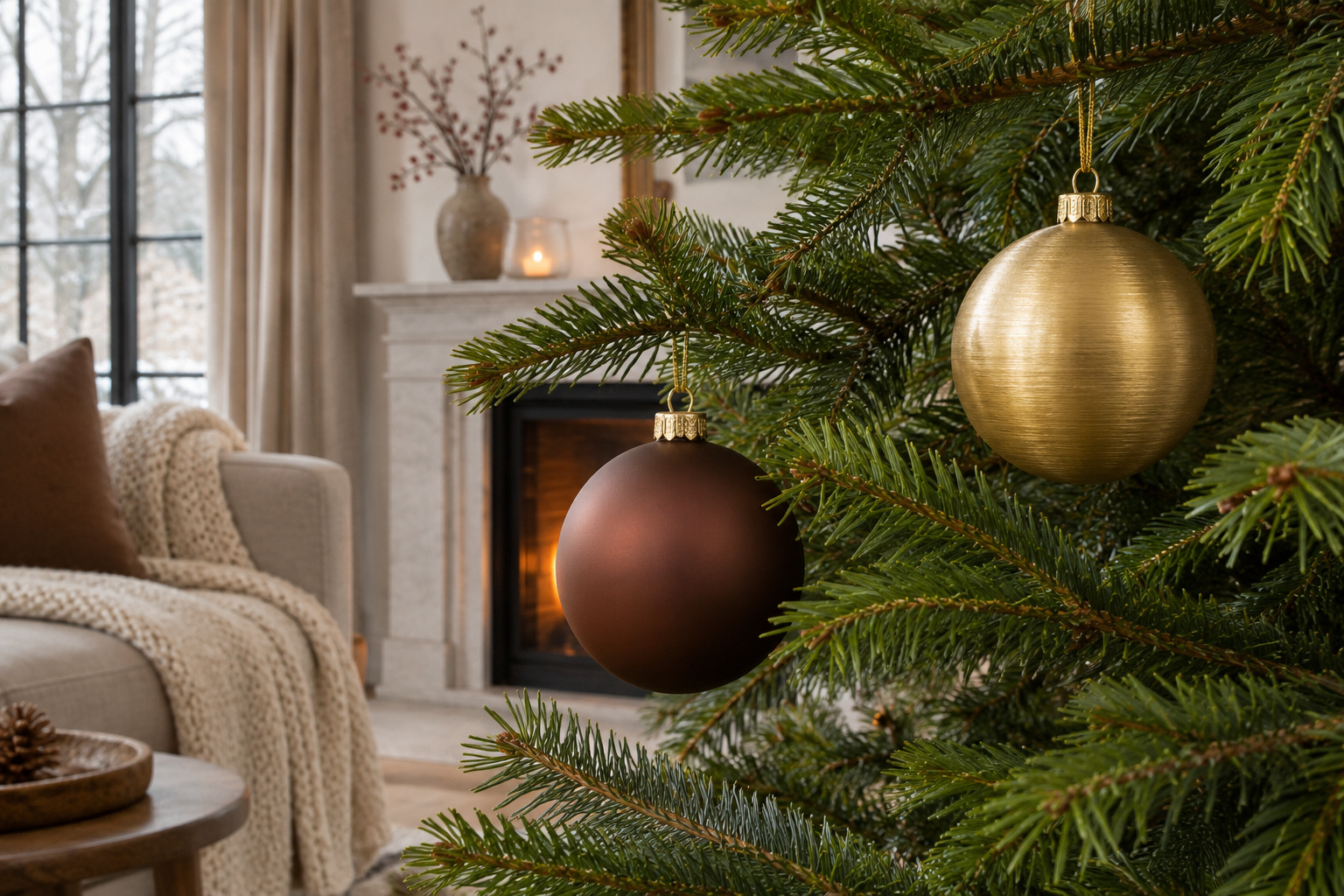
A matte brown bauble can hold its shape quietly beside a brushed-gold one. Hang them where there is enough green between the surfaces to notice the difference. Try two similar-sized shapes first so the finish, rather than scale, becomes the main contrast.
Keep highly reflective pieces out of this small grouping until you see whether they add anything. A few matte and brushed repeats can make the tree feel considered without a large assortment of patterns. If the brown looks too dark in the evening, move the pair toward a clearer branch opening rather than automatically buying a paler set.
5. Give Ribbed Gold Ornaments More Open Space
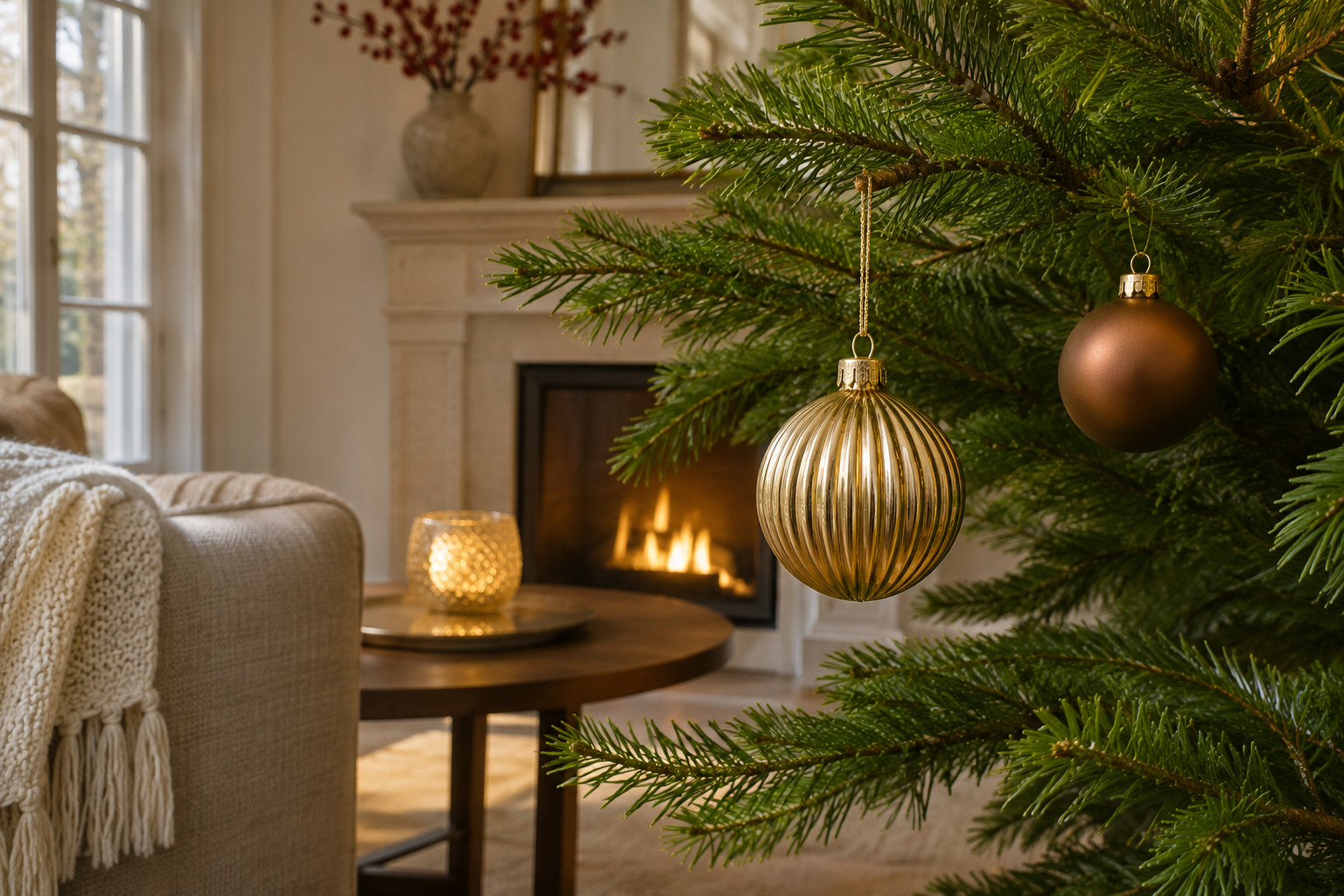
Choose a ribbed or fluted gold ornament and hang it with a clear view of its outline. The grooves already provide detail, so a plain brown sphere nearby is usually enough. Turn the ornament gently while it is securely hung to find a view where its texture catches the room light.
Keep the surrounding ribbon and branches from covering the ribs. A few textured gold pieces can act as punctuation among simpler shapes. Check the manufacturer’s hanging and branch-load guidance for the actual ornament; a textured appearance does not tell you what it weighs or which branch can support it.
6. Try Long Finials With Round Brown Baubles
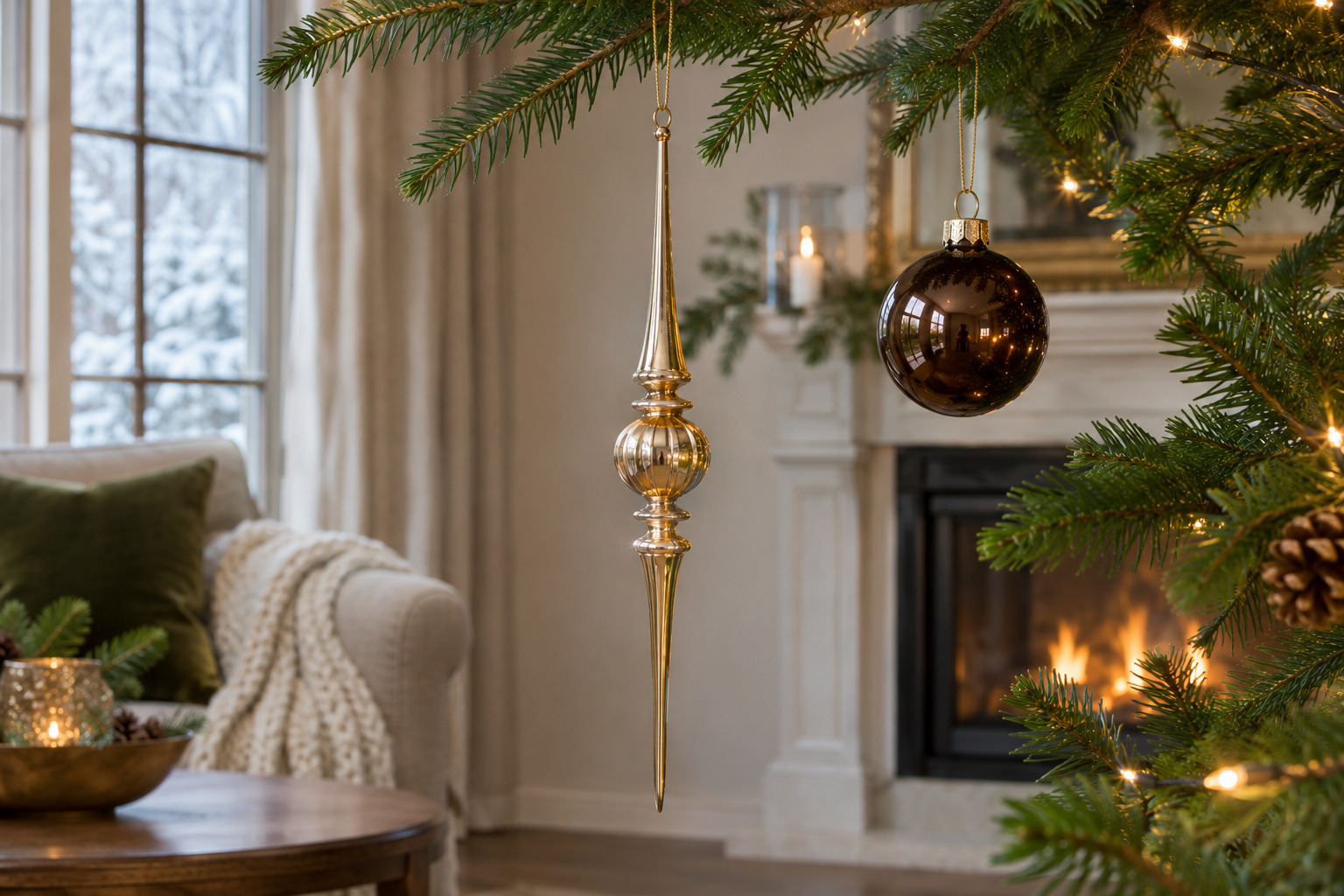
A long gold finial changes the rhythm of a tree filled mostly with round ornaments. Put it in a branch opening where its full drop remains visible and clear of the pieces below. A round brown bauble a little to the side gives the slender shape a useful contrast.
Repeat the long shape sparingly rather than lining every finial up at the same height. Look from the seated view to check which drops disappear behind branches. Keep their supports appropriate to the ornaments and leave the lower ends out of normal reach where a passing person or pet could catch them.
7. Bring in Small Carved-Wood Ornaments
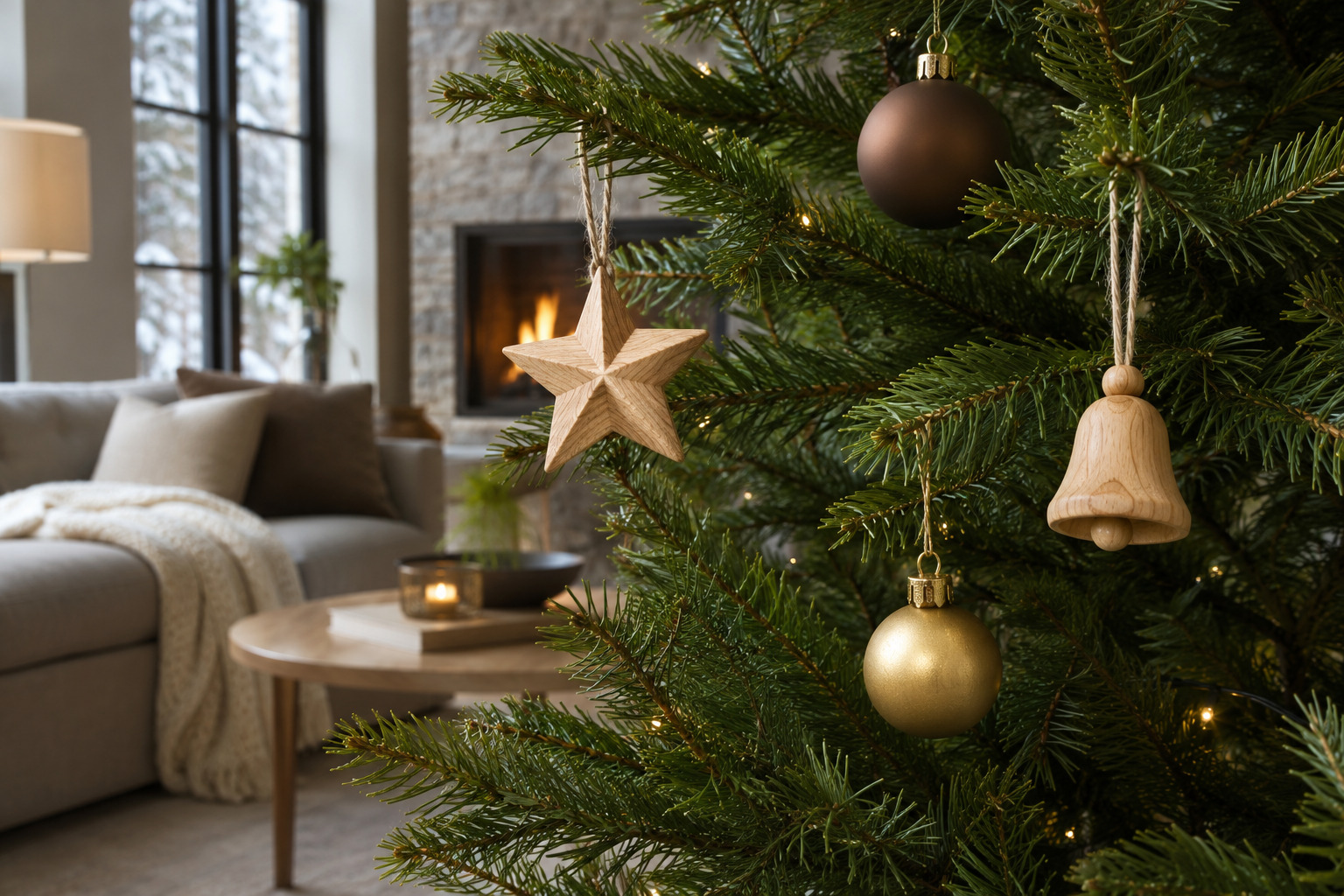
Mix a few small wood ornaments with the brown and gold pieces, choosing shapes whose grain and carved edges stay visible. A simple wooden bell or rounded star can connect a matte brown bauble to a quieter gold detail without adding sparkle everywhere.
Let the material remain the point: leave enough surrounding branch space to see the carved surface. Try pale wood if the brown ornaments are deep, or a warmer midtone beside caramel. The combination feels more natural when the tree contains a few deliberate wood pieces rather than many unrelated rustic props around its base.
8. Choose a Few Delicate Gold Details for a Formal Room
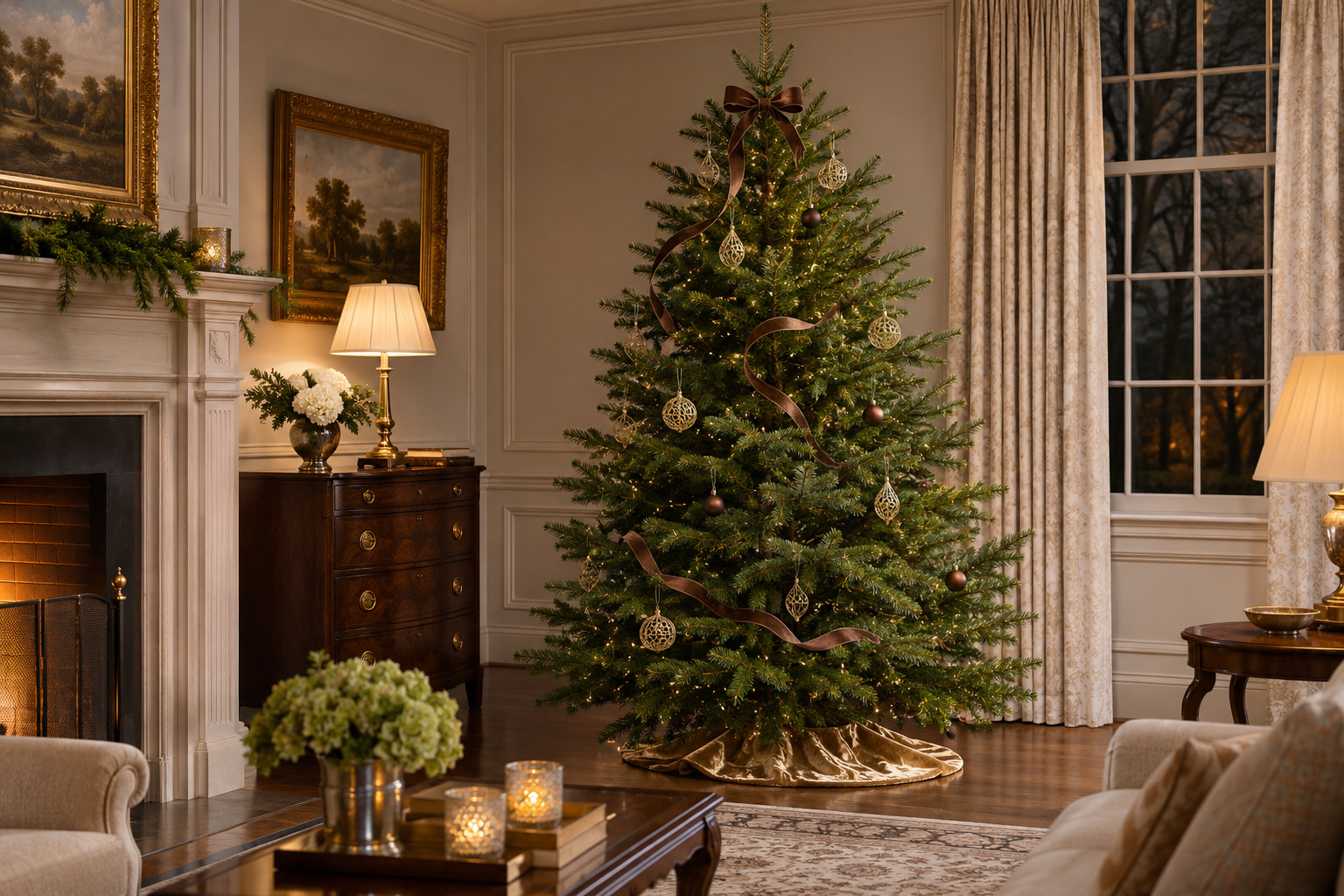
For a formal sitting area, select a few finely patterned gold ornaments and give them room among plain brown pieces. A delicate border, openwork shape, or restrained leaf design can be enough. Keep the ribbon simple so every surface does not compete to be the most detailed.
View the tree from the room’s main seats. The small decorative marks should read as points of interest within a calm overall shape. Repeat one gold tone in a nearby frame or lamp if it already belongs to the room; there is no need to purchase a matching collection for every surface.
9. Make One Narrow Ribbon Travel Through the Tree
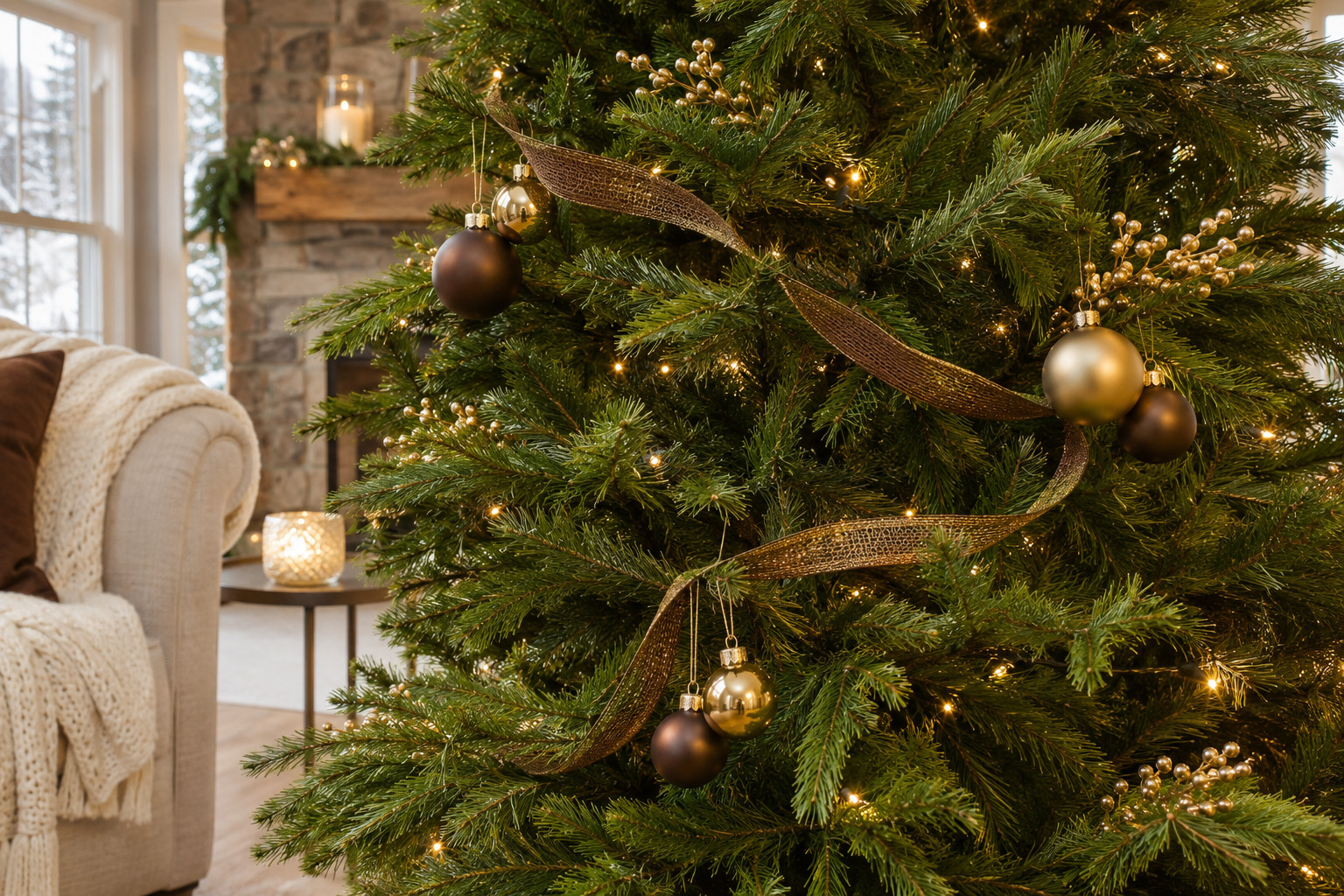
Use a narrow brown-and-gold ribbon to connect a few separate areas of the tree. Plan short visible sections that move gently through the branches, using the decoration’s intended support method. The ribbon should link the groups without drawing a rigid stripe over the whole tree.
Keep enough of the brown and gold ornaments visible outside its path. A modest woven pattern in the ribbon can provide detail when most of the baubles are plain. Check the whole tree from more than one side before trimming any lengths, especially if the tree also shows through a window.
10. Add Ivory Only Where the Darkest Brown Needs Relief
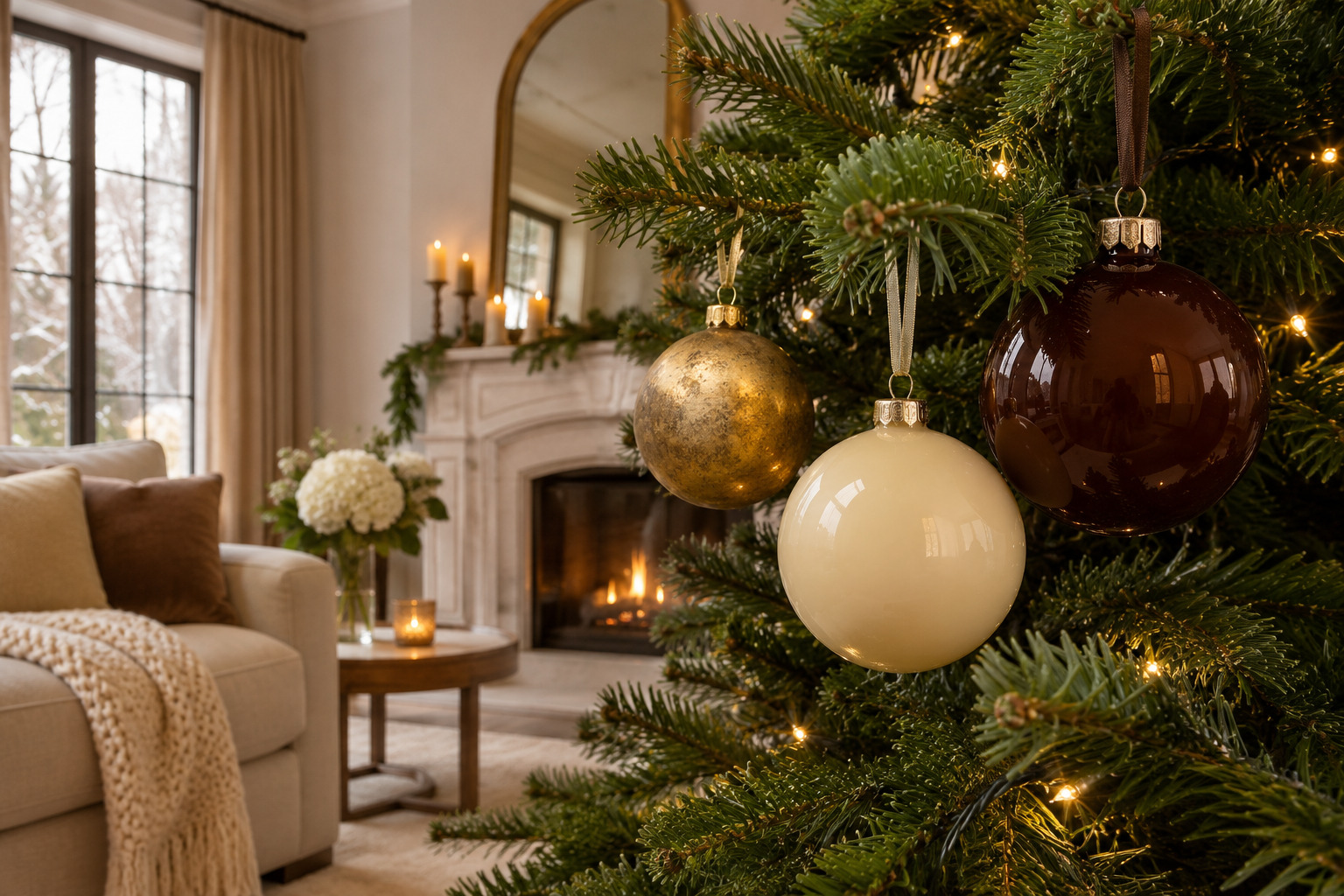
Try one ivory ornament beside the deepest brown in the collection. The pale surface can separate dark brown from green without introducing another saturated color. Move it around the tree until the lighter note looks like part of the palette rather than a single isolated dot.
Repeat ivory in only a few places if it helps. Compare it with your actual gold: a creamy ivory may feel gentler beside aged metal, while a sharp white can create a different contrast. The goal is to keep the brown legible, so stop before the tree becomes mostly pale ornaments with a little brown added afterward.
11. Use Brown Paper Ornaments for a Handmade Version
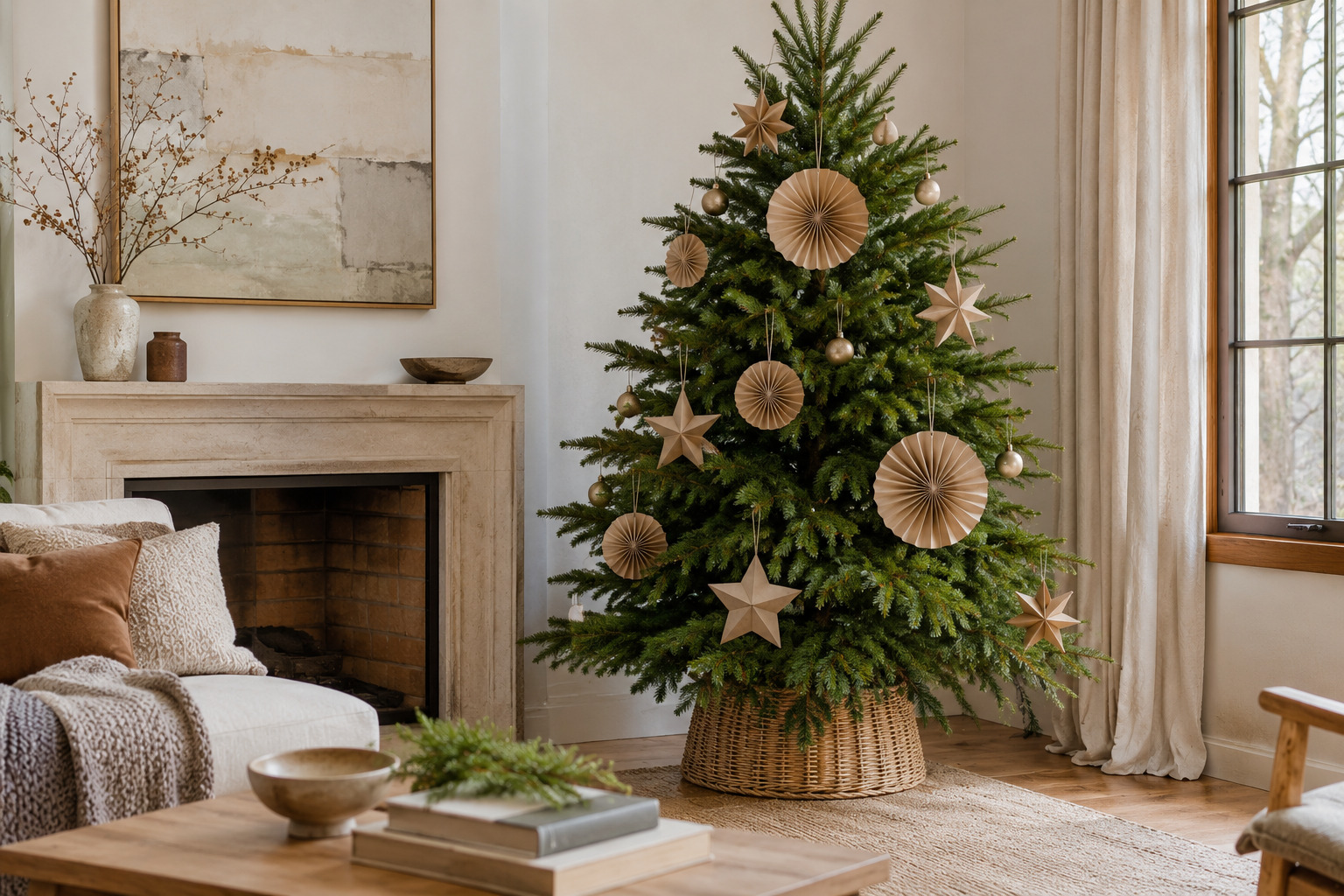
Fold or buy lightweight paper ornaments in a brown close to your favorite kraft wrapping. Choose a few simple shapes, such as small pleated circles or folded stars, and hang them using suitable supports. Let their matte folds sit beside one quiet gold detail.
Keep the paper unlit and clear of heat sources and lighting components as directed. A little visible paper texture makes this version feel different from a tree filled with polished baubles. Repeat the same brown on a package below if you already have matching wrap, while leaving the stand and the route around the tree accessible.
12. Keep a Small Tree Warm With Two Ornament Sizes
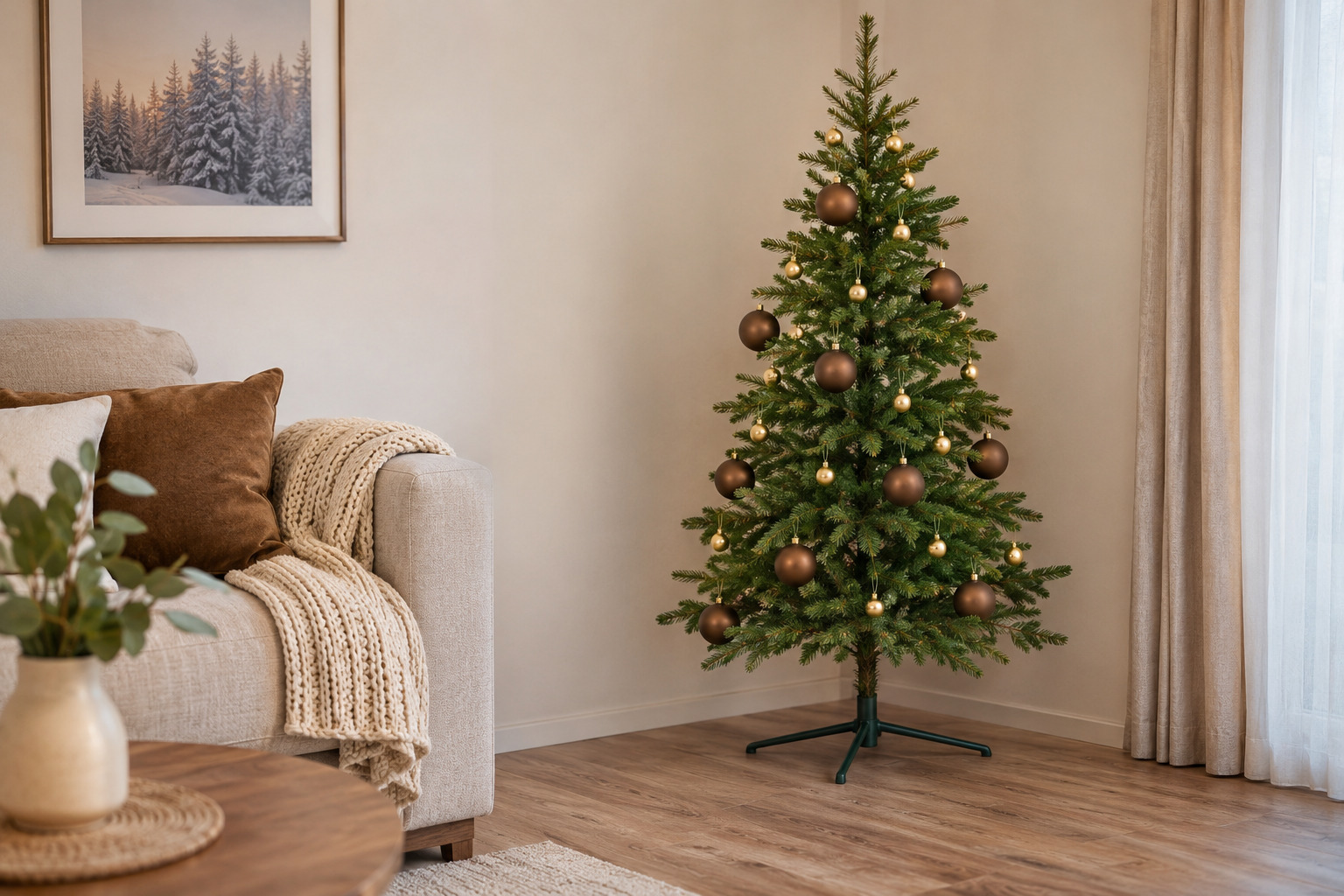
On a small tree, try a modest brown bauble and a smaller gold one before adding a third size. Hang the larger pieces where the branches can take them and let the smaller gold shapes reach into the narrower parts of the outline.
Look at the tree beside the actual furniture, since an ornament that seems small in your hand can look large on a compact tree. Leave enough clear branch tips to keep the silhouette visible. A simple two-size collection is easier to adjust than a dense mix when the tree occupies just one corner of an apartment.
13. Repeat the Tree Palette Near a Brown Sofa
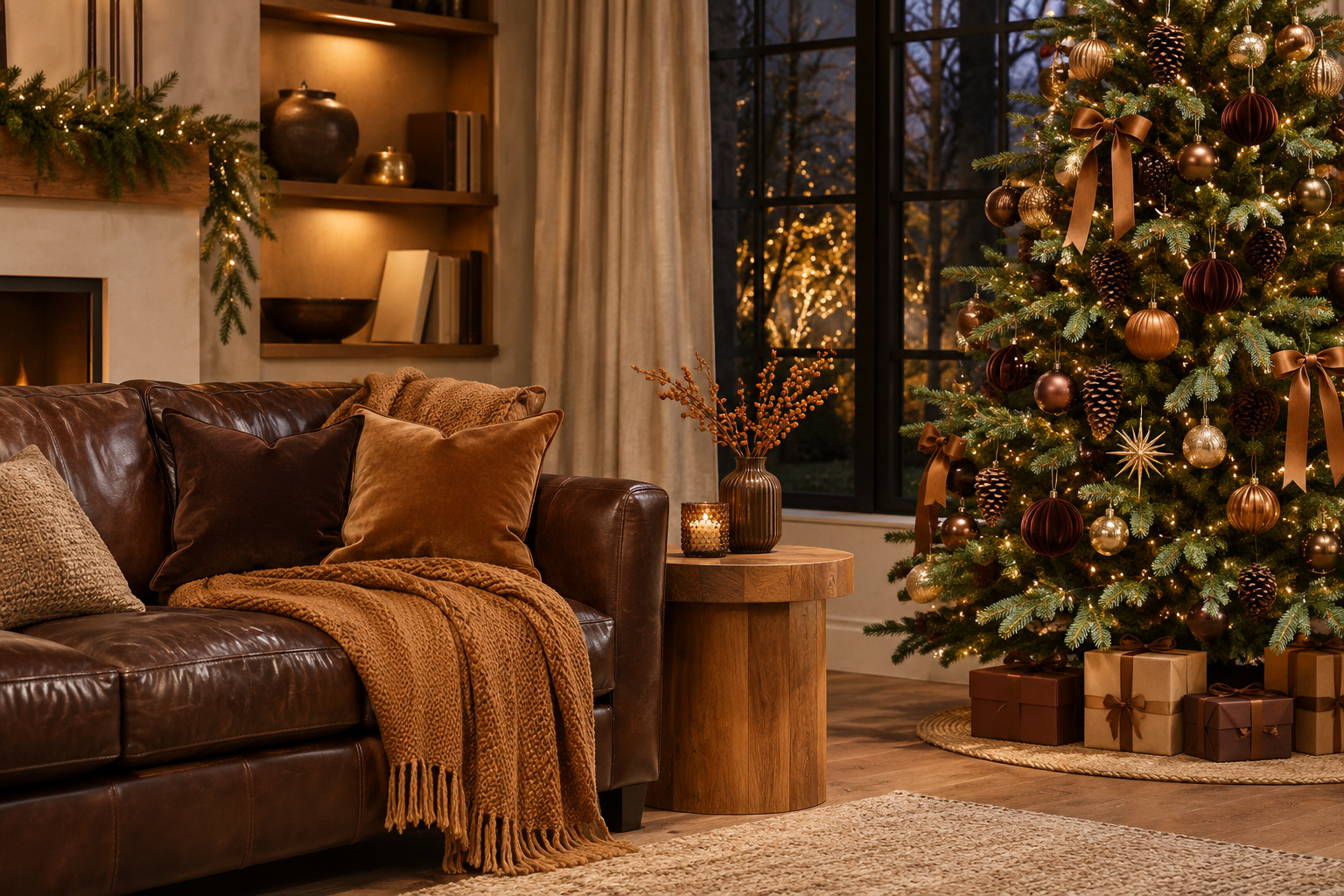
If your living room already has a brown sofa, compare the upholstery with the tree’s darkest ornament. Choose a related warmth rather than trying to match the two exactly. A caramel textile or small gold-toned object elsewhere in the room can make the tree feel connected to the seating.
Keep the sofa useful and avoid carrying every tree material onto it. One repeated color is enough to test the relationship. These brown leather sofa ideas give more guidance for the surrounding room when the sofa is the larger brown surface.
14. Let a Slim Tree Keep a Clear Outline
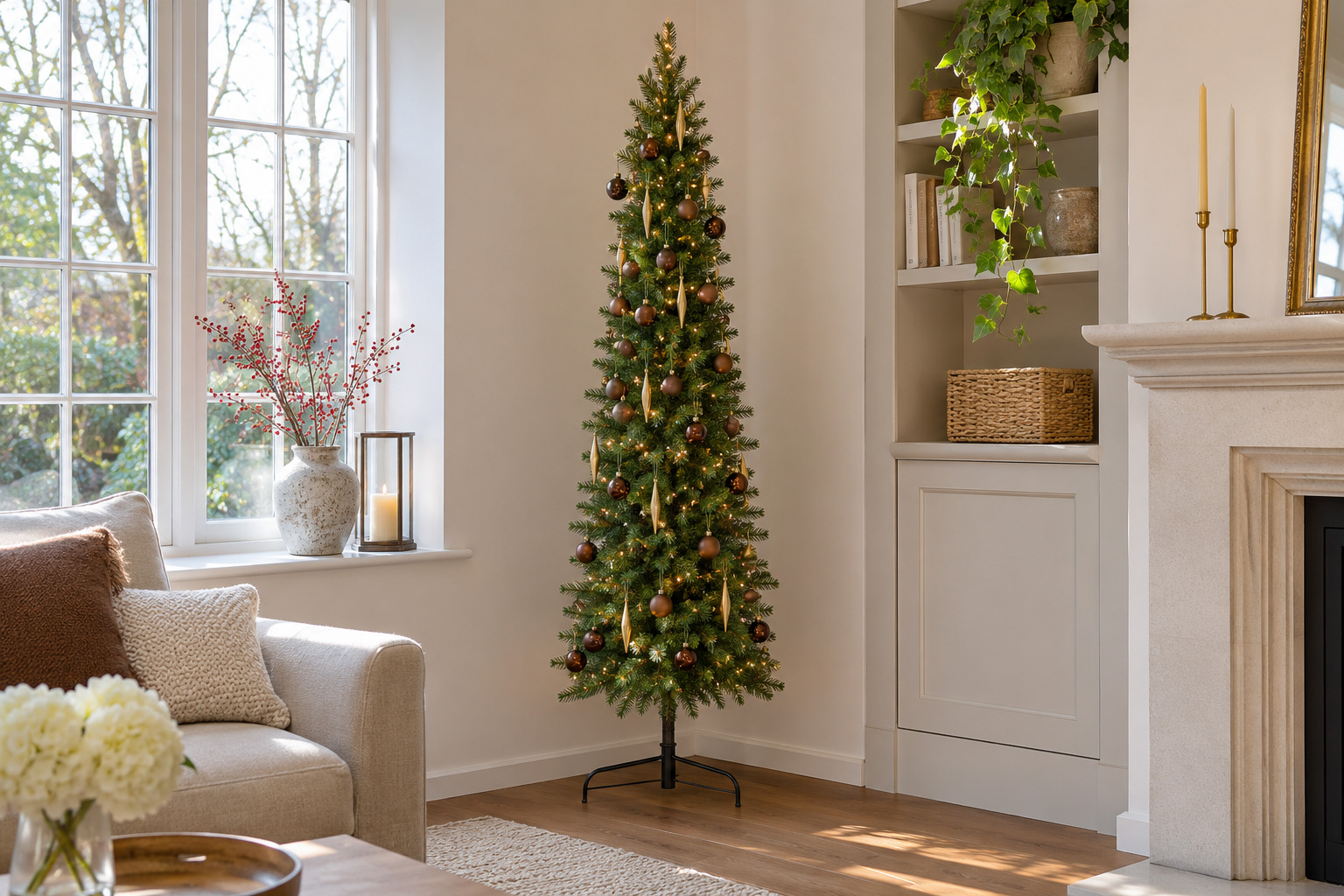
A slim tree needs ornaments that let its narrow shape remain readable. Start with smaller brown pieces and a few slender gold drops in the available openings. Keep bulky bows and projecting decorations from becoming wider than the branch structure you chose for the space.
Check the view from the side as well as the front. Move a crowded group inward or remove one piece if the tree starts to look like a stack of solid bands. Keep the actual tree’s base stable and its stand clear. Its compact shape should still help the room work once it is decorated.
15. Bring the Colors Down With Simple Wrapped Gifts
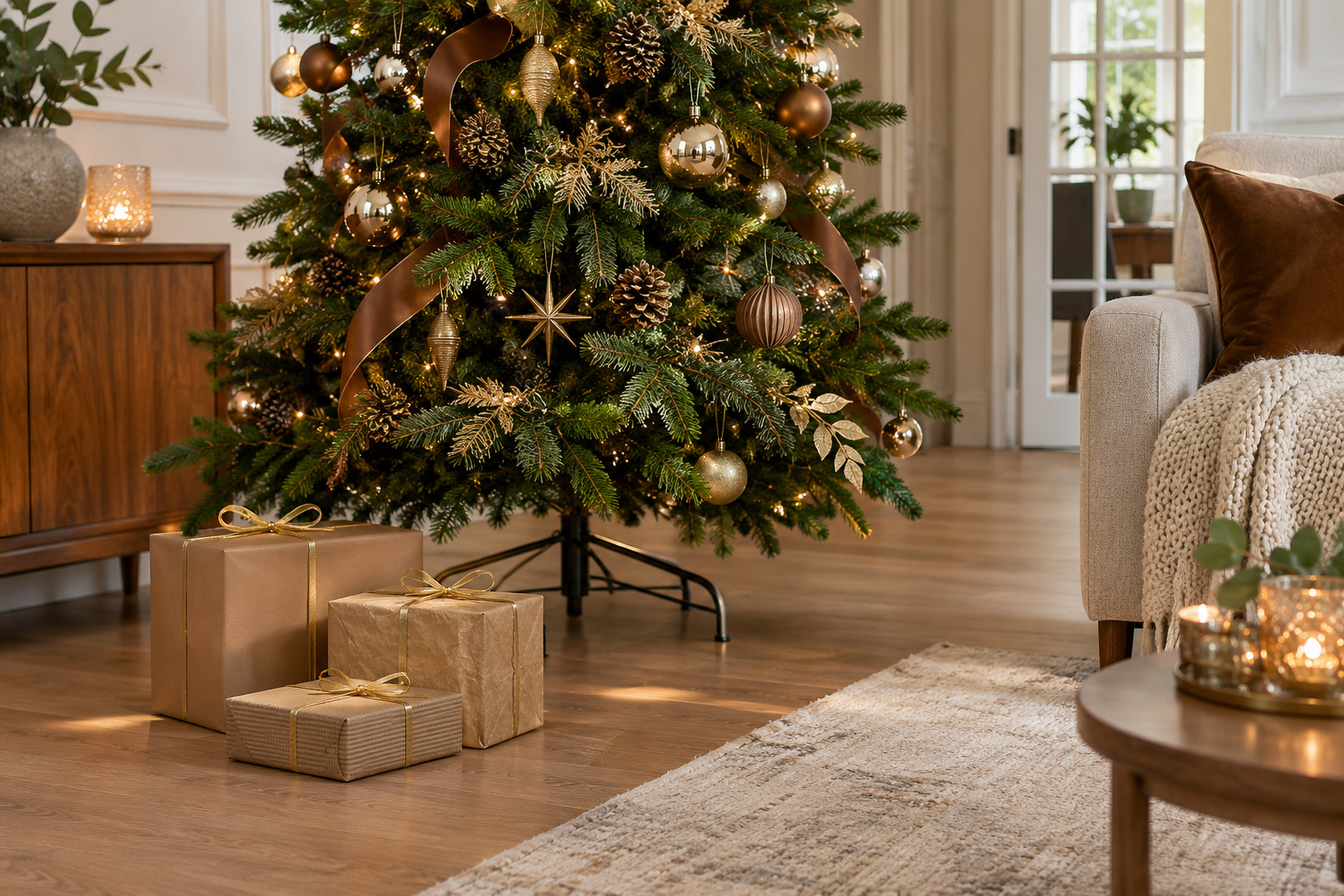
Wrap the presents you already plan to give in a few related browns, then use one narrow gold ribbon as the repeating detail. Different paper textures can look collected without needing many printed patterns. Keep any decorative empty boxes clearly separate from gifts that will be handled.
Place the packages within the available floor area while preserving stand access and walking space. Keep them clear of heat sources and the tree’s electrical arrangements. A few low boxes can carry the tree colors downward without hiding every part of the base or spreading the display into the room.
16. Keep a Favorite Mixed Ornament in the Palette
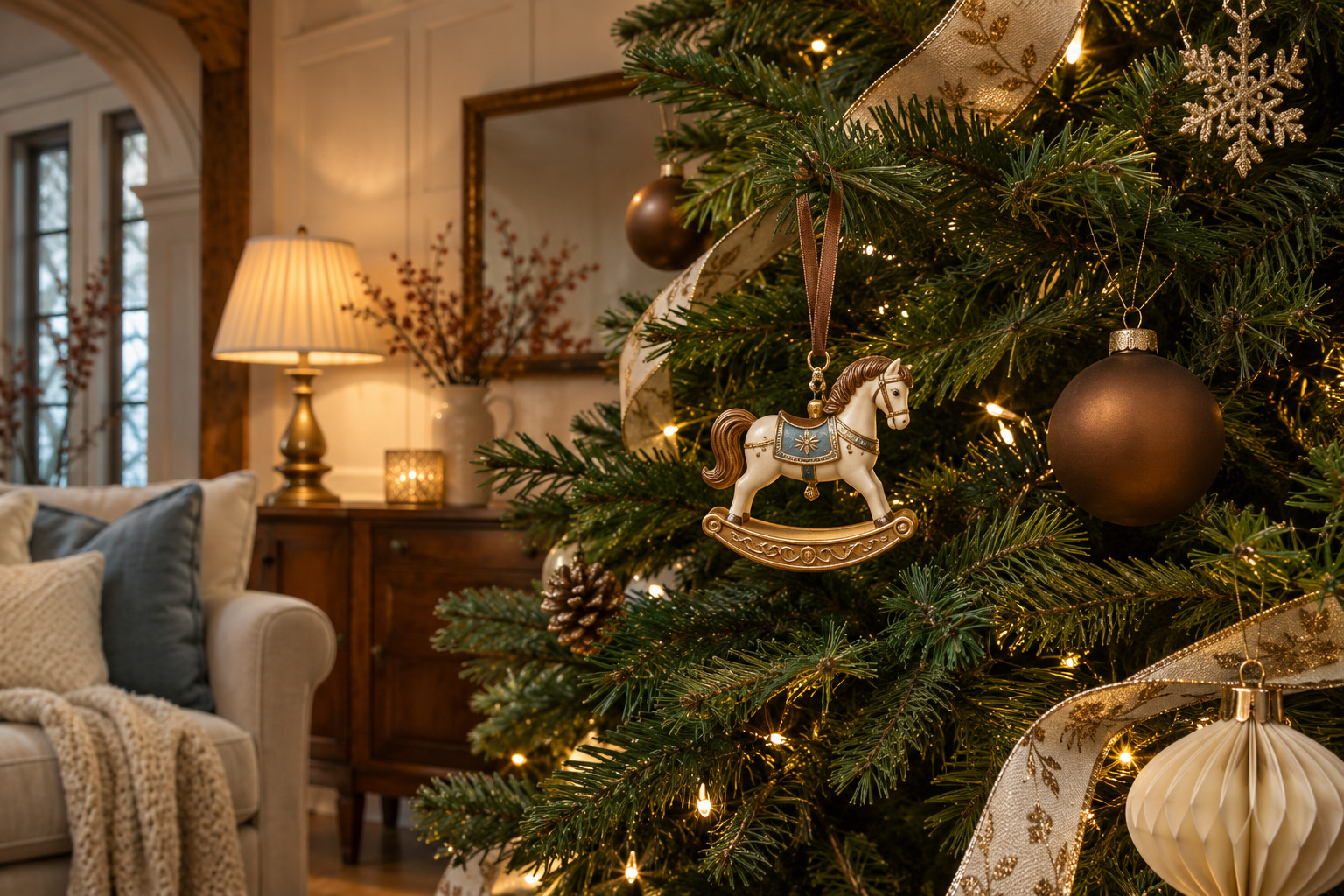
A favorite ornament does not need to be discarded because it contains another color. Look for a small brown, cream, or gold detail within it and put a related plain ornament nearby. The shared note can give the keepsake a place while its different shape supplies a little surprise.
Try it where you can see it from your usual chair, rather than burying it behind the strictest color grouping. Keep the rest of that area quieter. A collected tree can have a clear brown-and-gold palette and still contain something that matters to the household.
Begin with a small group in your own room light. Adjust the spaces between the brown and gold before adding more, and keep the branches part of the picture. The most useful version is the one that suits your tree, your furniture, and the decorations you enjoy bringing out again.
Discover more from HomeTrendora
Subscribe to get the latest posts sent to your email.