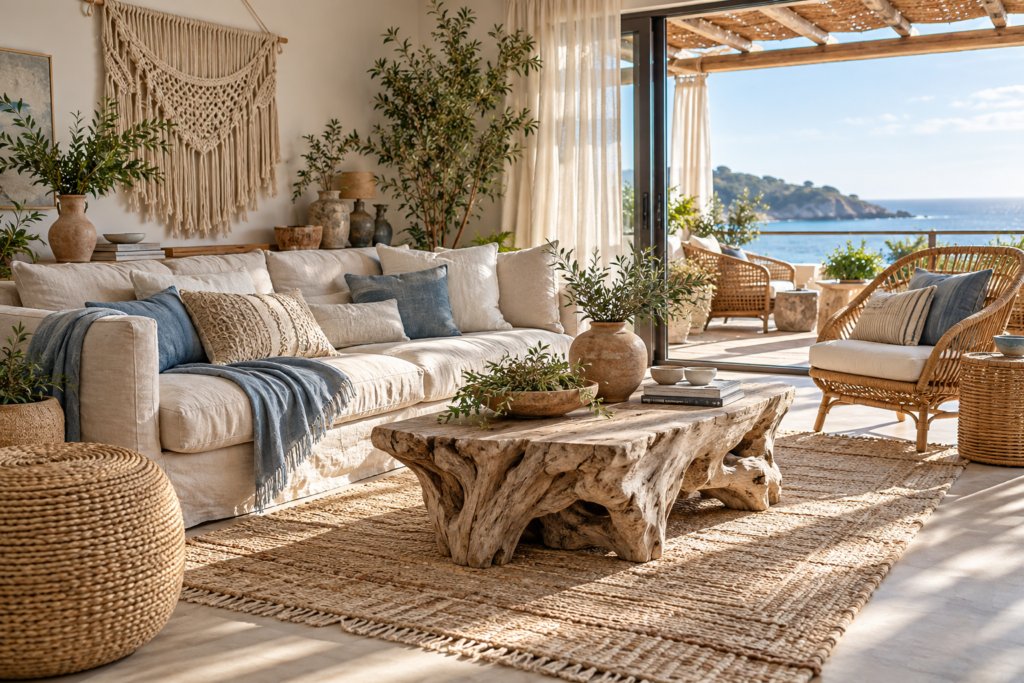
A room can look busy even after you clear the shelves. The path around the sofa may still bend around a table, the kitchen tools may live two steps from where you cook, and the lamp may light an empty corner. Begin with one routine you want the room to make easier. Then decide which pieces support it and what can move.
These 18 minimalist style interior design ideas work across the house, from the first place you drop your keys to the seat you use after dark. Use one idea at a time. You can keep the warm wood, the art you love, and the things you reach for every day while giving each room a clearer shape.
1. Start With a Straight Walk Through the Living Room
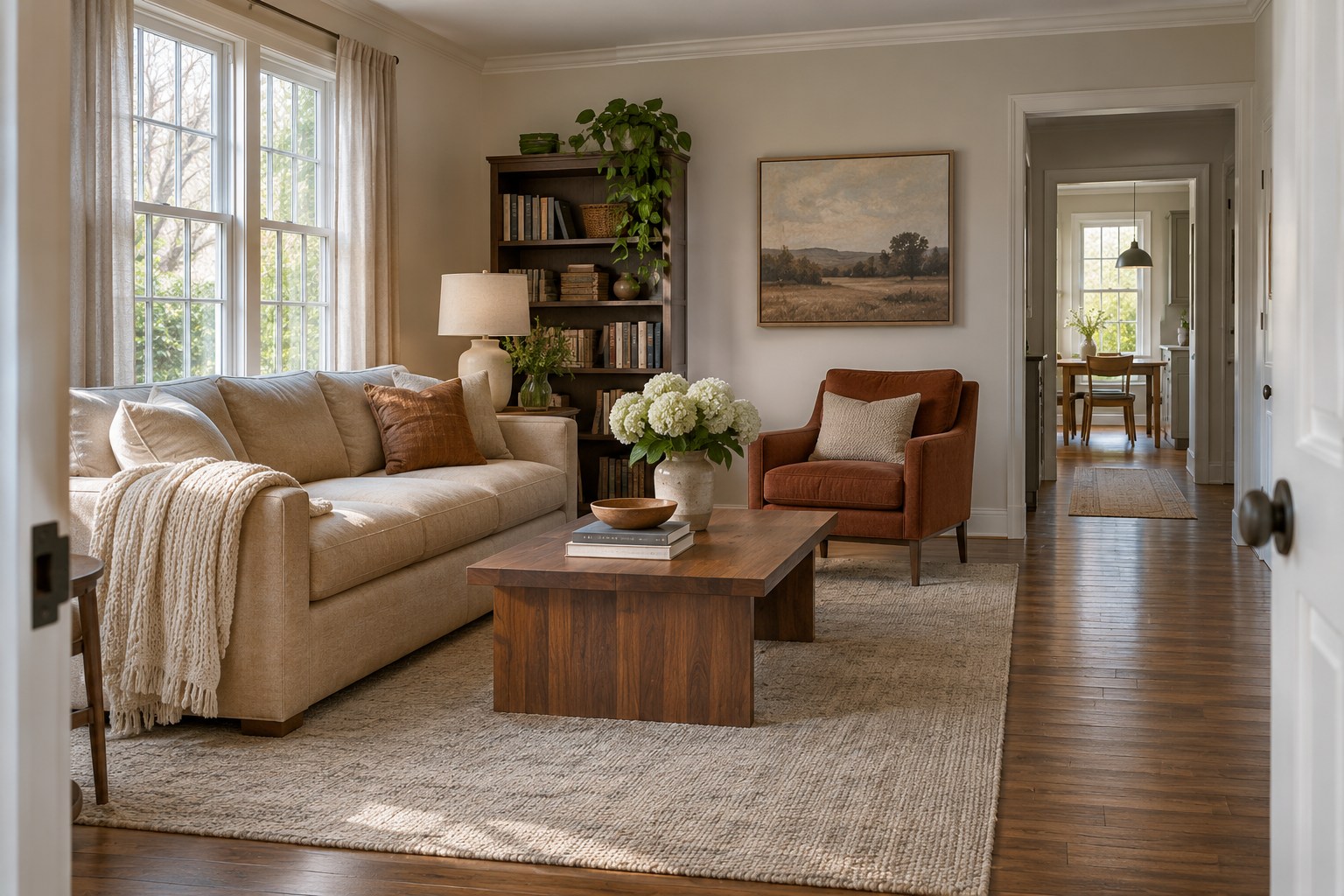
Walk from the living room door to the farthest seat and through to the next room. Move the first piece you have to step around. Often it is a table at the edge of the rug or a chair that has drifted toward the opening. Then sit down and check whether there is still somewhere comfortable to put a cup.
Push side tables into the seating group and let the main route run along an edge. Mark any proposed furniture footprint with tape and walk the room while carrying a laundry basket. If your elbows brush a chair, shift the grouping again before you buy anything. For more small-space layout tests, see these small room makeover ideas.
2. Give the Entry One Place for Daily Things
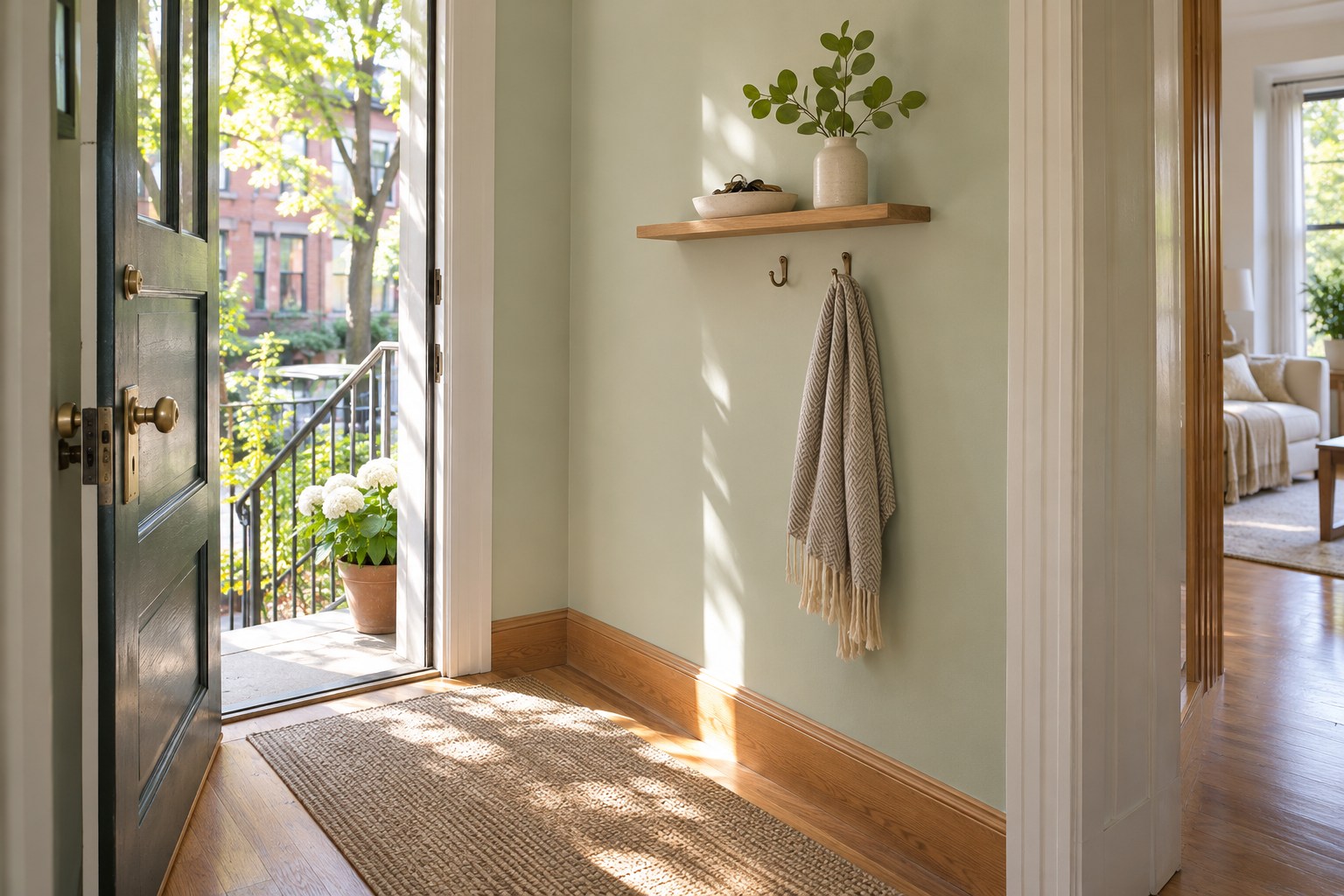
Pick the spot where keys naturally leave your hand. Add one shallow tray or ledge there and hang a hook for the jacket you wore today. The catchall can stay small when mail, umbrellas, and spare bags already have places elsewhere. Test it with a full tote on your shoulder so you can reach it without turning awkwardly.
Open the front door fully and check the space with a coat hanging on the hook. Shift it if a sleeve catches or if the tray narrows the route. A quiet entry starts with a place that works on a busy morning. Our Japandi entryway ideas show more ways to set up that first drop spot.
HOMETRENDORA PLANNING BUNDLE
Turn the ideas you like into a room plan.
Choose what to keep, check what will fit and decide what to buy first. The Home Design Book, fillable room planner and budget tracker guide you through those decisions with worked examples and practical checks.
160-page PDF + fillable room planner + Excel budget tracker
Bonuses included with your eBook purchase.
GRAB 10% DISCOUNT
Coupon code: HOMETRENDORA10
Use this code at Payhip checkout.
3. Warm Up a Plain Room With Three Textures
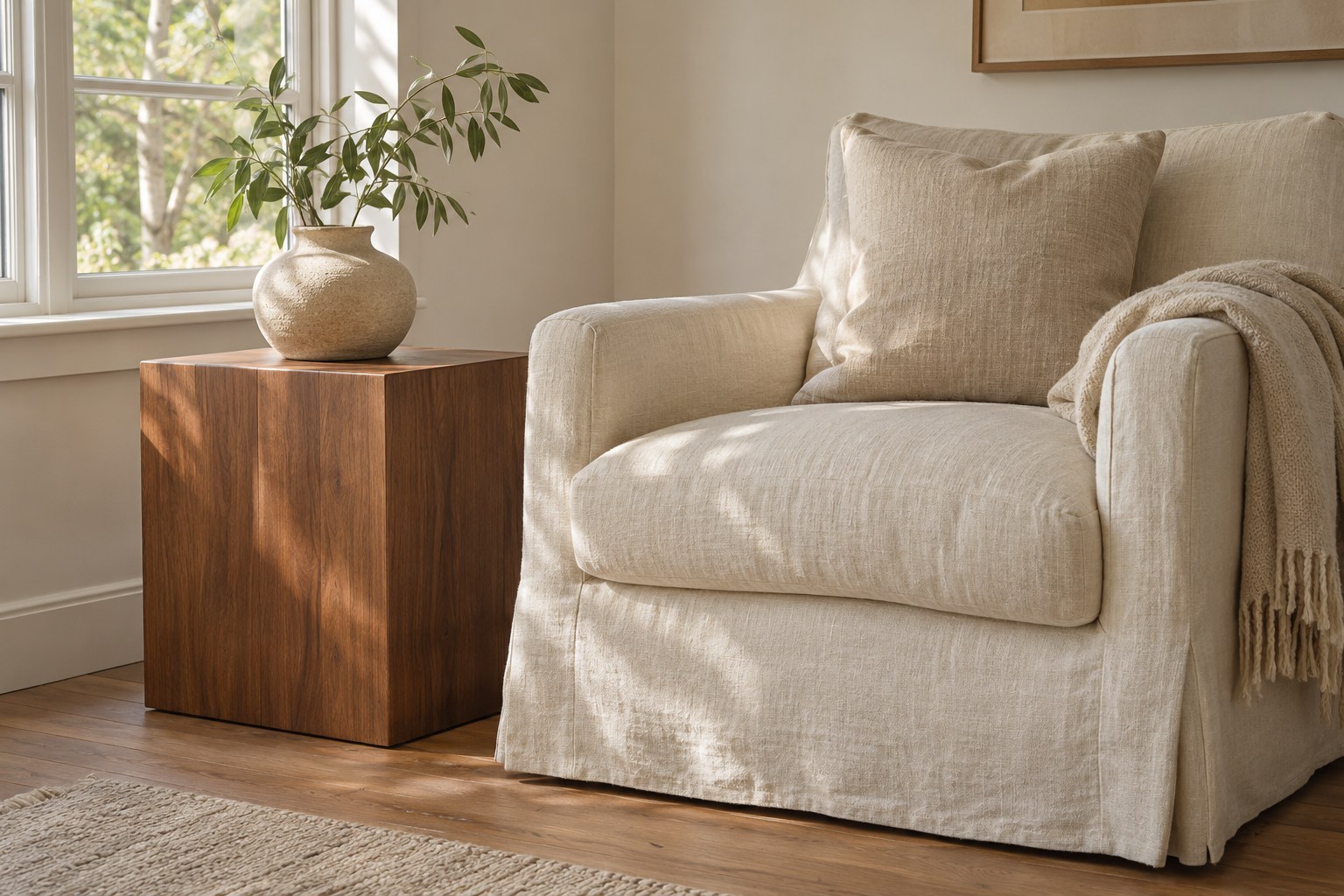
When a room looks a little flat, put three materials side by side and see how the daylight treats them. A cream linen seat, a dark smooth wood table, and a grainy clay vessel give you soft, smooth, and rough within a small area. Start with one material the room already has, such as the oak floor.
Keep the textures far enough apart to read from your usual seat. A low pot can look good on a cabinet with room around it, while a rough linen pillow works better where you can touch it. A plain color across several textures changes quietly as the sun moves and can carry a room without extra pattern.
4. Repeat One Wood Tone Across the Kitchen
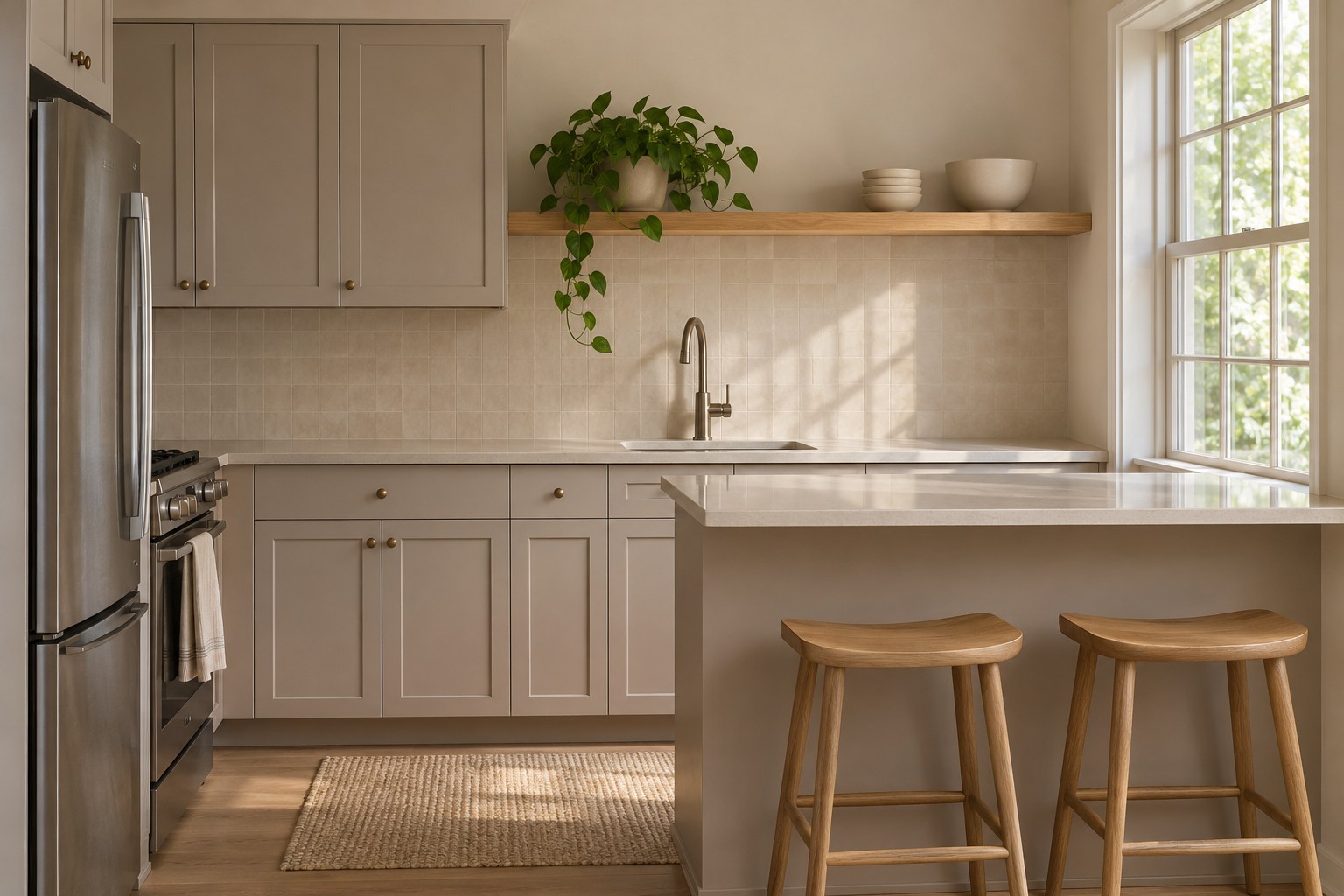
Repeat a wood tone in two places you see from the same viewpoint. Try the stool seats and a single shelf, or the pantry door and an open dish shelf. Compare samples next to each other under the kitchen lights. Pieces sold as oak can read quite differently once they are on opposite sides of the room.
The undertone and sheen matter more than a perfectly matched grain. If one sample looks yellow in the morning and another turns gray, choose which one suits the cabinets and repeat that tone. These modern white kitchen ideas show how pale cabinetry looks alongside different woods and work surfaces.
5. Put the Kitchen Tools Where You Prep
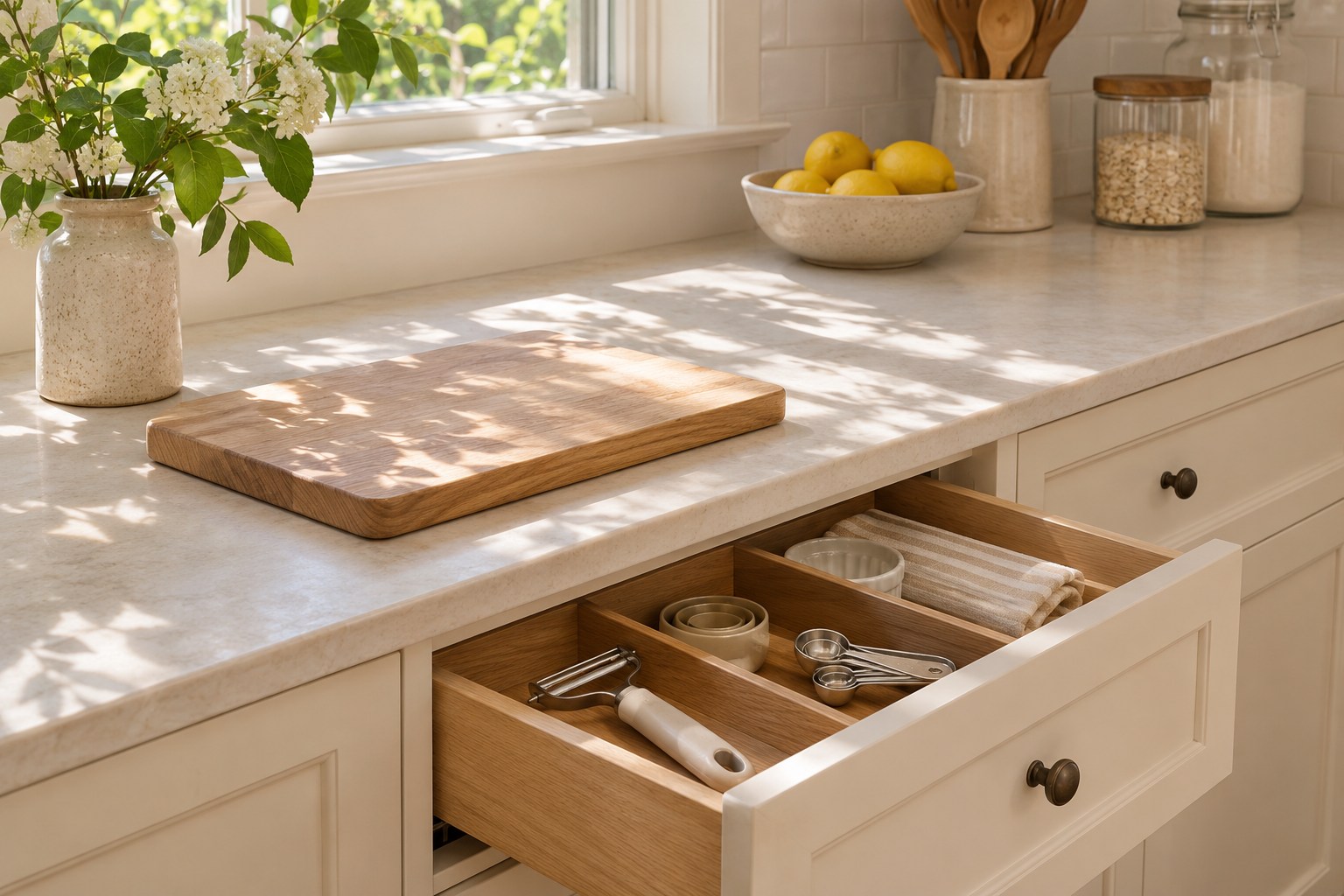
Leave your most-used cutting board out for one evening and notice which drawer you open while you prep. Put the small tools you reach for together in that drawer. Keep the tools you use for baking or occasional jobs in another place so you can see the everyday items at a glance.
Measure the usable drawer interior before adding dividers. Check that the tallest tool stays below the drawer opening and that the drawer closes without anything shifting into the runner. You can test the arrangement with small boxes you already own. Once the drawer works, put away the countertop bin that had been doing the same job.
6. Build a Bedroom Palette From the Bedding
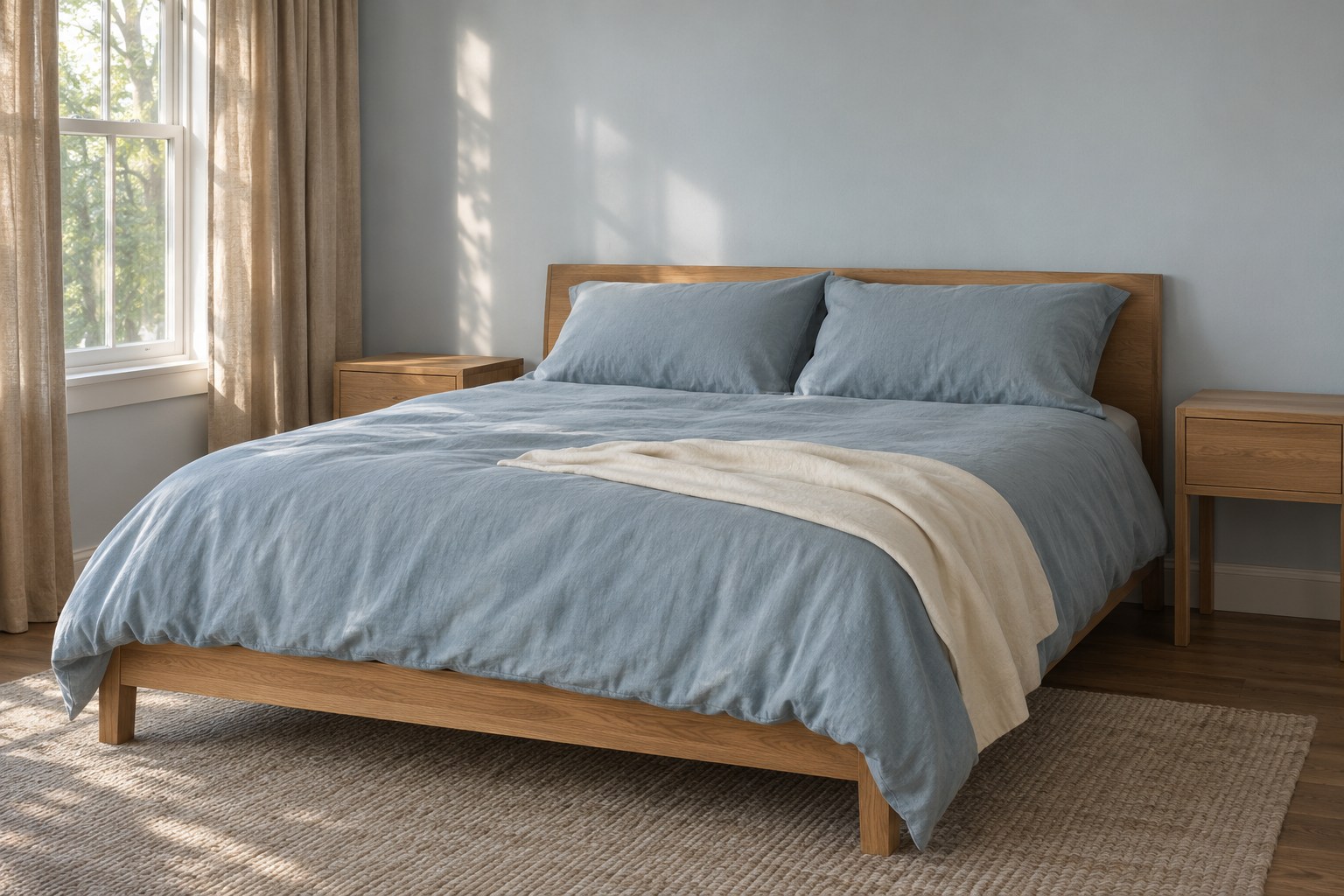
Choose the bedding you want to live with first. A cotton coverlet in dusty blue, for example, gives you a starting point for a paler blue-gray wall and a warmer neutral at the window. Move a painted sample beside the bed in the morning and again with the lamps on.
Leave one material or color different enough to show the edges of the room. Natural oak beside soft blue makes the nightstand easy to see without bringing in another bold hue. If the first paint sample makes the quilt look dull, take it away and try a lighter or warmer one. For another two-color approach, see our sage green and cream bedroom ideas.
7. Let the Window Be the Largest Shape
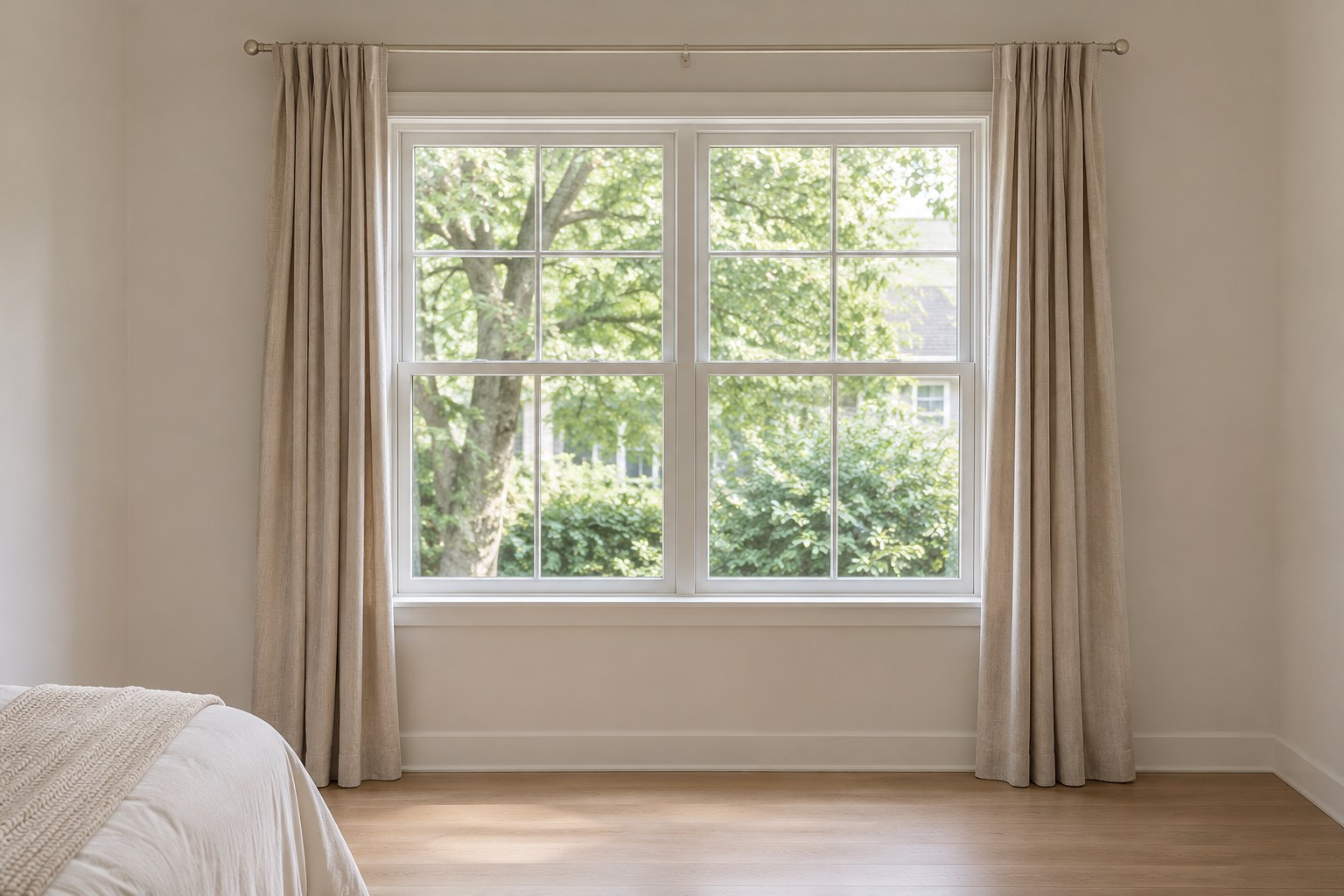
Clear the area directly in front of a window for a day and see what its frame adds to the room. Take objects off the sill and open the shade to its normal daytime position. Set your chair where you can see the light from the side while the latch stays within easy reach.
When you measure for curtains, check the width the fabric takes up when it is pulled aside. The frame can still read as one large shape if the curtain stacks mostly beyond the glass. In a bedroom, test privacy and early morning light with the curtains closed as well. Choose a practical cover for both conditions.
8. Let One Piece of Art Hold the Hallway
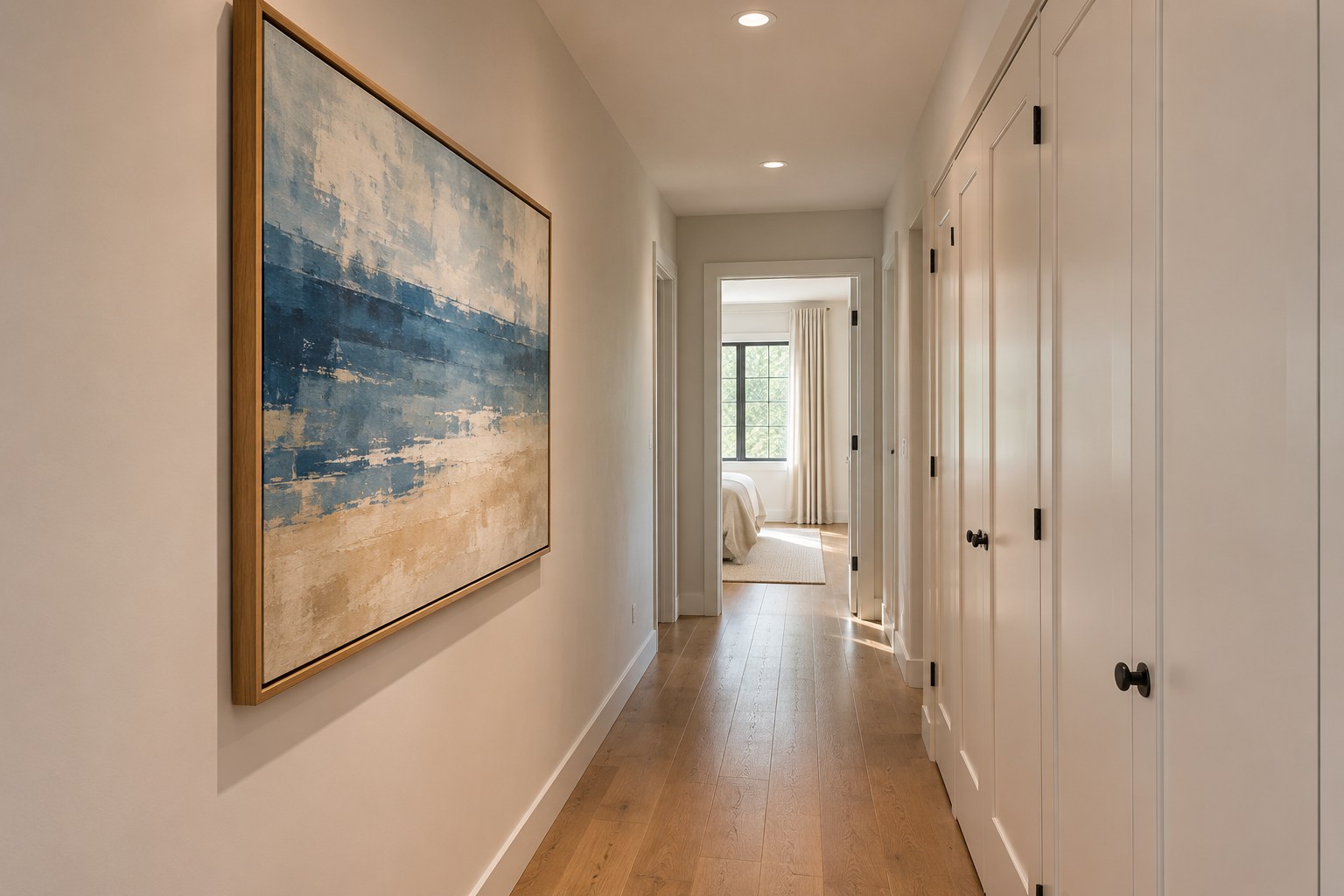
Hold a large piece of art in position before committing to a row of smaller frames. Cut a paper outline, tape it up with wall-appropriate tape, and walk toward it from both directions. In a long hall, shifting the outline toward a doorway can change where your eye lands from the next room.
Choose a frame depth that keeps passing space comfortable and use hardware suited to the wall and the weight of the piece. Keep the floor below open if the hall is already narrow. A single piece with space around it can carry a passage you usually only see for a few seconds at a time.
9. Light the Seats You Use After Dark
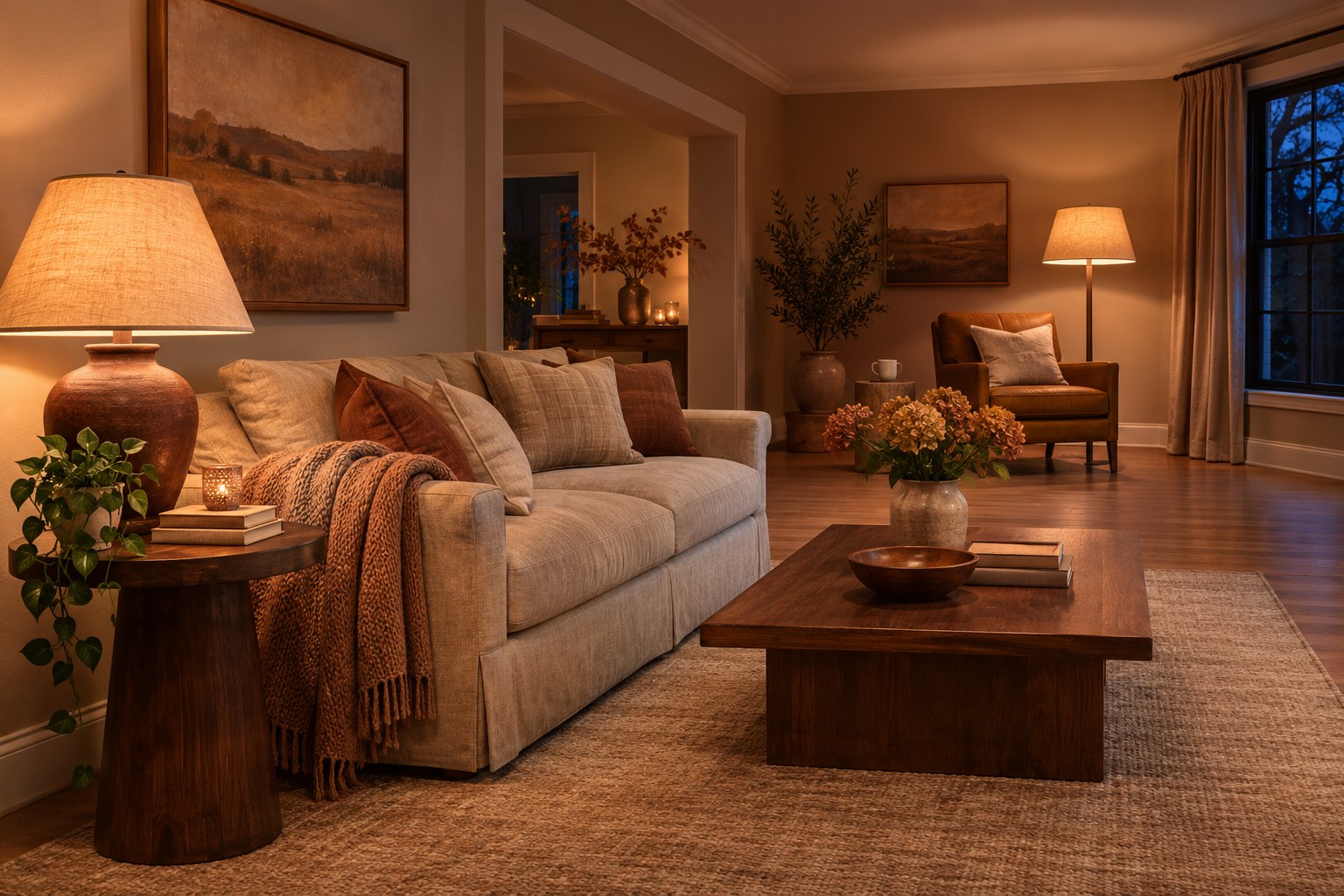
Turn off the overhead light and sit where you usually read or talk. Place a shaded lamp beside that seat and adjust the height until the light reaches your hands without showing the bare bulb at eye level. Give a second frequently used seat its own lamp if a single light leaves it in shadow.
Keep the lamp bases out of the path and arrange cords along the wall. Then walk the room from the doorway after dark to see whether there is enough light to cross it comfortably. For more options in a room without overhead lighting, use these living room lighting ideas.
10. Collect Charging Cords Along One Desk Edge
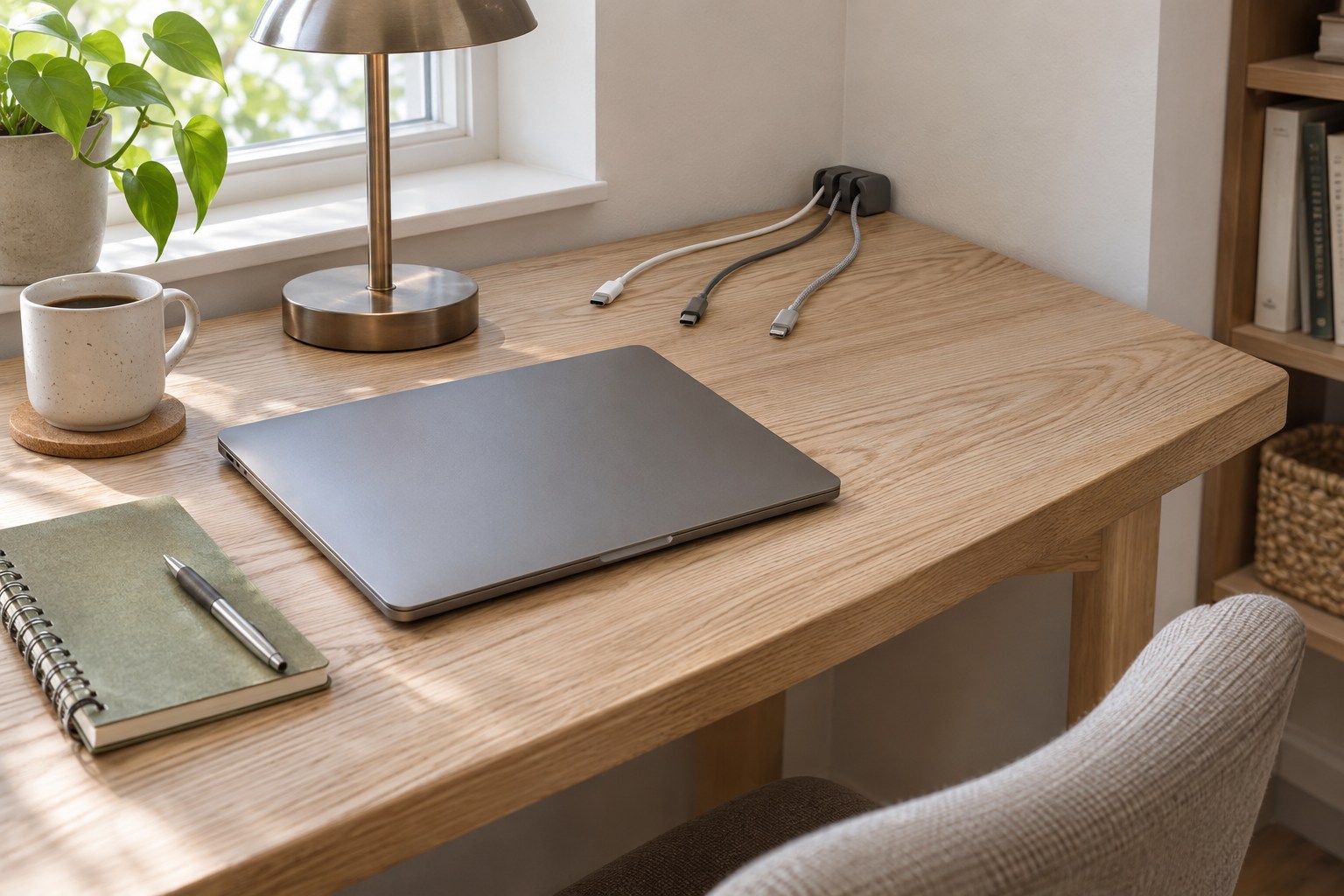
Keep the loose ends of the USB charging leads you use most along one desk edge. Put the holder near the side you reach from your chair and test it with each cable. The plugs should stay within reach when you unplug them, and the leads should slide out without tugging or bending sharply.
Leave enough slack for the phone or tablet to sit where you use it. Route the extra length back toward the source so it stays off the floor and clear of the chair wheels. If you change the desk layout often, a removable holder is easier to reposition. Test the spot for a few days before fixing anything to the finish.
For a charging lead that slips off the desk, try one of the white OHill self-adhesive cable clips that fits its diameter. Follow the maker’s surface instructions and leave enough slack to unplug without tugging.
Discover white OHill self-adhesive cable clips (paid link)
11. Choose One Focal Point Above the Table
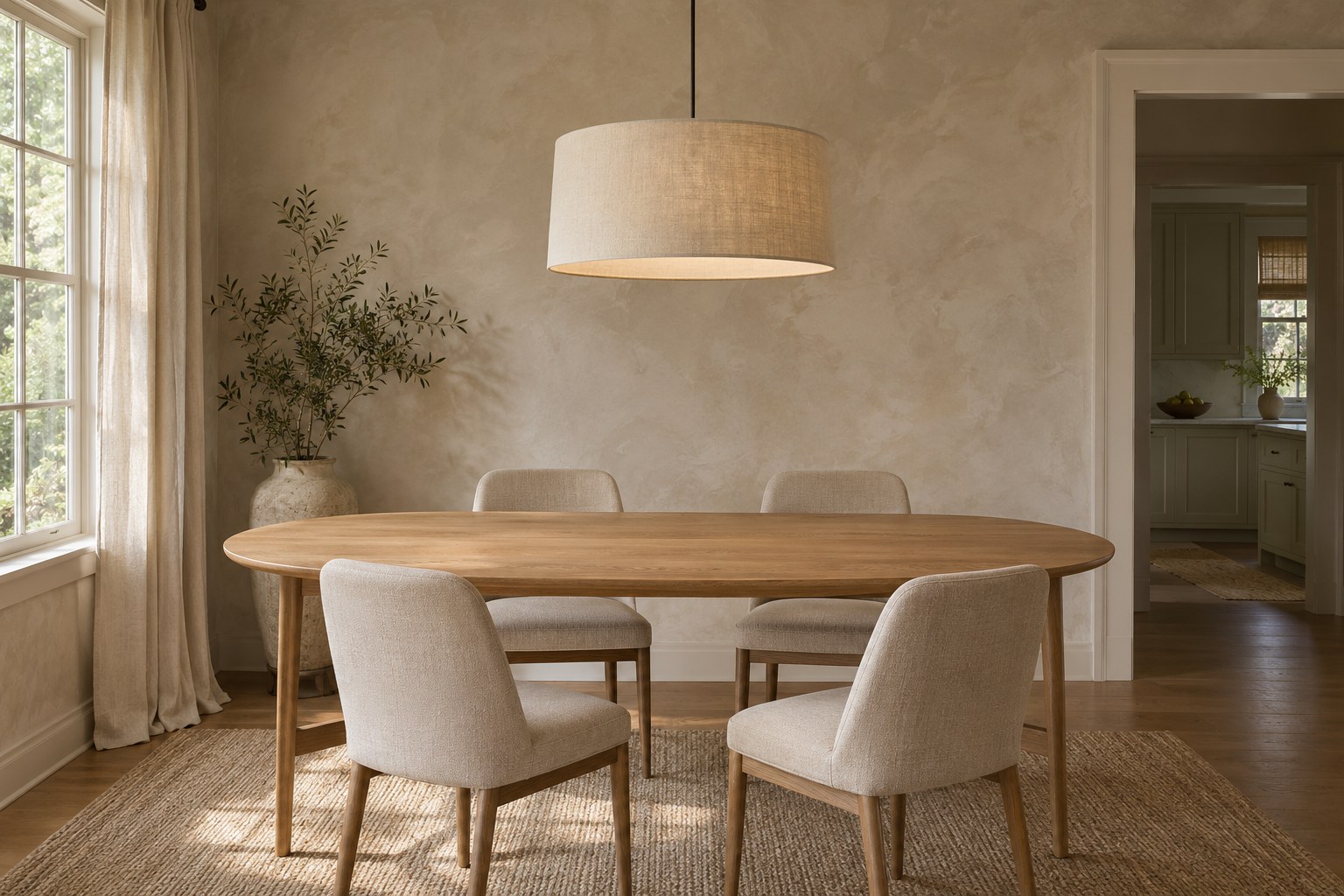
Center a single pendant or other focal piece on the position where the table lives most of the year. Stand in the dining doorway and mark the center of the table from that view. Then sit down and check whether the piece leaves a comfortable line of sight across the table.
For a table with a leaf, see where the ends fall in both positions and use the arrangement that fits daily meals. Keep the table itself quiet if the light already has a broad shape. If the fixture needs relocating, ask a qualified electrician to assess the mounting position and the fixture instructions.
12. Give the Bathroom Counter Its Full Width
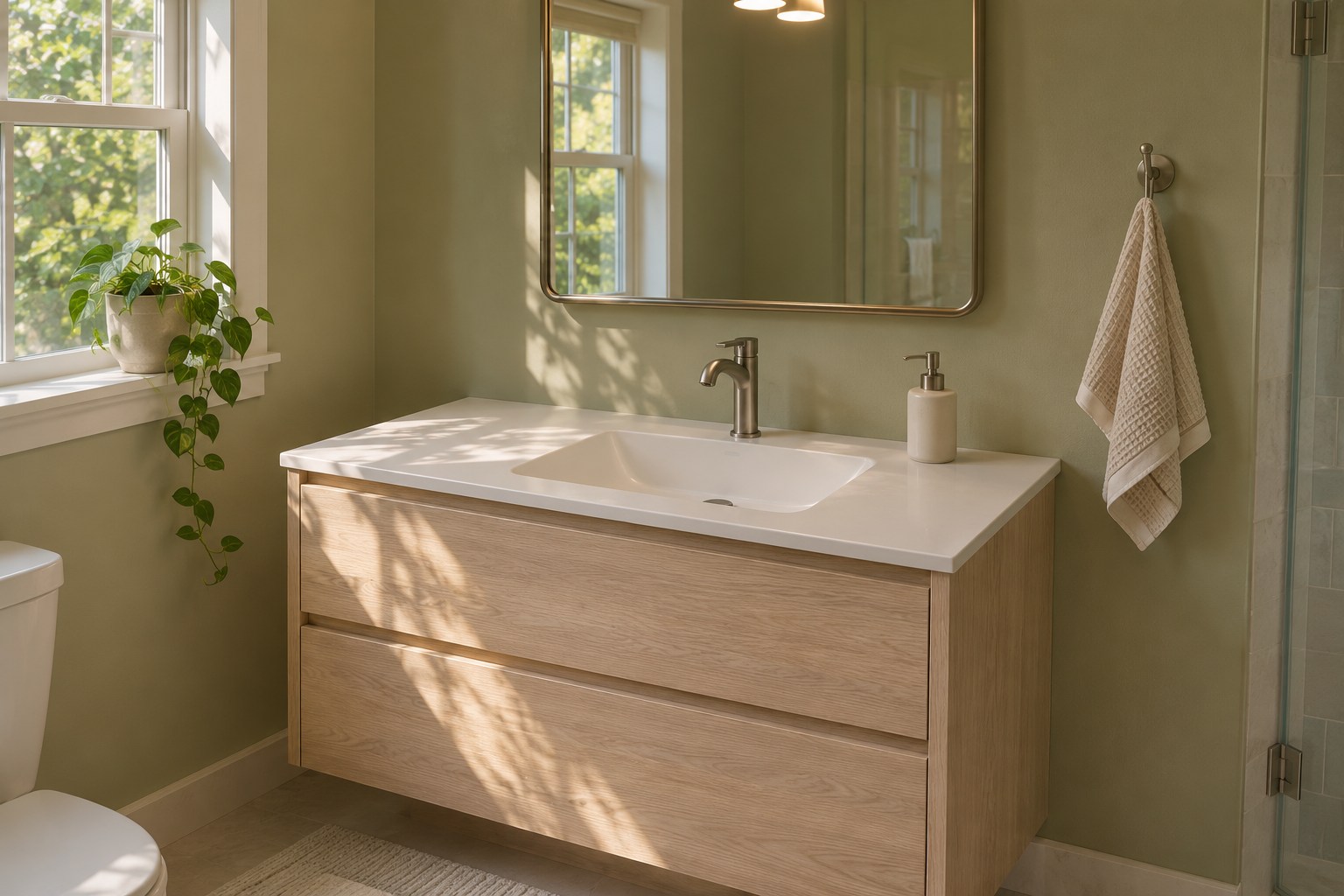
Take everything off the bathroom counter for one day. Set the soap back near the sink and give the hand towel a hook where you naturally reach after rinsing. When you get ready the next morning, put back the few items you use before leaving the room.
Keep refills and occasional supplies in a drawer or cabinet close enough to refill easily. A low open tray can hold two everyday items if they tend to drift. Leave space around it so you can wipe the counter in one pass. A narrow vanity can feel much easier to use when the area beside the basin stays open.
13. Keep the TV Wall Low and Closed
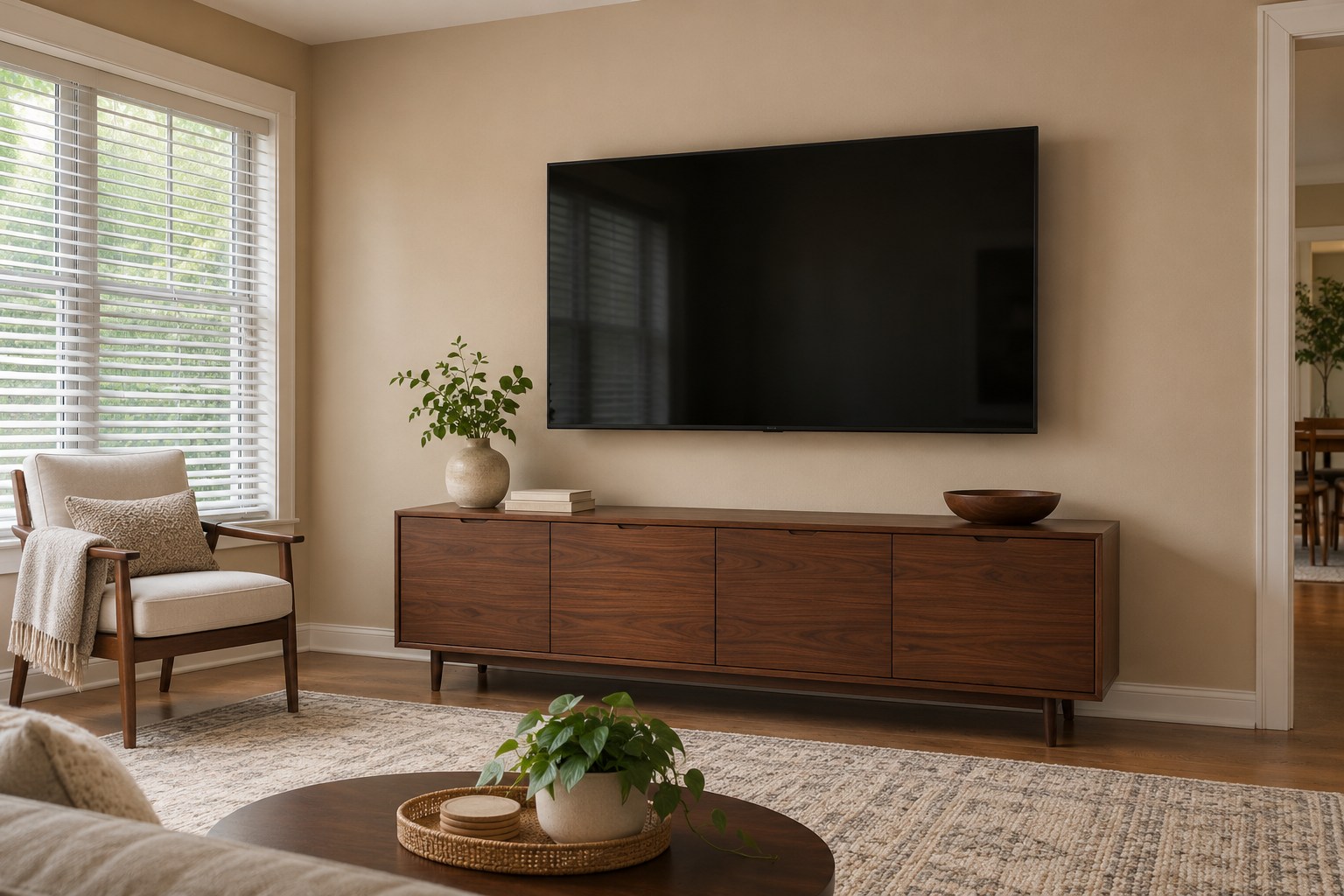
Measure the devices you need to keep, including space for their plugs, before choosing a low media cabinet. A cabinet with doors can give remotes and inactive gear a place while keeping the wall simple. For equipment that stays on, follow its maker’s instructions for airflow and access.
Try sitting in each seat before finalizing where the screen goes. A closed unit should still let you reach the controls, and the television and cabinet should be secured as their makers direct. Use these hidden storage ideas when you need another place for items that have accumulated near the TV.
14. Make a Nursery Storage Zone Easy to Reset
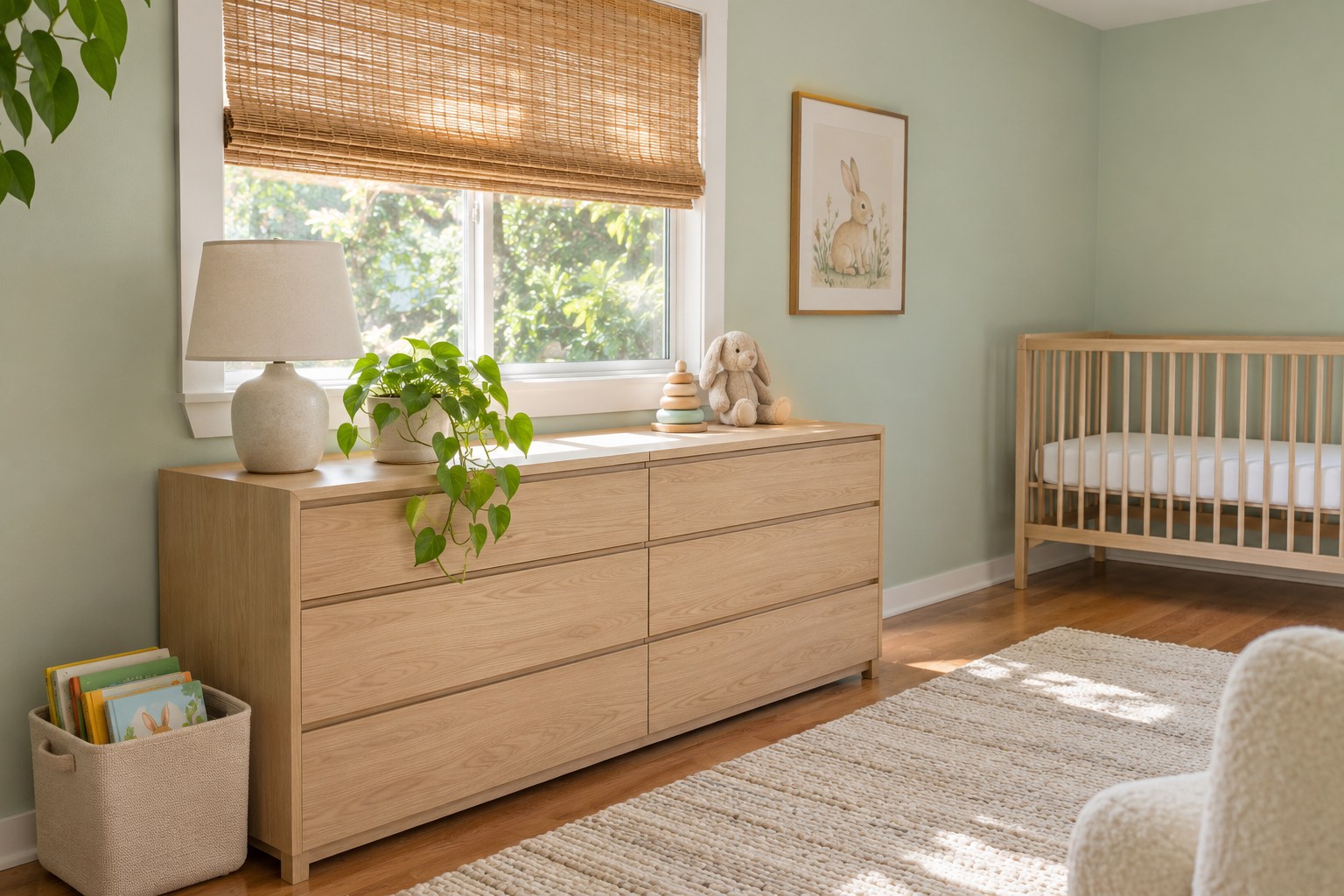
Give diapers, clean clothes, and books fixed places in a nursery so you can reset it in a few minutes. Keep the most-used supplies near where you reach for them and set backup packs in a closed drawer. A small floor bin can hold a handful of current books away from the crib and the walking path.
Pick storage that opens easily in the space you have, then secure the furniture following its instructions. Try the routine with the room arranged for nighttime. You should be able to get the next item you need without moving a basket or stepping around it.
15. Give the Sunroom Plant a Clear Silhouette
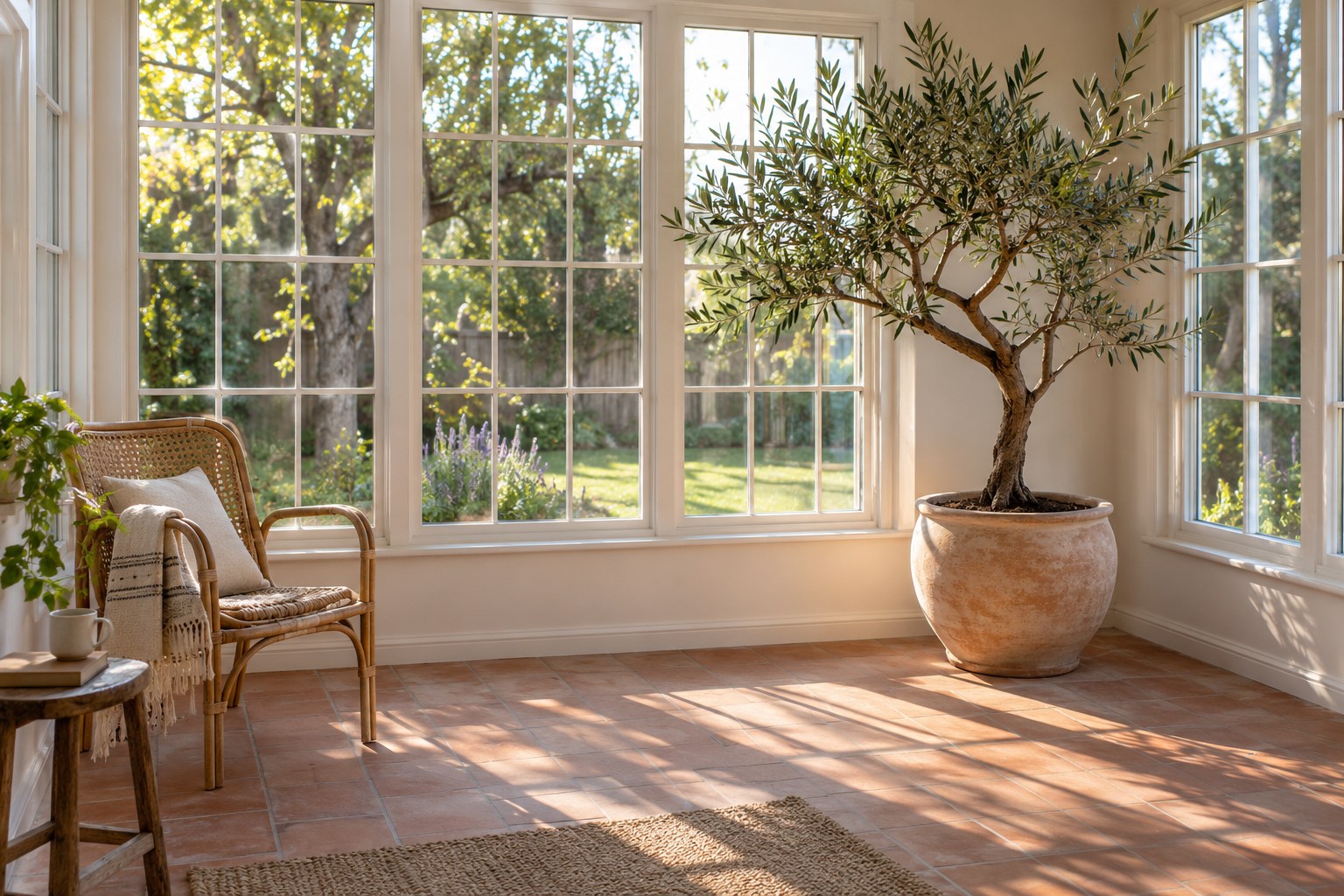
Choose the plant’s position based on the light and temperature it needs. Set it off to one side of the normal route and leave a little space behind the leaves so you can see the outline against the window. Check the position with the curtain drawn and the door fully open.
Set the pot on a surface that can handle normal watering and give yourself room to reach around it. A small clear patch of tile between the chair and the plant lets each read on its own. If a full-sized plant would pinch the route, try a narrower shape or a smaller plant on a stable surface farther from the door.
16. Use the Rug to Hold a Seating Group Together
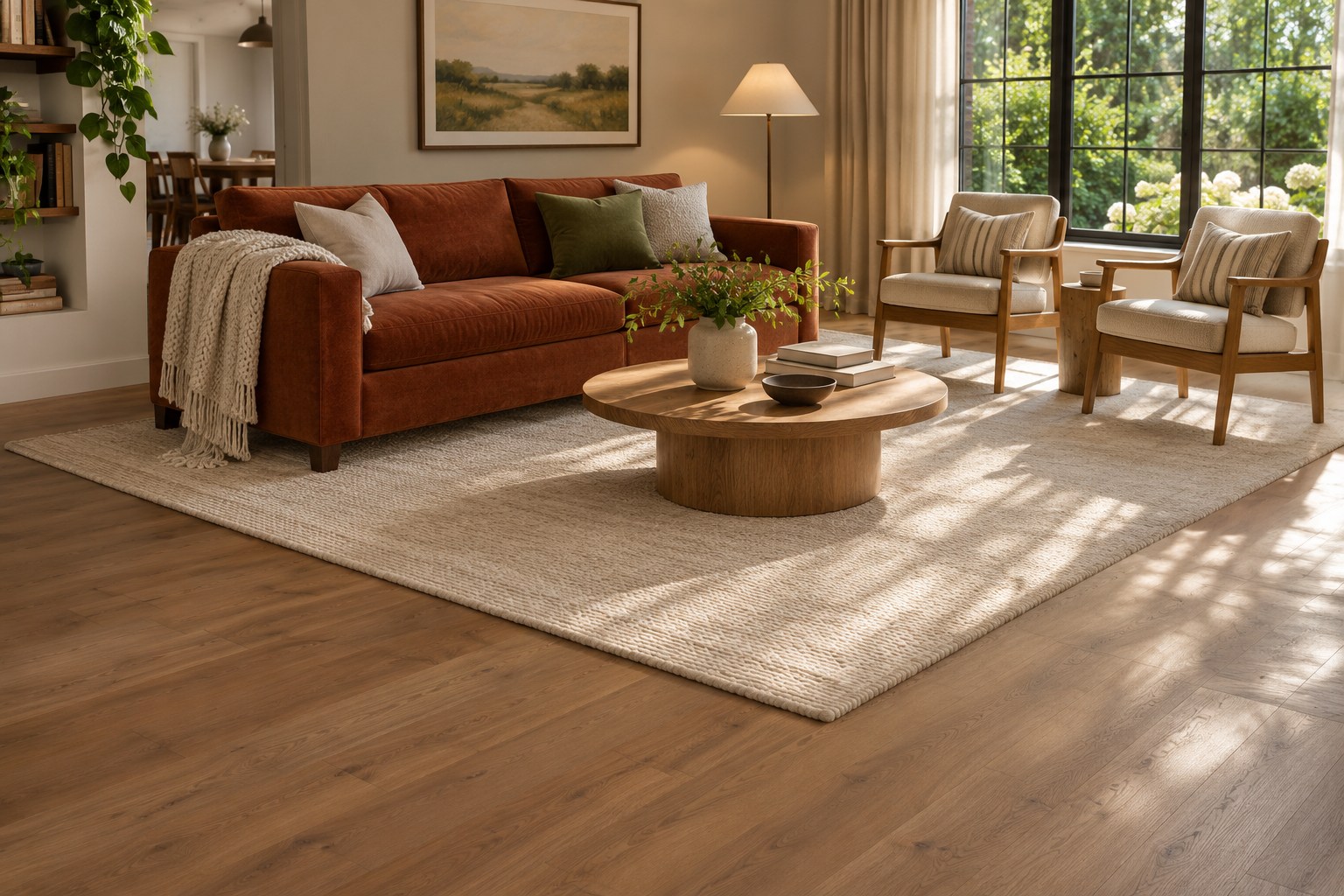
Test the rug size with tape before choosing a material. Start with a rectangle that reaches the front feet of the sofa and chairs, then see whether it keeps the outer route on bare floor. Sit down and check the space between your feet and the coffee table with the rug border marked.
A rug that pulls the seats together can define the room more clearly than multiple little mats. Check that the rug and any pad suit the flooring and that the edges stay flat where you walk. If the outline puts a corner directly where everyone turns, shift the seats and rug together or choose a different size.
17. Leave the Patio Walkway Open to the Door
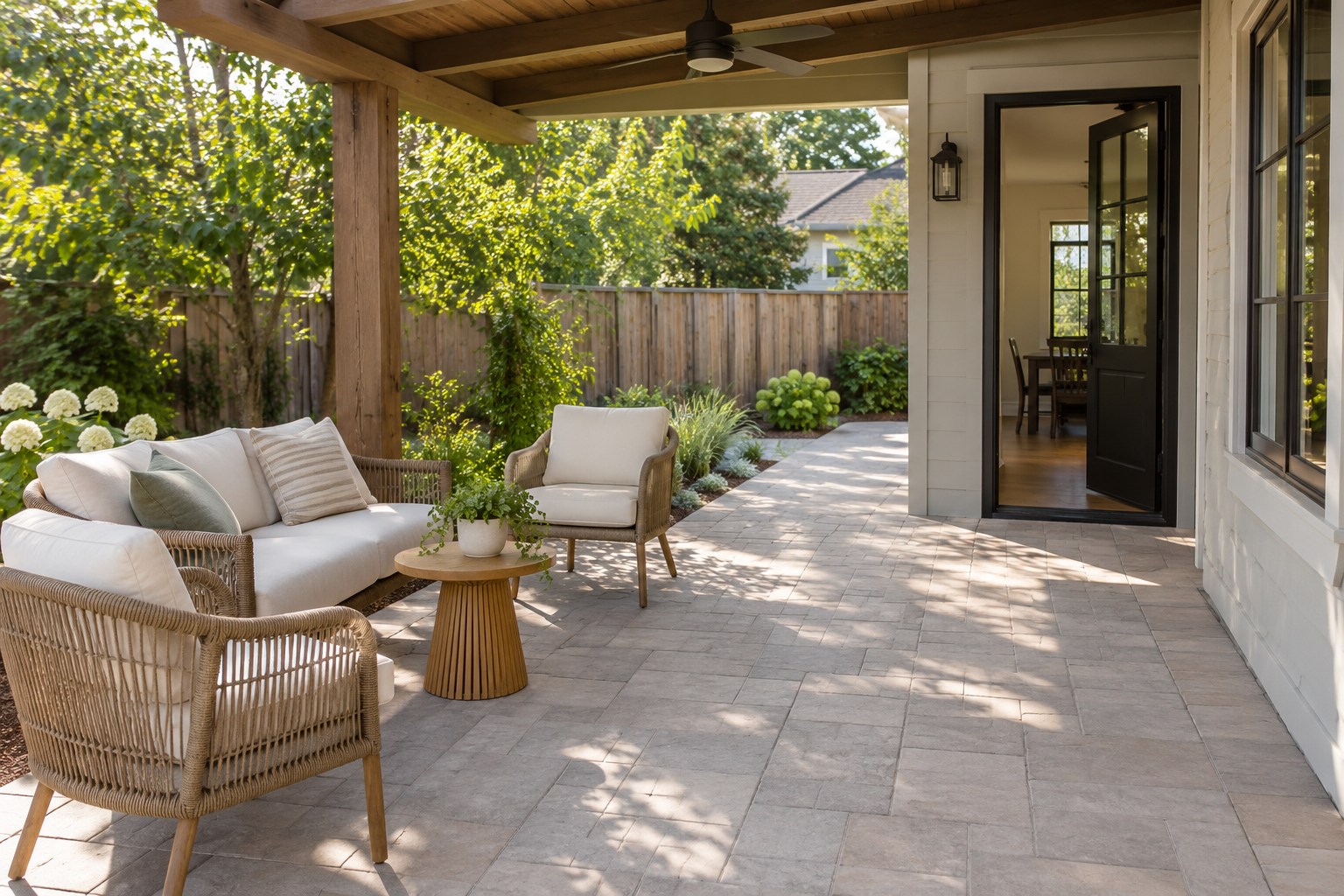
Open the back door all the way and walk from the house to the yard carrying a tray. Place the seating to one side of that path, with the chair farthest from the door facing the conversation area. Give the side table a place where it serves both seats without sitting in the middle of the route.
Test the arrangement with chairs pulled out and cushions in use. On a patio that gets wet, give cushions a place to dry or store them according to their care instructions. Keep any basket on the furniture side of the path so you can use the door just as easily after a rain.
18. Keep One Surface Open for a Week
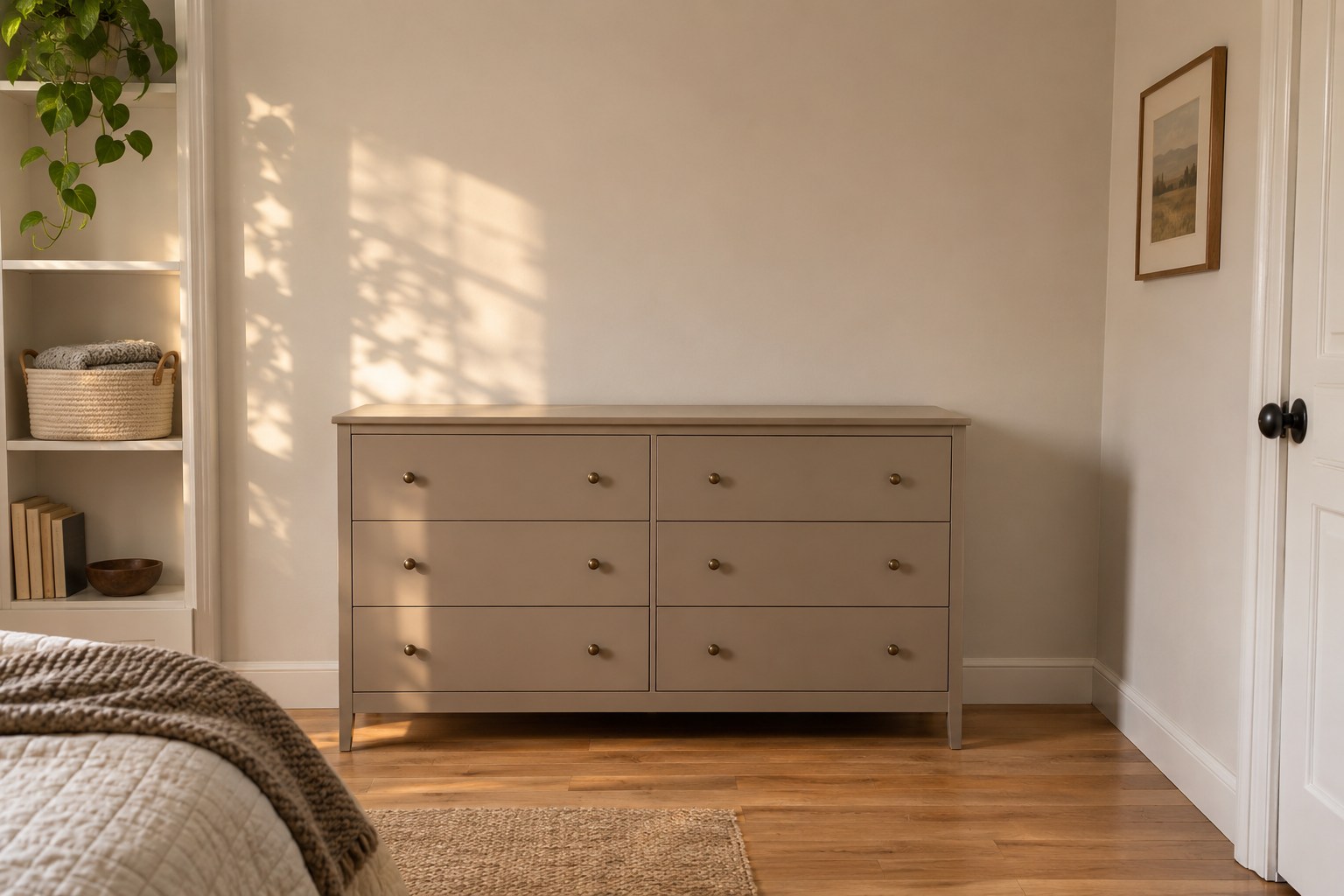
Clear one dresser or console top and give its contents a temporary home in a tray or basket. For seven days, return an item only when you reach for it. You may find that a watch dish belongs on the dresser and the loose receipts are easier to handle in the entry or office.
At the end of the week, group the items that returned. Give them an easy reset spot and leave the rest of the surface open. If you miss a particular photograph or vase, bring it back intentionally. There is room for a piece you enjoy when you have cleared the things you were storing by default.
Choose the room that takes the most effort to use. Clear its main route, put the things you use within reach, and see what shape the room has by daylight and after dark. Make the next change from what you notice while living there.
Discover more from HomeTrendora
Subscribe to get the latest posts sent to your email.